

OBD-II Code P0740: Torque Converter Clutch Circuit Malfunction
The Ultimate 2026 Guide: What P0740 means, why it triggers, and how to fix it for good.
- P0740 is strictly an electrical circuit code indicating a fault in the TCC wiring, solenoid coil, or TCM driver, unlike P0741 which flags a mechanical failure.
- Always perform the 'Key On, Engine Off' immediate code return test; if P0740 returns instantly after clearing, you have a confirmed hard electrical short or open circuit.
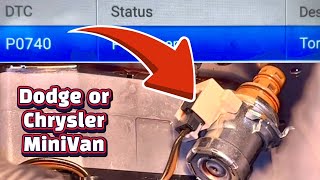
- Do not replace the TCC solenoid on Dodge/Chrysler vehicles with the 62TE transmission without checking TCC slip RPM, as the root cause is almost always a failed torque converter requiring a $1,200+ replacement.
- Driving with an active P0740 code increases transmission fluid temperatures by 20-50°F, which destroys internal clutches and guarantees a $2,500+ transmission rebuild within 6 months.
What Does P0740 Mean?

P0740 means the Powertrain Control Module (PCM) or Transmission Control Module (TCM) detects an electrical fault in the torque converter clutch (TCC) control circuit. At steady cruising speeds, the TCC locks to create a 1:1 mechanical connection between the engine and transmission, eliminating hydraulic slippage to improve fuel economy and reduce heat. This code specifically flags an electrical problem—such as an open circuit, a short to ground, or abnormal voltage—preventing the computer from commanding lock-up.
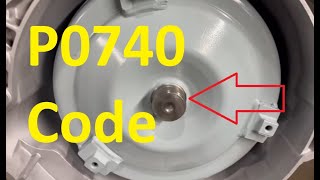
Technical definition: The SAE/OBD-II definition is "Torque Converter Clutch (TCC) Circuit Malfunction." It sets when the PCM/TCM perceives an electrical fault within the TCC solenoid's control circuit. 🎬 Watch: A breakdown of common causes and potential fixes. The computer triggers the code when it commands the solenoid on or off and the resulting circuit voltage or resistance falls outside expected parameters, pointing directly to an open wire, shorted coil, or internal TCM driver failure.
Can I Drive With P0740?
Yes, But With Caution. Short-distance driving is possible, but strongly discouraged. Driving without torque converter lock-up generates significant excess transmission heat (increasing temperatures by 20-50°F). This overheats the fluid, destroying its lubricating properties. Continued operation quickly causes severe internal damage, turning a $300 electrical repair into a $3,500+ transmission rebuild.
Common Causes

- Faulty Torque Converter Clutch (TCC) Solenoid (Very Common) — This electro-hydraulic solenoid is the most frequent culprit. It fails electrically due to an internal short or open in its coil windings, or sticks mechanically from debris in the fluid.
- Low, Dirty, or Incorrect Transmission Fluid (Very Common) — Fluid is the transmission's lifeblood. Low fluid prevents the hydraulic pump from creating enough pressure to operate the solenoid. Dirty or burnt fluid clogs the tiny passages in the valve body or the solenoid's filter screen.
- Damaged Wiring or Connectors (Common) — The transmission wiring harness lives in a harsh environment. Heat, vibration, and road debris cause wires to chafe, melt, or break. Corroded connectors create open circuits or high resistance.
- Failing Torque Converter (Common) — The internal clutch inside the torque converter wears out or its seals fail. When this happens, it cannot lock up even if the solenoid and circuit are perfect. This is a highly common misdiagnosis on Chrysler/Dodge vehicles with the 62TE transmission. 🎬 See why you shouldn't replace the solenoid on 62TE models.
- Internal Transmission Issues (Valve Body, Filter) (Less Common) — Problems within the valve body, such as a stuck TCC control valve or clogged hydraulic passages, prevent fluid pressure from reaching the clutch. Clogged internal filters also starve the circuit.
- Failing Alternator or Electrical Interference (Rare) — A failing alternator introduces AC voltage (ripple) into the vehicle's DC electrical system. This electrical 'noise' confuses sensitive electronics like the TCM, triggering false solenoid codes (common on Chrysler/Dodge).
- Faulty or Outdated TCM (Rare) — The TCM itself fails via a bad internal driver circuit, or its software logic is flawed. Manufacturers frequently release Technical Service Bulletins (TSBs) with software updates to correct erroneous P0740 codes.
- Faulty Related Sensors (Brake Switch, Speed Sensors) (Rare) — The TCM uses data from other sensors to command lock-up. A faulty brake light switch stuck 'on' tells the TCM the brakes are applied, permanently inhibiting lock-up.
Symptoms

- Engine RPMs Higher Than Normal at Highway Speed — The most classic symptom. When cruising at a steady 65 mph, the tachometer reads 200-500 RPMs higher than usual because the torque converter slips instead of locking.
- Poor Fuel Economy — Because the engine runs at higher RPMs to maintain highway speeds, fuel consumption noticeably increases by 5-10%.
- Check Engine Light / Transmission Lamp is On — The P0740 code always triggers the Malfunction Indicator Lamp (MIL). Some vehicles also illuminate a separate transmission warning light.
- Shuddering or Stalling — A shudder or vibration, similar to driving over rumble strips, occurs at highway speeds if the clutch tries to engage but slips. If the clutch sticks locked, the engine stalls when coming to a stop.
- Harsh or Delayed Shifts — A fault in the hydraulic circuit or electrical system impacts overall shift quality, causing rough or delayed gear changes.
- Transmission Overheating (also visible on scanner) — Constant slipping inside the torque converter generates excessive heat. This causes the transmission to run hot, produces a burning smell, and destroys internal components.
Diagnostic Flowchart
Tap your situation to follow the diagnostic path that matches what you're seeing on this code.
Common Fixes & Costs
- Replace Torque Converter Clutch (TCC) Solenoid
— Parts: $30-$150, Labor: $200-$500, ~2.5 hr book time
(Intermediate)
Honda Accord/Odyssey: OEM
Dodge Grand Caravan (62TE): OEM
Chevy Silverado (4L60E): OEM - Transmission Fluid and Filter Change — Parts: $60-$150, Labor: $120-$250, ~1.5 hr book time (DIY)
- Repair Damaged Wiring Harness — Parts: $15-$60, Labor: $150-$600, ~3 hr book time (Intermediate)
- Update or Reprogram PCM/TCM — Parts: $0, Labor: $150-$300, ~1 hr book time (Professional)
- Replace Torque Converter
— Parts: $300-$800, Labor: $900-$1,800, ~9.5 hr book time
(Professional)
Honda Odyssey: OEM
Dodge Grand Caravan (62TE): OEM
Chevy Silverado (4L60E): OEM - Replace/Rebuild Transmission — Parts: $2500-$5000+, Labor: Included in part cost, ~12 hr book time (Professional)
Used vs. New Parts: Buying Guide
When a used part is worth it: For a TCC solenoid, buying new is always better as the part is inexpensive. For a costly torque converter, a used unit from a low-mileage, accident-damaged vehicle is a budget-friendly option for an older, high-mileage car.
Donor-vehicle mileage cap: roughly under 70000 miles for the part to have meaningful remaining life.
Donor quality checklist:
- Verify the donor vehicle was not scrapped due to transmission or engine failure.
- Ask for the VIN to check the vehicle's history.
- Ensure the part comes with at least a 30-90 day warranty.
- Match the part number exactly, as similar models have different stall speeds or mounting patterns.
Decision logic:
- If The part is a TCC solenoid → Buy new. The cost savings for a used solenoid are minimal and not worth the risk of premature failure.
- If The part is a torque converter and the vehicle has over 150K miles → A quality remanufactured or a verified low-mileage used converter is a reasonable choice to save money.
- If The vehicle is newer or has low mileage → Buy a new or remanufactured torque converter to ensure longevity and get a better warranty.
Warranty tradeoff: Used parts typically offer a 30-90 day warranty, which only covers the part itself, not the labor to replace it. New aftermarket parts offer 1-3 year warranties, while OEM parts have longer warranties if installed by a dealer.
Worst-case if a used part fails: $1000-$2000 if a used torque converter fails after installation, as the labor to remove and replace the transmission must be paid again.
What Happens If You Wait — Timeline
- 0-1 Month: Check Engine Light is on. At highway speeds, engine RPM is 200-500 higher than normal. No other drivability symptoms are obvious. (MPG impact: 5-10%% · Added cost: $20-$60 in wasted fuel.)
- 1-3 Months: Constant slipping generates excessive heat, raising transmission fluid temperature by 20-50°F. The fluid begins to darken and break down, losing its protective qualities. A slight shudder occurs at highway speeds. (MPG impact: 7-12%% · Added cost: $100-$300 in wasted fuel plus the risk that a simple solenoid fix is no longer sufficient.)
- 3-6 Months: Fluid is now 'burnt' and contains abrasive clutch material from the failing TCC. This debris clogs hydraulic passages in the valve body and other solenoids. Harsh or delayed shifts appear. (MPG impact: 10-15%% · Added cost: $1,200-$2,600 (A torque converter replacement is now required as the internal clutch is destroyed).)
- 6+ Months: Catastrophic failure. The burnt, abrasive fluid destroys multiple internal clutches, seals, and bearings. The valve body scores beyond repair. The transmission slips severely in multiple gears or fails to engage at all. (MPG impact: 15-25%+% · Added cost: $2,500-$8,000+ (A complete transmission rebuild or replacement is now the only option).)
Cost of Not Fixing It
- 0-1 Month: A noticeable drop in fuel economy (5-10%) and higher engine RPMs at cruising speeds. (Added cost: $20-$60 in extra fuel costs.)
- 1-6 Months: Sustained high temperatures from converter slippage cause transmission fluid to break down and 'burn'. This leads to glazing of other internal clutches and hardening of seals, causing widespread shifting problems. (Added cost: $250-$600 (Cost of a solenoid replacement that is no longer sufficient).)
- 6+ Months: Catastrophic transmission failure. The burnt fluid and excessive heat destroy internal clutches, bearings, and score the valve body. The torque converter itself fails completely. This requires a full transmission rebuild or replacement. (Added cost: $2,500-$8,000+)
Diagnosis Steps

- Scan for Codes & Check for TSBs
Use an OBD-II scanner to confirm P0740 and look for related codes (e.g., P0700, P0741). Crucially, check for Technical Service Bulletins (TSBs) for your exact year, make, and model. The fix is often a known issue requiring a simple software update.
Tools: OBD-II Scanner, Internet Access (Beginner) - Check Transmission Fluid Level and Condition
With the engine running and transmission warm, check the fluid. It must be at the correct level and look clean and pink/red. Fluid that is dark brown/black or smells burnt indicates severe overheating and internal wear.
Tools: Rag, Owner's Manual (Beginner) - Perform the 'Immediate Code Return' Test
Clear the code(s) with the scanner. Turn the key to the 'ON' position without starting the engine. Wait 10-15 seconds and re-scan. If P0740 returns immediately without the engine running, it confirms a hard electrical fault (an open or shorted circuit) and rules out mechanical issues.
Tools: OBD-II Scanner (Intermediate) - Monitor Live Data with a Scan Tool
Using a scan tool with live data capability, monitor 'TCC Slip Speed' while driving. When the TCM commands lock-up, the slip speed must drop below 100 RPM. If the slip remains high while the duty cycle PID hits maximum (>85%), it confirms a mechanical or hydraulic failure rather than an electrical one.
Tools: OBD-II Scan Tool with Live Data (Advanced) - Inspect the External Wiring Harness
Visually inspect the entire wiring harness going to the transmission. Look for wires rubbing against the chassis, melted plastic near the exhaust, corrosion on the main connector, or loose pins.
Tools: Flashlight, Mirror (Intermediate) - Test the TCC Solenoid Resistance
Disconnect the transmission harness connector. Using a wiring diagram, identify the pins for the TCC solenoid. Measure the resistance across these pins. Compare the reading to the manufacturer's specification (typically 10-25 Ohms). An infinite reading (OL) means an open circuit; a near-zero reading means a short.
Tools: Digital Multimeter, Vehicle-specific wiring diagram (Advanced) - Test the TCC Solenoid Circuit for Power and Ground
Determine if the solenoid is power-side or ground-side switched. Check for battery voltage (10-12V) on the appropriate pin at the transmission connector with the key on. Check the control wire for shorts to ground or power by testing for continuity between the control pin and the battery terminals.
Tools: Digital Multimeter, Vehicle-specific wiring diagram (Advanced) - Command Solenoid with a Bi-Directional Scan Tool
Command the TCC solenoid on and off while the engine is running. Listen for an audible 'click' from the solenoid and watch for a change in Torque Converter Slip RPM. If the solenoid clicks but slip doesn't change, the problem is hydraulic or mechanical. If it doesn't click, the problem is electrical.
Tools: Bi-directional Scan Tool (Professional) - Check for Alternator AC Ripple Voltage
Set a multimeter to AC Volts. With the engine running at ~1500 RPM, place the leads on the battery terminals. A reading above 0.5V AC indicates a failing diode in the alternator causing electrical interference, which triggers false transmission codes on Chrysler/Dodge vehicles.
Tools: Digital Multimeter with AC Volts setting (Advanced) - Advanced Circuit Analysis (Oscilloscope)
Back-probe the TCC control wire at the TCM to view the electrical pattern. Most modern TCC solenoids are pulse-width modulated (PWM), displaying a square wave when commanded. A flat line or erratic signal points to a bad TCM or wiring fault.
Tools: Oscilloscope, Wiring Diagram (Professional)
When This Code Triggers (Freeze-Frame Conditions)
- Engine Coolant Temp: 180-210°F (The engine must be at full operating temperature for the TCM to attempt lock-up.)
- Vehicle Speed: 40-65 mph (Lock-up is commanded at steady cruising speeds, not during acceleration or deceleration.)
- Engine RPM: 1500-2500 RPM (Indicates a steady state, light-throttle cruise condition where lock-up is most effective.)
- Engine Load: 25-60% (The engine is under a stable, moderate load, not heavy acceleration or coasting.)
Related Codes
- P0700 — This is a general Transmission Control System Malfunction code. It acts as a 'master code' to turn on the Check Engine Light, telling you the TCM has stored a more specific fault, which is often P0740.
- P0741 — Indicates 'TCC System Performance or Stuck Off.' This is a crucial distinction. P0740 is an ELECTRICAL circuit fault. P0741 is a MECHANICAL/HYDRAULIC performance fault. With P0741, the circuit is electrically fine, but the TCM commands lock-up and sees no change in RPM slip, indicating a worn-out converter clutch or a stuck valve.
- P0742 — Indicates 'TCC System Stuck On.' This is the opposite of P0741. The TCM detects that the torque converter is locked when it should be unlocked, such as when coming to a stop. This is caused by a stuck solenoid or a mechanical failure in the valve body.
- P0743 — Indicates 'TCC Solenoid Electrical.' This is a more specific version of P0740. While P0740 points to a fault anywhere in the circuit, P0743 specifically flags an electrical fault detected right at the solenoid's coil, such as an internal short or open.
- P0744 — Indicates 'TCC Circuit Intermittent.' This is one of the most difficult codes to diagnose. The TCM detects an erratic or inconsistent signal in the TCC circuit, which points to a loose wire, a failing solenoid, or a glitchy TCM.
- P2769 / P2770 — Indicates 'TCC Pressure Control Solenoid Control Circuit Low' (P2769) or 'High' (P2270). These are highly specific electrical codes pointing to a short to ground (Low) or a short to power/open circuit (High) for the TCC solenoid.
Climate & Environmental Factors
- High Operating Temperature: Heat is the primary environmental enemy of an automatic transmission. Constant high temperatures, whether from aggressive driving, towing, or hot climates, accelerate the breakdown of transmission fluid. Degraded fluid loses its lubricating and cooling properties, leading to varnish buildup on solenoids and wear on clutches, directly causing P0740.
- Extreme Cold: In very cold climates, transmission fluid becomes thicker (higher viscosity). This causes delayed or sluggish solenoid operation on initial startup, potentially triggering an intermittent P0740. This is usually a temporary condition that resolves as the transmission warms up.
- Humidity / Moisture: High humidity or driving through deep water introduces moisture into external electrical connectors, especially if their weather seals are old or damaged. This corrosion creates high resistance or shorts in the TCC solenoid circuit, directly causing a P0740 code.
How to Talk to a Mechanic About This Code
Say this: "I have a P0740 torque converter clutch circuit code and I'd like to schedule a diagnostic. Can you please start by checking for TSBs, inspecting the fluid, and testing the TCC solenoid circuit resistance and wiring before recommending a major component replacement?"
This signals you understand the logical diagnostic steps for a P0740 code. It directs the shop to perform low-cost electrical checks first, preventing a premature and expensive recommendation to replace the torque converter or entire transmission without proper evidence.
Avoid saying:
- 'Just fix whatever's wrong'
- 'My check engine light is on, can you look at it?'
- 'The internet said to replace the solenoid, can you give me a price for that?'
Questions to ask before authorizing the repair:
- Did you check for any Technical Service Bulletins (TSBs) related to this code?
- What did the live data show for 'TCC Slip Speed' when you commanded lock-up on a test drive?
- What was the Ohm reading on the TCC solenoid and was it within the manufacturer's specification?
- If you are recommending a torque converter or transmission replacement, what specific tests ruled out a simpler electrical or solenoid failure?
Where to Take It: Dealer vs Independent vs Chain
- Dealer:
Recommended if a known software update (TSB) is the fix or if the vehicle is still under its powertrain warranty. Otherwise, it is the most expensive option.
Best for: Vehicles under warranty, Repairs that require a manufacturer-specific software update (common on Toyota/Lexus), Complex diagnostics on newer vehicles where specialized tools are required.
Downsides: Typically the highest labor rate and parts cost., Quick to recommend a full transmission replacement over a component-level repair. (Typical cost: +40% vs. baseline) - Independent Shop:
Best overall fit, especially a trusted, independent transmission specialty shop. They offer the best balance of expertise and cost for diagnosing and repairing the full range of P0740 causes, from wiring to internal hard parts.
Best for: Out-of-warranty vehicles where cost is a major factor., Shops that specialize in transmission repair will have deep expertise., Component-level diagnosis and repair (e.g., replacing a solenoid or repairing a wire).
Downsides: Quality and expertise vary widely; vetting the shop's reputation is crucial., May lack access to the very latest manufacturer-specific software or tools. (Typical cost: +0% vs. baseline) - Chain Shop:
AVOID for P0740 diagnosis. This code requires nuanced diagnostic skill that is outside the scope of a quick-lube or general service chain. A fluid change here is acceptable, but do not authorize further diagnostic work.
Best for: Simple fluid and filter changes, but only if you are certain that is the issue.
Downsides: Technician skill is highly variable., Lack the in-depth diagnostic tools and transmission-specific experience., High pressure to upsell; quick to recommend a very expensive transmission replacement without proper diagnosis. (Typical cost: -10% vs. baseline)
When to Walk Away From the Repair
If the estimated repair cost for a major transmission issue exceeds 50% of the car's private-party value, seriously consider selling the car as-is or for scrap.
- Car worth $8000, fix is $700: Fix it. A $700 solenoid or wiring repair is well below the threshold and restores full value to the car.
- Car worth $5000, fix is $2400: Borderline. The repair cost is nearly 50% of the car's value. Before authorizing, consider the car's overall condition, other needed repairs, and how long you plan to keep it.
- Car worth $3500, fix is $4000: Walk away. The repair costs more than the car is worth. Do not authorize the repair.
What Scan Tool You Need for This Code
Minimum: A scanner that reads manufacturer-specific transmission codes and displays live data PIDs (Parameter IDs).
A cheap, sub-$30 code reader only shows the P0740 code, giving you no further information. To diagnose this properly, you MUST view live transmission data, specifically 'TCC Slip Speed' (or Torque Converter Slip RPM), to determine if the failure is electrical or mechanical/hydraulic.
Budget: Ancel BD310 or similar Bluetooth OBD-II Adapter (~$70) — When paired with an app like OBD Fusion or Torque Pro, it displays critical live data PIDs like TCC slip speed, transmission fluid temperature, and engine RPM, which are essential for initial diagnosis.
Mid-range: Foxwell NT510 Elite / Autel MaxiCOM MK808S (~$180) — This is the sweet spot for DIY. These tools offer bi-directional control, allowing you to command the TCC solenoid on and off yourself to test its function. They also provide wider access to manufacturer-specific codes and data streams.
Professional: Autel MaxiSys MS906BT / Launch X431 Series (~$600-1200) — Provides full professional-level diagnostics, including bi-directional control, advanced data graphing, and the ability to perform transmission relearn procedures after a major repair or replacement.
Rent vs buy: Most auto parts store rental tools are basic code readers and are NOT sufficient for diagnosing P0740. If you plan to do the diagnosis yourself, you must buy a scanner with live data capabilities. For a one-time fix, the cost of a mid-range scanner is often less than one hour of shop diagnostic time.
How to Clear the Code After You Fix It
- Use an OBD-II scan tool to clear the P0740 and any related fault codes.
- Perform a complete OBD-II drive cycle to allow the vehicle's readiness monitors to run.
- Reconnect the battery if it was disconnected for the repair, but note this clears all learned values and monitors.
Drive cycle (~20 minutes): A typical transmission drive cycle involves: 1) Cold start and idle for 2-3 minutes. 2) Drive in stop-and-go traffic with several light accelerations. 3) Accelerate to a steady highway speed (45-60 mph) and maintain for 5-10 minutes to allow torque converter lock-up. 4) Safely come to a stop and allow the vehicle to idle. 5) Shut off the engine and let it cool.
Readiness monitors affected: Comprehensive Component Monitor, Catalyst Monitor, Evaporative System Monitor
Before emissions retest: drive at least 50 miles to fully set monitors.
Watch out for:
- Simply clearing the code without performing a drive cycle leaves readiness monitors as 'Not Ready', causing an emissions test failure.
- If the root cause of the P0740 was not correctly repaired, the code returns during the drive cycle.
- Disconnecting the battery clears codes but also resets all adaptive learning in the PCM/TCM, causing unusual shifting behavior temporarily.
Will This Fail Emissions / State Inspection?
Yes — this code typically fails an OBD-II emissions inspection.
- California: An active P0740 code results in an automatic smog check failure. All OBD-II readiness monitors must be in a 'Ready' state to pass, so you must complete a full drive cycle after repairs before re-testing.
- New York: The NYS DMV vehicle inspection includes an OBD-II scan. A Check Engine Light for P0740 is an automatic failure.
- Texas: In the 17 counties requiring emissions testing, an active P0740 code causes the vehicle to fail the OBD-II portion of the inspection. After repairs, you can have at most one monitor 'Not Ready' to pass.
Most Commonly Affected Vehicles
- Honda Accord, Odyssey, Civic, Pilot (2000-2015) — These models are notorious for TCC solenoid failure and internal transmission filters getting clogged with clutch material, which starves the TCC circuit of hydraulic pressure. Early 2000s models were subject to a class-action lawsuit regarding transmission durability.
- Acura TL, MDX, CL (2000-2015) — Sharing transmission designs with Honda, these are prone to the same TCC solenoid and fluid flow issues. Early 2000s models were particularly susceptible to transmission failure originating from TCC problems.
- Dodge/Chrysler/Jeep Grand Caravan, Town & Country, Journey (2008-2020) — Vehicles with the 62TE transmission are highly susceptible. TSB #9004206 for the 2017-2020 Journey states that if the solenoid is good, the torque converter has failed. This is a very common misdiagnosis where the solenoid is replaced but the code returns.
- General Motors (Chevrolet/GMC) Silverado, Sierra, Tahoe, Suburban (1999-2013) — Models with the 4L60E transmission often suffer from a worn TCC regulator valve in the valve body, which causes fluid pressure loss to the converter clutch. This requires valve body repair, not just a solenoid.
- Toyota Camry, Sienna, Corolla, Highlander (1998-2019) — While generally reliable, they suffer from age-related solenoid failure. For some 2017-2019 models, TSB T-SB-0122-20 points to an ECM software update as the fix, not a hardware replacement.
- Ford Explorer, F-150, Focus (2002-2010) — Commonly affected. Some models like the 2006 Explorer have a specific PCM diagnostic strategy where it looks for a voltage drop across the solenoid, making circuit integrity crucial.
- Nissan Frontier, Altima, Murano (CVT Models) (2007-2017) — On some models, external issues like a coolant leak shorting the TCM cause P0740. For CVT models, TSB NTB15-087a suggests a valve body replacement is needed instead of a full transmission replacement.
- Hyundai Santa Fe, Elantra, Sonata (2006-2016) — A known issue on some models is a short or break in the internal transaxle wiring harness, which causes a group of solenoid codes including P0740. The harness requires replacement.
Manufacturer-Specific Notes

- Honda/Acura: P0740 is frequently caused by a clogged internal transmission filter or debris on solenoid screens, which are not easily serviceable. This restricts fluid flow to the TCC solenoid. Multiple fluid drain-and-fills sometimes help, but often the issue persists without a more invasive cleaning or repair.
- Chrysler/Dodge/Jeep: On vehicles with the 62TE transmission, it is a very common misdiagnosis to replace the TCC solenoid when the actual cause is a worn-out torque converter. Technicians familiar with this platform always suspect the converter first. A failing alternator creating AC ripple voltage (>0.5V AC) also falsely triggers this code.
- General Motors: On the popular 4L60E/4L65E transmissions, the root cause is often not the TCC solenoid itself, but a worn TCC regulator valve bore in the valve body. This causes a hydraulic leak that prevents the clutch from applying correctly. Sonnax and other companies make oversized valve kits to repair the valve body without replacing it.
- Toyota: For some 2017-2019 models (Camry, Highlander, Sienna), TSB T-SB-0122-20 Rev2 addresses P07407E. The official fix is not a part replacement but an update to the Engine Control Module (ECM) software logic. Always check for TSBs on Toyotas before replacing hardware.
- Nissan: On some vehicles equipped with a Continuously Variable Transmission (CVT), TSB NTB15-087a indicates that P0740 (among other codes) is resolved by replacing the valve body assembly rather than the entire, much more expensive, CVT unit.
Real Owner Stories
2011 Dodge Grand Caravan at 115K miles - The Classic Misdiagnosis
Check Engine Light came on with code P0740. At highway speeds (65-70 mph), the RPMs held steady at ~2500, then the TCC attempted to lock, dropping RPMs to ~1500, but immediately slipped and bounced back up to 2500.
What they tried:
- Owner considered replacing the TCC solenoid himself after seeing it was a cheap part, but found forum posts warning against it.
- Multiple professional mechanics confirmed that for the 62TE transmission, P0740 is almost never fixed by a solenoid replacement.
Outcome: The confirmed root cause was internal failure of the torque converter clutch. The only correct fix is replacing the torque converter, a major repair requiring transmission removal with costs exceeding $2,000.
Lesson: On a Dodge/Chrysler/Jeep with a 62TE transmission, do not replace the TCC solenoid for a P0740 code. It is a well-documented misdiagnosis; the actual failure is almost always the torque converter itself.
2004 Honda Odyssey at 145K miles - The Temporary Fix
Check Engine Light and TCS light came on while driving on the highway, storing code P0740. The code returned 10 minutes after being cleared.
What they tried:
- A transmission shop performed a fluid drain and flush and cleaned debris from an internal filter/screen.
- This cleared the code and the van drove normally for less than 10,000 miles before the P0740 code returned.
Outcome: The return of the code indicates the initial problem was not solved. On these Honda transmissions, clutch friction material breaks down and continuously clogs internal filters and solenoid screens. A fluid change is only a temporary band-aid. The ultimate failure requires a transmission rebuild.
Lesson: For early 2000s Honda/Acura vehicles, a P0740 temporarily fixed by a fluid change points to internal clutch material breakdown. The problem will return, and a permanent, expensive repair is inevitable.
2007 Chrysler Town & Country - The Unusual Electrical Cause
Vehicle intermittently sets a P0740 code. Shifting seems fine, fluid is clean, and the TCC solenoid resistance tests within spec.
What they tried:
- After ruling out the common solenoid and fluid issues, a technician checked for less common causes.
- A multimeter was set to AC Volts and placed on the battery terminals while the engine was running.
Outcome: The multimeter showed a reading of over 0.5V AC. This 'AC ripple' was caused by a failing diode in the alternator. This electrical noise interfered with the sensitive Transmission Control Module (TCM), causing it to falsely trigger the P0740 code. Replacing the alternator resolved the transmission code.
Lesson: On Chrysler/Dodge vehicles, if common causes of P0740 don't check out, test the alternator for AC ripple voltage before replacing expensive transmission components. A failing alternator creates electrical interference that triggers false transmission codes.
How to Prevent This Code From Triggering
- Perform regular transmission fluid and filter changes (Every 30,000 to 60,000 miles) — Clean, fresh fluid maintains correct hydraulic pressure and lubrication. It prevents abrasive particles from worn clutches from clogging the tiny passages in the valve body and the TCC solenoid's filter screen.
- Install an external transmission fluid cooler (Once, especially if you tow or live in a hot climate) — Heat is the #1 enemy of automatic transmissions. An external cooler provides extra cooling capacity, keeping the fluid temperature stable. This prevents the fluid from breaking down and preserves its lubricating properties.
- Check engine cooling system during service (Annually or every 15,000 miles) — The transmission fluid is often cooled by a heat exchanger inside the engine's radiator. A poorly performing engine cooling system fails to cool the transmission fluid, leading to overheating and accelerated wear.
- Practice smooth driving habits (Daily habit) — Avoid aggressive acceleration and come to a complete stop before shifting from Drive to Reverse. This reduces shock load and heat buildup within the transmission and torque converter.
- Periodically inspect external wiring (During every oil change) — Visually check the wiring harness leading to the transmission for signs of rubbing, melting near the exhaust, or corrosion. Catching potential damage early prevents an electrical open or short circuit.
Frequently Asked Questions
What is the absolute most common cause of a P0740 code?
Across all makes and models, the two most common causes are a faulty torque converter clutch (TCC) solenoid and low or degraded transmission fluid. Always investigate these two items first before assuming catastrophic failure.
What are the most common misdiagnosis mistakes for P0740?
The biggest mistake is replacing the TCC solenoid on a Chrysler/Dodge 62TE transmission when the torque converter is the actual failure point. Another is failing to check for Technical Service Bulletins (TSBs) and replacing hardware when a simple software update fixes it. Finally, technicians often condemn the transmission without checking for external electrical issues like a failing alternator.
What's the difference between P0740 and P0741?
P0740 is an ELECTRICAL fault code indicating a problem in the circuit, such as a bad wire or solenoid coil. P0741 is a PERFORMANCE fault code meaning the circuit is electrically fine, but the computer detects mechanical slippage when commanding lock-up. This distinction dictates whether you chase wiring or mechanical hard parts.
Why did my P0740 code come back after replacing the TCC solenoid?
This happens if the original problem was misdiagnosed and was actually a failing torque converter or a wiring issue. It also occurs if an underlying issue, like a clogged internal filter or a worn valve body, prevents the new solenoid from functioning correctly. Rarely, the replacement solenoid itself is defective out of the box.
Can a bad brake switch cause a P0740 code?
No, a bad brake switch typically does not cause a P0740 code, but it causes the exact symptoms. If the brake switch sticks 'on', it prevents the TCM from ever commanding the torque converter to lock up. The TCM won't set a P0740 because it sees no electrical fault; it simply never attempts engagement.
How much does it cost to fix a P0740 code?
A fluid change costs $180-$400, while a TCC solenoid replacement ranges from $250 to $650 depending on accessibility. A torque converter replacement is a major job costing $1,200 to $2,600. If the entire transmission requires rebuilding due to heat damage, expect a bill between $2,500 and $5,000+.
Can I fix a P0740 code myself?
A DIYer easily handles checking fluid levels and replacing an externally accessible solenoid. However, diagnosing electrical circuits with a multimeter or dropping a transmission to replace a torque converter requires advanced skills and tools. Stop DIY diagnosis and tow the vehicle to a transmission shop if the fluid is black or if live data confirms mechanical slippage.
Will a P0740 code cause my car to fail an emissions test?
Yes. In any region utilizing OBD-II diagnostics for emissions testing, an active Check Engine Light for P0740 results in an automatic failure. You must repair the fault and complete a full drive cycle to reset the readiness monitors before re-testing.
What happens if I ignore a P0740 code?
Ignoring it guarantees terrible fuel mileage and eventual transmission failure. The excess heat from the unlocked converter cooks the transmission fluid, destroying its ability to protect internal clutches and bearings. This leads directly to a complete breakdown and a $2,500+ repair bill.
Key Takeaways
- P0740 is strictly an electrical circuit code indicating a fault in the TCC wiring, solenoid coil, or TCM driver, unlike P0741 which flags a mechanical failure.
- Always perform the 'Key On, Engine Off' immediate code return test; if P0740 returns instantly after clearing, you have a confirmed hard electrical short or open circuit.
- Do not replace the TCC solenoid on Dodge/Chrysler vehicles with the 62TE transmission without checking TCC slip RPM, as the root cause is almost always a failed torque converter requiring a $1,200+ replacement.
- Driving with an active P0740 code increases transmission fluid temperatures by 20-50°F, which destroys internal clutches and guarantees a $2,500+ transmission rebuild within 6 months.
Helpful Videos


The information in this article is provided for general reference and educational purposes only. Vehicle specifications, procedures, and part compatibility can vary by production date, trim level, and region. Always consult your vehicle's factory service manual and verify part numbers before purchasing or performing repairs. Safety-critical components such as airbags, seat belts, and braking systems should be installed by a qualified professional.
- 🎬 Helpful Videos
- What Does P0740 Mean?
- Can I Drive With P0740?
- Common Causes
- Symptoms
- Diagnostic Flowchart
- Common Fixes & Costs
- Used vs. New Parts: Buying Guide
- What Happens If You Wait — Timeline
- Cost of Not Fixing It
- Diagnosis Steps
- When This Code Triggers (Freeze-Frame Conditions)
- Related Codes
- Climate & Environmental Factors
- How to Talk to a Mechanic About This Code
- Where to Take It: Dealer vs Independent vs Chain
- When to Walk Away From the Repair
- What Scan Tool You Need for This Code
- How to Clear the Code After You Fix It
- Will This Fail Emissions / State Inspection?
- Most Commonly Affected Vehicles
- Manufacturer-Specific Notes
- Real Owner Stories
- 2011 Dodge Grand Caravan at 115K miles - The Classic Misdiagnosis
- 2004 Honda Odyssey at 145K miles - The Temporary Fix
- 2007 Chrysler Town & Country - The Unusual Electrical Cause
- How to Prevent This Code From Triggering
- Frequently Asked Questions
- What is the absolute most common cause of a P0740 code?
- What are the most common misdiagnosis mistakes for P0740?
- What's the difference between P0740 and P0741?
- Why did my P0740 code come back after replacing the TCC solenoid?
- Can a bad brake switch cause a P0740 code?
- How much does it cost to fix a P0740 code?
- Can I fix a P0740 code myself?
- Will a P0740 code cause my car to fail an emissions test?
- What happens if I ignore a P0740 code?
- Key Takeaways
- 🎟️ Get 5% Off