

P0521 on 2007-2013 GMC Sierra V8: Causes, Fixes, and Oil Pressure Sensor Replacement
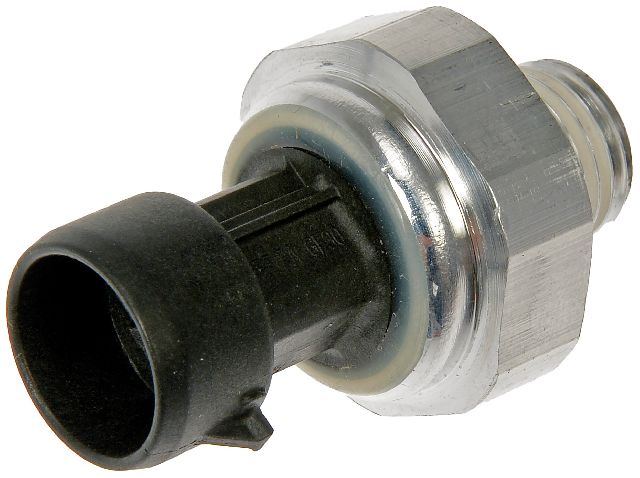
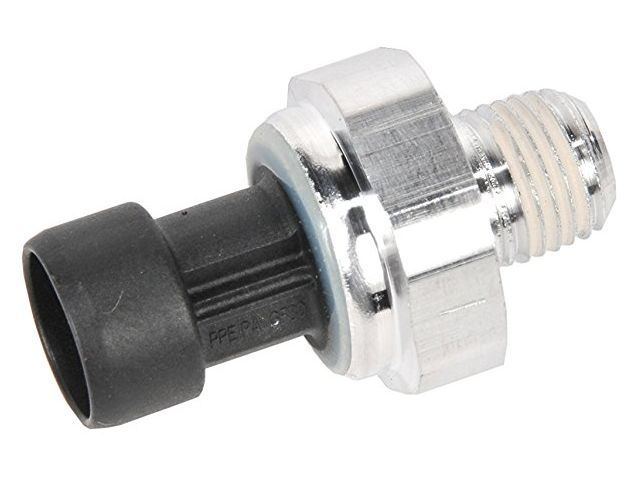
On a 2007-2013 GMC Sierra, P0521 is almost always caused by a faulty oil pressure sensor (ACDelco P/N 12673134) and its clogged filter screen (P/N 12585328). The fix involves replacing both parts, which are located at the back of the engine against the firewall. Expect to pay $40-$90 for the parts; labor is intensive due to the difficult access.
- Do not drive your truck with a P0521 code until you have verified the actual oil pressure with a mechanical gauge to rule out a severe engine issue.
- The most likely fix is replacing both the oil pressure sensor AND the small filter screen located underneath it.
- The repair is known to be difficult due to the sensor's location at the back of the engine against the firewall.
- Always use the correct viscosity engine oil and a high-quality OEM (ACDelco) oil filter to prevent future issues.
What's Unique About the 2007-2013 GMC Sierra

On these GMT900-platform V8 engines, code P0521 is extremely common. The issue is almost always a faulty oil pressure sensor (also called a sending unit) and, more specifically, a tiny, inexpensive filter screen located in the oil port directly beneath it. This screen is notoriously prone to clogging with engine sludge and debris, which restricts oil flow to the sensor and causes an inaccurate, out-of-range reading. Sludge buildup can be exacerbated by the Active Fuel Management (AFM) system, especially if oil change intervals are extended. The sensor's location, tucked behind the intake manifold against the firewall, also makes what should be a simple repair a significant labor challenge.
Generation note: The 2007-2013 year range covers the second generation of the GMC Sierra, known as the GMT900 platform. The causes and fixes for P0521 are consistent across this entire generation for V8 engines and its platform mates like the Chevrolet Silverado, Tahoe, and Cadillac Escalade.
Symptoms You May Notice
- Check Engine Light is on
- Oil pressure warning light is on or flickering
- Oil pressure gauge reads abnormally low (e.g., 0 PSI), high (pegged at 80-130 PSI), or fluctuates erratically.
- Engine may enter a reduced power or 'limp' mode.
- Engine may make ticking or knocking noises if actual oil pressure is low.
- Replacing only the oil pressure sensor without replacing the small filter screen underneath it. A clogged screen will cause the new sensor to read incorrectly and the code will return.
- Assuming the engine is failing and needs major repair without first verifying the true oil pressure with a mechanical gauge. The problem is most often electrical/sensor-related.
- Replacing the sensor and screen, but not cleaning out the debris from the sensor port in the block, which can immediately clog the new screen.
Most Likely Causes

- Faulty Engine Oil Pressure Sensor and Clogged Filter Screen 🔴 High Probability The small filter screen beneath the sensor is a known weak point, easily clogged by normal engine deposits or sludge, which then starves the sensor of a proper reading. The sensor itself is also a common failure item, with thousands of confirmed fixes 🎬 See this walkthrough on diagnosing the P0521 error code. pointing to its replacement. The Active Fuel Management (AFM) system can contribute to oil consumption and sludge if not perfectly maintained, increasing the likelihood of screen clogging.
How to confirm: After verifying the oil level is correct, the definitive test is to check the engine's oil pressure with a mechanical gauge. If the mechanical gauge shows normal pressure (e.g., ~25-30 PSI at hot idle, 45-65 PSI while cruising) while the dashboard gauge is erratic and the code is present, the sensor and/or screen are faulty.
Typical fix: Replace both the engine oil pressure sensor and the filter screen located underneath it. It is critical to replace the screen, as a new sensor with a clogged screen will not solve the problem. The updated OEM sensor is ACDelco P/N 12673134 (often sold as D1846A).
Est. part cost: $40-$90 - Incorrect or Low Engine Oil 🟡 Medium Probability Using oil of the wrong viscosity (e.g., too thick or too thin) or simply having a low oil level can cause pressure readings that fall outside the ECM's expected range. These engines require a specific Dexos-approved synthetic oil, and deviation can cause issues.
How to confirm: Check the oil level using the dipstick. Verify the oil viscosity listed on the oil cap or in the owner's manual and confirm it matches what was last used in the engine. A low oil level is a common and simple cause.
Typical fix: Top off or change the engine oil and replace the filter, ensuring the correct GM-specified Dexos oil or equivalent is used.
Est. part cost: $40-$80 - Incorrect Oil Filter ⚪ Low Probability GM has issued technical service bulletins (specifically PIP5276E) indicating that some aftermarket oil filters may have different flow characteristics or bypass valve settings that can trigger a P0521 code, especially right after an oil change. Some owners have fixed a persistent P0521 simply by switching from an aftermarket filter to an ACDelco PF48E. In some cases, TSBs have even recommended upgrading to the UPF48R filter.
How to confirm: Inspect the installed oil filter. Cross-reference the part number to see if it is a known problematic brand or a cheap, low-quality filter. The issue is more likely if the code appeared shortly after an oil change.
Typical fix: Replace the oil filter with a high-quality OEM filter, such as an ACDelco PF48E.
Est. part cost: $10-$15
Rare But Worth Checking
- Wiring or Connector Issue: The wiring harness to the sensor is in a hot, tight location. It can become brittle, oil-soaked, or damaged over time, leading to a poor connection. Check the connector and wiring for any signs of damage before replacing the sensor.
- Failing Oil Pump or Internal Engine Wear: This is the worst-case scenario. If a mechanical gauge confirms that the engine's oil pressure is actually low, it points to a serious mechanical problem like a worn oil pump, worn engine bearings, a cracked oil pickup tube o-ring, or issues with the Active Fuel Management (AFM) system lifters.
- Sticking Oil Pump Relief Valve: The oil pump contains a pressure relief valve that can get stuck open due to debris or wear. If it's stuck partially or fully open, it will bleed off pressure, resulting in consistently low readings across all RPMs, even if the pump itself is mechanically sound. This often requires oil pump replacement.
Diagnosis Steps

- Check the engine oil level and condition. Ensure it is full and not overly dirty or low.
- Scan the vehicle for any other trouble codes. Note any misfire codes (P030X) or high voltage codes (P0523).
- CRITICAL STEP: Connect a mechanical oil pressure gauge to the engine. This is the only way to know if you have a real oil pressure problem or just a sensor problem.
- Start the engine and compare the reading on the mechanical gauge to the reading on the dashboard gauge and the value seen by the scan tool. Note the pressure at hot idle and at ~2000 RPM.
- If mechanical pressure is good but the vehicle's gauge is low/erratic, the problem is the sensor, screen, or wiring. Proceed to the next step.
- If mechanical pressure is low, you have a serious internal engine problem (e.g., oil pump, pickup tube O-ring, bearing wear). Do not proceed. The engine requires professional mechanical diagnosis.
- Inspect the wiring and connector going to the oil pressure sensor for any signs of damage, corrosion, or looseness. The connector is at the back of the engine, near the firewall.
- If wiring is okay, the most likely cause is a failed sensor and/or clogged screen. Replace both parts. Ensure the port is cleaned of debris before installing the new screen.
- After replacement, clear the code and perform a test drive to ensure the code does not return. Note that P0521 can be a 'permanent' code that requires a specific drive cycle to fully clear from the ECM.
Parts You'll Likely Need

- Engine Oil Pressure Sensor
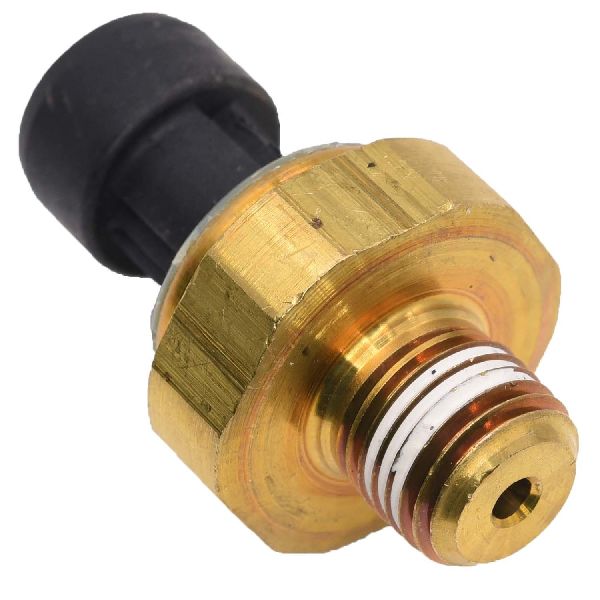
(OEM #12673134 (supersedes previous numbers, also sold as ACDelco D1846A))— This is the most common failure point for code P0521 on this vehicle. Aftermarket sensors have a high failure rate; using an OEM part is strongly recommended.
Trusted brands: ACDelco (OEM), Delphi
OEM price range: $50-$75
Aftermarket price range: $30-$50 - Engine Oil Pressure Sensor Filter Screen
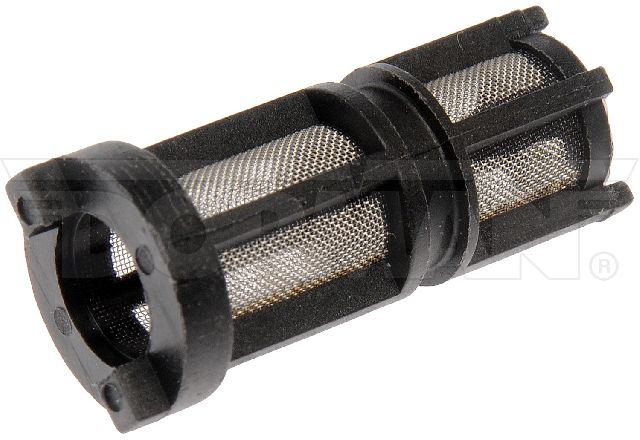
(OEM #12585328)— This screen, located under the sensor, becomes clogged with debris and is a primary cause of the inaccurate reading that triggers the code. It should always be replaced with the sensor.
Trusted brands: ACDelco, Dorman
OEM price range: $5-$10
Aftermarket price range: $3-$8 - Oil Pressure Sensor Socket — A special deep socket is required to access and remove the sensor due to its recessed location. A common tool is the Lisle 13250 or a similar 1-1/16" (27mm) oil pressure switch socket.
Trusted brands: Lisle, OEMTOOLS
OEM price range: $10-$20
Aftermarket price range: $10-$20
Related Codes That Often Appear With This One
- P0523 - Engine Oil Pressure Sensor/Switch High Voltage: This code often appears with P0521 and points to the same sensor/circuit failure.
- P0300-P0308 - Cylinder Misfire Codes: If actual oil pressure is low, it can affect the hydraulic valve lifters, especially on AFM cylinders (1, 4, 6, 7), leading to misfires.
Technical Service Bulletins (TSBs) & Recalls
- PIP5276E / F / G: Multiple revisions of this bulletin address P0521, often after an oil change. The primary recommendation is to ensure a genuine ACDelco PF48E oil filter is used and that procedures from TSB 10-06-01-008 have been performed.
- 10-06-01-008I: This extensive TSB addresses excessive oil consumption on AFM engines. The prescribed fixes (updated valve cover, AFM oil deflector) are intended to reduce oil burning and sludge, which are root causes of the sensor screen clogging that leads to P0521.
- PIP5276D: A specific version of the TSB that recommends switching to a high-performance UPF48R oil filter if P0521 persists.
Platform-Specific Known Issues
- The location of the oil pressure sensor at the very back of the engine block, under the cowl and behind the intake manifold, makes replacement difficult.
Mechanic-Grade Diagnostic Values
- Sensor 5-Volt Reference (Key On, Engine Off) — expected: 5.0 Volts. Failure: Low or no voltage points to an issue with the ECM or the wiring between the ECM and sensor.
- Sensor Signal Wire Continuity — expected: Less than 0.5 Ohms. Failure: High resistance or an open circuit (OL) reading indicates a break in the Tan/White signal wire between the sensor connector and the ECM.
- Hot Idle Oil Pressure (Mechanical Gauge) — expected: ~25 PSI or higher. Failure: Significantly lower pressure indicates a mechanical engine issue, not a sensor problem.
- ECM Trigger Condition — expected: The difference between predicted and actual oil pressure is within a specific range.. Failure: The ECM will set code P0521 if the difference is less than 6.8 PSI or greater than 7.3 PSI for several seconds.
Scan Tool Commands That Help
- Tech 2 / GDS2: View Engine Oil Pressure parameter — Use this during diagnosis to see the pressure value the ECM is receiving from the sensor. If this value is erratic or irrational (e.g., pegged at 129 PSI) while a mechanical gauge shows normal pressure, it confirms a sensor/circuit fault.
Wiring & Ground Locations

- Engine Oil Pressure Sensor Connector — Top rear of the engine block, against the firewall, below the brake booster vacuum line connection to the intake manifold.. This 3-pin connector is the primary point for electrical testing. Pin A (Gray) is the 5V reference, Pin B (Tan/White) is the signal to the ECM, and Pin C (Black) is the low reference/ground. Damage or oil contamination here is common.
- ECM Connector X2, Pin 50 — At the Engine Control Module (ECM), which is typically in the engine bay.. The Tan/White signal wire from the sensor terminates at Pin 50 of the gray X2 connector on the ECM. Testing for continuity between the sensor connector and this pin is the definitive way to rule out a broken wire.
- G103 / G104 — On the left rear of the engine block or cylinder head.. These are primary engine harness and ECM ground points. A loose or corroded ground here can create an unstable reference for multiple sensors, including the oil pressure sensor, leading to erratic readings and codes like P0521.
Real Owner Repair Stories
- Reddit user in r/ChevyTrucks (Chevrolet/GMC Truck with P0521) — Check engine light with P0521 code returned after replacing the sensor.
❌ Tried (didn't work) Replacing the oil pressure sensor with an aftermarket part from a local auto parts store.
✅ What actually fixed it Replacing the aftermarket sensor with a genuine OEM sensor resolved the issue. - Reddit user in r/ChevyTrucks (Chevrolet/GMC Truck with P0521) — Persistent P0521 code after replacing the sensor and removing the screen.
❌ Tried (didn't work) Replacing the oil pressure sensor multiple times., Removing the filter screen entirely.
✅ What actually fixed it Changing the oil filter to a Mobil 1 M1-113A filter fixed the issue, and the code did not return after 5,000 miles.
OEM Part Supersession History
12596951, 12621234→12673134— GM regularly updates service parts to integrate new materials and technologies for improved reliability and performance.
Heads up: While older part numbers may still be found, 12673134 is the current, validated OEM replacement for this application. Using non-OEM or knockoff parts is a known cause of repeat failures.
Model Year Variations Within This Range
- 2007-2013: The Active Fuel Management (AFM) system, prevalent in these years, introduces failure points not present in non-AFM engines, such as the oil pan pressure relief valve and increased potential for oil consumption leading to sludge. TSBs also note that in very cold climates, switching from the specified PF48E oil filter to a PF48 may resolve P0521.
Diagnostic Flowchart
Used vs. New Parts: Buying Guide for This Vehicle
When a used part is the smart pick: For this specific repair, buying a used part is NOT recommended. The oil pressure sensor is a high-failure, relatively low-cost electronic component. The risk of getting a part that has failed or is near the end of its service life is extremely high.
OEM-only on this vehicle (don't cheap out):
- Engine Oil Pressure Sensor: Numerous owner accounts and mechanic reports confirm that aftermarket sensors have a very high rate of premature failure or are dead-on-arrival, causing the P0521 code to return immediately. Using a genuine GM/ACDelco sensor (P/N 12673134) is critical for a lasting repair.
Brands owners have reported issues with on this vehicle:
- Unbranded or generic 'white box' sensors from online marketplaces and local parts stores are frequently cited as failing shortly after installation.
Real Owner Stories
Aggregated from forums and TSBs cited above. Mileages and costs reflect what owners reported in those sources.
2011 5.3L
Symptoms: The P0521 code returned after the owner had already replaced the oil pressure sensor and screen.
What fixed it: The issue was finally resolved by performing another oil and filter change, which suggests the problem was caused by incorrect oil or a non-OEM filter.
Source hint: GM-Trucks.com: '2011 5.3 and the infamous P0521 code'
Chevrolet Silverado / GMC Sierra
Symptoms: Owner received a P0521 code and was told by a dealership that the engine needed to be replaced.
What fixed it: Forum members advised the owner to ignore the dealer's initial diagnosis and first replace the oil pressure sensor and screen, which is the overwhelmingly likely and much cheaper cause of the code.
Source hint: ChevroletForum.com: 'HELP! Service Code P0521 Dealer Says Replace Engine'
Chevrolet Avalanche
Symptoms: The P0521 code came back on a few hundred miles after the owner replaced the sensor.
What fixed it: Other owners immediately suggested the cause was either using a non-OEM sensor or failing to also replace the small filter screen underneath the sensor.
Source hint: Reddit r/ChevyAvalanche: 'P0521'
Related OBD-II Codes
Frequently Asked Questions
My oil pressure gauge dropped to zero but the engine sounds fine. Is it safe to drive?
I just changed my oil and filter, and now the P0521 code is on. What's the most likely cause?
I'm replacing the oil pressure sensor. Is there anything else I need to replace at the same time?
What is the updated, recommended part number for the oil pressure sensor?
I've heard TSB 10-06-01-008I is related to this code. How?
A mechanic told me I might need a new engine for a P0521 code. Is that right?
Helpful Videos

Used OEM Parts in Stock

New Aftermarket Parts Available


The information in this article is provided for general reference and educational purposes only. Vehicle specifications, procedures, and part compatibility can vary by production date, trim level, and region. Always consult your vehicle's factory service manual and verify part numbers before purchasing or performing repairs. Safety-critical components such as airbags, seat belts, and braking systems should be installed by a qualified professional.
- GMC Sierra:
- 🎬 Helpful Videos
- 🛍️ Shop This Part
- What's Unique About the 2007-2013 GMC Sierra
- Symptoms You May Notice
- Most Likely Causes
- Rare But Worth Checking
- Diagnosis Steps
- Parts You'll Likely Need
- Related Codes That Often Appear With This One
- Technical Service Bulletins (TSBs) & Recalls
- Platform-Specific Known Issues
- Mechanic-Grade Diagnostic Values
- Scan Tool Commands That Help
- Wiring & Ground Locations
- Real Owner Repair Stories
- OEM Part Supersession History
- Model Year Variations Within This Range
- Diagnostic Flowchart
- Used vs. New Parts: Buying Guide for This Vehicle
- Real Owner Stories
- 2011 5.3L
- Chevrolet Silverado / GMC Sierra
- Chevrolet Avalanche
- Related OBD-II Codes
- Frequently Asked Questions
- 🎟️ Get 5% Off