

OBD-II Code P0522: Engine Oil Pressure Sensor Circuit Low
What P0522 means, why it triggers, and how to fix it
- Stop the engine immediately when P0522 appears to prevent catastrophic engine failure costing upwards of $4,000.
- Check the engine oil level with the dipstick before attempting any electronic diagnostics or parts replacement.
- Verify actual oil pressure using a mechanical gauge to definitively separate a $150 sensor failure from a $1,500 oil pump failure.
- Expect labor costs to exceed $300 on GM V8 and Chrysler 3.6L engines because the sensor sits beneath the intake manifold.
What Does P0522 Mean?

P0522 means your vehicle's Powertrain Control Module (PCM) detects a voltage signal from the engine oil pressure sensor below the normal operating range. This indicates an electrical short to ground in the sensor or wiring, or warns of a severe mechanical problem: dangerously low actual engine oil pressure.
Technical definition: The SAE/OBD-II definition is "Engine Oil Pressure Sensor/Switch 'A' Circuit Low Voltage". The PCM sets this code when sensor voltage drops below a minimum threshold (typically 0.2-0.5 volts). A healthy sensor operates between 0.5V (idle) and 4.5V (high RPM); readings below this confirm a circuit short or critical pressure loss.
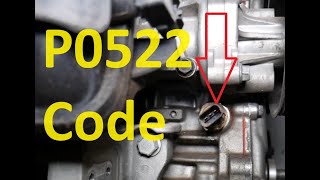
🎬 Watch: A breakdown of P0522 causes and potential fixes.Can I Drive With P0522?
No — Do Not Drive. Do not drive your vehicle. This code indicates dangerously low oil pressure. Continuing to drive causes friction between internal engine components, leading to catastrophic damage and requiring a full engine replacement. Pull over safely, turn off the engine immediately, and tow the vehicle.
Common Causes

- Faulty Engine Oil Pressure Sensor (Very Common) — The sensor frequently fails internally, shorts out, or wears down, sending a constant low voltage signal to the PCM.
- Low Engine Oil Level (Very Common) — Oil below the minimum level starves the oil pump, preventing it from creating sufficient pressure at idle.
- Clogged Oil Pressure Sensor Screen (Common) — GM engines feature a small filter screen below the sensor. Sludge clogs this screen, restricting oil flow to the sensor and causing a low-pressure reading even if engine pressure is normal.
- Wiring or Connector Issue (Common) — The wiring harness frays, melts, or shorts to ground. Oil saturation inside the connector interrupts the signal, forcing the PCM to read low voltage.
- Failing Oil Pump or Worn Engine Components (Rare) — Worn oil pumps or degraded internal engine bearings (crankshaft/camshaft) cause a genuine, severe low oil pressure condition.
- Incorrect Oil Viscosity or Clogged Filter (Less Common) — Using excessively thin oil (e.g., 5W-20 instead of 5W-30) or a severely clogged filter drops overall oil pressure.
- Sticking Oil Pressure Relief Valve (Less Common) — The oil pump's pressure relief valve sticks open due to debris, bypassing oil back to the pan and causing system-wide pressure loss.
- Faulty Instrument Cluster or PCM (Very Rare) — Faulty solder joints in older GM instrument clusters cause erratic gauge readings and trigger P0522. PCM failure is extremely rare.
Symptoms

- Check Engine Light and Oil Warning Light On — The PCM illuminates the Check Engine Light and the red oil pressure warning light on the dashboard.
- Oil Pressure Gauge Reads Zero — Vehicles equipped with an oil pressure gauge will show a drop to zero or a very low reading.
- Engine Ticking, Knocking, or Rumbling Noises — These sounds confirm a lack of lubrication and metal-on-metal contact, signaling imminent engine destruction.
- Engine Stalling or Limp Mode (also visible on scanner) — The PCM limits RPM, forces the vehicle into limp mode, or shuts the engine down entirely to prevent catastrophic damage.
Diagnostic Flowchart
Tap your situation to follow the diagnostic path that matches what you're seeing on this code.
Common Fixes & Costs
- Replace Engine Oil Pressure Sensor (and Filter Screen)
— Parts: $30-$120, Labor: $100-$500, ~1.5 hr book time
(Intermediate)
Chevrolet Silverado (2007-2013): OEM ACDelco D1846A (GM 12616646) / Screen: Dorman 917-143 (Alt: Standard Motor Products PS308)
Jeep Wrangler / Chrysler Town & Country (3.6L): OEM Mopar 5149062AB (Alt: NTK OP0085) - Engine Oil and Filter Change — Parts: $30-$80, Labor: $40-$80, ~0.5 hr book time (DIY)
- Repair Damaged Wiring Harness — Parts: $10-$50, Labor: $150-$400, ~2.5 hr book time (Professional)
- Replace Oil Pump — Parts: $150-$400, Labor: $600-$1500, ~8.0 hr book time (Professional)
DIY vs Professional
- Engine Oil and Filter Change — Beginner:
Tools: Wrench/socket for drain plug, oil filter wrench, drain pan, funnel. - Replace Engine Oil Pressure Sensor — Beginner:
Tools: Socket set, deep oil pressure sensor socket, ratchet, extensions, flashlight. - Repair Damaged Wiring Harness — Beginner:
Tools: Multimeter, wire strippers, soldering iron, heat shrink tubing, automotive-grade wiring. - Replace Oil Pump — Beginner:
Tools: Extensive mechanical toolset, engine lift/support, timing chain tools, gasket scrapers.
Used vs. New Parts: Buying Guide
When a used part is worth it: It is never recommended to use a used oil pressure sensor. The risk of premature failure outweighs the minimal savings, especially given the high labor cost to replace it.
Donor quality checklist:
- Do not buy used. Purchase a new OEM sensor.
Decision logic:
- If The part is an engine oil pressure sensor → Buy a new OEM or high-quality aftermarket part.
- If Labor for replacement is high (e.g., requires intake manifold removal) → Absolutely buy new OEM to maximize the chance of a long-lasting repair.
- If The vehicle is a GM, Chrysler, Dodge, or Jeep product → Strongly favor a new OEM sensor to avoid issues with aftermarket sensor quality.
Warranty tradeoff: New aftermarket sensors usually come with a 1-year to limited lifetime warranty. A new OEM part provides the best quality assurance.
Worst-case if a used part fails: $250 - $800 if a cheap aftermarket sensor fails and the labor must be performed again.
What Happens If You Wait — Timeline
- Immediate (if true low pressure): If the code reflects actual low oil pressure (<5-7 PSI), metal-on-metal contact begins within minutes. Camshafts and bearings are starved of oil. (MPG impact: 0%% · Added cost: $3,000 - $8,000+ (Engine seizure and replacement))
- 0-2 weeks (if only a sensor fault): The Check Engine Light and oil warnings are on. The engine runs normally, but you are driving without a critical safety monitor. (MPG impact: 0%% · Added cost: $0)
- 2 weeks - 6 months (if only a sensor fault): You become accustomed to ignoring the warning lights. If a separate issue develops (e.g., a minor oil leak), it goes unnoticed. (MPG impact: 0%% · Added cost: $100-$150 (Cost of a tow when the engine eventually fails))
- 6+ months (if only a sensor fault): The ignored faulty sensor leads to a catastrophic failure when a real oil pressure problem occurs. A simple oil leak results in complete engine seizure. (MPG impact: N/A (Engine has failed)% · Added cost: $4,000 - $10,000+ (Engine replacement))
Cost of Not Fixing It
- Immediately: If the code reflects true low oil pressure, continuing to drive for even a few minutes causes catastrophic engine failure. (Added cost: $3,000 - $8,000+)
- Short-Term (Days to Weeks): If the code is only a faulty sensor, you are driving without a critical safety monitor for your engine. (Added cost: $0)
- Long-Term (Months): Driving with a known faulty sensor leads to complacency. If a separate issue causes actual low pressure, the ignored warning system results in complete engine destruction. (Added cost: $3,000 - $8,000+)
Diagnosis Steps

- Check Engine Oil Level and Condition
Turn off the engine and let it sit for 5 minutes. Check the oil level with the dipstick. If low, top it off with the manufacturer-specified oil. If the oil is black, gritty, or smells burnt, change it immediately.
Tools: Rag, Correct Engine Oil (Beginner) - Scan for Additional Codes and Review Live Data
Use an OBD-II scanner to confirm P0522 and check for related codes (P0520, P0521, P0524). Review live data for the oil pressure sensor voltage PID; a reading below 0.5V confirms the fault.
Tools: OBD-II Scanner (Beginner) - Verify Actual Oil Pressure (Mechanical Gauge Test)
Temporarily remove the oil pressure sensor and connect a mechanical oil pressure gauge. Start the engine and compare the reading to manufacturer specs (typically 10-15 PSI at hot idle). This definitively separates a real low-pressure problem from an electrical fault.
Tools: Mechanical Oil Pressure Gauge, Socket Set (Advanced) - Inspect Sensor Wiring and Connector
Visually inspect the wiring harness connected to the oil pressure sensor. Look for melting, chafing, corrosion, or loose pins. Oil leaking through a failed sensor into the connector causes poor connections.
Tools: Flashlight, Contact Cleaner (Intermediate) - Test the Sensor Circuit (5V Reference & Ground)
Disconnect the sensor with the key on, engine off. Use a multimeter to check for 4.75-5.25 volts on the 5V reference wire and less than 1 ohm of resistance on the ground wire to chassis ground. Out-of-spec readings point to wiring or PCM issues.
Tools: Multimeter (Advanced) - Check for a Short to Ground
With the sensor disconnected and key off, set the multimeter to Ohms. Check for continuity between the signal wire terminal and a known good ground. The reading should be infinite (OL). Continuity indicates the signal wire is shorted to ground.
Tools: Multimeter (Advanced) - Check Sensor Voltage Output
Reconnect the sensor. Using a scan tool, monitor the oil pressure sensor voltage PID. With the key on, engine off, voltage should be near 0V. At hot idle, it should be around 0.5V or higher. If voltage stays near 0V with the engine running and mechanical pressure is good, the sensor has failed.
Tools: OBD-II Scanner with Live Data, Multimeter (Advanced) - Replace the Sensor (and Screen)
If mechanical oil pressure is good and wiring is intact, replace the faulty sensor. On GM vehicles, you must also replace the small filter screen located underneath it.
Tools: Deep Socket for Oil Pressure Sensor, Ratchet, Pick Tool (Intermediate) - Inspect for Mechanical Issues
If the mechanical gauge shows low pressure, the problem is internal. Inspect the oil pickup tube for debris, check for a stuck-open pressure relief valve, or replace a failing oil pump. Stop DIY diagnosis and consult a professional engine builder or mechanic.
Tools: Engine Hoist, Oil Pressure Tester, Wrench Set (Professional)
When This Code Triggers (Freeze-Frame Conditions)
- Engine RPM: 600-800 RPM (Sets at hot idle, when oil pressure is naturally at its lowest point.)
- Oil Pressure Sensor Voltage: < 0.5V (The PCM sees a voltage below the minimum threshold, indicating a short or critical pressure loss.)
- Engine Coolant Temperature: 180-210°F (Occurs when the engine is fully warmed up and the oil is at its thinnest.)
- Vehicle Speed: 0 mph (Triggers when the vehicle comes to a stop and engine RPMs drop to idle.)
Related Codes
- P0520 — A general fault for the 'Engine Oil Pressure Sensor/Switch Circuit'. P0522 is more specific, indicating LOW voltage. P0520 sets alongside P0522 during general circuit malfunctions.
- P0521 — Indicates 'Engine Oil Pressure Sensor/Switch Range/Performance'. Sets when the PCM sees an illogical pressure reading (e.g., pressure not increasing with RPM), whereas P0522 indicates a dead short.
- P0523 — The direct opposite of P0522, indicating 'Circuit High Voltage'. Typically caused by an open circuit (unplugged sensor, broken wire) rather than a short to ground.
- P0524 — Specifically means 'Engine Oil Pressure Too Low'. If P0524 is present, the PCM is confident that actual oil pressure is dangerously low, indicating a severe mechanical problem.
Climate & Environmental Factors
- Cold Weather: In cold temperatures, engine oil becomes thicker. During a cold start, this thicker oil circulates slowly, causing a temporary drop in oil pressure until the engine warms up, which can trigger P0522.
How to Talk to a Mechanic About This Code
Say this: "I have a P0522 code and the oil pressure light is on. I've checked the oil level and it's full. I'd like to schedule a diagnostic to determine if this is an electrical issue or a true low oil pressure problem. Please start with a mechanical oil pressure test before replacing any parts."
This signals that you understand the critical difference between a bad sensor and a bad oil pump. It directs the shop to perform the most important diagnostic step first, preventing them from simply replacing the sensor and charging you for a part that may not solve the problem.
Avoid saying:
- 'My check engine light is on, can you just fix it?'
- 'I think it's the oil sensor, can you just replace it?'
- 'Do whatever you think is best.'
Questions to ask before authorizing the repair:
- What were the results of the mechanical oil pressure test? What was the pressure at hot idle and at 2,500 RPM?
- If the pressure was good, did you test the sensor's wiring for 5V reference, ground, and a short on the signal wire?
- If the sensor needs to be replaced, are you using an OEM part or an aftermarket one? What is the warranty on the part and the labor?
- If the mechanical pressure was low, what is your recommended next step for diagnosis?
Where to Take It: Dealer vs Independent vs Chain
- Dealer:
Recommended for in-warranty vehicles or if a known TSB applies. A good, but expensive, choice for out-of-warranty diagnostics.
Best for: Vehicles under powertrain warranty., Newer vehicles (especially GM 2019+) with known Technical Service Bulletins (TSBs) for wiring issues., Complex diagnoses where manufacturer-specific tools are required.
Downsides: Highest labor rates., May be less willing to perform component-level wiring repairs, preferring to replace the entire harness. (Typical cost: +50% vs. baseline) - Independent Shop:
Best overall fit. A reputable independent shop is fully capable of diagnosing and repairing P0522 correctly and more affordably than a dealer.
Best for: Out-of-warranty vehicles where cost is a factor., Most common P0522 scenarios, such as sensor replacement or basic electrical testing., Building a long-term relationship with a trusted mechanic.
Downsides: Quality and diagnostic capabilities vary widely. Ensure the shop is well-reviewed and employs ASE-certified technicians. (Typical cost: +0% vs. baseline) - Chain Shop:
AVOID for initial diagnosis. The risk of a misdiagnosis (e.g., replacing a sensor when the oil pump is failing) is too high for a critical code like P0522.
Best for: Confirming the oil level and condition., Performing a basic oil and filter change if that is the suspected cause.
Downsides: Technician skill varies greatly., May lack the diagnostic rigor to differentiate mechanical vs. electrical faults., High pressure to upsell parts; defaults to replacing the sensor without proper diagnosis. (Typical cost: -10% vs. baseline)
When to Walk Away From the Repair
If the estimated repair cost exceeds 50% of the car's private-party value, seriously consider selling or trading it in rather than repairing it.
- Car worth $8000, fix is $450: Fix it. A simple sensor replacement is well below the threshold.
- Car worth $5000, fix is $3000: Walk away. A $3,000 repair for a failing oil pump and related damage is over 50% of the car's value.
- Car worth $6000, fix is $750: Borderline, but likely fix it. A labor-intensive sensor replacement on a GM truck is costly but still a fraction of the car's value. Get a second opinion on the quote before authorizing.
What Scan Tool You Need for This Code
Minimum: An OBD-II reader that can display Live Data, specifically the 'Engine Oil Pressure' and sensor voltage PIDs (Parameter IDs).
A basic $20 code reader only tells you the P0522 code is present. It cannot show you the live voltage the computer is seeing from the sensor. This data is crucial for DIY diagnosis to see if the sensor is completely dead (reading 0 volts) or just sending a low signal.
Budget: BlueDriver Pro or Autel AutoLink AL319 (~$60) — Connects to your smartphone and displays live data, including oil pressure sensor voltage. This is sufficient to confirm the electrical symptom before proceeding with a mechanical test.
Mid-range: Foxwell NT510 Elite or Innova 5610 (~$180) — Provides detailed manufacturer-specific live data and graphing capabilities. Reads codes from other modules (ABS, SRS) and offers limited active tests.
Professional: Autel MaxiCOM MK808S or XTOOL D8S (~$500-800) — Offers full bidirectional control to test circuits, comprehensive live data from all vehicle modules, and access to special functions. Professional-level equipment.
Rent vs buy: For a one-time diagnosis, many auto parts stores have a loaner tool program. You can borrow a scanner capable of live data for free with a refundable deposit.
How to Clear the Code After You Fix It
- Use an OBD-II scan tool to erase the P0522 trouble code.
- Perform a complete OBD-II drive cycle to allow the vehicle's readiness monitors to run.
- Check for pending or current codes again after the drive cycle.
Drive cycle (~20 minutes): Cold start the engine and idle for 3 minutes. Drive in stop-and-go city traffic for 10 minutes. Drive at a steady highway speed (55-60 mph) for 10 minutes. Safely come to a stop and idle for 2 minutes before shutting down.
Readiness monitors affected: Comprehensive Component Monitor (CCM), Misfire Monitor
Before emissions retest: drive at least 50 miles to fully set monitors.
Watch out for:
- Clearing the code with a scanner does not fix the underlying problem; the code returns if the fault persists.
- Disconnecting the battery clears the code but erases all readiness monitors, guaranteeing an emissions test failure.
Will This Fail Emissions / State Inspection?
Yes — this code typically fails an OBD-II emissions inspection.
- California: A P0522 code causes an automatic smog check failure. The Check Engine Light must be off and monitors set to 'Ready'.
- New York: An active P0522 code and illuminated Check Engine Light results in an immediate NYS DMV inspection failure.
- Texas: In the 17 Texas counties requiring emissions testing, a vehicle with an active P0522 code fails the OBD-II portion.
Most Commonly Affected Vehicles

- Chevrolet Silverado, Tahoe, Suburban (2007-2021) — Extremely common issue caused by a failed sensor, a clogged filter screen, or a chafed wiring harness (TSB 21-NA-149). Sensor replacement is labor-intensive.
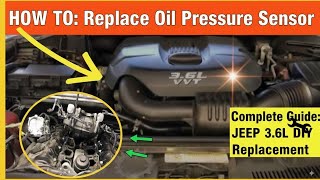
- Jeep Wrangler, Cherokee, Grand Cherokee (2011-2020) — Frequent failures of the oil pressure sensor on 3.6L Pentastar engines. Using an OEM Mopar sensor is highly recommended.
- Dodge / RAM Ram 1500, Charger, Dart (2011-2020) — Often suffer from premature oil pressure sensor failure. Early 2011 models were subject to a PCM software update (TSB 18-034-11) to correct false readings.
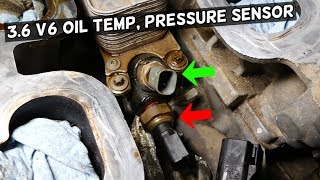
- Chrysler 200, 300, Town & Country (2011-2017) — The 3.6L engine is known for this code. Replacement is labor-intensive as the sensor is located under the intake manifold.
- GMC Sierra, Yukon, Envoy (2005-2021) — Mechanically identical to Chevrolet counterparts, sharing the same common failures: the sensor, the screen beneath it, and the wiring harness.
- Honda Accord, Civic, Fit, CR-V (2006-2020) — Often points to a failure of the 'Rocker Arm Oil Pressure Sensor' part of the VTEC system. The issue is usually electrical rather than mechanical pressure.
Manufacturer-Specific Notes
- General Motors (Chevrolet/GMC): A thimble-sized filter screen under the oil pressure sensor clogs with sludge. You MUST replace this screen when replacing the sensor. On 2019+ trucks, TSB #21-NA-149 documents wiring harness chafing causing P0522.
- Stellantis (Chrysler/Dodge/Jeep): Sensor failure is extremely common. TSB 18-034-11 was issued for some 2011 models for a PCM reflash to fix overly sensitive monitoring parameters.
- Honda: The code often relates to the VTEC system's 'Rocker Arm Oil Pressure Sensor/Switch'. Diagnosis involves checking for a specific low voltage reading with the key on.
Real Owner Stories
2011 Chevy Silverado 5.3L at 145,000 miles
Oil pressure gauge dropped to zero at idle, 'Low Oil Pressure - Stop Engine' warning appeared, and code P0522 set. No engine noises were present.
Outcome: Owner replaced both the oil pressure sensor and the clogged screen (GM Part 12585328). The repair solved the problem for $50 in parts. Actual oil pressure was never low.
Lesson: On GM 5.3L engines, a clogged sensor screen is a primary cause of P0522. Always replace this $7 filter when replacing the sensor.
2012 Chrysler Town & Country 3.6L at 110,000 miles
Check Engine Light on with codes P0522 and P0520. The owner attempted a DIY repair after seeing shop estimates of $600.
Outcome: The cheap aftermarket sensor was out of tolerance and wouldn't seat properly. The owner bought an OEM Mopar sensor, repeated the 3-hour job, and resolved the codes.
Lesson: Avoid cheap aftermarket sensors for hard-to-reach parts. The small savings are not worth repeating a labor-intensive job.
2019 Chevy Silverado 5.3L
Check Engine Light on with P0522, oil pressure at zero, and a 'no oil pressure' message.
Outcome: The main engine wiring harness rubbed through on the driver's side shock tower, causing a short circuit (documented in GM TSB 21-NA-149). Repairing the damaged wires resolved the code without replacing the sensor.
Lesson: On 2019+ GM trucks, inspect the wiring harness for chafing at the points specified in TSB 21-NA-149 before assuming the sensor is bad.
How to Prevent This Code From Triggering
- Perform regular oil and filter changes (Per manufacturer's schedule (e.g., 5,000-7,500 miles)) — Removes contaminants that form sludge, preventing clogs in the oil pump pickup tube, oil passages, and the sensor's filter screen.
- Use high-quality, manufacturer-specified engine oil (Every oil change) — Synthetic oils resist thermal breakdown and contain superior detergents that prevent sludge formation.
- Check engine oil level regularly (Every other fuel fill-up) — Ensures the oil level never drops low enough to cause the oil pump to suck in air, preventing a sudden loss of pressure.
Frequently Asked Questions
What's the difference between the P0522 code and my regular oil light?
The red oil warning light is a simple switch that turns on when pressure drops below a critical level (e.g., 5-7 PSI). The P0522 code comes from a sensor providing a variable voltage reading to the computer. P0522 tells you the computer sees an electrical problem (low voltage), which sometimes stems from a true loss of oil pressure.
What is the most common misdiagnosis for P0522?
The most common and dangerous mistake is replacing the oil pressure sensor without verifying the actual mechanical oil pressure with a gauge. If the true cause is a failing oil pump, a new sensor will not fix the problem, and the engine will be destroyed. Always test actual pressure before replacing parts.
Can I use a cheaper aftermarket oil pressure sensor?
It is highly recommended to use an OEM (Original Equipment Manufacturer) sensor. Cheaper aftermarket sensors have a notoriously high failure rate, sometimes failing immediately or causing new codes like P0523. Given the high labor cost to access this sensor on many vehicles, using a low-quality part is a significant financial risk.
What happens if I ignore P0522?
If the code stems from a bad sensor, your engine runs fine but you lose your warning system for real oil pressure problems. If the code stems from actual low oil pressure, ignoring it causes catastrophic engine failure. This requires a complete engine replacement costing thousands of dollars.
Can I just clear the code and keep driving?
No. Clearing the code does not fix the underlying issue. The code and warning lights return almost immediately if the fault persists, leaving you at risk of severe engine damage.
Why is this repair so expensive on my Chevy truck?
On many GM V8 and Chrysler 3.6L engines, the oil pressure sensor sits at the very back of the engine block or beneath the intake manifold. Accessing it requires significant disassembly, making the labor cost much higher than the part itself.
Can a P0522 code be caused by a recent oil change?
Yes. Using the wrong viscosity oil (too thick or too thin) causes a drop in oil pressure and triggers the code. An incorrect or defective oil filter also restricts flow and causes the same issue.
Can a bad battery cause a P0522 code?
A failing battery causes numerous electrical codes, but it is not a direct cause of P0522. This code is specific to the oil pressure sensor's 5-volt reference circuit. However, if multiple other sensor codes appear simultaneously, checking the battery and charging system is a valid diagnostic step.
Key Takeaways
- Stop the engine immediately when P0522 appears to prevent catastrophic engine failure costing upwards of $4,000.
- Check the engine oil level with the dipstick before attempting any electronic diagnostics or parts replacement.
- Verify actual oil pressure using a mechanical gauge to definitively separate a $150 sensor failure from a $1,500 oil pump failure.
- Expect labor costs to exceed $300 on GM V8 and Chrysler 3.6L engines because the sensor sits beneath the intake manifold.
Helpful Videos

The information in this article is provided for general reference and educational purposes only. Vehicle specifications, procedures, and part compatibility can vary by production date, trim level, and region. Always consult your vehicle's factory service manual and verify part numbers before purchasing or performing repairs. Safety-critical components such as airbags, seat belts, and braking systems should be installed by a qualified professional.
- 🎬 Helpful Videos
- What Does P0522 Mean?
- Can I Drive With P0522?
- Common Causes
- Symptoms
- Diagnostic Flowchart
- Common Fixes & Costs
- DIY vs Professional
- Used vs. New Parts: Buying Guide
- What Happens If You Wait — Timeline
- Cost of Not Fixing It
- Diagnosis Steps
- When This Code Triggers (Freeze-Frame Conditions)
- Related Codes
- Climate & Environmental Factors
- How to Talk to a Mechanic About This Code
- Where to Take It: Dealer vs Independent vs Chain
- When to Walk Away From the Repair
- What Scan Tool You Need for This Code
- How to Clear the Code After You Fix It
- Will This Fail Emissions / State Inspection?
- Most Commonly Affected Vehicles
- Manufacturer-Specific Notes
- Real Owner Stories
- 2011 Chevy Silverado 5.3L at 145,000 miles
- 2012 Chrysler Town & Country 3.6L at 110,000 miles
- 2019 Chevy Silverado 5.3L
- How to Prevent This Code From Triggering
- Frequently Asked Questions
- What's the difference between the P0522 code and my regular oil light?
- What is the most common misdiagnosis for P0522?
- Can I use a cheaper aftermarket oil pressure sensor?
- What happens if I ignore P0522?
- Can I just clear the code and keep driving?
- Why is this repair so expensive on my Chevy truck?
- Can a P0522 code be caused by a recent oil change?
- Can a bad battery cause a P0522 code?
- Key Takeaways
- 🎟️ Get 5% Off