

OBD-II Code P0524: Engine Oil Pressure Too Low
What P0524 means, why it triggers, and how to fix it
- P0524 indicates critically low engine oil pressure, requiring you to pull over and shut off the engine immediately to prevent catastrophic failure.
- Check the dipstick first; the most frequent causes are a low oil level or a faulty $50 oil pressure sensor, though failing oil pumps also trigger this code.
- Always verify actual pressure with a mechanical gauge before replacing expensive parts; a reading below 10-15 PSI at hot idle confirms a true mechanical failure.
- Repair costs range from $60 for a simple oil change to over $3,500 for complex internal engine repairs like replacing blown Infiniti gallery gaskets.
What Does P0524 Mean?

The code P0524 means your car's Powertrain Control Module (PCM) detects critically low engine oil pressure. Engine oil lubricates moving parts; without sufficient pressure, these parts rub together, creating intense heat and causing major engine failure.
Technical definition: The official SAE/OBD-II definition for P0524 is "Engine Oil Pressure Too Low." The PCM triggers this code when the signal from the engine oil pressure sensor falls below the manufacturer's specified minimum threshold for a set duration. The computer compares this reading against pre-calibrated lookup tables based on current RPM and engine temperature.
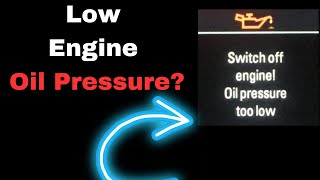
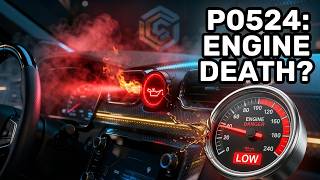
🎬 Watch: A mechanic explains the P0524 engine oil pressure code.Can I Drive With P0524?
No — Do Not Drive. You must pull over and shut off the engine immediately. Driving with low oil pressure causes severe and permanent engine damage within minutes, often leading to complete engine seizure.
Common Causes


- Insufficient Engine Oil Level (Very Common) — The most frequent cause. Oil consumption or leaks drop the level too low for the pump to pick up and circulate, causing an immediate pressure drop.
- Faulty Engine Oil Pressure Sensor (Very Common) — The sensor fails and sends incorrect low-pressure readings to the computer. Oil often leaks through the sensor body into the electrical connector, shorting it out.
- Clogged Oil Filter or Pickup Screen (Common) — A dirty, poor-quality, or collapsed oil filter restricts flow. Sludge or debris clogs the oil pickup screen in the oil pan, starving the pump.
- Wrong Oil Viscosity or Contaminated Oil (Common) — Using oil that is too thin for the engine or ambient temperature drops pressure. Oil heavily contaminated with fuel or coolant loses its ability to maintain pressure.
- Failing Oil Pump (Less Common) — Worn internal pump components or a stuck-open pressure relief valve prevent the pump from generating sufficient pressure to lubricate the engine.
- Worn Internal Engine Components (Less Common) — High-mileage engines develop excessive clearance in main or camshaft bearings. Oil flows out too quickly between parts, causing a system-wide pressure drop.
- Damaged Oil Filter Housing (Rare) — On some engines (e.g., BMW, Chrysler), broken internal plastic support cages or cracked housings cause the filter to collapse or bypass, triggering a severe restriction.
- PCM Software Glitch (Rare) — A software error incorrectly interprets sensor data during cold starts, triggering a false P0524. Fix requires a dealership software update.
- Oil Aeration from Overfilled Crankcase (Very Rare) — Significantly overfilling the oil causes the crankshaft to whip it into foam. The pump cannot pressurize aerated oil.
- Internal PCM Circuit Fault (Very Rare) — The internal monitoring circuit within the PCM fails, reading low pressure regardless of actual sensor input.
Symptoms

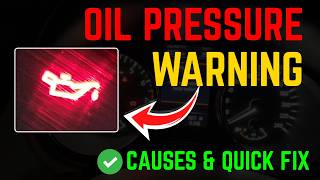
- Illuminated Oil Pressure Warning Light — A red warning light shaped like an oil can appears on your dashboard. This is a critical alert requiring an immediate stop. 🎬 Watch: 8 warning signs of low oil pressure to look for.
- Abnormal Engine Noises — Ticking, knocking, clunking, or grinding sounds from the engine indicate active metal-on-metal damage due to lack of lubrication.
- Check Engine Light On — The P0524 code triggers the check engine light, often alongside the red oil pressure light.
- Low or Zero Reading on Dash Gauge — If equipped, the physical or digital oil pressure gauge on the instrument cluster shows a dangerously low or zero reading.
- Reduced Engine Power or Stalling — The vehicle enters a reduced-power "limp mode" to protect the engine. In severe cases, the engine stalls or is shut down by the PCM.
Diagnostic Flowchart
Tap your situation to follow the diagnostic path that matches what you're seeing on this code.
Common Fixes & Costs
- Engine Oil and Filter Change — Parts: $30-$80, Labor: $30-$60, ~0.5 hr book time (DIY)
- Replace Engine Oil Pressure Sensor
— Parts: $25-$120, Labor: $80-$800. Labor varies heavily. Accessible sensors take 30 minutes; sensors under the intake manifold (e.g., Chrysler 3.6L) take 3-5 hours., ~2.5 hr book time
(Intermediate)
Chevrolet/GMC (5.3L/6.2L V8): OEM ACDelco: 12673134 (Alt: Standard Motor Products, Bosch)
Chrysler/Dodge/Jeep (3.6L Pentastar V6): OEM Mopar: 68105583AF (Alt: Dorman, NTK)
Infiniti (VQ37VHR V6): OEM Nissan: 25070-JK20E (Alt: Denso, Beck/Arnley) - Replace Oil Pump — Parts: $100-$500, Labor: $1,100-$1,800+. Labor-intensive job requiring removal of the timing cover and oil pan., ~6 hr book time (Professional)
- Replace Internal Oil Gallery Gaskets
— Parts: $50-$150, Labor: $1,800-$3,500+. Common on Infiniti VQ engines. Requires extensive front-engine disassembly., ~18 hr book time
(Professional)
Infiniti (VQ37VHR V6): OEM Nissan (Updated Metal Gaskets): 13533-JK21A (Upper), 13533-JK21B (Lower) (Alt: Z1 Motorsports, CZP) - Reprogram Powertrain Control Module (PCM) — Parts: $0, Labor: $100-$250. Dealer-only fix to resolve software glitches identified in TSBs., ~1 hr book time (Professional)
DIY vs Professional
- Engine Oil and Filter Change — Beginner:
Tools: Basic hand tools (wrench set, oil filter wrench, drain pan). - Replace Engine Oil Pressure Sensor — Beginner:
Tools: Socket set, wrenches. Location dictates difficulty. - Replace Oil Pump — Beginner:
Tools: Professional tools, engine hoist, timing chain tools, torque wrenches. - Replace Infiniti Oil Gallery Gaskets — Beginner:
Tools: Professional tool set, timing chain tools, crankshaft pulley puller, torque wrenches.
Used vs. New Parts: Buying Guide
When a used part is worth it: Buying used electronic sensors is not recommended. The minimal cost savings do not outweigh the high risk of repeat labor costs.
Donor-vehicle mileage cap: roughly under 20000 miles for the part to have meaningful remaining life.
Donor quality checklist:
- Source from a very low-mileage wrecked vehicle.
- Ensure the part number is an exact match.
- Avoid parts from engines showing signs of sludge.
Decision logic:
- If The part is an electronic sensor like the oil pressure sensor → Always buy new. The low cost of a new sensor outweighs the high risk of repeat labor costs.
- If The required part is a major mechanical component like an oil pump → New is strongly preferred. A used pump's history is unknown and failure means catastrophic engine damage.
- If Budget is the absolute primary concern and the vehicle has low value → A used sensor from a reputable salvage yard with a short-term warranty is a possibility, but carries significant risk.
Warranty tradeoff: Used parts typically have a 30-90 day warranty. New aftermarket parts carry a 1-year to limited lifetime warranty. New OEM parts carry a 1-2 year warranty.
Worst-case if a used part fails: $200-$1,200 if a used sensor fails shortly after installation, requiring repeat labor.
What Happens If You Wait — Timeline
- 0-5 minutes of driving with warning light on: The protective oil film collapses. Friction increases dramatically. Components farthest from the oil pump, like camshafts, suffer oil starvation. (MPG impact: 0-1%% · Added cost: $0 - $500)
- 5-15 minutes of driving: Engine bearings operate with insufficient lubrication, leading to accelerated wear and scoring. The engine becomes noticeably louder. (MPG impact: 1-5%% · Added cost: $2,000 - $4,000)
- 15-30 minutes of driving: Extreme heat warps components. Bearing surfaces are destroyed. The risk of a connecting rod breaking becomes critical. (MPG impact: 5-15%% · Added cost: $4,000 - $7,000)
- 30+ minutes of driving: Catastrophic failure is imminent. Moving parts weld themselves together from intense friction, seizing the engine completely. (MPG impact: N/A (Engine fails)% · Added cost: $5,000 - $10,000+)
Cost of Not Fixing It
- Immediately (0-10 minutes of driving): Accelerated wear on critical engine components like bearings and camshafts due to lack of lubrication. (Added cost: $0 - $500)
- 10-60 minutes of driving: Severe internal engine damage, including scored cylinder walls and destroyed bearings. (Added cost: $2,500-$7,000+)
- 1+ hour of driving: Catastrophic engine failure resulting in a seized engine requiring complete replacement. (Added cost: $5,000-$10,000+)
Diagnosis Steps

- Check the Engine Oil Level and Condition
Park on a level surface and turn off the engine. Pull the dipstick, wipe it clean, re-insert fully, and check the level. Note the oil's color and smell; black, sludgy, or fuel-scented oil requires immediate replacement.
Tools: Rag or paper towel (Beginner) - Scan for Trouble Codes and Review Freeze Frame Data
Connect an OBD-II scanner. Confirm P0524 and check for related codes (e.g., P0520, P0011). Analyze freeze-frame data to see engine speed and temperature at the exact moment the code triggered.
Tools: OBD-II Scanner (Beginner) - Test with a Mechanical Oil Pressure Gauge
The definitive test to separate mechanical failure from a sensor issue. Remove the electronic sensor and install a mechanical gauge. A reading below 10-15 PSI at hot idle confirms a true mechanical problem.
Tools: Mechanical oil pressure gauge, Wrench set (Advanced) - Inspect the Oil Pressure Sensor and Wiring
Look for signs of damage or corrosion on the sensor and connector. A frequent cause of false low readings is oil leaking through the sensor body into the electrical pins, causing a short.
Tools: Flashlight, Mirror (Intermediate) - Analyze Live Data with a Scan Tool
Access the live data stream for the Engine Oil Pressure (EOP) PID. If the scan tool shows critically low pressure (<5 PSI) but the mechanical gauge shows normal pressure, the sensor is faulty.
Tools: Advanced OBD-II Scanner (Intermediate) - Perform an Oil and Filter Change
If the oil is old, the wrong viscosity, or the mechanical test is inconclusive, perform a complete oil and filter change using OEM-specified fluids. An incorrect or collapsed filter causes P0524.
Tools: Wrench set, oil filter wrench, oil drain pan, new oil, new oil filter (Intermediate) - Perform Electrical Tests on the Sensor Circuit
Disconnect the sensor and use a multimeter to verify the 5-volt reference and ground wires. Reconnect and back-probe the signal wire; voltage should increase smoothly with RPM. Static or erratic voltage indicates a wiring or sensor fault.
Tools: Multimeter, Back-probe kit (Advanced) - Inspect the Oil Pan and Oil Pickup Tube
If the mechanical gauge confirms low pressure, remove the oil pan to inspect the pickup tube screen for sludge clogs. Check the pan for metallic debris indicating severe bearing wear.
Tools: Socket set, Gasket scraper, Torque wrench (Advanced) - Analyze Sensor Signal with an Oscilloscope
For intermittent issues, connect an oscilloscope to the sensor's signal wire. Sudden dropouts or a fuzzy line confirm the sensor is electrically failing, even if average multimeter voltage appears correct.
Tools: Automotive Oscilloscope (Scope) (Professional)
When This Code Triggers (Freeze-Frame Conditions)
- Engine Coolant Temp: 180-210°F (Fully warmed up, often during idle after driving.)
- RPM: 600-800 RPM (At hot idle, when pressure is naturally at its lowest.)
- Engine Load: 15-30% (Low load or idle conditions.)
- Vehicle Speed: 0 mph (Vehicle is stopped, such as at a traffic light.)
Related Codes
- P0520 — Indicates a malfunction in the sensor circuit (open/short). Points directly to an electrical fault, whereas P0524 requires ruling out real pressure loss.
- P0521 — Sensor performance is out of range, but not at the critical low level of P0524. A precursor warning.
- P0523 — Sensor reports pressure is too high. Points to a shorted signal wire or blocked oil passage.
- P0011 / P0021 — Camshaft timing over-advanced. Variable valve timing relies on oil pressure; low pressure prevents phasers from operating, triggering these codes.
Climate & Environmental Factors
- Hot Climate / High Engine Temperature: High temperatures thin engine oil, reducing viscosity and pressure. Borderline low pressure often triggers P0524 only in hot weather or stop-and-go traffic.
- Cold Climate: Extreme cold thickens oil, typically causing high pressure on startup. The primary environmental trigger for P0524 is heat.
How to Talk to a Mechanic About This Code
Say this: "I have a P0524 code for low oil pressure. I need to schedule a diagnostic, and the first step I want performed is a mechanical oil pressure test to verify the actual pressure before replacing any parts."
This specific request shows you understand the correct diagnostic procedure. It prevents a shop from guessing and replacing an expensive oil pump when the true cause is a cheap, faulty sensor. It forces them to prove a mechanical failure exists before quoting a mechanical repair.
Avoid saying:
- 'Just fix whatever's wrong'
- 'My check engine light is on, can you look at it?'
- 'Whatever you recommend'
Questions to ask before authorizing the repair:
- What was the exact pressure reading from the mechanical gauge at hot idle and at 2,000 RPM?
- How does that reading compare to the manufacturer's minimum specification for this engine?
- If the pressure was good, what tests did you perform to condemn the sensor or wiring?
- What is the warranty on the proposed repair, both parts and labor?
Where to Take It: Dealer vs Independent vs Chain
- Dealer:
Recommended only for warranty work or specific TSB-related software updates.
Best for: Vehicles still under powertrain warranty, Known software-glitch issues requiring a PCM reflash, Complex, model-specific failures (e.g., Ford TSBs on EcoBoost engines)
Downsides: Highest labor rate, often 1.5-2x an independent shop., Often recommends replacing an entire assembly when a smaller component fails. (Typical cost: +50% vs. baseline) - Independent Shop:
Best fit for most situations. Ensure the shop is skilled in diagnostics and agrees to perform a mechanical pressure test first.
Best for: Most out-of-warranty P0524 repairs., Vehicles requiring sensor, oil pump, or internal gasket replacements.
Downsides: Diagnostic skill varies greatly. Vet shops by reading reviews and checking for ASE certifications. (Typical cost: +0% vs. baseline) - Chain Shop:
AVOID for diagnosis. P0524 is a critical code requiring a higher level of diagnostic skill than typically found at chains focused on brakes and tires.
Best for: Only for a simple oil and filter change if you suspect incorrect oil viscosity is the cause.
Downsides: High risk of misdiagnosis. Technicians often lack experience or face pressure to upsell expensive repairs without performing essential mechanical gauge tests. (Typical cost: -10% vs. baseline)
When to Walk Away From the Repair
If the estimated repair cost for a confirmed mechanical failure (e.g., oil pump, gallery gaskets, engine bearings) exceeds 50% of the car's private-party value, seriously consider selling or trading it in.
- Car worth $4000, fix is $2500: Walk away. This is a classic Infiniti G37 gallery gasket scenario. The repair cost is over 60% of the car's value.
- Car worth $12000, fix is $800: Fix it. This represents a difficult sensor replacement (e.g., Chrysler 3.6L). The cost is a small fraction of the vehicle's value.
- Car worth $8000, fix is $150: Fix it immediately. This is a simple sensor replacement or an oil change. The cost is negligible.
What Scan Tool You Need for This Code
Minimum: A scanner that reads and graphs live data, specifically the Engine Oil Pressure (EOP) PID, and reads Freeze Frame data.
A basic $20 reader only shows the code 'P0524'. It cannot show the live pressure reading the computer sees. Seeing a static '3 PSI' reading that ignores RPM changes points to a bad sensor before you even open the hood.
Budget: BlueDriver Pro or Veepeak OBDCheck + Torque Pro (~$100) — Reads freeze frame data and displays live oil pressure sensor readings on your smartphone. This provides the minimum data needed to determine if the sensor sends a plausible or clearly faulty signal.
Mid-range: Innova 5610 or Foxwell NT510 Elite (~$150) — Provides a dedicated handheld screen, graphs live data, and reads manufacturer-specific codes that accompany P0524 on certain vehicles, offering a complete diagnostic picture.
Professional: Autel MaxiCOM MK808 or XTool D7 (~$450-800) — Offers advanced functions like detailed data logging and bi-directional controls. Excellent for professionals, but overkill for a one-time DIY diagnosis.
Rent vs buy: Rent for free. Most auto parts stores loan scanners capable of reading live data. For a one-time P0524 diagnosis, this is the most cost-effective option.
How to Clear the Code After You Fix It
- Use an OBD-II scan tool to clear the P0524 code and related codes.
- Start the engine and idle for 2-3 minutes while monitoring oil pressure.
- Test drive for 15-20 minutes through city and highway conditions to confirm the fix.
Drive cycle (~20 minutes): After clearing the code, idle for 2-3 minutes. Drive for 15-20 minutes, mixing stop-and-go and steady highway speeds to allow the system to verify the repair.
Readiness monitors affected: Comprehensive Component Monitor
Before emissions retest: drive at least 50 miles to fully set monitors.
Watch out for:
- Disconnecting the battery fails to clear the code from the PCM's history and resets all readiness monitors.
- The code immediately returns if the underlying mechanical or electrical fault remains.
Will This Fail Emissions / State Inspection?
Yes — this code typically fails an OBD-II emissions inspection.
- California: A P0524 code causes an automatic failure of the smog check. The Check Engine Light prevents the test from passing.
- New York: The vehicle fails the OBD-II portion of the NYS inspection due to the active trouble code.
- Texas: An active P0524 code results in a 'Not Ready' status and causes the vehicle to fail the inspection.
Most Commonly Affected Vehicles
- Infiniti G37, Q50, QX70 (with VQ37VHR Engines) (2008-2013) — Notorious for failed paper oil gallery gaskets behind the timing cover. Causes significant internal oil leak and P0524, often with P0011/P0021. Repair is labor-intensive and expensive.
- Chevrolet / GMC Silverado, Sierra, Tahoe, Suburban (with 5.3L, 6.2L V8) (2007-2019) — Issues stem from a clogged filter screen under the oil pressure sensor. Replacing this small screen is a common, inexpensive fix.
- Chrysler / Dodge / Jeep / Ram Various with 3.6L Pentastar V6 or 5.7L HEMI V8 (2011-2021) — The integrated plastic oil filter housing/cooler assembly cracks and leaks. The oil pressure sensor itself also has a high failure rate.
- Ford F-150 (with 2.7L EcoBoost) (2016-2017) — TSB 19-2384 links P0524 to excessive oil consumption from faulty cylinder head valve guides, requiring major engine repair.
- Hyundai / Kia Various models with GDI engines (Sonata, Optima, Sorento) (2011-2020) — TSB 21-EM-003H notes metal shavings jam the oil pump relief valve on 2.5L engines, requiring full pump replacement.
- BMW 3-Series (E90, E92), other models with N52/N55 engines (2006-2015) — P0524 appears due to a collapsed oil filter from a missing or broken internal plastic support cage inside the filter housing.
- Subaru Outback, Forester, Impreza (with FB and FA engines) (2012-2018) — Issues trace to a failing oil pressure switch/sensor. Using non-OEM oil filters also leads to pressure inconsistencies.
- Volkswagen / Audi Various models with 2.0T TSI/TFSI engines (2009-2017) — Caused by a failing oil pressure sensor, failing oil pump, or clogged oil pickup tube. Excessive oil consumption also triggers the code.
Manufacturer-Specific Notes
- General Motors (GM): A small filter screen under the oil pressure sensor clogs with sludge, starving the sensor. Cleaning or replacing this screen fixes the false reading.
- Chrysler / Dodge / Jeep / Ram: The sensor sits deep under the intake manifold, making replacement a 3-5 hour job. The plastic oil filter housing is a known major failure point.
- Infiniti: VQ37VHR engines blow out paper internal oil gallery gaskets, causing sudden, severe pressure loss. P0524 here often means a $2,000+ mechanical repair.
- Hyundai / Kia: Metal debris from manufacturing blocks the oil pump relief valve on 2.5L engines, requiring a complete oil pump replacement per TSB 21-EM-003H.
Real Owner Stories
2018 Chevrolet Silverado 5.3L - Misleading Sensor Reading
Owner received a P0524 code and a 'Low Oil Pressure' warning. The oil level was full.
Outcome: Before replacing the oil pump, a mechanical gauge confirmed actual pressure was a healthy 30 PSI. Replacing the faulty sensor resolved the issue.
Lesson: Never replace an oil pump based on a sensor reading alone. Always confirm true pressure with a mechanical gauge first.
2009 Infiniti G37 with 80K miles - The Dreaded Gallery Gasket
The check engine light came on with code P0524 and the car entered limp mode.
Outcome: The owner returned the car, avoiding a massive repair bill. The correct fix involves 12+ hours of labor to replace the rear timing cover gaskets, costing over $2,000.
Lesson: On Infiniti G37s (2008-2013), P0524 strongly indicates a specific, catastrophic failure. Research vehicle-specific issues before assuming a simple sensor problem.
2019 Mazda CX-5 - Post-Oil Change Gremlin
Three days after an oil change, the Check Engine Light came on with code P0524. The oil level was correct.
Outcome: The cause was an incorrectly installed oil filter causing a momentary pressure drop. The code was cleared and the filter inspected.
Lesson: If P0524 appears immediately after an oil change, suspect the service itself. An incorrect filter or wrong oil viscosity triggers the code.
2021 Hyundai Sonata 2.5L - Flickering Light at Idle
Owner experienced a flickering red oil light at hot idle. The oil level was full, but the car logged P0524.
Outcome: Per Hyundai TSB 21-EM-003H, metal shavings jammed the oil pump's relief valve. The fix required a complete oil pump replacement.
Lesson: A flickering oil light at idle indicates borderline pressure. On certain Hyundai/Kia models, this known defect requires oil pump replacement.
How to Prevent This Code From Triggering
- Use Manufacturer-Specified Oil and Filter (Every oil change) — Using the correct viscosity and a quality filter ensures the oil maintains pressure and flow is not restricted.
- Perform Regular Oil Changes (Per manufacturer's schedule (e.g., 5,000-10,000 miles)) — Prevents sludge buildup that clogs oil passages, the pickup screen, and the oil pump.
- Check Engine Oil Level Monthly (Monthly or before long trips) — The most common cause of low oil pressure is a low oil level. Catching it early prevents the pump from sucking in air.
- Address Oil Leaks Promptly (As needed) — Small leaks from seals or gaskets drop the oil level over time, eventually causing a P0524 code.
Frequently Asked Questions
Is it safe to drive my car with a P0524 code?
No, it is extremely unsafe. Stop driving immediately, turn off the engine, and tow the vehicle to prevent catastrophic engine failure.
How much does it cost to fix a P0524 code?
Costs range from $60 for an oil change to $240 for an accessible sensor. Difficult sensor locations (like the Chrysler 3.6L) push labor over $600. Major mechanical failures like oil pumps or Infiniti gallery gaskets cost $2,000 to $3,500+.
Can a recent oil change cause a P0524 code?
Yes. Using the wrong oil viscosity, installing a poor-quality filter, or missing o-rings causes a drop in oil pressure and triggers the code.
My oil level is full, so why am I getting a P0524 code?
A full oil level does not guarantee pressure. The code triggers from a faulty sensor, clogged filter, blocked pickup screen, or a failing oil pump.
Why does my oil pressure light flicker at idle but go away when I accelerate?
This indicates oil pressure is hovering at the minimum safe threshold, as the pump spins slower at idle. Common causes include low oil level, thinned-out hot oil, or worn engine bearings. The underlying dangerous condition still exists and requires immediate diagnosis.
Will the P0524 code clear itself?
No. P0524 indicates a critical fault requiring physical repair. The code remains active until the issue is fixed and manually cleared with a scan tool.
What is the most common misdiagnosis for P0524?
Replacing the oil pump without verifying actual pressure with a mechanical gauge. The root cause is often a cheaper problem like a clogged sensor screen or low oil level.
Why is the repair estimate for my oil pressure sensor so high?
While the sensor is inexpensive, its location on engines like the Chrysler 3.6L V6 requires removing the intake manifold. This adds several hours of labor to the job.
Key Takeaways
- P0524 indicates critically low engine oil pressure, requiring you to pull over and shut off the engine immediately to prevent catastrophic failure.
- Check the dipstick first; the most frequent causes are a low oil level or a faulty $50 oil pressure sensor, though failing oil pumps also trigger this code.
- Always verify actual pressure with a mechanical gauge before replacing expensive parts; a reading below 10-15 PSI at hot idle confirms a true mechanical failure.
- Repair costs range from $60 for a simple oil change to over $3,500 for complex internal engine repairs like replacing blown Infiniti gallery gaskets.
Helpful Videos

The information in this article is provided for general reference and educational purposes only. Vehicle specifications, procedures, and part compatibility can vary by production date, trim level, and region. Always consult your vehicle's factory service manual and verify part numbers before purchasing or performing repairs. Safety-critical components such as airbags, seat belts, and braking systems should be installed by a qualified professional.
- 🎬 Helpful Videos
- What Does P0524 Mean?
- Can I Drive With P0524?
- Common Causes
- Symptoms
- Diagnostic Flowchart
- Common Fixes & Costs
- DIY vs Professional
- Used vs. New Parts: Buying Guide
- What Happens If You Wait — Timeline
- Cost of Not Fixing It
- Diagnosis Steps
- When This Code Triggers (Freeze-Frame Conditions)
- Related Codes
- Climate & Environmental Factors
- How to Talk to a Mechanic About This Code
- Where to Take It: Dealer vs Independent vs Chain
- When to Walk Away From the Repair
- What Scan Tool You Need for This Code
- How to Clear the Code After You Fix It
- Will This Fail Emissions / State Inspection?
- Most Commonly Affected Vehicles
- Manufacturer-Specific Notes
- Real Owner Stories
- 2018 Chevrolet Silverado 5.3L - Misleading Sensor Reading
- 2009 Infiniti G37 with 80K miles - The Dreaded Gallery Gasket
- 2019 Mazda CX-5 - Post-Oil Change Gremlin
- 2021 Hyundai Sonata 2.5L - Flickering Light at Idle
- How to Prevent This Code From Triggering
- Frequently Asked Questions
- Is it safe to drive my car with a P0524 code?
- How much does it cost to fix a P0524 code?
- Can a recent oil change cause a P0524 code?
- My oil level is full, so why am I getting a P0524 code?
- Why does my oil pressure light flicker at idle but go away when I accelerate?
- Will the P0524 code clear itself?
- What is the most common misdiagnosis for P0524?
- Why is the repair estimate for my oil pressure sensor so high?
- Key Takeaways
- 🎟️ Get 5% Off