

OBD-II Code P0523: Engine Oil Pressure Sensor Circuit High
What P0523 means, why it triggers, and how to fix it
- Code P0523 indicates the oil pressure sensor is sending a maximum voltage signal (over 4.6V), which almost always points to a failed sensor or shorted wire rather than actual high oil pressure.
- Never replace the sensor without first using a mechanical gauge to verify actual oil pressure is within the safe 25-65 PSI range, ruling out a catastrophic mechanical failure.
- If the electrical connector attached to the sensor is filled with engine oil, the sensor's internal seals have blown and it requires immediate replacement.
- On GM 4.8L, 5.3L, and 6.0L V8 engines, you must replace the $10 filter screen located directly beneath the sensor, or the P0523 code will immediately return.
What Does P0523 Mean?

Your car's Engine Control Module (ECM) is receiving a voltage signal from the engine oil pressure sensor that exceeds 4.6 volts. This sensor converts mechanical oil pressure into a voltage signal to ensure proper lubrication. A 'high voltage' signal almost always means an electrical problem, like a bad sensor or a shorted wire, but it occasionally points to dangerously high mechanical oil pressure.
Technical definition: Engine Oil Pressure Sensor/Switch 'A' Circuit High. The Powertrain Control Module (PCM) detects the voltage signal from the engine oil pressure sensor is above the normal specified range (typically exceeding 4.6 to 4.8 volts) for a sustained period. Normal sensor voltage ranges from 0.5V at idle to 4.5V under high load.
Can I Drive With P0523?
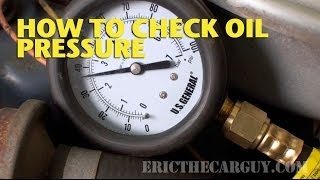
No — Do Not Drive. Driving is not recommended. The code indicates the engine's computer cannot reliably determine oil pressure. If the cause is a rare mechanical issue causing extremely high pressure, continuing to drive ruptures oil seals or the oil filter, leading to catastrophic oil loss and engine seizure within minutes. This turns a $200 repair into a $5,000+ engine replacement. Only drive a short distance to a shop if you have verified with a mechanical gauge 🎬 Watch: How to manually check oil pressure with a gauge. that actual oil pressure is within a safe range.
Common Causes

- Faulty Engine Oil Pressure Sensor (Internal Short/Leak) (Very Common) — The sensor itself is the most frequent cause. Internal short circuits, damage from heat, or pressurized oil seeping past internal seals into the electrical connector cause it to send a constant high voltage signal.
- Wiring or Connector Short (Common) — The wiring harness going to the sensor is damaged, corroded, or shorted. A frayed wire touching a 12V power source sends extra voltage through the signal circuit, instantly triggering the code.
- Clogged Oil Filter Screen (GM Specific) (Common) — On GM V8 engines, a small thimble-sized screen sits directly under the oil pressure sensor. Sludge blocks this screen, causing pressure to build up behind it and triggering the code even with a new sensor.
- Incorrect Oil Viscosity or Sludge Blockages (Common) — Using oil that is too thick (wrong viscosity), especially in cold weather, causes a temporary pressure spike. Very old, sludgy oil or a defective oil filter also creates blockages that lead to high pressure readings.
- Stuck Oil Pressure Relief Valve (Less Common) — The oil pump features a relief valve that opens to prevent excessive pressure. If sludge or mechanical failure sticks this valve closed, pressure skyrockets, creating a genuine high-pressure emergency.
- Overfilled Engine Oil (Rare) — If the engine oil level is significantly above the 'MAX' line, the crankshaft churns the oil into a foam. This aeration causes erratic pressure spikes that trigger the sensor.
- Faulty Powertrain Control Module (PCM) (Very Rare) — The PCM itself fails and misinterprets a normal signal from the sensor as a high voltage fault. Consider this only after ruling out all other electrical and mechanical possibilities.
Symptoms

- Check Engine Light is On — The primary and most immediate indicator that the ECM has stored a trouble code.
- Oil Pressure Gauge Maxed Out — If equipped with a physical gauge, the needle pegs at its highest reading (e.g., 80 or 100 PSI) because the computer receives a maximum voltage signal.
- Oil Pressure Warning Light/Message — The dashboard displays a red oil can symbol or an 'Oil Pressure High' warning.
- Engine in 'Limp Mode' or Reduced Power — The vehicle's computer limits engine power and RPM to prevent catastrophic damage from what it perceives as a critical lubrication failure.
- New Oil Leaks — In cases of genuine, extremely high mechanical pressure, the force pushes oil past gaskets and seals, creating new leaks under the engine.
Diagnostic Flowchart
Tap your situation to follow the diagnostic path that matches what you're seeing on this code.
Common Fixes & Costs
- Replace the Engine Oil Pressure Sensor — Parts: $30-$80, Labor: $100-$600 (Varies heavily by access; GM V8s are ~$100, Chrysler 3.6L V6s are ~$500+), ~0.8-4.5 hr book time (DIY)
- Replace Clogged Oil Pressure Sensor Screen (GM) — Parts: $5-$15, Labor: $0-$30 (Usually included in sensor replacement labor), ~0.2 hr book time (DIY)
- Repair Damaged Wiring or Connector — Parts: $10-$30, Labor: $150-$300, ~1.0-2.0 hr book time (Intermediate)
- Perform an Engine Flush and Oil Change — Parts: $50-$100, Labor: $50-$100, ~0.8-1.2 hr book time (DIY)
- Replace the Oil Pump / Pressure Relief Valve — Parts: $150-$400, Labor: $800-$2,500+, ~4.0-10.0 hr book time (Professional)
DIY vs Professional
- Replace Engine Oil Pressure Sensor — Beginner:
Tools: Socket set, deep well oil pressure sensor socket, extensions, universal joint, torque wrench, rags. - Repair Damaged Wiring — Beginner:
Tools: Multimeter, wire strippers, wire cutters, heat shrink tubing, soldering iron or quality crimp connectors. - Perform Oil Change / Engine Flush — Beginner:
Tools: Wrench for drain plug, oil filter wrench, drain pan, funnel, new oil, new filter. - Replace Oil Pump — Beginner:
Tools: Extensive professional toolset, engine hoist, timing chain tools, service manual.
Used vs. New Parts: Buying Guide
When a used part is worth it: Buying a used oil pressure sensor is never recommended. It is a low-cost electronic part with a finite lifespan, and the labor to replace it is often significant. The risk of premature failure outweighs the small cost savings.
Donor-vehicle mileage cap: roughly under 30000 miles for the part to have meaningful remaining life.
Donor quality checklist:
- Verify the part number is an exact match.
- Inspect the plastic connector for brittleness or cracks.
- Ensure the sensor is completely free of oil residue inside the connector pins.
Decision logic:
- If The sensor is difficult to access (e.g., under an intake manifold) → Always buy a new, high-quality OEM part to avoid repeating the labor-intensive repair.
- If The part is for a Chrysler, Dodge, or Jeep vehicle → Strongly favor a new OEM (Mopar) sensor. Aftermarket versions have a well-documented high failure rate for this application.
Warranty tradeoff: Used parts typically have a 30-day warranty. New aftermarket sensors offer 1-year to limited lifetime warranties. New OEM parts carry a 1-2 year warranty.
Worst-case if a used part fails: $300-800 if a used part fails, requiring a repeat of the labor costs plus the price of another sensor.
What Happens If You Wait — Timeline
- 0-2 weeks: Check Engine Light is on, and the oil pressure gauge reads maximum. The vehicle enters 'limp mode,' limiting RPM and speed. (MPG impact: 5-15% (due to limp mode)% · Added cost: $0 if the fault is purely electrical. If it's a rare mechanical high-pressure issue, engine seizure is immediate, costing $4,000-$10,000+.)
- 2 weeks - 3 months: Continued driving in limp mode causes poor fuel economy and stresses the transmission. If the sensor is leaking oil externally, it leads to a gradual loss of oil. (MPG impact: 10-20%% · Added cost: $50-$200 in wasted fuel. If the sensor leaks all the oil out, the cost becomes $4,000+ for a seized engine.)
- 3-6 months: The driver becomes accustomed to the warning light. A new, genuine low-pressure problem (P0524) occurs but is masked by the existing fault, leading to guaranteed engine damage. (MPG impact: 10-20% (if still in limp mode)% · Added cost: $2,000-$8,000 if a real low-pressure event is missed and the engine is damaged by oil starvation.)
- 6+ months: Catastrophic failure becomes highly probable. Either a slow leak finally starves the engine of oil, or a separate mechanical failure occurs and goes unnoticed. The engine seizes. (MPG impact: N/A (Vehicle is inoperable)% · Added cost: $4,000 - $10,000+ for a used or remanufactured engine replacement.)
Cost of Not Fixing It
- Immediate: If the code stems from true mechanical high pressure, continuing to drive blows out engine seals or ruptures the oil filter, leading to catastrophic oil loss and complete engine seizure. (Added cost: $4,000 - $10,000+)
- 1-3 months: A faulty sensor causes the engine to run in a protective 'limp mode', leading to poor fuel economy and placing extra stress on the transmission. (Added cost: $50 - $200 in wasted fuel)
- 6+ months: Ignoring the warning light guarantees engine damage if an actual oil pressure problem develops and is missed because the gauge is already maxed out. A slow leak from a blown sensor also leads to oil starvation. (Added cost: $2,000 - $8,000)
Diagnosis Steps

- Check Engine Oil Level and Condition
Turn the engine off, wait 5 minutes, and check the dipstick. Ensure the oil level is between the 'MIN' and 'MAX' marks. The oil must not look like thick sludge or smell burnt. Confirm you are using the manufacturer-recommended viscosity.
Tools: Rag or paper towel (Beginner) - Scan Codes and Review Live Data
Use a scanner to view the 'Engine Oil Pressure Sensor' live data. With the key on but engine off (KOEO), voltage should be near 0V. A reading above 4.6V confirms an electrical short or failed sensor. Start the engine; if voltage remains stuck high regardless of RPM, the fault is electrical.
Tools: OBD-II Scanner (Beginner) - Inspect the Sensor and Wiring
Locate the sensor. Disconnect the plug and check for oil inside the connector—if oil is present, the sensor is internally blown and must be replaced. Inspect the wiring harness for melted, chafed, or pinched sections.
Tools: Flashlight, Inspection Mirror (Intermediate) - Verify Actual Oil Pressure with a Mechanical Gauge
This is the most critical safety step. Remove the electronic sensor and screw in a mechanical gauge. Start the engine. If pressure is normal (25-65 PSI), the sensor or wiring is bad. If pressure exceeds 80 PSI, you have a critical mechanical failure (likely a stuck relief valve).
Tools: Mechanical Oil Pressure Gauge, Basic Hand Tools (Advanced) - Test the Sensor Circuit for Shorts
With the sensor disconnected and key on (KOEO), probe the harness pins with a multimeter. You should find 5V (reference), 0V (ground), and 0V (signal). If the signal wire shows 5V or 12V, the harness is shorted to power and requires repair.
Tools: Digital Multimeter (Advanced) - Inspect GM-Specific Oil Filter Screen
If working on a GM V8 (5.3L, 6.0L), use a pick tool to extract the small filter screen located in the block directly below the sensor. Inspect it for sludge blockages. Replace it regardless of condition.
Tools: Pick tool, New filter screen (Intermediate) - Perform Sensor Electrical Bench Test
Measure the resistance (Ohms) between the sensor's signal and ground pins. A reading below 100 Ohms indicates an internal short, confirming the sensor is dead.
Tools: Digital Multimeter, Basic Hand Tools (Advanced)
When This Code Triggers (Freeze-Frame Conditions)
- Engine Coolant Temp: 40-90°F (During or shortly after a cold start)
- RPM: 1200-3000 (During initial acceleration or steady cruise)
- Engine Load: 20-50% (Light to moderate acceleration)
- Fault Trigger Time: 2-5 seconds (The high voltage condition must be present for a few continuous seconds.)
Related Codes
- P0522 — The direct opposite of P0523, indicating 'Circuit Low.' P0523 is caused by a short to voltage, while P0522 is caused by an open circuit, a short to ground, or a disconnected sensor.
- P0521 — Indicates 'Range/Performance.' P0521 means the PCM sees a pressure reading that is technically valid but doesn't match the engine's speed and load. P0521 suggests an inaccurate sensor, whereas P0523 points to a dead short or completely failed sensor.
- P0524 — Indicates 'Engine Oil Pressure Too Low.' This is a critical mechanical code. While P0523 indicates a high voltage signal, P0524 means actual oil pressure is dangerously low and requires immediate engine shutdown.
- P0520 — A general fault for the 'Engine Oil Pressure Sensor Circuit.' It sets when the PCM detects a problem but can't determine if it's high, low, or a performance issue. P0523 provides more specific diagnostic information.
Climate & Environmental Factors
- Cold Weather: Cold temperatures increase oil viscosity. Starting a cold engine with thick oil forces the pump to work harder, causing a genuine, temporary spike in oil pressure that exceeds the PCM's voltage threshold. Pressure returns to normal as the engine warms up.
- High Altitude: Altitude has a negligible direct effect on the hydraulic pressure within the sealed engine lubrication system.
- Humidity: High humidity accelerates corrosion on electrical connectors. This corrosion creates unintended electrical paths or resistance changes, leading to a 'Circuit High' fault.
How to Talk to a Mechanic About This Code
Say this: "I have a P0523 code with the oil pressure gauge reading max. I'd like to book a diagnostic. The most important first step for me is to have you test the actual mechanical oil pressure with a gauge to determine if this is a real pressure problem or just an electrical/sensor fault."
This signals you understand the two possible causes (electrical vs. mechanical) and directs the mechanic to perform the single most important diagnostic step first. It prevents them from simply replacing the sensor without confirming the engine is safe.
Avoid saying:
- 'My check engine light is on, can you look at it?'
- 'The code says it's an oil pressure sensor, can you just replace it?'
- 'Just fix whatever is wrong.'
Questions to ask before authorizing the repair:
- What was the actual oil pressure reading from the mechanical gauge at idle and at 2,500 RPM?
- If the pressure was normal and you are recommending a new sensor, did you inspect the wiring and connector for oil contamination or damage?
- If this is a GM V8, are you also replacing the small filter screen underneath the sensor?
- What is the warranty on the parts and labor for this repair?
Where to Take It: Dealer vs Independent vs Chain
- Dealer:
Recommended if the vehicle is under warranty or has a known manufacturer-specific quirk (TSB, difficult access). Overkill for a simple sensor swap on a common engine.
Best for: Vehicles still under powertrain warranty., Complex manufacturer-specific issues (e.g., PCM software updates for a Ford, VTEC sensor issues on a Honda)., Repairs where OEM parts are strongly recommended (e.g., Chrysler 3.6L sensor replacement).
Downsides: Highest labor rates, typically 1.5-2x more than independent shops., May recommend replacing an entire assembly when only one component has failed. (Typical cost: +50% vs. baseline) - Independent Shop:
Best overall fit for most P0523 repairs, offering a good balance of cost and expertise, provided you choose a reputable shop.
Best for: Out-of-warranty vehicles where cost is a major factor., Common P0523 issues on well-known engines (e.g., GM 5.3L sensor and screen)., Getting a second opinion on a high dealer quote.
Downsides: Quality and diagnostic capabilities vary widely; vet shops based on reviews and ASE certifications., May lack expensive, specialized tools or up-to-the-minute TSBs that dealers have. (Typical cost: +0% vs. baseline) - Chain Shop:
AVOID for diagnosis. Only use for an oil change after you have confirmed the wrong oil is the problem. Do not let them diagnose a P0523 code.
Best for: Simple oil changes if you suspect the wrong oil viscosity is the cause.
Downsides: Technician skill varies dramatically; not recommended for diagnostics., High pressure to upsell services like engine flushes or other unnecessary items., May lack the experience to properly diagnose an electrical short vs. a bad sensor vs. a mechanical issue. (Typical cost: -10% vs. baseline)
When to Walk Away From the Repair
If the estimated repair cost exceeds 40-50% of the car's private-party value, you should seriously consider selling the car as-is or trading it in.
- Car worth $4000, fix is $800: Fix it. The repair cost is only 20% of the vehicle's value and is well below the threshold.
- Car worth $5000, fix is $2500: Walk away. The repair cost is 50% of the car's value. If the repair is for a major mechanical issue like an oil pump, it's a strong signal to sell.
- Car worth $15000, fix is $700: Fix it. This is a minor repair relative to the car's high value.
What Scan Tool You Need for This Code
Minimum: A scanner that can read and graph live data, specifically the 'Engine Oil Pressure Sensor' voltage PID.
A basic $20 code reader only shows the P0523 code. It cannot show the live voltage from the sensor, which is essential to know if the reading is stuck high (indicating an electrical fault) or if it's fluctuating.
Budget: BlueDriver Pro (~$100) — Connects to your smartphone and provides live data graphing for the oil pressure sensor voltage. It also offers repair reports based on a database of fixes.
Mid-range: Foxwell NT510 Elite / Innova 5610 (~$150-350) — These handheld scanners offer robust live data, graphing, and include manufacturer-specific codes and data. The Innova 5610 has bidirectional capabilities to help test circuits.
Professional: Autel MaxiCOM MK808 / MK906BT (~$500-1200) — Provides full bidirectional control to test circuits, comprehensive live data, and access to nearly all vehicle modules. This is professional-level and overkill for most DIYers.
Rent vs buy: For a one-time fix, auto parts stores like AutoZone read codes for free, but they may not provide live data. If you plan to do future DIY diagnostics, buying a budget pick like the BlueDriver Pro is a worthwhile investment.
How to Clear the Code After You Fix It
- Fix the root cause of the fault (e.g., replace sensor).
- Use an OBD-II scan tool to clear the P0523 code.
- Perform a complete drive cycle to allow the vehicle's readiness monitors to run.
Drive cycle (~20 minutes): Start the engine from a cold state (sitting for 8+ hours). Idle for 2-3 minutes. Drive at a steady speed of around 55 mph for 10 minutes. Perform stop-and-go city driving for 5-10 minutes. Let the vehicle idle for 2 minutes before shutting down.
Readiness monitors affected: Comprehensive Component Monitor (CCM), Misfire Monitor, Catalyst Monitor
Before emissions retest: drive at least 50 miles to fully set monitors.
Watch out for:
- Disconnecting the battery clears the Check Engine Light but resets all emissions readiness monitors to 'Not Ready', causing an automatic smog test failure.
- The code returns immediately if the underlying electrical short or mechanical issue is not repaired.
Will This Fail Emissions / State Inspection?
Yes — this code typically fails an OBD-II emissions inspection.
- California: A P0523 code causes an automatic failure of the smog check. The Check Engine Light must be off and all required readiness monitors must be in a 'Ready' state.
- New York: The NYS DMV inspection includes an OBD-II scan. An active P0523 trouble code results in an immediate emissions test failure.
- Texas: In the 17 Texas counties requiring emissions testing, a vehicle with an illuminated Check Engine Light and an active P0523 code will not pass.
Most Commonly Affected Vehicles
- Chevrolet / GMC Silverado, Sierra, Tahoe, Suburban, Yukon (2005-2016) — Extremely common on GM trucks with 4.8L, 5.3L, and 6.0L engines. The cause is often a failed sensor, but a small filter screen underneath the sensor clogs with sludge and must be replaced during the repair to prevent the code from returning.
- Dodge / Chrysler / Jeep / Ram Grand Caravan, Challenger, 300, Wrangler, Ram 1500 (2011-2018) — Very common on vehicles with the 3.6L Pentastar V6. The sensor is located in a difficult-to-reach spot under the intake manifold, increasing labor costs significantly. Using an OEM Mopar sensor is highly recommended.
- Hyundai / Kia Sonata, Optima, Sorento, Sportage (2011-2020) — Commonly seen on models with GDI engines (1.6L, 2.0L, 2.4L). The issue is typically a failed oil pressure sensor or a wiring harness problem. The sensor is often located under the intake manifold.
- Honda / Acura Odyssey, Pilot, Accord, MDX (2008-2017) — This code often appears due to failures of the 'Rocker Arm Oil Pressure Sensor' (part of the VTEC system), which is distinct from the main block pressure sensor. VIN verification is required for the correct part.
- Ford F-150, Explorer, Focus (2009-2018) — The code is triggered by a faulty sensor, wiring issues, or a stuck relief valve. Checking for TSBs related to a PCM software update is a critical first step, as a reflash often fixes the issue.
Manufacturer-Specific Notes
- General Motors (Chevy/GMC/Cadillac): On V8 engines (5.3L, 6.0L), a small filter screen (Part #12585328) sits in the block directly below the oil pressure sensor. This screen clogs with sludge, causing erratic readings and failure of the new sensor. Replacing this screen is mandatory when replacing the sensor.
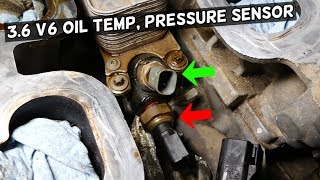
- Chrysler/Dodge/Jeep (Pentastar 3.6L): The oil pressure sensor is located deep in the engine valley, underneath the lower and upper intake manifolds. Replacement takes 3-5 hours and requires new intake gaskets. Using an OEM Mopar sensor (Part #5149062AB) is critical to avoid repeat failures.
- Ford: A software update for the Powertrain Control Module (PCM) is often available to correct overly sensitive thresholds for this code. Check for TSBs before replacing parts.
- Honda/Acura: These brands use multiple oil pressure sensors for the VTEC system. A P0523 code often refers to the 'Rocker Arm Oil Pressure Sensor,' not the primary engine block sensor.
Real Owner Stories
2011 GMC Yukon with 5.3L V8 at 140K miles
Check engine light came on, oil pressure gauge maxed out at 80 PSI. No unusual engine noises or performance issues were noted.
What they tried:
- Initially ignored the light as the truck ran fine.
- Took it to a shop after the light persisted.
- Technician replaced the oil pressure sensor (ACDelco D1846A).
- Crucially, the technician also removed the old, clogged filter screen (GM Part #12585328) from under the sensor and installed a new one.
Outcome: Replacing both the sensor and the screen cleared the P0523 code and restored normal gauge function. Total repair cost was approximately $250.
Lesson: On GM V8s, replacing the sensor without also replacing the small filter screen underneath is a common cause for the code to return. It's a mandatory step for a lasting repair.
2014 Dodge Grand Caravan 3.6L Pentastar at 115K miles
P0523 code appeared, gauge maxed out. Owner decided to replace the sensor themselves to save on labor costs.
What they tried:
- Purchased an aftermarket sensor for $40.
- Spent 5 hours disassembling the upper and lower intake manifolds to access the sensor.
- Replaced the sensor and reassembled the engine.
- The P0523 code returned within two days.
Outcome: Frustrated, the owner took it to a dealer. The dealer diagnosed a faulty aftermarket sensor. They replaced it with an OEM Mopar sensor (Part #5149062AB) and new intake gaskets. The fix was successful, but the total cost was over $700, negating the initial DIY savings.
Lesson: For difficult-to-access sensors like on the Pentastar 3.6L, the high labor cost makes using a high-quality OEM part critical. The risk of a cheap part failing and requiring a repeat of the labor is too high.
2013 Honda Accord V6 at 95K miles
P0523 code and check engine light on. Owner was confused because research pointed to a sensor on the engine block, but their mechanic mentioned a different part.
What they tried:
- Mechanic scanned the code and immediately identified it as a fault with the 'Rocker Arm Oil Pressure Sensor', not the main engine oil pressure sensor.
- The mechanic explained this sensor is part of the VTEC system and is a common failure point on these engines.
Outcome: The shop replaced the correct rocker arm oil pressure switch. The code was cleared and did not return. The repair was relatively quick and cost under $200.
Lesson: On Honda/Acura vehicles, P0523 often refers to a VTEC system pressure switch, not the primary block sensor. Correctly identifying the specific sensor is key to avoiding misdiagnosis and unnecessary repairs.
How to Prevent This Code From Triggering
- Use the correct viscosity and quality engine oil. (Every oil change) — Using oil that is too thick causes temporary pressure spikes. Low-quality oils break down faster, creating sludge that clogs passages or the sensor itself.
- Follow 'severe' service oil change intervals. (Every 3,000-5,000 miles) — Most driving is 'severe' (short trips, stop-and-go traffic), which prevents oil from getting hot enough to burn off contaminants, leading to faster sludge formation.
- Consider a preventative engine flush before an oil change on high-mileage vehicles. (Once on a newly acquired used car over 75k miles) — A quality engine flush dissolves existing sludge and deposits, clearing oil passages and potentially freeing a sticky pressure relief valve.
Frequently Asked Questions
What is the most common misdiagnosis for P0523?
The most dangerous mistake is replacing the sensor without verifying actual mechanical oil pressure with a gauge. If the true cause is a stuck relief valve, the engine remains at risk of severe damage. Always test mechanical pressure first.
I pulled the connector off my oil pressure sensor and it was full of oil. What does that mean?
This is a definitive sign that the sensor has failed internally. High engine pressure forced oil past the internal seals into the electrical connector, causing a short circuit. Replace the sensor and clean the connector with electrical contact cleaner.
My code came back after replacing the sensor, what now?
First, check the wiring harness for a short to voltage. Second, if you drive a GM V8, ensure you replaced the small filter screen under the sensor. Finally, verify actual mechanical oil pressure to rule out a stuck relief valve.
How much does it cost to fix code P0523?
A simple sensor replacement on an easy-to-access engine costs $130-$280. If the sensor is buried under the intake manifold (like the Chrysler 3.6L), labor pushes the total to $500-$800. Replacing a faulty oil pump costs $1,000 to $2,500+.
Will an oil change fix a P0523 code?
An oil change only fixes the code if the root cause was using oil that is too thick for the climate, causing a temporary pressure spike. If the sensor has failed or the wiring is shorted, fresh oil will not solve the problem.
Why does my oil pressure gauge read maxed out?
The P0523 code is for a 'high voltage' signal. The computer interprets this maximum voltage reading as maximum possible pressure and commands the dashboard gauge to display its highest level, even if real pressure is normal.
Key Takeaways
- Code P0523 indicates the oil pressure sensor is sending a maximum voltage signal (over 4.6V), which almost always points to a failed sensor or shorted wire rather than actual high oil pressure.
- Never replace the sensor without first using a mechanical gauge to verify actual oil pressure is within the safe 25-65 PSI range, ruling out a catastrophic mechanical failure.
- If the electrical connector attached to the sensor is filled with engine oil, the sensor's internal seals have blown and it requires immediate replacement.
- On GM 4.8L, 5.3L, and 6.0L V8 engines, you must replace the $10 filter screen located directly beneath the sensor, or the P0523 code will immediately return.
Helpful Videos

The information in this article is provided for general reference and educational purposes only. Vehicle specifications, procedures, and part compatibility can vary by production date, trim level, and region. Always consult your vehicle's factory service manual and verify part numbers before purchasing or performing repairs. Safety-critical components such as airbags, seat belts, and braking systems should be installed by a qualified professional.
- 🎬 Helpful Videos
- What Does P0523 Mean?
- Can I Drive With P0523?
- Common Causes
- Symptoms
- Diagnostic Flowchart
- Common Fixes & Costs
- DIY vs Professional
- Used vs. New Parts: Buying Guide
- What Happens If You Wait — Timeline
- Cost of Not Fixing It
- Diagnosis Steps
- When This Code Triggers (Freeze-Frame Conditions)
- Related Codes
- Climate & Environmental Factors
- How to Talk to a Mechanic About This Code
- Where to Take It: Dealer vs Independent vs Chain
- When to Walk Away From the Repair
- What Scan Tool You Need for This Code
- How to Clear the Code After You Fix It
- Will This Fail Emissions / State Inspection?
- Most Commonly Affected Vehicles
- Manufacturer-Specific Notes
- Real Owner Stories
- 2011 GMC Yukon with 5.3L V8 at 140K miles
- 2014 Dodge Grand Caravan 3.6L Pentastar at 115K miles
- 2013 Honda Accord V6 at 95K miles
- How to Prevent This Code From Triggering
- Frequently Asked Questions
- What is the most common misdiagnosis for P0523?
- I pulled the connector off my oil pressure sensor and it was full of oil. What does that mean?
- My code came back after replacing the sensor, what now?
- How much does it cost to fix code P0523?
- Will an oil change fix a P0523 code?
- Why does my oil pressure gauge read maxed out?
- Key Takeaways
- 🎟️ Get 5% Off