

P0521 on 2020-2023 Ford Explorer 3.0L: Oil Pressure Sensor Causes and Fixes
Code P0521 on a 2020-2023 Ford Explorer 3.0L indicates a problem with the engine oil pressure sensor's performance. While a faulty sensor is a common cause, a Ford Technical Service Bulletin (TSB) warns this code can also point to a serious internal oil pressure leak. Do not drive the vehicle and have it professionally diagnosed immediately.
- P0521 on this Explorer is a critical warning. Do not drive the vehicle until it is diagnosed.
- The most important diagnostic step is to verify the actual engine oil pressure with a mechanical gauge.
- While a faulty sensor is a likely cause, be aware of Ford's TSB #SSM 51764, which points to the possibility of a more serious internal oil leak.
- Always start by checking the simplest things: engine oil level and condition.
- If the oil pressure is truly low, the engine requires immediate professional service to prevent catastrophic failure.
What's Unique About the 2020-2023 Ford Explorer
For the 2020-2023 Explorer with the 3.0L EcoBoost engine, this code is particularly concerning due to a specific manufacturer warning. Ford issued Technical Service Bulletin (TSB) #SSM 51764, which directly links P0521 (and the related P0524 code) to potential internal oil pressure leaks on this engine and its platform-mate, the Lincoln Aviator. This elevates the issue beyond a simple sensor swap, as it could indicate a more severe mechanical problem within the engine, specifically related to the main oil gallery tube or its seal behind the front engine cover. This makes a thorough diagnosis, including a mechanical pressure test, absolutely essential.
Symptoms You May Notice
- Check Engine Light (Malfunction Indicator Lamp) is on
- Illuminated low oil pressure warning light on the dashboard
- Oil pressure gauge reading abnormally high or low, or fluctuating
- Engine running rough or making unusual noises (like rattling, ticking, or knocking, especially on a cold start)
- Engine may enter a reduced power "limp mode"
- Replacing the oil pressure sensor without first verifying the actual engine oil pressure with a mechanical gauge. If the pressure is truly low, a new sensor will not fix the problem and the engine remains at risk.
- Mistaking a faulty aftermarket sensor for a more serious mechanical problem. One owner reported a brand-new aftermarket sensor gave false high readings, causing confusion until it was replaced with an OEM part.
Most Likely Causes
- Faulty Engine Oil Pressure Sensor 🔴 High Probability Sensors operate in a harsh environment of heat and vibration and can fail over time, sending incorrect readings. Oil contamination in the connector can also cause a failure. Some owners of EcoBoost engines have reported repeat failures of this sensor.
How to confirm: After verifying actual oil pressure is correct with a mechanical gauge, test the sensor's voltage output. If the reading is erratic or doesn't correspond to the actual pressure, the sensor is faulty. A user on an Expedition forum reported their new, aftermarket sensor was faulty out of the box, reading 140 PSI with the engine off. Using an OEM Motorcraft part is recommended.
Typical fix: Replace the engine oil pressure sensor and clean the electrical connector. On the 3.0L EcoBoost, the sensor is located under the oil filter housing and can be accessed by removing the air cleaner assembly.
Est. part cost: $50-$75 - Internal Oil Pressure Leak 🟡 Medium Probability Ford TSB #SSM 51764 specifically identifies internal oil pressure leaks as a potential cause for this code on this exact engine and year range. The bulletin points to a misaligned main oil gallery tube (part #6718) or a failed engine oil gallery seal (part #00815) located behind the engine front cover.
How to confirm: A mechanical oil pressure test will show pressure that is actually below the manufacturer's specification. If this is the case, the TSB directs technicians to follow Workshop Manual (WSM) Section 303-01B, Pinpoint Test E. Confirmation requires engine disassembly to inspect the front cover, oil gallery tube, and seal.
Typical fix: This is a major, labor-intensive repair that involves removing the engine front cover to inspect, realign, or replace the main oil gallery tube and its seal. The oil gallery seal must be replaced anytime the front cover is removed.
Est. part cost: $50-$500+ - Low or Incorrect Engine Oil 🟡 Medium Probability This is a universal cause. Using oil of the wrong viscosity (e.g., too thin) or simply having a low oil level due to consumption or an external leak can cause pressure to drop out of the expected range. The 3.0L EcoBoost engine is also known for potential oil pan leaks from the RTV seal.
How to confirm: Check the engine oil level using the dipstick. Verify that the oil used meets Ford's specifications for the 3.0L EcoBoost, which is typically a full synthetic 5W-30.
Typical fix: Perform an oil and filter change with the correct type and amount of oil. If an external leak is found (e.g., from the oil pan), it must be repaired.
Est. part cost: $60-$120 - Damaged Wiring or Connector ⚪ Low Probability The sensor is located on the engine block, and its wiring can be susceptible to heat damage, corrosion, or physical damage from road debris or improper service. Oil leaking onto the connector can also cause a short or poor connection.
How to confirm: Visually inspect the wiring harness and connector for the oil pressure sensor for any signs of melting, corrosion, or broken wires. Check for oil contamination inside the connector itself. The connector pigtail for this sensor is available as a separate part (Motorcraft WPT-1469).
Typical fix: Repair the damaged section of wiring or replace the connector pigtail.
Est. part cost: $15-$40
Rare But Worth Checking
- Failing Oil Pump: While less common than a sensor failure, a worn or failing oil pump can cause genuine low oil pressure. TSB #SSM 51764 notes that if diagnostics lead to oil pump replacement, the technician must inspect the oil gallery tube alignment during reassembly.
- Clogged Oil Passages or Pickup Tube: Engine sludge or debris from a failing component (like a timing chain guide) can clog the oil pump pickup tube or narrow passages within the engine, restricting oil flow and causing a drop in pressure.
Diagnosis Steps
- STOP THE ENGINE. Do not continue to run the vehicle to prevent potential catastrophic damage.
- Check the engine oil level and condition. Ensure it is full and not sludgy or contaminated.
- Connect an OBD-II scanner to confirm P0521 is present and check for any other codes, like P0524.
- Crucially, connect a mechanical oil pressure gauge to the engine (typically at the sensor port) to measure the actual oil pressure.
- Compare the mechanical gauge reading to the manufacturer's specifications for the 3.0L EcoBoost at idle and higher RPMs.
- If actual oil pressure is within spec, the problem is likely electrical. Inspect the oil pressure sensor's wiring and connector for damage or oil contamination. If the wiring is good, the sensor itself is the most likely culprit. Replace with a genuine Motorcraft part.
- If actual oil pressure is LOW, a serious mechanical issue is present. Do not run the engine further. The vehicle needs professional diagnosis for an internal leak, failing oil pump, or blockage, as suggested by TSB #SSM 51764.
Parts You'll Likely Need
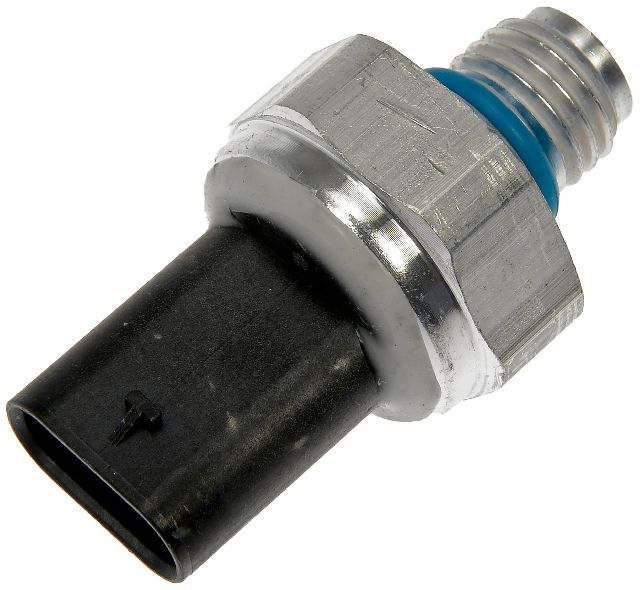
- Engine Oil Pressure Sensor
(OEM #GN1Z-9D290-D (superceded by OPS-4 / ML3Z-9D290-A))— This sensor is the most common failure point when actual oil pressure is confirmed to be good. It sends the pressure reading to the vehicle's computer. Part numbers can be complex; OPS-4 appears to be a service part number that replaces ML3Z-9D290-A.
Trusted brands: Motorcraft, Dorman
OEM price range: $50-$75
Aftermarket price range: $25-$40 - Engine Oil Pressure Sensor Connector
(OEM #WPT-1469)— If the wiring connector is damaged by heat or contaminated with oil, it may need to be replaced. This is a pigtail that is spliced into the existing harness.
Trusted brands: Motorcraft
OEM price range: $35-$45
Aftermarket price range: $20-$30
Related Codes That Often Appear With This One
- P0524 — P0524 means "Engine Oil Pressure Too Low." Ford TSB #SSM 51764 explicitly states that P0521 and P0524 may appear together, as they both relate to a low oil pressure condition that could be caused by the same internal leak.
Technical Service Bulletins (TSBs) & Recalls
- SSM 51764: Addresses an illuminated MIL and low oil pressure warning with DTCs P0521/P0524 on 2020-2023 Explorer/Aviator 3.0L, noting the cause may be an internal oil pressure leak from the main oil gallery tube or seal.
- SSM 50988: While for 2.3L/3.5L engines, it notes P0521 can occur after engine replacement due to a sensor design change, which is relevant context for the EcoBoost family.
Platform-Specific Known Issues
- Ford issued this bulletin for 2020-2023 Explorer and Aviator models with the 3.0L EcoBoost engine. It warns that DTCs P0521 and/or P0524, along with a low oil pressure warning, may be caused by an internal oil pressure leak. It advises technicians to follow specific diagnostic steps (Pinpoint Test E) and inspect the main oil gallery tube and seal if the front cover is removed.
Mechanic-Grade Diagnostic Values
- Engine Oil Pressure (Hot Idle) — expected: 1.2 - 2.0 bar (approx. 17 - 29 PSI). Failure: Pressure below 1.0 bar (approx. 14.5 PSI) is a warning sign.
- Engine Oil Pressure (at 2000 RPM, Hot) — expected: 2.5 - 3.5 bar (approx. 36 - 51 PSI). Failure: Pressure does not rise smoothly with RPM or is unstable.
- Engine Oil Pressure (at 3000 RPM, Hot) — expected: 3.5 - 4.5 bar (approx. 51 - 65 PSI). Failure: Pressure plateaus or fails to increase corresponding to RPM increase.
Scan Tool Commands That Help
- FORScan: Read PID Data (Live Data) — To monitor the 'Engine Oil Pressure' PID in real-time from the PCM. This allows observation of the sensor's reported pressure relative to engine RPM and temperature, which can help differentiate between a sensor fault and a potential mechanical issue before connecting a mechanical gauge.
Wiring & Ground Locations
- Engine Oil Pressure Sensor Connector — On the 3.0L EcoBoost, the sensor is typically located on the engine block, often near the oil filter housing.. The connector (pigtail part WPT-1469) is a common point of failure due to heat and oil contamination. Inspecting the three wires and the connector pins for corrosion, damage, or oil saturation is a key diagnostic step.
Real Owner Repair Stories
- Explorer ST Forum (explorerst.org) (2020 Ford Explorer ST) — Check engine light with code P0524 (Engine Oil Pressure Too Low).
❌ Tried (didn't work) Initial diagnosis by the dealer.
✅ What actually fixed it The dealer replaced the oil pressure sensor, which resolved the code. The user noted the repair was covered under warranty.
OEM Part Supersession History
GN1Z-9D290-D→ML3Z-9D290-A— Part number update and consolidation across multiple Ford platforms.
Heads up: ML3Z-9D290-A is the current recommended replacement for the 2020-2023 Explorer and is listed as fitting a wide range of Ford vehicles.
Model Year Variations Within This Range
- 2020+: The 2020 and newer Explorer models with the 3.0L EcoBoost V6 replaced the previous generation's 3.5L EcoBoost. This 3.0L engine is a different design family, more closely related to the 2.7L 'Nano' engine, and has specific issues like the internal oil leak potential cited in TSB SSM 51764 that do not apply to older Explorer models.
Diagnostic Flowchart
Other Known Issues on This Vehicle
Issues unrelated to this code that are worth knowing about as an owner of this generation:
- 10R60/10R80 Transmission Faults 🔴 High — Common, especially in 2020 models. Can manifest as harsh shifting, momentary neutral-out conditions, or complete failure. (Ref: TSB 23-2120 notes a momentary neutral-out condition. Many owner complaints on forums like Reddit.)
- Rear Axle Mounting Bolt Fracture 🔴 High — Common enough to warrant a safety recall. The bolt can fracture, leading to severe driveline noise and potential loss of power. (Ref: Safety Recall 22S27 / NHTSA Campaign 22V-255. Covered by TSBs like SSM 50471 and 22N06.)
- Plastic Oil Pan Leaks 🟠 Medium — A well-documented issue across many EcoBoost engines, including the 3.0L. Leaks develop from a poor RTV seal from the factory. (Ref: Multiple TSBs exist, such as TSB 24-2345 (which supersedes older ones), detailing updated repair procedures.)
- Cam Phaser Rattle on Cold Start 🔴 High — A known issue on the larger 3.5L EcoBoost, but can also affect the 3.0L. Presents as a distinct rattling or ticking noise for a few seconds after a cold start. It is a very labor-intensive repair.
- Cracked Flex Pipes or Catalytic Converters 🟠 Medium — The factory exhaust flex pipes are known to leak, and catalytic converters can crack, leading to exhaust noise or fumes in the cabin. (Ref: TSB SSM 51881 addresses an updated flex pipe design.)
Used vs. New Parts: Buying Guide for This Vehicle
When a used part is the smart pick: For this repair, used parts are generally not recommended for electronic components. However, a used wiring connector pigtail (WPT-1469) from a reputable salvage yard could be a cost-effective option if the original is physically damaged.
Donor-vehicle mileage cap: roughly under 60000 miles for the part to have meaningful remaining life.
What to inspect on the donor part:
- For a pigtail, ensure the wires are not brittle or cracked.
- Check that the connector's locking tab is intact and functional.
- Inspect for any signs of corrosion or oil contamination on the pins.
OEM-only on this vehicle (don't cheap out):
- Engine Oil Pressure Sensor (Motorcraft ML3Z-9D290-A): Given the critical function of this sensor and reports of faulty aftermarket units, using a genuine OEM part is strongly advised to avoid misdiagnosis and ensure accurate readings.
Brands owners have reported issues with on this vehicle:
- Unnamed/generic aftermarket sensors: Forum discussions often highlight issues with off-brand sensors providing incorrect readings out of the box, leading to continued diagnostic headaches.
Real Owner Stories
Aggregated from forums and TSBs cited above. Mileages and costs reflect what owners reported in those sources.
2020 Ford Explorer ST 3.0L EcoBoost
Symptoms: The vehicle triggered a P0524 code (low oil pressure), which is closely related to P0521. The owner sought the location of the sensor to begin troubleshooting.
What fixed it: The sensor was identified as being located under the oil filter housing for replacement.
Source hint: Explorer ST Forum - '2020 ST P0524 code Low oil pressure'
Related OBD-II Codes
Frequently Asked Questions
Does Ford TSB SSM 51764 apply to my 2021 Explorer with the 3.0L EcoBoost?
What specific internal parts are failing on the 3.0L EcoBoost to cause P0521?
I replaced my oil pressure sensor but the code returned immediately. Is the part defective?
Where is the oil pressure sensor located on the 3.0L EcoBoost engine?
Can a leaking oil pan cause the P0521 code on my Explorer?
Is there a specific wiring part if my sensor connector is contaminated with oil?
Helpful Videos
Used OEM Parts in Stock


New Aftermarket Parts Available

The information in this article is provided for general reference and educational purposes only. Vehicle specifications, procedures, and part compatibility can vary by production date, trim level, and region. Always consult your vehicle's factory service manual and verify part numbers before purchasing or performing repairs. Safety-critical components such as airbags, seat belts, and braking systems should be installed by a qualified professional.
- Ford Explorer:
- 🎬 Helpful Videos
- 🛍️ Shop This Part
- What's Unique About the 2020-2023 Ford Explorer
- Symptoms You May Notice
- Most Likely Causes
- Rare But Worth Checking
- Diagnosis Steps
- Parts You'll Likely Need
- Related Codes That Often Appear With This One
- Technical Service Bulletins (TSBs) & Recalls
- Platform-Specific Known Issues
- Mechanic-Grade Diagnostic Values
- Scan Tool Commands That Help
- Wiring & Ground Locations
- Real Owner Repair Stories
- OEM Part Supersession History
- Model Year Variations Within This Range
- Diagnostic Flowchart
- Other Known Issues on This Vehicle
- Used vs. New Parts: Buying Guide for This Vehicle
- Real Owner Stories
- 2020 Ford Explorer ST 3.0L EcoBoost
- Related OBD-II Codes
- Frequently Asked Questions
- 🎟️ Get 5% Off