

P0451 on 2007-2018 Jeep Wrangler: EVAP Pressure Sensor/Switch Fault Causes and Fixes
On a 2007-2018 Jeep Wrangler, P0451 is most often caused by a faulty EVAP pressure monitoring component. For 2007-2011 models with the 3.8L engine, this is the EVAP System Integrity Module (ESIM) switch on the charcoal canister (~$75). For 2012-2018 models with the 3.6L engine, it's the fuel tank pressure (FTP) sensor on the fuel pump (~$60), which requires dropping the fuel tank to replace.
- First, determine if your Wrangler has the 3.8L (2007-2011) or 3.6L (2012-2018) engine, as the faulty part is different for each.
- For 3.8L models, the most likely culprit is the EVAP System Integrity Module (ESIM) on the charcoal canister, which is a relatively easy DIY replacement.
- For 3.6L models, the cause is likely the Fuel Tank Pressure (FTP) sensor, which is a more difficult job because it's on the fuel pump and requires lowering the fuel tank.
- Before replacing parts, always perform a quick visual inspection of the wiring harness leading to the component, as damage is common on off-road vehicles.
What's Unique About the 2007-2018 Jeep Wrangler
The 2007-2018 Jeep Wrangler (JK) spans two different EVAP system designs based on the engine. The 2007-2011 models with the 3.8L V6 use a switch-based component called an EVAP System Integrity Module (ESIM) to monitor the system for leaks. The 2012-2018 models with the 3.6L Pentastar V6 use a more conventional variable Fuel Tank Pressure (FTP) sensor that provides a variable voltage signal to the PCM. The cause and repair for P0451 are different depending on which system the vehicle has, a common point of confusion for owners.
Generation note: The 2007-2018 Jeep Wrangler is the 'JK' generation, but it has two distinct engine and EVAP system types: - 2007-2011 (3.8L V6): Uses an EVAP System Integrity Module (ESIM), which is a switch mounted on the charcoal canister. This is a very common failure point. - 2012-2018 (3.6L V6): Uses a Fuel Tank Pressure (FTP) sensor, which provides a variable signal. This sensor is located on top of the fuel tank/pump assembly and requires dropping the tank for access.
Symptoms You May Notice
- Check Engine Light is illuminated.
- Possible faint fuel odor near the vehicle.
- Remote start system may be disabled.
- Vehicle will not pass an emissions inspection.
- Replacing the gas cap. A bad gas cap typically causes a large or small leak code (P0455, P0456, P0457), not a sensor performance code like P0451.
- Replacing the wrong part for the model year. Owners of 2007-2011 models might mistakenly buy an FTP sensor when they need an ESIM, and vice-versa for 2012-2018 owners, due to parts store catalog errors.
Most Likely Causes
- Faulty EVAP System Integrity Module (ESIM) 🔴 High Probability This applies to 2007-2011 models with the 3.8L engine. The ESIM is a known high-failure item on the JK platform, often failing due to internal mechanism wear or contamination from dirt/dust, which Wranglers are frequently exposed to. The internal switch can stick, providing an irrational signal to the PCM.
How to confirm: The ESIM is located on the EVAP canister, which is under the vehicle near the driver's side rear wheel. Inspect the part and its connector for damage. Replacement is often done based on the high probability of failure after ruling out wiring issues, as testing the switch function is difficult without a specific scan tool. One user noted that you should see a contact closure (low resistance) across the two connector pins when you blow on the port.
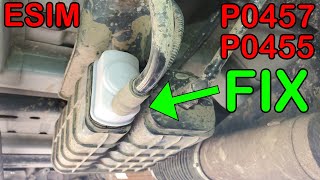
Typical fix: Replace the ESIM and the O-ring seal. 🎬 Watch this quick guide on replacing the ESIM unit. This is a simple process of disconnecting one hose and an electrical connector, pushing a release tab, then twisting the module about a quarter turn to release it from the canister.
Est. part cost: $40-$80 - Faulty Fuel Tank Pressure (FTP) Sensor 🔴 High Probability This applies to 2012-2018 models with the 3.6L engine. The sensor provides a variable voltage reading that can become erratic, stuck, or fail over time, sending an out-of-range signal to the PCM.
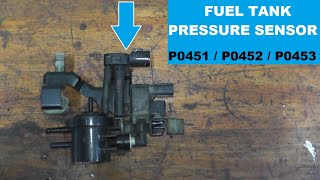
How to confirm: Use a scan tool to monitor the FTP sensor voltage. It should read around 1.3-1.7 volts at atmospheric pressure (gas cap off). The normal operating range is typically 0.5V (vacuum) to 4.5V (pressure). If the reading is stuck high (e.g., 5V), low (e.g., 0V), or doesn't change when applying a light vacuum with a hand pump, the sensor is likely bad. 🎬 See how to test and replace the FTP sensor. This requires dropping the fuel tank for access to the sensor connector for further testing.
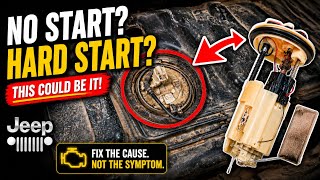
Typical fix: Replace the FTP sensor located on the fuel pump module. This is a labor-intensive job as the fuel tank must be lowered or removed for access. 🎬 Watch this walkthrough on how to drop the fuel tank.
Est. part cost: $25-$60 - Damaged Wiring or Connectors 🟡 Medium Probability As a vehicle designed for off-road use, the wiring harnesses running underneath the Wrangler are susceptible to damage from rocks, debris, and corrosion. The harness to the EVAP canister (3.8L) or fuel tank (3.6L) can chafe against the frame or suspension components, causing shorts or open circuits.
How to confirm: Visually inspect the wiring harness leading to the ESIM (on 3.8L models) or FTP sensor (on 3.6L models). Check for chafed, broken, or corroded wires. Use a multimeter to test for 5V reference, proper ground, and signal continuity back to the PCM at the component connector.
Typical fix: Repair or replace the damaged section of the wiring harness and clean or replace corroded connectors.
Est. part cost: $5-$50
Rare But Worth Checking
- Cracked EVAP Canister or Hose Nipple: While more likely to cause a leak code (P0455/P0456), a crack in the canister body or a hose fitting on the fuel tank can sometimes cause irrational pressure readings, triggering P0451. This is particularly relevant for Wranglers that see heavy off-road use where the canister or tank may suffer impacts from rocks or improper installation of aftermarket skid plates.
- Sticking Purge or Vent Valve: If the purge valve (in the engine bay) or vent valve (part of the ESIM/canister assembly) sticks, it can cause the system pressure to go outside the expected range during a self-test, leading the PCM to flag the pressure sensor's reading as a performance issue. This can happen if the vent gets clogged with mud or dust.
Diagnosis Steps
- Identify your engine: Determine if you have the 3.8L (2007-2011) or 3.6L (2012-2018) engine, as the parts and locations differ significantly.
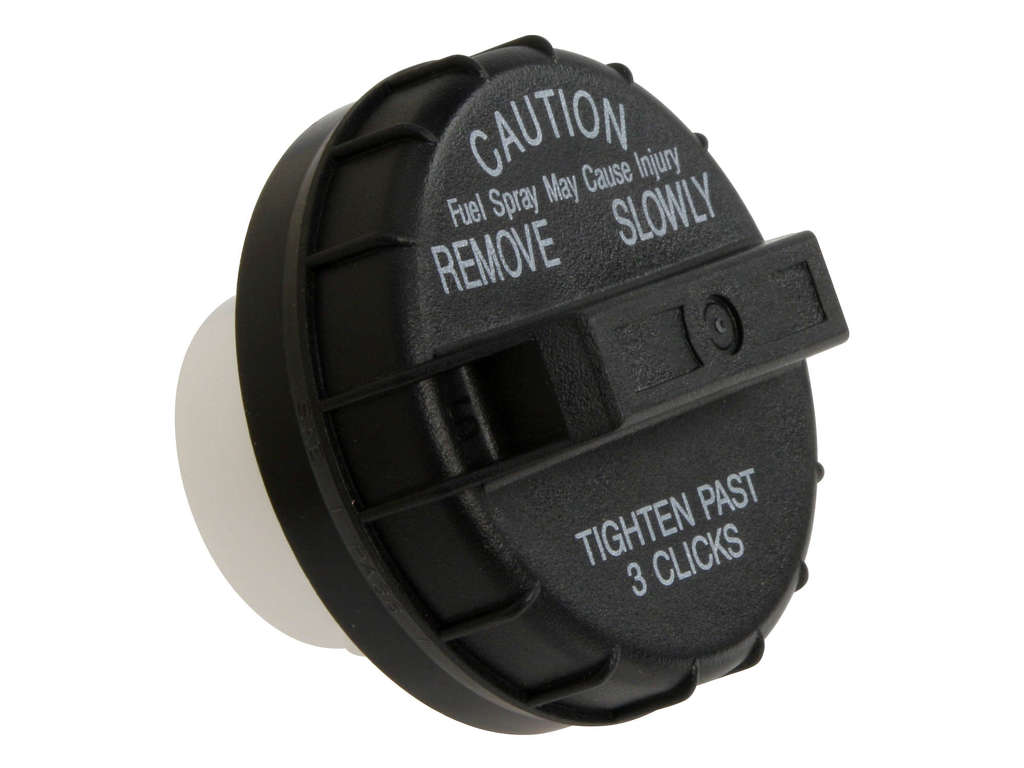
- Inspect the Gas Cap: Ensure it is tight and the seal is not cracked or damaged. While unlikely to be the cause, it's a simple first check.
- Inspect Wiring: Visually inspect the wiring harness leading to the ESIM (on the EVAP canister under the vehicle for 3.8L models) or the FTP sensor (on top of the fuel tank for 3.6L models). Look for any signs of physical damage, corrosion, or loose connections. Pay close attention to areas where the harness passes near the frame or exhaust.
- Test the Component (3.8L ESIM): The ESIM is a switch and difficult to test without a dealership-level scan tool. Due to its high failure rate and low cost, if wiring is intact, replacing the ESIM is a common and effective diagnostic step. A basic bench test is to check for continuity change across the pins while blowing into the port.
- Test the Component (3.6L FTP Sensor): Use a scan tool to observe the fuel tank pressure reading. With the gas cap off, the voltage should be around 1.3-1.7V. If it's stuck at 0V, 5V, or an unchanging value, the sensor is likely faulty. Before dropping the tank, try to access the connector to confirm 5V reference and good ground with a multimeter.
- Perform a Smoke Test: If the sensor/switch and wiring appear to be good, introduce smoke into the EVAP system to check for physical leaks from hoses, the canister, or the fuel tank itself that could be causing the out-of-range readings. Note that some high-end scan tools may not be able to command the vent valve closed on Jeeps, requiring the tech to manually cap the vent hose for an effective test.
Parts You'll Likely Need
- EVAP System Integrity Module (ESIM)
(OEM #4861962AD)— This is the primary pressure monitoring component for 2007-2011 3.8L models and is a very common failure point. This part number supersedes previous versions like 4861962AA, AB, and AC.
Trusted brands: Mopar, Dorman (310-215), Standard Motor Products (LDP14)
OEM price range: $60-$80
Aftermarket price range: $40-$60 - Fuel Tank Pressure (FTP) Sensor
(OEM #68525698AA)— This is the pressure sensor for 2012-2018 3.6L models. It fails by sending erratic or incorrect voltage signals. This part number replaces older part numbers 4593949AA and 4593949AB.
Trusted brands: Mopar, Bosch, Delphi, NTK (FG0070)
OEM price range: $50-$90
Aftermarket price range: $25-$60
Related Codes That Often Appear With This One
- P0452 — Indicates the sensor signal is stuck low, which is a specific type of range/performance failure.
- P0453 — Indicates the sensor signal is stuck high, another specific type of range/performance failure.
- P0456 — A small leak code. A failing sensor might intermittently cause the PCM to misinterpret data and set a leak code, or a leak could cause pressure readings that the PCM flags as a performance issue.
Platform-Specific Known Issues
- Real-world ESIM Replacement (2009 Wrangler): A user on the 'John's Jeep Garage' YouTube channel documented diagnosing a P0456 (small leak) code which was ultimately caused by a faulty ESIM. The video shows the simple replacement process: disconnect the electrical plug and hose, press a release tab, twist the module, and pull it out of the canister. This is a common repair story for the 3.8L engine.
- FTP Sensor Replacement Requires Dropping Tank: Multiple forums and videos confirm that for 2012-2018 models, accessing the FTP sensor is a significant job. The fuel tank must be supported and the straps removed to lower it enough to reach the top where the sensor is mounted on the fuel pump assembly. This greatly increases the labor time and difficulty compared to the ESIM replacement on earlier models.
Mechanic-Grade Diagnostic Values
- Fuel Tank Pressure (FTP) Sensor Voltage (3.6L Engine) — expected: Approximately 1.3V - 1.7V with key on, engine off, and gas cap removed (atmospheric pressure). The operating range is typically 0.5V (vacuum) to 4.5V (pressure).. Failure: A reading stuck at 0V, 5V, or a value that does not change when light vacuum/pressure is applied indicates a faulty sensor.
- FTP Sensor Circuit Voltage Check (at sensor connector) — expected: 5V on the reference wire, 0V (good ground) on the ground wire.. Failure: Missing 5V reference or a high resistance on the ground circuit points to a wiring or PCM issue, not a sensor failure.
Scan Tool Commands That Help
- Chrysler/Jeep Scan Tool (e.g., WiTech, Autel, Snap-on): ESIM Forced Monitor Test / EVAP System Test — This bidirectional command forces the EVAP system to run a self-test, allowing a technician to monitor sensor data and system response in real-time to confirm a repair or diagnose a fault without a full drive cycle. It can be used to see if the ESIM switch changes state or if the FTP sensor responds to commanded pressure changes.
Real Owner Repair Stories
- YouTube channel 'Tony Fix it' (2011 Jeep Wrangler JK) — EVAP leak code
❌ Tried (didn't work) A first smoke test did not reveal any leaks.
✅ What actually fixed it After the first self-test failed post-repair, a second smoke test revealed a cracked nipple on the top of the gas tank. The crack was caused by a previously installed aftermarket skid plate that allowed the tank to hang down and stress the fitting. The crack was apparently flexed shut during the first test, highlighting how intermittent physical leaks can be. - YouTube channel 'Fix it Angel' (Jeep Wrangler JK (3.8L)) — Check engine light with code P0457 (EVAP leak - gas cap loose/off).
❌ Tried (didn't work) Replacing the gas cap.
✅ What actually fixed it Replacing the EVAP System Integrity Module (ESIM) on the charcoal canister solved the code. The user noted this was the second time the ESIM had failed and been replaced on the vehicle, confirming it as a common wear item.
"I Checked Everything" — The Actual Cause
- A 2011 Wrangler passed an initial smoke test, but an EVAP code persisted. A technician later discovered a crack on a plastic nipple atop the fuel tank. It was determined that the crack was missed on the first test because it was flexed closed. Only after running a system self-test and re-smoking the system did the leak become apparent. This can happen after installing aftermarket parts like skid plates that alter how the fuel tank is supported.
OEM Part Supersession History
4593949AA, 4593949AB→68525698AA— Standard part revision and consolidation for the Fuel Tank Pressure (FTP) sensor used on 3.6L models.4861962AA, 4861962AB, 4861962AC→4861962AD— Standard part revision for the EVAP System Integrity Module (ESIM) used on 3.8L models.
Model Year Variations Within This Range
- 2012-2018 (3.6L Engine): A forum user with a 2013 JKU reported ordering a replacement EVAP canister and receiving one with a different style of port for the leak detection pump (ESIM), appearing as a simple hose nipple instead of the expected receptacle. This suggests a mid-cycle design change to the canister, and technicians should verify the canister port style before ordering a replacement.
Diagnostic Flowchart
Other Known Issues on This Vehicle
Issues unrelated to this code that are worth knowing about as an owner of this generation:
- Death Wobble 🔴 High — Common across all JK model years, especially after hitting a bump at speed (45-65 mph). Caused by worn or loose front suspension/steering components. (Ref: Multiple TSBs address contributing factors, but no single recall. The most common culprit is a worn track bar bushing or loose track bar bolt.)
- Cracked Oil Cooler / Filter Housing (3.6L) 🔴 High — Very common on 2012-2018 models with the 3.6L Pentastar engine. The plastic housing cracks, causing significant oil and/or coolant leaks into the engine valley. (Ref: No recall, but a class-action lawsuit was filed. Mopar has updated the part several times.)
- Cracked Exhaust Manifold (3.8L) 🟠 Medium — A very common failure on the 2007-2011 3.8L engine. The cast iron manifolds are prone to cracking from heat cycles, causing a ticking noise that is loudest on a cold start.
- Totally Integrated Power Module (TIPM) Failure 🔴 High — Affects all JK model years (2007-2018), with 2011-2013 being particularly bad. Can cause a wide range of bizarre electrical issues, including fuel pump failure, starter problems, and random accessory activation. (Ref: No recall, but subject of a class-action lawsuit.)
- Excessive Oil Consumption (3.8L) 🟠 Medium — The 2007-2011 3.8L V6 is known for burning oil, sometimes as much as a quart every 1,000 miles. This is often attributed to piston ring issues.
- Cylinder Head Failure (3.6L) 🔴 High — Primarily affected the 2012 and some 2013 models. A defect in the left cylinder head could lead to valve seat issues, causing a ticking noise, misfires (P0300 series codes), and eventual engine damage. (Ref: Chrysler issued an extended warranty (X45) for the left cylinder head on some 2011-2013 vehicles for 10 years or 150,000 miles.)
Used vs. New Parts: Buying Guide for This Vehicle
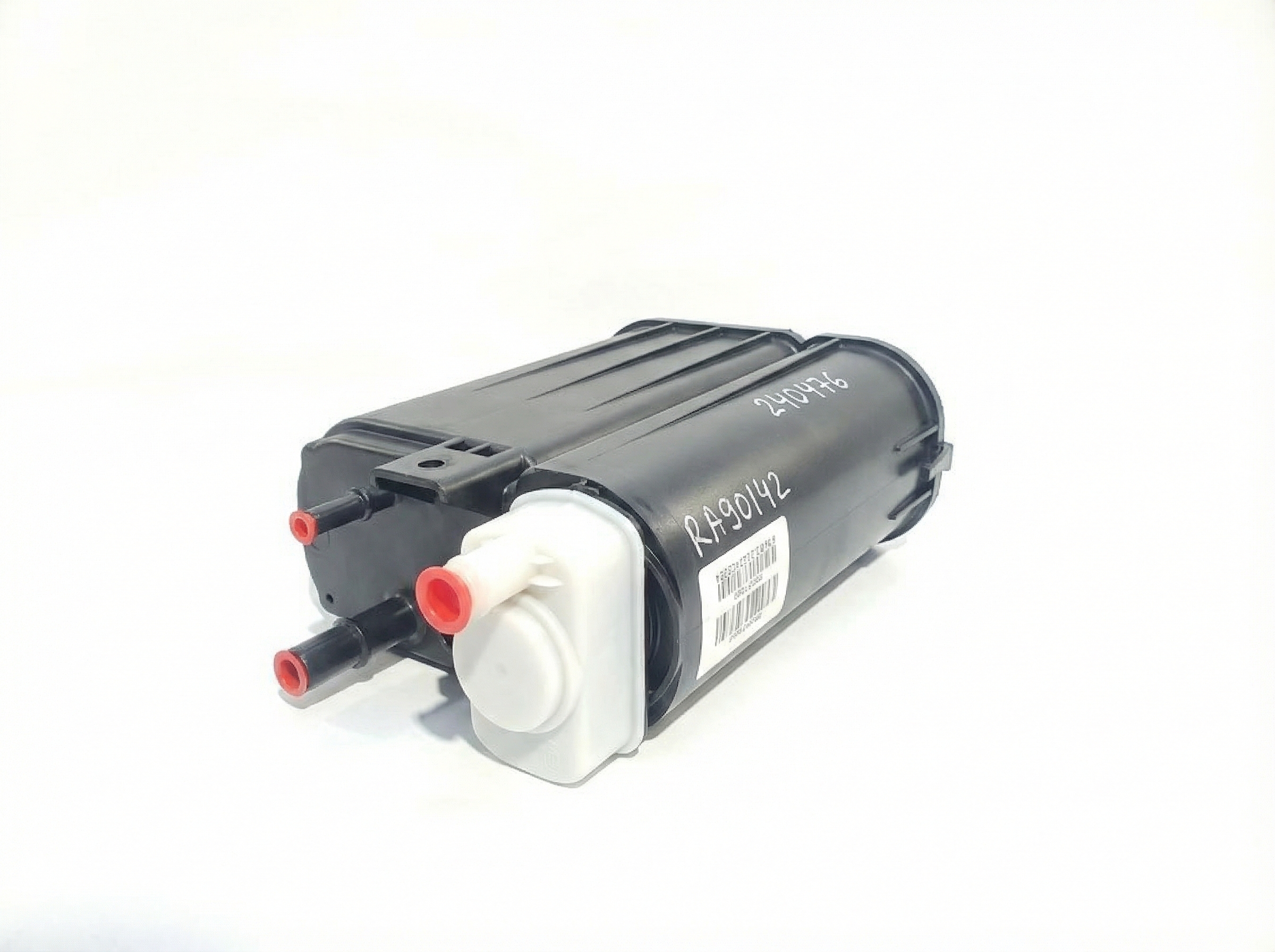
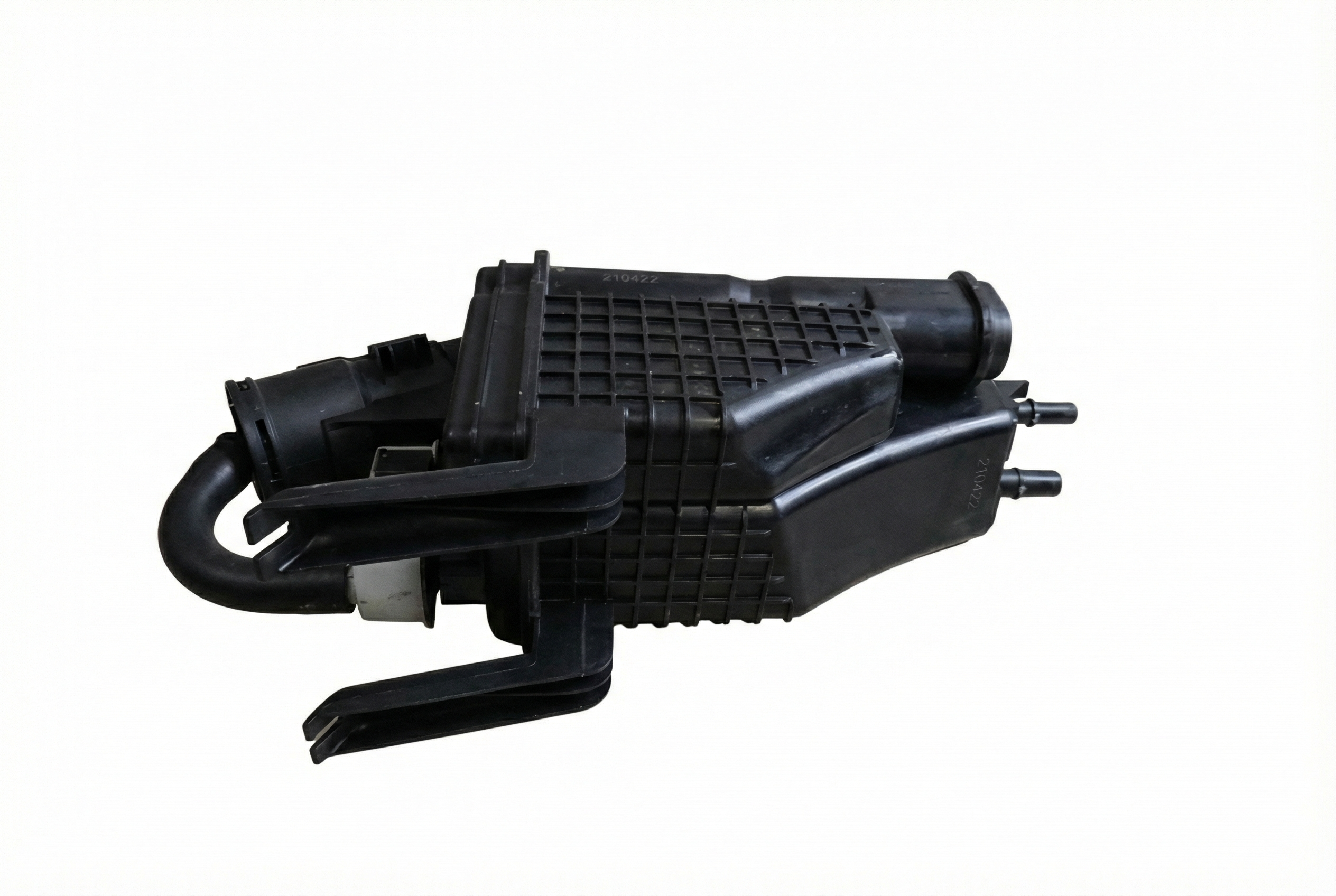
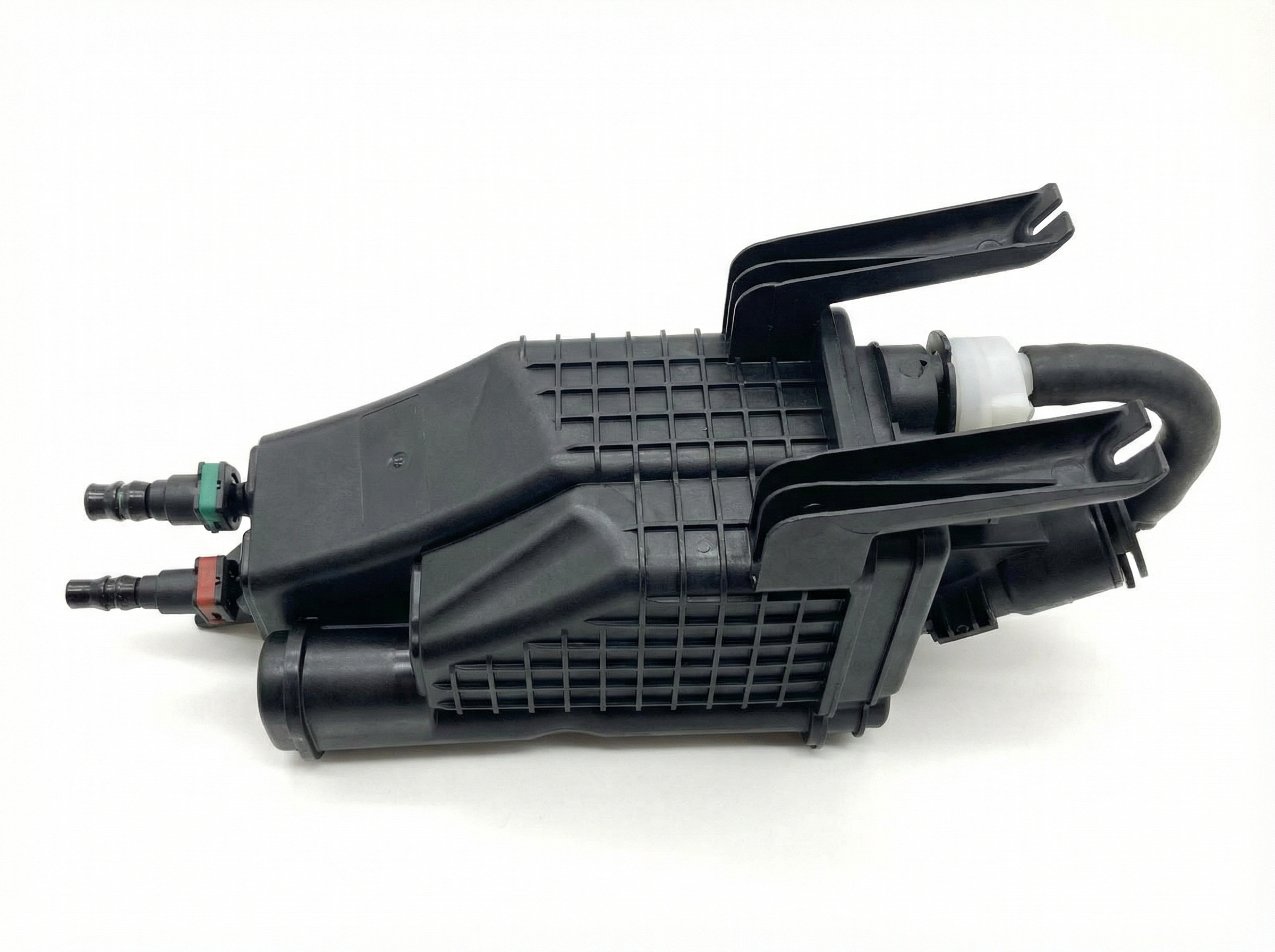
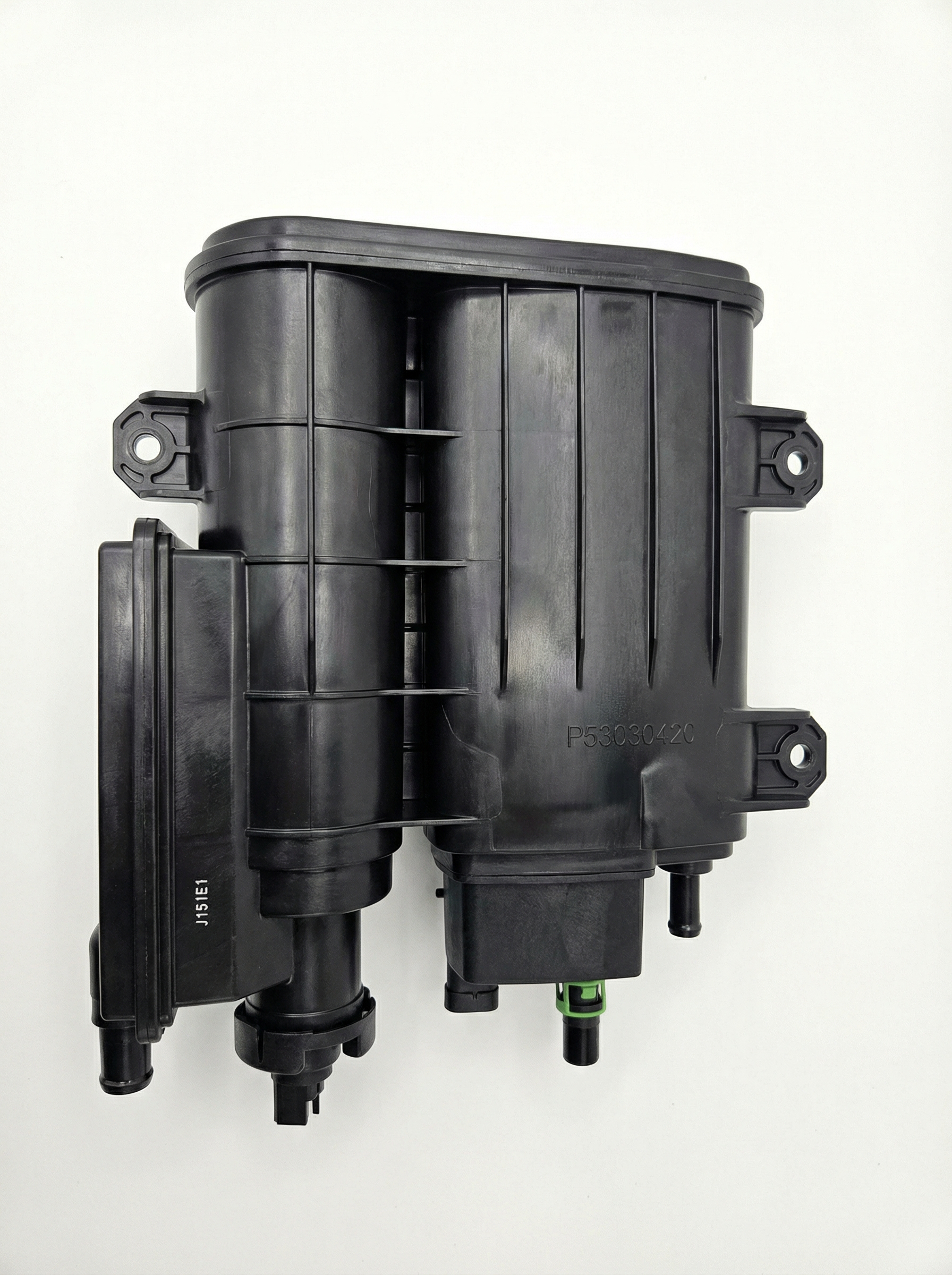
When a used part is the smart pick: A used EVAP canister can be a good value, as they are durable plastic boxes that typically only fail due to physical damage (cracks from off-roading) or contamination from consistently overfilling the fuel tank. If a donor vehicle is low-mileage and shows no signs of impact in that area, a used canister is a reasonable choice.
Donor-vehicle mileage cap: roughly under 80000 miles for the part to have meaningful remaining life.
What to inspect on the donor part:
- Inspect the canister body thoroughly for any cracks, especially around mounting tabs and hose ports.
- Check for signs of fuel saturation or a very strong raw fuel smell, which indicates contamination from over-filling.
- Ensure all hose nipples are intact and not brittle or cracked.
OEM-only on this vehicle (don't cheap out):
- Fuel Tank Pressure (FTP) Sensor (for 3.6L models). The labor to drop the fuel tank is significant, making the risk of a premature failure from a used or questionable aftermarket sensor unwise. The cost savings do not justify the risk of having to do the job twice.
Aftermarket brands forum-validated for this vehicle:
- Duralast (ESIM): One user reported a successful repair with a Duralast ESIM (Part # ESM1001).
- Standard Motor Products (ESIM): Generally considered a reliable aftermarket brand.
Brands owners have reported issues with on this vehicle:
- Dorman (ESIM): While many have used this part successfully, at least one user reported a catastrophic failure where a Dorman ESIM (Part # 310-215) allegedly shorted and destroyed the Powertrain Control Module (PCM), requiring a costly repair. This indicates potential quality control issues, and the part should be used with caution.
Real Owner Stories
Aggregated from forums and TSBs cited above. Mileages and costs reflect what owners reported in those sources.
2009 Jeep Wrangler 3.8L
Symptoms: A user documented diagnosing a P0456 (small leak) code, which was ultimately caused by a faulty ESIM. This component is a primary cause for related EVAP codes like P0451.
What fixed it: The owner replaced the ESIM by disconnecting the electrical plug and hose, pressing a release tab, and twisting the module out of the canister.
Source hint: vehicle_specific_issues: 'Real-world ESIM Replacement (2009 Wrangler)' citing a 'John's Jeep Garage' YouTube video
2012-2018 Jeep Wrangler 3.6L
Symptoms: Check Engine Light with code P0451.
What fixed it: The fix required replacing the FTP sensor. This was a significant job that involved supporting and lowering the fuel tank to access the sensor on top of the fuel pump assembly.
Source hint: vehicle_specific_issues: 'FTP Sensor Replacement Requires Dropping Tank' based on multiple forums and videos
Related OBD-II Codes
Frequently Asked Questions
I have a 2009 Wrangler with a P0451 code. What's the most likely cause?
My Wrangler is a 2015 model. Is the ESIM still the likely problem for P0451?
How can I tell if my ESIM is bad on my 2010 Wrangler without a special scan tool?
My mechanic says they need to drop the fuel tank to fix the P0451 code on my 2014 Wrangler. Is that correct?
My remote start stopped working and my check engine light is on. Could this be related to P0451?
I take my Wrangler off-roading. Could that have caused the P0451 code?
Will a loose gas cap cause a P0451 code on my Jeep?
Helpful Videos
Used OEM Parts in Stock

New Aftermarket Parts Available


The information in this article is provided for general reference and educational purposes only. Vehicle specifications, procedures, and part compatibility can vary by production date, trim level, and region. Always consult your vehicle's factory service manual and verify part numbers before purchasing or performing repairs. Safety-critical components such as airbags, seat belts, and braking systems should be installed by a qualified professional.
- Jeep Wrangler:
- 🎬 Helpful Videos
- 🛍️ Shop This Part
- What's Unique About the 2007-2018 Jeep Wrangler
- Symptoms You May Notice
- Most Likely Causes
- Rare But Worth Checking
- Diagnosis Steps
- Parts You'll Likely Need
- Related Codes That Often Appear With This One
- Platform-Specific Known Issues
- Mechanic-Grade Diagnostic Values
- Scan Tool Commands That Help
- Real Owner Repair Stories
- "I Checked Everything" — The Actual Cause
- OEM Part Supersession History
- Model Year Variations Within This Range
- Diagnostic Flowchart
- Other Known Issues on This Vehicle
- Used vs. New Parts: Buying Guide for This Vehicle
- Real Owner Stories
- 2009 Jeep Wrangler 3.8L
- 2012-2018 Jeep Wrangler 3.6L
- Related OBD-II Codes
- Frequently Asked Questions
- 🎟️ Get 5% Off