

OBD-II Code P0440: Evaporative Emission System Malfunction
The Ultimate Guide to Diagnosing and Fixing P0440
- Inspect and tighten your gas cap before buying any parts, as a loose or degraded cap causes over 50% of P0440 codes and costs under $30 to replace.
- You can safely drive with a P0440 code for 1-2 weeks, but your vehicle will automatically fail state emissions tests and disable convenience features like remote start.
- Test the EVAP purge and vent valves if a new OEM gas cap fails to clear the code; these solenoids cost $30-$150 and are the most common mechanical failures.
- Schedule a professional EVAP smoke test for $120-$250 to pinpoint hidden leaks in hoses or rusted filler necks instead of blindly replacing expensive emissions components.
What Does P0440 Mean?

The P0440 code means your car's computer detected a general problem in the Evaporative Emission (EVAP) Control System. This system captures gasoline vapors from the fuel tank and prevents them from escaping into the atmosphere. The code indicates the system has a leak or is not sealing correctly, but it doesn't specify the leak's size or location. A physical leak, a faulty valve, a blocked line, or an electrical fault triggers it.
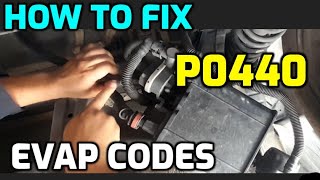
Technical definition: The official SAE/ISO definition for P0440 is "Evaporative Emission Control System Malfunction 🎬 Watch: Step-by-step guide to fixing the P0440 code". This generic code sets when the Engine Control Module (ECM) runs a self-test on the EVAP system and detects it cannot maintain pressure or vacuum. The ECM commands the vent and purge valves to close, sealing the system, then monitors the fuel tank pressure (FTP) sensor. If pressure changes faster than a pre-programmed threshold over two consecutive tests, the code sets. The test only runs under specific conditions, including ambient temperatures between 4-32°C (39-89°F) and a fuel level between 15-85%.
Can I Drive With P0440?
Yes, But With Caution. Driving with code P0440 is safe for short periods (1-2 weeks) and will not cause immediate engine damage. However, your vehicle will fail an emissions test, fuel economy drops slightly, and a persistent fuel smell is common. On some vehicles, features like remote start are disabled. Ignoring the code long-term stresses the catalytic converter due to incorrect air-fuel mixtures, risking a repair that costs over $1,500.
Common Causes


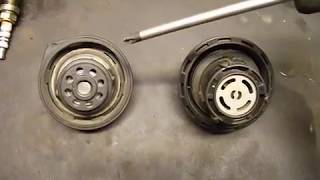
- Loose, Damaged, or Incorrect Gas Cap (Very Common) — The gas cap is a critical part of the sealed EVAP system. A cap not tightened until it clicks, a cracked seal, or a low-quality aftermarket cap causes a leak and triggers the code. This is the most frequent and easiest-to-fix cause.
- Faulty EVAP Purge Valve/Solenoid (Common) — This valve controls the flow of stored fuel vapors from the charcoal canister to the engine. If it sticks open or closed, or fails electrically, it disrupts the system's ability to seal and hold pressure during its self-test.
- Faulty EVAP Vent Valve/Solenoid (Common) — Located near the charcoal canister, this valve opens to allow fresh air into the system and closes to seal it for leak testing. A vent valve stuck open prevents the system from holding vacuum. It is highly susceptible to corrosion and water intrusion.
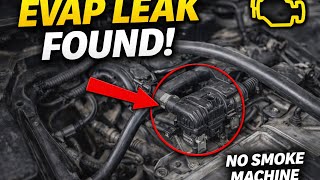
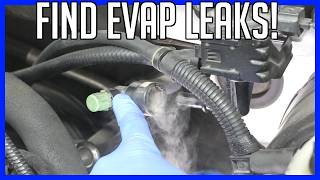
- Cracked, Disconnected, or Blocked EVAP Hoses/Lines (Common) — The rubber and plastic hoses connecting the fuel tank, charcoal canister, and purge valve become brittle, crack, or disconnect over time. These leaks are often tiny and require a smoke test to locate. 🎬 See how to find EVAP leaks without a smoke machine
- Rusted or Damaged Fuel Filler Neck (Less Common) — In regions with heavy road salt use, the metal fuel filler neck rusts and develops pinhole leaks. This prevents the gas cap from creating a proper seal, leading to a persistent P0440 code even with a brand-new cap.
- Leaking or Damaged Charcoal Canister (Less Common) — The charcoal canister stores fuel vapors. It cracks from road debris or fails internally. Overfilling the gas tank ('topping off') floods the canister with liquid fuel, destroying the charcoal pellets and triggering the code.
- Faulty Fuel Tank Pressure (FTP) Sensor (Rare) — This sensor monitors EVAP system pressure. If it fails or provides an inaccurate reading (e.g., stuck on one voltage), it sends incorrect data to the ECM, falsely indicating a leak.
- Leaking Fuel Tank or Sending Unit Gasket (Rare) — The fuel pump and sending unit are sealed to the top of the fuel tank with a large O-ring. Over time, this gasket dries out and cracks, creating a leak at the top of the tank.
Symptoms
- Check Engine Light is On — This is the most common and often the only symptom. The light illuminates after the system fails its self-test on two consecutive trips.
- Failed Emissions Test — The vehicle automatically fails a smog or emissions test because P0440 indicates a fault in a primary emissions control system.
- Fuel Smell — A noticeable smell of gasoline around the vehicle, especially near the gas cap or rear wheels, indicates fuel vapors are escaping instead of being contained.
- Slight Decrease in Fuel Economy — Because fuel vapors escape instead of being burned by the engine, overall miles per gallon (MPG) drops slightly, though often too small to notice immediately.
- Slightly Rough Idle or Hard Starting (also visible on scanner) — If the purge valve is stuck open, an un-metered amount of fuel vapor enters the engine at the wrong time. This disrupts the air-fuel ratio, causing a rough idle or difficulty starting after refueling.
Diagnostic Flowchart
Tap your situation to follow the diagnostic path that matches what you're seeing on this code.
Common Fixes & Costs
- Tighten or Replace Gas Cap — Parts: $15-$50, Labor: $0, ~0.1 hr book time (DIY)
- Replace EVAP Purge Valve/Solenoid
— Parts: $30-$150, Labor: $50-$150, ~0.8 hr book time
(DIY)
: OEM
: OEM
: OEM - Replace EVAP Vent Valve/Solenoid
— Parts: $40-$170, Labor: $75-$200, ~1.2 hr book time
(Intermediate)
: OEM
: OEM
: OEM - Perform Diagnostic Smoke Test — Parts: $0, Labor: $120-$250, ~1.5 hr book time (Professional)
- Repair or Replace Cracked EVAP Hose — Parts: $20-$50, Labor: $50-$120, ~1 hr book time (Intermediate)
- Replace Rusted Fuel Filler Neck — Parts: $100-$300, Labor: $150-$300, ~1.8 hr book time (Professional)
- Replace Charcoal Canister
— Parts: $250-$700, Labor: $100-$250, ~1.5 hr book time
(Professional)
: OEM
DIY vs Professional
- Tighten or Replace Gas Cap — Beginner: True
- Replace EVAP Purge Valve/Solenoid — Beginner: True
- Replace EVAP Vent Valve/Solenoid — Beginner: False
- Perform Diagnostic Smoke Test — Beginner: False
- Repair or Replace Cracked EVAP Hose — Beginner: False
- Replace Rusted Fuel Filler Neck — Beginner: False
- Replace Charcoal Canister — Beginner: False
Used vs. New Parts: Buying Guide
When a used part is worth it: For purely mechanical, non-wear items like a fuel filler neck or specific hoses from a low-mileage, non-rust-belt donor, a used part is cost-effective. Avoid used electronic components.
Donor-vehicle mileage cap: roughly under 60000 miles for the part to have meaningful remaining life.
Donor quality checklist:
- Verify the donor vehicle was not scrapped for an emissions-related failure.
- For metal parts like filler necks, ensure the donor is from a dry, salt-free climate.
- Match OEM part numbers exactly; visual matches have different internal calibrations.
Decision logic:
- If Part is electronic (purge valve, vent solenoid, pressure sensor) → Buy new. Used electronic parts have no reliable way to determine remaining life and are a high risk for repeat failure.
- If Part is a charcoal canister → Strongly favor new. A used canister is often partially saturated with fuel or has internal damage not visible externally.
- If Part is a simple hose or metal tube and the vehicle is >150k miles → A clean used part is acceptable if the new OEM part is prohibitively expensive or unavailable.
Warranty tradeoff: Used parts from salvage yards typically offer a 30-90 day warranty. New aftermarket parts often come with a 1-year to limited lifetime warranty. New OEM parts usually have a 1-year warranty.
Worst-case if a used part fails: $200-$500 if a used part fails shortly after installation, representing the cost of repeat labor and diagnosis.
What Happens If You Wait — Timeline
- 0-1 month: Check Engine Light illuminates. Vehicle fails emissions tests. A faint fuel smell is possible. No noticeable impact on driving performance. (MPG impact: 0-1%% · Added cost: $0)
- 1-6 months: If the purge valve is stuck open, it creates a constant vacuum leak. The engine computer compensates, but the air-fuel mixture runs slightly lean, causing a minor drop in fuel economy and a rough idle. (MPG impact: 1-3%% · Added cost: $20-$80 in wasted fuel.)
- 6-18 months: A prolonged lean condition forces the catalytic converter to run hotter, accelerating its aging process. If the charcoal canister is flooded, it breaks down, sending carbon granules into the EVAP lines and clogging valves. (MPG impact: 3-5%% · Added cost: $0, but risk of catalytic converter damage increases significantly.)
- 18+ months: Sustained high temperatures melt or fracture the internal ceramic substrate of the catalytic converter. This triggers new codes (e.g., P0420) and causes a significant loss of engine power. (MPG impact: 5-15%% · Added cost: $1200 - $2800 for catalytic converter replacement plus the original EVAP repair.)
Cost of Not Fixing It
- 0-3 months: Failed emissions test, slight drop in MPG (1-2%), and potential fuel smell. No direct damage to other components occurs. (Added cost: Negligible, other than the cost of wasted fuel.)
- 3-12 months: If the purge valve is stuck open, it creates a constant vacuum leak, leading to lean fuel conditions. This stresses the catalytic converter by causing it to run hotter than normal. (Added cost: $0, but risk of future expensive repairs increases.)
- 12+ months: Prolonged lean conditions from a stuck-open purge valve eventually lead to catalytic converter failure. Fuel-saturated charcoal canisters break down, sending granules into purge lines and causing blockages. (Added cost: $1200 - $2800 for catalytic converter replacement; $400 - $800 for canister and valve replacement.)
Diagnosis Steps

- Check the Gas Cap
Remove the gas cap and inspect the rubber O-ring for cracks. Ensure it is the correct OEM-spec cap. Reinstall it and turn it until it clicks several times. Clear the code with a scanner and drive for a few days to see if the light returns.
Tools: None (Beginner) - Visual Inspection of EVAP System
Trace the vapor lines from the engine bay to the charcoal canister at the rear. Look for cracked, brittle, disconnected, or collapsed hoses. Use a flashlight to inspect the fuel filler neck for heavy rust or corrosion.
Tools: Flashlight, Safety Glasses (Beginner) - Scan for Other Codes and Review Freeze Frame Data
Use an OBD-II scanner to check for pending codes. Codes like P0441, P0442, or P0455 narrow down the fault. Review freeze-frame data to see the vehicle's operating conditions (temperature, speed, fuel level) at the exact moment the code triggered.
Tools: OBD-II Scanner (Beginner) - Test the Purge & Vent Valve Resistance
Disconnect the electrical connector from the purge or vent valve. Using a multimeter set to Ohms (Ω), measure the resistance between the two pins. A normal reading is typically 14-30 Ohms. An infinite reading (OL) means the coil is open; a zero reading means it's shorted. Replace the valve if it fails this test.
Tools: Multimeter, Socket Set/Pliers (Intermediate) - Perform a Smoke Test
Connect an EVAP-approved smoke machine to the system's service port. Introduce smoke at a regulated pressure of no more than 1 PSI (13-14 inH2O). Watch for smoke escaping from hoses, the canister, filler neck, or gaskets to pinpoint the exact leak location.
Tools: EVAP Smoke Machine, Service Port Adapter (Advanced) - Test Fuel Tank Pressure (FTP) Sensor Voltage
Connect a scan tool and view live data for the FTP sensor. With the gas cap off, voltage should be around 2.5V. Applying a slight vacuum should cause the voltage to drop (except on GM vehicles, where logic is reversed). If voltage is stuck near 0V or 5V, check the sensor's wiring before replacing it.
Tools: OBD-II Scanner with Live Data, Multimeter (Advanced) - Use a Bi-Directional Scan Tool
Command the normally-open vent valve to close and the normally-closed purge valve to open using a professional scan tool. While monitoring FTP sensor data, verify if the valves function correctly. If commanding the vent valve closed doesn't allow the system to hold pressure during a smoke test, the valve is faulty.
Tools: Bi-Directional Scan Tool (Professional) - Check for PCM/ECM Updates
Manufacturers occasionally release software updates (TSBs) for the Powertrain Control Module to correct overly sensitive EVAP monitor parameters. A dealership or professional shop checks if updates are available for your VIN.
Tools: Professional Scan Tool, Access to TSBs (Professional)
When This Code Triggers (Freeze-Frame Conditions)
- Engine Coolant Temp: 70-100°C (160-212°F) (Engine fully warmed up.)
- RPM: 1200-3000 (Cruise / steady throttle during test.)
- Engine Load: 20-40% (Steady part-throttle, not heavy acceleration.)
- Vehicle Speed: 45-65 mph (Sustained highway or cruising speed.)
Related Codes
- P0455 — Indicates a 'Large Leak'. If you see P0455, the computer definitively detected a massive leak, such as a missing gas cap or a disconnected hose. P0440 is a general malfunction code that appears alongside it.
- P0442 — Indicates a 'Small Leak'. This means the ECM detected a slower rate of pressure loss than P0455. Diagnostically, a P0442 almost always requires a smoke test to find the source.
- P0441 — Indicates 'Incorrect Purge Flow'. This is a flow code, not a leak code. It points specifically to a purge valve stuck closed, a blockage in the purge line, or a bad charcoal canister.
- P0456 — Indicates a 'Very Small Leak'. This points to a tiny pinhole leak in a hose or a failing seal on the gas cap. This is the most difficult leak to find and necessitates a smoke test with UV dye.
Climate & Environmental Factors
- Road Salt / High Humidity: In regions using road salt, metal components like the fuel filler neck and EVAP line fittings suffer accelerated rust. This causes pinhole leaks that trigger a P0440 code and require a smoke test to find.
- Extreme Cold: The EVAP monitor self-test does not run if the ambient temperature is below freezing (approx. 4°C / 39°F). This delays the Check Engine Light from appearing. Extreme temperature fluctuations also cause plastic hoses to crack.
- High Altitude: Some vehicle systems have a barometric pressure (BARO) parameter and will not initiate the EVAP test above a certain altitude (e.g., 8,500 feet). The pressure differential affects test accuracy.
How to Talk to a Mechanic About This Code
Say this: "I have a P0440 EVAP system code. I've already checked that the gas cap is tight. I'd like to schedule a diagnostic, specifically a smoke test, to find the source of the leak."
This signals that you've done basic homework and steers the mechanic away from just replacing the gas cap. It focuses them on the most effective diagnostic step (a smoke test) and prevents unnecessary parts replacement.
Avoid saying:
- 'My check engine light is on, can you look at it?'
- 'Just fix whatever's wrong.'
- 'My friend said it's probably the purge valve, can you just replace that?'
Questions to ask before authorizing the repair:
- Did the smoke test reveal the exact location of the leak?
- Can you show me the failed part or a picture of the leak?
- Is the recommended part an OEM or aftermarket part, and what is the warranty on the part and your labor?
Where to Take It: Dealer vs Independent vs Chain
- Dealer:
Best for: Vehicles still under an emissions warranty., Known manufacturer-specific issues covered by a Technical Service Bulletin (TSB)., Complex electrical issues or those requiring PCM software updates.
Downsides: Highest labor rates, often 1.5-2x more than independent shops., Dealers frequently recommend replacing an entire assembly (like a charcoal canister with integrated valves) when only one part failed. (Typical cost: +50% vs. baseline) - Independent Shop:
Best fit for most P0440 repairs. A reputable independent shop has the necessary smoke machine and diagnostic tools to accurately find and fix the common causes of this code at a reasonable price.
Best for: Most out-of-warranty vehicles., Standard diagnostic procedures like smoke tests and component replacement., Building a long-term relationship with a trusted mechanic.
Downsides: Quality varies greatly; vet the shop through reviews and ASE certifications., May lack access to the very latest manufacturer TSBs or proprietary software. (Typical cost: +0% vs. baseline) - Chain Shop:
Use with caution. Acceptable for a free code scan or a simple gas cap replacement, but AVOID for diagnosing a persistent P0440 that requires a smoke test or electrical troubleshooting.
Best for: Simple, clear-cut repairs like replacing a gas cap or an easily accessible purge valve.
Downsides: Technician skill and equipment vary dramatically., Often lack the specialized smoke machine or advanced scan tools for a proper diagnosis., Business model pressures technicians to upsell unnecessary services. (Typical cost: -10% vs. baseline)
When to Walk Away From the Repair
If the estimated repair cost for the P0440 code exceeds 40-50% of your car's private-party value (e.g., from Kelley Blue Book), pause and consider your options.
- Car worth $3000, fix is $600: Fix it. This repair cost is well below the threshold and is necessary to pass emissions.
- Car worth $2000, fix is $900: Borderline. Get a second opinion before authorizing. If the car has other pending issues, consider selling.
- Car worth $1500, fix is $1000: Walk away. The repair cost is too high relative to the car's value. Put the money towards a replacement vehicle.
What Scan Tool You Need for This Code

Minimum: A code reader that reads and clears codes, and views live data for the Fuel Tank Pressure (FTP) sensor.
A basic $20 reader just gives you the P0440 code. It cannot show live pressure sensor data or command valves to operate, which are crucial for diagnosing if the issue is a valve, a sensor, or a physical leak.
Budget: BlueDriver Pro (~$90) — Reads and clears codes, provides freeze-frame data, and graphs live data like EVAP system pressure. It includes a database of reported fixes for P0440 on your specific vehicle. It does not offer bi-directional control.
Mid-range: Foxwell NT510 Elite (~$180) — Includes full bi-directional control, allowing you to command the purge and vent solenoids to open or close. This 'active test' capability confirms if a valve is working without having to remove it first.
Professional: Autel MaxiCOM MK808S (~$450) — Offers full bi-directional control to run active tests on all EVAP components. It provides comprehensive all-system diagnostics and includes advanced service functions useful for other repairs.
Rent vs buy: For a one-time diagnosis, auto parts stores let you borrow a basic scanner for free. However, a basic scanner only reads the code. To properly diagnose P0440, you need live data and ideally bi-directional control, making a purchase a better investment.
How to Clear the Code After You Fix It
- Use an OBD-II scan tool to clear the code.
- Perform a complete EVAP drive cycle to set the readiness monitor.
Drive cycle (~30 minutes): Start with a cold engine (sat 8+ hours) and fuel between 1/4 and 3/4 full. Idle for 2-3 minutes. Drive at a steady speed of 45-65 mph for 10-15 minutes. Perform a few slow decelerations without braking hard. Allow the car to cool down completely and repeat if necessary.
Readiness monitors affected: EVAP System Monitor, Catalyst Monitor, O2 Sensor Monitor
Before emissions retest: drive at least 100 miles to fully set monitors.
Watch out for:
- Disconnecting the battery clears codes but resets all readiness monitors, guaranteeing an emissions test failure until a full drive cycle is completed.
- The code returns if the root cause (the leak) is not fixed, even after being cleared.
- Not meeting specific conditions (cold start, fuel level) prevents the EVAP monitor from running its test.
Will This Fail Emissions / State Inspection?
Yes — this code typically fails an OBD-II emissions inspection.
- California: An active P0440 code is an automatic failure. All OBD readiness monitors must be set to 'Ready' for the test to proceed. Clearing the code right before the test results in a 'Not Ready' failure.
- New York: The NYVIP3 inspection includes an OBD-II scan. A P0440 code causes an automatic failure. Most areas allow one readiness monitor (typically EVAP) to be 'Not Ready' on vehicles 2001 and newer, but an active code is still a fail.
- Texas: In the 17 counties requiring emissions testing, a P0440 code results in a failed OBD-II test. The vehicle cannot be registered until the repair is made and the test is passed.
Most Commonly Affected Vehicles
- Toyota Camry, Corolla, Sienna, 4Runner (1998-2011) — Often caused by a faulty gas cap or a failed Vacuum Switching Valve (VSV) on the charcoal canister. For early 2000s models, the entire canister assembly is a common failure point.
- Chevrolet / GMC Silverado, Tahoe, Impala, Trailblazer (2000-2012) — Common issues include faulty purge and vent valve solenoids. On 2004-2010 trucks, the vent valve is prone to water intrusion; GM released TSB 09-06-04-028D with a redesigned part. Rusted fuel filler necks are also very common.
- Dodge / Ram / Jeep Ram 1500, Grand Caravan, Wrangler, Grand Cherokee (2005-2020) — Failures of the purge solenoid are common. On newer Jeeps (2012+), a faulty EVAP System Integrity Module (ESIM) causes the code. A P0440 code disables the remote start feature on these vehicles.
- Ford F-150, Focus, Escape, Explorer (2004-2014) — The canister vent valve is a frequent failure point. On vehicles with the capless fuel filler system (post-2009), debris in the filler opening prevents a proper seal. A special funnel is required to clean it.
- Hyundai / Kia Sonata, Elantra, Optima, Sorento, Sportage (2011-2020) — The canister purge valve is a frequent failure point, particularly on 2.0L and 2.4L GDI engines. It gets stuck, causing P0440 and P0441 codes. It is an inexpensive and easy part to replace.
- Honda Accord, Civic, CR-V, Odyssey (2003-2015) — Failures are often related to the EVAP purge valve or the vent valve solenoid. Aftermarket gas caps are a known cause of repeat codes on Hondas; always use OEM.
- Nissan Altima, Sentra, Pathfinder, Frontier (2002-2012) — The EVAP vent control valve, located on the canister, is a very common failure. It corrodes and gets stuck. A faulty gas cap is the second most likely cause.
- Subaru Outback, Legacy, Impreza, Forester (1999-2009) — Issues relate to leaking components near the charcoal canister. Rust on the fuel filler pipe is a known problem leading to leaks that a new gas cap won't fix. A smoke test is required.
Manufacturer-Specific Notes
- Toyota: On early 2000s models, the entire charcoal canister assembly, which includes integrated Vacuum Switching Valves (VSVs), is a common failure point. TSB EG013-02 addresses faulty VSVs causing P0440, P0441, and P0446.
- Jeep / Dodge / Chrysler: On modern Wranglers, Grand Cherokees, and Ram trucks, a persistent P0440 code automatically disables the remote start feature. The EVAP System Integrity Module (ESIM) is a known failure point.
- General Motors (Chevy/GMC): On trucks and SUVs, the vent valve solenoid fails frequently from water intrusion. GM issued TSB 09-06-04-028D with a relocation kit to move the valve's air filter.
- Ford: Many Ford vehicles use a capless fuel filler system. The internal spring-loaded flap gets stuck due to dirt or debris, triggering a P0440 code. A special cleaning tool is needed to clean the seal.
Real Owner Stories
2001 Chevrolet Silverado 1500
Check Engine Light with P0440 code returned after replacing the gas cap and the canister purge valve.
What they tried:
- Replaced gas cap - code returned.
- Replaced canister purge valve - code returned.
Outcome: A professional smoke test revealed a rusted filler neck, a common issue on these trucks. Replacing the filler neck permanently resolved the code.
Lesson: Stop replacing parts blindly. After checking the gas cap, a smoke test is the most cost-effective next step to pinpoint the actual leak location.
2015 Jeep Grand Cherokee
P0440 code appeared, causing the Check Engine Light to illuminate and disabling remote start.
What they tried:
- Searched forums for common failure points on the Pentastar V6 engine.
Outcome: A visual inspection revealed a split in a specific evaporative emissions hose on the passenger side of the engine. Replacing this $20 hose resolved the code and restored remote start.
Lesson: Search for your specific make and model's common P0440 causes. Known weak points, like specific EVAP hoses on the Pentastar V6, often lead you directly to the problem.
1997 Subaru Legacy
Persistent P0440 code and a strong gasoline smell when the tank was more than half full.
What they tried:
- Multiple visual inspections of the main fuel filler pipe.
Outcome: The owner discovered the smaller metal fill vent pipe rusted completely through where it passed through the frame rail. They repaired the section with a piece of 5/8" OD copper tubing for free.
Lesson: In salt-belt states, rust is the primary suspect. Inspect all smaller metal vent lines, especially where they pass through the frame or are covered by plastic guards that trap moisture.
Dodge Ram 1500 with 135k miles
Battled a recurring P0440 code for two years, sometimes accompanied by small and large leak codes.
What they tried:
- Replaced gas cap, EVAP solenoid, and other components.
- Used a stethoscope to listen for leaks.
Outcome: The owner built a DIY smoke machine and found the leak at the top of the fuel tank. The plastic top of the fuel pump assembly was corroded and leaking under the main retaining ring.
Lesson: For persistent leaks, the source is sometimes unusual. A leak from the fuel pump gasket is rare but possible, and a smoke test is the only way to find it.
How to Prevent This Code From Triggering
- Stop fueling at the first click (Every fill-up) — Consistently 'topping off' forces liquid fuel into the vapor-only charcoal canister. This saturates and destroys the carbon pellets, causing permanent blockages and a costly canister replacement.
- Use an OEM gas cap (When replacing a faulty cap) — Aftermarket gas caps frequently cause recurring P0440 codes because their seals fail to meet the exact pressure specifications required by the EVAP system. Always buy OEM.
- Periodically inspect EVAP hoses (During regular oil changes) — Rubber and plastic EVAP hoses become brittle and crack with age and heat. A quick visual inspection for obvious cracks or loose connections catches problems before they set a code.
- Clean the gas cap seal and filler neck (Once a year) — Dirt and grime build up on the gas cap's rubber O-ring and the metal filler neck, preventing a perfect seal. Wiping both surfaces with a clean cloth prevents slow leaks.
Frequently Asked Questions
Can I fix a P0440 code myself?
Yes, in many cases. The most common cause is a loose or bad gas cap, which is a very easy DIY fix. Replacing the purge valve is also beginner-friendly, but finding hidden leaks requires a smoke machine.
Will a P0440 code clear itself?
If the cause was a loose gas cap that you tightened, the code clears itself after several drive cycles. For any other issue, the code remains until the faulty part is repaired and the code is manually cleared with a scan tool.
What are common misdiagnosis mistakes with a P0440?
The most common mistake is 'firing the parts cannon' by replacing the purge valve or gas cap when the real issue is a cracked hose. Another pitfall is buying a cheap, aftermarket gas cap that doesn't seal correctly. Always perform a smoke test before replacing expensive components.
My remote start doesn't work. Is it related to the P0440 code?
Yes, it is directly related. On many modern vehicles (especially Jeep, Dodge, and Chrysler), the computer automatically disables remote start whenever the Check Engine Light is on for an emissions fault. Restoring the feature requires fixing the P0440 fault and clearing the code.
Why did the P0440 code appear after getting gas?
This happens if you didn't tighten the gas cap until it clicked, or if you 'topped off' the tank after the pump clicked off. Overfilling forces liquid gasoline into the vapor-only charcoal canister. This damages the canister and triggers the code.
What is the difference between P0440 and P0441?
P0440 is a general malfunction code indicating a leak or loss of system integrity. P0441 specifically means 'Incorrect Purge Flow', pointing to a blockage or a stuck purge valve rather than a leak to the outside air. P0441 is a flow problem, while P0440 is a pressure problem.
Can a bad battery cause a P0440 code?
It is highly unlikely that a bad battery directly causes a P0440 code. This code specifically monitors the mechanical and electrical integrity of the EVAP system. While a failing battery causes random electrical glitches, P0440 requires a specific failure in the EVAP self-test.
Key Takeaways
- Inspect and tighten your gas cap before buying any parts, as a loose or degraded cap causes over 50% of P0440 codes and costs under $30 to replace.
- You can safely drive with a P0440 code for 1-2 weeks, but your vehicle will automatically fail state emissions tests and disable convenience features like remote start.
- Test the EVAP purge and vent valves if a new OEM gas cap fails to clear the code; these solenoids cost $30-$150 and are the most common mechanical failures.
- Schedule a professional EVAP smoke test for $120-$250 to pinpoint hidden leaks in hoses or rusted filler necks instead of blindly replacing expensive emissions components.
Helpful Videos
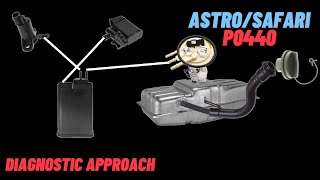

The information in this article is provided for general reference and educational purposes only. Vehicle specifications, procedures, and part compatibility can vary by production date, trim level, and region. Always consult your vehicle's factory service manual and verify part numbers before purchasing or performing repairs. Safety-critical components such as airbags, seat belts, and braking systems should be installed by a qualified professional.
- 🎬 Helpful Videos
- What Does P0440 Mean?
- Can I Drive With P0440?
- Common Causes
- Symptoms
- Diagnostic Flowchart
- Common Fixes & Costs
- DIY vs Professional
- Used vs. New Parts: Buying Guide
- What Happens If You Wait — Timeline
- Cost of Not Fixing It
- Diagnosis Steps
- When This Code Triggers (Freeze-Frame Conditions)
- Related Codes
- Climate & Environmental Factors
- How to Talk to a Mechanic About This Code
- Where to Take It: Dealer vs Independent vs Chain
- When to Walk Away From the Repair
- What Scan Tool You Need for This Code
- How to Clear the Code After You Fix It
- Will This Fail Emissions / State Inspection?
- Most Commonly Affected Vehicles
- Manufacturer-Specific Notes
- Real Owner Stories
- 2001 Chevrolet Silverado 1500
- 2015 Jeep Grand Cherokee
- 1997 Subaru Legacy
- Dodge Ram 1500 with 135k miles
- How to Prevent This Code From Triggering
- Frequently Asked Questions
- Can I fix a P0440 code myself?
- Will a P0440 code clear itself?
- What are common misdiagnosis mistakes with a P0440?
- My remote start doesn't work. Is it related to the P0440 code?
- Why did the P0440 code appear after getting gas?
- What is the difference between P0440 and P0441?
- Can a bad battery cause a P0440 code?
- Key Takeaways
- 🎟️ Get 5% Off