

P0451 on 2012-2018 Ford Focus: EVAP Pressure Sensor Causes and Fixes
On a 2012-2018 Ford Focus, code P0451 is most often caused by rodent-damaged wiring to the Fuel Tank Pressure (FTP) sensor on top of the gas tank, or a faulty FTP sensor itself. Inspecting and repairing the wires is the first step before replacing the sensor. This issue is also closely linked to the canister purge valve recall (18S32).
- Before buying any parts, check for open recalls (18S32/19S22) and inspect the FTP sensor wiring on top of the fuel tank for rodent damage.
- Repairing chewed wires is a very common and inexpensive fix for P0451 on this car.
- If the wiring is good, the Fuel Tank Pressure (FTP) sensor itself is the next most likely cause.
- A faulty canister purge valve is also a strong possibility, especially if you also have a P1450 code or problems filling the gas tank.
What's Unique About the 2012-2018 Ford Focus
The 2012-2018 Ford Focus is known for two specific issues related to the EVAP system. First, the wiring for the Fuel Tank Pressure (FTP) sensor, located on top of the fuel tank, is a common target for rodents, and chewed wires are a frequent cause of P0451 and related codes. The soy-based wire insulation used by Ford and other manufacturers is known to attract them. Second, this generation was subject to a major safety recall (18S32 / NHTSA 18V-735) for a faulty canister purge valve that could stick open, causing excessive vacuum, deforming the fuel tank, and triggering various EVAP codes. While P0451 isn't a primary code listed in the recall, a malfunctioning purge system can cause the erratic pressure readings that trigger it. The recall documentation explicitly lists P0452 as a related code.
Symptoms You May Notice
- Check Engine Light is on
- Slight decrease in fuel economy
- Possible fuel odor
- Potential issues when refueling, such as the pump shutting off frequently (if related to a blocked vent or faulty purge valve)
- Rough idle or stalling, particularly if the canister purge valve is stuck open (related to recall 18S32)
- Inaccurate fuel gauge or distance-to-empty reading, if the fuel tank has been deformed by excessive vacuum from a stuck purge valve
- Power loss, hesitation, and rough idle occurring intermittently after a cold start, as noted in NHTSA ODI #11230774.
- Replacing the gas cap. The 2012-2018 Focus has a capless system, so this is not applicable. The issue would be with the filler neck seal itself.
- Replacing the canister purge valve without checking for the more common wiring issue first.
- Replacing the FTP sensor without first confirming the wiring and connector are intact and have proper voltage.
Most Likely Causes
- Damaged Wiring to Fuel Tank Pressure (FTP) Sensor 🔴 High Probability The wiring harness on top of the fuel tank is accessible to rodents and is a known failure point for being chewed through. The soy-based wire insulation can attract them. This issue is also reported on platform mates like the Ford Escape. Manufacturer service bulletins for other Ford models, such as SSM 50348 and SSM 51247, also highlight that P0451 can be triggered by poor wiring harness connections at specific connectors like C1198.
How to confirm: Visually inspect the wiring going to the FTP sensor on top of the fuel tank. In many cases, you can reach a hand or camera above the tank from the rear of the vehicle to check for obvious damage without removing the tank.
Typical fix: Splice in new wires using butt connectors and heat shrink to repair the damaged section of the harness. Wrapping the repaired section in rodent-deterrent tape (e.g., Honda's capsaicin-infused tape) can prevent recurrence.
Est. part cost: $5-$20 for wiring repair supplies and protective tape. - Faulty Fuel Tank Pressure (FTP) Sensor 🟡 Medium Probability The sensor itself can fail, providing incorrect voltage readings to the PCM. On some Focus models, the sensor is integrated into a hose assembly, making replacement more complex and expensive.
How to confirm: With a scan tool, monitor the FTP sensor's voltage PID (FTP_V). With the engine off and the capless fuel filler open, the voltage should be stable (typically around 2.5V-2.7V). If the voltage is stuck high (5V), low (0V), or is erratic after confirming the wiring is intact, the sensor is likely bad.
Typical fix: Replace the Fuel Tank Pressure sensor. On most Focus models, it is located on top of the fuel tank, which may require the tank to be partially lowered for access. Some models have the sensor as part of a larger vapor tube assembly.
Est. part cost: $40-$180, depending on whether it's the sensor alone or part of a hose assembly. - Faulty Canister Purge Valve 🟡 Medium Probability This part is subject to Safety Recall 18S32 (NHTSA 18V-735). A valve that is stuck open or closed will cause abnormal pressure conditions in the EVAP system that the FTP sensor will report as an error.
How to confirm: Check if the vehicle has had recall 18S32 performed. With the engine off, the valve should be closed. You can test it by removing it and trying to blow through it; no air should pass. It is located in the engine bay near the intake manifold.
Typical fix: Replace the canister purge valve and have the dealer perform the associated PCM software update per the recall. The recall fix is free of charge.
Est. part cost: $30-$60 - Debris in Capless Fuel Filler Neck ⚪ Low Probability The capless system can sometimes not seal properly if dirt, rust, or debris gets trapped in the flap, causing the system to fail a vacuum test and potentially leading to erratic readings.
How to confirm: Visually inspect the fuel filler opening for any dirt, rust, or debris that may prevent the internal flap from sealing completely. Use the special funnel that came with the car to open and close it a few times to check for smooth operation.
Typical fix: Clean the opening carefully with a rag and a cleaner like WD-40.
Est. part cost: $0-$10
Rare But Worth Checking
- Faulty Powertrain Control Module (PCM): This is very rare. Before condemning the PCM, all other possibilities, including wiring, sensors, and software updates, must be exhaustively checked.
- Clogged EVAP Canister: If the canister becomes saturated with fuel (often due to overfilling the tank or a faulty purge valve), it can cause pressure issues. This usually presents with other codes as well. The 18S32 recall service includes inspection and, if necessary, replacement of the canister.
- Internal Fuel Tank Issues: According to TSB 25-2431, P0451 can be stored if a fuel vapor line becomes disconnected inside the fuel tank, which may also cause the vehicle to stall upon restart after refueling.
Diagnosis Steps
- Check the vehicle's VIN for open safety recalls, specifically 18S32 or 19S22, related to the canister purge valve and fuel tank deformation. This can be done on the NHTSA website.
- Inspect the capless fuel filler neck for any debris or damage that could prevent a proper seal. Clean as needed.
- From the rear of the vehicle, reach above the fuel tank to visually inspect and feel the wiring harness that connects to the Fuel Tank Pressure (FTP) sensor. Check for any signs of chewed or damaged wires. A phone camera can be helpful.
- If wiring appears damaged, repair it using butt connectors and heat shrink. Consider using rodent-deterrent tape for future protection.
- If wiring is intact, connect a scan tool and monitor the FTP sensor voltage (PID: FTP_V). With the engine off and fuel door open, the reading should be steady, around 2.5V-2.7V.
- If the voltage is stuck at 0V or 5V, or fluctuates wildly, and the wiring is confirmed to be good, the FTP sensor is faulty.
- To replace the sensor, the fuel tank may need to be partially lowered to gain access to the top. On some models, the sensor is part of a larger vapor hose assembly.
- If sensor and wiring are good, investigate the canister purge valve in the engine bay. Check if it's stuck open or closed. Given the high failure rate and recall, replacement is often a wise step.
Parts You'll Likely Need
- Fuel Tank Pressure Sensor
(OEM #BU5A-9C052-A (Verify by VIN, may be part of hose assembly))— This sensor is the primary component monitored by code P0451. It can fail internally, providing incorrect readings.
Trusted brands: Motorcraft, Bosch, Standard Motor Products
OEM price range: $60-$180
Aftermarket price range: $40-$90 - Canister Purge Valve
(OEM #BV6Z-9D289-E (Verify by VIN))— A known failure item on this vehicle, subject to a recall. A stuck valve causes system-wide pressure problems that can trigger P0451.
Trusted brands: Motorcraft
OEM price range: $40-$60
Aftermarket price range: $25-$50 - Wiring Pigtail for FTP Sensor — Needed if the connector itself is damaged by rodents, not just the wires.
Trusted brands: Dorman, Motorcraft
OEM price range: $25-$40
Aftermarket price range: $15-$30
Related Codes That Often Appear With This One
- P0452 — Indicates EVAP Pressure Sensor Circuit Low, often caused by the same wiring or sensor faults. This code is explicitly mentioned in the 18S32 recall TSB.
- P0453 — Indicates EVAP Pressure Sensor Circuit High, also caused by the same wiring or sensor faults.
- P1450 — Indicates 'Unable to Bleed Up Fuel Tank Vacuum.' This code is strongly linked to the faulty canister purge valve cited in recall 18S32.
- P0443 — Indicates an issue with the Purge Control Valve Circuit, pointing directly to the purge valve which is part of the 18S32 recall.
- P0456 — EVAP System Leak Detected (Very Small Leak). An owner reported in NHTSA ODI #11643510 that this code appeared alongside P0451 and P1450.
Technical Service Bulletins (TSBs) & Recalls
- Recall 18S32 / 19S22 (NHTSA Campaign ID: 18V735) - Fuel Tank Deformation due to Stuck Canister Purge Valve.
- Recall 19S22 (NHTSA Campaign ID: 19V435) - Follow-up recall for vehicles where the PCM software was not properly updated during the initial 18S32 service.
- TSB 25-2431 - Notes that P0451 may be stored due to a disconnected fuel vapor line inside the fuel tank, potentially causing stalling after refueling.
- SSM 50348 & SSM 51247 - Manufacturer bulletins indicating that P0451 and other EVAP codes may be caused by wiring harness connection issues at connector C1198.
Platform-Specific Known Issues
- Safety Recall 18S32 / 19S22 (NHTSA 18V-735): Ford issued a recall for a faulty Canister Purge Valve (CPV) that can stick open, creating excessive vacuum that deforms the plastic fuel tank. This leads to inaccurate fuel gauge readings, potential engine stalling, and various EVAP codes. The fix involves a PCM reprogram and
Mechanic-Grade Diagnostic Values
- Fuel Tank Pressure (FTP) Sensor Voltage PID (FTP_V) — expected: ~2.5V - 2.7V with Key On, Engine Off (KOEO) and fuel filler open (atmospheric pressure).. Failure: A voltage stuck at 0V (short to ground), 5V (open circuit/bad sensor), or fluctuating erratically indicates a fault.
- FTP Sensor 5V Reference Voltage (VREF) — expected: 5.0V at the sensor's electrical connector on the reference wire.. Failure: Low or no voltage points to a wiring issue between the sensor and the PCM, or a faulty PCM.
- FTP Sensor Ground Circuit — expected: Near 0V potential to chassis ground.. Failure: Voltage reading significantly above 0V indicates a poor ground connection, which can cause erratic sensor readings.
Scan Tool Commands That Help
- Ford IDS (Integrated Diagnostic System): EVAP System Test — This is a guided, automated test that commands the purge and vent solenoids to seal the system and monitor for pressure changes. It's the dealership-level method to verify the integrity of the entire EVAP system after a repair or to find leaks that are not immediately obvious. It can confirm if the system holds pressure correctly.
- Ford IDS (or equivalent professional scan tool): Manual EVAP Test via Data Logger — Used when the automated test cannot run due to fuel level being outside the 15-85% range. A technician can manually command the purge and vent valves 'on' or 'off' while monitoring the FTP sensor PID to check for pressure changes, effectively performing the test manually.
Wiring & Ground Locations
- G105 — Located on the left side of the motor compartment.. This is a primary engine bay ground point. A corroded or loose connection here can affect various sensors, including those related to the PCM which interprets the FTP sensor signal.
- G303 — Located under the driver's front scuff plate/kick panel area.. This is a major body ground. While less likely to be the direct cause, issues with interior grounds can sometimes create bizarre electrical problems that are hard to trace.
- FTP Sensor Connector — On top of the fuel tank, connected to the FTP sensor or the vapor tube assembly.. This is the primary point of failure for wiring issues. It's a 3-pin connector containing the 5V reference, ground, and signal wires. Damage here from rodents or corrosion will directly cause P0451, P0452, or P0453.
- Canister Purge Valve Fuse — In the engine compartment fuse box (e.g., on a 2015 model, this can be related to fuse F35 which powers multiple engine management systems).. While P0451 is a sensor performance code, it can be triggered by system-wide pressure issues caused by a faulty purge valve. A blown fuse for the purge valve circuit would typically set a different code (like P0443) but could contribute to erratic system behavior.
Real Owner Repair Stories
- Land Rover Forums (similar rodent issue) (Discovery 1 (demonstrates the universality of the problem)) — Found large rats' nests in the engine bay, chewed wires, lumpy idle, and no power. OBDII codes P0451 and a misfire code were present.
❌ Tried (didn't work) Initial wire repairs were made, but the P0451 code persisted, indicating the damage was either not fully repaired or another damaged wire (for the EVAP system) was missed.
✅ What actually fixed it The user identified and repaired chewed injector wires and vacuum lines. The P0451 code pointed towards additional, un-found wiring damage related to the EVAP pressure sensor circuit, a common occurrence in rodent infestations. - NHTSA ODI #11230774 — An owner reported the MIL coming on intermittently with a P0451 code several driving cycles after a cold start, accompanied by rough idle and power loss, even when no obvious repair conditions were present.
OEM Part Supersession History
BV6Z-9D289-D→BV6Z-9D289-E— Standard part revision by the manufacturer, likely for improved durability or performance to address the high failure rate.
Heads up: The new part number is a direct replacement for the old one.
Model Year Variations Within This Range
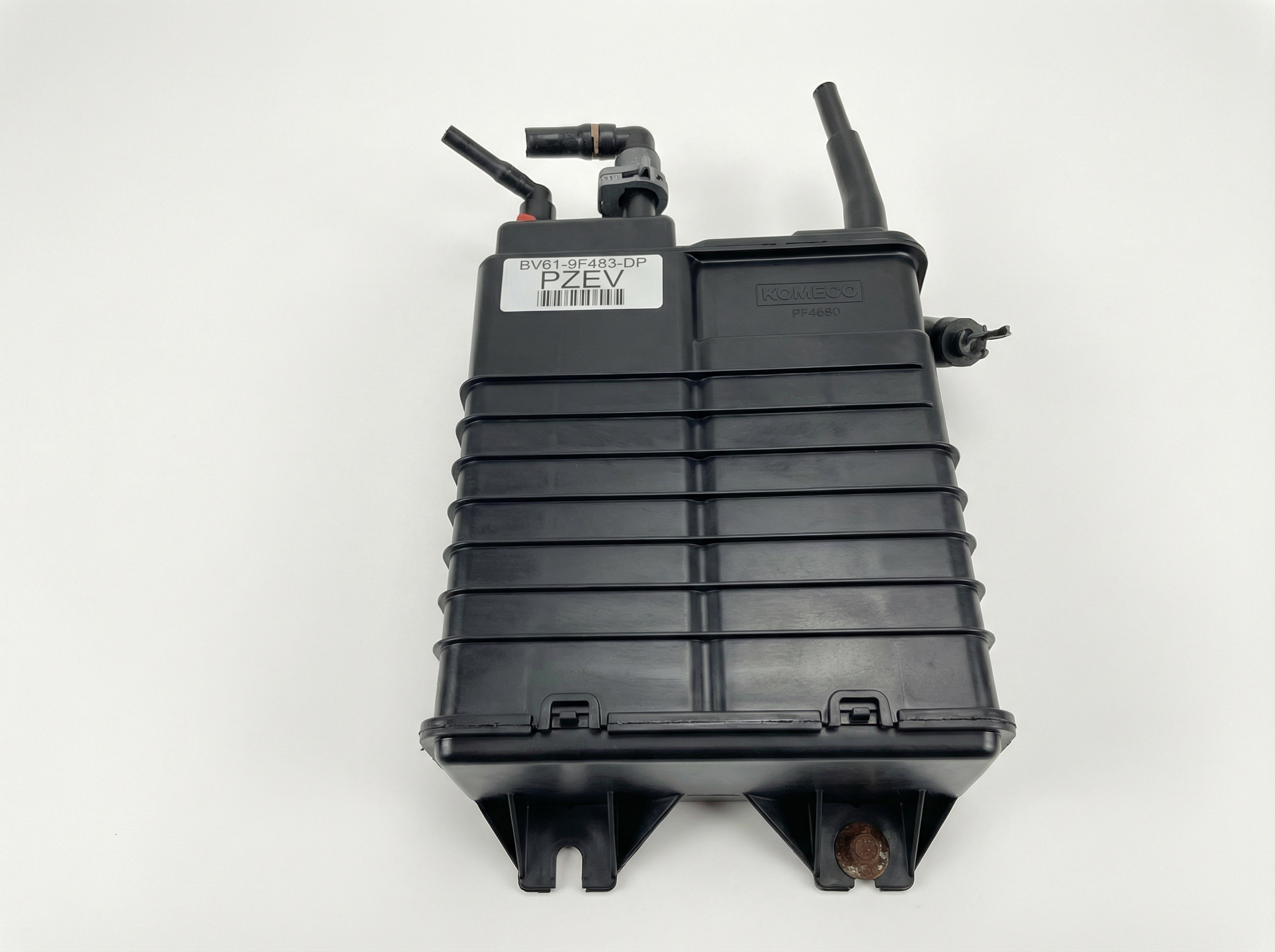
- 2012-2018: The most critical variation is not by year, but by emissions certification. Vehicles sold in California and other states following its standards may be PZEV (Partial Zero Emission Vehicle) models. These require a specific, non-interchangeable EVAP vapor canister. Using a standard Federal canister on a PZEV car (or vice-versa) will cause persistent EVAP codes. The emissions certification label is located under the hood.
Diagnostic Flowchart
Other Known Issues on This Vehicle
Issues unrelated to this code that are worth knowing about as an owner of this generation:
- PowerShift (DPS6) Automatic Transmission Failure 🔴 High — Extremely common on 2012-2016 models with automatic transmission. Issues include shuddering, hesitation, delayed shifting, and complete failure. (Ref: Multiple TSBs and warranty extensions were issued (e.g., 14M01, 14M02), leading to a major class-action lawsuit.)
- Electronic Power Steering (EPAS) Failure 🔴 High — Common across the generation. Often presents as a sudden loss of power steering assist, sometimes intermittent at first, making the car very difficult to steer. (Ref: Multiple TSBs exist (e.g., TSB 12-2-17, SSM 46210) but no widespread recall was issued in the US for this specific failure, which typically requires a full steering rack replacement.)
- Failed Passenger-Side Engine Mount 🟠 Medium — A very common failure point. The hydraulic mount collapses, causing excessive engine vibration to be felt in the cabin, especially at idle and in gear.
- Canister Purge Valve Failure (Recall 18S32) 🔴 High — Extremely common, affecting approx. 1.3 million vehicles. A stuck valve causes excessive fuel tank vacuum, leading to stalling, rough idle, and fuel tank deformation. (Ref: Safety Recall 18S32 / 19S22 (NHTSA 18V-735))
Used vs. New Parts: Buying Guide for This Vehicle
When a used part is the smart pick: Used parts are a reasonable choice for the capless fuel filler neck assembly or a wiring harness pigtail if the connector is damaged. These are generally robust parts with low failure rates, and a used OEM part is often better than a new, non-OEM equivalent.
Donor-vehicle mileage cap: roughly under 80000 miles for the part to have meaningful remaining life.
What to inspect on the donor part:
- For a wiring pigtail, ensure the wires have sufficient length for splicing and show no signs of brittleness, corrosion, or previous rodent damage.
- For a fuel filler neck, check that the internal flap moves freely and seals tightly. Ensure there is no rust or debris inside.
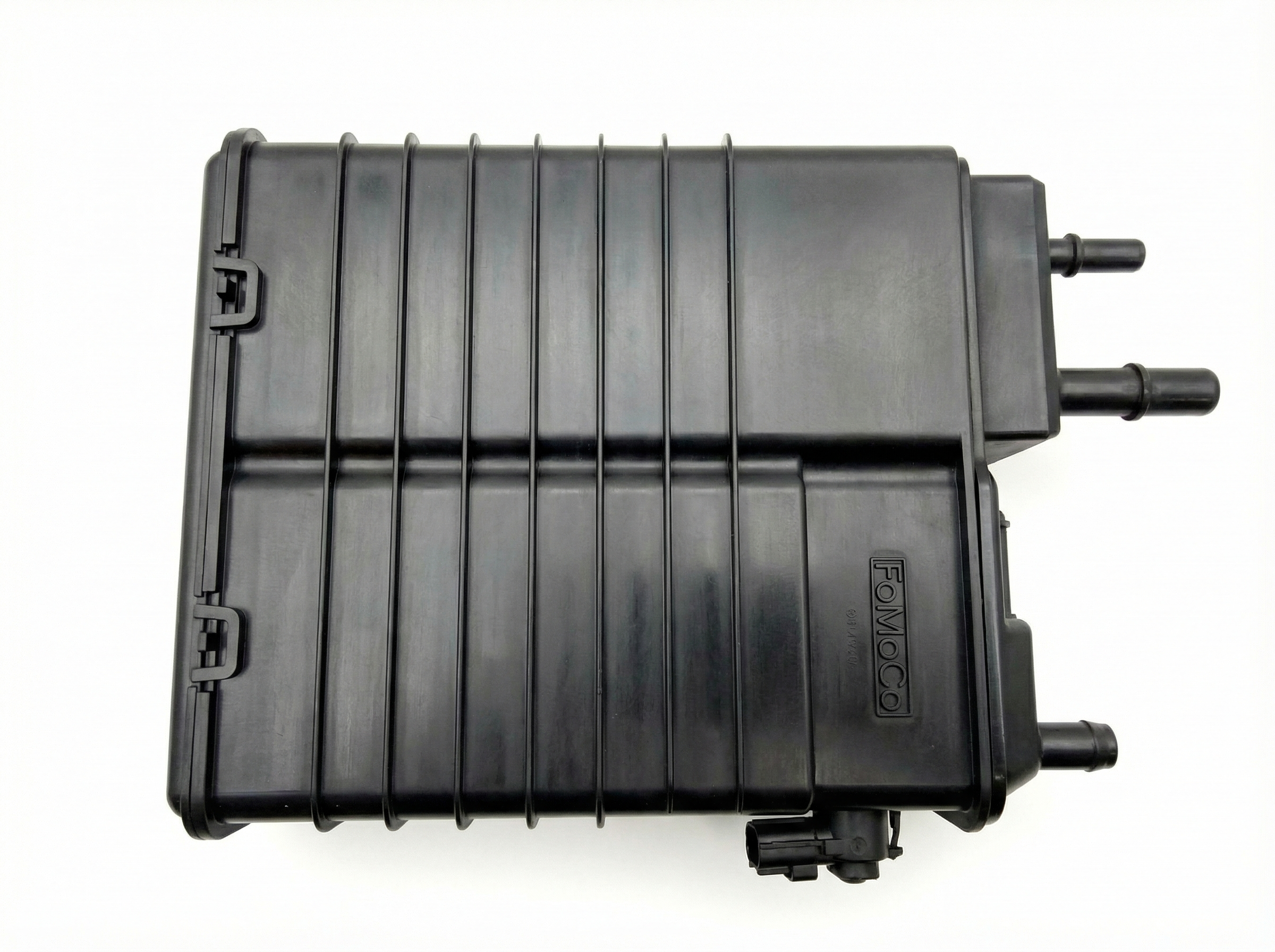
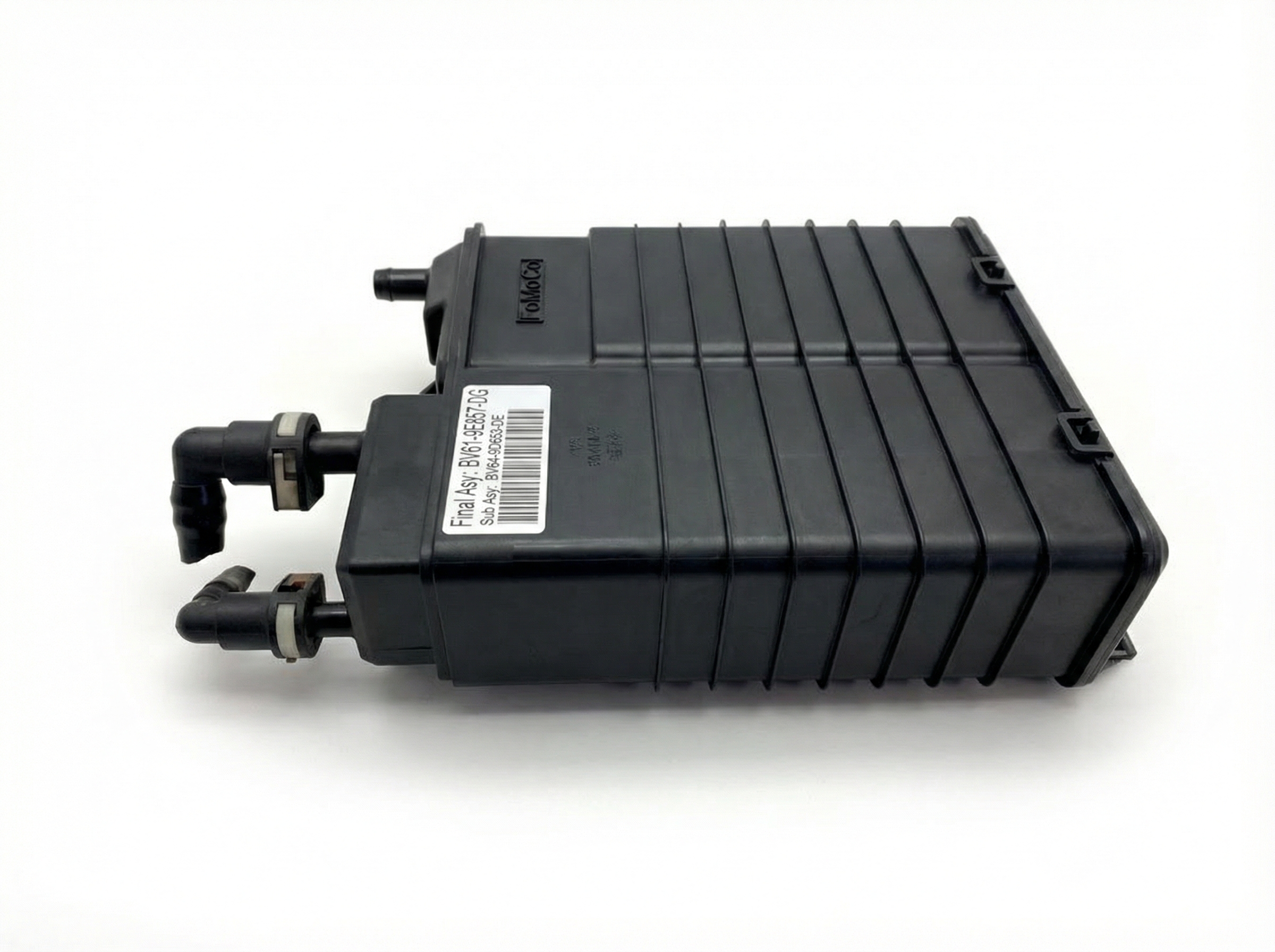
- For an EVAP canister, avoid used unless absolutely necessary. If you must, ensure it is not heavy (indicating fuel saturation) and has no visible cracks.
OEM-only on this vehicle (don't cheap out):
- Canister Purge Valve: Given the high failure rate and safety recall, it is strongly recommended to use a new, genuine Motorcraft part (BV6Z-9D289-E) to ensure you have the latest revision and avoid immediate repeat failure.
- Fuel Tank Pressure (FTP) Sensor: While aftermarket sensors exist, electronic sensors are a common point where aftermarket quality varies. Using a Motorcraft sensor provides the highest likelihood of correct voltage readings and long-term reliability.
Aftermarket brands forum-validated for this vehicle:
- Standard Motor Products (SMP)
- Bosch
- Dorman (for wiring pigtails)
Brands owners have reported issues with on this vehicle:
- No-name, unbranded electronic sensors from online marketplaces are a significant gamble and often fail to meet OEM specifications for voltage and pressure readings, leading to the code returning.
Real Owner Stories
Aggregated from forums and TSBs cited above. Mileages and costs reflect what owners reported in those sources.
2012-2018 Ford Focus
Symptoms: Inaccurate fuel gauge readings, potential engine stalling, and various EVAP codes, including P0451.
What fixed it: The dealer replaced the canister purge valve and performed the associated PCM software update per the recall.
Cost: $0-$0
Source hint: Recall 18S32 / 19S22 (NHTSA Campaign ID: 18V735)
Ford Escape (platform mate)
Symptoms: Check Engine Light with P0451 caused by chewed wires on top of the fuel tank. An owner reported in NHTSA ODI #11643510 that the vehicle was diagnosed with P0456, P0451, and P1450 after the fuel pump shut off frequently during refueling.
What fixed it: Spliced in new wires using butt connectors and heat shrink to repair the damaged section of the harness.
Source hint: Reddit r/fordescape - 'Chewed wires' thread
Ford Focus
Symptoms: P0451 Check Engine Light Code.
What fixed it: The Fuel Tank Pressure (FTP) sensor was found to be integrated into a complex hose assembly, which had to be replaced.
Source hint: YouTube - briansmobile1 - 'P0451 Ford Focus Check Engine Light Code Complete Fix...'
Related OBD-II Codes
Frequently Asked Questions
Is my 2012-2018 Ford Focus affected by a recall for code P0451?
My fuel gauge is reading incorrectly and I have a P0451 code. Are these issues related?
Why are chewed wires a common cause for P0451 on the Ford Focus?
How can I check the FTP sensor wiring without dropping the fuel tank?
Is replacing the Fuel Tank Pressure (FTP) sensor an easy DIY job on my Focus?
Could the capless fuel filler be causing my P0451 code?
Used OEM Parts in Stock
New Aftermarket Parts Available


The information in this article is provided for general reference and educational purposes only. Vehicle specifications, procedures, and part compatibility can vary by production date, trim level, and region. Always consult your vehicle's factory service manual and verify part numbers before purchasing or performing repairs. Safety-critical components such as airbags, seat belts, and braking systems should be installed by a qualified professional.
- Ford Focus:
- 🛍️ Shop This Part
- What's Unique About the 2012-2018 Ford Focus
- Symptoms You May Notice
- Most Likely Causes
- Rare But Worth Checking
- Diagnosis Steps
- Parts You'll Likely Need
- Related Codes That Often Appear With This One
- Technical Service Bulletins (TSBs) & Recalls
- Platform-Specific Known Issues
- Mechanic-Grade Diagnostic Values
- Scan Tool Commands That Help
- Wiring & Ground Locations
- Real Owner Repair Stories
- OEM Part Supersession History
- Model Year Variations Within This Range
- Diagnostic Flowchart
- Other Known Issues on This Vehicle
- Used vs. New Parts: Buying Guide for This Vehicle
- Real Owner Stories
- 2012-2018 Ford Focus
- Ford Escape (platform mate)
- Ford Focus
- Related OBD-II Codes
- Frequently Asked Questions
- 🎟️ Get 5% Off