

P0442 on 2003-2008 Toyota Corolla: EVAP Small Leak Causes and Fixes
The P0442 code on a 2003-2008 Toyota Corolla almost always points to a loose or faulty gas cap. Before buying any parts, tighten the cap, clear the code, and drive for a few days. If it returns, a new OEM gas cap is the next most likely fix, costing around $25-$40. If the cap isn't the issue, other common culprits include a cracked charcoal canister, brittle EVAP hoses, or a rusted fuel filler neck, especially in regions that use road salt.
- Always start with the gas cap. Ensure it's tight; if the code returns, replace it with an OEM part.
- P0442 is not a critical code and will not affect how the car drives, but it will cause an emissions test failure.
- If the gas cap doesn't fix it, visually inspect all EVAP hoses for cracks before moving to more expensive parts.
- A professional smoke test is the fastest way to accurately find the source of a small leak if it's not obvious.
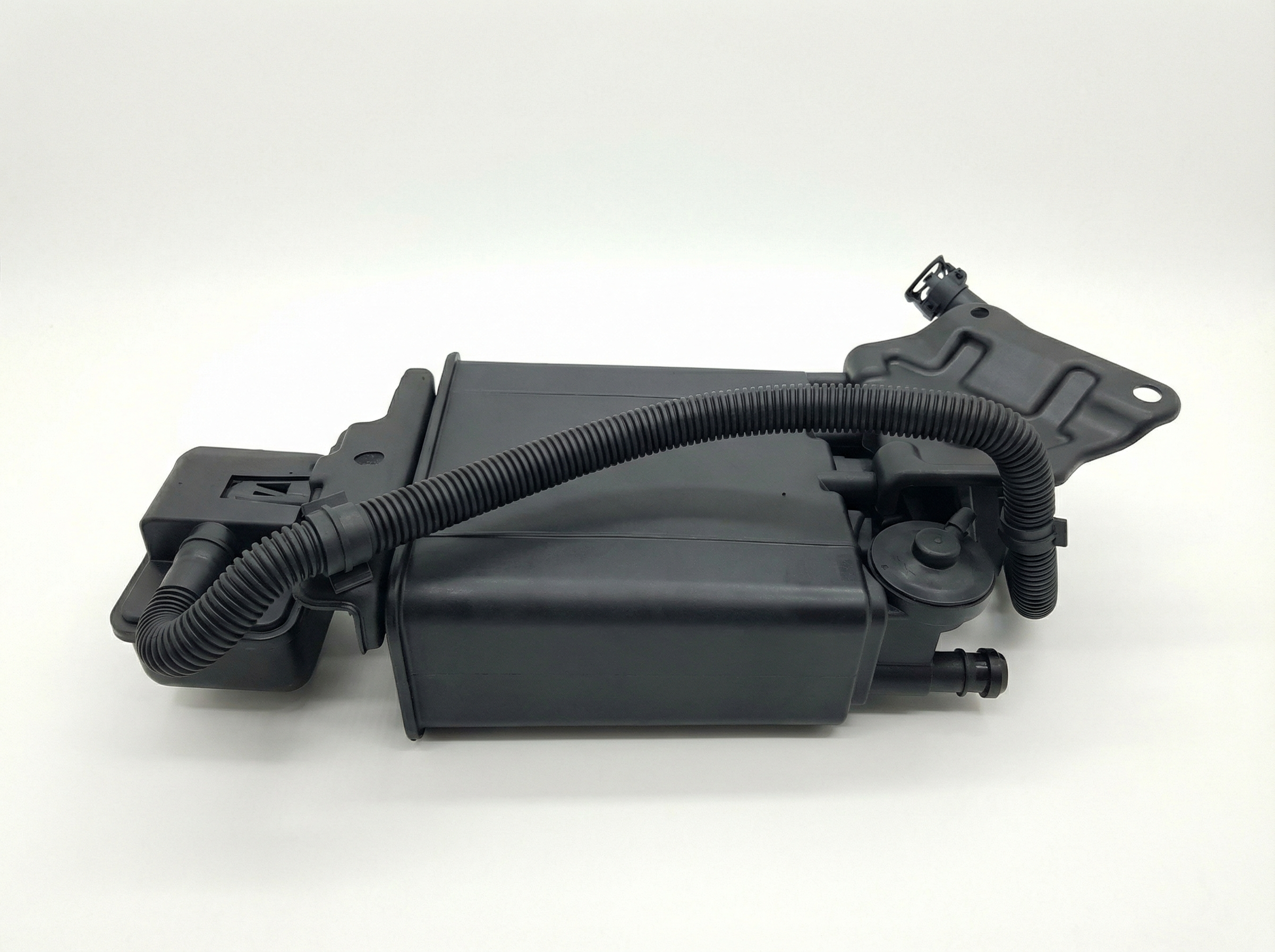
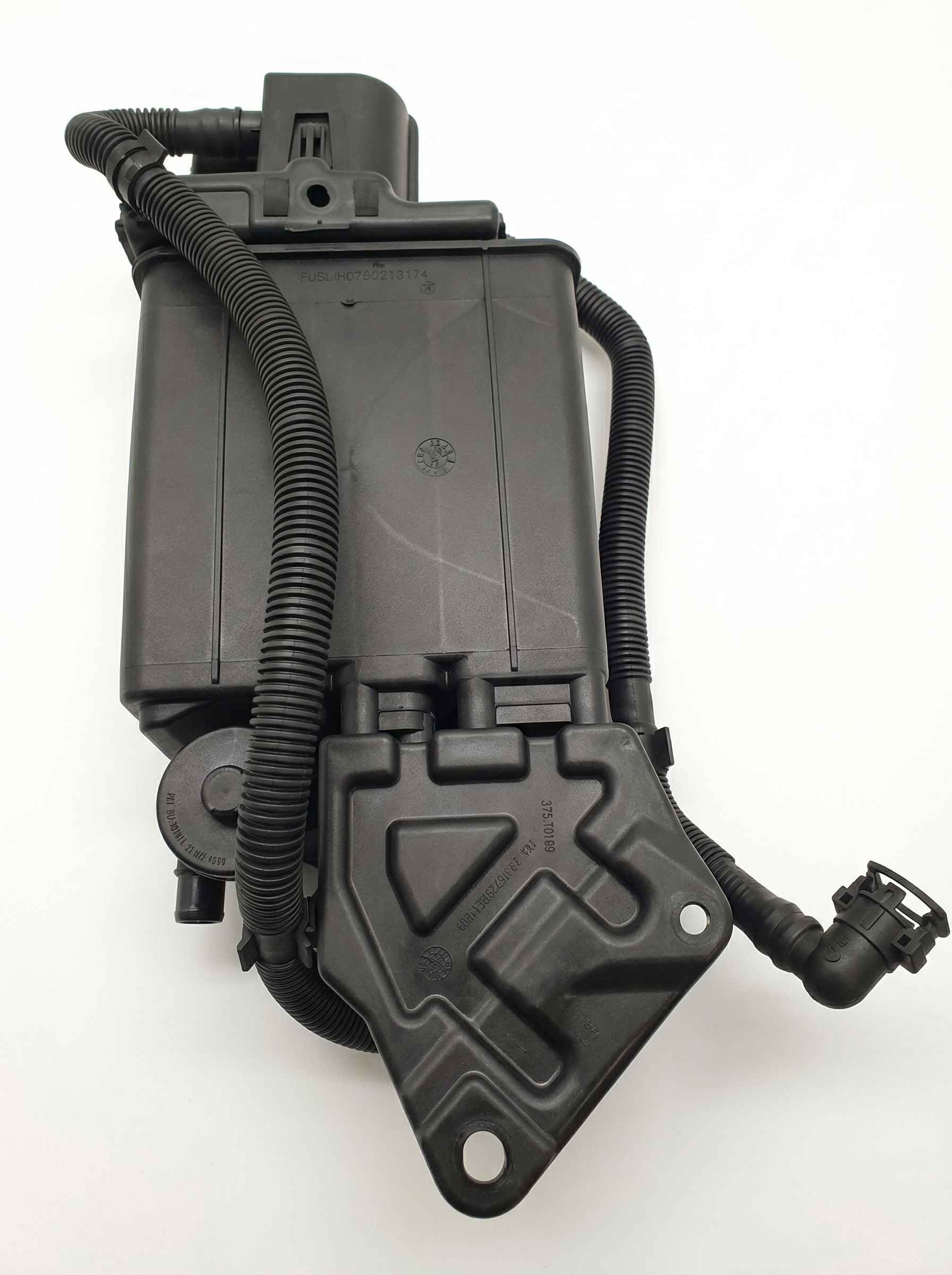
- The charcoal canister, located near the gas tank, is a common failure point on older Corollas and can be identified by cracks in its plastic body.
What's Unique About the 2003-2008 Toyota Corolla

The 9th generation Toyota Corolla (2003-2008) and its platform mates, the Toyota Matrix and Pontiac Vibe, share a relatively straightforward EVAP system. While the gas cap is the most frequent culprit, these vehicles are now old enough that rubber hoses can become brittle, the charcoal canister can crack, and the fuel filler neck can rust through. A known issue, documented in Toyota Technical Service Bulletin (TSB) EG051-06, points to corrosion on the fuel filler neck's sealing surface, preventing the gas cap from sealing properly on 2003-2004 models. Unlike some newer vehicles, the diagnostic process is generally simple, often starting with a visual inspection and ending with a smoke test to pinpoint the exact leak location.
Symptoms You May Notice
- Check Engine Light is on
- A faint smell of gasoline, particularly around the rear of the car when parked in an enclosed space like a garage.
- Difficulty refueling, where the gas pump clicks off repeatedly, which can be caused by a blocked vent valve.
- Replacing the charcoal canister when the problem is just a loose gas cap or a rusted filler neck.
- Replacing O2 sensors, which are not related to the EVAP system.
- Using a cheap aftermarket gas cap which fails to seal properly, leading the owner to suspect a more complex issue.
Most Likely Causes

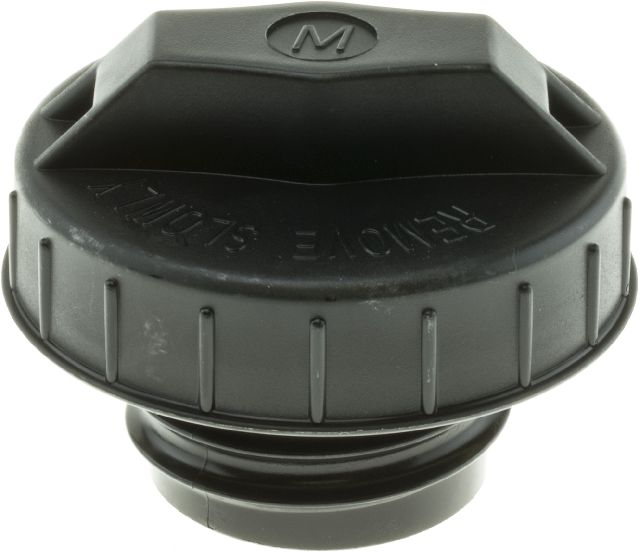
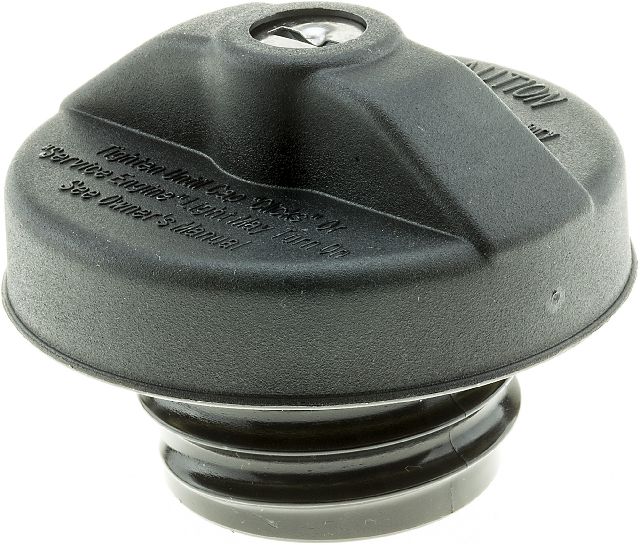
- Loose, Worn, or Incorrect Gas Cap 🔴 High Probability The gas cap seal is a simple rubber O-ring that degrades over time from exposure to fuel vapors and weather, losing its ability to seal. Aftermarket caps are a frequent cause of this code as they often do not seal as well as the original equipment (OEM) part. It is highly recommended to use a genuine Toyota cap.
How to confirm: Ensure the cap is tightened until it clicks several times. Inspect the rubber seal for cracks, stiffness, or deformities. Clean the sealing surface on the fuel filler neck, as rust or debris can prevent a good seal. If the light returns after tightening and clearing the code, replacing the cap is the next logical step.
Typical fix: Replace the gas cap with a new OEM part.
Est. part cost: $25-$40 - Cracked or Disconnected EVAP Hoses 🟡 Medium Probability After 15+ years, the rubber and plastic hoses in the engine bay and underneath the car become brittle from heat cycles and age, leading to small cracks, particularly at connection points and bends. A common failure point is a cracked hose near the air filter box or the lines running to the charcoal canister.
How to confirm: Visually inspect all accessible EVAP hoses. A smoke test is the definitive way to find a leak that isn't visually obvious. During a smoke test, smoke is injected into the system, and the technician looks for where it escapes.
Typical fix: Replace the cracked section of hose.
Est. part cost: $10-$30 - Failed Charcoal Canister Assembly 🟡 Medium Probability The plastic housing of the canister, located near the fuel tank, can develop cracks over time due to age and exposure to road debris. The integrated valves, like the vent valve, can also fail or stick. Overfilling the gas tank repeatedly can saturate the canister with liquid fuel, causing it to fail prematurely.
How to confirm: Visually inspect the canister for physical cracks or damage. A smoke test will often show smoke exiting from a crack in the canister body or from a faulty vent valve on the canister. In some cases, multiple EVAP codes (like P043E, P043F, P2401, P2402, P2419) will appear at once, strongly pointing to a failed canister assembly.
Typical fix: Replace the entire charcoal canister assembly.
Est. part cost: $200-$350 - Faulty Purge Valve (VSV) ⚪ Low Probability The purge valve (solenoid), often called a Vacuum Switching Valve (VSV) on Toyotas, can get stuck open or closed. A stuck-open valve can cause a long crank time after refueling because the engine is flooded with fuel vapors. On this Corolla, there are typically two VSVs located near the air filter housing.
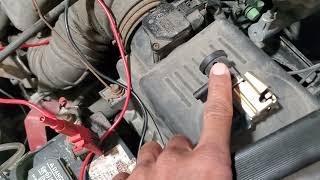
How to confirm: A faulty purge valve often triggers other codes like P0441 or P0446. 🎬 Watch: How to diagnose and fix these common EVAP codes. It can be tested by applying 12V (or a 9V battery for a quick check) to see if it clicks open and closed; it should be normally closed and hold a vacuum when not energized. You can also test for vacuum at the hose leading to the canister when the engine is cold; there should be no vacuum.
Typical fix: Replace the faulty purge valve/VSV.
Est. part cost: $40-$90
Rare But Worth Checking
- Cracked or Rusted Fuel Filler Neck: Rust can form on the metal pipe leading to the gas tank, creating small holes that cause a leak. This is more common in regions that use road salt and is a known issue for 2003-2004 models per TSB EG051-06. A smoke test will clearly show smoke escaping from the rusted area.
- Faulty Fuel Tank Overfill Check Valve: This valve, located on the fuel tank, can develop a crack and cause a leak. It is often identified via a smoke test and may require lowering the fuel tank to replace. A mechanic on a forum noted that after a smoke test was clean, he smelled fumes and suspected a hose on top of the gas tank was the culprit.
Diagnosis Steps

- Check the gas cap. Remove it and retighten it until you hear at least three clicks. Clear the code and drive for a few days to see if it returns.
- If the code returns, inspect the gas cap's rubber seal for any cracks, stiffness, or damage. Also, inspect the lip of the fuel filler neck for rust or debris that could prevent a seal. Consider replacing it with a genuine OEM cap as the next step.
- Perform a thorough visual inspection of all EVAP hoses in the engine bay, particularly around the air filter box, and underneath the car leading to the charcoal canister. Look for any obvious cracks, especially at bends and connection points.
- Inspect the charcoal canister (located near the gas tank, in front of the spare tire well) for any visible cracks or damage.
- If no visual faults are found, the most effective next step is a professional smoke test. A machine injects low-pressure, UV-dyed smoke into the EVAP system's service port (a green cap in the engine bay), and any leaks will be revealed by escaping smoke.
- If the smoke test reveals no leaks, test the purge valve (VSV) and vent valve for proper electrical and mechanical operation. The purge valve (VSV) near the airbox should click when 12V is applied and hold vacuum when de-energized.
- After any repair, the code must be cleared. The EVAP monitor may require a specific drive cycle to run its self-test and confirm the fix, which can sometimes take a few days of normal driving.
Parts You'll Likely Need

- Gas Cap
(OEM #77300-52030)— This is the most common failure point for a P0442 code. The seal wears out over time. Using an OEM cap is highly recommended for a proper seal.
Trusted brands: Toyota Genuine
OEM price range: $25-$40
Aftermarket price range: $15-$25 - Charcoal Canister Assembly
(OEM #77740-02121 (2003-2004), 77740-02310 (2005-2008))— The plastic housing can crack with age, or the integrated vent valve can fail, causing a persistent small leak. This is a common failure on high-mileage Corollas.
Trusted brands: Toyota Genuine, Dorman, ACDelco
OEM price range: $250-$350
Aftermarket price range: $150-$250 - EVAP Purge Valve / Vacuum Switching Valve (VSV)
(OEM #90910-12276)— Can become stuck open or closed, causing an intermittent leak or incorrect flow. A stuck-open valve can also cause hard starting after refueling. This part is located in the engine bay near the air filter housing.
Trusted brands: Toyota Genuine, Denso
OEM price range: $60-$90
Aftermarket price range: $30-$60
Related Codes That Often Appear With This One
- P0440 — General EVAP System Malfunction. P0442 often appears as a pending code alongside P0440, indicating the system has a general fault and a small leak has been specifically identified.
- P0441 — EVAP System Incorrect Purge Flow. This often points to a problem with the purge valve (VSV) itself, rather than a physical leak in a hose.
- P0446 — EVAP System Vent Control Circuit Malfunction. This points to an issue with the vent valve or its circuit, which is usually part of the charcoal canister assembly on these models.
Technical Service Bulletins (TSBs) & Recalls
- EG051-06: Describes an issue on 2003-2004 Corolla and Matrix models where corrosion on the fuel filler pipe's sealing surface can cause various EVAP codes, including P0442. The fix is to inspect and, if corroded, replace the fuel filler neck with an updated part.
Platform-Specific Known Issues
- Rusted Fuel Filler Neck: On 2003-2004 models in particular, the fuel filler neck is prone to rusting where the gas cap seals and where the smaller vent lines attach. This is especially common in the Salt Belt. Toyota issued TSB EG051-06 for this issue, recommending replacement with an updated part. Owners have confirmed this failure with smoke tests showing leaks from the neck itself.
Scan Tool Commands That Help
- Toyota Techstream: Evaporative System Check (Automatic Mode) — To force the vehicle's computer to run the entire EVAP leak test sequence, which normally only runs after the vehicle has been off for 5+ hours. This allows a technician to verify a fix without waiting, as the test will set a code if a malfunction is detected.
- Toyota Techstream: Activation Test -> Vent Valve — To manually command the canister vent valve closed ('Not Venting'). This is a required step before performing a smoke test to ensure the system is sealed and smoke doesn't just exit through the normally-open vent.
- Toyota Techstream: Activation Test -> Purge Valve — To manually cycle the purge valve (VSV) to check for an audible click and to verify it is not stuck open or closed. This helps isolate a faulty valve without removing it.
Wiring & Ground Locations
- Ground Point IF — Behind the dash near the steering column, attached to a 10mm bolt.. This is a primary ground location for components in the driver's side dash area. A poor ground here could potentially affect the ECM or other related control modules, though it's not a direct cause of a P0442 leak.
- Junction Connector J2(A), J3(B) — Located behind the combination meter (instrument cluster).. These are central electrical junctions. Wires for various sensors and solenoids, including potentially those for the EVAP system, pass through these connectors. A fault here could cause an electrical issue with a valve, leading to other codes like P0441 or P0446.
- Vapor Canister Purge Switch Connector — Connects to the VSV in the engine bay, near the air filter housing. It is a 2-pin oval male connector.. This connector provides power and ground to the purge valve. Corrosion or damage to the pins or wires here can cause the valve to fail, leading to incorrect purge flow (P0441) or other EVAP codes.
- Charcoal Canister Connector — Connects to the charcoal canister assembly near the rear of the car. On later models, this can be an 8-pin connector (Toyota P/N 90980-12520).. This connector powers the vent valve and any integrated pressure sensors on the canister. Damage here is a common cause for vent control circuit codes (P0446) and can prevent the EVAP monitor from running its tests correctly.
Real Owner Repair Stories
- YouTube user 'Dan the Fix it Man' (2004 Toyota Avalon (similar EVAP system)) — P0442 and P0456 codes would appear as pending, and eventually trigger the Check Engine Light and VSC light.
❌ Tried (didn't work) Replacing the gas cap with a new OEM part.
✅ What actually fixed it Using a DIY smoke machine, a very small crack was found in a vacuum hose in the engine bay. The mineral oil vapor from the smoke machine made the area around the tiny crack dark and visible. Replacing the small section of hose resolved the codes. - Reddit user 'mrzulu' (2002 Toyota Corolla S, 160k miles) — P0442 Check Engine Light.
❌ Tried (didn't work) Replacing the gas cap with a new OEM part.
✅ What actually fixed it The user took it for a smoke test which came back clean (no visible smoke). However, the mechanic smelled fuel fumes and believed the problem was a loose hose on top of the gas tank, requiring the tank to be lowered for access. The final resolution was not posted, but the diagnosis pointed away from common, easily visible parts.
"I Checked Everything" — The Actual Cause
- In one documented case on a similar Toyota, a smoke test did not reveal any visible leaks, but the mechanic could still smell fuel fumes. The suspected cause was a loose hose on top of the fuel tank, which is not easily visible and may only leak under specific conditions not perfectly replicated by a standard smoke test.
- A faulty fuel tank pressure sensor can give the ECU incorrect data, making it believe there is a leak when the system is perfectly sealed. This will pass a smoke test but still set a P0442 code. This scenario often triggers other pressure sensor-specific codes as well.
OEM Part Supersession History
90910-12276→90910-TC001— Standard part revision/update by Toyota.
Heads up: The new part number 90910-TC001 is the direct replacement and is fully compatible.
Model Year Variations Within This Range
- 2003-2004: Uses charcoal canister part number 77740-02121. These earlier models are also specifically called out in TSB EG051-06 for having issues with rusted fuel filler necks.
- 2005-2008: Uses charcoal canister part number 77740-02310.
Diagnostic Flowchart
Real Owner Stories
Aggregated from forums and TSBs cited above. Mileages and costs reflect what owners reported in those sources.
2003 Toyota Corolla
Symptoms: Check Engine Light with codes P0440 and P0442.
What fixed it: The user did not report a final fix and was considering having the PCM checked or re-flashed after replacing the gas cap, canister, filler neck, and fixing loose hoses to no avail.
Source hint: Toyota Corolla Forum
2004 Pontiac Vibe Base (Corolla platform-mate)
Symptoms: P0442 EVAP LEAK code.
What fixed it: Replacing the entire charcoal canister assembly resolved the code after previously replacing the gas cap and filler neck without success.
Source hint: GenVibe.com - '2004 Vibe Base P0442 EVAP LEAK...FIXED'
2003-2004 Toyota Corolla
Symptoms: P0442 code triggered by a leak from the fuel filler neck itself, confirmed via a smoke test.
What fixed it: Replaced the rusted fuel filler neck with an updated part per Toyota's technical service bulletin.
Source hint: TSB EG051-06
Related OBD-II Codes
Frequently Asked Questions
Does TSB EG051-06 apply to my 2003-2008 Corolla?
Why does my P0442 code keep coming back after buying a new gas cap from the auto parts store?
Can a P0442 code cause the gas pump to keep clicking off when I try to refuel my Corolla?
Where is the charcoal canister located on the 2003-2008 Corolla?
I have a Pontiac Vibe with a P0442 code. Is the diagnosis the same as the Corolla?
Helpful Videos
Used OEM Parts in Stock
New Aftermarket Parts Available


The information in this article is provided for general reference and educational purposes only. Vehicle specifications, procedures, and part compatibility can vary by production date, trim level, and region. Always consult your vehicle's factory service manual and verify part numbers before purchasing or performing repairs. Safety-critical components such as airbags, seat belts, and braking systems should be installed by a qualified professional.
- Toyota Corolla:
- 🎬 Helpful Videos
- 🛍️ Shop This Part
- What's Unique About the 2003-2008 Toyota Corolla
- Symptoms You May Notice
- Most Likely Causes
- Rare But Worth Checking
- Diagnosis Steps
- Parts You'll Likely Need
- Related Codes That Often Appear With This One
- Technical Service Bulletins (TSBs) & Recalls
- Platform-Specific Known Issues
- Scan Tool Commands That Help
- Wiring & Ground Locations
- Real Owner Repair Stories
- "I Checked Everything" — The Actual Cause
- OEM Part Supersession History
- Model Year Variations Within This Range
- Diagnostic Flowchart
- Real Owner Stories
- 2003 Toyota Corolla
- 2004 Pontiac Vibe Base (Corolla platform-mate)
- 2003-2004 Toyota Corolla
- Related OBD-II Codes
- Frequently Asked Questions
- 🎟️ Get 5% Off