

OBD-II Code P2419: EVAP System Switching Valve Control Circuit Low
What P2419 means, why it triggers, and how to fix it
- P2419 indicates an electrical circuit failure—such as a blown fuse or severed wire—rather than a physical vapor leak in the fuel system.
- Replacing the EVAP switching valve or leak detection pump resolves this code in over 60% of cases, costing between $150 and $410.
- An active P2419 code triggers an automatic emissions test failure in all 50 states, even if the vehicle exhibits zero drivability symptoms.
- If P2419 appears alongside codes P2401 and P043E on a Toyota, expect to replace the entire $400-$700 charcoal canister assembly due to known water intrusion issues.
- Test the EVAP system's 12V power supply and ground circuit with a multimeter before spending money on replacement parts.
What Does P2419 Mean?

P2419 means the Powertrain Control Module (PCM) detects a low voltage in the EVAP switching valve's electrical circuit. This valve—often integrated into the leak detection pump (LDP) or Diagnostic Module for Tank Leakage (DMTL)—seals the evaporative emission (EVAP) system to test for fuel vapor leaks. 'Circuit Low' indicates the voltage is below the manufacturer's specified level, typically caused by a short to ground, an open circuit, or a dead component.
Technical definition: The SAE/OBD-II definition for P2419 is "Evaporative Emission System Switching Valve Control Circuit Low". The PCM registers this fault when the control circuit for the EVAP switching valve reads a voltage lower than specified parameters (e.g., 0.4 volts or lower for 2 seconds). This prevents the PCM from activating the leak detection pump to run the EVAP system's self-test.
Can I Drive With P2419?
Yes, But With Caution. You can drive with a P2419 code; it does not cause immediate drivability problems. However, ignoring it prevents the EVAP system from testing itself, meaning a real fuel vapor leak goes undetected, leading to increased emissions and a failed inspection. Long-term, this saturates the charcoal canister and damages the catalytic converter from an imbalanced air-fuel mixture—a repair costing up to $1,500. Address the issue within a few hundred miles to prevent cascading failures.
Common Causes

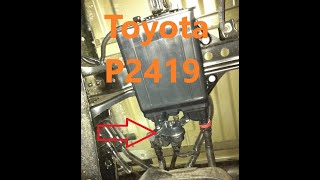
- Faulty EVAP Switching Valve / Leak Detection Pump (LDP/DMTL) (Very Common) — The valve or pump assembly fails internally due to a bad solenoid coil, mechanical jamming from dirt, or a torn diaphragm. On Toyota and BMW vehicles, this valve is integrated into the charcoal canister 🎬 Watch: A detailed guide on Toyota P2419 causes and fixes. or DMTL assembly.
- Damaged, Corroded, or Loose Wiring (Common) — The wiring harness or electrical connector for the switching valve degrades from heat, vibration, or rodent damage. Corrosion or loose pins cause a voltage drop or open circuit, triggering the code.
- Liquid Intrusion (Water or Fuel) (Common) — Water entering through the fresh air inlet, or liquid fuel forced in by habitually 'topping off' the gas tank, saturates the charcoal canister. This destroys the integrated leak detection pump and valves.
- Blown Fuse or Faulty Relay (Less Common) — The EVAP system components are protected by a fuse (often labeled 'EFI' or 'EMISS'). A blown fuse cuts power to the switching valve's circuit, resulting in a zero-voltage reading.
- Low Vehicle Battery Voltage (Rare) — A weak 12V battery (testing below 11.5V) reduces voltage across multiple vehicle systems. This system-wide low voltage triggers a P2419 code, especially in older vehicles.
- Faulty Powertrain Control Module (PCM) (Rare) — The internal driver circuit in the PCM that controls the valve fails. Consider this only after thoroughly ruling out all wiring and component issues.
Symptoms
- Check Engine Light is On — This is the most common and often the only symptom you will notice.
- Failed Emissions Test — An active P2419 fault causes an automatic failure of any state emissions inspection.
- Fuel Smell — You will notice a smell of raw gasoline near the gas tank, as the system fails to contain and purge fuel vapors.
- Slightly Rough Idle — Unregulated fuel vapor entering the engine disrupts the air-fuel mixture, leading to an erratic or rough idle.
Diagnostic Flowchart

Tap your situation to follow the diagnostic path that matches what you're seeing on this code.
Common Fixes & Costs
- Replace EVAP Leak Detection Pump / Switching Valve — Parts: $80-$250, Labor: $70-$160, ~1 hr book time (Intermediate)
- Repair Damaged Wiring or Connector — Parts: $5-$20, Labor: $50-$120, ~0.8 hr book time (DIY)
- Replace Charcoal Canister Assembly — Parts: $285-$450, Labor: $127-$250, ~1.5 hr book time (Intermediate)
- Replace Blown EVAP System Fuse — Parts: $1-$5, Labor: $0, ~0.1 hr book time (DIY)
- Reprogram or Replace Powertrain Control Module (PCM) — Parts: $500-$800, Labor: $150-$300, ~2 hr book time (Advanced)
Used vs. New Parts: Buying Guide
When a used part is worth it: For a high-mileage vehicle (>150k miles) on a strict budget, a used leak detection pump or canister assembly from a low-mileage donor is a cost-effective gamble.
Donor-vehicle mileage cap: roughly under 80000 miles for the part to have meaningful remaining life.
Donor quality checklist:
- Verify the donor vehicle was not scrapped for emissions-related failures.
- Avoid parts from regions where road salt is common to minimize corrosion risk.
- Match the part number exactly. Visually identical parts have different internal calibrations.
Decision logic:
- If The vehicle is under 8 years or 80,000 miles → Check if the repair is covered under the federal emissions warranty before buying parts.
- If The cost of a new aftermarket part is less than $150 → Buy new. The warranty and assurance of a non-saturated part outweigh the small savings.
- If The vehicle is over 150,000 miles and the OEM part is over $400 → A used part from a reputable salvage yard with a short-term warranty is an acceptable risk.
Warranty tradeoff: Used parts from salvage yards offer a 30-90 day warranty. New aftermarket parts come with a 1-year to limited lifetime warranty. New OEM parts carry a 1-year warranty.
Worst-case if a used part fails: $200-$400 if a used part fails shortly after installation, requiring a second labor charge and a new part.
What Happens If You Wait — Timeline
- 0-1 month: Code P2419 is set and the Check Engine Light is on. The EVAP system self-test is disabled, but there are no noticeable driving symptoms. (MPG impact: 0-1%% · Added cost: $0)
- 1-6 months: The disabled system improperly purges fuel vapors, causing a slight fuel smell or minor drop in fuel economy. The charcoal canister risks saturation. (MPG impact: 1-3%% · Added cost: $20-60 in wasted fuel.)
- 6-12 months: The charcoal canister saturates with liquid fuel, permanently damaging it. A slight rough idle becomes noticeable. (MPG impact: 3-8%% · Added cost: $400-700 (for a new charcoal canister assembly).)
- 12+ months: A saturated canister constantly feeds un-metered fuel vapor into the engine, disrupting the air-fuel mixture. This fouls spark plugs and damages the catalytic converter. (MPG impact: 5-15%% · Added cost: $1200-2800 (if the catalytic converter is damaged).)
Cost of Not Fixing It
- Immediate: Guaranteed failure of any state emissions inspection due to the active Check Engine Light and incomplete EVAP monitor. (Added cost: $0)
- 1-6 months: Liquid fuel saturates the charcoal canister due to the malfunctioning valve, permanently ruining its ability to store vapors. (Added cost: $400 - $700)
- 6+ months: A saturated canister allows unregulated fuel vapors into the engine, disrupting the air-fuel ratio and overheating the catalytic converter. (Added cost: $1200 - $2800)
Diagnosis Steps
- Read the Codes and Freeze Frame Data
Use an OBD-II scanner to confirm P2419 is active. Check for related EVAP codes (P2401, P2402, P043E, P043F), which point to a specific component failure when grouped. Note the freeze frame data.
Tools: OBD-II Scanner (Beginner) - Check the Fuses
Locate the fuse box and find the fuse related to the EVAP system (labeled 'EFI' or 'EMISS'). Visually inspect the fuse and replace it if blown.
Tools: Owner's Manual, Fuse Puller or Pliers (Beginner) - Visually Inspect Wiring and Connectors
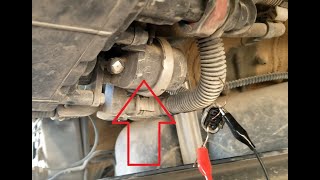
Locate the EVAP switching valve near the charcoal canister. Examine the electrical connector and wiring harness for corrosion, chafing, or rodent damage. Wiggle the connector to check for a loose fit.
Tools: Flashlight (Beginner) - Test the Connector for Voltage
Disconnect the electrical connector from the valve. With the ignition on and the component commanded ON via a bi-directional scan tool, use a multimeter to check for voltage at the power wire. A reading below 9V confirms a 'Circuit Low' condition upstream.
Tools: Multimeter, Bi-directional Scan Tool (Intermediate) - Test the Valve's Resistance
Set your multimeter to Ohms (Ω). Measure the resistance across the pins on the valve itself. Compare this to the manufacturer's specification (typically 30–40 Ω). An infinite reading (OL) or near-zero reading confirms the component has failed.
Tools: Multimeter, Vehicle-Specific Repair Manual (Intermediate) - Check the Ground Circuit
Check for continuity between the ground pin on the connector and a known good chassis ground. The multimeter must read less than 1.0 Ω. Infinite resistance indicates a broken ground wire.
Tools: Multimeter (Intermediate) - Perform a Voltage Drop Test
Connect the positive multimeter lead to the battery's positive terminal and the negative lead to the power pin on the plugged-in valve connector (while activated). A reading over 0.5 volts indicates excessive resistance in the power-side wiring.
Tools: Multimeter with long leads, Bi-directional Scan Tool (Advanced) - Analyze the Control Circuit with a Lab Scope
Connect an oscilloscope to the PCM-controlled ground side of the valve circuit. When commanded on, the voltage should pull down from battery voltage to near zero. An erratic waveform indicates a faulty PCM driver or internal valve failure.
Tools: Oscilloscope (Lab Scope), Bi-directional Scan Tool (Advanced)
When This Code Triggers (Freeze-Frame Conditions)
- Engine Coolant Temp: 170-210°F (Engine fully warmed up. The test requires the initial engine start temperature to match the ambient air temperature.)
- Fuel Level: 15-85% (The EVAP monitor aborts if the tank is too full or too empty.)
- Vehicle Speed: 40-65 mph (Steady cruising speed, without sharp turns or hills, is required for the monitor to run.)
- Engine Load: 20-60% (The test runs under moderate, steady engine load, not during heavy acceleration or deceleration.)
Related Codes
- P2401 — 'EVAP Leak Detection Pump Control Circuit Low' is nearly identical to P2419 and often appears with it. Both point to a low voltage condition in the pump's control circuit.
- P2402 — 'EVAP Leak Detection Pump Control Circuit High' indicates a short to power. Seeing P2402 with P2419 suggests an intermittent shorting issue in the wiring or a failing PCM driver.
- P043E / P043F — These codes relate to the 'Leak Detection Reference Orifice'. When grouped with P2419 on Toyota vehicles, they point to a failed charcoal canister assembly due to water intrusion.
- P2420 — 'EVAP System Switching Valve Control Circuit High' is the direct counterpart to P2419. If seen together, it points to an erratic wiring short or a failing PCM.
Climate & Environmental Factors
- Cold Weather: Cold temperatures cause plastic and rubber EVAP components to contract and become brittle. This creates temporary connection issues that trigger a fault code, which often disappears in warmer weather.
- High Humidity / Road Salt: Moisture and road salt accelerate the corrosion of electrical connectors and wiring for the EVAP switching valve, leading directly to the 'Circuit Low' condition.
- Altitude: Changes in barometric pressure at high altitudes affect the pressure differentials the EVAP system operates on, exposing borderline intermittent issues.
How to Talk to a Mechanic About This Code
Say this: "I have an OBD code P2419, which points to a 'Control Circuit Low' for the EVAP switching valve. I'd like to schedule a diagnostic to test the circuit. Please check for power, ground, and resistance at the component before recommending a part replacement."
This signals that you understand P2419 is an electrical code, not a leak. It directs the technician to perform a proper electrical diagnosis first, preventing them from immediately quoting an expensive part like a charcoal canister.
Avoid saying:
- 'My check engine light is on, can you look at it?'
- 'I think I have an EVAP leak.'
- 'Just replace the EVAP pump.'
Questions to ask before authorizing the repair:
- Did you test for voltage at the pump/valve connector, and what was the reading?
- What was the resistance (Ohm) reading of the component itself?
- Did you check the related fuses and the ground connection for the circuit?
- If you are recommending a part replacement, how did you rule out a wiring issue?
Where to Take It: Dealer vs Independent vs Chain
- Dealer:
Recommended if your vehicle has a known TSB for this code or is under warranty. Otherwise, an independent shop is more cost-effective.
Best for: Vehicles under warranty, Known manufacturer-specific issues covered by a Technical Service Bulletin (TSB), such as ECM reprogramming for Subaru or canister replacements for Toyota.
Downsides: Highest labor rates., Defaults to replacing an entire assembly (e.g., charcoal canister) when only a smaller component or wire has failed. (Typical cost: +50% vs. baseline) - Independent Shop:
Best fit for most cases. An experienced independent shop performs the necessary electrical tests effectively and avoids defaulting to the most expensive repair.
Best for: Out-of-warranty vehicles where cost is a factor., Pinpointing electrical faults, as independent technicians often have deep diagnostic experience across many brands.
Downsides: Shop quality and diagnostic skill vary widely; look for ASE certification. (Typical cost: +0% vs. baseline) - Chain Shop:
Not recommended. The risk of misdiagnosis is high for a circuit-specific code like P2419. They replace expensive parts when the fault is a simple broken wire.
Best for: Simple, unrelated maintenance like oil changes or tire rotations.
Downsides: Technicians lack specialized diagnostic training for complex electrical faults., High pressure to meet sales targets leads to misdiagnosis and unnecessary parts replacement. (Typical cost: -10% vs. baseline)
When to Walk Away From the Repair
If the estimated repair cost exceeds 40-50% of the car's private-party value, seriously consider selling or trading in the vehicle.
- Car worth $5000, fix is $700: Fix it. This repair is well below the threshold and is necessary to pass emissions.
- Car worth $3500, fix is $1500: Borderline. The repair cost is approaching 50% of the car's value. Get a second opinion before proceeding.
- Car worth $2000, fix is $1500: Walk away. The repair cost is 75% of the car's value and is not a sound investment.
What Scan Tool You Need for This Code
Minimum: A scanner that reads codes and features bi-directional control to command the EVAP switching valve on and off.
A basic $20 code reader only confirms the P2419 code exists. It cannot command the EVAP valve to activate, which is a critical step to test the circuit for voltage and ground.
Budget: Autel AutoLink AP200 / TOPDON TopScan Lite (~$60) — These bluetooth dongles offer bi-directional capabilities, allowing you to command the EVAP valve on and off through a smartphone app to perform electrical tests.
Mid-range: Foxwell NT510 Elite / XTOOL D7 (~$160) — Provides robust bi-directional control to activate the EVAP pump, read manufacturer-specific codes, and view live data streams with graphing.
Professional: Autel MaxiCOM MK808BT / Launch X431 Series (~$450) — Offers full bi-directional control, access to all vehicle modules, guided diagnostics, and advanced topology mapping to visualize circuit faults.
Rent vs buy: Auto parts stores offer free loaner tool programs for basic code readers, but these are insufficient for diagnosing P2419. You must purchase a bi-directional tool for proper DIY diagnosis.
How to Clear the Code After You Fix It
- Use an OBD-II scan tool to clear the P2419 code and related fault codes.
- Ensure the fuel tank is between 15% and 85% full.
- Perform the vehicle-specific EVAP drive cycle to allow the readiness monitor to run.
Drive cycle (~30 minutes): A general EVAP drive cycle involves: 1) A cold start after the vehicle sits for 8+ hours. 2) Idling for 2-3 minutes. 3) Driving at a steady speed between 40-65 mph for 10-15 minutes, avoiding aggressive throttle. 4) Allowing the vehicle to cool down completely. Repeat over several days.
Readiness monitors affected: EVAP System Monitor, Comprehensive Component Monitor
Before emissions retest: drive at least 100 miles to fully set monitors.
Watch out for:
- Disconnecting the battery clears the code, but resets all readiness monitors to 'Not Ready', guaranteeing an emissions test failure.
- The code returns immediately if the underlying electrical fault was not repaired.
- The EVAP monitor is notoriously difficult to set and requires specific temperature and fuel level conditions.
Will This Fail Emissions / State Inspection?
Yes — this code typically fails an OBD-II emissions inspection.
- California: California requires all readiness monitors to be 'Ready'. An active P2419 is an automatic failure. A full drive cycle must be completed before re-testing.
- New York: NYS DMV inspections include an OBD-II scan. An illuminated Check Engine Light for P2419 causes an immediate test failure.
- Texas: For vehicles 2001 and newer, the test allows for one readiness monitor to be 'Not Ready'. However, an active P2419 code fails the test regardless of monitor status.
Most Commonly Affected Vehicles

- Toyota Tacoma (2005-2017) — Commonly appears with P2401, P2402, P043E, and P043F. This combination indicates a failed charcoal canister assembly.
- Toyota Corolla (2009-2011) — Prone to a cluster of EVAP codes caused by water intrusion into the charcoal canister (TSB T-SB-0200-11). The fix requires replacing the canister and installing an updated fuel filler pipe protector.
- Toyota RAV4 (2006-2012) — Frequently logs P2419 along with P043E, P043F, P2401, and P2402. This points to a failure of the integrated canister module (Part # 77740-0R020).
- Toyota Yaris (2007-2011) — Experiences P2419 along with P043E, P043F, P2401, and P2402 due to water intrusion near the fuel filler pipe (TSB T-SB-0016-12).
- BMW 3-Series (E90/E92) (2006-2011) — P2419 appears with BMW-specific code 2A17 or P2402. The cause is a faulty DMTL pump (Bosch part # 16137193479) located in the rear wheel well.
- Subaru Forester, Legacy, Outback, WRX (2015-2018) — Service bulletin 11-174-17R involves reprogramming the ECM to correct logic issues that falsely trigger P2419 and cause battery drain.
- Chevrolet Silverado (2019-2022) — Often accompanied by a strong fuel smell. The issue traces to the EVAP canister vent solenoid or its wiring, which is susceptible to corrosion.
- Hyundai Various (2010-2020) — Typically caused by a faulty Canister Close Valve (CCV) or an open/short in its wiring harness.
Manufacturer-Specific Notes
- Toyota: If P2419 appears with P043E, P043F, P2401, and P2402, the cause is water intrusion into the EVAP system. The official TSB fix is to replace the entire charcoal canister assembly and install an updated fuel filler pipe protector.
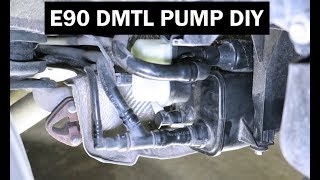
- BMW: BMW uses a DMTL (Diagnostic Module for Tank Leakage) pump. A P2419 code points directly to a failure of this pump, located in the rear wheel well (driver's side for 335i, passenger's side for 328i).
- Subaru: Subaru issued service bulletin 11-174-17R to reprogram the Engine Control Module (ECM). This corrects faulty logic that causes false triggers for P2419 and related battery drain complaints.
- Chrysler/Dodge/Jeep: The leak detection pump (ESIM) is sensitive to installation orientation. It must be installed with the electrical connector at the 3 o'clock position, or the internal weights will fail to operate.
Real Owner Stories
2010 Toyota Corolla at 145K miles with multiple EVAP codes
Check Engine and VSC lights came on simultaneously. Scanner showed a cluster of codes: P2419, P2401, P2402, P043E, P043F.
Outcome: The issue resolved itself after replacing the car battery and negative terminal cable for an unrelated starting problem. The lights stayed off.
Lesson: With a cluster of Toyota EVAP codes, the charcoal canister is a prime suspect. However, check for underlying electrical problems (e.g., a weak battery) before spending hundreds on parts, as low voltage triggers complex faults.
2017 Toyota Tacoma at 75K miles with intermittent CEL
Check Engine Light came on and off, eventually staying on. A scan revealed nine EVAP-related codes, including P2419, P2401, and P2402.
Outcome: After replacing the gas cap and clearing the codes, the Check Engine Light did not return. The new cap felt much tighter.
Lesson: While P2419 is a circuit code, a faulty gas cap seal causes a chain reaction of EVAP test failures that the computer misinterprets. Always start with the simplest and cheapest potential fixes.
2005 Toyota Tacoma with 123K miles and recurring codes
Check Engine Light appeared with codes P2419, P2401, and P2402. Clearing the codes worked, but they returned weekly.
Outcome: The owner replaced the canister and filter themselves without removing the truck bed. The codes did not return.
Lesson: Researching TSBs saves significant diagnostic time and points directly to the failed part. A DIY replacement saves hundreds in labor, but requires navigating tight spaces.
How to Prevent This Code From Triggering
- Avoid overfilling the fuel tank. (Every fill-up) — Habitually 'topping off' forces liquid fuel into the charcoal canister. This saturates the charcoal and ruins the integrated leak detection pump.
- Tighten the gas cap until it clicks. (Every fill-up) — A loose gas cap causes EVAP system faults. A persistent failure to seal interrupts system self-tests and leads to secondary circuit faults.
- Periodically inspect EVAP hoses and wiring. (Every oil change) — The EVAP pump is exposed to road debris, salt, and moisture. A visual inspection catches cracked hoses or corroded connectors before they cause a circuit fault.
- Maintain battery health. (Annually) — A weak battery causes low voltage across the vehicle. Sensitive electronics like the EVAP pump require stable voltage to operate correctly.
Frequently Asked Questions
What is the most common misdiagnosis for P2419?
A common mistake is replacing the leak detection pump or charcoal canister without performing basic electrical checks. Technicians and DIYers often overlook simple causes like a blown fuse, a poor ground connection, or damaged wiring. This leads to unnecessary and expensive parts replacement.
Can a bad gas cap cause a P2419 code?
No, a loose or bad gas cap causes an EVAP gross leak code (like P0455), not a circuit code like P2419. P2419 specifically points to an electrical problem with the valve's control circuit. It does not indicate a physical leak in the system.
Will I pass an emissions test with code P2419?
No. An active P2419 code illuminates the Check Engine Light, resulting in an automatic failure for any OBD-II emissions test. Even if the code is 'pending', the EVAP system monitor reads 'Not Ready', which also fails the test.
Can overfilling my gas tank cause P2419?
Yes, habitually 'topping off' the tank forces liquid gasoline into the charcoal canister, which is designed only for vapor. This saturates the canister and damages the integrated electronic components like the switching valve. Over time, this leads to electrical fault codes like P2419.
What does a failing leak detection pump sound like?
A failing leak detection pump usually makes no noise. However, some drivers report hearing a faint, repetitive 'beeping' or 'chirping' sound from the rear of the car. This occurs as the pump continuously tries and fails to build pressure.
How much does it cost to fix a P2419 code?
Repair costs range from $10 for a blown fuse to $700 for a full charcoal canister replacement. Replacing the leak detection pump—the most common fix—typically costs between $150 and $410 including parts and labor. Always diagnose the electrical circuit before buying expensive parts.
Can I fix code P2419 myself?
Replacing a blown fuse or visibly damaged wire is a straightforward DIY fix. However, diagnosing the exact electrical fault requires a multimeter and a scan tool with bi-directional controls. If you lack these tools, take the vehicle to an ASE-certified diagnostic technician.
Key Takeaways
- P2419 indicates an electrical circuit failure—such as a blown fuse or severed wire—rather than a physical vapor leak in the fuel system.
- Replacing the EVAP switching valve or leak detection pump resolves this code in over 60% of cases, costing between $150 and $410.
- An active P2419 code triggers an automatic emissions test failure in all 50 states, even if the vehicle exhibits zero drivability symptoms.
- If P2419 appears alongside codes P2401 and P043E on a Toyota, expect to replace the entire $400-$700 charcoal canister assembly due to known water intrusion issues.
- Test the EVAP system's 12V power supply and ground circuit with a multimeter before spending money on replacement parts.
Helpful Videos



The information in this article is provided for general reference and educational purposes only. Vehicle specifications, procedures, and part compatibility can vary by production date, trim level, and region. Always consult your vehicle's factory service manual and verify part numbers before purchasing or performing repairs. Safety-critical components such as airbags, seat belts, and braking systems should be installed by a qualified professional.
- 🎬 Helpful Videos
- What Does P2419 Mean?
- Can I Drive With P2419?
- Common Causes
- Symptoms
- Diagnostic Flowchart
- Common Fixes & Costs
- Used vs. New Parts: Buying Guide
- What Happens If You Wait — Timeline
- Cost of Not Fixing It
- Diagnosis Steps
- When This Code Triggers (Freeze-Frame Conditions)
- Related Codes
- Climate & Environmental Factors
- How to Talk to a Mechanic About This Code
- Where to Take It: Dealer vs Independent vs Chain
- When to Walk Away From the Repair
- What Scan Tool You Need for This Code
- How to Clear the Code After You Fix It
- Will This Fail Emissions / State Inspection?
- Most Commonly Affected Vehicles
- Manufacturer-Specific Notes
- Real Owner Stories
- 2010 Toyota Corolla at 145K miles with multiple EVAP codes
- 2017 Toyota Tacoma at 75K miles with intermittent CEL
- 2005 Toyota Tacoma with 123K miles and recurring codes
- How to Prevent This Code From Triggering
- Frequently Asked Questions
- What is the most common misdiagnosis for P2419?
- Can a bad gas cap cause a P2419 code?
- Will I pass an emissions test with code P2419?
- Can overfilling my gas tank cause P2419?
- What does a failing leak detection pump sound like?
- How much does it cost to fix a P2419 code?
- Can I fix code P2419 myself?
- Key Takeaways
- 🎟️ Get 5% Off