

P0442 on 2007-2018 Jeep Wrangler: Causes and Fixes for a Small EVAP Leak
For a 2007-2018 Jeep Wrangler, code P0442 is most often caused by a loose or faulty gas cap. If that doesn't fix it, the next most likely culprit is a failed EVAP Leak Detection Pump (ESIM) located near the rear wheel. A new gas cap is about $15-$30, while the pump is around $40-$60 for an aftermarket part.
- Always check the gas cap first. Make sure it's tight and the seal isn't cracked. An OEM Mopar cap is recommended if replacement is needed.
- If the gas cap isn't the issue, the EVAP Leak Detection Pump (ESIM) is the next most likely culprit on a JK Wrangler and is a straightforward DIY replacement.
- Visually inspect all EVAP hoses, especially around the engine bay and near the fuel tank, for cracks or damage.
- A smoke test is the most reliable way for a professional to find the exact source of a persistent leak.
- This code will not leave you stranded, but it will cause you to fail an emissions inspection.
What's Unique About the 2007-2018 Jeep Wrangler
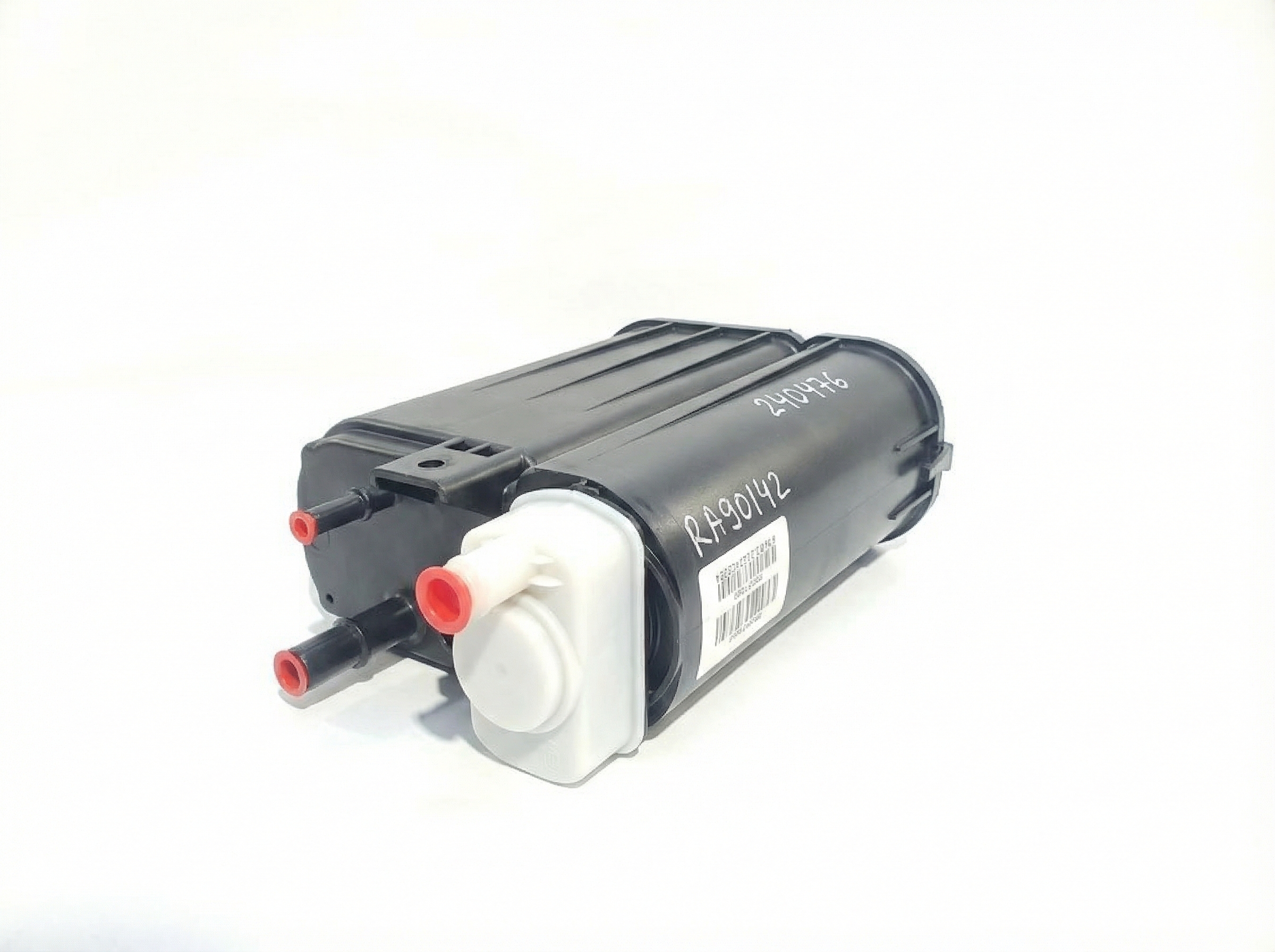
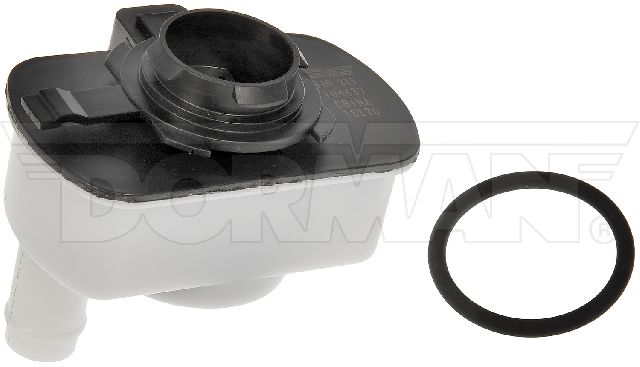
On the 2007-2018 Jeep Wrangler (JK), the P0442 code is exceptionally common. While a loose gas cap is a frequent cause on any vehicle, the JK Wrangler is particularly known for failures of the EVAP Leak Detection Pump, also called the Evaporative System Integrity Module (ESIM). This white, rectangular component twists directly into the charcoal canister and is a frequent point of failure that is relatively unique to Chrysler/Jeep products of this era. Its internal check valve and weights can get stuck, causing it to fail the self-test even without an external leak. Additionally, cracked EVAP hoses, especially near the battery or fuel filler neck, and rust on the filler neck itself are common culprits due to material wear, off-road use, and exposure to road salt.
Generation note: The 2007-2018 model years cover the entire Jeep Wrangler JK generation. This includes models with the 3.8L V6 (2007-2011) and the 3.6L Pentastar V6 (2012-2018). The causes and fixes for P0442 are largely the same across both engine types within the JK platform, as they use a very similar EVAP system design and the same ESIM module.
Symptoms You May Notice
- Check Engine Light is on
- A "GASCAP" message may appear on the instrument cluster
- A faint fuel smell may be noticeable, particularly after refueling or when parked in a garage, though this is less common with small leaks.
- Difficulty filling the fuel tank (pump clicks off repeatedly 🎬 Watch: How to fix common Jeep fuel overflow issues.), which can point to a clogged vent or a failing ESIM.
- Replacing the purge valve when the actual problem is the leak detection pump (ESIM) or a cracked hose.
- Replacing the O2 sensors, which are unrelated to the EVAP system.
- Assuming an aftermarket gas cap is sealing correctly when it is not. Always try an OEM Mopar cap before moving to more complex diagnostics.
Most Likely Causes
- Loose or Faulty Gas Cap 🔴 High Probability The gas cap seal can wear out, crack, or become brittle over time, preventing a proper seal. This is the most common and easiest first step for any EVAP code.
How to confirm: Ensure the cap is tightened until it clicks several times. Inspect the rubber O-ring on the cap for cracks or brittleness. Also, inspect the metal sealing surface on the fuel filler neck for rust or debris, which can prevent a good seal.
Typical fix: Tighten or replace the gas cap. It is highly recommended to use an OEM Mopar gas cap, as some aftermarket caps may not seal correctly and can cause the code to persist. If the filler neck is rusty, clean the sealing surface with a wire brush.
Est. part cost: $15-$30 - Faulty EVAP Leak Detection Pump (ESIM) 🔴 High Probability This specific component, the Evaporative System Integrity Module (ESIM), is a notorious failure point on Chrysler/Jeep vehicles of this era, including the JK Wrangler. It often fails internally (the check valve/weights get stuck) without showing external damage, leading to repeated failures for some owners.
How to confirm: After ruling out the gas cap, this is the next most likely part to fail. Diagnosis often involves replacing the part due to its high failure rate. A definitive diagnosis requires a smoke test, but many owners successfully replace it as a primary suspect. A failed ESIM can sometimes be identified if it doesn't rattle when shaken.
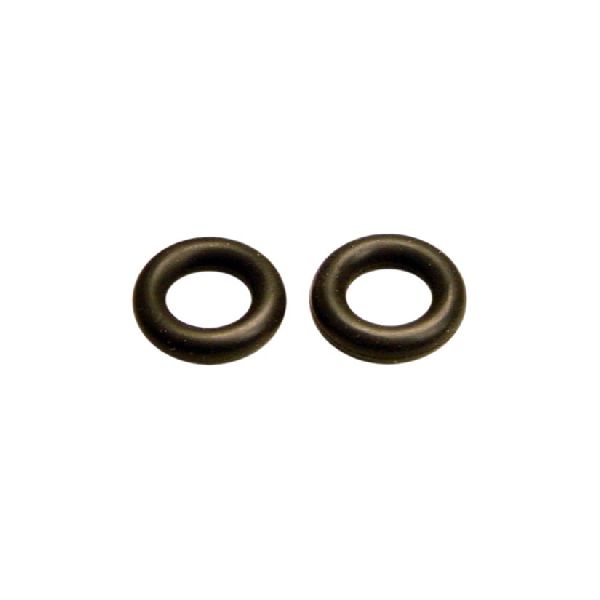
Typical fix: Replace the ESIM and its O-ring. It is located on the driver's side, attached to the EVAP canister 🎬 Watch: How to replace the ESIM leak detection pump. in front of the rear axle. It twists off after disconnecting one hose and one electrical connector.
Est. part cost: $40-$110 - Cracked or Disconnected EVAP Hoses 🟡 Medium Probability Rubber and plastic hoses become brittle with age and heat cycles. On the JK, common failure points are the hoses near the battery, the lines running from the fuel filler neck to the canister, and connections on the purge solenoid in the engine bay.
How to confirm: Visually inspect all accessible EVAP lines for obvious cracks, especially at bends and connection points. A smoke test is the most effective way to find a small, hard-to-see crack.
Typical fix: Replace the damaged section of hose. Small cracks can sometimes be temporarily sealed, but replacement is the correct long-term fix.
Est. part cost: $10-$50 - Faulty EVAP Purge Valve/Solenoid ⚪ Low Probability The purge valve, located in the engine bay, can get stuck open or closed, causing a leak code. While it can fail, it's less common than the gas cap or ESIM for this specific code on a JK.
How to confirm: With the engine off, disconnect the valve and try to blow through it; it should be closed and not allow air to pass. You can also apply 12V power to it and listen for a click. A stuck-open valve can sometimes cause a rough idle or difficulty starting after refueling.
Typical fix: Replace the purge valve solenoid.
Est. part cost: $25-$50
Rare But Worth Checking
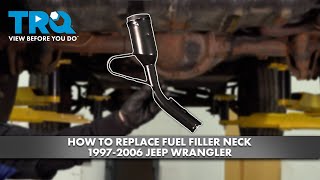
- Cracked or Rusted Fuel Filler Neck: The metal tube where you insert the gas nozzle can rust through and develop small holes, causing an EVAP leak. This is more common in areas with heavy road salt usage (the 'Salt Belt'). A smoke test is the best way to confirm this, as the smoke will be visible inside the fender well area. There was a related TSB (25-001-09) for earlier models concerning this issue.
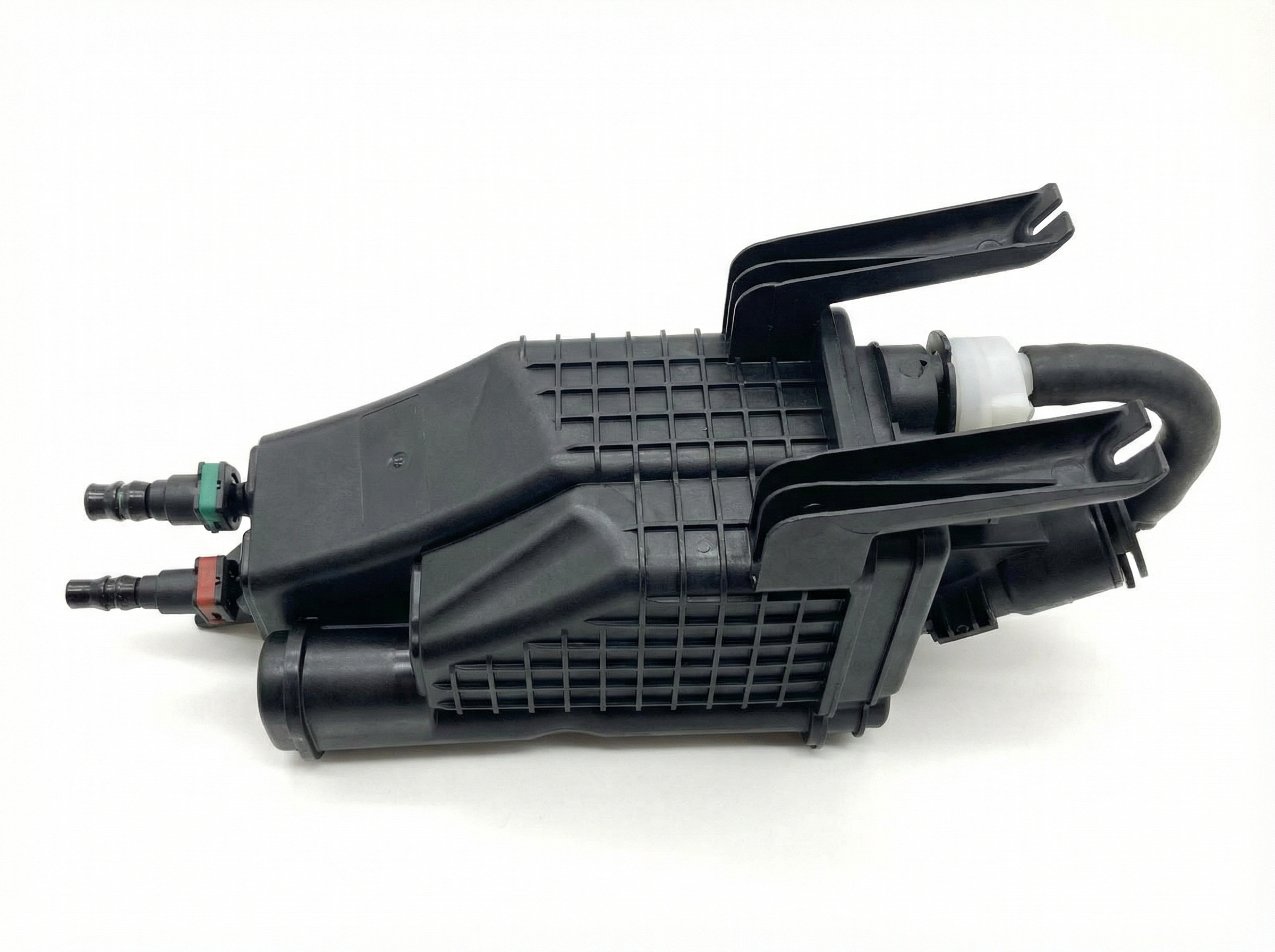
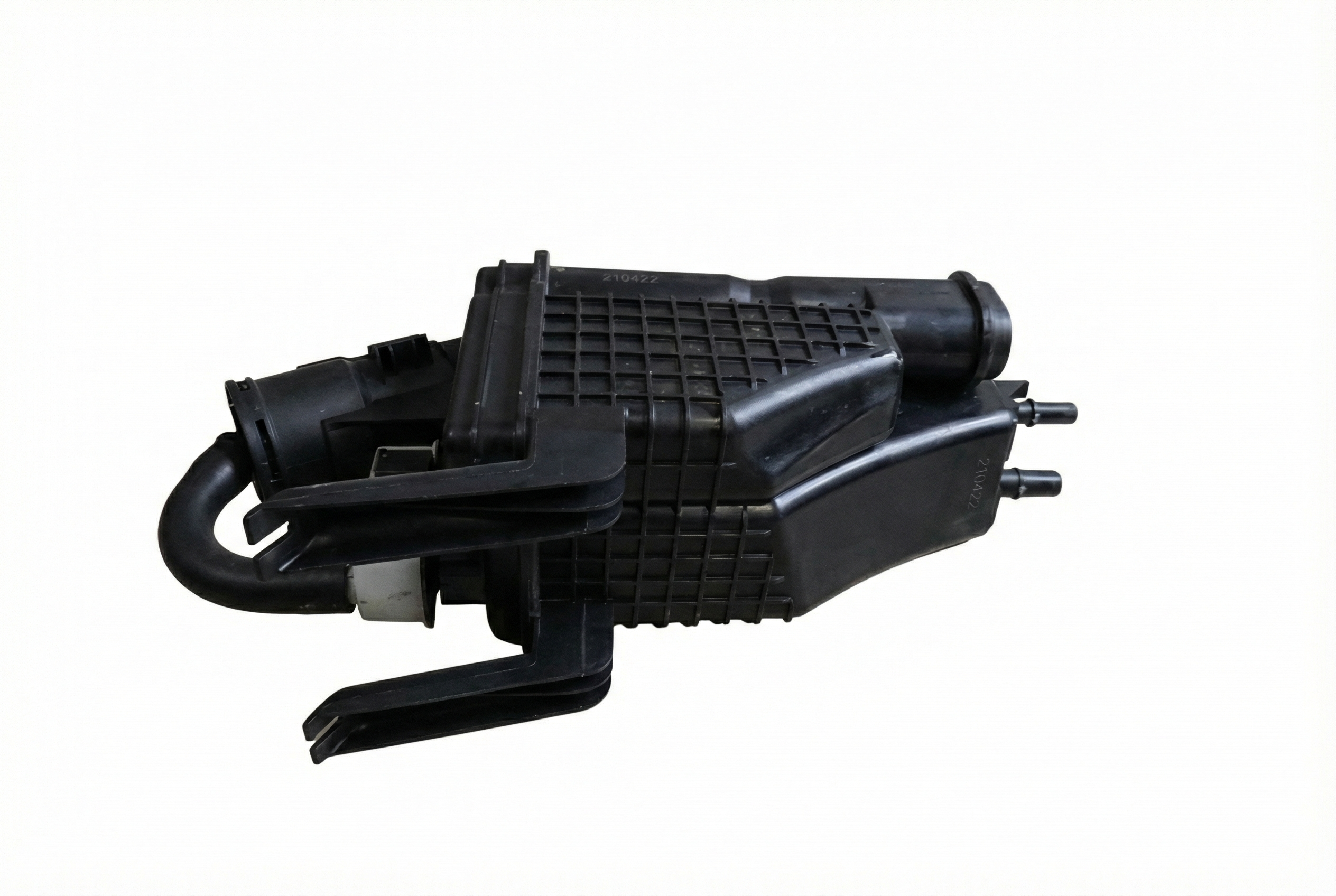
- Cracked EVAP Canister: The charcoal canister itself can be damaged by road debris or develop cracks from age, though this is uncommon. A smoke test will show smoke billowing from the canister body if it is cracked.
Diagnosis Steps
- Check the Gas Cap: Remove, inspect the seal for damage, and retighten it until it clicks at least three times. Inspect the filler neck for rust. Clear the code and drive for a few days to see if it returns. If in doubt, spend the $25 on an OEM Mopar cap.
- Visual Inspection: Carefully inspect all visible EVAP hoses in the engine bay (around the purge solenoid) and under the vehicle near the fuel tank and charcoal canister. Look for any cracks, chafing, or loose connections.
- Replace the Leak Detection Pump (ESIM): Given its extremely high failure rate on JKs, if the gas cap is good and there are no obvious hose leaks, the ESIM is the most probable cause. It is an inexpensive and easy part to replace for a DIYer.
- Perform a Smoke Test: This is the most definitive diagnostic step if the above steps fail. A mechanic will introduce pressurized smoke into the EVAP system. Smoke will escape from the location of the leak, making it easy to pinpoint 🎬 See how a professional mechanic performs a smoke test. whether it's a hose, the ESIM, the purge valve, or the filler neck.
- Test the Purge Valve: Check if the valve is stuck open by attempting to blow through it when disconnected and unpowered. It should not allow air to pass.
Parts You'll Likely Need
- EVAP System Integrity Module (ESIM) / Leak Detection Pump
(OEM #04861962AD (supersedes 4861962AA, 4861962AB, 4861962AC))— This is a very common failure item on the 2007-2018 Wrangler that directly causes the P0442 code. The internal mechanism is prone to sticking.
Trusted brands: Mopar, Dorman, Standard Motor Products (SMP)
OEM price range: $60-$90
Aftermarket price range: $40-$70 - Fuel Cap
(OEM #52100551AG (Confirm with VIN))— A worn gas cap seal is the most frequent cause of all EVAP leak codes. OEM is strongly recommended for proper sealing.
Trusted brands: Mopar
OEM price range: $20-$30
Aftermarket price range: $15-$25 - EVAP Purge Valve / Solenoid
(OEM #4891735AC (Confirm with VIN))— Can get stuck open, causing a small leak. It's a possible but less common cause than the gas cap or ESIM for this specific code.
Trusted brands: Mopar, Bosch
OEM price range: $30-$50
Aftermarket price range: $20-$40
Related Codes That Often Appear With This One
- P0456 — P0456 indicates a 'very small leak', while P0442 indicates a 'small leak'. They point to the same type of problem, just with a different leak size threshold detected by the computer. The causes and fixes are identical, and it's common to see one code appear after the other.
- P0455 — P0455 indicates a 'large leak'. If you see this with P0442, it may suggest an intermittent or worsening leak in the EVAP system, or a component like the ESIM that is failing intermittently.
- P0457 — This code specifically points to a leak detected that is consistent with a loose or missing gas cap. It often appears alongside P0442 if the gas cap is the root cause.
Technical Service Bulletins (TSBs) & Recalls
- TSB 25-001-09: While not directly for the JK, this older Chrysler TSB addresses EVAP codes caused by corrosion on the fuel filler tube sealing surface. It recommends replacing the filler tube with an updated part, which is relevant context for the 'Cracked Fuel Filler Neck' cause, especially in rust-prone regions.
Platform-Specific Known Issues
- Real-World Repair Story: Chasing the Leak to the Filler Neck: A user on Reddit with a Jeep TJ (a similar platform) detailed a year-long battle with P0442/P0455. They performed multiple smoke tests, replaced components, and even dropped the fuel tank twice without finding a leak. The ultimate culprit was a small rust hole in the fuel filler neck, hidden up inside the tub area. The smoke wa
Mechanic-Grade Diagnostic Values
- ESIM Connector Voltage (Key On, Engine Off, Connector Disconnected) — expected: 5V or 12V, depending on the specific powertrain controller. Some 'G-pug' controllers use 5V.. Failure: A significantly lower voltage (e.g., 1.7V) points to a wiring issue or a fault in the PCM, not the ESIM itself.
- EVAP Purge Solenoid Function Test — expected: With the solenoid disconnected and unpowered, no air should pass through it. When 12V is applied, it should click open and allow air to pass.. Failure: Air passes through when unpowered (stuck open), or it does not open/click when 12V is applied (stuck closed or failed coil).
Hidden / Shadow Codes Worth Checking
- Mode $06, Test ID $3C (and others): Chrysler/Jeep vehicles use Mode $06 data to show results from non-continuous monitors. Test IDs like $3C correspond to the 0.020" leak test (small leak). A scan tool can view the raw test data and limits, which can confirm a failure before a DTC is set or provide more detail than the generic P-code. (see via A professional scan tool with Mode $06 data viewing capabilities.)
Scan Tool Commands That Help
- Witech or equivalent professional scanner: EVAP Vent Valve Actuation / Sealing — This command is required to close the normally-open EVAP vent solenoid before performing a smoke test. The function is often found in the 'Activation Test' or 'Special Functions' menu and will change the valve status from 'Venting' to 'Not Venting'.
- Witech or equivalent professional scanner: Force EVAP Large Leak Test — This is an advanced diagnostic step. By forcing the system to run its large leak test, a technician can watch the live data for the 'ESIM Switch' status. If the switch state changes to 'Closed' during the test, it confirms the ESIM is likely functioning correctly, even if a smoke test is clean.
Wiring & Ground Locations
- G301 — Under the front passenger's seat (on 2011 models).. A poor ground connection can cause erratic behavior or failure of electrical components in the EVAP system, such as the fuel tank pressure sensor or nearby modules.
- Engine Bay Ground Stud — On the driver's side of the engine bay, near the brake booster.. This is a primary grounding point for components in the engine bay. The EVAP purge solenoid is located in this area and relies on a solid ground to function correctly.
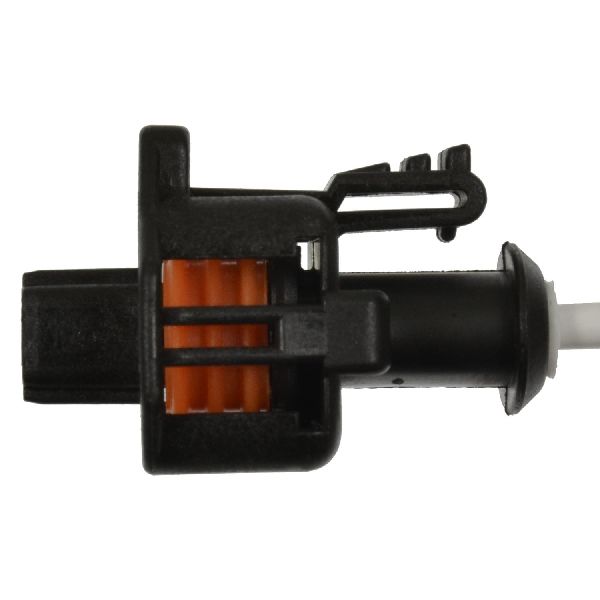
- ESIM Connector — On the EVAP canister, in front of the rear axle on the driver's side.. This 2-pin connector and its wiring are vulnerable to damage from road debris or rodents. Checking for proper voltage here is a key diagnostic step to differentiate between a bad ESIM and a wiring/PCM fault.
Real Owner Repair Stories
- Reddit user oxtrot75 (2011 Jeep Wrangler) — P0455 (large leak) and P0456 (small leak) codes.
❌ Tried (didn't work) Initial assumption was the gas cap.
✅ What actually fixed it After replacing the gas cap, the actual problem was found to be the breather tube on the gas filler neck, which had snapped off right at the connection to the gas tank. - BobIsTheOilGuy forum user Jimmy9190 (Dodge Dakota (similar Chrysler EVAP system)) — P0442 code returned after previous repairs.
❌ Tried (didn't work) The leak detection pump and under-hood hoses had been replaced during a previous occurrence of the code.
✅ What actually fixed it The final fix was a small, cracked rubber elbow on a vent hose connecting the charcoal canister to a plastic line leading to the gas tank. The user sealed the crack with black Permatex to resolve the leak. - NHTSA ODI #10761885 (Jeep Patriot) — An owner reported that the engine light with code P0442 comes on occasionally but goes off after a day or two, creating a frustrating and potentially dangerous driving situation.
- NHTSA ODI #10520663 (Jeep Grand Cherokee) — One owner reported spending over $3500 on repairs, including replacing the EVAP purge solenoid, yet the vehicle continued to stall and throw codes P0442 and P0455.
"I Checked Everything" — The Actual Cause
- The most common scenario for a Jeep Wrangler is an internal failure of the Evaporative System Integrity Module (ESIM). The system passes a smoke test because there is no external leak, but the ESIM's internal weighted valve mechanism sticks and fails to operate correctly during the PCM's self-test, triggering a P0442 or related code. A technician confirmed that if you have leak codes but find no leaks, and the vehicle has a leak detection pump (ESIM), it is the most common cause.
When the Usual Fixes Don't Work
- While replacing the gas cap and ESIM are the most common fixes, they are not guaranteed solutions. Multiple owner accounts exist where both parts were replaced (sometimes with OEM parts) yet the P0442 code persisted. In these cases, the root cause was often a more obscure issue like a pinhole rust leak in the fuel filler neck, a cracked hose elbow near the tank, or a broken breather tube connection, requiring a thorough smoke test or meticulous visual inspection to find. NHTSA ODI #10357094 notes that OBD error codes like P0442 can sometimes be inaccurate, leading to unneeded repairs and costly replacement of sensors and computers without cause.
OEM Part Supersession History
4861962AA, 4861962AB, 4861962AC→04861962AD— Standard part revision and improvement over time.
Heads up: Part 04861962AD is specified for vehicles built on or before September 4, 2013. This implies a potential change for the 2014 model year, and owners of 2014+ models should verify the correct part number.
Model Year Variations Within This Range
- 2007-2011: The EVAP canister on early JKs was mounted in a highly exposed location between the driveshaft and exhaust, making it very vulnerable to off-road damage. Relocation kits and skid plates are common modifications for these years.
- 2014-2018: The ESIM part number (04861962AD) is specified for vehicles built on or before 09/04/2013, suggesting that models built after this date may use a different ESIM module. Owners should verify the part number for their specific vehicle.
Diagnostic Flowchart
Real Owner Stories
Aggregated from forums and TSBs cited above. Mileages and costs reflect what owners reported in those sources.
2008 Jeep JK Wrangler 3.8L — 12784 miles
Symptoms: Triggered P0456 and P0455 codes. A smoke machine revealed a pretty large leak at the EVAP System Integrity Monitor Switch (ESIM) mounted to the charcoal canister. Applying dielectric grease to the seal did not slow the leak down.
What fixed it: Ordered and installed a new ESIM, which completely resolved the leak.
Source hint: BobIsTheOilGuy forum
Jeep JK Wrangler
Symptoms: Heard a clanking noise when making turns and had an EVAP code. Discovered that the ESIM module was physically broken and hanging loose.
What fixed it: Replaced the broken ESIM module.
Source hint: jk-forum.com thread titled 'replaced my esim evaporative system integrity module'
Jeep TJ
Symptoms: Chased P0442 and P0455 EVAP codes for over a year. Performed multiple smoke tests, replaced components, and dropped the fuel tank twice without finding a leak because not enough time was given for the smoke to accumulate.
What fixed it: Found and repaired a small rust hole in the fuel filler neck that was hidden up inside the tub area.
Source hint: reddit.com/r/WranglerTJ thread titled 'P0441 P0442 P0445 P0446 fix'
Related OBD-II Codes
Frequently Asked Questions
Why does my JK Wrangler display a 'GASCAP' message on the dash along with the P0442 code?
I replaced the gas cap on my 2007-2018 Wrangler, but the P0442 code came back. What is the next most likely culprit?
Does TSB 25-001-09 apply to my JK Wrangler's P0442 code?
Why is my Jeep Wrangler having difficulty filling up with gas (the pump keeps clicking off) along with the P0442 code?
How much does it cost to fix the ESIM on a JK Wrangler?
Where are the most common places for EVAP hoses to crack on a JK Wrangler?
Helpful Videos
Used OEM Parts in Stock

New Aftermarket Parts Available


The information in this article is provided for general reference and educational purposes only. Vehicle specifications, procedures, and part compatibility can vary by production date, trim level, and region. Always consult your vehicle's factory service manual and verify part numbers before purchasing or performing repairs. Safety-critical components such as airbags, seat belts, and braking systems should be installed by a qualified professional.
- Jeep Wrangler:
- 🎬 Helpful Videos
- 🛍️ Shop This Part
- What's Unique About the 2007-2018 Jeep Wrangler
- Symptoms You May Notice
- Most Likely Causes
- Rare But Worth Checking
- Diagnosis Steps
- Parts You'll Likely Need
- Related Codes That Often Appear With This One
- Technical Service Bulletins (TSBs) & Recalls
- Platform-Specific Known Issues
- Mechanic-Grade Diagnostic Values
- Hidden / Shadow Codes Worth Checking
- Scan Tool Commands That Help
- Wiring & Ground Locations
- Real Owner Repair Stories
- "I Checked Everything" — The Actual Cause
- When the Usual Fixes Don't Work
- OEM Part Supersession History
- Model Year Variations Within This Range
- Diagnostic Flowchart
- Real Owner Stories
- 2008 Jeep JK Wrangler 3.8L — 12784 miles
- Jeep JK Wrangler
- Jeep TJ
- Related OBD-II Codes
- Frequently Asked Questions
- 🎟️ Get 5% Off