

OBD-II Code P0445: EVAP Purge Control Valve Circuit Shorted
What P0445 means, why it triggers, and how to fix it
- Code P0445 indicates an electrical short in the EVAP purge valve circuit, meaning the valve is drawing excessive current rather than leaking vapor.
- Replacing a shorted EVAP purge valve costs between $85 and $360 and resolves the code in over 80% of cases.
- Never replace the gas cap to fix P0445; use a multimeter to verify the purge valve's resistance falls between 15 and 30 Ohms.
- Stop topping off the gas tank, as forcing liquid fuel into the EVAP system saturates the charcoal canister and destroys the purge valve.
What Does P0445 Mean?

P0445 means the Powertrain Control Module (PCM) detected a short circuit in the Evaporative Emission (EVAP) system's purge control valve. The EVAP system traps gasoline fumes in a charcoal canister, and this valve opens to let the engine burn those fumes. A short circuit indicates excessive electrical current draw, preventing the computer from controlling the valve.
Technical definition: The SAE/OBD-II definition is "Evaporative Emission Control System Purge Control Valve Circuit Shorted." This indicates the Powertrain Control Module (PCM) detected excessive current draw or a direct path to ground or power in the purge valve's electrical circuit. The PCM commands the valve's solenoid using a duty-cycled ground signal and monitors the circuit's voltage. If it sees near zero volts when it expects battery voltage, it flags the circuit as shorted and sets P0445.
Can I Drive With P0445?
Yes, But With Caution. You can safely drive with a P0445 code, as it does not affect immediate engine performance or safety. However, the vehicle will automatically fail an emissions test. Ignoring the code long-term causes a 5-10% decrease in fuel economy and saturates the charcoal canister. A constantly open purge valve also creates a persistent incorrect air-fuel mixture, which degrades the catalytic converter over thousands of miles and leads to a $1,500+ repair.
Common Causes

- Faulty EVAP Purge Control Valve (Very Common) — The most frequent cause is a failed purge valve. Internal solenoid windings short out over time due to heat and vibration, causing the valve to draw excessive electrical current. This is highly common in vehicles over 100,000 miles.
- Shorted Wiring or Damaged Connector (Common) — The wiring harness connecting the purge valve melts, frays, or chafes against hot engine components. If exposed wire touches the metal chassis, it creates a direct short to ground. Rodent damage is also a frequent culprit.
- Saturated Charcoal Canister (Common) — Repeatedly topping off the gas tank forces liquid fuel into the vapor-only charcoal canister. This ruins the canister and sends charcoal pellets down the purge line, contaminating the valve and causing an internal mechanical bind that leads to an electrical short.
- Corroded Electrical Connector (Less Common) — Moisture from rain, car washes, or cracked EVAP hoses enters the purge valve's electrical connector. This corrosion creates an unintended electrical path between the pins, leading to a short circuit.
- Blown EVAP Fuse (Less Common) — A shorted valve or wire often blows the EVAP circuit fuse. Replacing the fuse without fixing the underlying short causes the new fuse to blow immediately.
- Faulty Powertrain Control Module (PCM) (Very Rare) — The internal driver circuit within the PCM that controls the purge valve fails and shorts internally. This is the least likely cause and requires ruling out the valve, wiring, and fuse first. 🎬 Watch: A quick breakdown of P0445 causes and common fixes.
Symptoms

- Check Engine Light is On — The light illuminates as soon as the PCM detects the short circuit fault during a system self-test.
- Rough Idle or Engine Hesitation — If the valve shorts in the open position, it creates a constant vacuum leak. This disrupts the air-fuel mixture, causing a rough idle, hesitation on acceleration, or stalling.
- Fuel Smell — You will notice a faint smell of gasoline near the engine bay or fuel tank if the valve is stuck open, allowing vapors to escape or enter the intake manifold incorrectly.
- Failed Emissions Test — The vehicle automatically fails an emissions inspection because the Check Engine Light is active and the EVAP system monitor reads 'incomplete'.
- Difficulty Starting After Refueling (also visible on scanner) — A purge valve shorted in the open position allows excessive fuel vapor into the intake manifold after filling the tank. This creates a rich condition, making the engine hard to start until the excess vapor clears.
Diagnostic Flowchart
Tap your situation to follow the diagnostic path that matches what you're seeing on this code.
Common Fixes & Costs
- Replace EVAP Purge Control Valve
— Parts: $25-$160, Labor: $60-$200, ~0.8 hr book time
(DIY)
: OEM (Alt: {"brand": "Standard Motor Products", "part_number": "CP937", "price_range": "$50-$60"}, {"brand": "Dorman", "part_number": "994-073", "price_range": "$45-$55"})
: OEM (Alt: {"brand": "ACDelco", "part_number": "12630282", "price_range": "$55-$65"}, {"brand": "Standard Motor Products", "part_number": "CVS176", "price_range": "$60-$70"})
: OEM (Alt: {"brand": "Carquest Premium", "part_number": "CPC1021", "price_range": "$70-$85"}, {"brand": "Standard Motor Products", "part_number": "CP1021", "price_range": "$65-$80"}) - Repair Damaged Wiring or Connector — Parts: $10-$50, Labor: $125-$300, ~1.5 hr book time (Intermediate)
- Replace Blown Fuse — Parts: $1-$5, Labor: $0-$50, ~0.1 hr book time (DIY)
- Replace Charcoal Canister — Parts: $150-$400, Labor: $100-$250, ~1.2 hr book time (Intermediate)
- Replace Powertrain Control Module (PCM) — Parts: $400-$1000+, Labor: $150-$300, ~1.5 hr book time (Professional)
Used vs. New Parts: Buying Guide
When a used part is worth it: For a simple, external, and easily accessible electrical part like an EVAP purge valve, buying a used OEM part from a reputable auto recycler is a cost-effective option for older, high-mileage vehicles.
Donor-vehicle mileage cap: roughly under 100000 miles for the part to have meaningful remaining life.
Donor quality checklist:
- Verify the part number exactly.
- Buy from a licensed salvage yard or recycler that offers a 30-90 day warranty.
- Avoid parts from vehicles in flood-damaged areas or the rust belt, as corrosion is a key failure mode.
Decision logic:
- If The new aftermarket part costs less than $50. → Buy new. The small savings on a used part isn't worth the risk and lack of warranty.
- If The vehicle is over 10 years old or has >150,000 miles and the OEM part is expensive. → A used OEM part is a reasonable choice, provided it has a return policy or warranty.
- If The part is known to be a very common failure item on your specific model. → Favor a new part with a longer warranty, as a used part is likely to have a similar remaining lifespan.
Warranty tradeoff: Used parts typically come with a 30-90 day functional warranty. New aftermarket parts often have a 1-year to limited lifetime warranty. New OEM parts carry a 12-month/12,000-mile warranty.
Worst-case if a used part fails: $150-$300 if a used part fails after the warranty period, requiring you to pay for labor again plus the cost of another part.
What Happens If You Wait — Timeline
- 0-1 month: Check Engine Light is on. Vehicle fails emissions test. No other noticeable symptoms for most drivers. (MPG impact: 0-2%% · Added cost: $0)
- 1-4 months: If valve is shorted open, a noticeable 5-10% drop in fuel economy occurs. A faint fuel odor is present after parking. Possible rough idle or hard starting after refueling. (MPG impact: 5-10%% · Added cost: $20-$50 in wasted fuel.)
- 4-12 months: Constant flow of fuel vapor from a stuck-open valve saturates the charcoal canister, reducing its effectiveness. The canister is at risk of permanent damage. (MPG impact: 5-10%% · Added cost: $150-$400 (Cost to replace the ruined charcoal canister).)
- 12+ months: The charcoal canister fails completely. A long-term rich/lean condition caused by the faulty valve increases the catalytic converter's temperature, shortening its life. (MPG impact: 5-10%% · Added cost: $1200-$2800 (Cost if catalytic converter damage occurs).)
Cost of Not Fixing It
- 0-3 months: Guaranteed failure of any emissions test. A 5-10% reduction in fuel economy occurs due to unburned vapors or incorrect air-fuel mixtures. A persistent fuel odor is present. (Added cost: $10-$30 per month in wasted fuel.)
- 3-12 months: If the purge valve is stuck open, it saturates the charcoal canister. This requires replacing the canister in addition to the valve. (Added cost: $150-$400 for charcoal canister replacement.)
- 12+ months: Long-term driving with a stuck-open purge valve contributes to a rich or lean air-fuel mixture, increasing the operating temperature of the catalytic converter and degrading it. (Added cost: $1200-$2800 for catalytic converter replacement.)
Diagnosis Steps

- Read the Code and Freeze Frame Data
Use an OBD-II scanner to confirm P0445 is the active code. Examine the freeze-frame data to see the engine conditions (speed, temperature, load) when the code set to identify when the short occurs.
Tools: OBD-II Scanner (Beginner) - Check the EVAP Fuse
Check the owner's manual to find the fuse for the EVAP system. Visually inspect it. A blown fuse confirms a direct short circuit in the valve or wiring that must be repaired before replacing the fuse.
Tools: Owner's Manual, Fuse Puller (Beginner) - Visually Inspect the Purge Valve and Wiring
Locate the purge valve near the intake manifold. Inspect the wiring harness for melting, chafing, or rodent damage. Ensure the electrical connector is secure and free of internal corrosion.
Tools: Flashlight (Beginner) - Test the Purge Valve's Resistance
Disconnect the electrical connector from the purge valve. Use a multimeter set to Ohms (Ω) to measure resistance between the two pins on the valve. A normal reading is 15-30 Ohms. A reading near 0 Ohms confirms an internal short, requiring valve replacement.
Tools: Multimeter, Vehicle Service Manual (Intermediate) - Bench Test the Solenoid with a 9V Battery
Connect a 9-volt battery to the two electrical pins on the removed purge valve. You should hear a distinct click. With the battery connected, you should be able to blow air through it. If it fails either test, it is mechanically faulty.
Tools: 9-Volt Battery, Jumper Wires (Intermediate) - Test the Circuit for a Short to Ground
Disconnect the purge valve and the PCM connector. Set the multimeter to Ohms (Ω). Test for continuity between the purge valve control wire pin and a chassis ground. A reading near 0 Ohms indicates a short to ground in the wiring. Wiggle the harness to find intermittent shorts.
Tools: Multimeter, Vehicle Wiring Diagram (Advanced) - Test the Circuit for a Short to Power
With the purge valve and PCM disconnected, test for continuity between the purge valve control wire and the power supply wire in the same connector. A reading under 10 Ohms confirms a short to power within the harness.
Tools: Multimeter, Vehicle Wiring Diagram (Advanced) - Activate the Solenoid with a Bi-Directional Scan Tool
Command the purge valve to cycle on and off while the engine runs. Listen for an audible click. If the valve does not click and the wiring tests passed, the valve has failed.
Tools: Bi-directional OBD-II Scanner (Advanced) - Check Live Data for Voltage and Command PID
Monitor the 'EVAP Purge Command' PID and 'Purge Valve Circuit Voltage'. With the engine off, the command is 0% and voltage is near battery voltage (11-14V). For P0445, a constant 0V reading confirms a short to ground.
Tools: Advanced Bi-Directional Scan Tool (Advanced) - Check Fuel Tank Pressure (FTP) Sensor Data
Use the FTP sensor to confirm a stuck-open valve. The FTP sensor voltage reads 1.5-2.0V with the gas cap off. If the purge valve is shorted open, the system struggles to build vacuum during a test or shows vacuum when none is commanded.
Tools: Advanced Scan Tool, Vehicle Service Manual (Advanced)
When This Code Triggers (Freeze-Frame Conditions)
- Engine Coolant Temp: 170-210°F (The EVAP monitor runs when the engine is at full operating temperature.)
- Fuel Level: 25-75% (The system needs a specific range of fuel to run its tests; a full or empty tank prevents the monitor from running.)
- Vehicle Speed: 45-65 mph (The test occurs during steady-state cruising on a highway.)
- Ambient Air Temperature: 40-95°F (The EVAP monitor does not run if the outside temperature is too hot or too cold.)
Related Codes
- P0443 — P0443 is a general 'Circuit Malfunction' code. P0445 is a more specific version, confirming the problem is a short circuit (excessive current).
- P0444 — P0444 indicates an 'Open Circuit,' meaning the PCM detects no current flow due to a broken wire or burned-out coil. P0445 means too much current flow. You cannot have both active simultaneously for the same fault.
- P0441 — P0441 is a 'Performance' code for 'Incorrect Purge Flow.' A valve shorted and stuck open (P0445) causes incorrect flow (P0441). Fix the P0445 electrical fault first.
- P0455 — P0455 indicates a 'Large EVAP Leak.' A valve shorted and stuck open causes the system to fail its pressure test, logging P0455 as a secondary code.
Climate & Environmental Factors
- High Humidity: High humidity accelerates corrosion on electrical connectors. This corrosion creates unintended electrical paths (shorts).
- Road Salt (Cold Climates): Salty spray enters the engine bay and severely accelerates corrosion of wiring and connectors, leading to shorts.
- Extreme Temperatures: Extreme heat makes wiring insulation brittle and susceptible to cracking, while extreme cold makes plastic connectors fragile and prone to breaking during service.
How to Talk to a Mechanic About This Code
Say this: "I have an OBD-II code P0445 indicating a short in the EVAP purge valve circuit. I need a diagnostic to determine if the fault is the valve itself, the wiring, or a blown fuse. Please test the component's resistance and check the circuit for a short to ground before replacing parts."
This signals that you understand P0445 is an electrical fault, not a simple EVAP leak. It directs the technician to perform a specific diagnosis, preventing them from replacing the valve without confirming it is the true cause of the short.
Avoid saying:
- 'My check engine light is on, can you look at it?' (This is too vague and leads to an expensive, open-ended diagnostic process).
- 'I think I have an EVAP leak, maybe it's the gas cap?' (This misdirects the technician, as P0445 is an electrical code, not a leak code).
- 'Just fix whatever is wrong.' (This gives the shop a blank check to replace parts without your approval).
Questions to ask before authorizing the repair:
- What resistance reading did you get from the purge valve itself?
- Did you test the control wire for a short to ground, and what was the result?
- Was the fuse for the EVAP circuit checked and was it blown?
- Can you show me the damaged wiring or the failed part before you replace it?
- What is the warranty on the recommended repair and the new part?
Where to Take It: Dealer vs Independent vs Chain
- Dealer:
Recommended only if the vehicle is under warranty or if other shops failed to diagnose a complex wiring short. Otherwise, it is an unnecessarily expensive option.
Best for: Vehicles still under the original powertrain or emissions warranty., Complex, brand-specific electrical issues or when a TSB points to a known wiring problem., Very rare instances where the PCM is suspected to be faulty and requires programming.
Downsides: Significantly higher labor rates, often 1.5x to 2x more than an independent shop., May recommend replacing an entire wiring harness when a simpler spot repair suffices. (Typical cost: +50% vs. baseline) - Independent Shop:
Best fit. P0445 is a routine electrical diagnostic job that any competent independent mechanic handles efficiently with a multimeter and a scan tool.
Best for: Most out-of-warranty vehicles., Diagnosing common electrical faults like P0445., Cost-conscious owners who want a good balance of expertise and value.
Downsides: Shop quality and diagnostic skill vary. Choose a well-reviewed shop with ASE-certified technicians. (Typical cost: +0% vs. baseline) - Chain Shop:
Use with caution. Acceptable if you are paying for labor to swap a part you identified as faulty. AVOID for the initial diagnosis of a P0445 code.
Best for: You have already diagnosed the problem yourself and are certain only the purge valve needs replacement., Simple, non-diagnostic work like oil changes or tires.
Downsides: Technician skill varies dramatically. They may lack the experience to accurately trace a short circuit, leading to misdiagnosis., There is high pressure to upsell services, and a P0445 might be incorrectly blamed on unrelated items. (Typical cost: -10% vs. baseline)
When to Walk Away From the Repair
If the total estimated repair cost for the P0445 fault exceeds 40% of your car's current private-party value, consider selling the vehicle.
- Car worth $3000, fix is $350: Fix it. The repair cost is low compared to the vehicle's value and solves a key issue for emissions testing.
- Car worth $15000, fix is $400: Fix it. This is a routine repair cost for a modern vehicle.
- Car worth $2500, fix is $1400: Walk away. This scenario implies a rare PCM failure. The repair cost is over half the car's value. It is not economically sensible.
What Scan Tool You Need for This Code
Minimum: A basic OBD-II code reader that reads and clears codes, and views Freeze Frame data.
A basic $20 reader confirms the P0445 code but cannot help diagnose it. To properly test the circuit, you need to see live data (voltage, command percentage) and command the valve on and off (bi-directional control).
Budget: BlueDriver Pro (~$100) — This Bluetooth scanner connects to your phone and provides live data for the EVAP purge command and circuit voltage. It does not offer bi-directional control, but its live data shows if the circuit is dead before testing with a multimeter.
Mid-range: Foxwell NT510 Elite (~$170) — This is the sweet spot for DIY diagnosis. It offers bi-directional control, allowing you to manually command the purge valve to open and close. You can listen for the valve's click and watch live data respond.
Professional: Autel MaxiCOM MK808 / Launch X431 CRP919XBT (~$450-800) — These professional-grade tablets offer full bi-directional control for all vehicle systems, including initiating a full EVAP system self-test. They provide OEM-level data and diagnostics.
Rent vs buy: For a one-time fix, borrow a basic code reader from an auto parts store for free to confirm the code. If you plan to do future DIY repairs, buying a tool in the $100-$200 range is a worthwhile investment.
How to Clear the Code After You Fix It
- Use an OBD-II scan tool to clear the P0445 code.
- Ensure the fuel tank is between 1/4 and 3/4 full.
- Perform a complete drive cycle to allow the EVAP readiness monitor to run.
Drive cycle (~30 minutes): A typical EVAP drive cycle involves a cold start (sitting for 8+ hours), 2-3 minutes of idling, 10-15 minutes of steady highway driving (around 55 mph), followed by 10 minutes of mixed city (stop-and-go) driving.
Readiness monitors affected: EVAP System Monitor, Comprehensive Component Monitor
Before emissions retest: drive at least 100 miles to fully set monitors.
Watch out for:
- Disconnecting the battery clears the code but resets all readiness monitors, requiring a full drive cycle to complete them again.
- The code returns immediately if the underlying short circuit is not repaired.
- Not having the correct fuel level (1/4 to 3/4 tank) prevents the EVAP monitor from running.
Will This Fail Emissions / State Inspection?
Yes — this code typically fails an OBD-II emissions inspection.
- California: An active P0445 code is an automatic Smog Check failure. Vehicles must have all readiness monitors set to 'Ready' to pass.
- New York: A P0445 code causes an automatic failure of the NYS vehicle inspection. The Check Engine Light must be off, and the required readiness monitors must be complete.
- Texas: In the 17 counties requiring emissions testing, a vehicle with P0445 fails the OBD-II test. This emissions test is required for registration renewal.
Most Commonly Affected Vehicles
- Ford F-150, Explorer, Focus, Mustang (2004-2018) — The purge valve on F-150 models from 2009-2018 is a highly common failure item. In some 2018 F-150s, a shorted wire near the exhaust is a known issue.
- Chevrolet / GM Silverado, Tahoe, Suburban, Cruze, Malibu (2004-2016) — GM trucks and vans are prone to purge solenoid failure, causing the 'Tighten Gas Cap' message and starting issues after refueling.
- Hyundai / Kia Sonata, Elantra, Optima, Sportage, Sorento (2011-2020) — These models frequently experience issues with the purge control valve sticking or shorting out. A replacement valve is the most common fix.
- Volkswagen / Audi Jetta, Golf, Passat, A4 (2006-2016) — A very common failure of the 'N80' valve, often caused by owners topping off the fuel tank.
- Nissan Altima, Rogue, Titan, Sentra (2013-2019) — Prone to both purge valve failure and saturated charcoal canisters from overfilling. Always check the EVAP fuse on these vehicles.
- Dodge / Ram / Chrysler Ram 1500, Durango, Grand Caravan, Town & Country (2008-2016) — Wiring issues and solenoid failure are common culprits. Rodent damage to the harness above the fuel tank is frequently noted in Ram trucks.
- Honda Accord, Odyssey, Pilot, Ridgeline (2008-2022) — Failure is common on V6 models. An electrical short causing P0445 is a frequent failure mode on these parts.
- Subaru Impreza, Forester, Outback (2005-2015) — Causes are consistent with others: faulty purge solenoid, wiring damage near the engine, or moisture entering the system over time.
Manufacturer-Specific Notes
- General Motors (GM): A failing purge valve is a common cause for a 'CHECK GAS CAP' message on the dash, even if the cap is tight. It also causes the engine to be difficult to start right after refueling.
- Volkswagen/Audi: VW and Audi refer to the purge valve as the 'N80 valve'. It is a notoriously common failure item due to the habit of 'topping off' the fuel tank.
- Hyundai/Kia: TSB 17-01-019 involves an ECM software update for certain models to prevent incorrect setting of the related P0441 flow code, though P0445 points to a definite hardware or wiring fault.
- Honda: On V6 models, the internal spring in the purge valve sticks, leading to a P0441 code. An electrical short causing P0445 is also a common failure mode.
Real Owner Stories
2012 Toyota Corolla with 230K miles
Check Engine Light came on with codes P0445 and P0441 right after the owner replaced the fuel pump and a rear O2 sensor.
What they tried:
- Re-sealed the fuel pump gasket, thinking it was a leak.
- Replaced the gas cap with an OEM part.
Outcome: The codes returned after each attempt. The problem was related to the recent repairs, specifically a disturbed wiring harness near the fuel tank, not a leak.
Lesson: If a code appears immediately after a repair, suspect the work that was just done. P0445 is an electrical code, so a leak-related fix like a gas cap is the wrong path.
2016 Chevy Cruze with rough idle
Owner experienced a Check Engine Light for P0445, a rough idle, and difficulty starting the car immediately after getting gas.
What they tried:
- Initially ignored the light, but the starting issue became progressively worse.
Outcome: A mechanic diagnosed a failed EVAP purge valve that was shorted internally and stuck open. Replacing the valve resolved all symptoms in under an hour.
Lesson: Difficulty starting after refueling combined with a P0445 code is a classic sign of a failed purge valve, especially on GM vehicles. It is a simple and inexpensive DIY fix.
Dodge Ram truck with intermittent P0445
The P0445 code appeared intermittently, sometimes staying off for weeks. No other symptoms were present.
What they tried:
- Replaced the purge valve, but the code eventually returned.
- Checked the fuse, which was not blown.
Outcome: A thorough inspection revealed rodents chewed through the insulation on the wires running over the fuel tank. The exposed wire occasionally touched the metal tank, creating a short to ground. Repairing the harness permanently fixed the issue.
Lesson: For intermittent electrical codes, always suspect a wiring issue. Wiggling the harness while testing for shorts with a multimeter locates the fault. Rodent damage is a common cause.
How to Prevent This Code From Triggering
- Avoid 'topping off' your fuel tank. (Every fill-up) — Overfilling the tank forces liquid fuel into the charcoal canister. This saturates the canister and sends debris into the purge valve, causing it to clog, stick, or short circuit.
- Apply dielectric grease to the purge valve connector. (Anytime the connector is disconnected for service.) — Dielectric grease seals out moisture and prevents corrosion on electrical pins. Since corrosion creates an unintended path for electricity, this maintains a clean connection.
- Inspect wiring harnesses for chafing or damage. (During routine maintenance like oil changes.) — Visually checking the wiring harness helps spot areas where it rubs against hot engine components or sharp edges. Catching insulation damage early prevents a short circuit.
- Take steps to deter rodents. (Ongoing, especially if parking outdoors.) — Rodents chew on soy-based wire insulation, a primary cause of shorts. Keeping the garage clean and using deterrents like peppermint oil or capsaicin-laced tape protects the wiring.
Frequently Asked Questions
Can a bad gas cap cause a P0445 code?
No, a loose gas cap does not cause a P0445 code. This code specifically flags an electrical short in the purge valve circuit. A bad gas cap triggers EVAP leak codes like P0455 or P0457.
Can overfilling my gas tank cause a P0445 code?
Yes, indirectly. Consistently topping off the fuel tank forces liquid gasoline into the charcoal canister. This saturates the canister, sending carbon particles into the purge valve and causing it to short circuit.
What are the most common mistakes when diagnosing P0445?
The most common mistake is assuming an EVAP leak and replacing the gas cap without performing electrical tests. Another error is replacing the purge valve without checking the fuse or testing the wiring for shorts. If the wiring is shorted to ground, a new valve will not fix the problem.
What is the difference between a purge valve and a vent valve?
The purge valve sits in the engine bay and controls the flow of stored vapors from the charcoal canister to the engine intake. The vent valve is located near the gas tank and opens to allow fresh air into the EVAP system for leak testing.
How much does it cost to fix a P0445 code?
A professional diagnostic fee typically costs $150. If the purge valve requires replacement, expect to pay between $200 and $400 for parts and labor at a shop. A DIY replacement costs between $25 and $160 for the part.
Will clearing the code fix the problem?
No, clearing the code only turns the check engine light off temporarily. Because P0445 indicates a hard electrical short, the PCM detects it during the next self-test. The code returns almost immediately.
What is the difference between a short to ground and a short to power?
A 'short to ground' means the purge valve control wire touches the vehicle's metal chassis, dropping the voltage to zero. A 'short to power' means the control wire touches another 12V wire. A short to ground is the most common failure mode for this code.
Can P0445 damage my catalytic converter?
It does not cause immediate damage. However, a purge valve shorted in the open position creates a persistent rich or lean condition. Over tens of thousands of miles, this increases the catalytic converter's operating temperature and shortens its lifespan.
Key Takeaways
- Code P0445 indicates an electrical short in the EVAP purge valve circuit, meaning the valve is drawing excessive current rather than leaking vapor.
- Replacing a shorted EVAP purge valve costs between $85 and $360 and resolves the code in over 80% of cases.
- Never replace the gas cap to fix P0445; use a multimeter to verify the purge valve's resistance falls between 15 and 30 Ohms.
- Stop topping off the gas tank, as forcing liquid fuel into the EVAP system saturates the charcoal canister and destroys the purge valve.
Helpful Videos

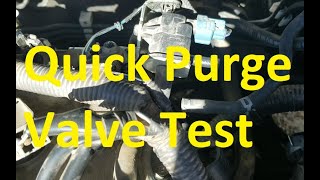


The information in this article is provided for general reference and educational purposes only. Vehicle specifications, procedures, and part compatibility can vary by production date, trim level, and region. Always consult your vehicle's factory service manual and verify part numbers before purchasing or performing repairs. Safety-critical components such as airbags, seat belts, and braking systems should be installed by a qualified professional.
- 🎬 Helpful Videos
- What Does P0445 Mean?
- Can I Drive With P0445?
- Common Causes
- Symptoms
- Diagnostic Flowchart
- Common Fixes & Costs
- Used vs. New Parts: Buying Guide
- What Happens If You Wait — Timeline
- Cost of Not Fixing It
- Diagnosis Steps
- When This Code Triggers (Freeze-Frame Conditions)
- Related Codes
- Climate & Environmental Factors
- How to Talk to a Mechanic About This Code
- Where to Take It: Dealer vs Independent vs Chain
- When to Walk Away From the Repair
- What Scan Tool You Need for This Code
- How to Clear the Code After You Fix It
- Will This Fail Emissions / State Inspection?
- Most Commonly Affected Vehicles
- Manufacturer-Specific Notes
- Real Owner Stories
- 2012 Toyota Corolla with 230K miles
- 2016 Chevy Cruze with rough idle
- Dodge Ram truck with intermittent P0445
- How to Prevent This Code From Triggering
- Frequently Asked Questions
- Can a bad gas cap cause a P0445 code?
- Can overfilling my gas tank cause a P0445 code?
- What are the most common mistakes when diagnosing P0445?
- What is the difference between a purge valve and a vent valve?
- How much does it cost to fix a P0445 code?
- Will clearing the code fix the problem?
- What is the difference between a short to ground and a short to power?
- Can P0445 damage my catalytic converter?
- Key Takeaways
- 🎟️ Get 5% Off