

P0401 on 2004-2011 Ford Focus 2.0L: EGR Flow Insufficient Causes and Fixes
On a 2004-2007 Focus, this code is almost always a failed DPFE sensor or its cracked rubber hoses, a ~$50 part that's easy to replace. On 2008-2011 models, the 2.0L petrol engine likely has no external EGR valve, so the cause is different and P0401 is much less common.
- For a 2004-2007 Ford Focus, P0401 is most likely a bad DPFE sensor or its hoses, not the EGR valve itself.
- For a 2008-2011 Ford Focus with the 2.0L petrol engine, do not look for an EGR valve; it likely isn't there. The problem lies elsewhere.
- Always inspect the two small rubber hoses connected to the DPFE sensor on early models; they are a frequent and cheap-to-fix cause of this code.
- If you must clean EGR passages, take care not to drop carbon chunks into the intake manifold.
What's Unique About the 2004-2011 Ford Focus
This year range is split into two completely different EGR systems, which is a major source of confusion. The earlier 2004-2007 models use a classic Ford setup with a vacuum-operated EGR valve and a separate DPFE (Differential Pressure Feedback EGR) sensor that frequently fails. In contrast, the redesigned 2008-2011 North American models with the 2.0L Duratec petrol engine typically do not have an external EGR valve at all; they achieve recirculation internally using Variable Camshaft Timing (VCT). Therefore, diagnostic advice for a 2006 model is completely irrelevant for a 2009 model.
Generation note: The 2004-2011 range covers two generations of the Ford Focus in North America, with critical differences for this code: - 2004-2007 (First Generation, Facelift): These models use a vacuum-operated EGR valve, an EGR control solenoid, and a separate DPFE sensor to measure flow. The vast majority of P0401 issues occur on these models, with the DPFE sensor and its hoses being the most common culprits. - 2008-2011 (Second Generation): The 2.0L Duratec petrol engine in these models generally does not use an external EGR valve. It uses Variable Camshaft Timing (VCT) to create valve overlap, which keeps some exhaust in the cylinder to achieve the same effect. P0401 is uncommon on these engines, and if it appears, it may be related to the VCT system or other sensor faults, not a dedicated EGR component.
Symptoms You May Notice
- Check Engine Light is on
- Engine stumbling or hesitation, especially at a steady cruising speed.
- Rough or unstable idle
- Audible engine pinging or knocking during acceleration.
- Reduced fuel economy
- Failure to pass an emissions test
- On 2004-2007 models, replacing the more expensive EGR valve before checking the cheaper and more failure-prone DPFE sensor and its hoses.
- On 2008-2011 petrol models, searching for and attempting to diagnose a physical EGR valve that does not exist on the vehicle.
- Mistaking a VCT system issue for an EGR issue on 2008-2011 models.
Most Likely Causes
- Faulty DPFE Sensor (2004-2007 models) 🔴 High Probability The original DPFE sensors on this generation of Ford vehicles are notoriously prone to failure from heat, internal corrosion, and moisture contamination, often in as little as 30,000 miles. It's the most common cause for P0401 on these cars, a fact widely echoed in owner forums.
How to confirm: With the engine off and key in the 'ON' position, back-probe the DPFE signal wire (typically the middle wire, often brown/light green) with a multimeter. Voltage should be between 0.5V-1.1V. A reading significantly higher (e.g., 1.5V+) or lower suggests the sensor is bad. A scan tool showing a high voltage (e.g., 1.97V) at idle also confirms failure.
Typical fix: Replace the DPFE sensor. It is typically mounted to the firewall or on a bracket near the EGR valve with two bolts. Ensure the new sensor is a quality part, as cheap aftermarket sensors can fail quickly.
Est. part cost: $30-$75 - Cracked or Clogged DPFE Hoses (2004-2007 models) 🟡 Medium Probability The two rubber hoses connecting the DPFE sensor to the EGR pipe are exposed to extreme exhaust heat. They frequently become brittle, crack, burn through, or collapse internally, causing a pressure leak that the sensor reads as 'no flow'.
How to confirm: Visually inspect the entire length of both hoses for cracks, holes, or mushy spots. Remove them and check if they are blocked with carbon or have collapsed internally. Squeeze them to feel for soft spots or internal blockages.
Typical fix: Replace both hoses with new high-temperature silicone hoses. Do not use standard vacuum line. NAPA offers pre-cut replacement sections for this purpose. It is often recommended to replace these hoses whenever the DPFE sensor is replaced.
Est. part cost: $10-$25 - Clogged EGR Passages (2004-2007 models) 🟡 Medium Probability Over time, carbon from the exhaust builds up and can completely block the small ports where the gas enters the intake manifold. This is a very common issue on many Ford engines.
How to confirm: After removing the throttle body and/or EGR valve, inspect the entry ports on the intake manifold. If they are significantly restricted with carbon, they are the cause. A diagnostic test is to apply vacuum to the EGR valve at idle; if the engine does not stumble or stall, the passages are likely clogged.
Typical fix: Remove the throttle body and/or EGR valve for access and carefully scrape the carbon out of the ports. A pick, small brushes, and carburetor cleaner can be effective. 🎬 See how to clear carbon from clogged intake ports. Ensure all loose carbon is removed or vacuumed out to prevent it from entering the engine.
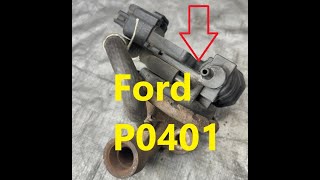
Est. part cost: $0-$15 (for cleaner and gaskets) - Stuck or Defective EGR Valve (2004-2007 models) ⚪ Low Probability The valve itself can become clogged with carbon and get stuck in the closed position, preventing any exhaust gas from flowing.
How to confirm: With the engine idling, apply vacuum directly to the EGR valve's vacuum port with a hand pump. The engine should stumble or stall. If it doesn't, the valve is not opening (or the passages are clogged).
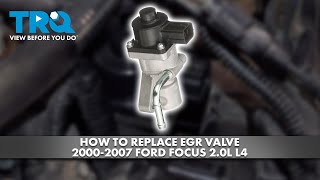
Typical fix: The valve can sometimes be removed and cleaned, but if the diaphragm is ruptured or it's mechanically stuck, it must be replaced. Always use a new gasket upon reinstallation. 🎬 Watch this walkthrough on replacing the EGR valve.
Est. part cost: $60-$150
Rare But Worth Checking
- Faulty VCT Solenoid (2008-2011 models): On the newer Focus without an external EGR valve, a P0401 code is rare but could theoretically be caused by a malfunctioning VCT (Variable Camshaft Timing) system that fails to create the necessary valve overlap for internal EGR. This would almost always be accompanied by other VCT-specific codes like P0010, P0011, etc. and is not a primary diagnosis for P0401 alone.
- Failed EGR Vacuum Solenoid (EVR) (2004-2007 models): The electronic solenoid (also called EGR Valve Regulator or EVR) that supplies vacuum to the EGR valve can fail. If no vacuum is being sent to the EGR valve when commanded, it won't open. This can be tested by checking for vacuum at the line leaving the solenoid during a steady cruise (or with a capable scan tool that can actuate the solenoid).
Diagnosis Steps
- Identify Vehicle Generation: First, confirm if you have a 2004-2007 model or a 2008-2011 model, as the diagnostic path is completely different.
- For 2004-2007 Models:
- Inspect DPFE Hoses: Carefully check the two rubber hoses running from the metal EGR tube to the DPFE sensor. Look for any cracks, holes, or soft/burnt spots. Squeeze them to check for internal collapse. This is a very common failure point.
- Test the DPFE Sensor: With the key on, engine off, use a multimeter to check the sensor's reference voltage (should be ~5V on the VREF wire) and the signal voltage (should be 0.5V-1.1V). If signal voltage is out of spec 🎬 Watch: How to test Ford EGR flow and sensor voltages., the sensor is the primary suspect.
- Test the EGR Valve: Use a hand vacuum pump to apply 10-15 inHg of vacuum to the EGR valve while the engine is idling. The engine should run very poorly or stall. If nothing happens, the valve is stuck closed or the passages are completely blocked.
- Check for Clogged Passages: If the EGR valve test fails, remove the valve and/or throttle body and visually inspect the ports on the intake manifold for heavy carbon buildup.
- Check the EGR Solenoid (EVR): If the valve and passages are good, check if the control solenoid is providing vacuum to the valve when commanded by the PCM (requires a scan tool or testing under specific driving conditions).
- For 2008-2011 Models:
- Scan for Other Codes: Since a dedicated EGR valve is not present, P0401 is unusual. Check for any other stored codes, especially those related to the camshaft position or VCT system (e.g., P0010, P0011, P0012, P0014). Address those codes first.
- Consult a Professional: Diagnosis on these models can be complex and may involve checking the VCT solenoids, camshaft phasers, and engine timing, which is best left to a professional technician.
Parts You'll Likely Need
- EGR Pressure Feedback (DPFE) Sensor (For 2004-2007)
(OEM #DPFE-15 (4U7Z-9J460-AA))— This is the most common failure point for P0401 on this platform. It provides the flow measurement to the PCM, and when it fails, it sends incorrect data. The Motorcraft DPFE-15 is the OEM replacement. - DPFE Sensor Hoses (For 2004-2007) — These high-temperature hoses crack and fail frequently, causing a pressure leak that mimics a no-flow condition. They should be replaced whenever the DPFE sensor is changed.
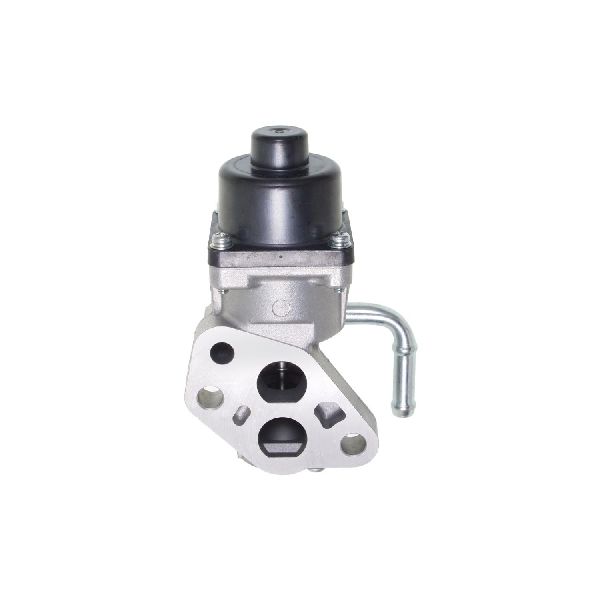
- EGR Valve (For 2004-2007) — The valve can get stuck closed due to carbon buildup, preventing flow. While less common than a sensor failure, it's a frequent enough issue.
- EGR Vacuum Regulator (EVR) Solenoid (For 2004-2007) — This solenoid controls the vacuum supply to the EGR valve. If it fails electrically or mechanically, the EGR valve will not open when commanded.
Related Codes That Often Appear With This One
- P0402 — This code means 'EGR Flow Excessive Detected'. It can sometimes appear along with P0401 if the DPFE sensor is failing erratically, sending signals that are both too high and too low to the PCM.
- P1408 — This is a Ford-specific code for 'EGR Flow Out Of Self-Test Range'. It can be a helpful secondary code during a Key-On-Engine-Running (KOER) self-test to confirm a hard fault in the EGR system.
Platform-Specific Known Issues
- The DPFE sensor and its hoses on the 2004-2007 models are a well-documented, high-failure-rate system. Many owners have replaced these parts multiple times.
- Significant confusion exists for 2008-2011 models because many generic repair guides and part catalogs incorrectly list an EGR valve for the 2.0L petrol engine, leading to misdiagnosis.
Mechanic-Grade Diagnostic Values
- DPFE Sensor Signal Voltage (Key On, Engine Off) — expected: 0.5V - 1.1V DC. Failure: Voltage significantly higher (e.g., >1.5V) or lower suggests a biased sensor. A reading near 5V indicates a short to reference voltage.
- DPFE Sensor Signal Voltage (Engine Idling, EGR Commanded Open) — expected: Rises to approx. 4.0V - 4.9V DC. Failure: Voltage does not rise when vacuum is applied to the EGR valve (with engine running), indicating a faulty DPFE sensor, even if the engine idle becomes rough.
- EGR Vacuum Regulator (EVR) Solenoid Coil Resistance — expected: 20 - 70 Ohms. Failure: A reading outside this range (open circuit or shorted) indicates a failed solenoid coil.
- EVR Solenoid Connector Voltage (Key On, Engine Off) — expected: ~12V (Battery Voltage) on both wires. Failure: Lack of voltage on one or both wires indicates a wiring issue. Because it's ground-side switched by the PCM, both wires will show battery voltage until the PCM commands it on.
Scan Tool Commands That Help
- Ford IDS, Autel, Snap-on (or similar professional scanner): EGRVR Solenoid On/Off Test (or Output State Control) — This is a critical test to perform after confirming the EVR solenoid's resistance is good. It directly tests the PCM's ability to control the solenoid. While commanding the solenoid 'ON', you should see the voltage on the control wire drop from battery voltage, confirming the PCM driver is working.
Wiring & Ground Locations
- DPFE Sensor Connector (C102) — On the DPFE sensor itself, typically mounted on the firewall near the center for 2004-2007 models.. This is the primary connection for testing sensor voltages. Pin 1: Signal (often Brown/Light Green), Pin 2: Ground, Pin 3: 5V Reference (VREF, often Brown/White). Incorrect readings here are the fastest way to condemn or clear the sensor.
- EGR Vacuum Regulator (EVR) Solenoid Connector (C169) — Near the EGR valve, connected via vacuum lines.. This connector provides power to the solenoid that enables EGR flow. Testing here for power and PCM control is essential if the EGR valve doesn't operate when commanded. It is a 2-wire connector, typically ground-side switched.
- G104 — Typically located on the inner fender apron, near the battery tray on the driver's side.. This is a major engine and PCM ground point. While a failure here would likely cause multiple other codes and driveability issues, a poor connection could potentially cause erratic sensor readings, including for the EGR system.
Real Owner Repair Stories
- Compilation of multiple forum threads and technician videos (2005 Ford Focus 2.0L) — Check Engine Light with code P0401, slight hesitation at cruising speeds.
❌ Tried (didn't work) Replaced the EGR valve itself, as it was assumed to be stuck. Code returned within a day., Cleaned the EGR passages in the intake manifold, which had minor carbon buildup but were not fully blocked. Code returned.
✅ What actually fixed it The DPFE sensor was replaced with a new Motorcraft part, and crucially, the two small rubber hoses connecting it to the EGR pipe were also replaced. One hose had a hairline crack hidden on the underside, and the other had become soft and was collapsing internally under vacuum, causing the pressure differential to be misread by the sensor. The combination of a new sensor and new hoses resolved the code permanently. - NHTSA ODI #10200528 — An owner reported that their check engine light came on and the dealership replaced sensors related to a recall for code P0401. However, the light remained on, and the dealership subsequently suggested the issue was related to "dirty" gas or waiting too long to refuel.
"I Checked Everything" — The Actual Cause
- A common scenario analogous to a 'smoke test clean' for this code is when all components (EGR valve, DPFE sensor, EVR solenoid) test perfectly with a multimeter and vacuum pump, and the passages are clean, yet the P0401 code returns. The root cause is often an inexpensive, aftermarket DPFE sensor that was used for the repair. While it may test correctly under static, key-on-engine-off conditions, its internal diaphragm or electronics do not respond accurately to the rapid pressure fluctuations and high temperatures of real-world driving, causing the PCM to flag an insufficient flow fault.
OEM Part Supersession History
Various (often metal-cased sensors)→4U7Z-9J460-AA (Motorcraft DPFE-15)— The original metal-cased DPFE sensors were highly prone to internal corrosion and failure from heat and moisture. They were superseded by a plastic-cased design intended to improve durability.
Heads up: While physically interchangeable, using cheap, unbranded aftermarket versions of the plastic sensor is a common cause of repeat failures. They often do not meet the precise voltage/pressure curve required by the PCM, leading to persistent P0401 or new P0402 codes.
Model Year Variations Within This Range
- 2004-2007: While most 2.0L Duratec engines in this range use the 'winged' black plastic DPFE sensor mounted on the firewall, some very early models may have a different, more squarish sensor located closer to the EGR pipe itself. The diagnostic principles are the same, but the part number and location may vary slightly.
Diagnostic Flowchart
Other Known Issues on This Vehicle
Issues unrelated to this code that are worth knowing about as an owner of this generation:
- Passenger-Side Engine Mount Failure 🔴 High — Extremely common. The hydraulic mount collapses, causing severe vibration at idle and noise. Often fails well before 100,000 miles. (Ref: A TSB was issued for 2000-2011 models recommending specific replacement mounts to address vibration.)
- Cracked Plastic Thermostat Housing 🟠 Medium — Common source of coolant leaks. The plastic housing can develop hairline cracks or the seals can degrade, leading to slow or steady leaks.
- Intake Manifold Swirl Flap Problems 🟠 Medium — The plastic swirl flaps inside the intake manifold can wear, break, or the actuator can fail. This can cause a rattling noise, rough idle, and poor performance, sometimes setting codes like P2008. (Ref: Ford issued a TSB for some Duratec engines regarding the swirl flap actuator.)
- Failing Instrument Cluster 🟠 Medium — The instrument cluster on the Mk2 Focus is known to suffer from electrical failures, leading to loss of gauges, display corruption ('---' for mileage), and even no-start conditions.
Used vs. New Parts: Buying Guide for This Vehicle
When a used part is the smart pick: For this specific repair, sourcing used parts is generally not recommended for the electronic or rubber components. A used metal EGR tube or the EGR valve itself could be considered if it's from a very low-mileage vehicle and can be thoroughly cleaned and tested (i.e., holds vacuum) before installation.
Donor-vehicle mileage cap: roughly under 75000 miles for the part to have meaningful remaining life.
What to inspect on the donor part:
- For an EGR valve, check that the pintle is not seized and the vacuum diaphragm holds vacuum with a hand pump.
- For a metal EGR tube, ensure there are no cracks and the DPFE sensor ports are not corroded or blocked.
- Avoid any parts with heavy rust, corrosion on electrical connectors, or signs of heat damage.
OEM-only on this vehicle (don't cheap out):
- EGR Pressure Feedback (DPFE) Sensor: This is the most critical part to buy OEM (Motorcraft). Aftermarket versions are notoriously unreliable and are the number one cause of the repair not working.
- DPFE Sensor Hoses: These must be high-temperature silicone hoses. Using standard vacuum hose will result in rapid failure.
Aftermarket brands forum-validated for this vehicle:
- Standard Motor Products (SMP) is often considered a reliable alternative if a Motorcraft part is unavailable.
Brands owners have reported issues with on this vehicle:
- Unbranded, low-cost sensors from online marketplaces like eBay or Amazon are frequently reported as being dead-on-arrival or failing within a few weeks.
Real Owner Stories
Aggregated from forums and TSBs cited above. Mileages and costs reflect what owners reported in those sources.
2004-2007 Ford Focus 2.0L Duratec — ~30000 miles
Symptoms: The original DPFE sensor failed due to heat and internal corrosion. The owner noted this is a high-failure-rate part widely discussed in forums.
What fixed it: Replacement of the DPFE sensor with a quality part and ensuring the mounting bolts were secure.
Source hint: Vehicle specific issues and common causes section citing Ford owner forums and source
2002 Ford Focus (referenced via platform/engine family) — ~120000 miles
Symptoms: P0401 code triggered by a sensor failure common to this Ford generation.
What fixed it: Replacing the DPFE sensor.
Source hint: Automotiveforums.com thread titled '02_focus_dpfe_sensor.html'
Ford Focus Platform Owner Report — NHTSA ODI #10200528
Symptoms: An owner reported the check engine light came on for code P0401. After the dealership replaced sensors that were part of a recall, the light remained on.
What fixed it: The dealership claimed the persistent light was due to using "dirty" gas and waiting too late to refuel the vehicle.
Source hint: NHTSA ODI #10200528
Related OBD-II Codes
Frequently Asked Questions
I have a 2009 Ford Focus with a P0401 code, but I can't find the EGR valve. Where is it located?
My 2005 Focus is stumbling at cruising speeds and has a P0401. What is the most likely cause?
Is there a specific TSB for the engine vibration I'm feeling along with my P0401 symptoms?
How can I test if my DPFE sensor is bad using a multimeter?
Can I use standard vacuum line to replace the hoses on my DPFE sensor?
If I apply vacuum to the EGR valve and the engine doesn't stall, what does that mean?
Helpful Videos
We Have This Part in Stock



The information in this article is provided for general reference and educational purposes only. Vehicle specifications, procedures, and part compatibility can vary by production date, trim level, and region. Always consult your vehicle's factory service manual and verify part numbers before purchasing or performing repairs. Safety-critical components such as airbags, seat belts, and braking systems should be installed by a qualified professional.
- Ford Focus:
- 🎬 Helpful Videos
- 🛍️ Shop This Part
- What's Unique About the 2004-2011 Ford Focus
- Symptoms You May Notice
- Most Likely Causes
- Rare But Worth Checking
- Diagnosis Steps
- Parts You'll Likely Need
- Related Codes That Often Appear With This One
- Platform-Specific Known Issues
- Mechanic-Grade Diagnostic Values
- Scan Tool Commands That Help
- Wiring & Ground Locations
- Real Owner Repair Stories
- "I Checked Everything" — The Actual Cause
- OEM Part Supersession History
- Model Year Variations Within This Range
- Diagnostic Flowchart
- Other Known Issues on This Vehicle
- Used vs. New Parts: Buying Guide for This Vehicle
- Real Owner Stories
- 2004-2007 Ford Focus 2.0L Duratec — ~30000 miles
- 2002 Ford Focus (referenced via platform/engine family) — ~120000 miles
- Ford Focus Platform Owner Report — NHTSA ODI #10200528
- Related OBD-II Codes
- Frequently Asked Questions
- 🎟️ Get 5% Off