

OBD-II Code P2008: Intake Manifold Runner Control Circuit/Open (Bank 1)
The Ultimate Guide to What P2008 Means, Why It Triggers, and How to Fix It for Good
- P2008 designates a strictly electrical open circuit, meaning you must hunt for a broken wire, unplugged connector, or dead solenoid rather than a mechanically jammed flap.
- Over 80% of P2008 codes trigger immediately after engine maintenance due to a forgotten electrical connector or a cracked wire harness near the intake manifold.
- Driving with an active P2008 code drops fuel economy by 2-5 MPG and causes noticeable hesitation during acceleration below 3,000 RPM.
- Before buying parts for Nissan or Chrysler vehicles, check for Technical Service Bulletins (TSBs), as a 30-minute dealership software update often resolves false P2008 codes.
- Ignoring a P2008 code for more than 6 months risks catastrophic engine failure costing upwards of $4,000 if brittle plastic runner flaps break off and fall into the cylinders.
What Does P2008 Mean?

P2008 means the Powertrain Control Module (PCM) detected an electrical open circuit in the intake manifold runner control (IMRC) system for engine bank 1. The IMRC uses small flaps inside the intake manifold to adjust airflow speed and optimize engine efficiency. An 'open circuit' means a wire is cut, a connector is unplugged, or the actuator motor is dead, completely preventing the computer from moving the flaps.
Technical definition: Intake Manifold Runner Control (IMRC) Circuit/Open Bank 1. The Powertrain Control Module (PCM) detects a complete break, lack of continuity, or an out-of-range high voltage signal in the electrical circuit for the IMRC actuator on the cylinder bank containing cylinder #1.
Can I Drive With P2008?
Yes, But With Caution. You can drive with a P2008 code, but extended trips are strongly discouraged. Performance drops noticeably, causing sluggish acceleration and poor fuel economy. The greatest risk is that brittle plastic runner flaps break off and fall into the engine, causing catastrophic damage costing $4,000-$8,000+ to repair. Limit driving to necessary trips under 20 miles until you diagnose and repair the issue.
Common Causes

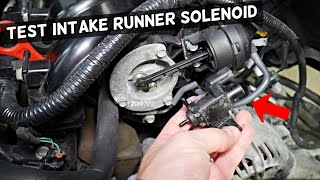
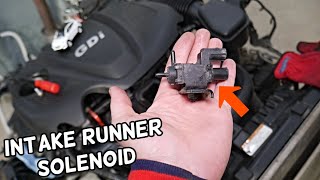
- Faulty Intake Manifold Runner Control (IMRC) Solenoid/Actuator (Very Common) — The solenoid is an electronic part controlling vacuum or electricity to move the runner flaps. Located in a hot engine bay, its internal coil breaks over time, creating a hard open circuit.
- Damaged or Unplugged Wiring/Connectors (Very Common) — Wires leading to the IMRC solenoid become brittle from heat, get chewed by rodents, or the connectors are left unplugged after engine work like changing spark plugs.
- Blown IMRC Circuit Fuse (Common) — The IMRC control circuit is protected by a fuse. If a wire shorts to ground, it blows the fuse, presenting as an open circuit to the PCM and triggering the P2008 code.
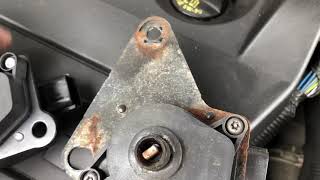
- Broken IMRC Actuator Linkage (Less Common) — The plastic linkage arm connecting the actuator motor to the runner flaps becomes brittle and breaks. The motor over-extends, damaging its internal circuit and triggering the electrical fault.
- Severe Vacuum Leaks (Less Common) — While P2008 is an electrical code, severe vacuum leaks on systems with integrated position sensors cause the sensor to report an impossible position, triggering the circuit code.
- Carbon Buildup on Runner Flaps (Rare) — Soot and carbon build up inside the intake manifold, physically jamming the runner flaps. This strains the control circuit and burns out the actuator motor, leading to an electrical P2008 fault.
- Faulty Powertrain Control Module (PCM) or Outdated Software (Rare) — The internal driver circuit sending the signal to the IMRC solenoid burns out. Alternatively, software glitches incorrectly trigger a P2008 code, requiring a PCM reflash.
Symptoms

- Check Engine Light is On — The PCM immediately triggers the Check Engine Light when it logs the P2008 code.
- Reduced Engine Power and Hesitation — The engine feels sluggish and unresponsive at low RPMs because the runner flaps are stuck in the long-runner position, killing low-end torque.
- Rough or Fluctuating Idle — Airflow is not optimized for low speed, causing the engine to idle unevenly, stumble, or shake.
- Poor Fuel Economy — Inefficient engine operation increases fuel consumption, dropping efficiency by 2-5 MPG.
- Engine Surging — The engine surges or hunts for a stable RPM as the PCM struggles to compensate for incorrect airflow.
- IMRC Command vs. Position Mismatch (scan-tool only — no driver-felt sign) — On a scan tool, the live data for the IMRC commanded position does not match the actual position reported by the sensor.
Diagnostic Flowchart
Tap your situation to follow the diagnostic path that matches what you're seeing on this code.
Common Fixes & Costs
- Replace IMRC Solenoid/Actuator — Parts: $40-$150, Labor: $100-$200, ~1 hr book time (DIY)
- Repair Damaged Wiring or Connector — Parts: $10-$50, Labor: $150-$300, ~1.5 hr book time (Intermediate)
- Replace Intake Manifold Assembly — Parts: $250-$800, Labor: $450-$800, ~3.5 hr book time (Professional)
- Replace Blown Fuse & Repair Short — Parts: $5-$20, Labor: $150-$300, ~1.5 hr book time (Intermediate)
- Reprogram or Replace Powertrain Control Module (PCM) — Parts: $0-$800, Labor: $150-$300, ~1.5 hr book time (Professional)
DIY vs Professional
- Replace IMRC Solenoid/Actuator — Beginner: Yes
Tools: Basic hand tools (socket set, screwdrivers). - Repair Damaged Wiring or Connector — Beginner: No
Tools: Multimeter, wire strippers, crimpers, heat shrink tubing, soldering iron (recommended). - Replace Intake Manifold Assembly — Beginner: No
Tools: Extensive socket set, torque wrench, fuel line disconnect tools, gasket scrapers, vehicle-specific service manual. - Replace Blown Fuse & Repair Short — Beginner: No
Tools: Multimeter, wiring diagrams. - Reprogram or Replace PCM — Beginner: No
Tools: Specialized programming tools (dealership/professional only), scan tool.
Used vs. New Parts: Buying Guide
When a used part is worth it: For a full intake manifold assembly on a high-mileage vehicle (>150k miles) where budget is the primary concern. A used manifold from a low-mileage, accident-damaged donor vehicle is a viable option.
Donor-vehicle mileage cap: roughly under 80000 miles for the part to have meaningful remaining life.
Donor quality checklist:
- Verify the donor vehicle was not scrapped for engine or emissions-related failures.
- Inspect the used part carefully for cracks around mounting points and seams.
- Ensure the part number is an exact match.
- Check that integrated actuators and linkages are physically intact and move freely.
Decision logic:
- If The failed part is a separate, external solenoid. → Buy a new OEM or high-quality aftermarket solenoid. The cost is low and it guarantees a reliable fix.
- If The entire intake manifold must be replaced and the vehicle has over 120,000 miles. → A used part is an acceptable risk to save money. A new aftermarket manifold (e.g., Dorman) is often the best balance of cost and reliability.
- If The part has a known design flaw (e.g., early VW/Audi manifolds). → Buy a new OEM part of the latest revision or a quality aftermarket part that addresses the original flaw. Avoid used parts with the same defect.
Warranty tradeoff: Used parts typically include a 30-90 day warranty covering only the part. New aftermarket parts offer a 1-year to limited lifetime warranty. New OEM parts carry a 1-2 year warranty.
Worst-case if a used part fails: $500-$1200 if a used intake manifold fails after installation, requiring repeat labor and a new part.
What Happens If You Wait — Timeline
- 0-1 Month: Check Engine Light is on. Driver notices intermittent hesitation or sluggishness, primarily at lower RPMs (under 3000). (MPG impact: 2-4%% · Added cost: $20-$50 in wasted fuel.)
- 1-4 Months: Performance issues become consistent. The rough idle is frequent, and acceleration is noticeably poor. Fuel economy drop is easily measurable. (MPG impact: 5-10%% · Added cost: $50-$200 in wasted fuel and increased carbon buildup begins on intake runners.)
- 4-12 Months: Plastic components of the intake manifold become increasingly brittle from constant engine heat cycles. The actuator motor is under continuous strain. (MPG impact: 10-15%% · Added cost: $200+ in wasted fuel. The risk of secondary damage climbs.)
- 12+ Months: Catastrophic failure becomes a significant risk. Brittle plastic runner flaps snap, sending fragments into the engine's combustion chamber. (MPG impact: 15%+% · Added cost: $4,000-$10,000 for a used or remanufactured engine replacement.)
Cost of Not Fixing It
- 0-1 Month: Noticeable drop in fuel economy by 2-5 MPG and poor engine performance, especially sluggish acceleration and a rough idle. (Added cost: $20-$60 per month in extra fuel costs.)
- 1-6 Months: Carbon buildup worsens in the intake manifold due to inefficient combustion. The imbalanced air/fuel mixture increases stress on the catalytic converter. (Added cost: $0)
- 6+ Months / Long-Term: Catastrophic engine failure. Brittle plastic runner flaps or linkages snap from heat and vibration, falling directly into a cylinder. This destroys the piston, cylinder head, and valves. (Added cost: $4000-$10000 for a used or remanufactured engine replacement.)
Diagnosis Steps

- Thorough Visual Inspection
Carefully inspect the entire area around the intake manifold. Look for unplugged electrical connectors, disconnected vacuum lines, and wires that are frayed, burnt, or chewed by rodents. This is the most common cause after recent engine repairs.
Tools: Flashlight, Inspection Mirror (Beginner) - Scan for Codes and Review Freeze Frame Data
Use an OBD-II scanner to confirm P2008 is present and record any other codes. Codes like P2006 (Stuck Closed) often appear with P2008, indicating the electrical fault prevents mechanical movement. Clear the codes and test drive to see if P2008 returns immediately.
Tools: OBD-II Scanner (Beginner) - Test the Solenoid's Internal Resistance
With the ignition off, unplug the IMRC solenoid. Set your multimeter to Ohms (Ω) and touch the probes to the two pins on the solenoid. A good solenoid reads between 20-40 ohms. If the multimeter reads 'OL' (Open Loop), the internal coil is broken, and the solenoid must be replaced.
Tools: Multimeter (Intermediate) - Check for Power and Ground at the Solenoid Connector
With the ignition on (engine off), use a multimeter to check for battery voltage (~12V) at the power pin in the solenoid's harness connector. Check the ground pin for continuity to a known good ground. No voltage indicates a blown fuse or broken power wire. No ground indicates a broken wire leading back to the PCM.
Tools: Multimeter (Intermediate) - PRO TIP: The 'Click Test' (Bidirectional Control)
Use a bidirectional scan tool's 'Active Test' function to command the IMRC solenoid ON and OFF. Listen for a distinct 'click' from the solenoid. If it clicks, the solenoid, wiring, and PCM driver are functional, pointing to an intermittent issue. No sound confirms a dead circuit.
Tools: Bidirectional OBD-II Scanner (Intermediate) - PRO TIP: The 'Wiggle Test' for Intermittent Faults
If the code is intermittent, monitor the IMRC circuit voltage on a scan tool while gently wiggling the wiring harness at the solenoid and PCM. If the voltage reading drops out, you have located the loose connection or broken wire.
Tools: OBD-II Scanner with Live Data (Advanced) - Live Data PID Monitoring
Monitor the IMRC Actuator Command and Position Sensor PIDs. The command PID changes as you rev past 3,000 RPM. If the command voltage remains at 0V or a steady 5V regardless of RPM, it confirms a hard circuit fault or PCM issue.
Tools: OBD-II Scanner with Live Data (Advanced) - PRO TIP: Back-Probe the PCM Connector
If the solenoid and wiring are good, check for a signal at the source. Identify the IMRC control pin on the PCM connector using a wiring diagram. Back-probe the connector with a T-pin and measure voltage while commanding the system with a scan tool. No signal from the PCM confirms internal driver failure.
Tools: Multimeter, T-pins, Vehicle-Specific Wiring Diagram (Professional)
When This Code Triggers (Freeze-Frame Conditions)
- Engine Coolant Temp: 180-210°F (82-99°C) (The engine is at full operating temperature when the test runs.)
- Engine RPM: 2500-4000 RPM (The fault logs when the PCM commands the runners to open, typically above 3000 RPM during acceleration.)
- Engine Load: 30-70% (The code sets under moderate to heavy engine load, such as accelerating or climbing a hill.)
- Vehicle Speed: 30-60 mph (48-97 kph) (The fault occurs during normal city or highway driving when engine speed and load requirements change.)
Related Codes
- P2004, P2005, P2006, P2007 — These indicate a mechanical fault (Stuck Open/Closed), while P2008 is purely electrical (Open Circuit). An open circuit prevents the PCM from commanding the runners, causing them to be stuck. Fix the P2008 electrical fault first.
- P2009, P2010 — These indicate a 'short' in the IMRC circuit (P2009 is short to ground, P2010 is short to power). P2008 indicates an 'open' or break in the wire.
- P0171, P0174 (System Too Lean) — A broken vacuum line for the IMRC system creates a vacuum leak, triggering lean codes. Fixing the vacuum leak resolves both issues.
- P2015 (Runner Position Sensor Circuit Range/Performance) — Points to a problem with the sensor reporting flap position. On vehicles where the actuator and sensor are integrated (VW/Audi), a failure triggers P2008, P2015, or both.
Climate & Environmental Factors
- Extreme Temperature Cycles (Hot and Cold): Plastic components, such as the intake manifold, actuator linkages, and wiring insulation, become brittle over time due to repeated exposure to engine heat and cold weather.
- High Humidity / Salty Environments: Moisture and salt accelerate corrosion on electrical connectors and wiring pins. This corrosion increases electrical resistance, eventually leading to an 'open circuit' fault.
- Rodent Activity: Rodents seek shelter in engine bays and chew on the soy-based wiring insulation used in modern cars, leading directly to severed wires and open circuits.
How to Talk to a Mechanic About This Code
Say this: "I have a P2008 code for the Intake Manifold Runner Control circuit. I'd like to schedule a diagnostic to confirm the cause. Can you please test the IMRC solenoid, its wiring, and check for power and ground at the connector before recommending a full intake manifold replacement?"
This signals that you understand P2008 is an electrical code. It directs the mechanic to perform a proper electrical diagnosis rather than immediately quoting the most expensive repair.
Avoid saying:
- 'My check engine light is on, can you look at it?'
- 'The car feels sluggish, just fix it.'
- 'I think I need a new intake manifold.'
Questions to ask before authorizing the repair:
- Did you test the resistance of the IMRC solenoid? What was the reading?
- Did you confirm there is voltage and a good ground at the solenoid's electrical connector?
- If the whole manifold needs to be replaced, can you show me why the actuator cannot be replaced separately?
- Is there a Technical Service Bulletin (TSB) for this code on my vehicle?
Where to Take It: Dealer vs Independent vs Chain
- Dealer:
Recommended only for warranty/TSB work. Otherwise, an independent shop is more cost-effective.
Best for: Vehicles under warranty (powertrain or emissions)., Vehicles with known TSBs requiring a software update (Nissan, Chrysler)., Complex German vehicles (VW, Audi) where the part is integrated and may have an extended warranty.
Downsides: Highest labor rates., Defaults to replacing the entire intake manifold assembly even if a cheaper fix is possible. (Typical cost: +50% vs. baseline) - Independent Shop:
Best fit for most P2008 repairs. A good independent shop easily diagnoses the circuit and replaces the necessary component.
Best for: Out-of-warranty vehicles where cost is a factor., Diagnosing common electrical faults like a bad solenoid or broken wire.
Downsides: Quality varies, so check for ASE certifications and good reviews., May not have access to the latest manufacturer software for TSB-related reflashes. (Typical cost: +0% vs. baseline) - Chain Shop:
AVOID for initial diagnosis. Acceptable for a simple solenoid replacement only if you have already confirmed it's the failed part.
Best for: Simple, clear-cut part replacements where the diagnosis is already certain.
Downsides: Technician skill varies widely; lacks the experience for proper electrical diagnosis., High pressure to upsell; recommends unnecessary intake manifold replacements. (Typical cost: -10% vs. baseline)
When to Walk Away From the Repair
If the estimated repair cost exceeds 40-50% of the car's Kelley Blue Book (KBB) private-party value, seriously consider selling the car as-is or trading it in.
- Car worth $4000, fix is $2100: Walk away. The repair cost is over 50% of the vehicle's value, and this is likely not the only maintenance item it needs.
- Car worth $12000, fix is $400: Fix it. This is a relatively inexpensive repair and is well below the threshold.
- Car worth $3000, fix is $1800: Walk away. A costly intake manifold replacement on a low-value car is a poor investment.
What Scan Tool You Need for This Code

Minimum: A scanner that reads live data PIDs for the IMRC command and actual position.
A basic $20 code reader only shows the P2008 code. It cannot show live data or perform active tests, which are crucial for determining if the fault is the solenoid, the wiring, or the PCM.
Budget: BlueDriver Pro (~$99) — Reads and clears the code, shows freeze frame data, and graphs live data for the IMRC command vs. actual position.
Mid-range: Foxwell NT510 Elite (~$180) — Includes full live data capabilities plus bidirectional control (Active Test). This allows you to command the IMRC solenoid to open and close directly from the tool, providing immediate confirmation of circuit functionality.
Professional: Autel MaxiCOM MK808S / MK808BT (~$450-550) — Offers full, professional-level bidirectional control for all vehicle systems. It provides faster processing, a user-friendly interface for graphing data, and performs advanced functions like software updates.
Rent vs buy: For a one-time fix, auto parts stores lend basic scanners for free. However, these rental tools lack the live data or bidirectional features needed for a proper P2008 diagnosis. Buying a mid-range scanner is a worthwhile investment for DIYers.
How to Clear the Code After You Fix It
- Use an OBD-II scan tool to clear the diagnostic trouble codes.
- Perform a full drive cycle to allow the vehicle's onboard diagnostics to run and confirm the fix.
- Reconnect the battery if disconnected, noting this alone does not clear all fault memory or reset readiness monitors.
Drive cycle (~20 minutes): A complete drive cycle includes: a cold start, 3 minutes of idling, 10 minutes of city driving with several stops, and 10 minutes of steady-speed highway driving (around 55 mph). Shut the vehicle off and allow it to cool.
Readiness monitors affected: Catalyst (CAT) Monitor, Evaporative System (EVAP) Monitor, Oxygen (O2) Sensor Monitor
Before emissions retest: drive at least 50 miles to fully set monitors.
Watch out for:
- Clearing the code with a scanner does not fix the underlying issue; the code returns immediately if the circuit remains open.
- Disconnecting the battery resets all readiness monitors, causing an automatic emissions test failure until a drive cycle is completed.
Will This Fail Emissions / State Inspection?
Yes — this code typically fails an OBD-II emissions inspection.
- California: An active P2008 code triggers an automatic smog check failure. After repair, complete a full drive cycle to set all readiness monitors before re-testing.
- New York: The NYS DMV emissions inspection includes an OBD-II scan. An active Check Engine Light and P2008 code result in an automatic failure.
- Texas: In the 17 Texas counties requiring emissions testing, a vehicle with an active P2008 code fails the OBD-II portion of the annual state inspection.
Most Commonly Affected Vehicles
- Ford Focus (2005-2011) — Extremely common issue on 2.0L and 2.3L Duratec engines. The solenoid pack fails due to heat. Swap the two identical solenoids; if the code changes, you confirmed a bad solenoid.
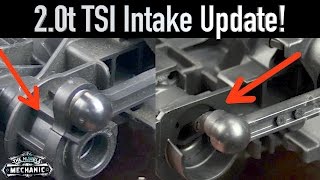
- Volkswagen/Audi Jetta, Golf, A4, GTI (with 2.0T TSI engine) (2008-2014) — The actuator motor is integrated into the plastic intake manifold. When it fails, the entire manifold must be replaced. VW issued a warranty extension for this part to 10 years/120,000 miles.
- Mazda 3, 6, MX-5 (2004-2013) — Shares platforms and engines with Ford. The vacuum solenoids and hoses are common failure points, and the diagnostic process is identical to the Ford Focus.
- Dodge/Chrysler/Jeep Avenger, Caliber, Compass, Patriot (with 2.0L/2.4L World Engine) (2007-2017) — The intake manifold contains swirl flaps controlled by an integrated electronic actuator motor. This motor fails frequently, requiring replacement of the entire manifold assembly.
- Ford Explorer, Mustang (with 4.6L 3V V8) (2005-2010) — The Charge Motion Control Valve (CMCV) actuator motor, located at the back of the intake manifold, is a frequent failure point covered by TSB 06-7-10.
- Chevrolet/Pontiac Cruze, Sonic, G5 (with 1.8L Ecotec engine) (2009-2016) — The plastic intake manifold tuning valve actuator fails, or the linkage arm breaks, requiring a full intake manifold replacement.
- Hyundai/Kia Sonata, Tucson, Optima (with 2.4L GDI engine) (2011-2019) — The Variable Charge Motion Actuator (VCMA) fails electrically. The actuator is typically replaceable separately from the manifold.
- Nissan Altima, Sentra, Rogue (with 2.5L QR25DE engine) (2015-2019) — Covered by TSB NTB19-045b where the ECM software incorrectly logs a permanent P2008 code. The fix is an ECM reprogram, not a hardware replacement.
Manufacturer-Specific Notes
- Ford: On Focus and Fusion models, the IMRC solenoid is a two-part assembly on a single bracket. They fail frequently from heat. Replacing the solenoid pack usually resolves the code.
- Volkswagen/Audi: On 2.0T TSI engines, the entire intake manifold is replaced due to an integrated actuator design. Check for warranty extensions related to code P2015, as the repair is often covered.
- Chrysler/Dodge/Jeep: TSB 18-033-12 addresses a software issue on 3.6L engines causing false P2008 codes. On 2.4L engines, the actuator is integrated into the manifold and requires full replacement.
- Nissan: TSB NTB19-045b addresses an ECM calibration issue causing permanent P2008 faults on 2015-2019 models. The fix is a software update.
Real Owner Stories
2007 Ford Focus at 110K miles - The Easy Fix
Check Engine Light came on, with noticeable hesitation and loss of power below 3000 RPM.
What they tried:
- Owner cleaned the throttle body and checked for vacuum leaks, but code P2008 returned.
Outcome: The owner replaced the IMRC solenoid pack (Dorman 911-907, ~$50). The replacement took less than an hour with basic tools, and the code was resolved.
Lesson: On Ford/Mazda products, the IMRC solenoid is the most likely culprit. Test it by swapping the two identical solenoids on the mounting bracket; if the code's behavior changes, you confirmed the faulty part.
2011 VW GTI at 89K miles - The Post-Repair Headache
Owner got the car back from a shop after major work (new fuel injectors). The Check Engine Light with code P2008 appeared almost immediately.
What they tried:
- The shop told the owner to 'drive it for a few hundred miles' to see if it cleared itself. The code remained.
Outcome: A connector was not plugged back in securely during reassembly. On the VW 2.0T engine, there is a vacuum solenoid connector on the driver's side of the intake manifold that is easily missed. Once properly connected, the code resolved.
Lesson: If a new code appears immediately after a repair, the cause is almost always related to the work performed. Inspect all connectors and vacuum lines before buying parts.
2008 Dodge Caliber at 125K miles - The Integrated Part Scenario
Check Engine Light on with P2008. The car was sluggish. The owner was confused why an electrical code required a major mechanical part.
What they tried:
- A scan confirmed the P2008 code. Initial checks of external wiring showed no issues.
Outcome: On the 2.4L World Engine, the swirl flap actuator motor is integrated into the plastic intake manifold and is not sold separately. The owner replaced the entire intake manifold assembly (Dorman 615-905, ~$300), resolving the issue.
Lesson: On many modern vehicles, electronic control components are permanently integrated into larger mechanical parts. A P2008 code on these specific vehicles almost always means an intake manifold replacement is needed.
How to Prevent This Code From Triggering
- Use Top Tier certified gasoline or add a PEA-based fuel system cleaner every oil change. (Every 5,000-7,500 miles) — Detergents with Polyetheramine (PEA) prevent carbon deposits from forming on intake valves and runner flaps, preventing them from getting stuck and burning out the actuator motor.
- Install an oil catch can on the PCV line (especially for GDI engines). (One-time installation) — Traps oil and fuel vapors before they enter the intake manifold, drastically reducing the oil residue that bakes onto hot intake runners.
- Apply rodent-repellent tape or spray to wiring harnesses in the engine bay. (Seasonally, or every 6 months) — Rodents are a leading cause of 'open circuit' faults. Making the soy-based wiring taste bad prevents expensive electrical repairs.
Frequently Asked Questions
What happens if I ignore the P2008 code?
Ignoring it causes consistently poor performance and fuel economy. The worst-case scenario is that plastic runner flaps break apart and get ingested by the engine, causing catastrophic internal damage requiring a full engine replacement.
I just had my spark plugs changed and now I have this code. Are they related?
Yes, they are highly related. The IMRC solenoid and wiring are located near the intake manifold. It is extremely common for a connector to be left unplugged or a wire to be broken during a spark plug job.
My mechanic says I need a new intake manifold, but the code is electrical. Why?
On many modern engines (VW, Audi, Dodge/Chrysler/Jeep), the electronic actuator motor is permanently built into the plastic intake manifold. When the electronic part fails, the entire manifold assembly must be replaced.
Is there a fuse for the P2008 code?
Yes, the IMRC control circuit is protected by a fuse, often shared with other emissions components. If you find a blown fuse, you must locate the shorted wire that caused it to blow before replacing it.
I replaced the IMRC solenoid, but the P2008 code came back. What now?
If a new solenoid didn't fix it, the fault is in the wiring harness or the PCM. Perform a continuity test on the power and ground wires between the PCM and the solenoid connector to find the break. If the wiring is perfect, the PCM's internal driver has failed.
What's the difference between a P2008 'Circuit Open' and a P2006 'Stuck Closed' code?
P2008 is an electrical fault indicating a broken wire or dead solenoid. P2006 is a mechanical fault indicating the flaps are not physically moving. An electrical P2008 almost always causes a mechanical P2006 because the signal to move never reaches the actuator.
Can a bad gas cap cause a P2008 code?
No. A bad gas cap relates to the EVAP system and sets codes starting with P04xx.
Key Takeaways
- P2008 designates a strictly electrical open circuit, meaning you must hunt for a broken wire, unplugged connector, or dead solenoid rather than a mechanically jammed flap.
- Over 80% of P2008 codes trigger immediately after engine maintenance due to a forgotten electrical connector or a cracked wire harness near the intake manifold.
- Driving with an active P2008 code drops fuel economy by 2-5 MPG and causes noticeable hesitation during acceleration below 3,000 RPM.
- Before buying parts for Nissan or Chrysler vehicles, check for Technical Service Bulletins (TSBs), as a 30-minute dealership software update often resolves false P2008 codes.
- Ignoring a P2008 code for more than 6 months risks catastrophic engine failure costing upwards of $4,000 if brittle plastic runner flaps break off and fall into the cylinders.
Helpful Videos

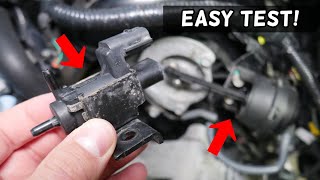

The information in this article is provided for general reference and educational purposes only. Vehicle specifications, procedures, and part compatibility can vary by production date, trim level, and region. Always consult your vehicle's factory service manual and verify part numbers before purchasing or performing repairs. Safety-critical components such as airbags, seat belts, and braking systems should be installed by a qualified professional.
- 🎬 Helpful Videos
- What Does P2008 Mean?
- Can I Drive With P2008?
- Common Causes
- Symptoms
- Diagnostic Flowchart
- Common Fixes & Costs
- DIY vs Professional
- Used vs. New Parts: Buying Guide
- What Happens If You Wait — Timeline
- Cost of Not Fixing It
- Diagnosis Steps
- When This Code Triggers (Freeze-Frame Conditions)
- Related Codes
- Climate & Environmental Factors
- How to Talk to a Mechanic About This Code
- Where to Take It: Dealer vs Independent vs Chain
- When to Walk Away From the Repair
- What Scan Tool You Need for This Code
- How to Clear the Code After You Fix It
- Will This Fail Emissions / State Inspection?
- Most Commonly Affected Vehicles
- Manufacturer-Specific Notes
- Real Owner Stories
- 2007 Ford Focus at 110K miles - The Easy Fix
- 2011 VW GTI at 89K miles - The Post-Repair Headache
- 2008 Dodge Caliber at 125K miles - The Integrated Part Scenario
- How to Prevent This Code From Triggering
- Frequently Asked Questions
- What happens if I ignore the P2008 code?
- I just had my spark plugs changed and now I have this code. Are they related?
- My mechanic says I need a new intake manifold, but the code is electrical. Why?
- Is there a fuse for the P2008 code?
- I replaced the IMRC solenoid, but the P2008 code came back. What now?
- What's the difference between a P2008 'Circuit Open' and a P2006 'Stuck Closed' code?
- Can a bad gas cap cause a P2008 code?
- Key Takeaways
- 🎟️ Get 5% Off