

OBD-II Code P0010: 'A' Camshaft Position Actuator Circuit Malfunction (Bank 1)
The Ultimate Expert Guide to Diagnosing and Fixing P0010
- P0010 indicates an electrical failure in the Bank 1 intake VVT solenoid circuit, triggered most frequently by a dead solenoid coil or severely degraded engine oil.
- Stop driving to prevent a $1,500+ catalytic converter replacement; the incorrect engine timing dumps unburnt fuel directly into the exhaust system.
- Check your oil dipstick first; low or sludge-filled oil starves the hydraulic VVT system and is the root cause of 40% of P0010 codes.
- Test the solenoid's resistance with a multimeter before buying parts; a healthy Toyota solenoid reads 6.9-7.9 Ω, while an 'OL' reading confirms internal failure.
- Buy only OEM replacement solenoids ($60-$120); cheap aftermarket units have a high out-of-the-box failure rate and frequently cause the P0010 code to return within weeks.
What Does P0010 Mean?

Code P0010 indicates the Engine Control Module (ECM) detected an electrical fault in the control circuit for the Bank 1 intake camshaft position actuator solenoid. This solenoid controls the Variable Valve Timing (VVT) system, adjusting engine timing dynamically for power and efficiency. The fault isolates specifically to the intake camshaft on the side of the engine housing cylinder number one.
Technical definition: The official definition is "'A' Camshaft Position Actuator Circuit / Open (Bank 1)". The ECM sets this code when voltage or resistance in the VVT solenoid circuit falls outside the expected range, indicating an open wire, a short to ground, a short to power, or a failed internal solenoid coil.
Can I Drive With P0010?
yes_but_not_recommended. You can drive short distances, but doing so risks severe engine damage. The engine operates with reduced power, burns excess fuel, and stalls unexpectedly in traffic. Prolonged driving dumps unburnt fuel into the exhaust, destroying the catalytic converter and triggering a $1,500+ repair.
🎬 Watch: A step-by-step guide to fixing the P0010 code yourself.Common Causes

- Dirty, Low, or Incorrect Engine Oil (Very Common) — The VVT system is hydraulic and requires clean, pressurized oil. Sludge from missed oil changes, low oil levels, or incorrect viscosity clogs the solenoid's fine mesh screens, causing mechanical binding and subsequent electrical failure.
- Faulty Camshaft Position Actuator Solenoid (VVT Solenoid) (Very Common) — The solenoid's internal copper coil breaks or shorts over time due to heat and vibration, creating an open circuit. Cheap aftermarket replacement solenoids also fail prematurely, causing the code to return rapidly.
- Damaged Wiring or Connectors (Common) — The electrical harness connecting the ECM to the solenoid degrades from engine heat. Wires fray, corrode, or break entirely—often right at the connector pigtail—severing the circuit.
- Failed VVT Actuator (Cam Phaser) (Less Common) — The mechanical actuator (phaser) on the camshaft fails internally. On vehicles with electronic CVVT (like certain Hyundai/Kia models), this internal failure creates an open circuit that triggers P0010.
- Worn Timing Chain or Belt Components (Less Common) — A stretched timing chain or failed tensioner forces the VVT system to constantly overcompensate. While this typically triggers performance codes (P0011), the continuous electrical strain sometimes contributes to circuit codes.
- Failed Powertrain Control Module (PCM) (Rare) — The internal driver circuit within the vehicle's computer burns out. Suspect the PCM only after exhaustively testing the solenoid, wiring harness, and oil pressure.
Symptoms

- Check Engine Light is On — The light illuminates immediately when the ECM detects the electrical fault during its continuous self-test.
- Rough Idle and Stalling — Incorrect intake cam timing causes the engine to run unevenly, shake at stops, or stall completely when shifting into gear.
- Poor Engine Performance and Hesitation — The vehicle feels sluggish and lacks acceleration because the camshaft cannot advance timing under load.
- Rattling or Ticking Noise from Engine — A metallic rattling from the top of the engine on startup indicates oil starvation at the cam phaser or timing chain.
- Decreased Fuel Economy (also visible on scanner) — An inefficiently timed engine burns excess fuel, dropping gas mileage by 10-20%.
- Failed Emissions Test (scan-tool only — no driver-felt sign) — An active P0010 code forces an automatic failure of any state OBD-II emissions inspection.
Diagnostic Flowchart
Tap your situation to follow the diagnostic path that matches what you're seeing on this code.
Common Fixes & Costs
- Change Engine Oil and Filter — Parts: $40-$100, Labor: $50-$100, ~0.5 hr book time (DIY)
- Replace Camshaft Position Actuator Solenoid (VVT Solenoid)
— Parts: $50-$150 (OEM recommended), Labor: $100-$250, ~0.8 hr book time
(Intermediate)
: OEM 12679099 (Intake) (Alt: {'Dorman': '917-215', 'Standard Motor Products': 'VVT419', 'Price Comparison': 'OEM parts cost $60-$90; aftermarket options run $25-$60.'})
: OEM HL3Z6M280A (Alt: {'Ford Performance': 'M-6297-M50A', 'Price Comparison': 'OEM solenoids cost $30-$50 each. Labor is intensive (under valve covers), making OEM parts mandatory.'})
: OEM 24355-2G500 (Alt: {'Dorman': '917-284', 'Price Comparison': 'OEM parts cost $70-$120; aftermarket versions run $40-$80.'}) - Repair or Replace Damaged Wiring/Connector — Parts: $15-$50, Labor: $150-$300, ~1.5 hr book time (Professional)
- Perform Engine Oil Flush — Parts: $20-$50, Labor: $100-$200, ~0.8 hr book time (Professional)
- Replace Cam Phaser/Actuator — Parts: $150-$500, Labor: $500-$1500, ~8 hr book time (Professional)
- Replace Timing Chain and Related Components — Parts: $400-$1000, Labor: $1000-$2500+, ~10 hr book time (Professional)
Used vs. New Parts: Buying Guide
When a used part is worth it: Never. VVT solenoids are high-failure wear items. Buying a used solenoid risks immediate failure and doubles your labor time. New aftermarket parts cost $30-$80.
Donor-vehicle mileage cap: roughly under 40000 miles for the part to have meaningful remaining life.
Donor quality checklist:
- Verify the exact part number; solenoids are rarely interchangeable.
- Ensure the donor vehicle was scrapped for collision, not engine failure.
Decision logic:
- If A new OEM or reputable aftermarket part is available → Buy new. The risk of a used part failing is too high.
- If The part is discontinued and unavailable new → Buy used, test resistance before installing, and accept it may fail quickly.
Warranty tradeoff: Used parts offer 30-day warranties. New OEM parts carry 12-month warranties. New aftermarket parts offer limited lifetime warranties.
Worst-case if a used part fails: $150-$400 to repeat the labor and buy a new part when the used one fails.
What Happens If You Wait — Timeline
- 0-1 month: Check Engine Light illuminates. The vehicle exhibits a slightly rough idle when cold, but performance impact remains minimal. (MPG impact: 0-5%% · Added cost: $0-$30 in wasted fuel.)
- 1-3 months: Engine performance becomes sluggish with hesitation during acceleration. Stalling at stops increases. Fuel economy drops noticeably. (MPG impact: 5-15%% · Added cost: $50-$150 in wasted fuel.)
- 3-6 months: Incorrect timing dumps unburnt fuel into the exhaust, overheating the catalytic converter and degrading its internal honeycomb structure. (MPG impact: 10-20%% · Added cost: $800-$2500 (Catalytic converter replacement required).)
- 6+ months: The catalytic converter fails completely. Constant strain from failed VVT control stretches the timing chain, risking catastrophic engine failure. (MPG impact: 15-25%% · Added cost: $2000-$4500 (Catalytic converter plus timing chain replacement).)
Cost of Not Fixing It
- 0-1 Month: 10-15% drop in fuel economy, rough idle, poor acceleration, and automatic emissions test failure. (Added cost: $20-$60 in wasted fuel.)
- 1-6 Months: Unburnt fuel enters the exhaust, overheating and melting the catalytic converter internals. (Added cost: $1200-$2800)
- 6+ Months: Improper camshaft phasing strains the timing chain and guides, leading to premature timing component failure and potential engine destruction. (Added cost: $1500-$4000+)
Diagnosis Steps

- Scan for Codes and Review Freeze Frame Data
Use an OBD-II scanner to confirm P0010. Note related codes like P0011 (timing over-advanced) or P0013 (exhaust solenoid). Review freeze-frame data to identify engine RPM and temperature when the fault occurred.
Tools: OBD-II Scanner (Beginner) - Check Engine Oil Level and Condition
Pull the dipstick. Low, dark, or sludgy oil causes the entire VVT system to fail. If the oil is degraded or low, perform an oil change before replacing any electronic parts.
Tools: Rag (Beginner) - Inspect Solenoid Wiring and Connector
Visually inspect the wiring harness for the Bank 1 intake solenoid. Look for broken wires, oil-soaked pins, or loose connections. Perform a 'wiggle test' on the wires while the engine idles to check for internal breaks.
Tools: Flashlight (Beginner) - Test the Solenoid's Resistance (Pro Tip)
Unplug the solenoid and measure resistance across its two pins with a multimeter set to Ohms (Ω). A reading of infinity (OL) means an open circuit; near zero means a short. Both require replacement. Most solenoids read 5-25 Ω (e.g., Toyota 1.8L is 6.9-7.9 Ω; GM 2.4L is 11-13 Ω).
Tools: Multimeter (Intermediate) - Check for Power and Ground at the Connector
Turn the ignition ON (engine OFF). Set the multimeter to DC Volts. Probe the connector's power pin; it must show battery voltage (~12.6V). The other pin is the ground control wire pulsed by the PCM. If voltage is missing, trace the wiring back to the fuse box or PCM.
Tools: Multimeter, Vehicle-specific wiring diagram (Advanced) - Remove and Inspect the Solenoid
Unbolt the solenoid and pull it from the cylinder head. Inspect the fine mesh screens. Metal shavings or heavy sludge indicate severe engine wear or poor maintenance, requiring an engine flush.
Tools: Socket/Wrench Set (Intermediate) - Bench Test the Solenoid
Apply 12V power and ground directly to the removed solenoid's pins. A healthy solenoid produces a sharp, solid 'click' as the valve moves. A weak click or no movement confirms mechanical binding or electrical failure.
Tools: 12V Power Source, Test Leads (Intermediate) - Command the Solenoid with a Bi-Directional Scan Tool
With the engine idling, use a pro-level scanner to command the intake solenoid ON. A working system immediately drops engine RPM or stalls the engine. No RPM change confirms a fault in the solenoid, wiring, or oil passages.
Tools: Bi-Directional Scan Tool (Advanced) - Analyze Live Data PIDs for Camshaft Position
Monitor 'Camshaft Position Desired Angle' and 'Actual Angle' on a scanner. At idle, they match (usually 0 degrees). Rev the engine; the 'Actual' angle must smoothly track the 'Desired' angle. Erratic tracking confirms a VVT system failure.
Tools: OBD-II Scanner with Live Data (Advanced)
When This Code Triggers (Freeze-Frame Conditions)
- Engine Coolant Temp: 180-210°F (The engine reached full operating temperature, thinning the oil to its operational viscosity.)
- Engine RPM: 1500-3000 RPM (The fault triggers during steady-state cruising or light acceleration when the ECM commands timing changes.)
- Engine Load: 25-60% (The VVT system actively adjusts timing under moderate load conditions.)
- Vehicle Speed: 30-60 mph (Triggered during city or highway driving when camshaft phasing is required.)
Related Codes
- P0011 — Means '"A" Camshaft Position - Timing Over-Advanced'. The electrical fault (P0010) prevents the ECM from controlling the solenoid, causing the camshaft timing to stick in an advanced position (P0011).
- P0020 — The identical electrical fault code as P0010, but for 'Bank 2'. Diagnosis is identical, just performed on the opposite side of a V6 or V8 engine.
- P0013 / P0014 — Codes for the 'B' (exhaust) camshaft on Bank 1. P0013 is the circuit fault; P0014 is the performance fault. On GM vehicles, replace both intake and exhaust solenoids simultaneously.
- P2089 — Means '"A" Camshaft Position Actuator Control Circuit High'. Specific to manufacturers like GM, it points to the same electrical issues within the VVT solenoid circuit.
Climate & Environmental Factors
- Cold Weather: Cold temperatures thicken engine oil. If a VVT solenoid is weak or partially clogged, thick oil prevents it from moving during the ECM's initial self-test, triggering P0010 on startup.
- Incorrect Oil Viscosity: Using 10W-40 in an engine requiring 0W-20 impedes VVT hydraulic flow. The system is calibrated for specific flow rates; incorrect viscosity causes sluggish actuator response and sets circuit or performance codes.
How to Talk to a Mechanic About This Code
Say this: "I have an active P0010 code. Please test the resistance of the Bank 1 intake VVT solenoid and check for power and ground at its connector before recommending any part replacement."
This directs the technician to perform a proper electrical diagnosis rather than blindly replacing parts, saving you money on unnecessary labor.
Avoid saying:
- 'My check engine light is on, can you look at it?'
- 'My car is running rough, just fix whatever is wrong.'
- 'I think I need a new sensor.'
Questions to ask before authorizing the repair:
- What was the resistance measurement of the solenoid in ohms?
- Did you confirm battery voltage at the solenoid's connector?
- If the solenoid and wiring test good, what is your next diagnostic step?
- Are you installing an OEM replacement part?
Where to Take It: Dealer vs Independent vs Chain
- Dealer:
Best for: Vehicles under powertrain warranty, especially Hyundai/Kia models with engine extensions., Labor-intensive VVT repairs (e.g., Ford 5.0L under valve covers)., Diagnosing rare PCM failures.
Downsides: Highest labor rates, typically 1.5-2x more than independent shops., Aggressive upselling of related parts. (Typical cost: +50% vs. baseline) - Independent Shop:
Best fit. P0010 is common, and competent independent shops diagnose and repair the typical causes effectively at a reasonable cost.
Best for: Out-of-warranty P0010 repairs., Diagnosing common causes like bad solenoids or broken wires., Cost-conscious customers.
Downsides: Quality varies; vet shops based on ASE certifications., May lack dealer-specific diagnostic tools for newer models. (Typical cost: +0% vs. baseline) - Chain Shop:
Use with caution. Acceptable for an oil change, but risky for diagnosing P0010. They frequently replace the solenoid without testing the circuit, leading to repeat repairs.
Best for: An oil change, the critical first step for VVT codes.
Downsides: Technicians lack experience for proper electrical diagnosis., High pressure to replace parts without definitive testing., Not equipped for wiring repairs. (Typical cost: -10% vs. baseline)
When to Walk Away From the Repair
If the estimated repair cost exceeds 50% of the car's private-party value, consider selling or trading in.
- Car worth $5000, fix is $400: Fix it. This is a minor repair cost compared to the car's value.
- Car worth $4000, fix is $2200: Walk away. The repair cost exceeds 50% of the car's value, indicating a major issue like timing chain failure.
- Car worth $15000, fix is $1800: Fix it. While expensive, this repair protects a significant asset.
What Scan Tool You Need for This Code
Minimum: A code reader that provides access to Live Data PIDs.
A $30 reader only displays the code. Proper diagnosis requires viewing live 'Desired' vs 'Actual' camshaft position angles to verify system operation.
Budget: BlueDriver Pro (~$100) — Reads codes and graphs live data PIDs like camshaft position to confirm the fault.
Mid-range: Foxwell NT510 / XTOOL D7 (~$180-400) — Provides bi-directional control to directly command the VVT solenoid ON/OFF, definitively testing mechanical function without removing it.
Professional: Autel MaxiCOM MK808 (~$450-1200) — Offers full bi-directional control and OEM-level diagnostics for advanced actuator tests.
Rent vs buy: Auto parts stores loan basic readers that cannot view live data. Buying a budget scanner with live data is mandatory for DIY diagnosis.
How to Clear the Code After You Fix It
- Use an OBD-II scan tool to erase the diagnostic trouble codes.
- Perform a complete OBD-II drive cycle to run readiness monitors.
- Check for pending codes after the drive cycle to confirm the repair.
Drive cycle (~20 minutes): Cold start and idle for 3 minutes. Drive at a steady 55 mph for 10 minutes. Perform 10 minutes of stop-and-go city driving. Allow the vehicle to cool down completely.
Readiness monitors affected: Catalyst (CAT), Oxygen Sensor (O2S), Oxygen Sensor Heater (HTR)
Before emissions retest: drive at least 50 miles to fully set monitors.
Watch out for:
- Disconnecting the battery clears the code but resets all readiness monitors, guaranteeing an emissions test failure.
- The code returns immediately if the root cause (dirty oil, broken wire) remains unfixed, even with a new solenoid.
Will This Fail Emissions / State Inspection?
Yes — this code typically fails an OBD-II emissions inspection.
- California: An active P0010 is an automatic smog check failure. All readiness monitors must read 'Ready' before re-testing, requiring 50-100 miles of driving post-repair.
- New York: The NYVIP3 inspection mandates an OBD-II scan. An illuminated Check Engine Light for P0010 results in immediate failure.
- Texas: In the 17 emissions-testing counties, an active P0010 fails the OBD portion of the inspection.
Most Commonly Affected Vehicles
- Chevrolet / GMC Equinox, Terrain, Malibu, HHR, Cobalt (2006-2017) — Extremely common on the 2.4L Ecotec. The intake solenoid (gray connector) fails internally, showing infinite resistance (OL). Technicians routinely replace both intake and exhaust solenoids simultaneously.
- Ford F-150, Mustang, Edge, Fusion (2011-2018) — Common on the 5.0L 'Coyote' V8. VCT solenoids are located under the valve covers, making replacement highly labor-intensive and expensive compared to other makes.
- Hyundai / Kia Sonata, Optima, Santa Fe, Sorento (2011-2019) — Prevalent on 2.0L and 2.4L 'Theta II' GDI engines due to oil sludge. TSB SA305 addresses oil leaking into the electronic CVVT motor plug, causing P0010.
- Honda / Acura Accord, CR-V, Civic (2008-2015) — On K-series engines (e.g., K24), P0010 points to a faulty VTC oil control solenoid. Inspect for external oil leaks around the solenoid housing.
- Toyota Corolla, Matrix, Prius (2005-2015) — On 1.8L (2ZR-FE) and 2.4L (2AZ-FE) engines, the root cause is frequently a broken wire at the VVT solenoid pigtail connector, not the solenoid itself.
- Volkswagen / Audi GTI, Jetta, A4, Tiguan (2.0T) (2008-2016) — On 2.0T TSI/TFSI (EA888) engines, the VVT solenoid is the N205 valve. Stretched timing chains are also prevalent and trigger related timing codes.
- BMW Various models with N52, N54, N55 engines (2006-2017) — P0010 indicates a fault with the intake VANOS solenoid. These fail frequently after 60,000 miles but are mounted on the front of the engine for easy DIY replacement.
- Subaru Legacy, Outback, Forester (2013-2019) — Relates to the Oil Control Valve (OCV) for the Bank 1 intake camshaft. Pinched wiring harnesses near the front timing cover are a known issue.
Manufacturer-Specific Notes
- General Motors (Chevrolet, GMC, Buick): On 2.4L Ecotec engines, intake (gray connector) and exhaust (black connector) solenoids fail constantly with internal open circuits. Multimeter testing shows infinite resistance (OL). Replace both simultaneously.
- Ford: On the 5.0L 'Coyote' V8, VCT solenoids reside under the valve covers. Replacement requires hours of labor, drastically increasing repair costs compared to external solenoids.
- Toyota: On 1.8L engines (2ZR-FE), a single wire frequently breaks inside the insulation at the electrical connector pigtail. The wire looks intact but lacks continuity. Wiggle the wires during resistance testing.
- Hyundai / Kia: On 2.0L/2.4L GDI engines, TSB SA305 addresses oil leaking past an O-ring and saturating the electronic CVVT motor plug. Inspect this connector for oil before replacing parts.
Real Owner Stories
2017 Chevy Equinox, 45K miles - The Classic Solenoid Fix
Check Engine Light illuminated, and the car nearly stalled when accelerating. The owner admitted to skipping oil changes.
What they tried:
- Changed the oil, cleaned the MAF sensor, and scanned codes, revealing P0010 and P0011.
Outcome: Replaced the intake VVT solenoid. The fix was successful, and the engine ran smoothly.
Lesson: On GM 2.4L engines, stalling combined with P0010 almost always points to a failed intake solenoid, especially with poor oil maintenance.
2005 Toyota Corolla, 1.8L - The Hidden Broken Wire
Check Engine Light for P0010 appeared immediately on startup with no drivability symptoms.
What they tried:
- Prepared to replace the VVT solenoid (OCV).
Outcome: Visual inspection revealed a single wire completely severed at the solenoid's electrical connector. Soldering the wire resolved the code without replacing parts.
Lesson: On Toyotas, the wiring harness is the weak point. Perform a 'wiggle test' on the connector; wires break internally while the insulation looks intact.
2019 Hyundai Santa Fe, 200K+ miles - Misdiagnosis and Root Cause
Vehicle threw P0010 and P0011. The Check Engine Light returned immediately after replacing the solenoid.
What they tried:
- Replaced the VVT solenoid.
Outcome: The owner discovered the oil was two quarts low and heavily sludged, despite a recent dealership service. After a proper oil change, the light returned, indicating the new solenoid was compromised by sludge or the engine had deeper oil pressure issues.
Lesson: If P0010 returns after replacing the solenoid, low or dirty oil is the root cause. Always verify oil level and condition yourself.
How to Prevent This Code From Triggering

- Follow manufacturer's recommended oil change intervals with the correct oil type. (Every 5,000 miles) — Clean, correct-viscosity oil prevents sludge from clogging the VVT solenoid screens and passages.
- Use high-quality full synthetic oil. (Every oil change) — Synthetic oils resist thermal breakdown and contain superior detergents that actively dissolve sludge in the VVT system.
- Drive the vehicle at highway speeds to reach full operating temperature. (Weekly) — Short trips prevent oil from getting hot enough to burn off moisture. Highway driving evaporates condensation, preventing sludge formation.
- Perform a professional engine flush. (When buying a used car with unknown maintenance history) — Chemical flushes dissolve existing sludge that regular oil changes cannot remove, restoring hydraulic flow to the VVT solenoids.
Frequently Asked Questions
What is the most common fix for a P0010 code?
The most common fix is replacing the Bank 1 intake camshaft position actuator solenoid. Always perform an oil change first, as dirty oil is the primary cause of solenoid failure.
What does 'Bank 1' and 'Camshaft A' mean?
'Bank 1' is the side of the engine containing cylinder #1. Inline engines have only one bank. 'Camshaft A' universally refers to the intake camshaft.
Can I just clean the VVT solenoid instead of replacing it?
Cleaning clogged screens with brake cleaner removes sludge, but P0010 is an electrical circuit code indicating a failed internal coil. Cleaning cannot fix a broken electrical circuit, making replacement mandatory.
What happens if the P0010 code comes back after replacing the solenoid?
If the code returns immediately, the wiring harness is damaged or the new aftermarket part is defective. If it returns intermittently, severe engine sludge is clogging the new solenoid.
Will an oil change fix a P0010 code?
If the solenoid is merely sticking due to dirty oil, a fresh oil change and engine flush restores function. However, if the internal electrical coil has already burned out, an oil change will not clear the code.
What is the difference between the camshaft position SENSOR and ACTUATOR?
The sensor reads the camshaft's speed and sends data to the ECM. The actuator (solenoid) physically changes the camshaft's timing based on ECM commands. P0010 is a code for the actuator, not the sensor.
Is it okay to use a cheaper aftermarket VVT solenoid?
Professional technicians strongly advise against cheap aftermarket solenoids due to high out-of-box failure rates. Invest in an OEM part to avoid doing the labor twice.
Will the P0010 code clear itself?
No, P0010 is a 'hard' electrical fault. The Check Engine Light remains on until the underlying problem is repaired and the code is cleared with a scanner.
Key Takeaways
- P0010 indicates an electrical failure in the Bank 1 intake VVT solenoid circuit, triggered most frequently by a dead solenoid coil or severely degraded engine oil.
- Stop driving to prevent a $1,500+ catalytic converter replacement; the incorrect engine timing dumps unburnt fuel directly into the exhaust system.
- Check your oil dipstick first; low or sludge-filled oil starves the hydraulic VVT system and is the root cause of 40% of P0010 codes.
- Test the solenoid's resistance with a multimeter before buying parts; a healthy Toyota solenoid reads 6.9-7.9 Ω, while an 'OL' reading confirms internal failure.
- Buy only OEM replacement solenoids ($60-$120); cheap aftermarket units have a high out-of-the-box failure rate and frequently cause the P0010 code to return within weeks.
Helpful Videos

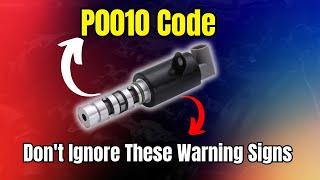
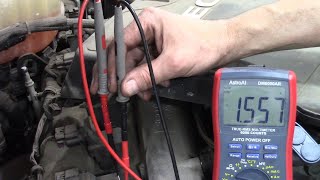
![How to Fix P0010 Engine Code in 4 Minutes [2 DIY Methods / Only $6.53]](https://img.youtube.com/vi/p9bv-ibS4OE/mqdefault.jpg)
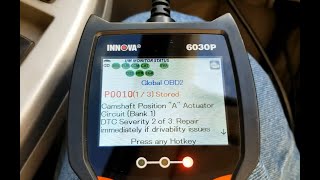

The information in this article is provided for general reference and educational purposes only. Vehicle specifications, procedures, and part compatibility can vary by production date, trim level, and region. Always consult your vehicle's factory service manual and verify part numbers before purchasing or performing repairs. Safety-critical components such as airbags, seat belts, and braking systems should be installed by a qualified professional.
- 🎬 Helpful Videos
- What Does P0010 Mean?
- Can I Drive With P0010?
- Common Causes
- Symptoms
- Diagnostic Flowchart
- Common Fixes & Costs
- Used vs. New Parts: Buying Guide
- What Happens If You Wait — Timeline
- Cost of Not Fixing It
- Diagnosis Steps
- When This Code Triggers (Freeze-Frame Conditions)
- Related Codes
- Climate & Environmental Factors
- How to Talk to a Mechanic About This Code
- Where to Take It: Dealer vs Independent vs Chain
- When to Walk Away From the Repair
- What Scan Tool You Need for This Code
- How to Clear the Code After You Fix It
- Will This Fail Emissions / State Inspection?
- Most Commonly Affected Vehicles
- Manufacturer-Specific Notes
- Real Owner Stories
- 2017 Chevy Equinox, 45K miles - The Classic Solenoid Fix
- 2005 Toyota Corolla, 1.8L - The Hidden Broken Wire
- 2019 Hyundai Santa Fe, 200K+ miles - Misdiagnosis and Root Cause
- How to Prevent This Code From Triggering
- Frequently Asked Questions
- What is the most common fix for a P0010 code?
- What does 'Bank 1' and 'Camshaft A' mean?
- Can I just clean the VVT solenoid instead of replacing it?
- What happens if the P0010 code comes back after replacing the solenoid?
- Will an oil change fix a P0010 code?
- What is the difference between the camshaft position SENSOR and ACTUATOR?
- Is it okay to use a cheaper aftermarket VVT solenoid?
- Will the P0010 code clear itself?
- Key Takeaways
- 🎟️ Get 5% Off