

P0400 on 2011-2019 Ford Explorer: EGR Flow Malfunction Causes & Fixes
P0400 on a 2011-2019 Ford Explorer indicates an Exhaust Gas Recirculation (EGR) flow malfunction, most commonly caused by carbon buildup clogging the EGR passages or a faulty EGR valve. The fix usually involves cleaning the passages or replacing the valve. Note: The 2.5L engine was not an available option for this Explorer generation; this guide focuses on the common 3.5L V6 where this is a known issue.
- The user-specified 2.5L engine is not available for this vehicle; this guide applies to the common 3.5L V6.
- P0400 most often points to clogged EGR passages within the intake manifold, not a failed EGR valve. Always inspect and clean the passages before replacing parts.
- Symptoms include a rough idle, hesitation, and potential engine knocking.
- This is a moderately difficult DIY repair that mainly requires time and patience for cleaning, rather than expensive s
What's Unique About the 2011-2019 Ford Explorer
The user-specified 2.5L engine was not offered in the 2011-2019 Ford Explorer in North America. This generation, the fifth, primarily used a naturally aspirated 3.5L V6, a 2.0L EcoBoost (2012-2015), a 2.3L EcoBoost (2016-2019), or a 3.5L EcoBoost V6. This guide will focus on the most common engine, the naturally aspirated 3.5L V6, where P0400 is a well-documented issue often stemming from carbon buildup in the EGR passages integrated into the lower intake manifold, rather than a simple part failure.
Symptoms You May Notice
- Check Engine Light is on
- Rough or uneven idle, or stalling at stops
- Engine hesitation or stumbling during acceleration
- Reduced fuel economy
- Engine pinging or knocking sounds (detonation)
- Failed emissions test
- Replacing the EGR valve without first inspecting and cleaning the EGR passages. The blockage within the intake manifold is often the root cause of the P0400 code, not the valve itself. A new valve will not fix a clogged passage.
Most Likely Causes
- Clogged EGR Passages 🔴 High Probability The design of the EGR system on the 3.5L V6 routes exhaust gas through small passages in the lower intake manifold. Over time, these passages become severely restricted or completely blocked by carbon accumulation, which is a very common failure pattern for this engine.
How to confirm: Visually inspect the EGR ports and passages after removing the upper intake manifold and throttle body. The passages will be visibly coated or completely blocked with black, hardened carbon deposits.
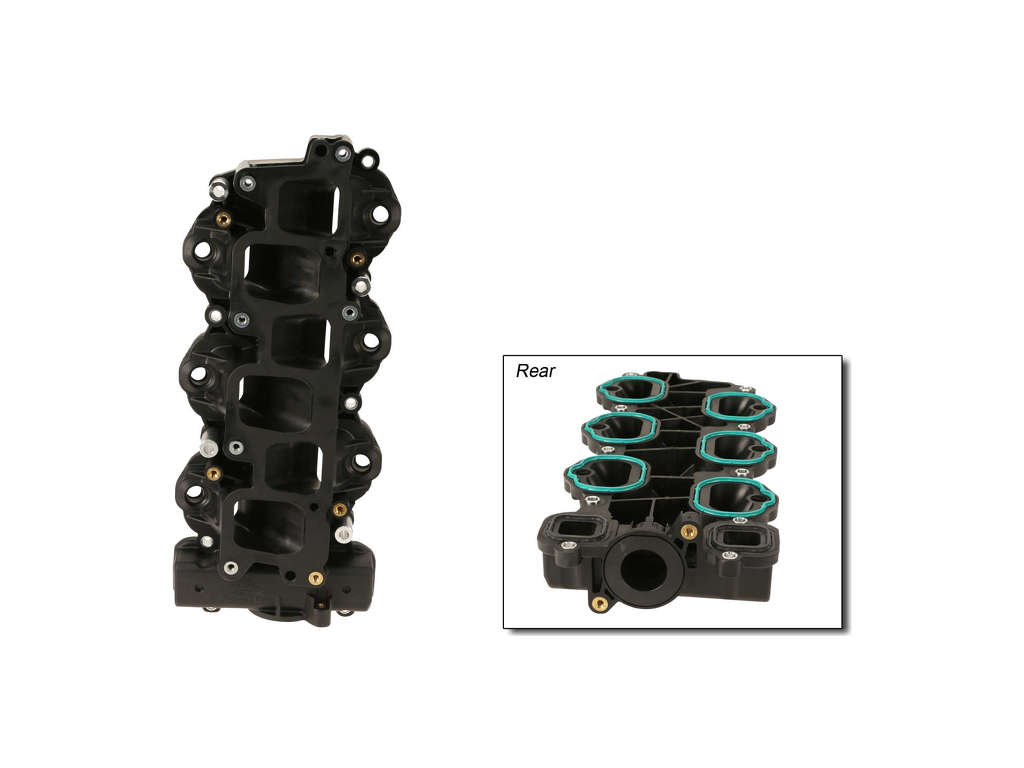
Typical fix: Thoroughly clean the EGR passages using picks, brushes, and a suitable solvent like carburetor cleaner. This requires removing the upper and lower intake manifolds for access and can be a time-consuming and messy job.
Est. part cost: $30-$80 (for cleaners and required intake gaskets) - Faulty EGR Valve 🟡 Medium Probability The valve itself can become clogged with carbon, causing its pintle to stick open or closed. The electronic solenoid that actuates the valve can also fail internally, preventing it from responding to the PCM's commands.
How to confirm: Use a capable OBD-II scan tool to command the EGR valve to open while the engine is idling. If the engine stumbles or stalls, the valve is likely opening and flow is present. If there is no change in engine idle, the valve is either not opening or the passages are completely blocked.
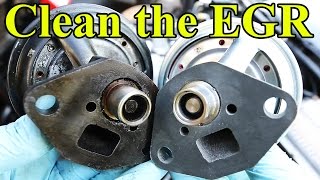
Typical fix: Replace the EGR valve and its gasket. 🎬 Watch: How to clean and replace your EGR valve It is highly recommended to clean the EGR passages at the same time, as a new valve cannot overcome a clogged passage.
Est. part cost: $80-$200 - Faulty MAP Sensor ⚪ Low Probability
How to confirm: The PCM uses the Manifold Absolute Pressure (MAP) sensor to verify EGR flow by detecting a change in intake pressure when the EGR valve opens. A slow or failing sensor may not detect this pressure change. Test the sensor by monitoring its voltage with a scan tool or multimeter while applying vacuum to it.
Typical fix: Replace the MAP sensor.
Est. part cost: $40-$100
Rare But Worth Checking
- Cracked EGR Tube: The metal tube that carries exhaust from the manifold to the EGR valve can crack over time due to heat cycles, causing an exhaust leak and affecting flow.
- Wiring or Connector Issue: A damaged wire or corroded electrical connector for the EGR valve or MAP sensor can interrupt the signal, leading to a P0400 code.
- Vacuum Leak: On older systems that use vacuum-actuated EGR valves, a cracked or disconnected vacuum line to the valve or solenoid can prevent the valve from opening.
Diagnosis Steps
- Connect an OBD-II scanner to verify the P0400 code and check for any other pending or active codes.
- Inspect the EGR valve, its electrical connector, and wiring for any visible damage, corrosion, or loose connections.
- If your scan tool has bidirectional controls, command the EGR valve to open at idle. Listen for a change in engine RPM or smoothness. If the engine stumbles or stalls, the valve is likely working and the passages are at least partially clear. If there's no change, the valve is likely stuck or the passages are completely blocked.
- Remove the throttle body and look into the intake manifold to inspect the EGR ports for heavy carbon buildup. This is the most common cause.
- If significant carbon buildup is found, remove the upper and lower intake manifolds to gain full access to the EGR passages. Thoroughly clean the passages using picks, brushes, and an appropriate solvent like carburetor cleaner. This is a critical step.
- While the EGR valve is removed, inspect its pintle for carbon and test its electrical function with a multimeter if a faulty valve is suspected.
- If the EGR valve and passages are confirmed to be good, investigate the sensor used to monitor flow (typically the MAP sensor on this vehicle). Check its live data on the scan tool to ensure it's reading correctly and responding to changes in engine vacuum.
- After any repairs, replace all necessary gaskets (intake manifold, EGR valve), clear the codes, and perform a drive cycle to ensure the fix was successful.
Parts You'll Likely Need
- EGR Valve
(OEM #CX-2102 (Motorcraft))— The valve can fail electronically or become stuck due to carbon buildup, preventing proper EGR flow.
Trusted brands: Motorcraft, Standard Motor Products (SMP), Duralast
OEM price range: $120-$180
Aftermarket price range: $80-$150 - EGR Valve Gasket
(OEM #Included with most new valves)— A new gasket is required anytime the EGR valve is removed to ensure a proper seal and prevent exhaust leaks.
Trusted brands: Motorcraft, Fel-Pro
OEM price range: $10-$20
Aftermarket price range: $5-$15 - Intake Manifold Gaskets (Upper and Lower) — Required for the most common repair: cleaning the EGR passages, which involves removing the intake manifolds.
Trusted brands: Motorcraft, Fel-Pro
OEM price range: $40-$70
Aftermarket price range: $25-$50
Related Codes That Often Appear With This One
- P0401 — This code for 'EGR Flow Insufficient' is very similar and often points to the same root causes, like clogged passages or a stuck-closed valve.
- P0171 / P0174 — If the EGR valve is stuck open, it can create a vacuum leak, allowing unmetered air into the intake and causing the engine to run lean, which may trigger these 'System Too Lean' codes.
- P0402 — This code for 'EGR Flow Excessive' can be triggered if the EGR valve is stuck open due to carbon buildup or mechanical failure.
Platform-Specific Known Issues
- On the 3.5L V6 engine common in this Explorer generation, the EGR passages are integrated into the lower intake manifold and are highly prone to clogging with carbon, which is the most frequent cause of a P0400 code. The repair requires removing the upper and lower intake manifolds to access and clean these passages.
Mechanic-Grade Diagnostic Values
- MAP Sensor Voltage (Key On, Engine Off) — expected: ~4.5V - 5.0V (should be within 1.5 PSI / 10.35 kPa of the BARO reading). Failure: Voltage is significantly different from the Barometric Pressure (BARO) sensor reading, indicating a faulty sensor.
- MAP Sensor Voltage (Engine at Idle) — expected: 1.0V - 1.8V. Failure: Voltage remains high (near Key On, Engine Off levels of 4.5V), suggesting the sensor is not reading engine vacuum.
- EGR Valve Position Sensor Voltage (KOEO, Closed) — expected: 0.6V - 1.2V. Failure: Voltage outside this range can trigger a P0404 code and indicates the position sensor is faulty or the valve is not fully closed.
Scan Tool Commands That Help
- Ford IDS / FORScan / Capable Bidirectional Scanner: Key-On, Engine-Running (KOER) Self-Test — This test commands various actuators, including the EGR valve, to operate while the engine is running. It can generate active codes related to the EGR system if it detects a malfunction during the test, helping to confirm a fault that may not be present at idle.
- Ford IDS / FORScan / Capable Bidirectional Scanner: EGR Valve Commanded Position (%) — Use this function to manually command the EGR valve to open by a certain percentage while monitoring engine RPM and MAP sensor data. A functioning system will show a drop in RPM/stumble and a change in MAP pressure. No change indicates a blockage or a failed valve.
Wiring & Ground Locations
- Engine Block Ground — On the front of the engine block; a wire runs from a bolt on the block to a factory ground point on the chassis in front of the passenger side front tire.. A poor engine ground can cause erratic sensor readings for components mounted to the engine, including the MAP sensor and the EGR valve's position sensor, leading to incorrect data being sent to the PCM.
- Chassis Ground (near battery) — On the frame next to the battery on the passenger side.. This is a primary grounding point for the engine bay. Corrosion or looseness here can affect the entire engine management system, including the PCM's ability to correctly interpret sensor signals.
- Firewall Ground — On the firewall, often near the power steering reservoir. Some vehicles may have an unattached ground wire from the factory in this area that needs to be properly secured.. The PCM and various sensors are grounded through connections on the firewall. A poor connection can cause intermittent electrical issues and fault codes.
Real Owner Repair Stories
- Ford Edge Forum (Ford Edge with 3.5L V6 (engine shared with Explorer)) — Check Engine Light with P0400 code.
❌ Tried (didn't work) Initial diagnosis pointed towards the EGR valve itself.
✅ What actually fixed it The owner reported that the definitive fix was removing the intake manifold and thoroughly cleaning the clogged EGR passages. This confirms the common knowledge that passage blockage is the primary failure point on this engine design.
OEM Part Supersession History
9U5Z-9D475-A→9U5Z-9D475-D, CX-2411— Part revision and update by Ford. The newer part numbers are the current replacements.
Diagnostic Flowchart
Other Known Issues on This Vehicle
Issues unrelated to this code that are worth knowing about as an owner of this generation:
- Internal Water Pump Failure (3.5L V6) 🔴 High — Common after 60,000-100,000 miles. Failure can cause coolant to mix with engine oil, leading to catastrophic engine failure with little warning. (Ref: No recall, but it is a widely documented design flaw.)
- Power Transfer Unit (PTU) Failure (AWD Models) 🔴 High — The PTU fluid can overheat and break down, leading to gear and bearing failure, often before 100,000 miles. Ford considered it a 'lifetime' fluid with no drain plug, leading to lack of servicing.
- Exhaust Odor in Cabin 🟠 Medium — Owners report exhaust or sulfur smells entering the cabin, especially under heavy acceleration. This can be caused by cracked exhaust manifolds or body sealing issues near the rear of the vehicle. (Ref: TSB 14-0130, TSB 16-0166 address reprogramming the HVAC and sealing the body.)
- Electronic Power Steering (EPAS) Failure 🔴 High — Can lead to a sudden loss of power steering assist, making the vehicle very difficult to steer, especially at low speeds. Failures can be intermittent or permanent. (Ref: Recall 14S06 was issued for 2011-2013 models to update software and replace the steering gear if necessary.)
- Throttle Body Malfunction 🟠 Medium — Can cause the vehicle to unexpectedly enter 'limp mode' with sudden loss of power, often illuminating a wrench light on the dashboard. (Ref: Ford extended warranty coverage for this part on some model years.)
Used vs. New Parts: Buying Guide for This Vehicle
When a used part is the smart pick: A used intake manifold from a junkyard can be a cost-effective choice, but ONLY if you can thoroughly inspect and clean the integrated EGR passages before installation. Since the manifold itself is just a casting, it does not wear out, but it must be free of carbon blockage.
Donor-vehicle mileage cap: roughly under 80000 miles for the part to have meaningful remaining life.
What to inspect on the donor part:
- For an intake manifold, shine a light into the EGR ports. Avoid any manifold that has heavy, caked-on carbon that looks difficult to remove.
- Check for any cracks or damage to the plastic manifold housing, especially around mounting points and gasket surfaces.
- Ensure all threaded inserts for bolts are intact and not stripped.
OEM-only on this vehicle (don't cheap out):
- EGR Valve: Due to the high failure rate from both carbon fouling and electronic issues, buying a used EGR valve is a significant gamble. The labor to replace it is substantial, so a new part with a warranty (OEM or reputable aftermarket) is strongly recommended to avoid repeat repairs.
Aftermarket brands forum-validated for this vehicle:
- Standard Motor Products (SMP) for EGR valves and sensors.
- Fel-Pro for intake manifold and EGR gaskets.
Brands owners have reported issues with on this vehicle:
- No-name, unbranded EGR valves from online marketplaces are frequently reported to fail prematurely or be dead-on-arrival.
Real Owner Stories
Aggregated from forums and TSBs cited above. Mileages and costs reflect what owners reported in those sources.
2013 Ford Explorer 3.5L V6
Symptoms: Owner described an issue that resulted in a P0400 trouble code.
What fixed it: Forum comments suggested that cleaning the EGR passages was the likely fix.
Source hint: Reddit r/FordExplorer - A user describes a similar issue on their 2013 model, with comments suggesting EGR passage cleaning as the likely fix.
5th Gen Ford Explorer 3.5L V6
Symptoms: Check Engine Light on with code P0400.
What fixed it: The consensus fix was to clean the clogged EGR passages before considering replacing the EGR valve.
Source hint: explorerforum.com - Multiple threads corroborate that clogged EGR passages are a very common cause for P0400 on the 5th generation Explorer with the 3.5L V6, often recommending cleaning before replacing the valve.
Ford Edge 3.5L V6
Symptoms: Owners reported identical P0400 issues as the Explorer.
What fixed it: The problem was caused by clogged intake passages, requiring cleaning to resolve the code.
Source hint: Ford Edge Forum - Owners of the Ford Edge with the same 3.5L engine report identical P0400 issues caused by clogged intake passages, confirming it's an engine-specific problem.
Related OBD-II Codes
Frequently Asked Questions
My 2015 Explorer has a P0400 code. Is it more likely the EGR valve or something else?
Do I have to remove the intake manifold to fix the P0400 code on my Ford Explorer?
I'm getting a P0400 code. Could a bad MAP sensor be the cause?
My mechanic wants to replace the EGR valve for a P0400. Should I also have them clean the passages?
Does this P0400 EGR issue affect other Ford or Lincoln vehicles?
What are the typical symptoms of a P0400 code on this Explorer besides the Check Engine Light?
Helpful Videos
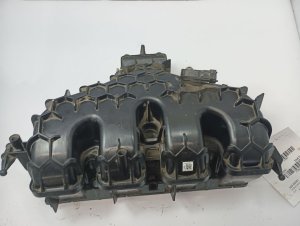
Used OEM Parts in Stock


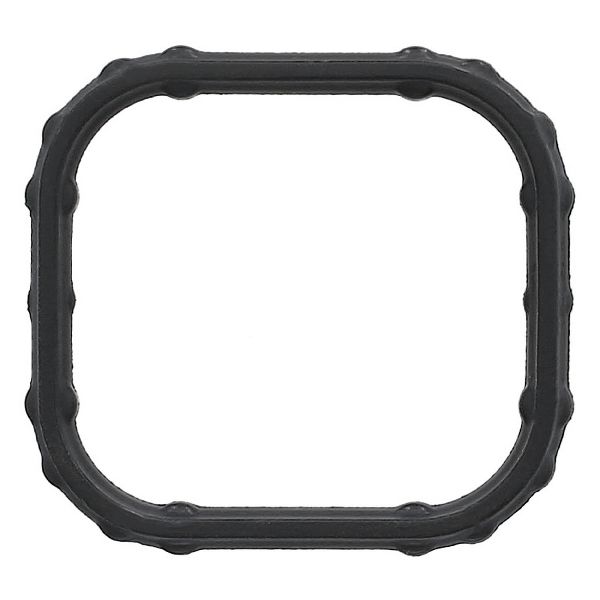
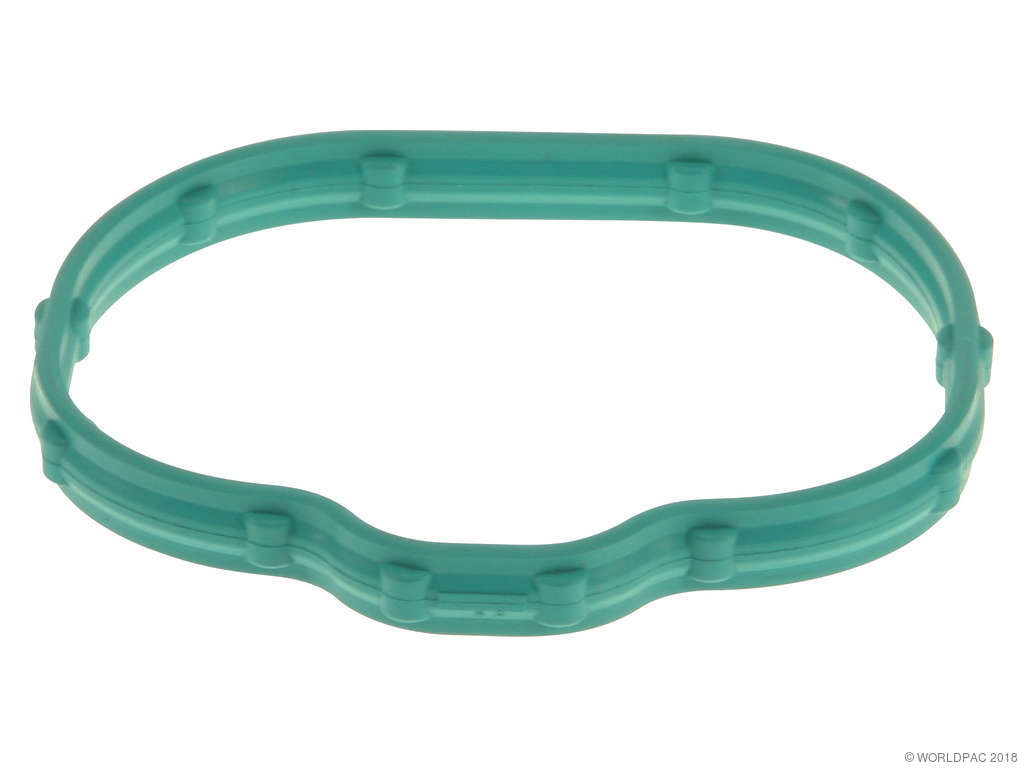
New Aftermarket Parts Available


The information in this article is provided for general reference and educational purposes only. Vehicle specifications, procedures, and part compatibility can vary by production date, trim level, and region. Always consult your vehicle's factory service manual and verify part numbers before purchasing or performing repairs. Safety-critical components such as airbags, seat belts, and braking systems should be installed by a qualified professional.
- Ford Explorer:
- 🎬 Helpful Videos
- 🛍️ Shop This Part
- What's Unique About the 2011-2019 Ford Explorer
- Symptoms You May Notice
- Most Likely Causes
- Rare But Worth Checking
- Diagnosis Steps
- Parts You'll Likely Need
- Related Codes That Often Appear With This One
- Platform-Specific Known Issues
- Mechanic-Grade Diagnostic Values
- Scan Tool Commands That Help
- Wiring & Ground Locations
- Real Owner Repair Stories
- OEM Part Supersession History
- Diagnostic Flowchart
- Other Known Issues on This Vehicle
- Used vs. New Parts: Buying Guide for This Vehicle
- Real Owner Stories
- 2013 Ford Explorer 3.5L V6
- 5th Gen Ford Explorer 3.5L V6
- Ford Edge 3.5L V6
- Related OBD-II Codes
- Frequently Asked Questions
- 🎟️ Get 5% Off