

OBD-II Code P0106: Manifold Absolute Pressure Sensor Performance Problem
What P0106 means, why it triggers, and how to fix it
- Vacuum leaks and faulty MAP sensors cause over 80% of P0106 codes.
- Expect a 10-20% drop in fuel economy, rough idling, and sluggish acceleration until the code is resolved.
- Always check Long-Term Fuel Trims (LTFT) before replacing parts; a reading above +10% confirms a vacuum leak, not a bad sensor.
- Chevrolet 1.4L Turbos and VW 2.5L engines frequently trigger P0106 due to ruptured PCV diaphragms, requiring a $150-$300 valve cover replacement.
- Driving with an active P0106 for more than 3 months risks overheating the catalytic converter, turning a $100 repair into a $1,500 replacement.
What Does P0106 Mean?

P0106 means the Powertrain Control Module (PCM) receives illogical signals from the Manifold Absolute Pressure (MAP) sensor. The MAP sensor measures engine load by reading intake manifold pressure. The PCM detected a pressure reading that contradicts the engine's current RPM and throttle position. Essentially, the MAP sensor's data conflicts with other engine sensors.
Technical definition: Manifold Absolute Pressure/Barometric Pressure Sensor Range/Performance. The PCM sets this code when the MAP sensor's voltage signal falls outside the expected 1.0 to 4.5-volt range or fails to correlate logically with the throttle position sensor (TPS), engine RPM, and barometric pressure (BARO) readings.
Can I Drive With P0106?
Yes, But With Caution. You can drive, but it is strongly discouraged. Your engine runs poorly, gets bad gas mileage, and stalls unexpectedly in traffic. Prolonged driving with an incorrect air-fuel mixture overheats and destroys the catalytic converter, turning a minor issue into a $1,500 to $2,500 repair. Diagnose the issue immediately to prevent secondary failures.
Common Causes

- Vacuum leak in the intake system (Very Common) — Cracked vacuum hoses, leaking intake manifold gaskets, or ruptured PCV diaphragms introduce unmeasured air into the engine. This alters intake pressure, confusing the MAP sensor and forcing incorrect readings.
- Faulty Manifold Absolute Pressure (MAP) sensor (Very Common) — The sensor fails from age, heat, or internal electronic drift, sending erratic, incorrect, or dead signals to the PCM.
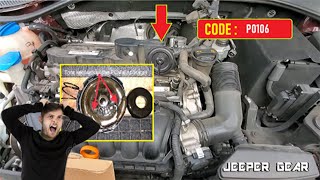
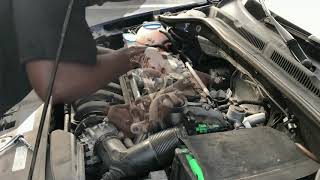
- Contaminated or dirty MAP sensor (Common) — Oil or carbon buildup from the PCV system coats the sensor's element, insulating it and causing sluggish or inaccurate readings. This is a known pattern failure on VW, Ford, and GM engines. 🎬 Watch: How to fix P0106 on VW 2.5L engines.
- Dirty or faulty throttle body (Common) — Heavy carbon buildup prevents the throttle plate from closing properly. This alters airflow and creates pressure readings the PCM considers irrational at idle.
- Damaged wiring or connector (Common) — Frayed wires, corroded pins, or water intrusion inside the MAP sensor connector cause high resistance or intermittent signals.
- Clogged intake or exhaust (Less Common) — A severely clogged engine air filter or blocked catalytic converter dramatically alters intake manifold pressure, pushing MAP readings out of range.
- Mechanical engine issues (Rare) — Internal problems like a stretched timing chain, incorrect valve timing, or a broken valve spring cause abnormal manifold vacuum fluctuations.
- Faulty Powertrain Control Module (PCM) (Rare) — The vehicle's computer misinterprets a valid signal. Rule out all other hardware and check for manufacturer software updates before replacing the PCM.
Symptoms

- Check Engine Light is on — The light illuminates immediately when the PCM logs the P0106 fault.
- Rough idle or stalling — The engine shakes, idles erratically, or stalls at stops due to an improper air-fuel mixture.
- Poor acceleration and hesitation — The vehicle feels sluggish, bogs down, or lacks power when pressing the gas pedal.
- Reduced fuel economy — The engine wastes fuel because the PCM commands an overly rich air-fuel mixture based on faulty sensor data.
- Black smoke from the exhaust — A rich fuel mixture causes unburned fuel to exit the tailpipe as black smoke.
- Hard starting — The engine cranks longer than usual, especially when cold, because the PCM relies on the initial MAP reading to set the starting fuel mixture.
- Engine surging — The vehicle jerks during steady driving as the PCM attempts to adjust to erratic MAP sensor signals.
Diagnostic Flowchart
Tap your situation to follow the diagnostic path that matches what you're seeing on this code.
Common Fixes & Costs
- Repair a vacuum leak (hose or gasket) — Parts: $10-$80, Labor: $100-$400, ~2.5 hr book time (Intermediate)
- Replace a faulty MAP sensor — Parts: $40-$150, Labor: $50-$80, ~0.5 hr book time (DIY)
- Clean a contaminated MAP sensor — Parts: $10-$15, Labor: $0-$50, ~0.3 hr book time (DIY)
- Clean or Replace Throttle Body — Parts: $10-$250, Labor: $75-$150, ~1.0 hr book time (Intermediate)
- Repair damaged wiring or connector — Parts: $5-$30, Labor: $100-$250, ~1.5 hr book time (Professional)
Used vs. New Parts: Buying Guide
When a used part is worth it: Buying a used MAP sensor is not recommended. The minimal cost savings do not justify the risk of installing a partially failed electronic component. Used parts make sense for expensive, non-wear items like body panels.
Donor-vehicle mileage cap: roughly under 40000 miles for the part to have meaningful remaining life.
Donor quality checklist:
- Verify the donor vehicle was not scrapped for engine-related issues.
- Match the part number exactly; similar-looking sensors have different voltage calibrations.
- Choose OEM used parts over aftermarket used parts.
Decision logic:
- If The part is a MAP sensor → Buy a new OEM or high-quality aftermarket part. The low cost doesn't justify the risk of a used one.
- If The vehicle is older (>10 years) and budget is the primary concern → A used OEM sensor from a low-mileage vehicle is acceptable, but test it before installation.
- If The part is electronic and critical for engine management → Favor new parts to ensure reliability and avoid repeat labor costs.
Warranty tradeoff: Used salvage yard parts offer a 30-90 day warranty covering only the part. New aftermarket parts offer 1-year to lifetime warranties. New OEM parts carry a 1-year warranty.
Worst-case if a used part fails: $100-250 if a used sensor fails shortly after installation, requiring repeat diagnosis and labor.
What Happens If You Wait — Timeline
- 0-1 month: Check Engine Light turns on. Slight drop in fuel economy and unsteady idle when cold. (MPG impact: 0-5%% · Added cost: $0)
- 1-3 months: Rough idle becomes consistent. Vehicle hesitates during acceleration. Fuel economy loss is measurable. (MPG impact: 5-10%% · Added cost: $50-$150 in wasted fuel)
- 3-6 months: Stalling at stoplights occurs. The incorrect air-fuel mixture begins overheating the catalytic converter. (MPG impact: 10-20%% · Added cost: $500-$1500 (Catalytic converter damage begins))
- 6+ months: Catalytic converter melts, creating extreme exhaust backpressure. Severe power loss and engine backfiring occur. (MPG impact: 15-25%% · Added cost: $1500-$4000 (Catalytic converter and O2 sensor replacement required))
Cost of Not Fixing It
- 0-1 month: Noticeable drop in fuel economy (5-15%), rough idle, and poor acceleration. Increased tailpipe emissions. (Added cost: $20-$60 in wasted fuel)
- 1-6 months: Risk of overheating the catalytic converter due to a rich or lean fuel mixture. Potential for engine backfiring and increased stalling. (Added cost: $1000-$2500 for catalytic converter replacement.)
- 6+ months: Severe damage to the catalytic converter is guaranteed. Prolonged misfires lead to fouled spark plugs, damaged oxygen sensors, and internal engine wear. (Added cost: $2500+ for catalytic converter, O2 sensors, and engine repairs.)
Diagnosis Steps

- Read Codes and Freeze Frame Data
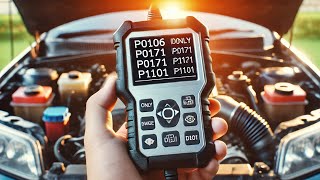
Use an OBD-II scanner to confirm P0106 and check for related codes (like P0171 or P0068). Analyze freeze-frame data to identify engine conditions (RPM, load) when the code triggered.
Tools: OBD-II Scanner (Beginner) - Analyze Live Data & BARO/MAP Correlation
With Key On, Engine Off (KOEO), the MAP sensor reading must match the Barometric Pressure (BARO) reading (approx. 101 kPa or 4.5V at sea level). Start the engine; a healthy naturally aspirated engine pulls vacuum, dropping the MAP reading to 20-48 kPa (1.0-1.5V) at idle. Mismatched KOEO readings indicate a bad sensor. High idle readings indicate a vacuum leak.
Tools: Advanced OBD-II Scanner with Live Data (Advanced) - Analyze Fuel Trim Data
View Short-Term (STFT) and Long-Term (LTFT) Fuel Trims. Consistently positive fuel trims (LTFT > +10%) confirm the PCM is adding fuel to compensate for unmetered air. High positive fuel trims combined with P0106 guarantee a vacuum leak.
Tools: Advanced OBD-II Scanner with Live Data (Advanced) - Perform a Visual Inspection
Inspect for cracked, disconnected, or mushy vacuum hoses. Check the MAP sensor's electrical connector for corrosion or backed-out pins. Ensure the intake air snorkel fits tightly.
Tools: Flashlight (Beginner) - Check for Vacuum Leaks
With the engine running, listen for hissing. Use a smoke machine to pump smoke into the intake system and pinpoint leaks. Alternatively, spray short bursts of carburetor cleaner around the intake manifold and vacuum lines; an RPM change confirms a leak.
Tools: Smoke machine or carburetor cleaner (Intermediate) - Inspect and Clean the MAP Sensor
Remove the MAP sensor and inspect the tip for oil or carbon. Clean it gently with dedicated MAF or electronic sensor cleaner. Never use brake cleaner. Let it dry completely before reinstalling.
Tools: Basic hand tools, MAF sensor cleaner (Beginner) - Inspect and Clean the Throttle Body
Remove the intake boot and inspect the throttle plate for heavy carbon buildup. Clean it with throttle body cleaner and a soft brush. A sticking throttle plate causes implausible pressure readings.
Tools: Basic hand tools, throttle body cleaner, rags (Intermediate) - Test the MAP Sensor Electrical Circuit
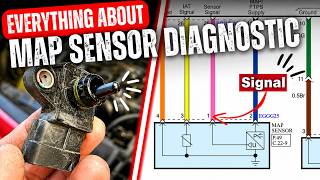
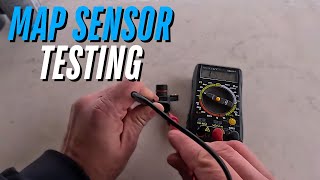
Back-probe the sensor connector. Verify a 5-volt reference, a good ground (<0.1V), and a signal wire matching BARO voltage. Apply vacuum with a hand pump; the signal voltage must drop smoothly and linearly. If voltage sticks or jumps, replace the sensor.
Tools: Multimeter with back-probe pins, hand vacuum pump (Advanced) - Check for Exhaust Restrictions
A clogged catalytic converter causes abnormal intake pressure. Feel the exhaust flow at the tailpipe at 2500 RPM; weak flow indicates a blockage requiring a professional backpressure test.
Tools: Exhaust pressure gauge or hand (Advanced)
When This Code Triggers (Freeze-Frame Conditions)
- Engine Coolant Temp: 180-200°F (Fully warmed up, during steady-state driving.)
- RPM: 1500-3000 (During light acceleration or cruising, not typically at idle or full throttle.)
- Engine Load: 20-50% (The PCM compares the MAP reading to an expected value based on engine load; the fault triggers in this moderate range.)
- Vehicle Speed: 30-60 mph (Occurs during city or highway cruise conditions when engine vacuum is expected to be stable.)
Related Codes
- P0171 / P0174 — These 'System Too Lean' codes frequently accompany P0106. A vacuum leak introduces unmetered air, causing a lean condition and skewing MAP readings. If present together, a vacuum leak is the definitive cause.
- P0107 / P0108 — These indicate a hard electrical failure (circuit stuck low or high). P0106 is a performance code (signal exists but is illogical). P0107/P0108 require electrical diagnosis; P0106 requires mechanical and vacuum diagnosis.
- P0300 - P0308 — Misfire codes trigger when the faulty MAP sensor forces an incorrect air-fuel ratio. Fixing the P0106 root cause resolves the misfires.
- P0068 — Indicates a direct conflict between the MAP, MAF, and Throttle Position sensors. Often requires cleaning the throttle body or applying a PCM software update (common on Hyundai/Kia).
Climate & Environmental Factors
- Cold Weather: In below-freezing temperatures, moisture inside the MAP sensor vacuum line freezes, obstructing the sensor element. GM and Ford issued TSBs for this specific icing issue.
- High Altitude: At higher altitudes, atmospheric pressure drops (e.g., 84 kPa at 5,000 ft vs. 101 kPa at sea level). If the MAP sensor fails to calibrate to this lower baseline at startup, the PCM triggers P0106.
- High Humidity: Prolonged high humidity accelerates corrosion on the MAP sensor's electrical pins, creating unwanted resistance that degrades the voltage signal.
How to Talk to a Mechanic About This Code
Say this: "I have a P0106 code and my car is running rough. Please start by checking for vacuum leaks with a smoke test and verifying the MAP sensor's live data readings against the BARO sensor with the key on, engine off."
This directs the mechanic to perform the correct diagnostic steps first, preventing them from blindly replacing the sensor without confirming it's the actual problem.
Avoid saying:
- 'My check engine light is on, can you just fix it?'
- 'I think I need a new MAP sensor.'
- 'Just do whatever it takes to make the light go off.'
Questions to ask before authorizing the repair:
- Did you perform a smoke test to check for vacuum leaks, and what were the results?
- What were the MAP and BARO readings on the scan tool with the key on and engine off?
- What were the long-term fuel trim readings at idle?
- If the sensor needs replacement, can you show me the failed test results for the old one?
- What is the warranty on this specific repair?
Where to Take It: Dealer vs Independent vs Chain
- Dealer:
Best for: Vehicles under warranty, Known manufacturer-specific issues covered by a TSB (e.g., VW PCV failures, GM valve covers), Complex electrical issues requiring PCM software updates
Downsides: Highest labor rates, Recommends replacing large assemblies rather than individual components (Typical cost: +50% vs. baseline) - Independent Shop:
Best overall fit. An experienced independent shop handles the vast majority of P0106 causes, from vacuum leaks to sensor replacement, at a reasonable cost.
Best for: Out-of-warranty vehicles, Diagnosing common causes like vacuum leaks and faulty sensors, General-purpose diagnosis with a good balance of cost and expertise
Downsides: Diagnostic capabilities vary; look for ASE certifications., Lacks access to manufacturer-specific software updates. (Typical cost: +0% vs. baseline) - Chain Shop:
Use with caution. Acceptable for a pre-diagnosed MAP sensor replacement. Avoid for initial diagnosis, as vacuum leaks and PCV issues are often misdiagnosed as simple sensor failures.
Best for: Simple part replacement if you have already correctly diagnosed the issue yourself.
Downsides: Technician skill is inconsistent., Lacks advanced diagnostic tools like smoke machines., High potential for misdiagnosis and unnecessary part replacements. (Typical cost: -10% vs. baseline)
When to Walk Away From the Repair
If the estimated repair cost exceeds 40-50% of the car's private-party value, seriously consider selling or trading it in.
- Car worth $4000, fix is $1800: Borderline. The repair is 45% of the car's value. Get a second opinion before authorizing.
- Car worth $12000, fix is $600: Fix it. The repair cost is only 5% of the car's value.
- Car worth $2500, fix is $1500: Walk away. The repair cost is 60% of the car's value. It is not financially sensible to proceed.
What Scan Tool You Need for This Code

Minimum: A scanner that reads and graphs live data, specifically MAP, BARO, RPM, and long-term fuel trims (LTFT).
A basic $20 code reader only shows 'P0106'. It lacks the live sensor data needed to determine if the cause is a vacuum leak (high fuel trims) or a bad sensor (MAP/BARO mismatch).
Budget: BlueDriver Pro (~$99) — Connects to a smartphone, provides freeze-frame data, graphs live data for MAP, BARO, and fuel trims, and generates repair reports.
Mid-range: Foxwell NT510 Elite (~$199) — A handheld unit offering deep, manufacturer-specific diagnostics. Provides robust live data and accesses brand-specific codes cheaper scanners miss.
Professional: Autel MaxiCOM MK808 / MK906BT (~$450-1200) — Offers full bidirectional control, comprehensive live data, and advanced diagnostic functions for complex electrical faults.
Rent vs buy: Auto parts stores loan basic scanners for free. These read the code but lack live data capabilities. If diagnosing your own vehicles, buying a tool like the BlueDriver is required.
How to Clear the Code After You Fix It
- Use an OBD-II scan tool to clear the diagnostic trouble codes (DTCs).
- Perform a drive cycle to allow the vehicle's readiness monitors to run.
- Check for pending or permanent codes after the drive cycle.
Drive cycle (~20 minutes): Start the engine and idle for 3 minutes. Drive in mixed city traffic with several stops for 15 minutes. Drive on a highway at a steady 55-65 mph for 10 minutes. Let the vehicle cool down completely.
Readiness monitors affected: Comprehensive Component Monitor, Misfire Monitor, Fuel System Monitor
Before emissions retest: drive at least 50 miles to fully set monitors.
Watch out for:
- Disconnecting the battery clears the active code but leaves a permanent DTC (P-DTC) that fails emissions tests.
- The code returns immediately if the root cause (like a vacuum leak) remains unfixed.
- Failing to complete the specific drive cycle leaves readiness monitors 'not ready', resulting in an emissions test failure.
Will This Fail Emissions / State Inspection?
Yes — this code typically fails an OBD-II emissions inspection.
- California: An active P0106 automatically fails the smog check. If recently cleared, the vehicle fails if readiness monitors have not completed. California allows zero 'not ready' monitors on most vehicles.
- New York: The NYVIP3 inspection includes an OBD-II scan. P0106 results in failure. The Check Engine Light must be off and readiness monitors set to pass.
- Texas: In the 17 emissions-testing counties, an active P0106 fails the OBD-II inspection. The vehicle cannot pass until repaired and monitors are ready.
Most Commonly Affected Vehicles
- Chevrolet Cruze, Sonic, Aveo (2011-2016) — Caused by a ruptured PCV diaphragm in the valve cover, creating a massive vacuum leak. Often accompanied by P0171 and P1101. Requires replacing the entire valve cover.
- Volkswagen Jetta, Golf, Passat (2.5L & 2.0T) (2008-2015) — Prone to PCV valve failure causing oil to contaminate the MAP sensor. VW TSB 2034012 updates overly sensitive PCM software.
- GMC / Chevrolet Sierra, Silverado, Tahoe (2007-2014) — Issues range from bad MAP sensors to intake manifold icing in cold climates (TSB #PI1257). On 2014 models, P0106 with a ticking noise indicates a broken valve spring (TSB #PIP5423B).
- Ford F-150, Focus, Freestyle, Five Hundred (2005-2012) — Moisture freezes inside the MAP sensor vacuum line in cold weather. TSB 08-9-7 for 2005-2007 models requires reprogramming the PCM and clearing the line.
- Hyundai Elantra, Sonata (2011-2020) — TSB 21-01-041H for 2020 Elantras updates the PCM software to revise overly sensitive logic for detecting P0106 and P0068.
- Honda Accord, Civic, CR-V (2003-2012) — Frequently caused by a failing MAP sensor. Part numbers for 2003-2007 models differ significantly from later years.
- Kia Optima, Sorento, Forte (2011-2016) — Suffers from MAP sensor calibration drift over time. Check for intake gasket leaks on higher-mileage examples.
- Subaru Outback, Forester, Impreza (2013-2017) — A dirty throttle body is the primary cause. Cleaning the throttle body and performing an idle relearn procedure resolves the code without replacing the MAP sensor.
Manufacturer-Specific Notes
- General Motors (Chevy/GMC): On 1.4L turbos (Cruze/Sonic), a ruptured PCV diaphragm in the valve cover is the primary cause. On Silverado/Sierra trucks, ice forms on the MAP sensor in cold climates (TSB #PI1257).
- Volkswagen/Audi: Failed PCV systems suck oil into the intake, ruining the MAP sensor. VW TSB 2034012 updates overly sensitive PCM software. Extended warranties often cover this PCV failure.
- Ford: Moisture freezes inside the MAP sensor vacuum line in cold weather. TSB 08-9-7 for 2005-2007 models requires reprogramming the PCM and clearing the line.
- Hyundai/Kia: Sensor calibration drifts on high-mileage vehicles. TSB 21-01-041H for models like the 2020 Elantra updates overly sensitive diagnostic logic.
Real Owner Stories
2014 Chevy Cruze 1.4L Turbo at 105K miles
Check Engine Light illuminated with P0106 and P0171. Engine idled roughly with a noticeable whistling sound.
What they tried:
- Initially suspected a bad MAP sensor.
- Sprayed brake cleaner near the valve cover; RPM changed, confirming a vacuum leak.
Outcome: The PCV diaphragm integrated into the valve cover ruptured. Replacing the valve cover assembly stopped the whistling, normalized fuel trims, and cleared all codes.
Lesson: On a GM 1.4L Turbo, P0106 paired with P0171 and a whistling noise guarantees a failed PCV system in the valve cover, not a bad MAP sensor.
2011 VW Jetta 2.5L at 180K miles
P0106 caused poor gas mileage and black exhaust smoke.
What they tried:
- Removed the MAP sensor and found it coated in oil.
- Cleaned the sensor and replaced the PCV valve. The code returned.
- Replaced the MAP sensor with a new one. The code returned intermittently.
Outcome: A failed PCV system allowed oil to pool inside the intake manifold. Residual oil kept fouling the new sensor. The fix required removing the throttle body to thoroughly clean oil out of the intake manifold.
Lesson: When a VW MAP sensor is oily, replacing the PCV and sensor isn't enough. You must clean pooled oil out of the intake manifold, or the problem returns.
2013 Ford F-150 3.5L EcoBoost at 120K miles
Vehicle had a rough idle, lack of power, and multiple codes including P0106.
What they tried:
- Replaced all timing components based on other codes. Fixed a startup rattle but not the P0106.
- Checked for vacuum leaks and sensor issues.
Outcome: The problem was a faulty MAP sensor on top of the intake manifold. Replacing the $75 sensor took 30 seconds and resolved all running issues.
Lesson: Perform basic sensor checks (like comparing KOEO MAP vs. BARO readings) before committing to expensive, unrelated repairs.
How to Prevent This Code From Triggering
- Clean the throttle body periodically (Every 30,000-50,000 miles) — Carbon buildup prevents the throttle plate from closing properly, altering intake pressure and causing incorrect MAP readings.
- Service the PCV system (Inspect every 30,000 miles, replace as needed) — A failed PCV valve creates vacuum leaks or sucks oil into the intake, contaminating the MAP sensor.
- Use high-quality engine oil (Per manufacturer's schedule) — Low-quality oil breaks down faster, creating sludge that clogs the PCV system and contaminates sensors.
- Inspect vacuum hoses (Every oil change) — Engine heat makes rubber hoses brittle. Visual checks catch cracked hoses before they cause major vacuum leaks.
Frequently Asked Questions
Can a dirty air filter cause a P0106 code?
Yes. A severely clogged air filter restricts airflow enough to push intake manifold pressure outside its normal range, triggering the code.
I replaced the MAP sensor, but the P0106 code came back. What now?
The sensor was not the root cause. You likely have an unfixed vacuum leak, damaged wiring, a dirty throttle body, or need a PCM software update.
What's the difference between a MAP sensor and a MAF sensor?
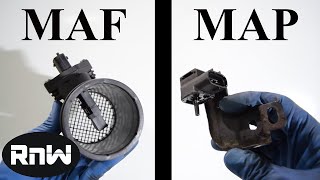
A MAP sensor measures engine load based on intake manifold pressure (vacuum). A MAF sensor measures the volume and density of air entering the engine. Many vehicles use both to cross-check airflow data.
Is it safe to clean my MAP sensor?
Yes, provided you use a dedicated MAF or electronic sensor cleaner. Never use harsh chemicals like brake cleaner, which destroys the sensitive plastic components. Allow the sensor to air dry completely before reinstalling.
What is the most common misdiagnosis for P0106?
Replacing the MAP sensor without checking for vacuum leaks is the most common mistake. Unmetered air from a leak forces the sensor to read irrational pressures. Always perform a smoke test before buying parts.
Can a bad EGR valve cause P0106?
Yes. A stuck-open Exhaust Gas Recirculation (EGR) valve creates a massive vacuum leak. It allows exhaust gases into the intake manifold at the wrong time, skewing MAP sensor readings.
Can a bad battery cause a P0106 code?
Yes. Low system voltage degrades the 5-volt reference signal the PCM sends to the MAP sensor, causing inaccurate readings. Replacing a battery also clears learned idle values, temporarily triggering the code until an idle relearn completes.
What does a bad MAP sensor sound like?
The sensor itself is silent, but the resulting engine issues are audible. You will hear a rough, shaking idle, engine backfires, or a distinct hissing sound if a vacuum leak is the root cause.
Key Takeaways
- Vacuum leaks and faulty MAP sensors cause over 80% of P0106 codes.
- Expect a 10-20% drop in fuel economy, rough idling, and sluggish acceleration until the code is resolved.
- Always check Long-Term Fuel Trims (LTFT) before replacing parts; a reading above +10% confirms a vacuum leak, not a bad sensor.
- Chevrolet 1.4L Turbos and VW 2.5L engines frequently trigger P0106 due to ruptured PCV diaphragms, requiring a $150-$300 valve cover replacement.
- Driving with an active P0106 for more than 3 months risks overheating the catalytic converter, turning a $100 repair into a $1,500 replacement.
Helpful Videos



The information in this article is provided for general reference and educational purposes only. Vehicle specifications, procedures, and part compatibility can vary by production date, trim level, and region. Always consult your vehicle's factory service manual and verify part numbers before purchasing or performing repairs. Safety-critical components such as airbags, seat belts, and braking systems should be installed by a qualified professional.
- 🎬 Helpful Videos
- What Does P0106 Mean?
- Can I Drive With P0106?
- Common Causes
- Symptoms
- Diagnostic Flowchart
- Common Fixes & Costs
- Used vs. New Parts: Buying Guide
- What Happens If You Wait — Timeline
- Cost of Not Fixing It
- Diagnosis Steps
- When This Code Triggers (Freeze-Frame Conditions)
- Related Codes
- Climate & Environmental Factors
- How to Talk to a Mechanic About This Code
- Where to Take It: Dealer vs Independent vs Chain
- When to Walk Away From the Repair
- What Scan Tool You Need for This Code
- How to Clear the Code After You Fix It
- Will This Fail Emissions / State Inspection?
- Most Commonly Affected Vehicles
- Manufacturer-Specific Notes
- Real Owner Stories
- 2014 Chevy Cruze 1.4L Turbo at 105K miles
- 2011 VW Jetta 2.5L at 180K miles
- 2013 Ford F-150 3.5L EcoBoost at 120K miles
- How to Prevent This Code From Triggering
- Frequently Asked Questions
- Can a dirty air filter cause a P0106 code?
- I replaced the MAP sensor, but the P0106 code came back. What now?
- What's the difference between a MAP sensor and a MAF sensor?
- Is it safe to clean my MAP sensor?
- What is the most common misdiagnosis for P0106?
- Can a bad EGR valve cause P0106?
- Can a bad battery cause a P0106 code?
- What does a bad MAP sensor sound like?
- Key Takeaways
- 🎟️ Get 5% Off