

P0363 on 2008-2016 Audi A4 2.0T: Misfire Fuel Cut-Off Causes & Fixes
P0363 on an Audi A4 with the 2.0T EA888 engine means the computer has detected a severe misfire and cut fuel to protect the engine. The most common causes are faulty ignition coils or spark plugs. However, a failed PCV valve, severe carbon buildup on intake valves, or a failing timing chain tensioner are also frequent and more serious possibilities that are well-documented for this specific engine.
- P0363 is a critical code indicating a severe misfire that has forced the engine to cut fuel to a cylinder.
- Do not drive the vehicle with a flashing check engine light.
- While ignition coils and spark plugs are the most common and easiest fix, do not overlook the other three major culprits on the EA888 engine: timing chain/tensioner, PCV valve, and carbon buildup.
- A VCDS (VAG-COM) scan tool is invaluable for proper diagnosis, especially for checking timing chain stretch.
- Early models (2008-2012) are at high risk for timing chain tensioner failure, which can destroy the engine.
What's Unique About the 2008-2016 Audi A4

The EA888 engine in the B8-generation A4 is a strong performer, but it has several well-documented weak points that directly lead to misfires severe enough to trigger a P0363 code. While ignition coils are a common culprit on many cars, this platform is also highly susceptible to premature timing chain tensioner failure (especially pre-2013 models), severe carbon buildup on intake valves due to its direct-injection design, and PCV valve failures creating massive vacuum leaks. These issues are so common that they should be considered primary suspects after basic ignition components are checked.
Generation note: The 2008-2016 model years primarily cover the Audi A4 B8 generation (2008-2016 for the sedan in North America). Within this generation, earlier models (approx. 2008-2012) are equipped with a faulty timing chain tensioner design that is prone to failure. Later B8.5 models (2013-2016) have an updated tensioner from the factory (p/n 06K109467K), reducing this specific risk, though chain stretch can still occur. Additionally, 2009-2011 models are particularly known for excessive oil consumption issues related to flawed piston rings, which was the subject of a class-action lawsuit and TSBs.
Symptoms You May Notice
- Flashing Check Engine Light (CEL)
- Violent engine shaking and vibration, especially at idle
- Sudden and significant loss of power
- Engine stalling or struggling to stay running
- Rough, unstable idle
- Hesitation during acceleration
- A rattling noise from the front of the engine on cold starts (indicative of timing chain issues)
- Loud whistling or squealing noise from the engine bay (indicative of PCV failure)
- Misfires are worse on a cold engine (indicative of carbon buildup)
- Replacing only the spark plugs when a bad ignition coil was the root cause.
- Replacing ignition components repeatedly when the actual issue is carbon buildup, a failing PCV valve, or a stretched timing chain.
- Replacing camshaft or crankshaft position sensors when the timing correlation issue (e.g., code P0016) is actually due to a stretched timing chain.
- Assuming a misfire is from carbon buildup when it's a simple coil failure.
Most Likely Causes

- Faulty Ignition Coil(s) 🔴 High Probability Ignition coils are a very common failure item on most modern Volkswagen and Audi engines, including the EA888. They are exposed to high heat and can fail electronically without warning.
How to confirm: Scan for cylinder-specific misfire codes (e.g., P0301, P0302). Swap the ignition coil from the misfiring cylinder to a known good cylinder. Clear codes and run the engine. If the misfire code follows the coil to the new cylinder (e.g., P0302 now shows instead of P0301), the coil is bad.
Typical fix: Replace the faulty ignition coil. It is highly recommended to replace all four coils at the same time with the latest revision part (often red-topped coils, like OEM p/n 06H905115B or equivalent) along with the spark plugs.
Est. part cost: $30-$60 per coil - Worn or Fouled Spark Plugs 🔴 High Probability Often replaced with ignition coils. Can be fouled by oil due to the engine's tendency for oil consumption, or simply be past their service life (typically 40,000-60,000 miles). Using incorrect plugs or an improper gap can also cause misfires.
How to confirm: Remove the spark plugs and inspect them. Look for worn or melted electrodes, cracks in the ceramic, or heavy deposits of black, sooty carbon or wet oil.
Typical fix: Replace all four spark plugs. Use the correct OEM-spec plugs (e.g., NGK PFR8S8EG) and ensure they are gapped correctly.
Est. part cost: $15-$25 per plug - Failed Timing Chain Tensioner / Stretched Chain 🟡 Medium Probability Early EA888 engines (pre-2013) used a tensioner design prone to hydraulic failure, allowing the timing chain to lose tension and potentially jump teeth, causing catastrophic engine damage. Even on later models, the chain itself can 'stretch' (wear) over time.
How to confirm: A brief (1-2 second) metallic rattle on a cold start is a classic sign. A mechanic can remove a small inspection plug on the lower timing cover to visually check the tensioner style and its extension. Using a VCDS (VAG-COM) tool, check 'Camshaft Adaptation Intake Bank 1 Phase' in Advanced Measuring Values (MVB 093). A value more negative than -5 degrees strongly suggests a stretched chain requiring replacement.
Typical fix: This is a major repair. Replace the timing chain, the tensioner (with the latest revision, p/n 06K109467K), and all related guides and rails. This is a labor-intensive job (8-10 hours) requiring special tools.
Est. part cost: $400-$800 for a full kit - Failed PCV Valve (Oil Separator) 🟡 Medium Probability The diaphragm inside the PCV (Positive Crankcase Ventilation) valve is made of rubber and is known to tear, creating a large, unmetered vacuum leak. This leans out the air-fuel mixture and causes misfires.
How to confirm: Listen for a loud whistling or squealing noise from the engine bay at idle. With the engine running, try to remove the oil filler cap. If there is extremely strong suction holding it down, making it difficult to remove, the PCV has failed. A failed PCV will also often trigger a P0171 (System Too Lean) code.
Typical fix: Replace the entire PCV valve assembly (p/n 06H103495 is a common revision). It is located on top of the valve cover and is relatively accessible for a DIY repair (less than 1 hour).
Est. part cost: $150-$250 for an OEM part - Carbon Buildup on Intake Valves 🟡 Medium Probability As a TFSI (direct injection) engine, fuel is sprayed directly into the cylinder, not over the intake valves. Oil vapor from the PCV system bakes onto the hot valves, forming hard carbon deposits that restrict airflow and can prevent the valves from closing properly, especially when the engine is cold.
How to confirm: This requires physical inspection by removing the intake manifold and using a borescope. Symptoms include misfires that are most prominent on a cold start and may clear up as the engine warms. A quick, though less definitive, check is to remove the MAP or IAT sensor from the intake manifold; if the sensor tip is coated in oily grime, the valves are likely heavily carbonized.
Typical fix: The intake manifold must be removed, and the valves must be manually cleaned. The most effective method is walnut shell blasting. Chemical cleaning is often insufficient for heavy buildup. This is a labor-intensive service (4-6 hours).
Est. part cost: $50-$100 for gaskets and seals (cleaning is labor)
Rare But Worth Checking
- Failed Fuel Injector: A fuel injector can become clogged or fail electronically, causing a misfire on a single cylinder. While less common than coils, it's a possibility if ignition components check out. Sometimes a potent fuel system cleaner can help, but replacement is often necessary.
- Low Compression (Piston Ring/Valve Failure): On 2009-2011 models known for oil consumption, the piston rings can fail, leading to low compression and persistent misfires. Additionally, oil ash buildup on valve faces can cause a 'burnt valve', which no longer seals properly, resulting in zero compression in that cylinder. This is confirmed with a compression and leak-down test and is a major engine-out repair.
Diagnosis Steps

- Scan the ECM for all stored fault codes. Note any cylinder-specific misfire codes (P0301-P0304) or timing correlation codes (P0016). A tool like VCDS is highly recommended.
- If a specific cylinder is identified, swap its ignition coil with a neighboring cylinder's coil. Clear codes and run the engine to see if the misfire code 'moves' to the new cylinder. If it does, the coil is faulty.
- If the misfire does not move, inspect the spark plug from the misfiring cylinder. Look for wear, damage, or fouling from oil or fuel. Replace if necessary.
- With the engine running, listen for a high-pitched whistle. Carefully try to remove the oil filler cap. If extreme vacuum suction is present, the PCV valve has likely failed and needs replacement.
- If pre-2013 model or high mileage, investigate the timing chain. Listen for a brief rattle on cold startup. Use VCDS to check 'Camshaft Adaptation Intake Bank 1 Phase'. Values more negative than -5° indicate a problem.
- If symptoms are worse on cold starts and improve when warm, suspect carbon buildup. This requires removing the intake manifold for visual confirmation and cleaning.
- If all else fails, consider less common causes like a failed fuel injector or low compression. Perform a fuel pressure test and an engine compression/leak-down test.
Parts You'll Likely Need

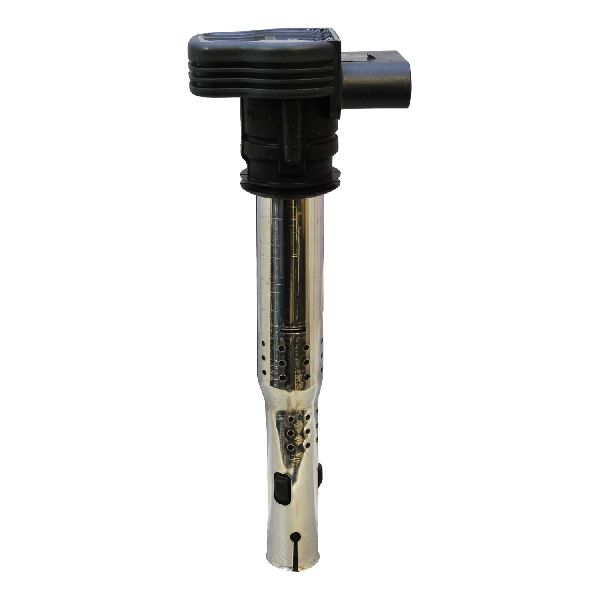
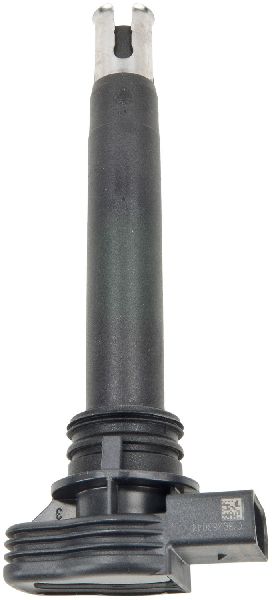
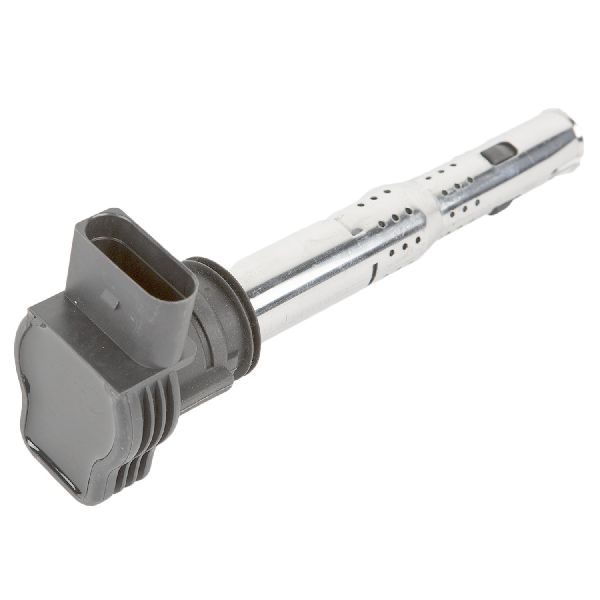
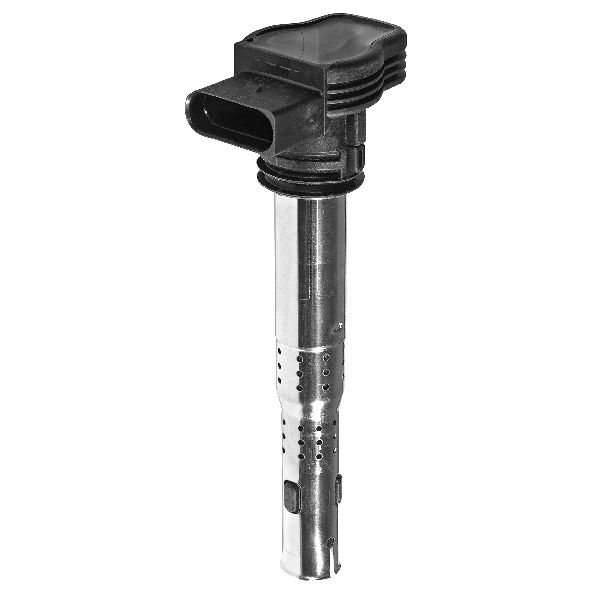
- Ignition Coil
(OEM #07K905715F (common red R8 version))— This is the most frequent cause of misfires on the EA888 engine. They fail due to heat and electrical stress.
Trusted brands: Bosch, NGK, Eldor
OEM price range: $45-$60
Aftermarket price range: $25-$45 - Spark Plug
(OEM #06H905601A)— A standard maintenance item that is critical for proper combustion and is often replaced alongside ignition coils.
Trusted brands: NGK, Bosch
OEM price range: $20-$30
Aftermarket price range: $15-$25 - PCV Valve / Oil Separator
(OEM #06H103495AH (or latest revision))— The internal diaphragm is a known failure point, causing a major vacuum leak that the ECM cannot compensate for, resulting in misfires.
Trusted brands: Audi Genuine, Vaico
OEM price range: $180-$250
Aftermarket price range: $80-$150 - Timing Chain Kit — Required to fix a failed tensioner or stretched chain, a critical and common issue on pre-2013 models. A full kit includes the chain, tensioner, guides, and seals.
Trusted brands: Iwis (OEM supplier), FCP Euro Kit, INA
OEM price range: $600-$800
Aftermarket price range: $350-$500
Related Codes That Often Appear With This One
- P0300 — Random/Multiple Cylinder Misfire Detected. This is a general misfire code that often accompanies the more specific P0363, especially if the underlying cause (like a vacuum leak or timing issue) is affecting all cylinders.
- P0301, P0302, P0303, P0304 — Cylinder-specific misfire codes (e.g., P0303 for Cylinder 3). These are crucial for diagnosis as they pinpoint which cylinder's ignition coil, spark plug, or injector to check first.
- P0016 — Crankshaft Position - Camshaft Position Correlation. This code is a smoking gun for a stretched timing chain or a failed tensioner that has allowed timing to jump.
- P0171 — System Too Lean (Bank 1). This code frequently appears alongside misfire codes when the cause is a failed PCV valve, which creates a large vacuum leak.
Technical Service Bulletins (TSBs) & Recalls
- TSB 2071114/1: Addresses excessive oil consumption due to piston ring geometry on some engines, which can lead to fouled plugs and misfires.
- TSB 2059366: Outlines the official ODIS procedure for conducting an oil consumption test to verify the issue before warranty repairs.
- There are multiple TSBs regarding timing chain tensioner updates, though specific numbers can be elusive. The general service knowledge is to replace the original tensioner with the updated part (06K109467K).
Platform-Specific Known Issues
- Real Owner Story: The Full Gauntlet for P0363: An owner on AudiWorld with a 2010 A4 experienced a sudden, violent shaking and flashing CEL. They had already dealt with the known oil consumption issue and had the turbo replaced under warranty previously. The community advised the first step is always to scan for codes to pinpoint the misfiring cylinder. This case illustrates a common owner experience: a B8 A4 will likely present multiple signature EA888 issues during its life, and a P0363 can be triggered by any one of them.
- The Elusive Cold Start Misfire: On Audizine, a user with a 2011 A4 detailed a frustrating chase to solve a cylinder 3 misfire that only occurred at cold idle. They had already performed all the common fixes: new OEM coils, new NGK plugs, a new injector, and a full walnut blast carbon cleaning. Compression was good at 175 PSI. This demonstrates that even after addressing the 'big four' (coils, plugs, carbon, injectors), diagnosis can sometimes require a deeper look into fuel pressure regulation or other more subtle engine parameters that affect the cold-start fuel mixture.
- Piston Soak as a Last Resort for Oil Consumption: A Reddit user with a 2011 A4 Avant burning a quart of oil every 300 miles tried multiple fixes. A new PCV valve did nothing. A professional BG engine flush helped, but consumption was still high at 550 miles per quart. As a final attempt before a full engine rebuild, they performed a 'piston soak' using Berryman's B12 cleaner poured into the cylinders to dissolve carbon on the piston rings. This dramatically improved consumption to ~4200 miles per 3/4 quart, suggesting the oil control rings were freed up. This is a DIY-level attempt to fix the root cause of oil-fouled plugs.
Mechanic-Grade Diagnostic Values
- Camshaft Adaptation Intake Bank 1 Phase (Timing Chain Stretch) — expected: 0 to -4.0 degrees for a healthy chain. Some sources consider up to -5.0 degrees acceptable, but values beyond that are a strong indicator of a stretched chain or failing tensioner.. Failure: A value more negative than -5.0 degrees (e.g., -6.0, -7.0). Values can fluctuate slightly with temperature and engine load.
- Low Pressure Fuel System Pressure — expected: 2800 to 7200 mbar (approximately 40 to 104 PSI) at idle.. Failure: Pressure that is consistently below 2800 mbar, or pressure that drops significantly under load, can indicate a failing in-tank low-pressure fuel pump (LPFP).
- High Pressure Fuel System Pressure (Actual vs. Specified) — expected: Actual pressure should closely track specified pressure. At idle, this is typically around 40 bar (580 PSI), rising to over 140 bar (2000+ PSI) under load.. Failure: If 'Actual' pressure cannot meet 'Specified' pressure, especially under acceleration, it points to a failing High-Pressure Fuel Pump (HPFP), a worn cam follower, or a leak in the high-pressure system.
- Fuel Injector Resistance — expected: Approximately 12 to 20 ohms between the two pins on the injector.. Failure: A reading of 'OL' (open loop) or a value significantly outside the expected range indicates a failed injector coil. This test confirms electrical integrity but does not rule out mechanical clogging.
Scan Tool Commands That Help
- VCDS (VAG-COM): Basic Settings - Group 060 (Throttle Body Adaptation) — After cleaning the throttle body or if experiencing erratic idle along with misfires. This command forces the ECU to re-learn the closed, open, and partial-load positions of the throttle plate, which can be crucial if carbon buildup or a vacuum leak has caused incorrect adaptations.
- VCDS (VAG-COM): Output Tests (Sequential) — To individually test components without the engine running. You can cycle through tests to activate specific fuel injectors (listening for a click) or ignition coils. This can help isolate a completely dead component if other diagnostic methods are inconclusive.
Wiring & Ground Locations
- G12 / G18 — On the left rear of the engine compartment, often near the firewall or on the engine block itself.. This is a primary ground point for the Engine Control Module (ECM) and the ignition coils. A loose or corroded connection here can cause insufficient spark energy, leading to misfires across multiple cylinders that can be difficult to diagnose, as the coils and plugs may test good individually.
- Ignition Coil Connector Pins — At each ignition coil.. The plastic connectors become brittle with heat cycles and can crack, leading to intermittent connections. The ground wire (typically brown) is essential. Some owners install an aftermarket coil pack ground harness kit that provides a redundant, robust ground path from all four coils directly to a chassis ground point to eliminate this failure mode permanently.
- G44 — Located behind the driver's side kick panel, near the A-pillar.. This is a major ground distribution point that grounds numerous modules, including the instrument cluster and steering column electronics. While not a direct engine ground, a fault here can cause bizarre electrical issues and communication errors between modules, potentially leading to incorrect data being sent to the ECM.
Real Owner Repair Stories
- Reddit user in r/Audi (2014 Audi S5 (similar engine principles)) — EPC light came on with a 'wicked misfire'. Car went into limp mode with a loss of power. Restarting the car temporarily resolved the issue.
❌ Tried (didn't work) Initial suspicion was a common coil pack failure.
✅ What actually fixed it The root cause was a leaking fuel injector. - YouTube channel 'TicketyBoo' (2013 Audi A4 with 200,000km) — Developed a misfire on the highway, EPC light came on, car went into limp mode. Progressed to a heavy misfire/dead cylinder with a flashing check engine light. Codes P0300 and P0304 (Cylinder 4 Misfire) were stored.
❌ Tried (didn't work) The owner considered a leaky injector (a previous issue on another VW) or a mechanical problem as possibilities.
✅ What actually fixed it Swapping the ignition coil from cylinder 4 to another cylinder confirmed the coil was bad. The misfire followed the coil. A new ignition coil resolved the P0304 and P0363 condition.
"I Checked Everything" — The Actual Cause
- A common scenario for the EA888 engine is a smoke test that shows no leaks, yet the car has lean codes (P0171) and misfires (P0300, P0363). The actual cause is often a torn rear main seal. The seal fails due to excessive crankcase pressure, often caused by a clogged or failing PCV valve. The torn seal creates a large, unmetered vacuum leak at the back of the engine that a standard smoke test applied to the intake may not reveal.
OEM Part Supersession History
06H109467N, 06H109467AB, 06H109467T→06K109467K— The original tensioner designs were prone to sudden hydraulic pressure loss, causing the plunger to retract and allowing the timing chain to go slack. The updated 'K' revision features a stronger ratchet mechanism that prevents retraction even if oil pressure is lost, significantly reducing the risk of catastrophic failure.06H103495A, 06H103495E, 06H103495B→06H103495AC, 06H103495AH, 06H103495AK, and others— The diaphragm in the original PCV valves was prone to tearing. Subsequent revisions used improved diaphragm materials and construction to increase longevity. There are many part numbers and revisions, and using the latest available version is critical for a lasting repair.
Heads up: Some later revisions (e.g., 06K103495 series) are for the Gen 3 EA888 engine and are not physically compatible with the Gen 2 EA888 found in this A4. Always verify the part number against the vehicle's VIN.
Model Year Variations Within This Range

- 2008-2012 (B8): These models were factory-equipped with the failure-prone timing chain tensioner. The risk of P0363 being caused by jumped timing is significantly higher. Visual inspection of the tensioner or checking the part number is critical during diagnosis.
- 2013-2016 (B8.5): These models have the updated timing chain tensioner (06K109467K) from the factory, making sudden tensioner failure much less likely. However, they are still susceptible to timing chain stretch over time, which will still present with a rattle and a high negative value in VCDS block 093.
- 2009-2011: These specific years are notorious for an oil consumption issue due to piston ring design. Persistent misfires, especially if spark plugs are oil-fouled, could be an early symptom of this larger problem, which may ultimately require piston replacement or engine work to resolve low compression.
Diagnostic Flowchart
Used vs. New Parts: Buying Guide for This Vehicle
When a used part is the smart pick: For this repair, used parts are generally not recommended for the primary failure items. However, if a supporting component is damaged (e.g., a cracked engine cover, a broken sensor bracket), a used part from a reputable salvage yard is a cost-effective choice. A complete used intake manifold (for swapping, not for its valves) can also be a viable option if the original is physically cracked.
Donor-vehicle mileage cap: roughly under 75000 miles for the part to have meaningful remaining life.
What to inspect on the donor part:
- For any used part, verify the donor vehicle's mileage and check for signs of collision damage near the part.
- Inspect plastic components for hairline cracks or extreme brittleness.
- For a used intake manifold, look inside the ports. While some carbon is expected, avoid manifolds that are completely caked in thick, flaky deposits.
OEM-only on this vehicle (don't cheap out):
- Timing Chain Tensioner: The risk associated with a non-OEM or used tensioner is catastrophic engine failure. Only use the latest OEM revision (06K109467K).
- PCV Valve / Oil Separator: Aftermarket PCV valves for this engine have a very high failure rate, often within months. The diaphragm material and calibration are critical. Stick with a genuine OEM part from a dealer or reputable OEM supplier.
- Fuel Injectors: While expensive, OEM injectors are calibrated specifically for the engine's software. Mismatched or poor-quality aftermarket injectors can cause persistent running issues that are difficult to diagnose.
Aftermarket brands forum-validated for this vehicle:
- Ignition Coils: Bosch, Eldor, NGK (often the original OEM supplier).
- Spark Plugs: NGK (PFR8S8EG is a common spec), Bosch.
- Timing Chain Kit: INA, IWIS (often supply the OEM chains and guides).
Brands owners have reported issues with on this vehicle:
- Unbranded 'eBay special' ignition coils and PCV valves. These are notoriously unreliable and often fail quickly, leading to re-doing the repair.
- Any timing chain tensioner that is not the latest OEM part number. The cost savings do not justify the risk of engine failure.
Real Owner Stories
Aggregated from forums and TSBs cited above. Mileages and costs reflect what owners reported in those sources.
2010 Audi A4 2.0L TFSI
Symptoms: A sudden, violent shaking and flashing Check Engine Light.
What fixed it: The story illustrates a common diagnostic path rather than a single fix. The owner was advised that the first step is always to scan for codes to pinpoint the misfiring cylinder, as a P0363 can be triggered by any of the signature EA888 issues.
Source hint: An owner on AudiWorld with a 2010 A4
2011 Audi A4 2.0L TFSI
Symptoms: A frustrating cylinder 3 misfire that only occurred at cold idle.
What fixed it: The issue was not resolved by common fixes like new coils, plugs, injector, or a walnut blast. The owner's experience suggests the diagnosis required a deeper look into fuel pressure regulation or other subtle engine parameters affecting the cold-start mixture.
Source hint: On Audizine, a user with a 2011 A4
2011 Audi A4 Avant 2.0L TFSI
Symptoms: Severe oil consumption, burning a quart of oil every 300 miles, which can lead to oil-fouled spark plugs and misfires.
What fixed it: As a last resort before a rebuild, the owner performed a 'piston soak' using Berryman's B12 cleaner poured into the cylinders. This dissolved carbon on the oil control rings and dramatically improved oil consumption.
Source hint: A Reddit user with a 2011 A4 Avant
Related OBD-II Codes
Frequently Asked Questions
My 2010 A4 is making a rattling noise on cold starts. Is this related to the P0363 code?
I'm replacing the ignition coils on my A4 to fix a misfire. Is there a recommended part?
How can I tell if the PCV valve has failed and is causing my P0363 code?
My misfires are much worse when the engine is cold. What does that point to?
What is the most effective way to clean carbon buildup on the EA888 engine?
I have a P0302 code with P0363. What's the first diagnostic step I should take?
What specific spark plugs are recommended for the 2.0L TFSI engine?
Used OEM Parts in Stock


New Aftermarket Parts Available


The information in this article is provided for general reference and educational purposes only. Vehicle specifications, procedures, and part compatibility can vary by production date, trim level, and region. Always consult your vehicle's factory service manual and verify part numbers before purchasing or performing repairs. Safety-critical components such as airbags, seat belts, and braking systems should be installed by a qualified professional.
- Audi A4:
- 🛍️ Shop This Part
- What's Unique About the 2008-2016 Audi A4
- Symptoms You May Notice
- Most Likely Causes
- Rare But Worth Checking
- Diagnosis Steps
- Parts You'll Likely Need
- Related Codes That Often Appear With This One
- Technical Service Bulletins (TSBs) & Recalls
- Platform-Specific Known Issues
- Mechanic-Grade Diagnostic Values
- Scan Tool Commands That Help
- Wiring & Ground Locations
- Real Owner Repair Stories
- "I Checked Everything" — The Actual Cause
- OEM Part Supersession History
- Model Year Variations Within This Range
- Diagnostic Flowchart
- Used vs. New Parts: Buying Guide for This Vehicle
- Real Owner Stories
- 2010 Audi A4 2.0L TFSI
- 2011 Audi A4 2.0L TFSI
- 2011 Audi A4 Avant 2.0L TFSI
- Related OBD-II Codes
- Frequently Asked Questions
- 🎟️ Get 5% Off