

P0346 on 2005-2014 Ford Expedition 5.4L: VCT Solenoid, Timing, and Sensor Causes
On a Ford Expedition with the 5.4L 3V engine, code P0346 is rarely just a bad camshaft sensor. It almost always points to a deeper issue in the Variable Camshaft Timing (VCT) system, most commonly a failing VCT solenoid, low oil pressure, or worn timing components. Start by checking your oil and replacing the VCT solenoids (OEM Part No. 8L3Z-6M280-B) before considering a full timing job.
- Do not assume P0346 means you need a new camshaft position sensor. On this engine, it's a strong indicator of a problem in the VCT system.
- Your first and cheapest diagnostic step is to check the oil level and quality. An oil change with 5W-30 oil and a Motorcraft filter can sometimes resolve the issue.
- Replacing both VCT solenoids is a logical and relatively inexpensive next step if an oil change doesn't work.
- If you have rattling noises or multiple timing codes (P0012, P0022, P0341), prepare for a full timing job, including phasers, chains, guides, tensioners, and a new high-volume oil pump.
What's Unique About the 2005-2014 Ford Expedition

The Ford 5.4L 3V Triton V8 is notorious for issues within its Variable Camshaft Timing (VCT) system. This system uses engine oil pressure to adjust camshaft timing. Due to design weaknesses, components like VCT solenoids, cam phasers, and especially the plastic timing chain tensioners are prone to failure. The tensioner seals can blow out, causing a significant loss of oil pressure to the upper engine, which starves the cam phasers. Therefore, a P0346 code is frequently a symptom of these underlying mechanical issues—like low oil pressure or incorrect cam timing—rather than a simple failure of the sensor itself. Owners who replace only the sensor often find the code returns quickly.
Generation note: This range covers the second generation (2005-2006) and third generation (2007-2014) Ford Expedition. Both generations used the 5.4L 3V V8 engine, and the causes, symptoms, and fixes for code P0346 are consistent across both.
Symptoms You May Notice
- Rough, unstable idle, especially when the engine is warm or in gear at a stop.
- Engine stalling when coming to a stop or at low RPMs.
- Audible engine noise, such as a ticking, knocking, or rattling sound (often called 'phaser rattle' or 'diesel tick'), especially at hot idle.
- Hard starting or a crank-no-start condition.
- Noticeable loss of engine power and poor acceleration.
- Check Engine Light is on.
- Replacing only the camshaft position sensor without diagnosing the VCT system. The code is most often a symptom of a mechanical timing or oil pressure issue, so a new sensor will not fix the root cause.
- Replacing VCT solenoids when the root cause is low oil pressure from failed timing chain tensioner seals. The new solenoids will not be able to function correctly without adequate pressure.
Most Likely Causes

- Low, Dirty, or Incorrect Viscosity Engine Oil 🔴 High Probability The VCT system is entirely dependent on oil pressure. Sludge from infrequent oil changes clogs the small mesh screens in the VCT solenoids and the narrow passages in the cam phasers. Low oil levels or thin oil (especially when hot) reduces the pressure needed to operate the system correctly.
How to confirm: Check the oil level on the dipstick. Inspect the oil for cleanliness. Note if the problem started shortly after an oil change with a non-spec or non-Motorcraft filter. The Motorcraft filter (FL-820S) contains an anti-drainback valve crucial for this engine.
Typical fix: Change the engine oil and filter. Use a quality 5W-20 or 5W-30 synthetic blend or full synthetic oil and a Motorcraft oil filter (FL-820S). Many experienced technicians recommend switching to 5W-30 in higher-mileage engines to maintain better oil pressure when hot.
Est. part cost: $40-$90 - Failing VCT Solenoid (Bank 2) 🔴 High Probability The solenoids get clogged with debris or fail electronically. When one sticks, it can't properly regulate oil flow to the cam phaser, causing the camshaft to be in the wrong position (often over-retarded) at idle.
How to confirm: Swap the Bank 1 (passenger side) and Bank 2 (driver's side) VCT solenoids. Clear the codes and drive. If the code changes to P0341 (Bank 1), the solenoid is confirmed bad. You can also test the solenoid with a multimeter or watch its commanded vs. actual position on a capable scan tool like FORScan.
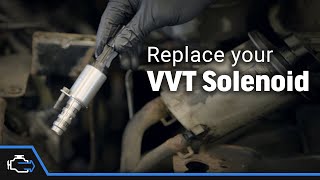
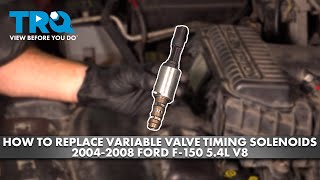
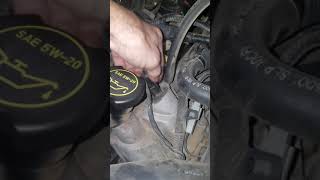
Typical fix: Replace the VCT solenoid on Bank 2. 🎬 See this walkthrough on how to remove the VCT solenoid. It is highly recommended to replace both solenoids at the same time. The updated OEM Ford part number is 8L3Z-6M280-B, which replaces the earlier 8L3Z-6M280-A.
Est. part cost: $50-$150 for a pair - Worn Timing Components (Cam Phasers, Chains, Guides, Tensioners) 🟡 Medium Probability The original cam phasers are a known weak point. More critically, the plastic timing chain tensioners have seals that blow out, causing a major loss of oil pressure to the top of the engine, which starves the phasers and triggers timing codes. Broken pieces of the plastic guides can also fall into the oil pan and clog the oil pump pickup tube.
How to confirm: A rattling noise on startup that goes away is a classic sign of bad tensioners bleeding down. An advanced scan tool can show cam error PIDs (VCTADVERR) fluctuating wildly at hot idle. The ultimate confirmation is visual inspection by removing the valve and timing covers.
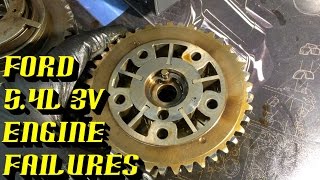
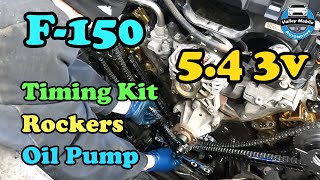
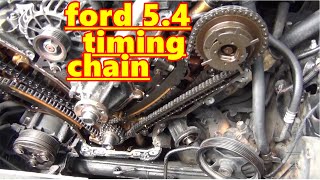
Typical fix: A complete timing job is required. 🎬 Watch: Full timing chain, phaser, and oil pump replacement guide. This includes replacing cam phasers, timing chains, tensioners, and guides. It is critical to use updated OEM Ford parts (a common kit part number is 3R2Z-6A257-DA-KIT) and to install a new high-volume oil pump (e.g., Melling M340HV) at the same time to prevent recurrence.
Est. part cost: $500-$1200 for a complete OEM kit with oil pump - Faulty Camshaft Position Sensor (Bank 2) ⚪ Low Probability While not the most common cause, the sensor itself can fail electronically or its wiring can be damaged. Oil leaks from the valve cover gasket above can saturate the sensor's connector, causing a poor connection.
How to confirm: Inspect the sensor and its connector for oil contamination, corrosion, or damage. The sensor's resistance can be tested with a multimeter. An oscilloscope is the best tool to verify a clean, square-wave signal.
Typical fix: Replace the Bank 2 camshaft position sensor and repair the connector if needed. The OEM part number is typically 3L3Z-6B288-AA.
Est. part cost: $25-$100
Rare But Worth Checking
- Failing Alternator: A failing diode in the alternator can introduce electrical 'noise' (AC voltage ripple) into the vehicle's DC system. This electrical interference can disrupt the sensitive signal from the camshaft position sensor, causing false codes like P0346 and others. This issue is noted in Ford TSB 06-19-12 for similar codes. A multimeter set to AC volts can be used to check for ripple at the battery terminals; anything over 50-100mV AC with the engine running is cause for concern.
- Clogged VCT Solenoid Body Passages: In some cases, the VCT solenoid valve body itself (the part the solenoid mounts into) can become clogged with sludge, preventing proper oil flow even with a new solenoid. This requires removing the valve cover to clean the passages, which is a significant labor increase.
Diagnosis Steps

- Check Engine Oil: Verify the oil level is full and the oil is clean. If low, top it off. If old or dirty, perform an oil and filter change using 5W-20 or 5W-30 synthetic blend and a Motorcraft FL-820S filter.
- Scan for Codes: Use an OBD-II scanner to confirm P0346 and look for other related codes (P0341, P0012, P0022, P0345). Note if codes are present for both banks.
- Inspect Sensor and Wiring: Visually inspect the Bank 2 (driver's side) camshaft position sensor and its electrical connector for oil leaks, damage, or corrosion.
- Diagnose VCT Solenoids: Swap the Bank 1 and Bank 2 VCT solenoids. Clear codes and drive. If the fault moves to Bank 1 (P0341), the solenoid is bad. This is a very effective and low-cost diagnostic step.
- Monitor Live Data: Use a scan tool like FORScan to monitor VCT PIDs. At hot idle in gear, watch VCTADV2 (cam angle) and VCTADVERR2 (cam error) for Bank 2. A healthy engine should have an error near 0 degrees. Large, erratic fluctuations (e.g., +/- 5 degrees or more) indicate a phaser/oil pressure problem.
- Check Oil Pressure: If VCT issues are suspected, test the engine's oil pressure at hot idle using a mechanical gauge. Ford's official minimum spec is 15 PSI at hot idle, though many technicians prefer to see at least 20-25 PSI. Pressure below this confirms an internal engine problem (e.g., bad tensioner seals, worn bearings).
- Inspect Timing System: If all else fails, the final step is to remove the valve covers and timing cover to visually inspect the cam phasers, chain guides (checking for broken plastic pieces), and tensioners for wear or damage.
Parts You'll Likely Need

- Engine Variable Valve Timing (VVT) Solenoid
(OEM #8L3Z-6M280-B)— This is one of the most common failure points. They get clogged with sludge or fail electronically, causing incorrect oil flow to the cam phasers. It's a cost-effective first part to replace.
Trusted brands: Motorcraft, Dorman
OEM price range: $40-$70 each
Aftermarket price range: $25-$50 each - Complete Timing Chain Kit — Required for a full timing job. A quality kit should include new phasers, chains, cast-iron tensioners, guides, and seals to address the system's known weak points.
Trusted brands: Ford Parts, Melling, Cloyes
OEM price range: $600-$900
Aftermarket price range: $300-$500 - High Volume Oil Pump — Highly recommended during a timing job to restore proper oil pressure throughout the engine, which is critical for the VCT system's health and longevity. The Melling M340HV or M360HV are popular choices.
Trusted brands: Melling
OEM price range: N/A
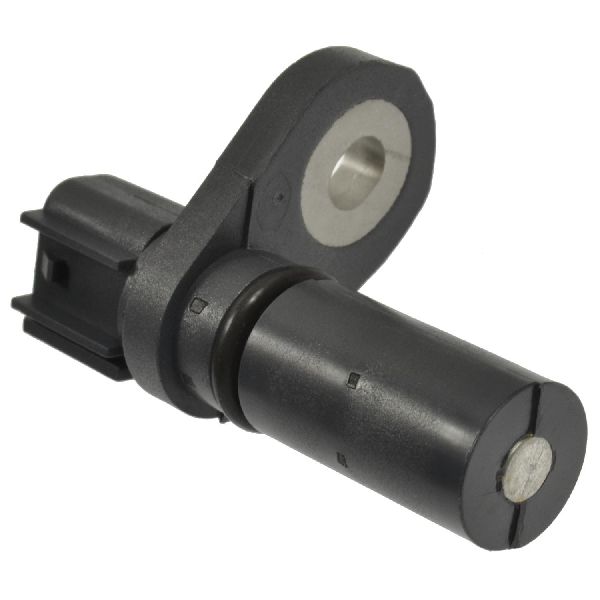
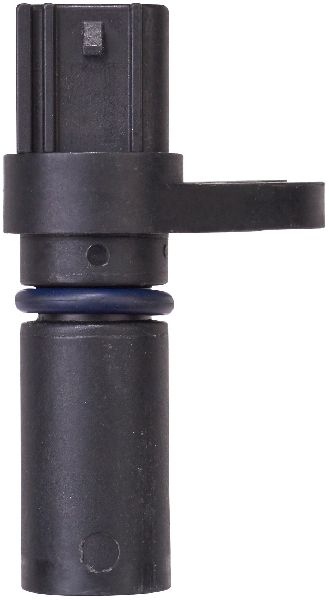
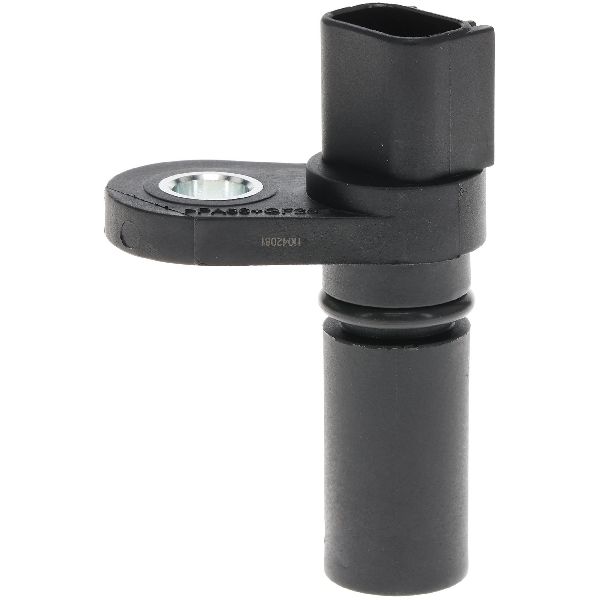
Aftermarket price range: $100-$150 - Camshaft Position Sensor
(OEM #1W7Z-6B288-AB)— Replaced if the sensor itself is confirmed faulty through testing or if its connector is damaged by oil. It is not the most likely cause of the code.
Trusted brands: Motorcraft, Bosch, NTK
OEM price range: $40-$60
Aftermarket price range: $25-$45
Related Codes That Often Appear With This One
- P0341 — This is the identical 'Range/Performance' code for Bank 1. Seeing P0346 and P0341 together strongly suggests a systemic problem affecting the entire engine, like low oil pressure, dirty oil, or stretched timing chains.
- P0022 — This code means 'Camshaft Position 'A' - Timing Over-Retarded (Bank 2)'. Seeing P0022 with P0346 confirms the issue is mechanical timing. The cam is so far out of its commanded position that the sensor's signal is deemed irrational by the PCM.
- P0012 — This is the 'Over-Retarded' code for Bank 1. Seeing P0346, P0341, P0012, and P0022 all together is a classic sign of major timing system failure on the 5.4L 3V engine, often due to low oil pressure from bad tensioners or sludge.
- P0345 — This is a 'Circuit Malfunction' code for the same sensor (Bank 2). While P0346 indicates a performance problem (often mechanical), P0345 points to a harder electrical failure like a dead sensor, broken wire, or unplugged connector.
Technical Service Bulletins (TSBs) & Recalls
- TSB 08-7-6: Details the specific, careful procedure for removing the original two-piece spark plugs to minimize breakage.
- SSM 32051: Establishes the official minimum hot idle oil pressure specification for the 5.4L 3V engine at 15 PSI.
- TSB 06-19-12: While for different codes (P0340/P0344/P0345), it documents the issue of alternator noise causing false camshaft sensor codes, which is relevant to P0346 diagnostics.
Platform-Specific Known Issues
- The 5.4L 3V engine is widely known for cam phaser failure, which produces a distinct knocking or ticking sound at hot idle.
- Original plastic timing chain tensioners are prone to failure as their seals blow out, causing a severe drop in oil pressure that leads to timing codes and chain rattle.
- Using oil filters other than the OEM Motorcraft FL-820S has been linked to VCT problems, as their anti-drainback valves may not be as effective, leading to dry starts and chain rattle.
Mechanic-Grade Diagnostic Values
- Camshaft Position (CMP) Sensor Resistance — expected: 205 to 579 Ohms. Failure: A reading outside this range indicates a faulty sensor.
- VCT Solenoid Internal Resistance — expected: 5 to 15 Ohms. Failure: A reading outside this range, or an open circuit, points to a bad solenoid coil.
- CMP Sensor Connector Voltage (Key On, Engine Off) — expected: Greater than 10 Volts DC on each wire to the sensor.. Failure: Voltage below 10V on either the Gray or Green wire for the Bank 2 sensor suggests a wiring harness or PCM connection problem.
- Alternator AC Voltage Ripple — expected: Less than 100 millivolts (0.1V) AC. Failure: AC voltage exceeding 100mV at the battery terminals while the engine is running indicates a failing alternator diode, which can create electrical noise that disrupts the CMP sensor signal.
Scan Tool Commands That Help
- FORScan / Ford IDS: VCT Solenoid On/Off Command — This bidirectional control allows a technician to command the VCT solenoids on and off while the engine is running to see if the engine note changes. If commanding the Bank 2 solenoid makes no difference to a rough idle, but commanding Bank 1 does, it points to a stuck solenoid or clogged oil passage on Bank 2.
- FORScan / Ford IDS: Monitor PIDs: VCTADV2, VCTADVERR2, RCAM — These live data PIDs are critical. VCTADV2 shows the actual camshaft angle for Bank 2. RCAM shows the PCM's desired cam angle. VCTADVERR2 is the difference between the two. At hot idle, this error should be near zero. If it fluctuates wildly or shows a large, consistent error, it confirms a mechanical VCT system problem (phaser, oil pressure) rather than a sensor issue.
Wiring & Ground Locations
- Bank 2 CMP Sensor Connector — On the front of the driver's side valve cover, above the power steering pump.. This is the direct connection point for the sensor. It is prone to oil contamination from valve cover leaks, which can degrade the connection and cause P0346. The wires are Brown (from PCM) and Green/Violet (return to PCM).
- G104 — On the passenger side fender, behind the battery.. This is a major engine harness and chassis ground point. While a failure here would likely cause multiple codes, a poor or corroded connection can introduce electrical noise or resistance affecting sensitive sensor circuits like the CMP.
- G101 — On the firewall, often behind or near the PCM on the passenger side.. This is a primary ground for the Powertrain Control Module (PCM). A loose or corroded connection at G101 can cause erratic PCM behavior, leading to misinterpretation of sensor data and false codes.
Real Owner Repair Stories
- Ford F150 Forum user (2007 F-150 5.4L 3V with 128k miles) — Typical startup rattle, then sudden severe misfire, loss of power, and multiple phaser-related codes.
❌ Tried (didn't work) The owner noted that simply replacing timing components (phasers, solenoids) is a 'hit or miss' fix, with many reporting the problem returns.
✅ What actually fixed it The owner installed cam phaser 'lockouts,' which physically lock the cam phasers in the fully advanced position, preventing them from moving and eliminating the rattle and associated codes. This is considered a permanent, though compromising, fix. - Ford F150 Forum user 'txresq' (2004-2008 F-150 5.4L 3V) — Engine noise, likely related to timing components.
❌ Tried (didn't work) Installed Livernois lockouts into new Dorman phasers, along with new guides and tensioners. After 50,000 miles, the noise returned., Diagnosis found broken passenger side guide and failed plastic tensioners.
✅ What actually fixed it The owner replaced the failed plastic tensioners with cast iron tensioners from an earlier 2V 5.4L engine (Cloyes PNs 9-5338 & 9-5339), which are a direct bolt-on upgrade. This, combined with new guides and the existing phaser lockouts, provided a durable solution.
OEM Part Supersession History
8L3Z-6M280-A (and earlier versions)→8L3Z-6M280-B— The updated VCT solenoid has a revised design with a smaller orifice and improved internal components to reduce the likelihood of sticking and to provide more robust operation under varying oil pressure conditions.Original Plastic Body Timing Chain Tensioners→Melling Cast Iron Tensioners (e.g., Cloyes 9-5338 & 9-5339)— The OEM plastic tensioners use a seal that is notorious for blowing out, causing a massive loss of oil pressure to the cylinder heads. Upgrading to the older-style cast iron tensioners from the 2V engine is a common, durable fix as they do not rely on these seals.
Heads up: This is a popular and recommended modification during a timing job for improved durability.
Model Year Variations Within This Range
- 2009-2014: Later model 5.4L 3V engines may have slightly different PCM logic and updated factory parts, but they are still fundamentally susceptible to the same oil pressure-related VCT and timing component failures as the earlier 2005-2008 models.
- 2004-2008 vs 2009-2014: The recommended high-volume oil pump from Melling differs slightly. The M340HV (60 PSI relief) is generally recommended for the F-150/Expedition truck platform, while the M360HV (80 PSI relief) was originally specified for Mustang applications. Both offer a 20% volume increase over stock. Most technicians now recommend the M340HV for truck applications to avoid excessively high pressure while still gaining the crucial volume increase.
Diagnostic Flowchart
Other Known Issues on This Vehicle
Issues unrelated to this code that are worth knowing about as an owner of this generation:
- Two-Piece Spark Plug Breakage 🔴 High — Extremely common on engines built before 10/9/07. A carbon buildup seizes the lower part of the plug in the cylinder head, causing it to break during removal. (Ref: TSB 08-7-6)
- Fuel Pump Driver Module (FPDM) Corrosion 🔴 High — Very common, especially in regions with road salt. The aluminum module corrodes where it mounts to the steel frame, causing failure and a crank-no-start condition.
- Exhaust Manifold Leaks 🟠 Medium — Common at higher mileage. The manifolds can warp or the mounting studs can break, causing an exhaust leak with a ticking sound that is often mistaken for an engine issue.
- 4x4 Integrated Wheel End (IWE) Solenoid Failure 🟠 Medium — A common failure. The solenoid, which controls vacuum to the front hubs, can fail and allow water intrusion, causing the 4x4 hubs to partially engage and make a grinding noise while driving in 2WD.
- Cracked Intake Manifold 🟡 Low — Less common on the 5.4L 3V than its 2V predecessor, but the plastic intake manifold can still develop cracks, particularly around the coolant crossover passage, leading to coolant leaks.
Used vs. New Parts: Buying Guide for This Vehicle
When a used part is the smart pick: For this specific repair, using used parts is almost never recommended. The failure is caused by wear and design flaws in the timing components (phasers, tensioners, guides, chains) and VCT system. Installing used parts with unknown history and mileage is highly likely to result in the same failure returning in a short time.
What to inspect on the donor part:
- Not applicable. Do not use salvaged timing components for this repair.
OEM-only on this vehicle (don't cheap out):
- Cam Phasers: Aftermarket phasers, especially from brands like Dorman, are widely reported to fail prematurely, sometimes within hours of installation. Stick with genuine Ford/Motorcraft phasers.
- VCT Solenoids: While some aftermarket brands may work, the cost difference is minimal and the OEM Ford part (8L3Z-6M280-B) is a proven, updated design.
Aftermarket brands forum-validated for this vehicle:
- Melling: For the oil pump (M340HV is the consensus choice) and cast-iron tensioners. Melling is a highly respected brand for engine internal components.
- Cloyes: For timing chains and their cast-iron tensioner equivalents (9-5338 & 9-5339).
Brands owners have reported issues with on this vehicle:
- Dorman: Specifically for cam phasers. There are numerous accounts of Dorman phasers failing quickly, causing the job to be redone.
- Unbranded/No-Name 'Timing Kits': Cheap, all-in-one kits from online marketplaces are a significant gamble. The quality of the phasers and plastic guides is often extremely poor and leads to rapid failure.
Real Owner Stories
Aggregated from forums and TSBs cited above. Mileages and costs reflect what owners reported in those sources.
2010 Ford F-150 5.4L 3V V8
Symptoms: Owner reported codes P0012, P0022, P0341, and P0346.
What fixed it: The ultimate diagnosis found scored cam caps, indicating a severe and widespread oil pressure problem within the engine.
Source hint: f150forum.com thread titled 'looking-advice-2010-5-4l-3v-509180/'
2010 Ford F-150 5.4L 3V V8
Symptoms: Vehicle had a 'slew of codes' which included P0346.
What fixed it: A dealer diagnosis concluded the engine had scored camshafts and a bad timing chain, requiring major engine work to resolve the issues.
Source hint: Reddit r/MechanicAdvice thread titled '2010 f150 5.4l problems/'
Documented NHTSA Reports
Manufacturer Service Record
Symptoms: Codes P0012, P0022, P0341, and P0346 were identified by a dealership technician.
What fixed it: NHTSA ODI #11062913 describes a situation where a dealership stated they would need to tear down the engine to inspect for internal issues related to these codes.
Owner Reported Performance Failure
Symptoms: An owner reported a series of error codes including P0012, P0341, and P0346.
What fixed it: According to NHTSA ODI #10525992, the repair involved parts and labor that were not covered under the powertrain warranty, totaling approximately $300 for the specific component addressed.
Related OBD-II Codes
Frequently Asked Questions
What specific oil and filter should I use in my 5.4L Expedition to help prevent P0346?
I hear a rattling or ticking noise at hot idle. Is this related to the P0346 code?
How can I test the VCT solenoid myself before buying a new one?
My mechanic said my oil pressure is 15 PSI at hot idle. Is that too low for this engine?
Can I just replace the camshaft position sensor to fix this code?
What is the updated part number for the VCT solenoids?
Helpful Videos
We Have This Part in Stock


The information in this article is provided for general reference and educational purposes only. Vehicle specifications, procedures, and part compatibility can vary by production date, trim level, and region. Always consult your vehicle's factory service manual and verify part numbers before purchasing or performing repairs. Safety-critical components such as airbags, seat belts, and braking systems should be installed by a qualified professional.
- Ford Expedition:
- 🎬 Helpful Videos
- 🛍️ Shop This Part
- What's Unique About the 2005-2014 Ford Expedition
- Symptoms You May Notice
- Most Likely Causes
- Rare But Worth Checking
- Diagnosis Steps
- Parts You'll Likely Need
- Related Codes That Often Appear With This One
- Technical Service Bulletins (TSBs) & Recalls
- Platform-Specific Known Issues
- Mechanic-Grade Diagnostic Values
- Scan Tool Commands That Help
- Wiring & Ground Locations
- Real Owner Repair Stories
- OEM Part Supersession History
- Model Year Variations Within This Range
- Diagnostic Flowchart
- Other Known Issues on This Vehicle
- Used vs. New Parts: Buying Guide for This Vehicle
- Real Owner Stories
- 2010 Ford F-150 5.4L 3V V8
- 2010 Ford F-150 5.4L 3V V8
- Documented NHTSA Reports
- Manufacturer Service Record
- Owner Reported Performance Failure
- Related OBD-II Codes
- Frequently Asked Questions
- 🎟️ Get 5% Off