

OBD-II Code P0341: Camshaft Position Sensor 'A' Circuit Range/Performance
The Ultimate 2026 Guide for P0341: Causes, Diagnosis, and Pro-Level Fixes
- P0341 indicates the engine computer detects an erratic or out-of-sync signal from the Bank 1 camshaft position sensor, causing extended cranking and stalling.
- Check the engine oil level immediately; low or dirty oil starves the Variable Valve Timing (VVT) system and triggers this code on over 40% of modern engines.
- Do not blindly replace the sensor if P0016 or P0017 codes are also present, as this combination guarantees a mechanical timing chain failure requiring a $1,500+ repair.
- Stop driving the vehicle within 50 miles to prevent unburnt fuel from destroying the catalytic converter, which adds a $1,200 to $2,800 replacement cost.
What Does P0341 Mean?

P0341 means the Powertrain Control Module (PCM) receives an erratic, intermittent, or out-of-sync signal from the Bank 1 Camshaft Position Sensor 'A'. This discrepancy disrupts engine timing, fuel injection, and ignition.
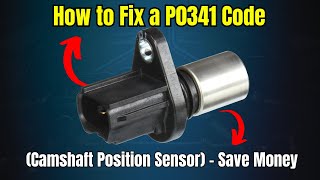
Technical definition: The SAE/OBD-II definition is "Camshaft Position Sensor 'A' Circuit Range/Performance (Bank 1 or Single Sensor)". 🎬 Watch: A deep dive into P0341 causes and common fixes. The PCM sets this code when the camshaft position sensor signal falls outside the expected range or loses synchronization with the crankshaft position sensor for a specific number of engine revolutions.
Can I Drive With P0341?
Yes, But With Caution. You can drive temporarily, but expect hard starting, stalling, and poor acceleration. Stop driving within 50 miles. If the code stems from a timing issue causing misfires, unburnt fuel enters the exhaust and destroys the catalytic converter, adding an $800-$2,500 repair. Ignoring the code leads to a no-start condition or catastrophic engine damage if the timing chain fails.
Common Causes

- Faulty Camshaft Position Sensor (CMP) (Very Common) — The sensor is the most frequent culprit. Internal components fail from extreme heat cycles, or oil contamination breaches the housing, generating erratic signals.
- Low or Dirty Engine Oil (Very Common) — Low or sludged engine oil starves the hydraulic Variable Valve Timing (VVT) system. This causes VVT solenoids and phasers to stick, creating a physical cam/crank timing discrepancy that triggers P0341.
- Stretched or Slipped Timing Chain/Belt (Common) — A stretched timing chain or slipped belt physically misaligns the camshaft. The computer detects this mechanical timing failure immediately. This plagues high-mileage Honda K-series and VW 2.0T engines. 🎬 See how to diagnose Honda-specific camshaft phase issues.
- Faulty Variable Valve Timing (VVT) Solenoid or Phaser (Common) — A stuck VVT solenoid (oil control valve) or shattered cam phaser physically alters camshaft timing. The sensor accurately reports this mechanical failure as an out-of-range condition.
- Wiring or Connector Issues (Common) — Heat, vibration, and oil leaks degrade the sensor's wiring harness and connector. Corroded pins or frayed wires sever the signal to the PCM. GM trucks frequently suffer from this due to poor factory harness routing.
- Weak Battery or Faulty Starter (Less Common) — A weak battery or failing starter drops system voltage significantly during cranking. The PCM interprets the resulting weak sensor signal as a performance fault, setting a false P0341 code before the engine starts.
- Damaged Reluctor Wheel/Tone Ring (Less Common) — The sensor reads a toothed wheel (reluctor) on the camshaft. A bent, debris-covered, or misaligned wheel prevents the sensor from capturing a clean reading.
- Incorrect Sensor Air Gap (Rare) — On specific engines (like the Subaru FB series), the physical distance between the sensor and the reluctor ring must remain within 0.5mm - 1.5mm. An incorrect gap generates a weak signal, requiring a factory shim to fix.
- Electrical Interference (Rare) — High-resistance secondary ignition components (old spark plugs or failing ignition modules) create electrical noise. This interference corrupts the camshaft sensor signal on older GM V6 and Jaguar engines.
- Failing Engine Control Module (ECM/PCM) (Very Rare) — The vehicle's main computer fails and misinterprets a perfect signal from a healthy sensor. Rule out all other mechanical and electrical possibilities before replacing the PCM.
Symptoms

- Check Engine Light is On — The PCM illuminates the malfunction indicator lamp immediately upon detecting the timing discrepancy.
- Extended Cranking or No-Start — The engine cranks for 5-10 seconds before starting, or refuses to start entirely, because the computer cannot determine camshaft position to time fuel and spark.
- Rough Idle and Stalling — The engine runs unevenly, shakes violently, or stalls unexpectedly when stopped in traffic.
- Engine Misfires and Hesitation — Disrupted ignition timing causes the engine to stumble or shudder during acceleration, often triggering secondary misfire codes (P0300-P0308).
- Reduced Power (Limp Mode) — The vehicle intentionally limits engine power and RPMs to prevent catastrophic internal damage.
Diagnostic Flowchart
Tap your situation to follow the diagnostic path that matches what you're seeing on this code.
Common Fixes & Costs
- Replace Camshaft Position Sensor — Parts: $30-$120, Labor: $80-$150, ~0.5 hr book time (DIY)
- Replace Variable Valve Timing (VVT) Solenoid — Parts: $50-$200, Labor: $100-$200, ~1 hr book time (DIY)
- Repair Wiring or Connector — Parts: $10-$50, Labor: $150-$400, ~2.5 hr book time (Intermediate)
- Replace Timing Chain Tensioner — Parts: $50-$150, Labor: $400-$800, ~4 hr book time (Advanced)
- Replace Timing Chain, Tensioner, and Guides — Parts: $200-$800, Labor: $1,200-$2,500, ~11 hr book time (Professional)
DIY vs Professional
- Replace Camshaft Position Sensor — Beginner:
Tools: Basic socket set (8mm or 10mm), ratchet, flathead screwdriver, torque wrench, shop towel. - Replace VVT Solenoid — Beginner:
Tools: Socket set, ratchet, torque wrench, pick tool. - Repair Wiring or Connector — Beginner:
Tools: Multimeter, wire strippers, crimpers, heat shrink tubing, soldering iron, replacement pigtail. - Replace Timing Chain, Tensioner, and Guides — Beginner:
Tools: Large socket set, breaker bars, harmonic balancer puller, torque wrenches, engine-specific timing locking tools.
Used vs. New Parts: Buying Guide
When a used part is worth it: Never buy a used camshaft position sensor. It is an inexpensive, critical electronic component. The minimal savings do not justify the high risk of premature failure and repeated labor.
Donor-vehicle mileage cap: roughly under 40000 miles for the part to have meaningful remaining life.
Donor quality checklist:
- Source from a reputable recycler that tests electronic components.
- Verify the part number is an exact match.
- Avoid parts from high-mileage donor vehicles.
Decision logic:
- If A new OEM or high-quality aftermarket sensor costs under $150. → Buy new. The reliability and warranty justify the cost.
- If The vehicle is over 20 years old and the part is discontinued. → A tested, low-mileage used part is your only option.
Warranty tradeoff: Used sensors carry a 30-90 day parts-only warranty. New aftermarket sensors offer 1-year to lifetime warranties, while OEM parts carry a 1-2 year warranty.
Worst-case if a used part fails: $150-$300 if a used sensor fails, requiring repeat labor and the purchase of a new sensor.
What Happens If You Wait — Timeline
- 0-1 month: Check Engine Light illuminates with intermittent symptoms. Driving is possible but not recommended. (MPG impact: 0-5%% · Added cost: $0)
- 1-3 months: Symptoms become consistent. You experience hard starting, rough idle, and hesitation. Fuel economy drops visibly. (MPG impact: 5-15%% · Added cost: $50-$200 in wasted fuel and potential towing.)
- 3-6 months: Engine misfires begin. Unburnt fuel overheats the catalytic converter. A rattling noise from a loose timing chain becomes obvious. (MPG impact: 10-20%% · Added cost: $1,200-$2,800 for catalytic converter replacement.)
- 6+ months: Catastrophic failure occurs. A stretched timing chain jumps a tooth, causing pistons to smash into open valves. The engine is destroyed. (MPG impact: N/A (Vehicle undrivable)% · Added cost: $4,000-$8,000+ for engine replacement.)
Cost of Not Fixing It
- Immediate (0-1 month): Poor drivability, hard starting, stalling, and a 5-15% drop in fuel economy. You risk being stranded by a no-start condition. (Added cost: $50-$150 in wasted fuel and potential towing costs.)
- Short-Term (1-6 months): Unburnt fuel from misfires enters the exhaust and melts the catalytic converter substrate. (Added cost: $1,200-$2,800 for catalytic converter replacement.)
- Long-Term (6+ months): A stretched timing chain jumps multiple teeth or breaks, causing pistons to smash into open valves (catastrophic engine damage). (Added cost: $4,000-$8,000+ for a used or rebuilt engine replacement.)
Diagnosis Steps

- Read Codes & Check TSBs
Use an OBD-II scanner to confirm P0341. Look for timing codes (P0016) or crankshaft codes (P0335), which indicate mechanical failure rather than a bad sensor. Search online for Technical Service Bulletins (TSBs) for your specific year/make/model, as software updates or shims often fix this code.
Tools: ['OBD-II Scanner', 'Smartphone or Computer'] (Beginner) - Inspect Engine Oil Level and Condition
Check the engine oil dipstick. Low or sludged oil is the primary cause of Variable Valve Timing (VVT) failures that trigger P0341. Top off or change the oil before replacing any electronic parts.
Tools: ['Dipstick', 'Shop Towel'] (Beginner) - [Pro Tip] Analyze Live Scan Tool Data
Monitor 'Cam/Crank Sync' status (must be 'Yes'). Monitor 'Desired vs. Actual' camshaft angle for Bank 1. If the 'Cam Error' PID deviates by more than 5 degrees at idle, you have a mechanical timing or VVT problem, not a faulty sensor.
Tools: ['Advanced OBD-II Scan Tool with Live Data'] (Advanced) - Visually Inspect Sensor and Wiring
Locate the Bank 1 Camshaft Position Sensor. Unplug it and check for oil inside the connector, corroded pins, or melted wires. Trace the harness back to the main loom, looking for chafe marks against hot exhaust shields or sharp brackets.
Tools: ['Flashlight'] (Beginner) - [Pro Tip] Perform a 'Swap-tronics' Test
If your engine has identical Bank 1 and Bank 2 camshaft sensors, swap their positions. Clear the codes. If the code moves to P0346 (Bank 2), the sensor is definitively dead. If P0341 remains, the sensor is fine and the issue is wiring or mechanical timing.
Tools: ['Basic Socket Set', 'Masking Tape'] (Intermediate) - Test Sensor Circuit Voltage
Turn the key ON (engine off). Back-probe the 3-wire sensor connector with a multimeter. You must see a 5V reference from the PCM, a ground wire with less than 0.1V, and a 5V signal wire. Missing voltage indicates a broken wire or dead PCM.
Tools: ['Multimeter', 'Back-probe kit', 'Vehicle-specific wiring diagram'] (Intermediate) - Analyze Sensor Waveform
Connect an oscilloscope to the sensor's signal and ground wires while the engine runs. A healthy Hall-effect sensor produces a sharp 0V to 5V square wave. Rounded peaks, flattened spikes, or a flatline confirm internal sensor failure.
Tools: ['Oscilloscope', 'Back-probe kit'] (Advanced) - Test VVT Solenoid Resistance
Disconnect the VVT solenoid (Oil Control Valve) and measure resistance across its pins. A healthy solenoid typically reads 7-15 Ohms. A reading of zero (shorted) or infinite (open loop) means the solenoid is electrically dead and must be replaced.
Tools: ['Multimeter', 'Vehicle-specific service manual'] (Intermediate) - Inspect Mechanical Timing Components
If the sensor, wiring, and VVT system pass all tests, the timing chain is stretched or the tensioner has failed. Remove the valve cover or timing cover to measure chain slack and verify alignment marks.
Tools: ['Hand tools', 'Engine-specific timing alignment tools'] (Professional)
When This Code Triggers (Freeze-Frame Conditions)
- Engine State: Running or Extended Crank (Sets while the engine is running or during a prolonged, difficult starting sequence.)
- Engine RPM: 600-2500 RPM (Triggers at idle or during steady-state cruising and light acceleration below 2,500 RPM.)
- Engine Load: 20-60% (Occurs under light to moderate engine load, such as climbing a slight grade or maintaining highway speed.)
- Engine Coolant Temp: Variable (Appears on a cold engine (indicating oil viscosity/VVT issues) or a fully warmed-up engine (indicating heat-soaked sensor electronics failing).)
Related Codes
- P0340 — P0340 indicates a complete loss of signal (a dead circuit), while P0341 indicates the signal exists but is irrational or out of sync (a performance fault).
- P0335 — Indicates a Crankshaft Position Sensor fault. Seeing both codes together points to a shared wiring harness short or a catastrophic mechanical timing failure throwing both readings off.
- P0016 / P0017 — Directly indicates a Camshaft/Crankshaft Correlation error. If present with P0341, you have a guaranteed mechanical timing issue (stretched chain, jumped tooth, shattered phaser).
- P0300-P0308 — Random or specific cylinder misfire codes. Incorrect camshaft timing disrupts ignition, directly causing the engine to misfire. P0341 is the root cause; the misfire is the symptom.
Climate & Environmental Factors
- Cold Temperatures: Cold weather thickens engine oil, slowing the hydraulic reaction time of the VVT system. This delay causes a temporary mismatch between desired and actual camshaft position on startup, triggering P0341. Weak batteries also drop voltage significantly during cold cranks, generating false codes.
- High Humidity / Road Salt: Moisture and road salt accelerate corrosion on the sensor's electrical connector pins and harness grounds. This corrosion increases circuit resistance, corrupting the 5V signal and triggering the code.
How to Talk to a Mechanic About This Code
Say this: "I have a P0341 code and need a diagnostic. Please check the live data for cam/crank correlation and verify any related TSBs before recommending parts."
This proves you understand the code's complexity. It forces the mechanic to perform a proper live-data diagnosis rather than blindly swapping the cheapest part.
Avoid saying:
- 'Just replace the camshaft sensor.'
- 'My check engine light is on, can you look at it?'
- 'I think it's the timing chain.'
Questions to ask before authorizing the repair:
- Did you check the live data for cam/crank sync or cam angle error?
- If you recommend a timing chain, what is the specific evidence of failure (e.g., tensioner extension, chain stretch measurement)?
- Did you check for Technical Service Bulletins (TSBs) related to P0341 for my specific vehicle?
- Will you provide a written warranty for the parts and labor?
Where to Take It: Dealer vs Independent vs Chain
- Dealer:
Best for: Vehicles under factory warranty., Vehicles with complex manufacturer-specific TSBs (e.g., Subaru ECM updates, VW timing chain tensioners)., Diagnostics requiring proprietary factory software.
Downsides: Labor rates are typically 50% to 100% higher than independent shops., Service advisors frequently recommend expensive wholesale repairs over targeted fixes. (Typical cost: +50% vs. baseline) - Independent Shop:
Best fit for most scenarios. A skilled independent shop effectively diagnoses the full range of P0341 causes at a much lower cost than a dealer.
Best for: Out-of-warranty vehicles where cost is a major factor., Diagnosing common failures like bad sensors, wiring issues, or standard timing chain replacements.
Downsides: Diagnostic skill varies widely; you must vet shops for ASE certification and positive reviews., May lack access to the latest factory software updates. (Typical cost: +0% vs. baseline) - Chain Shop:
Avoid for initial diagnosis. They lack the expertise to differentiate a sensor fault from a catastrophic mechanical timing problem.
Best for: Simple sensor replacement only after you have definitively confirmed the sensor is the fault.
Downsides: Technician skill is generally lower., High pressure to upsell unnecessary fluid flushes., Not equipped or trained for in-depth mechanical diagnostics like timing chain inspections. (Typical cost: -10% vs. baseline)
When to Walk Away From the Repair
If the estimated repair cost exceeds 40-50% of the car's current private-party value, seriously consider selling or trading in the vehicle.
- Car worth $4000, fix is $2500: Walk away. A $2,500 timing chain job on a $4,000 car is a poor financial investment.
- Car worth $12000, fix is $300: Fix it. A $300 sensor replacement is well below the threshold and restores the car's value.
- Car worth $2000, fix is $1500: Walk away. The repair cost is 75% of the car's value.
What Scan Tool You Need for This Code
Minimum: A scanner that reads and graphs live data, specifically Cam/Crank PIDs. A basic code reader is useless for this diagnosis.
A cheap reader only displays 'P0341'. It cannot show if the sensor signal drops out, if the cam and crank are out of sync, or what the VVT system is doing. You cannot distinguish a $50 sensor problem from a $2,500 timing chain problem.
Budget: BlueDriver Pro (~$99) — Connects to your smartphone and graphs live data for the camshaft and crankshaft sensors, allowing you to spot signal dropouts.
Mid-range: Foxwell NT510 Elite (~$180) — Offers manufacturer-specific diagnostics and bidirectional controls. You can command the VVT solenoids on and off to test their function.
Professional: Autel MaxiCOM MK808S (~$450) — A professional tablet scanner with full bidirectional controls, extensive live data, and the ability to perform factory cam/crank relearn procedures.
Rent vs buy: Auto parts stores loan basic scanners, but they lack the live data capability needed for P0341. Buying a tool like the BlueDriver Pro is a mandatory investment for DIY diagnosis.
How to Clear the Code After You Fix It
- Use an OBD-II scan tool to clear the P0341 code.
- Ensure the fuel tank is between 30% and 70% full.
- Perform a complete OBD-II drive cycle to allow readiness monitors to run.
Drive cycle (~30 minutes): Start with a cold engine (parked overnight). Let it idle for 3 minutes. Drive in stop-and-go city traffic for 10 minutes. Accelerate to highway speed (55-60 mph) and maintain a steady speed for 10 minutes. Safely coast to 20 mph without braking, then come to a complete stop. Park and shut off the engine.
Readiness monitors affected: Comprehensive Component Monitor, Misfire Monitor, Catalyst Monitor, Oxygen (O2) Sensor Monitor
Before emissions retest: drive at least 50 miles to fully set monitors.
Watch out for:
- Disconnecting the battery clears the code but resets all readiness monitors, guaranteeing an automatic emissions test failure.
- The code returns immediately upon startup if the mechanical timing remains out of sync.
- Failing to start with a truly cold engine prevents the O2 heater and catalyst monitors from initiating.
Will This Fail Emissions / State Inspection?
Yes — this code typically fails an OBD-II emissions inspection.
- California: An active P0341 code triggers an automatic Smog Check failure. You must complete a full drive cycle to set all OBD readiness monitors after the repair.
- New York: The NYS DMV inspection includes an OBD-II scan. The Check Engine Light and P0341 code result in an immediate emissions failure.
- Texas: In the 17 counties requiring emissions testing, a vehicle with P0341 fails the OBD portion of the annual safety inspection.
Most Commonly Affected Vehicles

- Honda Accord, CR-V, Civic, Element (K-Series engines) (2002-2014) — Extremely common for P0341 to indicate a stretched timing chain. A rattling noise on cold start confirms this. The VTC actuator also fails frequently.
- Volkswagen/Audi Golf, Jetta, Passat, A4, Q5 (2.0T TSI/TFSI) (2008-2015) — Notorious for timing chain tensioner failure. A failed tensioner introduces chain slack, throwing camshaft timing out of sync. Investigate the tensioner before replacing sensors.
- General Motors Equinox, Terrain, Malibu (2.4L Ecotec) (2010-2017) — Plagued by excessive timing chain stretch and guide failure, directly causing cam/crank correlation faults. High oil consumption starves the timing components.
- Ford F-150, Explorer, Mustang (5.4L 3V and 4.6L 3V V8) (2004-2010) — P0341 is rarely a bad sensor on these engines. It strongly indicates failing cam phasers, worn chain guides, or low oil pressure affecting the VCT system. A diesel-like knock at idle is the primary clue.
- Nissan Altima, Rogue, Sentra (2.5L QR25DE) (2007-2018) — Commonly associated with stretched timing chains on high-mileage engines. Always check the sensor circuit fuse first, as a blown fuse is a simple fix.
- Hyundai/Kia Sonata, Optima, Santa Fe, Sorento (2.0L & 2.4L Theta II) (2006-2016) — Requires thorough diagnosis to differentiate a simple sensor fault from widespread timing chain, tensioner, and guide failures common to the Theta II family.
- Chrysler/Dodge/Jeep Various models (3.6L Pentastar V6) (2011-2016) — Suffers from failing camshaft phasers and rocker arms. A known left cylinder head defect led to an extended warranty (X69/ZEA) that addresses the root causes of this code.
- Subaru Impreza, Outback, Forester, Crosstrek (FB/FA engines) (2011-2015) — TSB #11-137-14 fixes false P0341 codes with an ECM software update. TSB #11-130-13R fixes incorrect sensor air gaps using a specific factory shim (p/n 10130AA060).
- BMW 3-Series, 5-Series (N52/N54/N55 engines) (2006-2013) — Often appears after valve cover gasket replacements due to pinched wires. Also indicates failing VANOS solenoids caused by neglected oil changes.
Manufacturer-Specific Notes
- Honda/Acura: A stretched timing chain causes P0341 on K-Series engines, accompanied by a cold-start rattle. A stuck or contaminated VTC solenoid also triggers this code.
- Volkswagen/Audi: On 2.0T TSI engines, suspect the timing chain tensioner before the sensor. VW released an updated tensioner (p/n 06K109467K) to fix a massive design flaw.
- General Motors: Check for chafed wiring harnesses near the front of the engine on V8 trucks (TSB #PIP5724). On 3.0L diesels (LM2), a bent exciter wheel causes the code (TSB #PIP5822B).
- Subaru: On 2011-2014 FB engines, TSB #11-137-14 requires an ECM software update to fix false codes. TSB #11-130-13R requires installing a specific shim to correct the sensor air gap.
- Chrysler/Dodge/Ram: Requires a 'cam/crank relearn procedure' using a bidirectional scan tool after replacing the sensor. Ram Cummins diesels require an ECM re-flash for false P0341 codes.
Real Owner Stories
2014 Honda CR-V with 260k miles - The Classic Timing Chain Failure
Check engine light with P0341, sluggish acceleration, and disabled cruise control.
What they tried:
- Replaced the camshaft position sensor as the cheapest option. The code and symptoms remained.
Outcome: A professional diagnosis revealed a stretched timing chain that jumped three teeth. Due to high mileage and internal wear, the owner opted for a complete engine replacement.
Lesson: On high-mileage Honda K-series engines, P0341 frequently indicates a stretched timing chain. If you experience performance symptoms, suspect a mechanical timing issue rather than a sensor.
2012 VW CC 2.0T TSI - The 'Check Your Oil' Fix
P0341 appeared months after a major cylinder head rebuild. The car ran fine, but the check engine light remained on.
What they tried:
- The mechanic initially suspected a faulty sensor or a botched previous repair.
Outcome: The mechanic checked the dipstick and found the oil level critically low. Topping off the oil and clearing the code permanently fixed the issue. Low oil pressure starved the VVT system.
Lesson: Always check the engine oil first. Low oil is a primary cause for VVT-related performance codes because the system relies entirely on hydraulic pressure.
2010 Ford F-150 5.4L 3V - It's Never the Sensor
Vehicle displayed P0341 and P0346, suffered long cranking times, and stumbled at idle when hot.
What they tried:
- The owner correctly suspected the Variable Camshaft Timing (VCT) system rather than the sensors.
Outcome: Replacing both faulty VVT solenoids fixed the hard starting and cleared the codes. On these Ford engines, this code is a hallmark of failing solenoids or cam phasers.
Lesson: On Ford 5.4L and 4.6L 3V engines, do not replace the sensors. Investigate the VVT solenoids and cam phasers, especially if you hear a diesel-like rattling at idle.
High-Mileage GM (250k miles) - The Electrical Gremlin
Intermittent P0341 code accompanied by random poor idle, hesitation, and stalling when hot.
What they tried:
- Replaced spark plugs, wires, ignition coils, and the crankshaft sensor with no improvement.
Outcome: Replacing the Ignition Control Module (ICM) solved the P0341 code. The failing ICM created electrical noise that the PCM misinterpreted as a cam sensor fault.
Lesson: On high-mileage GM vehicles, electrical interference from failing ignition components or chafed wiring triggers false sensor codes. Look for sources of electrical noise if the sensor tests good.
How to Prevent This Code From Triggering
- Perform regular oil changes with high-quality synthetic oil. (Every 5,000 to 7,500 miles.) — Clean oil lubricates the timing chain and provides the hydraulic pressure required by the VVT system. This prevents chain stretch and VVT solenoid sludge.
- Use a premium oil filter. (Every oil change.) — High-quality filters trap metal particles that act as abrasives on timing chain pins and clog microscopic VVT solenoid passages.
- Avoid aggressive driving on a cold engine. (Daily habit.) — Hard acceleration before the oil reaches operating temperature puts massive stress on the timing chain, guides, and tensioner, accelerating wear.
- Combine short trips to allow the engine to fully warm up. (Weekly.) — Trips under 15 minutes prevent oil from burning off accumulated moisture. This condensation creates engine sludge, which destroys VVT systems.
- Inspect and protect engine bay wiring harnesses. (Every 1-2 years.) — Engine heat makes plastic conduit brittle. Wrapping chafe points with high-temperature cloth tape prevents wires from shorting out against the engine block.
Frequently Asked Questions
What is the most common misdiagnosis for P0341?
The biggest mistake is immediately replacing the camshaft sensor without further diagnosis. Common pitfalls include ignoring timing correlation codes (P0016), overlooking damaged wiring, and forgetting to check the engine oil. Low or dirty oil is a primary cause of VVT system faults that trigger P0341.
Can a low battery or bad starter cause P0341?
Yes, a weak battery or faulty starter drops system voltage significantly during engine cranking. The PCM interprets this resulting weak signal from the camshaft sensor as a performance fault, setting a false P0341 code. Test the starting and charging system if the code only appears during a difficult start.
I just replaced my timing chain and now I have a P0341 code. What happened?
This guarantees the mechanical timing is incorrect. Being off by even a single tooth on a timing gear throws the cam and crank signals out of sync. You must disassemble the front of the engine to re-verify and correct the alignment of all timing marks.
Can I just clean a camshaft position sensor?
Cleaning a magnetic sensor covered in metallic debris provides a temporary fix, but most modern Hall-effect sensors are sealed units that fail internally. Cleaning the outside of a sealed unit has no effect. If oil contamination caused the failure, repair the leak and replace the sensor.
What is the difference between Camshaft Sensor 'A' and 'B'?
On Dual Overhead Cam (DOHC) engines, Sensor 'A' refers to the intake camshaft position sensor. Sensor 'B' refers to the exhaust camshaft position sensor.
Is P0341 the same as P0340?
No, they indicate different failures. P0340 means the computer receives zero signal from the sensor due to a dead circuit. P0341 means the signal exists but is irrational, erratic, or out of sync with the crankshaft.
What does 'Bank 1' mean?
On 'V' shaped engines (V6, V8), Bank 1 is the side containing cylinder #1. Inline engines (4-cylinder, straight-6) only have one bank, making 'Bank 1' the default.
How long does it take to replace a camshaft position sensor?
Replacing a top-mounted sensor takes 15 to 30 minutes using basic hand tools. However, sensors buried under intake manifolds or rear firewalls require 1 to 2 hours of labor.
Key Takeaways
- P0341 indicates the engine computer detects an erratic or out-of-sync signal from the Bank 1 camshaft position sensor, causing extended cranking and stalling.
- Check the engine oil level immediately; low or dirty oil starves the Variable Valve Timing (VVT) system and triggers this code on over 40% of modern engines.
- Do not blindly replace the sensor if P0016 or P0017 codes are also present, as this combination guarantees a mechanical timing chain failure requiring a $1,500+ repair.
- Stop driving the vehicle within 50 miles to prevent unburnt fuel from destroying the catalytic converter, which adds a $1,200 to $2,800 replacement cost.
Helpful Videos



The information in this article is provided for general reference and educational purposes only. Vehicle specifications, procedures, and part compatibility can vary by production date, trim level, and region. Always consult your vehicle's factory service manual and verify part numbers before purchasing or performing repairs. Safety-critical components such as airbags, seat belts, and braking systems should be installed by a qualified professional.
- 🎬 Helpful Videos
- What Does P0341 Mean?
- Can I Drive With P0341?
- Common Causes
- Symptoms
- Diagnostic Flowchart
- Common Fixes & Costs
- DIY vs Professional
- Used vs. New Parts: Buying Guide
- What Happens If You Wait — Timeline
- Cost of Not Fixing It
- Diagnosis Steps
- When This Code Triggers (Freeze-Frame Conditions)
- Related Codes
- Climate & Environmental Factors
- How to Talk to a Mechanic About This Code
- Where to Take It: Dealer vs Independent vs Chain
- When to Walk Away From the Repair
- What Scan Tool You Need for This Code
- How to Clear the Code After You Fix It
- Will This Fail Emissions / State Inspection?
- Most Commonly Affected Vehicles
- Manufacturer-Specific Notes
- Real Owner Stories
- 2014 Honda CR-V with 260k miles - The Classic Timing Chain Failure
- 2012 VW CC 2.0T TSI - The 'Check Your Oil' Fix
- 2010 Ford F-150 5.4L 3V - It's Never the Sensor
- High-Mileage GM (250k miles) - The Electrical Gremlin
- How to Prevent This Code From Triggering
- Frequently Asked Questions
- What is the most common misdiagnosis for P0341?
- Can a low battery or bad starter cause P0341?
- I just replaced my timing chain and now I have a P0341 code. What happened?
- Can I just clean a camshaft position sensor?
- What is the difference between Camshaft Sensor 'A' and 'B'?
- Is P0341 the same as P0340?
- What does 'Bank 1' mean?
- How long does it take to replace a camshaft position sensor?
- Key Takeaways
- 🎟️ Get 5% Off