

OBD-II Code P0346: Camshaft Position Sensor 'A' Circuit Range/Performance (Bank 2)
What P0346 means, why it triggers, and how to fix it
- P0346 flags a signal error from the Bank 2 camshaft position sensor, directly causing engine stalling, hard starts, and up to a 15% drop in fuel economy.
- Check your engine oil before buying parts; dirty or low oil disrupts Variable Valve Timing (VVT) systems and triggers this code in over 30% of cases.
- Do not blindly replace the sensor on Ford 5.4L or GM 3.6L engines, where P0346 almost always points to failing VCT solenoids or a stretched timing chain.
- Stop driving if you experience misfires with this code; unburnt fuel destroys your catalytic converter within months, turning a $150 sensor swap into a $2,500 repair.
What Does P0346 Mean?

P0346 means the Powertrain Control Module (PCM) receives an incorrect, intermittent, or irrational signal from the Bank 2 camshaft position sensor. This sensor dictates the exact rotational position of the camshaft, which controls fuel injection and ignition spark timing. Bank 2 is the engine side opposite cylinder #1.
Technical definition: SAE/OBD-II defines P0346 as "Camshaft Position Sensor 'A' Circuit Range/Performance (Bank 2)". The PCM detects the Bank 2 Camshaft Position Sensor 'A' signal falls outside its expected range, drops intermittently, or fails to correlate with the crankshaft position sensor signal.
Can I Drive With P0346?
Yes, But With Caution. You can drive for short distances, but it is highly discouraged. The engine stalls without warning, creating a major safety risk, or fails to restart, leaving you stranded. Continuing to drive with misfires sends unburnt fuel into the exhaust, destroying the catalytic converter—a repair costing between $800 and $2,500.
Common Causes

- Faulty Bank 2 Camshaft Position Sensor (Very Common) — The sensor fails internally from heat cycles, vibration, or age, preventing accurate signal transmission. This accounts for 60-70% of isolated P0346 cases.
- Low or Dirty Engine Oil (Common) — On engines with Variable Valve Timing (VVT), oil pressure adjusts camshaft position. Low or dirty oil prevents cam phasers from responding, creating a mechanical mismatch that triggers P0346.
- Wiring or Connector Issues (Common) — The wiring harness shorts, frays, or suffers pin corrosion. Valve cover oil leaks frequently saturate the connector and degrade wire insulation.
- Timing Chain or Belt Problems (Less Common) — A stretched timing chain, broken guide, or skipped belt tooth destroys synchronization between the camshaft and crankshaft. This mechanical misalignment forces the sensor to send a performance fault signal.
- Failing Alternator or Weak Battery (Less Common) — A failing alternator diode injects excessive AC voltage (electrical noise) into the system. This interference disrupts the sensitive Hall-effect sensor signal, setting a false P0346.
- Damaged Camshaft Reluctor Wheel (Less Common) — The sensor reads a notched camshaft wheel. Bent teeth, cracks, or heavy sludge prevent the sensor from generating an accurate square wave.
- Improper Sensor Installation or Air Gap (Rare) — An improperly installed replacement sensor leaves an incorrect air gap between the tip and reluctor wheel. Tilted or unseated sensors produce weak signals.
- Faulty Crankshaft Position Sensor (Rare) — The PCM constantly compares camshaft and crankshaft signals. An erratic crankshaft sensor signal tricks the PCM into flagging the camshaft sensor.
- Faulty Powertrain Control Module (PCM) (Very Rare) — The vehicle's main computer suffers hardware failure or software glitches, misinterpreting a healthy sensor signal. Rule out all other causes before replacing the PCM.
Symptoms

- Check Engine Light is On — The Check Engine Light illuminates immediately upon the PCM detecting the fault.
- Engine Stalling — The engine stalls unexpectedly at low speeds or idle, creating a severe traffic hazard.
- Hard Start or No Start — The engine cranks for an extended period before starting, or refuses to fire entirely.
- Rough Idle and Poor Performance — The vehicle idles unevenly, hesitates, surges, and lacks power during acceleration.
- Engine Misfires — Incorrect cam timing data prevents the PCM from timing ignition, causing misfires felt as heavy shudders.
- Reduced Fuel Economy — Suboptimal fuel and ignition timing forces the engine to burn excess fuel, dropping efficiency by up to 15%.
Diagnostic Flowchart

Tap your situation to follow the diagnostic path that matches what you're seeing on this code.
Common Fixes & Costs
- Perform an Oil and Filter Change — Parts: $40-$90, Labor: $0-$50, ~0.5 hr book time (Beginner)
- Replace Camshaft Position Sensor (Bank 2)
— Parts: $25-$100, Labor: $50-$150, ~0.9 hr book time
(DIY)
Ford F-150 5.4L (2004-2008): OEM 1W7Z-6B288-AB (Alt: Bosch 0232103052, NTK EC0091)
Audi A6 4.2L (2002-2006): OEM 06C905163B (Alt: Bosch 0232103037, Hitachi CPS0088)
Chevy Traverse 3.6L (2009-2017): OEM 12684186 (Alt: ACDelco 12684186, Standard Motor Products PC908) - Repair Wiring or Replace Connector — Parts: $10-$50, Labor: $100-$250, ~1.5 hr book time (Intermediate)
- Replace VCT Solenoids
— Parts: $50-$150, Labor: $100-$300, ~1.5 hr book time
(Intermediate)
Ford F-150 5.4L 3V: OEM 8L3Z-6M280-B (Alt: Dorman 917-200, Motorcraft 8L3Z6M280B) - Replace Timing Chain and Related Components — Parts: $300-$800, Labor: $600-$1500+, ~8.5 hr book time (Professional)
DIY vs Professional
- Perform an Oil and Filter Change — Beginner: Yes.
Tools: Wrench for drain plug, oil filter wrench, drain pan, funnel. - Replace Camshaft Position Sensor — Beginner: Yes, if accessible.
Tools: Basic socket set or wrenches. - Repair Wiring or Replace Connector — Beginner: No. Requires intermediate skills.
Tools: Multimeter, wire strippers, crimpers, heat shrink tubing, soldering iron. - Replace VCT Solenoids — Beginner: No. Stop DIY and go to a shop.
Tools: Socket set, torque wrench, pick tool. - Replace Timing Chain — Beginner: No. Professional level only.
Tools: Extensive. Engine-specific timing holding tools, harmonic balancer puller, torque wrenches.
Used vs. New Parts: Buying Guide
When a used part is worth it: Never buy a used camshaft position sensor. The $15 savings is erased by the labor cost of replacing it a second time when it fails.
Donor-vehicle mileage cap: roughly under 50000 miles for the part to have meaningful remaining life.
Donor quality checklist:
- Source from a reputable auto recycler that provides a warranty and donor vehicle mileage.
- Visually inspect the used sensor's connector for corrosion and the housing for cracks.
Decision logic:
- If The part is under $100 new. → Buy an OEM or reputable aftermarket brand (Bosch, Denso, NTK). The reliability and warranty justify the cost.
- If The budget is extremely tight. → Buy a new aftermarket part, never used.
Warranty tradeoff: Used sensors carry a 30-90 day warranty. New aftermarket parts offer 1-year to limited lifetime warranties. OEM parts offer 1-2 year warranties.
Worst-case if a used part fails: 200-400, representing the cost of repeat diagnosis and labor if the used sensor fails outside its short warranty period.
What Happens If You Wait — Timeline
- 0-1 month: Check Engine Light on. Intermittent hard starting or a slightly rough idle when cold. No other major symptoms. (MPG impact: 0-5%% · Added cost: $0-40 in wasted fuel)
- 1-3 months: Symptoms become consistent. Engine hesitates during acceleration. Intermittent stalling at low speeds poses a safety risk. Fuel economy drops noticeably. (MPG impact: 5-15%% · Added cost: $50-150 in wasted fuel)
- 3-6 months: Engine runs poorly constantly. Frequent misfires cause heavy shudders. Unburnt fuel overheats and damages the catalytic converter substrate. (MPG impact: 15-25%% · Added cost: $800-2,500 (Catalytic converter replacement is now likely needed))
- 6+ months: Catastrophic failure occurs. A stretched timing chain snaps, causing pistons to hit valves and destroying the engine. The catalytic converter clogs completely, causing a no-start condition. (MPG impact: >25%% · Added cost: $4,000-8,000+ (Cost of catalytic converter plus complete engine replacement))
Cost of Not Fixing It
- 0-1 month: Reduced fuel economy (5-15% drop), intermittent stalling, and hard starting. Increased safety risk due to potential stalling in traffic. (Added cost: 50-150)
- 1-6 months: Persistent misfires from incorrect timing cause unburnt fuel to enter the exhaust, overheating and destroying the catalytic converter. (Added cost: 1200-2800)
- 6+ months: If caused by a mechanical issue like a stretched timing chain, continued operation snaps the chain, causing catastrophic engine damage (pistons hitting valves). (Added cost: 4000-8000)
Diagnosis Steps
- Read Codes & Freeze Frame Data
Use an OBD-II scanner to confirm P0346 and check for related codes (P0341, P0022, P0345). Record freeze frame data to see engine conditions when the code set. Clear codes and test drive.
Tools: OBD-II Scanner (Beginner) - Check Engine Oil Level and Condition
Check the dipstick. Low or dirty oil disrupts Variable Valve Timing (VVT) systems, directly causing this code. Top off low oil; change sludgy oil immediately.
Tools: Dipstick, Shop Towel (Beginner) - Inspect Wiring and Connector
Locate the Bank 2 camshaft position sensor. Inspect the connector and harness for frayed wires, corrosion, or oil contamination. Wiggle the connector with the engine running to check for stalls.
Tools: Flashlight (Beginner) - Test Circuit Voltage
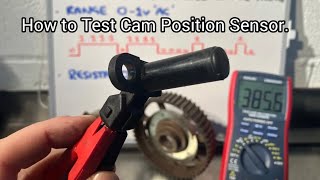
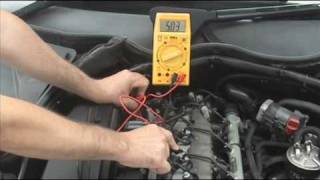
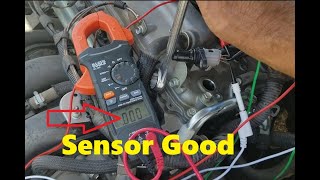
With the key on, engine off, and sensor unplugged, probe the connector. A 3-wire Hall-effect sensor requires 5V or 12V on the power wire, near 0V on ground, and often 5V on the signal wire. This confirms PCM power delivery.
Tools: Multimeter, Back-probe pins (Intermediate) - Test Sensor Signal Generation (Bench Test)
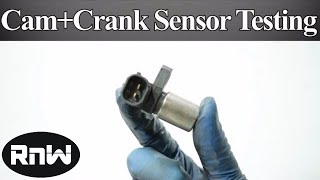
Remove the sensor. Connect a multimeter to the signal and ground pins. Pass a steel wrench across the sensor tip. The voltage must switch between 0V and 5V. No change means a dead sensor.
Tools: Multimeter, Steel Wrench (Intermediate) - Analyze Sensor Signal with an Oscilloscope
Connect an oscilloscope to the sensor's signal wire and ground. A healthy Hall-effect sensor produces a crisp square wave that scales with RPM. Spikes or dropouts indicate a failing sensor or electrical interference.
Tools: Oscilloscope, Back-probe pins (Professional) - Perform Cam/Crank Correlation Test
Graph Bank 2 camshaft and crankshaft position sensor data simultaneously using a dual-channel oscilloscope or advanced scan tool. Out-of-sync patterns confirm a mechanical timing issue like a stretched chain.
Tools: Advanced Bi-Directional Scan Tool, Oscilloscope (Professional) - Inspect Reluctor Wheel
Visually inspect the camshaft reluctor wheel for bent teeth, missing notches, or heavy sludge. Use a borescope through the sensor mounting hole to avoid removing the valve cover.
Tools: Borescope, Socket Set (Advanced)
When This Code Triggers (Freeze-Frame Conditions)
- Engine Coolant Temp: 180-200°F (Engine at full operating temperature.)
- RPM: 600-800 RPM (During idle, shortly after starting.)
- Engine Load: 20-40% (Under light load or steady cruise.)
- Vehicle Speed: 0-15 mph (Often triggers at low speeds or during initial acceleration.)
Related Codes
- P0341 — The identical code for Bank 1. Seeing both indicates a systemic engine problem like a stretched timing chain or low oil pressure, not an isolated sensor failure.
- P0345 — A hard electrical failure (no signal, short, or open circuit) for Bank 2. P0346 is a performance issue where a signal exists but is irrational or out of sync.
- P0347 / P0348 — Specific electrical faults. P0347 is a short to ground; P0348 is a short to voltage. P0346 flags performance, not a hard circuit break.
- P0022 — A mechanical timing code (Timing Over-Retarded). If paired with P0346, the root cause is mechanical. Focus on VCT solenoids, cam phasers, or timing chains.
Climate & Environmental Factors
- Extreme Temperatures: Extreme heat bakes plastic connectors and wire insulation, making them brittle and prone to the open circuits that trigger P0346.
- Rodent Damage: Rodents chew engine bay wiring harnesses, severing the camshaft sensor circuit.
How to Talk to a Mechanic About This Code
Say this: "I have a P0346 code. Please check the wiring, connector, and oil level before recommending a sensor replacement. If other timing codes are present, investigate the VCT system or timing chain."
This proves you expect a thorough diagnosis, preventing shops from performing a quick, incorrect part swap. It directs them to check the most common failure points first, saving diagnostic time.
Avoid saying:
- 'Just replace the camshaft sensor.'
- 'My check engine light is on, can you look at it?'
- 'I read online it's probably the sensor, so just do that.'
Questions to ask before authorizing the repair:
- Did you test the sensor's circuit for proper voltage and ground at the connector?
- Did you inspect the wiring harness for damage or oil contamination?
- If you are recommending a sensor replacement, what tests did you perform to rule out a wiring or mechanical timing issue?
- If the repair is for a timing chain or VCT solenoid, can you explain how you confirmed that was the root cause?
- Will you be using an OEM or a quality aftermarket part, and what is the warranty on the part and labor?
Where to Take It: Dealer vs Independent vs Chain
- Dealer:
Best for: Vehicles under powertrain warranty or covered by a TSB (e.g., GM 3.6L timing chains, Subaru ECU updates)., Complex, manufacturer-specific issues requiring proprietary diagnostic tools.
Downsides: Higher labor rates (1.5-2x vs. independent shops)., Inclined to replace entire assemblies rather than performing targeted wiring repairs. (Typical cost: +50% vs. baseline) - Independent Shop:
Best fit for most out-of-warranty vehicles. Experienced independent technicians diagnose electrical vs. mechanical issues accurately at lower labor rates.
Best for: Out-of-warranty vehicles where cost is a significant factor., Diagnosing issues that could be electrical, mechanical, or sensor-related., Vehicles with well-documented P0346 issues (like Ford 5.4L VCT solenoids).
Downsides: Shop quality and technician skill vary widely. Vet shops based on ASE certifications and brand experience. (Typical cost: +0% vs. baseline) - Chain Shop:
Acceptable for oil changes or battery tests. Avoid for comprehensive P0346 diagnosis or mechanical timing repairs.
Best for: Simple fixes like an oil change., Battery testing and replacement.
Downsides: Technician experience with complex diagnostics is inconsistent., Lacks advanced scan tools to diagnose mechanical timing issues or perform relearn procedures., Business model incentivizes quick parts replacement over in-depth diagnosis. (Typical cost: -10% vs. baseline)
When to Walk Away From the Repair
If the repair cost (like a timing chain) exceeds 50% of the car's Kelley Blue Book value, sell or trade the vehicle.
- Car worth $4000, fix is $2000: Borderline. This repair is 50% of the car's value. Get a second opinion before authorizing.
- Car worth $12000, fix is $1800: Fix it. The repair cost is only 15% of the vehicle's value.
- Car worth $2500, fix is $1500: Walk away. The repair is 60% of the car's value. It is not economically sensible to proceed.
What Scan Tool You Need for This Code

Minimum: A scanner must read codes, show freeze-frame data, and display live data PIDs for the camshaft and crankshaft sensors.
A basic $20 reader cannot show live sensor dropouts or perform the cam/crank relearn procedure required by GM and Chrysler.
Budget: BlueDriver Pro (~$100) — Connects via Bluetooth. Reads codes, provides freeze-frame data, and graphs live data from cam/crank sensors to diagnose signal dropouts.
Mid-range: Autel MaxiCOM MK808 / Foxwell NT510 Elite (~$300) — Offers bidirectional controls. Performs the 'Cam/Crank Relearn' procedure necessary to clear the code after replacing a sensor on GM and Chrysler vehicles.
Professional: Autel MaxiSys MS906 / Launch X431 Series (~$600-1200) — Provides full bidirectional control, advanced graphing capabilities, and OEM-level diagnostics. Essential for diagnosing complex mechanical timing vs. sensor signal issues.
Rent vs buy: For a one-time code read, use a free service at AutoZone. If the code returns, use AutoZone's Loan-A-Tool program to 'buy' a scanner and return it for a full refund. Buy a scanner if you perform regular maintenance.
How to Clear the Code After You Fix It
- Use an OBD-II scan tool to clear the diagnostic trouble code.
- Perform a complete drive cycle to allow readiness monitors to set.
Drive cycle (~20 minutes): A typical OBD-II drive cycle involves: 1) A cold start (engine off for 8+ hours). 2) Idle for 2-3 minutes. 3) Drive in stop-and-go city traffic. 4) Drive at a steady highway speed (55-60 mph) for 10-15 minutes. 5) Gently decelerate and exit.
Readiness monitors affected: Comprehensive Component Monitor, Misfire Monitor, Catalyst Monitor, O2 Sensor Monitor
Before emissions retest: drive at least 50 miles to fully set monitors.
Watch out for:
- Disconnecting the battery clears the code but resets all readiness monitors, guaranteeing an emissions test failure until a full drive cycle is completed.
- The code returns immediately if the root cause of the fault remains unaddressed.
Will This Fail Emissions / State Inspection?
Yes — this code typically fails an OBD-II emissions inspection.
- California: A P0346 code is an automatic failure for a smog check. The Check Engine Light being on fails the test. All readiness monitors must be 'Ready' before passing.
- New York: The NYS DMV vehicle inspection includes an OBD-II scan. An active P0346 trouble code results in an emissions failure.
- Texas: In the 17 Texas counties requiring emissions testing, a vehicle with an illuminated Check Engine Light and an active P0346 code fails the OBD portion of the inspection.
Most Commonly Affected Vehicles
- Ford F-150, Expedition, Mustang GT (2004-2010) — The 5.4L 3V Triton V8 triggers this code due to failing VCT solenoids, worn timing chain guides, or low oil pressure from sludging. Sensor replacement alone rarely fixes it.
- Chevrolet / GM Traverse, Acadia, Enclave, Equinox (2009-2017) — On 3.6L V6 (LLT) engines, stretched timing chains cause P0346, often accompanied by P0008 and P0009. GM issued Special Coverage Adjustment #14582 to extend the warranty on these chains.
- Nissan / Infiniti Altima, Maxima, Murano, G35 (2002-2008) — On VQ-series V6 engines, camshaft position sensors fail frequently, causing stalling and no-starts. Use OEM sensors and replace both bank 1 and bank 2 sensors simultaneously.
- Subaru Forester, Impreza, Legacy (2011-2014) — TSB #11-137-14R involves an ECU software update for over-sensitive fault logic. TSB #11-130-13R details adding a shim to correct the sensor's air gap on 2013 models.
- Audi / Volkswagen A6, A8, S4, Touareg (2002-2012) — On 4.2L V8 engines, failing timing chain adjusters trigger this code. A common repair mistake is crossing identical electrical connectors for the cam sensor and intake flap motor.
- Dodge/Chrysler/Jeep Charger, 300, Grand Cherokee (2005-2014) — The sensor fails frequently on 5.7L and 6.1L Hemi V8 engines. A cam/crank relearn procedure is required with a scan tool after replacement.
- Hyundai / Kia Santa Fe, Sorento, Veracruz (2007-2013) — On 3.3L V6 engines, this code indicates severe mechanical failure where the camshaft stops spinning due to a timing chain failure, disabling the high-pressure fuel pump.
- BMW 3-Series, 5-Series, X3, X5 (2006-2013) — On N52 and N54 engines, oil leaks from the valve cover gasket onto the sensor and connector, degrading the connection. Replace the valve cover gasket alongside the sensor.
Manufacturer-Specific Notes
- Ford: On 5.4L 3V engines, P0346 flags a Variable Camshaft Timing (VCT) system failure. Low oil pressure or clogged VCT solenoids are the root cause, not the sensor.
- Audi/VW: The camshaft sensor connector is physically identical to the intake flap motor and fuel pressure sensor connectors. Swapping them during repairs immediately sets P0346.
- General Motors (GM): A blown alternator diode creates electrical noise that disrupts the sensor signal. On 3.6L V6 engines, Special Coverage Adjustment #14582 extends warranties for stretched timing chains causing this code.
- Subaru: TSB #11-137-14R provides an ECU software update to fix overly sensitive fault logic. TSB #11-130-13R requires installing a shim to correct the physical air gap on 2013 models.
Real Owner Stories
2008 Ford F-150 5.4L 3V at 135K miles
Check Engine Light with P0346 and intermittent rough idle, especially in drive-thrus.
What they tried:
- Replaced the Bank 2 camshaft position sensor. Code returned within a day.
- Checked wiring, which appeared fine.
- Consulted a forum, where members suggested checking VCT solenoids.
Outcome: Owner replaced both VCT solenoids (Motorcraft 8L3Z6M280B) after finding clogged screens. An oil change with 5W-20 resolved the rough idle and P0346 permanently.
Lesson: On Ford 5.4L 3V engines, P0346 flags a VCT system problem caused by oil flow issues, not a bad sensor. Investigate VCT solenoids before considering timing chain repairs.
2010 Chevy Traverse 3.6L at 110K miles
Car suddenly started running rough, Check Engine Light came on with codes P0346, P0008, and P0017.
What they tried:
- A local shop quoted $3,000+ for a full timing chain replacement.
- Owner researched the codes and found GM Special Coverage Adjustment #14582 regarding stretched timing chains.
Outcome: The owner contacted a Chevrolet dealership and confirmed the vehicle was covered under the extended warranty. The dealer replaced the timing chains, guides, and tensioners at no cost. All codes resolved.
Lesson: If you have a GM 3.6L with P0346 and timing correlation codes (P0008, P0009, P0017), check for Special Coverage Adjustments. You may not have to pay for the expensive repair.
2007 Nissan 350Z (VQ35DE) at 95K miles
Car stalled while driving at low speed and was very hard to start. Idle was rough and the Check Engine Light showed P0345 and P0346.
What they tried:
- Tested battery and alternator, which passed.
- Replaced only the Bank 2 sensor with a cheap aftermarket part. The code returned intermittently.
Outcome: The owner learned Nissan VQ engines require high-quality sensors. They replaced both bank sensors with OEM Hitachi parts. The car started immediately, idled smoothly, and the codes cleared permanently.
Lesson: For Nissan/Infiniti VQ-series engines, cheap aftermarket sensors fail quickly. Use OEM or Hitachi-brand parts and replace both cam sensors simultaneously.
2009 Hyundai Santa Fe 2.7L V6
Persistent P0346 code returned immediately after being cleared, with no noticeable driving symptoms.
What they tried:
- Replaced both Bank 1 and Bank 2 camshaft sensors. Code returned.
- Tested the wiring harness, confirming 5V power, good ground, and 5V on the signal wire.
Outcome: An oil change did not fix the issue. The root cause was a mechanical timing chain issue requiring advanced diagnosis.
Lesson: When a new sensor and confirmed good wiring fail to fix P0346, the problem is mechanical (timing chain, phaser, reluctor wheel). Stop throwing parts at it and prepare for advanced diagnosis.
How to Prevent This Code From Triggering
- Perform regular oil changes with the correct oil. (Per manufacturer's schedule (e.g., 5,000-7,500 miles)) — Clean, correct-viscosity oil is critical for Variable Valve Timing (VVT) systems. Dirty oil clogs VCT solenoid screens and causes timing deviations that trigger P0346.
- Replace VCT Solenoids proactively on high-mileage VVT engines. (Every 75,000-100,000 miles) — VCT solenoids wear internally and clog over time, leading to timing codes. Proactive replacement prevents issues on known problem engines like the Ford 5.4L.
- Protect wiring harnesses from heat and oil. (During any under-hood maintenance) — Use high-temperature wire loom to protect wires near hot engine parts. Fix valve cover oil leaks promptly to prevent oil from degrading the sensor connector.
Frequently Asked Questions
What does Bank 2 and Sensor 'A' mean?
Bank 2 is the side of a V-shaped engine that does not have the #1 cylinder. Sensor 'A' refers to the sensor for the intake camshaft. On engines with four camshafts (DOHC), Sensor 'B' monitors the exhaust camshaft.
Where is the Bank 2 Camshaft Sensor 'A' located?
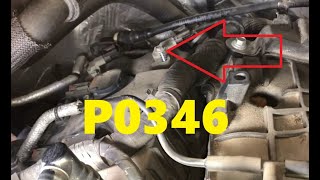
The location varies by engine, but it mounts on the valve cover, front timing cover, or cylinder head for Bank 2. For example, on a Ford 5.4L V8, it sits on the front of the driver's side valve cover. Always consult a vehicle-specific repair manual to confirm.
What are the most common mistakes when diagnosing P0346?
The biggest mistake is replacing the camshaft sensor without performing any diagnosis. The actual cause is frequently a wiring issue, low engine oil, or a failing VCT system. Always check oil levels and wiring integrity before buying parts.
I replaced the sensor, but the code came back. What now?
If a new sensor fails to clear the code, the problem lies elsewhere. Verify engine oil condition, inspect the wiring harness for 5V reference voltage, and check for electrical noise from the alternator. Finally, investigate mechanical timing issues like a stretched timing chain or failing VCT solenoids.
What happens if I ignore a P0346 code?
Ignoring P0346 guarantees poor performance and risks severe damage. The engine stalls in traffic, creating a safety hazard. Persistent misfires overheat and destroy the catalytic converter, turning a minor issue into a $2,500 repair.
Is a 'relearn' procedure needed after replacing the camshaft sensor?
Many cars require no special procedure, but GM, Chrysler, and Nissan vehicles often mandate a 'Cam/Crank Relearn' using an advanced scan tool. This synchronizes the new sensor with the Powertrain Control Module (PCM). Skipping this step guarantees a persistent code and rough idle.
Will a P0346 code clear itself?
No, the underlying problem must be repaired first. After the repair, clear the code with an OBD-II scanner. If not cleared manually, the Check Engine Light turns off after 3-4 successful drive cycles where the PCM detects no faults.
Key Takeaways
- P0346 flags a signal error from the Bank 2 camshaft position sensor, directly causing engine stalling, hard starts, and up to a 15% drop in fuel economy.
- Check your engine oil before buying parts; dirty or low oil disrupts Variable Valve Timing (VVT) systems and triggers this code in over 30% of cases.
- Do not blindly replace the sensor on Ford 5.4L or GM 3.6L engines, where P0346 almost always points to failing VCT solenoids or a stretched timing chain.
- Stop driving if you experience misfires with this code; unburnt fuel destroys your catalytic converter within months, turning a $150 sensor swap into a $2,500 repair.
Helpful Videos


The information in this article is provided for general reference and educational purposes only. Vehicle specifications, procedures, and part compatibility can vary by production date, trim level, and region. Always consult your vehicle's factory service manual and verify part numbers before purchasing or performing repairs. Safety-critical components such as airbags, seat belts, and braking systems should be installed by a qualified professional.
- 🎬 Helpful Videos
- What Does P0346 Mean?
- Can I Drive With P0346?
- Common Causes
- Symptoms
- Diagnostic Flowchart
- Common Fixes & Costs
- DIY vs Professional
- Used vs. New Parts: Buying Guide
- What Happens If You Wait — Timeline
- Cost of Not Fixing It
- Diagnosis Steps
- When This Code Triggers (Freeze-Frame Conditions)
- Related Codes
- Climate & Environmental Factors
- How to Talk to a Mechanic About This Code
- Where to Take It: Dealer vs Independent vs Chain
- When to Walk Away From the Repair
- What Scan Tool You Need for This Code
- How to Clear the Code After You Fix It
- Will This Fail Emissions / State Inspection?
- Most Commonly Affected Vehicles
- Manufacturer-Specific Notes
- Real Owner Stories
- 2008 Ford F-150 5.4L 3V at 135K miles
- 2010 Chevy Traverse 3.6L at 110K miles
- 2007 Nissan 350Z (VQ35DE) at 95K miles
- 2009 Hyundai Santa Fe 2.7L V6
- How to Prevent This Code From Triggering
- Frequently Asked Questions
- What does Bank 2 and Sensor 'A' mean?
- Where is the Bank 2 Camshaft Sensor 'A' located?
- What are the most common mistakes when diagnosing P0346?
- I replaced the sensor, but the code came back. What now?
- What happens if I ignore a P0346 code?
- Is a 'relearn' procedure needed after replacing the camshaft sensor?
- Will a P0346 code clear itself?
- Key Takeaways
- 🎟️ Get 5% Off