

P0345 on 2011-2018 Ram 1500 3.6L: Camshaft Sensor (Bank 2) Causes & Fixes
P0345 on a Ram 1500 3.6L most often means the driver's side camshaft position sensor has failed. Replacing it involves removing the upper intake manifold. Expect to pay $40-$110 for the part and budget 1.5-2.5 hours for labor if not doing it yourself. Before replacing, always inspect the wiring harness for damage, as this is another common cause.
- P0345 points to the camshaft position sensor on the driver's side.
- The easiest way to confirm a bad sensor is to swap it with the passenger side sensor and see if the code follows (changes to P0340).
- If the code does NOT follow the sensor, the problem is likely in the wiring or a more serious mechanical timing issue.
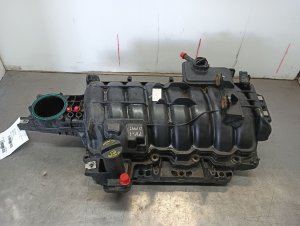
- Replacing the driver's side sensor is a DIY job but requires removing the upper intake manifold.
- Due to the known issues with the 3.6L Pentastar, do not ignore this code, as it can be an early warning of a more significant mechanical problem.
What's Unique About the 2011-2018 Ram 1500

The 3.6L Pentastar V6 has a complex valvetrain with four camshafts and is known for a few specific issues that can lead to this code. While a bad sensor is common, P0345 can also be a symptom of deeper mechanical problems like failing cam phasers, stretched timing chains, or even rocker arm failure (the 'Pentastar tick'). A Chrysler Technical Service Bulletin (TSB) specifically advises further investigation before simply replacing the sensor for this code, highlighting that it's not always a simple swap. [05149141A] The sensor itself is a dual-read unit that monitors both the intake and exhaust camshafts for its respective bank.
Symptoms You May Notice
- Check Engine Light is on
- Engine is difficult to start or won't start
- Engine stalls, especially at low speeds or idle
- Rough idle
- Noticeable loss of power and acceleration
- Reduced fuel economy
- Traction control light may illuminate simultaneously
- ECO mode and Cruise Control may be disabled
- Replacing the sensor when the true fault is in the wiring harness, such as a chafed wire or a loose pin in the connector.
- Replacing only the sensor when there is an underlying mechanical timing issue (e.g., a bad cam phaser), which will cause the code to return.
- Replacing the sensor when the issue is a damaged magnetic tone ring on the camshaft itself.
Most Likely Causes

- Failed Camshaft Position Sensor (Bank 2) 🔴 High Probability Like any electronic component, these sensors can fail with age, heat cycles, and exposure to engine oil. The Bank 2 sensor is located in a high-heat area at the rear of the cylinder head.
How to confirm: Swap the Bank 2 (driver side) sensor with the Bank 1 (passenger side) sensor. If the code changes to P0340, the sensor is confirmed bad.
Typical fix: Replace the faulty camshaft position sensor. Since accessing the Bank 2 sensor requires removing the intake manifold, many owners choose to replace both sensors, spark plugs, and intake gaskets at the same time.
Est. part cost: $40-$110 - Damaged Wiring or Connector 🟡 Medium Probability The wiring harness to the Bank 2 sensor can be tight from the factory. Engine movement and vibrations can cause wires to chafe or break at the connector or where the harness is secured. Owners on forums report the harness being stretched or rubbing against the back of the engine.
How to confirm: Visually inspect the wiring harness and connector for any signs of damage, corrosion, or oil saturation. Wiggle the connector with the engine running to see if it triggers the code. Test for 5V supply, ground, and signal continuity on the (K444) CMP Signal 2/1 circuit back to the PCM.
Typical fix: Repair the damaged section of wire or replace the connector pigtail. Ensure the harness has adequate slack after repair.
Est. part cost: $15-$40 - Failing Cam Phaser or Timing Components ⚪ Low Probability The 3.6L Pentastar can experience wear on its timing chains, guides, and cam phasers at higher mileage, especially if oil change intervals are extended. A mechanically failed (unlocked) phaser can disrupt the cam timing enough to set a circuit code.
How to confirm: This is a more advanced diagnosis. It often presents with other codes (like cam/crank correlation faults P0016/P0018) and may involve listening for startup rattle or using a scope to analyze cam/crank signals.
Typical fix: Requires extensive engine work to replace the timing chains, guides, tensioners, and affected cam phasers. This is a costly repair.
Est. part cost: $400-$2500
Rare But Worth Checking
- Damaged Camshaft Magnetic Encoder Ring: The sensor reads a magnetic ring on the end of the camshaft. During other engine repairs (like rocker arm replacement), accidental contact with a magnetic tool can damage this ring, causing an immediate P0345 or P0340 code.
- Loose Oil Gallery Plugs: On some Pentastar engines, oil gallery plugs under the valve cover can loosen, causing a loss of oil pressure to the cam phasers. This typically results in multiple cam sensor codes (P0340, P0345, P0365, P0390) appearing simultaneously.
- Faulty Powertrain Control Module (PCM): This is rare. The PCM is the last item to suspect after all other possibilities (sensor, wiring, mechanical) have been thoroughly ruled out.
- Failing Alternator or Weak Battery: Low system voltage during cranking or running can cause a host of spurious electrical codes, including cam sensor circuit faults. Always ensure the battery and charging system are healthy before chasing sensor issues.
Diagnosis Steps

- Read the code with an OBD-II scanner to confirm P0345 is present.
- Check battery voltage and charging system health. A weak battery can cause spurious electrical codes on modern vehicles.
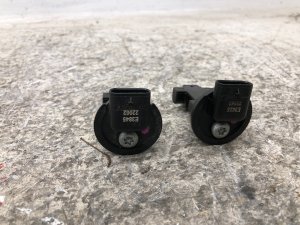
- Locate the Bank 2 (driver's side) and Bank 1 (passenger's side) camshaft position sensors. They are identical parts located at the rear of the valve covers.
- Inspect the connector and wiring for the Bank 2 sensor. Look for broken wires, corrosion, or oil contamination. Pay close attention to where the harness might rub or be stretched.
- The Swap Test: Swap the Bank 2 sensor with the Bank 1 sensor. Clear the codes and run the engine.
- If code P0340 (Bank 1) appears, the sensor you moved is faulty. Replace it with a quality OEM part.
- If code P0345 (Bank 2) returns, the sensor is good. The problem is in the Bank 2 circuit wiring or a mechanical issue.
- If the code remains, test the Bank 2 sensor connector for 5-volt reference, good ground, and signal wire integrity. The signal wire is typically a dark blue wire (circuit K444) going to the PCM.
- If wiring is good, the fault is likely mechanical (timing chain, phaser, damaged tone ring) or, rarely, the PCM itself. Listen for engine ticking or startup rattles that would indicate a mechanical problem.
Parts You'll Likely Need

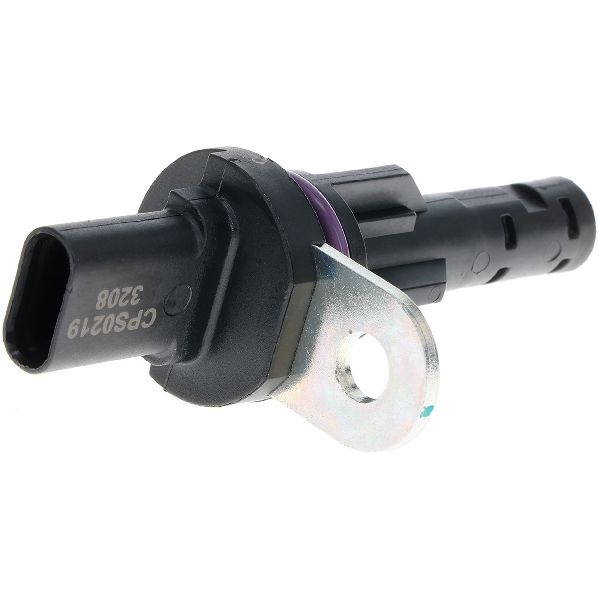
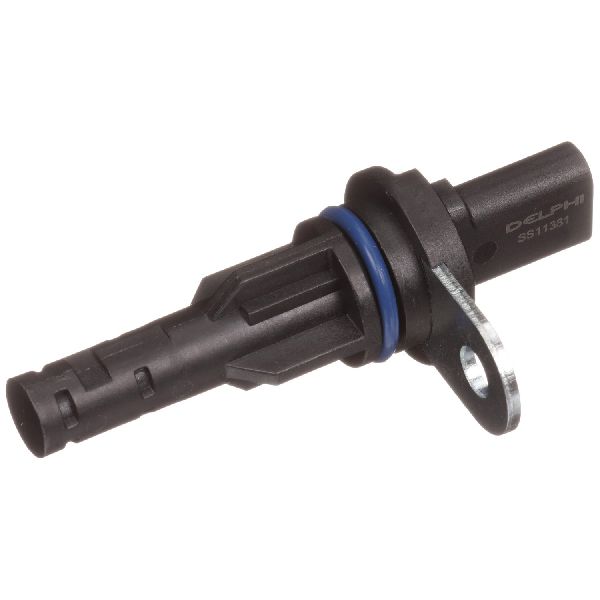
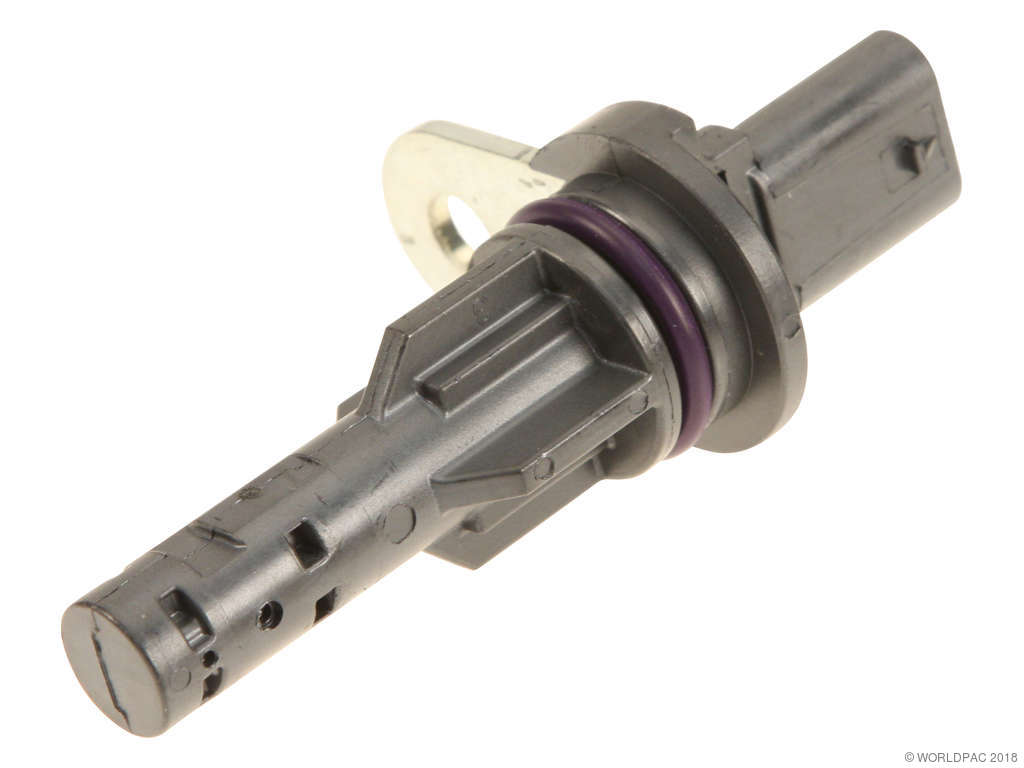
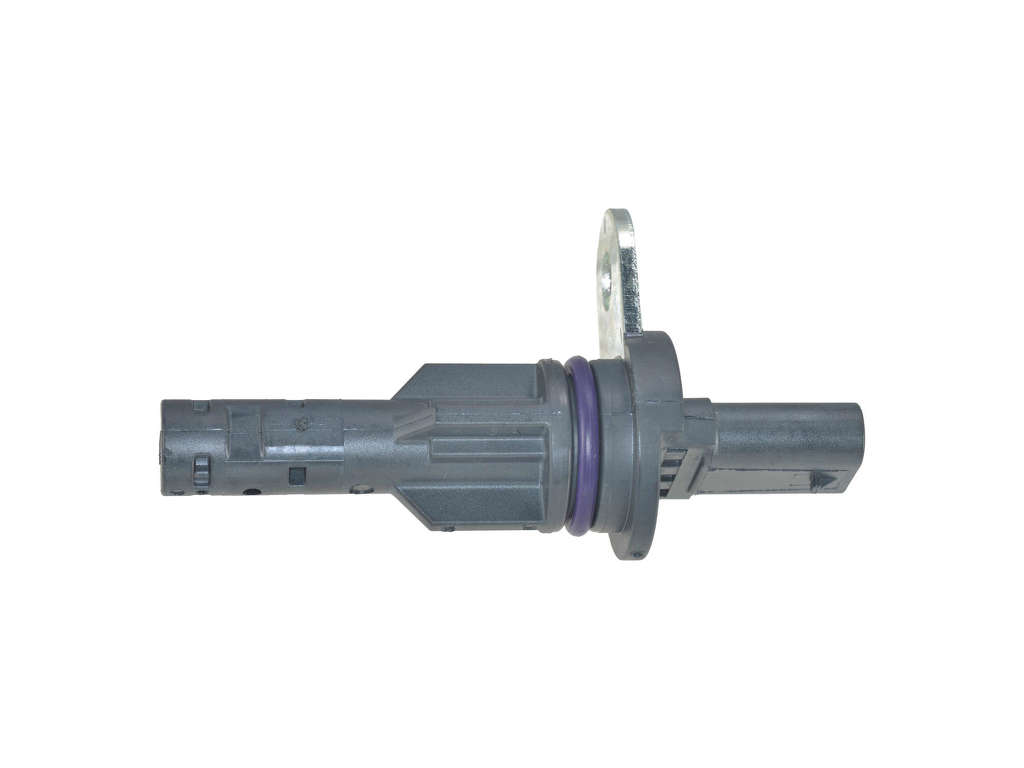
- Camshaft Position Sensor
(OEM #5149141AF)— This is the most frequent cause of the P0345 code. The sensor fails due to heat and age. It is the same part for both banks.
Trusted brands: Mopar, Bosch, NGK/NTK, Delphi
OEM price range: $100-$150
Aftermarket price range: $40-$80 - Upper and Lower Intake Manifold Gaskets — These must be replaced when removing the intake manifold to access the Bank 2 sensor. Reusing old gaskets will cause vacuum leaks.
Trusted brands: Mopar, Fel-Pro, Mahle
OEM price range: $30-$50
Aftermarket price range: $15-$30
Related Codes That Often Appear With This One
- P0349 — This code indicates an intermittent signal from the same Bank 2 sensor, often appearing with or preceding a constant fault like P0345.
- P0340 — This is the equivalent code for Bank 1 (passenger side). If both P0340 and P0345 appear together, it points towards a common cause like a weak battery, alternator issue, or a systemic problem like loose oil gallery plugs.
- P0016, P0018 — These are crank/cam correlation codes for Bank 1 and Bank 2, respectively. If you see these with P0345, it strongly suggests a mechanical timing issue (stretched chain, bad phaser) rather than just a sensor failure.
- P0365, P0390 — These are codes for the 'B' (exhaust) sensor circuit on Bank 1 and Bank 2. Since the sensor is a dual-unit, seeing these codes together with P0340/P0345 often points to a failure of the entire sensor unit, its connector, or a shared power/ground issue.
Technical Service Bulletins (TSBs) & Recalls
- 05149141A - Mentions P0345 and advises contacting a specific factory representative before replacing the camshaft position sensor, indicating that the sensor itself is not always the root cause and deeper diagnosis may be required.
- 18-027-15 REV. B - A PCM software update for some FCA vehicles to address intermittent crank/no-start conditions and other issues, showing that software can sometimes play a role in engine control faults.
Platform-Specific Known Issues
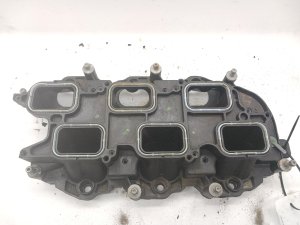
- The Bank 2 (driver's side) sensor is located under the upper intake manifold, which must be removed for access. The Bank 1 (passenger's side) sensor is easily accessible at the back of the passenger side valve cover.
- Early 2011-2013 models had a known issue with the left cylinder head, leading to an extended warranty. While this typically causes misfire codes, it highlights the valvetrain's sensitivity.
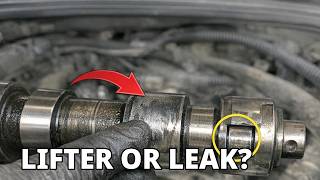
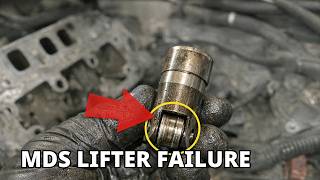
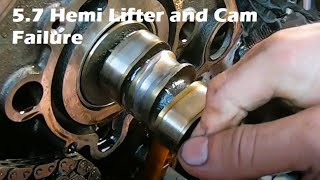
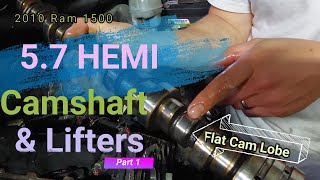
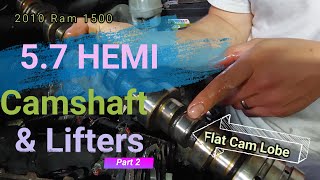
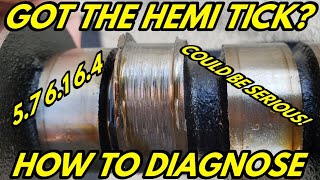
- The Pentastar engine family is known for potential rocker arm/lifter failure, causing a ticking noise. If this code appears with an engine tick, a deeper mechanical inspection is warranted as a failing rocker can damage the camshaft.
Mechanic-Grade Diagnostic Values
- 5-Volt Supply Circuit Voltage — expected: 4.5 to 5.2 volts. Failure: Voltage below 4.5V or above 5.2V indicates a wiring or PCM issue.
- CMP Sensor Signal Circuit Voltage (Key On, Engine Off) — expected: 4.5 to 5.0 volts. Failure: Voltage outside this range suggests a faulty sensor or wiring short.
- Sensor Ground Circuit Resistance to PCM — expected: Below 5.0 Ohms. Failure: Resistance above 5.0 Ohms indicates a poor ground connection.
- Sensor Signal Circuit Resistance to Ground — expected: Above 100 Ohms. Failure: Resistance below 100 Ohms indicates a short to ground in the signal wire.
- Sensor Signal Voltage (Manual Test) — expected: Switches between ~5V and 0V when a magnet is passed over the sensor tip.. Failure: Voltage does not switch, indicating a failed sensor.
Scan Tool Commands That Help
- wiTECH (Dealer Tool): View Cam/Crank Sync Status — To determine if the PCM sees a synchronized signal from the cam and crank sensors. A 'No' status when the engine is running points to a timing or sensor signal issue.
- wiTECH (Dealer Tool): VVT System Test — Can be used to command the cam phasers to move, helping to diagnose if a phaser is stuck or not responding, which could be an underlying mechanical cause for the cam sensor code.
Wiring & Ground Locations

- PCM Connector C2 — This is one of the main connectors on the Powertrain Control Module (PCM).. The circuits for the camshaft position sensors run to this connector. Testing for continuity and voltage should be done between the sensor connector and this PCM connector.
- (F856) 5-Volt Supply Circuit — Wire running from the PCM C2 connector to the camshaft position sensor connector.. This wire provides the 5V reference voltage required for the sensor to operate. A break or short on this wire will cause the sensor to fail.
- (K444) CMP Sensor Signal 2/1 Circuit — Wire running from the Bank 2 camshaft position sensor connector to the PCM C2 connector.. This is the specific signal wire for the Bank 2 sensor. A short or open on this wire is a direct cause of P0345.
- (K900) Sensor Ground Circuit — Wire providing the ground path from the sensor back to the PCM C2 connector.. A high-resistance or open ground circuit will prevent the sensor from sending a valid signal.
Real Owner Repair Stories
- RamForum.com user (2014 Ram 1500 3.6L with 195k miles) — Stalled on highway, went into limp mode, codes U1424, P1DD2, and P0394 (related to Bank 2 Cam Sensor 'B' circuit).
❌ Tried (didn't work) Replaced the Bank 2 camshaft position sensor. The truck drove for 20 miles before the codes returned.
✅ What actually fixed it The user found inconsistent voltage readings at the Bank 2 sensor connector. Wiggling the wires at the connector would cause the voltage to fluctuate between 5V and 0V, indicating a break in the wiring or a bad terminal inside the connector itself. The fix was to repair the wiring/connector pigtail.
OEM Part Supersession History
5149141AE (and earlier versions)→5149141AF— Standard part revision and improvement over time.
Heads up: 5149141AF is the current, widely compatible OEM part for the 2011-2018 range and is interchangeable with previous versions.
Model Year Variations Within This Range
- 2016-2018: In 2016, Chrysler introduced an upgraded 3.6L Pentastar (sometimes called PUG). Changes included a two-stage variable valve lift (VVL) system, improved rocker arm bearings, and the addition of a cooled EGR system. While the P0345 code can still occur, the underlying mechanical causes related to rocker arms may be less frequent on these later models compared to the 2011-2015 engines.
- 2011-2015: These earlier engines are more commonly associated with rocker arm bearing failures, which can lead to ticking noises and, if a rocker fails catastrophically, potential camshaft damage that could trigger a P0345 code.
Diagnostic Flowchart
Other Known Issues on This Vehicle
Issues unrelated to this code that are worth knowing about as an owner of this generation:
- Cracked Oil Filter/Cooler Housing 🔴 High — Very common across all Pentastar applications. The plastic housing becomes brittle from heat cycles and can crack, causing significant oil and/or coolant leaks into the engine valley. (Ref: NHTSA TSB 09-008-22 (and others) advises on proper diagnosis to avoid unnecessarily replacing the entire assembly for a simple gasket leak.)
- Rocker Arm / Lifter Failure ('Pentastar Tick') 🔴 High — Widespread issue, particularly in 2011-2014 models, but can occur at any mileage. A ticking noise from the valvetrain is the primary symptom, which if ignored can lead to camshaft damage. (Ref: While no recall exists, numerous class-action lawsuits have been filed. The issue stems from a design/material flaw in the rocker arm bearings.)
- Left Cylinder Head Failure (Early Models) 🔴 High — Primarily affected 2011-2013 models, causing misfires (especially on cylinder #2) and check engine lights. (Ref: Chrysler issued an extended warranty (X56) and TSB 09-002-14 Rev. B to address this known manufacturing defect.)
- Totally Integrated Power Module (TIPM) Failure 🟠 Medium — More common in the 2011 model year, a faulty TIPM can cause a wide range of bizarre electrical issues, including no-start conditions that can be misdiagnosed as sensor problems. (Ref: Subject of a recall and multiple lawsuits for other Chrysler/Dodge/Ram vehicles of the era.)
Used vs. New Parts: Buying Guide for This Vehicle
When a used part is the smart pick: Sourcing a used wiring harness pigtail from a junkyard is a viable option if your original connector is damaged and you need a replacement with factory-correct wires. Other major components for this repair should be purchased new.
Donor-vehicle mileage cap: roughly under 100000 miles for the part to have meaningful remaining life.
What to inspect on the donor part:
- For a pigtail, ensure the connector body is not cracked or brittle.
- Check that the locking tab on the connector is intact.
- Inspect the wires for at least 6 inches of flexible, undamaged insulation.
- Avoid parts from vehicles with obvious signs of engine fire or severe front-end damage.
OEM-only on this vehicle (don't cheap out):
- Camshaft Position Sensor: While some aftermarket brands are reliable, the OEM Mopar sensor is highly recommended to avoid compatibility issues. The cost difference is often minimal compared to the labor involved, especially since the intake manifold must be removed.
- Intake Manifold Gaskets: Always use new gaskets to prevent vacuum leaks. Reusing old, compressed gaskets is a common cause of future problems.
Aftermarket brands forum-validated for this vehicle:
- NTK/NGK (for sensors)
- Delphi (for sensors)
- Fel-Pro (for gaskets)
- Mahle (for gaskets)
Brands owners have reported issues with on this vehicle:
- Unbranded, 'white-box' sensors from online marketplaces have a high failure rate and can be dead-on-arrival. One user review for a generic part noted it did not function at all out of the box.
Real Owner Stories
Aggregated from forums and TSBs cited above. Mileages and costs reflect what owners reported in those sources.
2014 Jeep Wrangler JK 3.6L V6
Symptoms: Owner replaced the camshaft position sensor but the P0345 error remained. The vehicle required deeper electrical troubleshooting.
What fixed it: The issue required checking the magnetic tone wheels on the cams for metallic debris and performing continuity checks on the K444 wiring circuit back to the PCM.
Source hint: WranglerForum.com thread titled 'P0345 - camshaft sensor error - new sensor didn't fix anything'
2015 Jeep Wrangler JK 3.6L V6
Symptoms: Intermittent connection issues triggered by the engine moving or going over bumps.
What fixed it: Repairing the wiring harness which was found to be too short or tight from the factory; wiggling the wire helped reproduce the fault during diagnosis.
Source hint: WranglerForum.com thread titled 'P0345 P0349 Camshaft Position Sensor issue'
2013 Jeep Wrangler JK 3.6L V6
Symptoms: P0345 code persisted even after replacing both the sensor and the PCM.
What fixed it: The dealer had to replace both camshafts to resolve the code, indicating a mechanical defect in the camshaft itself.
Source hint: JK-Forum.com thread titled 'P0345 Camshaft Issues'
Related OBD-II Codes
Frequently Asked Questions
I have a P0345 on my Ram 1500; should I check for any specific TSBs before replacing parts?
Why is the Bank 2 sensor more expensive to labor-wise than Bank 1 on the 3.6L Pentastar?
Can I test if the sensor is actually bad without buying a new one?
My Ram has a ticking noise along with the P0345 code. Are they related?
Could a wiring issue be causing my P0345 code instead of a sensor failure?
Is there a specific wire I should check for continuity to the PCM?
Helpful Videos
Used OEM Parts in Stock



New Aftermarket Parts Available


The information in this article is provided for general reference and educational purposes only. Vehicle specifications, procedures, and part compatibility can vary by production date, trim level, and region. Always consult your vehicle's factory service manual and verify part numbers before purchasing or performing repairs. Safety-critical components such as airbags, seat belts, and braking systems should be installed by a qualified professional.
- Ram 1500:
- 🎬 Helpful Videos
- 🛍️ Shop This Part
- What's Unique About the 2011-2018 Ram 1500
- Symptoms You May Notice
- Most Likely Causes
- Rare But Worth Checking
- Diagnosis Steps
- Parts You'll Likely Need
- Related Codes That Often Appear With This One
- Technical Service Bulletins (TSBs) & Recalls
- Platform-Specific Known Issues
- Mechanic-Grade Diagnostic Values
- Scan Tool Commands That Help
- Wiring & Ground Locations
- Real Owner Repair Stories
- OEM Part Supersession History
- Model Year Variations Within This Range
- Diagnostic Flowchart
- Other Known Issues on This Vehicle
- Used vs. New Parts: Buying Guide for This Vehicle
- Real Owner Stories
- 2014 Jeep Wrangler JK 3.6L V6
- 2015 Jeep Wrangler JK 3.6L V6
- 2013 Jeep Wrangler JK 3.6L V6
- Related OBD-II Codes
- Frequently Asked Questions
- 🎟️ Get 5% Off