

OBD-II Code P0349: Camshaft Position Sensor 'A' Circuit Intermittent (Bank 2)
The Ultimate Guide to Meaning, Causes, Diagnosis, and Repair
- P0349 indicates an intermittent electrical signal dropout from the Bank 2 intake camshaft sensor, with wiring issues causing up to 30% of these failures.
- Check your engine oil level and condition immediately, as low oil pressure to the VVT phasers is a primary trigger for this code on modern engines.
- Never replace the sensor without first performing a 'wiggle test' on the wiring harness to rule out chafed wires or loose connector pins.
- Test your alternator for AC ripple voltage exceeding 0.5V, as electrical interference frequently mimics a failing camshaft sensor, especially on Ford 5.4L engines.
What Does P0349 Mean?

Your car's Powertrain Control Module (PCM) detects an unstable, erratic, or disappearing signal from the camshaft position sensor. This code points to 'Sensor A' (the intake camshaft sensor) on 'Bank 2' of the engine. This sensor tells the computer the exact rotational position of the camshaft, orchestrating precise fuel injection and ignition timing.
Technical definition: The SAE/OBD-II definition is "Camshaft Position Sensor 'A' Circuit Intermittent (Bank 2)". The PCM identified that the signal waveform from the Bank 2 intake camshaft position sensor is not stable, continuous, or within the expected voltage range. For a Hall-effect sensor, the PCM expects a clean digital square wave toggling between 0V and 5V. An intermittent fault means the signal drops out or becomes noisy. Some vehicles require this fault to occur on three separate drive cycles before illuminating the Check Engine Light, though a pending code stores on the first occurrence.
Can I Drive With P0349?
Yes, But With Caution. You can drive for short, essential trips, but immediate attention is required. The primary risk is unexpected engine stalling in traffic. Driving with an intermittent signal causes a persistent no-start condition, rough running, and a 10-20% decrease in fuel economy. Over time, inconsistent timing causes misfires that overheat the catalytic converter, leading to internal damage costing $800 to $2,500 to replace.
Common Causes

- Faulty Camshaft Position Sensor (Bank 2, Sensor A) (Very Common) — The sensor itself is the most frequent culprit, accounting for up to 70% of cases. Internal electronics degrade from constant heat cycles and engine vibration, leading to an intermittent signal before total failure.
- Wiring Harness or Connector Issues (Common) — The wiring harness accounts for 20-30% of P0349 occurrences. Wires chafe against engine components, melt from heat, or break internally from vibration. Connectors suffer from corrosion, backed-out pins, or oil contamination.
- Low or Dirty Engine Oil / Low Oil Pressure (Common) — On engines with Variable Valve Timing (VVT), oil pressure adjusts the camshaft's position. Low, dirty, or incorrect viscosity oil, or internal pressure loss (like on the Jeep 3.6L), prevents the cam phaser from operating correctly, causing erratic sensor readings.
- Worn Timing Components (Chain, Belt, Guides, Tensioner) (Less Common) — A stretched timing chain, worn guides, or a failing tensioner creates excessive slack. This allows camshaft timing to fluctuate relative to the crankshaft, creating an intermittent signal even if the sensor works perfectly.
- Faulty Alternator or Charging System Issues (Less Common) — A failing alternator produces excessive electromagnetic interference (EMI) as AC ripple voltage. This electrical noise disrupts the sensitive camshaft sensor signal. Ford issued TSB 06-19-12 for this exact issue on 5.4L 3V engines. A weak battery also causes erratic voltage and triggers this code.
- Damaged Camshaft Reluctor Wheel (Rare) — The sensor reads a toothed reluctor wheel on the camshaft. A cracked, bent, or misaligned wheel generates an erratic signal. This usually results from previous engine work.
- Failing Crankshaft Position Sensor (Rare) — The PCM constantly compares camshaft and crankshaft signals. If the primary crankshaft sensor signal is intermittent, the PCM becomes confused and incorrectly flags the camshaft sensor circuit.
- Faulty Powertrain Control Module (PCM) (Very Rare) — PCM failure is extremely rare. Internal circuit problems, such as cracked solder joints or software glitches, trigger this code. Consider this only after exhaustively ruling out wiring, TSBs, and other sensors.
Symptoms

- Engine is Hard to Start or Won't Start — The engine cranks for an extended period before starting, or fails to start entirely (crank-no-start). This occurs when the fault is present during startup, depriving the PCM of timing data.
- Rough Idle and Unexpected Stalling — The engine runs poorly, idles erratically, or stalls unexpectedly while driving. The intermittent signal destabilizes engine timing.
- Reduced Engine Power and Hesitation — The vehicle feels sluggish, hesitates upon acceleration, and lacks power. The PCM enters 'limp mode' to prevent damage, severely restricting engine RPM and power output.
- Check Engine Light is On (also visible on scanner) — The Malfunction Indicator Lamp (MIL) illuminates. It flashes if the fault causes a severe engine misfire, indicating a critical condition.
- Decreased Fuel Economy (also visible on scanner) — Imprecise engine timing burns fuel inefficiently, causing a 10-20% drop in average miles per gallon (MPG).
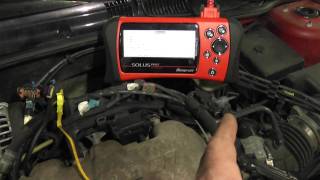
- Engine Misfires (also visible on scanner) — The erratic cam signal forces the PCM to mistime ignition spark and fuel injection, causing misfires felt as a shudder or stumble. 🎬 Watch: Bad camshaft sensor symptoms and how to fix them
Diagnostic Flowchart
Tap your situation to follow the diagnostic path that matches what you're seeing on this code.
Common Fixes & Costs
- Perform an Oil Change with Correct Oil — Parts: $40-$90, Labor: $25-$60, ~0.5 hr book time (DIY)
- Replace Camshaft Position Sensor (Bank 2, Sensor A) — Parts: $40-$150, Labor: $80-$250, ~0.9 hr book time (DIY)
- Repair or Replace Wiring Harness/Connector — Parts: $15-$60, Labor: $150-$400, ~2.5 hr book time (Intermediate)
- Replace Alternator — Parts: $250-$500, Labor: $150-$300, ~1.5 hr book time (Intermediate)
- Update or Re-flash Powertrain Control Module (PCM) — Parts: $0, Labor: $150-$250, ~1 hr book time (Professional)
DIY vs Professional
- Replace Camshaft Position Sensor — Beginner: Yes, on most vehicles.
Tools: Basic socket set, screwdriver, flashlight. - Perform an Oil Change — Beginner: Yes.
Tools: Wrench for drain plug, oil filter wrench, drain pan, funnel, new oil, new filter. - Replace Alternator — Beginner: No, this is for intermediate DIYers.
Tools: Socket set, serpentine belt tool, multimeter. - Repair Wiring Harness/Connector — Beginner: No.
Tools: Multimeter, wire strippers, crimpers, heat shrink tubing, soldering iron (optional), wiring diagrams. - Update or Re-flash PCM — Beginner: No.
Tools: J2534 Pass-Thru device, stable power supply, manufacturer-specific software subscription.
Used vs. New Parts: Buying Guide
When a used part is worth it: Buying a used camshaft position sensor is never recommended. The part is an inexpensive wear item, and the labor cost to replace it a second time negates any initial savings.
Donor-vehicle mileage cap: roughly under 20000 miles for the part to have meaningful remaining life.
Donor quality checklist:
- If forced to buy used, source from a very low-mileage vehicle (under 20k miles) that was wrecked, not scrapped for engine failure.
- Match the OEM part number exactly; do not rely on visual similarity.
- Avoid sensors from vehicles in rust-belt states due to a higher likelihood of connector corrosion.
Decision logic:
- If The part is a camshaft position sensor. → Buy a new OEM or high-quality aftermarket (e.g., Bosch, Delphi, Denso) part. The cost difference is minimal and reliability is much higher.
- If The vehicle is a Ford, Jeep, or other make known to be sensitive to sensor quality. → Strongly prefer a new OEM part (e.g., Motorcraft for Ford). Aftermarket sensors cause repeat failures on these models.
Warranty tradeoff: Used sensors typically have a 30-day warranty at best. New aftermarket parts offer a 1-year to limited lifetime warranty. New OEM parts carry a 1-2 year warranty.
Worst-case if a used part fails: $150-$300 if a used sensor fails after installation, representing repeat labor charges and the cost of another part.
What Happens If You Wait — Timeline
- 0-1 month: Intermittent Check Engine Light, occasional extended crank time, or a brief hesitation when accelerating. Symptoms are infrequent. (MPG impact: 0-5%% · Added cost: $0-25 in wasted fuel.)
- 1-3 months: Symptoms become frequent. Stalling at idle becomes a risk. Engine enters 'limp mode' with severely reduced power. Hard starting is common. (MPG impact: 5-10%% · Added cost: $50-150 in wasted fuel and increased risk of being stranded.)
- 3-6 months: The intermittent fault becomes a hard fault (P0345). The engine runs rough consistently. Incorrect timing causes unburnt fuel to enter the exhaust. (MPG impact: 10-20%% · Added cost: $800-$2,500 if the catalytic converter is damaged from overheating.)
- 6+ months: If masking a mechanical timing issue, continued driving causes the timing chain to jump a tooth or break, resulting in catastrophic engine damage. (MPG impact: 15-25%+% · Added cost: $4,000-$10,000+ for a new engine.)
Cost of Not Fixing It
- 0-1 month: Annoying but manageable symptoms like intermittent stalling, hard starting, and a 5-10% drop in fuel economy. Risk of being stranded is moderate. (Added cost: Negligible, aside from extra fuel costs.)
- 1-6 months: Continued misfiring from incorrect timing causes unburnt fuel to enter the exhaust, overheating and damaging the catalytic converter. (Added cost: $1,000-$2,800 for catalytic converter replacement.)
- 6+ months: If the code masks a deeper mechanical issue like a failing timing chain, continued operation leads to catastrophic engine damage (e.g., piston-to-valve contact). (Added cost: $4,000-$10,000+ for engine replacement.)
Diagnosis Steps

- Check Engine Oil Level and Condition
Low, dirty, or incorrect viscosity oil directly impacts the variable valve timing (VVT) system, triggering this code. Verify the oil level and check its color.
Tools: Rag, Dipstick (Beginner) - Check for TSBs and Software Updates
Search for Technical Service Bulletins (TSBs) for your specific VIN. Manufacturers like Chrysler and Ford issue software updates to correct over-sensitive PCM logic or address known issues like alternator interference.
Tools: Internet access, VIN (Beginner) - Visually Inspect the Circuit
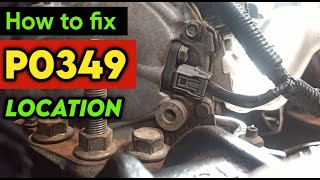
Locate Sensor 'A' on Bank 2 (the side without cylinder #1). Inspect the sensor, connector, and wiring harness for oil contamination, melted insulation, corrosion, or chafing.
Tools: Flashlight (Beginner) - Perform a 'Wiggle Test'
With the engine running, carefully wiggle the wiring harness and connector for the Bank 2 camshaft sensor. If the engine stumbles or stalls, you have located an electrical fault in that harness section.
Tools: Hands, Protective Gloves (Intermediate) - Swap Sensors (If Applicable)
If Bank 1 and Bank 2 use identical sensors, swap them. Clear codes and drive. If the code changes to P0344 (Bank 1 fault), the sensor is definitively faulty and requires replacement.
Tools: Basic socket set (Intermediate) - Test the Sensor Circuit with a Multimeter
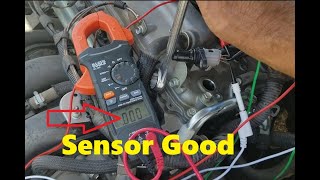
Unplug the sensor and turn the ignition 'ON'. For a 3-wire Hall-effect sensor, verify a 5-volt reference signal, a solid ground (<0.1V), and a signal wire. Missing 5V or ground indicates a wiring or PCM issue, not the sensor.
Tools: Multimeter, Back-probe pins (Intermediate) - Pro Tip: Test for Alternator AC Ripple Voltage
Set a multimeter to AC Volts. With the engine running and all accessories on, test across the battery terminals. A reading above 0.5V AC indicates a failing alternator diode inducing electrical noise, a known cause of P0349.
Tools: Multimeter (Advanced) - Pro Tip: Analyze the Waveform with an Oscilloscope
Connect an oscilloscope to the sensor's signal wire. A healthy Hall-effect sensor produces a crisp digital square wave (0V to 5V). Look for signal dropouts, noise on the 5V line, or rounded edges indicating a failing sensor or wiring issue.
Tools: Oscilloscope, Back-probe pins (Advanced) - Advanced: Monitor Live Data PIDs
Monitor Cam/Crank correlation and camshaft advance PIDs. Perform a wiggle test while watching the live data graph. A sudden drop to zero pinpoints a wiring issue; a signal that disappears as the engine warms indicates a heat-related sensor failure.
Tools: Professional Scan Tool (Advanced) - Advanced: Test Sensor Resistance
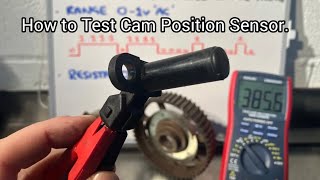
For a two-wire variable reluctance sensor, measure resistance across the pins. Compare to the service manual (typically 200-900 Ohms). An open circuit (OL) or zero resistance confirms a failed sensor.
Tools: Multimeter, Service Manual (Advanced) - Advanced: Check Fuel Pressure
Connect a fuel pressure gauge. With key on, engine off (KOEO), pressure must meet manufacturer specs (typically 40-60 PSI). A significant drop indicates a failing fuel pump mimicking timing issues.
Tools: Fuel Pressure Gauge, Service Manual (Advanced)
When This Code Triggers (Freeze-Frame Conditions)
- Engine Coolant Temp: 180-210°F (The fault appears once the engine is fully warmed up; heat causes failing electronics or wiring to malfunction.)
- RPM: 1500-3000 (P0349 sets during steady-state cruise or light acceleration, rarely during hard acceleration. Engine vibrations in this range expose loose connections.)
- Engine Load: 25-60% (Triggers under moderate load conditions consistent with highway cruising or maintaining speed on an incline.)
- Vehicle Speed: 40-65 mph (Corresponds to RPM and load conditions, indicating the fault occurs during typical highway driving rather than stop-and-go traffic.)
Related Codes
- P0345 — P0345 is 'Camshaft Position Sensor 'A' Circuit Malfunction (Bank 2)'. This is the 'hard fault' version of P0349. While P0349 indicates an intermittent signal, P0345 means the PCM sees a continuous fault, like a complete loss of signal.
- P0344 — This is the identical intermittent fault code, but for Bank 1. If you swap the suspected bad sensor from Bank 2 to Bank 1 and the code changes from P0349 to P0344, you have confirmed the sensor is the problem.
- P0018 — This code means 'Crankshaft Position - Camshaft Position Correlation (Bank 2 Sensor A)'. P0349 points to an electrical circuit problem. P0018 points to a mechanical timing problem, suggesting a stretched timing chain or failed VVT phaser, not a bad sensor.
- P0300 — This code means 'Random or Multiple Cylinder Misfire Detected'. A faulty camshaft position sensor providing an intermittent signal (P0349) prevents the PCM from correctly sequencing fuel and spark, leading to misfires. Always diagnose and fix P0349 first.
Climate & Environmental Factors
- Extreme Cold: Cold temperatures make wiring insulation brittle and prone to cracking, causing intermittent shorts. It also thickens oil, affecting VVT system performance on startup.
- High Humidity / Moisture: Moisture and high humidity, especially in regions with road salt, accelerate corrosion on connector pins. This corrosion creates resistance and disrupts the sensitive sensor signal.
- High Heat: Engine bay heat degrades the internal electronics of the camshaft sensor. Heat also softens wiring insulation, leading to shorts against the engine block.
How to Talk to a Mechanic About This Code
Say this: "I have an OBD-II code P0349 for an intermittent camshaft position sensor circuit on Bank 2. I'd like to schedule a diagnostic to determine if the cause is the sensor, the wiring, or external factors like oil pressure or electrical interference."
This signals that you understand the code refers to an intermittent electrical fault, not just a bad sensor. It directs the technician to perform a proper diagnosis rather than just swapping the most likely part.
Avoid saying:
- 'My check engine light is on, can you fix it?'
- 'My car is stalling, I think it's a sensor.'
- 'Just replace the camshaft sensor.'
Questions to ask before authorizing the repair:
- Did you check for Technical Service Bulletins (TSBs) for this code?
- How did you test the circuit? Did you perform a wiggle test or use an oscilloscope?
- Did you test the alternator for AC ripple voltage?
- If the sensor needs replacement, is the warranty on the part and the labor?
Where to Take It: Dealer vs Independent vs Chain
- Dealer:
Recommended if your vehicle is a make known for specific issues related to P0349 (Ford, Jeep, GM) or if initial diagnostics at an independent shop fail.
Best for: Vehicles under warranty., Vehicles with known, complex TSBs or software updates (common for Ford, Jeep/Chrysler)., Diagnosing manufacturer-specific quirks like Jeep's oil galley plugs or GM's CASE relearn requirement.
Downsides: Highest labor rates., May recommend replacing parts that a skilled independent shop might repair (e.g., wiring harness). (Typical cost: +50% vs. baseline) - Independent Shop:
Best fit for most vehicles, provided you choose a reputable shop. Ask if they are comfortable diagnosing intermittent electrical faults and have an oscilloscope.
Best for: Out-of-warranty vehicles., Shops with good reviews and ASE-certified technicians specializing in electrical diagnostics.
Downsides: Quality and diagnostic capabilities vary widely., May not have access to the latest manufacturer software updates. (Typical cost: +0% vs. baseline) - Chain Shop:
Acceptable for a simple oil change or battery test. AVOID for diagnosing the P0349 code itself, as they are likely to misdiagnose a wiring or mechanical issue as a bad sensor.
Best for: Simple, clear-cut part replacements like an oil change or battery test.
Downsides: Technicians lack advanced diagnostic training for intermittent electrical faults., High pressure to sell parts leads to replacing the sensor without diagnosing the underlying circuit issue. (Typical cost: -10% vs. baseline)
When to Walk Away From the Repair
If the estimated repair cost exceeds 50% of the car's private-party value, seriously consider selling or trading it in.
- Car worth $4000, fix is $350: Fix it. A simple sensor or wiring repair is well below the threshold.
- Car worth $6000, fix is $2200: Borderline. This cost suggests a timing chain replacement. Get a second opinion before authorizing, as this is close to 40% of the car's value.
- Car worth $3000, fix is $2500: Walk away. The repair cost is over 75% of the car's value. It is not a sound financial decision.
What Scan Tool You Need for This Code

Minimum: A scanner that reads and clears codes, shows freeze-frame data, and graphs live sensor data.
A basic $20 code reader only shows 'P0349'. It cannot display the live data stream from the camshaft sensor, which is essential to see intermittent signal dropouts and confirm if the fault is in the wiring or sensor.
Budget: BlueDriver Pro Scan Tool or Ancel AD310 (~$100) — Connects to your smartphone and provides live data graphing for the camshaft position sensor PID. This allows you to perform a 'wiggle test' on the harness while watching the graph for signal dropouts.
Mid-range: Foxwell NT510 Elite or Innova 5610 (~$150) — Offers manufacturer-specific PIDs for detailed data. These handheld units have better data logging and graphing capabilities than budget dongles, and some initiate a CASE relearn procedure for GM vehicles.
Professional: Autel MaxiCOM MK808 or Launch X431 series (~$500-1200) — Provides full bidirectional control, OEM-level diagnostics, and advanced data graphing. The ultimate tool for this code is an oscilloscope to visually inspect the sensor's square waveform for noise or dropouts.
Rent vs buy: For a one-time diagnosis, auto parts stores like AutoZone offer a 'Loan-A-Tool' program. You pay a refundable deposit for a scanner, allowing you to read the code and check live data for free.
How to Clear the Code After You Fix It
- Reconnect the battery if it was disconnected for the repair.
- Use a quality OBD-II scan tool to clear the P0349 code and any other related fault codes.
- Perform a complete OBD-II drive cycle to allow the vehicle's readiness monitors to run and complete.
Drive cycle (~20 minutes): A generic drive cycle includes: 1) Cold start and idle for 2-3 minutes. 2) Drive in stop-and-go traffic with several accelerations and decelerations. 3) Drive at a steady speed of 55-60 mph for 5-10 minutes on a highway. 4) Let the vehicle cool down completely. Repeat over a few days.
Readiness monitors affected: Catalyst Monitor, Oxygen Sensor Monitor, Misfire Monitor
Watch out for:
- Disconnecting the battery clears the code but resets all readiness monitors to 'Not Ready', causing an automatic failure at an emissions testing station.
- The code returns if the underlying intermittent electrical or mechanical fault is not truly fixed.
- Failing to perform a specific relearn procedure (like a GM CASE relearn) after sensor replacement causes poor performance.
Will This Fail Emissions / State Inspection?
Yes — this code typically fails an OBD-II emissions inspection.
- California: An illuminated Check Engine Light from P0349 is an automatic failure. All required readiness monitors must be 'Ready'. Clearing the code resets monitors, requiring a drive cycle of 50-100 miles before a retest.
- New York: The NYS DMV inspection includes an OBD-II scan. An active P0349 code causes an immediate test failure.
- Texas: In counties requiring emissions testing, an illuminated Check Engine Light is an automatic failure. Inspectors see if codes were recently cleared, resulting in a failure until readiness monitors complete.
Most Commonly Affected Vehicles
- Jeep, Chrysler, Dodge Wrangler, Grand Cherokee, Ram 1500, Pacifica (with 3.6L Pentastar V6) (2011-2019) — Highly prone to this code due to loose or fallen-out oil galley plugs under the valve cover, causing an oil pressure drop to the cam phasers. Early models (2011-2013) were subject to PCM software glitches requiring an update.
- Ford F-150, Mustang, Expedition (with 5.4L 3V and 5.0L V8 engines) (2004-2020) — Commonly caused by a faulty alternator producing excessive AC ripple voltage (TSB 06-19-12), wiring harness chafing, or sticking VCT solenoids. Using non-Motorcraft sensors causes repeat failures.
- Chevrolet / GMC Silverado, Sierra, Tahoe, Yukon (with 5.3L, 6.0L, 6.2L V8 engines) (2007-2014) — Frequently linked to oil pressure issues from a faulty oil pump or clogged filter screen affecting the Active Fuel Management (AFM) lifters and cam phaser. A stretched timing chain is common on higher-mileage vehicles.
- BMW 3-Series, 5-Series, X3, X5 (with N52, N54, N55 engines) (2006-2017) — A frequent cause is oil leaking from the valve cover gasket onto the eccentric shaft sensor connector, causing signal interference. A failing VANOS solenoid due to oil sludge also triggers timing-related faults.
- Hyundai / Kia Sonata, Santa Fe, Optima, Sorento (with 2.4L GDI and 3.3L V6 engines) (2011-2019) — Issues are commonly related to the sensor failing due to high heat exposure or problems within the wiring harness pigtail. Carbon buildup on intake valves affects engine operation enough to contribute to timing codes.
- Honda Accord, Odyssey, Pilot (with J-series V6 engine) (2003-2017) — Very commonly caused by a failing sensor on the rear bank (Bank 2). Oil leaks from the valve cover gasket or spool valve filter gasket contaminate the sensor and its connector, leading to failure.
- Toyota Camry, Avalon, Sienna, Highlander (with 2GR-FE V6 engine) (2007-2024) — Typically related to a simple failure of the camshaft position sensor on Bank 2 (the bank closer to the firewall). Wiring integrity should be checked, but sensor failure is the primary cause.
- Nissan / Infiniti Altima, Maxima, Murano, G35 (with VQ35DE V6 engine) (2002-2015) — Well-known for camshaft and crankshaft sensor failures due to age and heat exposure. Symptoms include an intermittent crank-no-start condition. It is recommended to replace all cam and crank sensors simultaneously on higher mileage vehicles.
Manufacturer-Specific Notes
- Jeep/Chrysler/Dodge: On 3.6L Pentastar V6 engines, do NOT immediately replace the sensor. P0349 is frequently a secondary code caused by loose oil galley plugs under the valve cover, causing a loss of oil pressure to the cam phasers. The repair involves tightening or replacing the plugs with thread locker.
- Ford: On 5.4L 3V and some 4.6L 3V engines, always test the alternator for AC ripple voltage before replacing cam sensors, per TSB 06-19-12. A failing alternator diode causes electrical interference that triggers P0349. Use only genuine Motorcraft brand sensors.
- General Motors (GM): After replacing a camshaft position sensor on many GM vehicles, a 'Crankshaft Position System Variation Learn' procedure (CASE relearn) must be performed with a compatible scan tool. Failure to do this results in a rough idle or no-start condition.
- BMW: On engines like the N52, N54, and N55, oil leaks are a common cause of electrical faults. Inspect the large, round eccentric shaft sensor connector on the valve cover. Oil pools in this connector from a leaking gasket, causing erratic timing-related codes.
Real Owner Stories
2012 Ram 1500 at 185K miles - The Misdiagnosis
Check Engine Light with P0349 appeared. The owner immediately replaced both the camshaft and crankshaft position sensors.
What they tried:
- Replaced camshaft position sensor (Bank 2, Sensor A)
- Replaced crankshaft position sensor
Outcome: The code remained. The issue was in the wiring harness, as P0349 is an intermittent electrical circuit fault.
Lesson: Don't immediately replace sensors for an intermittent circuit code. Perform a 'wiggle test' on the wiring harness and visually inspect connectors for corrosion first.
2013 Chrysler 300 3.6L at 245K miles - The Heat-Related Failure
Vehicle ran perfectly until fully warmed up, then entered limp mode and threw code P0349.
What they tried:
- Replaced the Bank 2 camshaft sensor - no change.
- Swapped sensors between banks - the code remained P0349.
- Verified 4.95V at both sensor connectors.
Outcome: The problem persisted only when the engine was hot, pointing to a heat-related electrical failure in the wiring or a mechanical issue affected by oil viscosity.
Lesson: If a fault appears only when hot, suspect a heat-related electrical failure or a mechanical issue affected by oil viscosity. Swapping sensors is an excellent diagnostic step.
2009 Ford F-150 - Sudden Failure and Misfires
Truck ran very rough and threw code P0349 along with misfire codes for cylinders 5, 6, 7, and 8 (all of Bank 2).
What they tried:
- Used FORScan to pull codes, identifying P0349 and multiple misfires on the same bank.
Outcome: The combination of a Bank 2 cam sensor code and misfires isolated to Bank 2 proves the timing fault is the root cause.
Lesson: When a timing code appears with multiple misfire codes on the same bank, the timing fault is the root cause. Fix the timing code first to resolve the misfires.
Porsche Cayenne (955) - Aftermarket Parts Woe
Check Engine Light came on with P0349. The owner experienced a momentary loss of power while driving.
What they tried:
- Purchased a 'compatible' aftermarket sensor to save money.
- Discovered the aftermarket sensor did not physically fit correctly.
Outcome: The owner ordered the correct OEM (Bosch) sensor, which fixed the issue immediately.
Lesson: For critical sensors, pay extra for OEM or OEM-supplier parts (e.g., Bosch, Denso). Aftermarket sensor fitment and signal quality are inconsistent.
How to Prevent This Code From Triggering
- Perform regular oil changes with high-quality, manufacturer-spec oil. (Every 5,000-7,500 miles, or as per owner's manual.) — Clean oil lubricates the timing chain and powers VVT cam phasers. Dirty oil clogs passages and causes timing correlation faults.
- Inspect and clean engine bay wiring harnesses. (Every 15,000 miles or during major service.) — Visually check for harnesses rubbing against sharp edges. Use split-loom tubing to protect vulnerable areas, preventing chafing that leads to intermittent shorts.
- Clean battery terminals and ensure connections are tight. (Annually.) — Corroded battery connections cause unstable voltage. Sensitive sensors misinterpret this voltage fluctuation as a fault, triggering codes like P0349.
- Apply dielectric grease to critical sensor connectors. (When replacing a sensor or if a connector is exposed.) — Dielectric grease repels moisture and prevents corrosion on electrical pins, which is critical in humid climates or areas using road salt.
- Address engine oil leaks promptly. (As soon as they are noticed.) — Leaking oil contaminates sensor connectors and degrades wiring insulation, leading to short circuits and intermittent signals.
Frequently Asked Questions
What does 'Bank 2' and 'Sensor A' mean?
'Bank 2' refers to the cylinder head that does NOT contain the #1 cylinder, typically the driver's side on V8s or the firewall side on transverse V6s. 'Sensor A' universally designates the intake camshaft sensor.
What is the most common misdiagnosis for P0349?
The most common mistake is immediately replacing the camshaft sensor without testing the circuit. Because P0349 is an intermittent electrical code, the root cause is frequently damaged wiring, a corroded connector, or alternator interference.
I replaced the sensor but the P0349 code came back. What now?
If a new OEM sensor fails to fix the issue, the problem lies in the wiring, PCM, or mechanical timing. Perform a wiggle test on the harness, test the alternator for AC ripple voltage, and verify correct oil pressure.
Will P0349 clear itself?
No, the code will not clear itself permanently because it indicates an active underlying fault. Even if the Check Engine Light turns off temporarily, the code remains stored in the PCM's memory until the root cause is repaired.
Can a weak battery cause a P0349 code?
Yes, a weak battery provides inconsistent voltage to the vehicle's electrical system. The PCM misinterprets these voltage fluctuations as an intermittent sensor signal, triggering P0349.
Is it necessary to replace all camshaft and crankshaft sensors at once?
This is generally unnecessary and often an upsell, as proper diagnosis pinpoints the specific faulty component. The exception is on high-mileage engines (like the Nissan VQ35DE) where all sensors share a similar service life and fail concurrently.
What is the difference between a Hall-effect and a magnetic reluctance sensor?
A Hall-effect sensor is a digital 3-wire component that produces a clean on/off square wave signal switching between 0V and 5V. A magnetic reluctance sensor is an analog 2-wire component that generates its own AC voltage sine wave. Diagnostic testing differs significantly between the two types.
How do I perform a Camshaft Relearn procedure?
A 'CASE Relearn' is required for GM and some Chrysler vehicles after replacing timing components. It requires a professional scan tool to initiate a specific rev-matching sequence, allowing the PCM to calibrate to the new sensor.
Key Takeaways
- P0349 indicates an intermittent electrical signal dropout from the Bank 2 intake camshaft sensor, with wiring issues causing up to 30% of these failures.
- Check your engine oil level and condition immediately, as low oil pressure to the VVT phasers is a primary trigger for this code on modern engines.
- Never replace the sensor without first performing a 'wiggle test' on the wiring harness to rule out chafed wires or loose connector pins.
- Test your alternator for AC ripple voltage exceeding 0.5V, as electrical interference frequently mimics a failing camshaft sensor, especially on Ford 5.4L engines.
Helpful Videos
![How to Fix P0349 Engine Code in 3 Minutes [2 DIY Methods / Only $9.54]](https://img.youtube.com/vi/1QQEU0C5elE/mqdefault.jpg)

The information in this article is provided for general reference and educational purposes only. Vehicle specifications, procedures, and part compatibility can vary by production date, trim level, and region. Always consult your vehicle's factory service manual and verify part numbers before purchasing or performing repairs. Safety-critical components such as airbags, seat belts, and braking systems should be installed by a qualified professional.
- 🎬 Helpful Videos
- What Does P0349 Mean?
- Can I Drive With P0349?
- Common Causes
- Symptoms
- Diagnostic Flowchart
- Common Fixes & Costs
- DIY vs Professional
- Used vs. New Parts: Buying Guide
- What Happens If You Wait — Timeline
- Cost of Not Fixing It
- Diagnosis Steps
- When This Code Triggers (Freeze-Frame Conditions)
- Related Codes
- Climate & Environmental Factors
- How to Talk to a Mechanic About This Code
- Where to Take It: Dealer vs Independent vs Chain
- When to Walk Away From the Repair
- What Scan Tool You Need for This Code
- How to Clear the Code After You Fix It
- Will This Fail Emissions / State Inspection?
- Most Commonly Affected Vehicles
- Manufacturer-Specific Notes
- Real Owner Stories
- 2012 Ram 1500 at 185K miles - The Misdiagnosis
- 2013 Chrysler 300 3.6L at 245K miles - The Heat-Related Failure
- 2009 Ford F-150 - Sudden Failure and Misfires
- Porsche Cayenne (955) - Aftermarket Parts Woe
- How to Prevent This Code From Triggering
- Frequently Asked Questions
- What does 'Bank 2' and 'Sensor A' mean?
- What is the most common misdiagnosis for P0349?
- I replaced the sensor but the P0349 code came back. What now?
- Will P0349 clear itself?
- Can a weak battery cause a P0349 code?
- Is it necessary to replace all camshaft and crankshaft sensors at once?
- What is the difference between a Hall-effect and a magnetic reluctance sensor?
- How do I perform a Camshaft Relearn procedure?
- Key Takeaways
- 🎟️ Get 5% Off