

P0306 on 2009-2012 Audi Q5 3.2L V6: Cylinder 6 Misfire Causes and Fixes
P0306 indicates a misfire in cylinder 6. On the Audi Q5 3.2L, this is most often caused by a failed ignition coil or a worn spark plug. If those don't fix it, the next most likely cause is significant carbon buildup on the intake valves, a known issue with this direct-injection engine. A flashing check engine light signals a severe misfire that can quickly damage the catalytic converter; in this case, the vehicle should be towed.
- P0306 on a 2009-2012 Audi Q5 3.2L means the rearmost cylinder on the driver's side is misfiring.
- Always start diagnosis by swapping the ignition coil, then the spark plug, as these are the most likely and easiest fixes.
- If coils and plugs are good, severe carbon buildup on the intake valves is the next most probable cause and is a well-documented issue with this engine.
- Do not drive if the Check Engine Light is flashing, as you can quickly cause expensive damage to your catalytic converter.
- If you see code P130A with P0306, it's just the car's computer trying to protect the engine; focus on fixing the P0306 cause.
What's Unique About the 2009-2012 Audi Q5
The Audi 3.2L V6 (CALB) is a direct-injection (FSI) engine. This design is highly susceptible to carbon buildup on the intake valves. Unlike traditional port-injected engines, fuel is sprayed directly into the cylinder, so it never washes over the intake valves to keep them clean. Over time, oil vapors from the crankcase ventilation system bake onto the hot valves, restricting airflow and causing misfires that can be mistaken for ignition or fuel system faults. This is a very common cause for P0306 on high-mileage 3.2L engines and is often accompanied by codes P0491 and P0492 for insufficient flow in the secondary air injection system, which gets clogged by the same carbon.
Symptoms You May Notice
- Rough or vibrating idle
- Hesitation or stumbling during acceleration
- Noticeable loss of engine power
- Flashing or solid Check Engine Light
- Reduced fuel economy
- Smell of gasoline from the exhaust
- Engine jerking during acceleration
- Replacing oxygen sensors. A misfire will cause the O2 sensors to report abnormal readings, but they are rarely the cause of a single-cylinder misfire.
- Replacing the catalytic converter. A misfire can damage the converter, but the converter itself will not cause a single-cylinder misfire code like P0306. A clogged converter would typically cause misfires on all cylinders in that bank (P0304, P0305, P0306) and a loss of power at high RPM.
Most Likely Causes
- Faulty Ignition Coil 🔴 High Probability Ignition coils are a common failure item on Volkswagen/Audi products from this era due to heat and electrical stress. They are considered a wear item.
How to confirm: Swap the ignition coil from cylinder 6 with another cylinder (e.g., cylinder 5). Clear the codes and drive. If the code changes to P0305, the ignition coil is faulty.
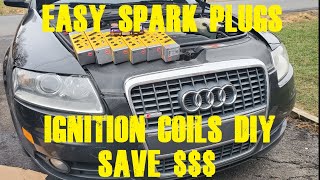
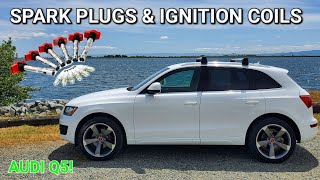
Typical fix: Replace the faulty ignition coil. It is often recommended to replace all six coils and spark plugs at the same time, especially if they are original, to ensure long-term reliability. 🎬 Watch: Step-by-step guide to replacing coils and spark plugs.
Est. part cost: $30-$60 per coil - Worn or Fouled Spark Plug 🔴 High Probability Spark plugs are a regular maintenance item with a finite lifespan, typically 30,000 to 60,000 miles. An incorrect gap or fouling from oil or carbon can prevent a proper spark.
How to confirm: After confirming the coil is good, remove the spark plug from cylinder 6. Inspect it for wear, damage, or fouling (e.g., black and sooty from carbon, or wet from oil/fuel). You can also swap it with another cylinder's plug to see if the misfire follows.
Typical fix: Replace the spark plug. It is best practice to replace all six spark plugs at the same time to maintain consistent performance.
Est. part cost: $15-$25 per plug - Carbon Buildup on Intake Valves 🟡 Medium Probability This is a very common and well-documented issue on Audi's FSI direct-injection engines. The lack of fuel washing over the valves allows carbon deposits to accumulate, severely restricting airflow and causing misfires, especially on cold starts or at idle. Many owners on forums like AudiWorld report this as the cause after ignition components are ruled out.
How to confirm: This requires visual inspection using a borescope inserted into the intake runners with the intake manifold removed. The valves will be visibly coated in thick, black carbon deposits. This is often preceded by ruling out ignition and fuel injector issues.
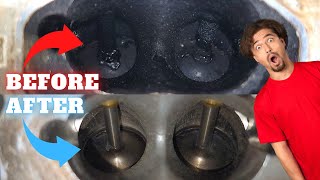
Typical fix: The intake valves must be manually cleaned. This is typically done by 'walnut blasting' (using crushed walnut shells as a media) or by carefully scraping the deposits off after soaking them with a chemical solvent. This is a labor-intensive job as it requires removing the intake manifold. 🎬 See how to perform a DIY walnut shell carbon cleaning.
Est. part cost: $50-$100 for gaskets and seals - Clogged or Leaking Fuel Injector ⚪ Low Probability Direct injectors can become clogged over time. More specific to the 3.2L, they are known to leak fuel into the cylinder after the engine is shut off, which can cause a rich condition, a washed cylinder, and a misfire on the next startup. A user on the Ross-Tech forums with a 3.2L Q5 found a dripping injector was the cause of their misfire and rich condition.
How to confirm: This is more difficult to confirm. A professional can perform a flow test. Swapping injectors between cylinders is possible but labor-intensive. A cold start misfire that clears up, or a spark plug that is black and smells of raw fuel, are strong indicators of a leaky injector.
Typical fix: Replace the faulty fuel injector. It's recommended to replace the Teflon seals for all injectors anytime the fuel rail is removed. 🎬 Watch this walkthrough for replacing the 3.2L fuel injectors. It is often wise to replace all six injectors if they are high-mileage originals.
Est. part cost: $100-$200 per injector
Rare But Worth Checking
- Low Compression (Roller Rocker Failure): A known, though uncommon, failure point on the CALB engine is the roller rockers in the valvetrain. A worn or failed roller rocker can cause a ticking noise and lead to insufficient valve lift, causing a persistent misfire even after ignition, fuel, and carbon issues are addressed. A user on a Ross-Tech forum with a 3.2L CALB engine ultimately traced their persistent misfire to a worn-out roller rocker after trying all other common fixes. A compression test and cylinder leak-down test are the first steps to diagnosing any mechanical engine problem.
- Vacuum Leak: A leak in a vacuum hose or a faulty PCV (Positive Crankcase Ventilation) valve can introduce unmetered air into the engine, causing a lean condition and misfires. This would typically cause multiple or random misfires (P0300) but can sometimes isolate to one cylinder if the leak is near the cylinder 6 intake runner.
- Timing Chain Tensioner Failure: The 3.2L V6 is known for issues with its upper timing chain tensioners. A failing tensioner can cause a brief rattle on cold starts. If it fails sufficiently, it can allow camshaft timing to deviate, leading to misfires, typically across all cylinders on one bank (P0304, P0305, P0306) and setting timing correlation codes.
Diagnosis Steps
- Read the fault codes with an OBD-II scanner and note any other codes present, especially P0300, P130A, or timing correlation codes.
- Note the freeze frame data to see the engine conditions (RPM, load, temperature) when the misfire occurred.
- Clear the codes and test drive to see if the P0306 code returns.
- If it returns, swap the ignition coil from cylinder 6 (driver's side, rear) with cylinder 5 (driver's side, middle). A coil puller tool is recommended to avoid damage.
- Clear codes and drive again. If the code changes to P0305, the ignition coil is bad and needs replacement.
- If the code remains P0306, swap the spark plug from cylinder 6 with cylinder 5. Check the old plug for fouling.
- Clear codes and drive. If the code changes to P0305, the spark plug is the culprit.
- If the code is still P0306, the issue is likely fuel, carbon buildup, or mechanical. The next most common cause is carbon buildup.
- Visually inspect the intake valves for cylinder 6 using a borescope. This requires removing the throttle body and opening the intake runner flaps, or removing the intake manifold entirely.
- If carbon buildup is not the issue, investigate the fuel injector. A professional may be needed to perform a flow test, or it can be swapped with another cylinder's injector.
- If all else fails, perform a compression test and cylinder leak-down test on cylinder 6 to check for mechanical engine health, such as a bad valve or a failed roller rocker.
Parts You'll Likely Need
- Ignition Coil
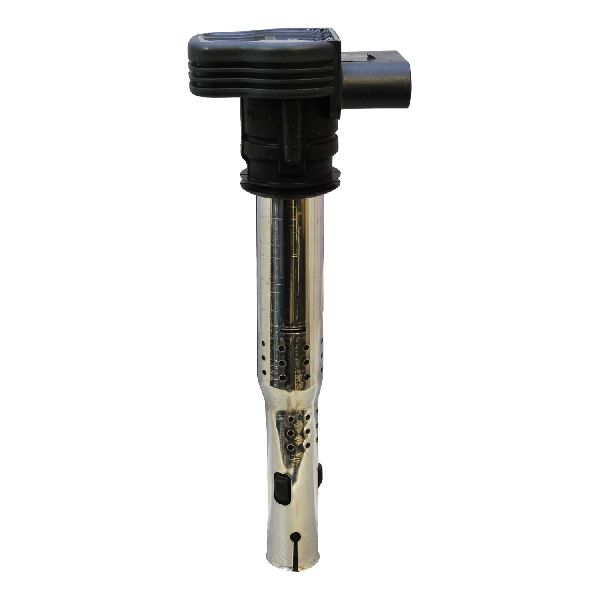
(OEM #06E905115F (supercedes 06E905115E, D, C, etc.))— This is the most common failure point for a single-cylinder misfire on this engine.
Trusted brands: Bosch, NGK, Eldor, Denso
OEM price range: $50-$70
Aftermarket price range: $30-$50 - Spark Plug
(OEM #101905622 (often NGK PFR6X-11 or Bosch FR7KPP332))— A routine maintenance item that is a frequent cause of misfires when worn or fouled.
Trusted brands: NGK, Bosch
OEM price range: $20-$30
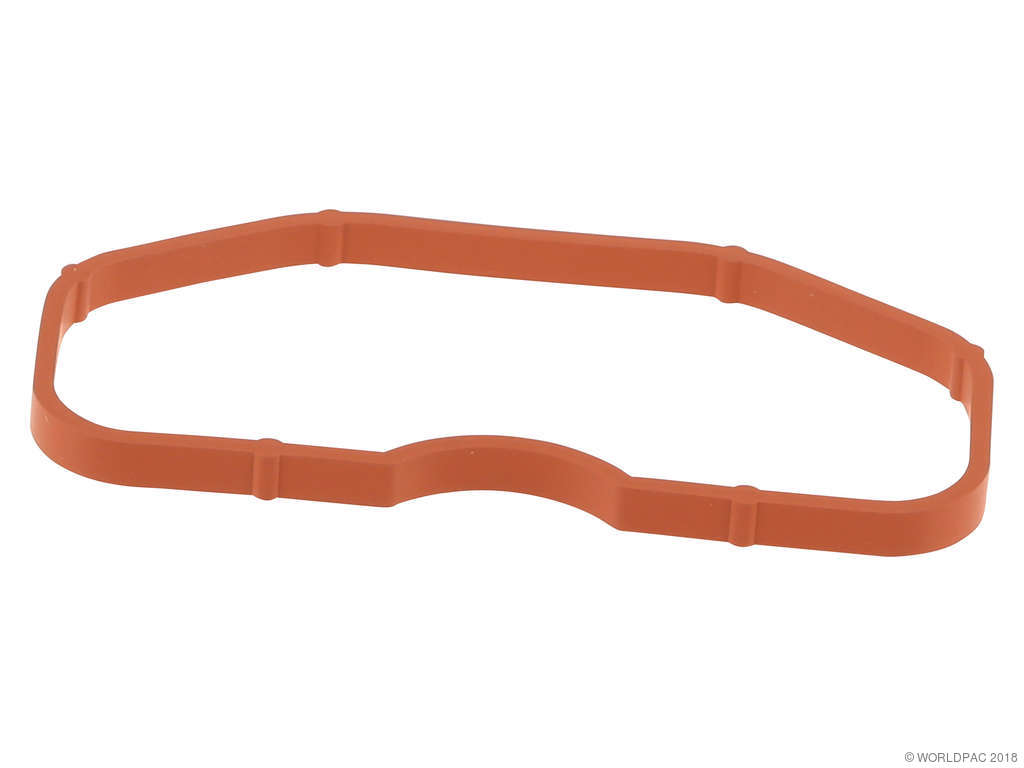
Aftermarket price range: $15-$25 - Intake Manifold Gasket Kit
(OEM #06E198717)— Required if removing the intake manifold for carbon cleaning or fuel injector service. The kit includes gaskets for the upper and lower manifold sections.
Trusted brands: Victor Reinz, Elring, Genuine Audi
OEM price range: $80-$120
Aftermarket price range: $40-$70 - Fuel Injector
(OEM #06E906036C or 06E906036E)— Can become clogged or leak, causing misfires. Often replaced after ignition and carbon issues are ruled out.
Trusted brands: Bosch, Genuine Audi
OEM price range: $150-$250
Aftermarket price range: $70-$150
Related Codes That Often Appear With This One
- P0300 — If multiple cylinders are misfiring due to a systemic issue like a large vacuum leak or severe carbon buildup, P0300 (Random/Multiple Cylinder Misfire) will appear alongside P0306.
- P130A — This is an Audi-specific code for 'Cylinder Disabling'. If the ECM detects a severe misfire that could damage the catalytic converter, it sets P130A and cuts fuel to cylinder 6 as a protective measure. The P0306 fault must be fixed to clear P130A.
- P0304, P0305 — Misfires on adjacent cylinders on the same bank (Bank 2) can indicate an issue affecting that entire side of the engine, such as a clogged catalytic converter for that bank, a failing timing chain tensioner for that bank, or a vacuum leak specific to the Bank 2 intake runners.
- P0491, P0492 — These codes for 'Secondary Air Injection System Insufficient Flow' for Bank 1 and Bank 2 are very commonly seen with misfire codes on this engine. The air passages for this system are integrated into the cylinder head and become clogged with the same carbon that affects the intake valves.
Technical Service Bulletins (TSBs) & Recalls
- TSB 2069038 / 01 22 31: Mentions MIL illumination for cylinder misfires (P0300-P0306) and suggests a software update may be needed to correct misfire detection.
- TSB Bulletin #01138920337681: Notes that a cylinder misfire fault (DTC P0301 – P0306) with DTC P130A is stored in the engine control module (ECM), J623 (address word 01).
Platform-Specific Known Issues
- The 3.2L FSI engine is notorious for heavy carbon buildup on the intake valves, which is a primary cause of misfire codes once the vehicle has higher mileage (typically over 80,000 miles).
- The timing chain components are located on the rear of the engine, making service extremely labor-intensive and expensive as it requires engine or transmission removal.
Mechanic-Grade Diagnostic Values
- Ignition Coil Secondary Resistance — expected: 9,000-14,000 Ohms (9-14 kOhms). Failure: A reading significantly higher or lower than the specified range indicates a faulty coil.
- Ignition Coil Primary Resistance — expected: 0.4 - 2.0 Ohms. Failure: A reading outside this range suggests an internal fault in the coil's primary winding.
- Low-Side Fuel Pressure (at Low Fuel Pressure Sensor G410) — expected: Approximately 5 bar (73 PSI). Failure: Significantly lower pressure indicates a weak in-tank fuel pump or a clogged filter, which could cause misfires under load.
- Long-Term Fuel Trim (Additive) at Idle (VCDS Measuring Block 032) — expected: Should be close to 0%, within +/- 10%.. Failure: A large positive value (e.g., >10%) on one bank can indicate a vacuum leak affecting those cylinders. A large negative value (e.g., < -10%) can indicate a leaking fuel injector.
Scan Tool Commands That Help
- VCDS (VAG-COM): Measuring Value Blocks (MVB) 015 & 016 — To monitor the live misfire count for each individual cylinder. Block 015 shows cylinders 1-3, and Block 016 shows cylinders 4-6. This is essential for confirming the misfire is actively occurring on cylinder 6 and to see if other cylinders are misfiring intermittently without setting a code.
- VCDS (VAG-COM): Advanced Measuring Values — On newer UDS protocol controllers, this replaces the older Measuring Blocks. You can search for 'misfire' to find the per-cylinder counters. This provides the same data as MVBs 015/016 but through the modern interface.
- VCDS (VAG-COM): Output Tests — Can be used to cycle individual fuel injectors. By listening with a mechanic's stethoscope, you can confirm if the injector for cylinder 6 is receiving a signal and clicking, which helps rule out an electrical failure of the injector or its wiring.
Wiring & Ground Locations
- (600) - Ground point on right cylinder head — Located on the cylinder head for Bank 1 (passenger side).. While not the primary ground for Bank 2, poor grounding on one bank can sometimes cause floating ground issues or electrical noise that affects the other bank. It's a relevant check for overall engine electrical health.
- (615) - Ground connection on left strut tower — In the engine compartment, on the driver's side strut tower.. This is a major chassis ground point in the engine bay. Corrosion or a loose connection here can cause a weak spark from the ignition coils on Bank 2 (cylinders 4, 5, 6), leading to misfires.
- (12) - Ground Connection (in engine compartment, left) — Located on the driver's side of the engine compartment, often near the longitudinal frame member.. This is the main engine-to-chassis ground strap. A faulty or corroded main ground can cause a host of electrical issues, including intermittent misfires, as the ignition system may not get a stable ground reference.
- J623 - Engine Control Module (ECM) — Located in the plenum chamber, under the plastic cover at the base of the windshield.. The ECM provides the ground signal to fire the ignition coil for cylinder 6. While an ECM failure is rare, water intrusion in the plenum chamber can corrode the ECM connectors and wiring, leading to a P0306.
Real Owner Repair Stories
- AudiWorld Forums user 'kingnguyen964@yahoo.com' (2010 Audi Q5 3.2L) — Sudden violent shaking on the highway, solid EPC light (no CEL), code P0306.
❌ Tried (didn't work) Replaced spark plug for cylinder 6, Replaced ignition coil for cylinder 6
✅ What actually fixed it The user's post ends after the initial failed attempts, with the car still shaking violently and smelling of smoke. This is a cautionary tale where the common fixes did not work, pointing towards a more severe underlying issue like a fuel injector stuck open or a mechanical failure. The thread did not have a final resolution posted. - Reddit user r/Audi (2012 Audi Q5 3.2L FSI at 95,000 miles) — Misfire codes P0304 and occasionally P0306, primarily at idle and on startup. EPC light and disabled cylinder would sometimes occur.
❌ Tried (didn't work) Replaced fuel injector on cylinder 4, Swapped spark plug and ignition coil from cylinder 4 to cylinder 1
✅ What actually fixed it The user had performed a carbon cleaning a few months prior. The issue persisted after trying common ignition and fuel injector fixes. The thread does not contain a final confirmed fix, but the symptoms (misfire at idle only, after ruling out coil/plug/injector) are highly characteristic of either residual carbon issues or a potential vacuum leak that is most prominent at idle.
OEM Part Supersession History
06E-905-115-E (and earlier revisions)→06E-905-115-G— Revisions to improve reliability and resistance to heat failure. The -E revision was common but has been updated.
Heads up: All revisions are generally interchangeable, but it is highly recommended to use the latest available revision (e.g., 06E-905-115-G) and to replace coils in full sets to ensure matched performance and longevity.06E-906-036-C, 06E-906-036-F→06E906036F (Hitachi)— Minor updates to injector design and manufacturing process.
Heads up: While injectors can be replaced individually, it is best practice to replace them as a set of six if the vehicle has high mileage to prevent future failures and ensure balanced fuel delivery.
Diagnostic Flowchart
Other Known Issues on This Vehicle
Issues unrelated to this code that are worth knowing about as an owner of this generation:
- Upper Timing Chain Tensioner Failure 🔴 High — Common on engines over 80,000 miles. Often presents as a loud 'rattle' for 1-2 seconds on a cold start. If left unaddressed, can lead to jumped timing and catastrophic engine damage. (Ref: Audi TSB 2033806/7 addresses timing chain noise and issues.)
- Carbon Buildup on Intake Valves 🟠 Medium — Considered an inevitable maintenance item on all 3.2L FSI engines, typically requiring cleaning every 60,000-80,000 miles. Causes rough idle, hesitation, and misfire codes.
- Water Pump and/or Thermostat Failure 🟠 Medium — The water pump and thermostat housing often use plastic components that can become brittle and leak over time, typically between 70,000-100,000 miles. An Audi technician on Reddit confirms this is a common issue across the lineup.
- Excessive Oil Consumption 🟠 Medium — While more famous on the 2.0T engine, the 3.2L V6 can also consume oil, often due to PCV system issues or worn piston rings at higher mileage. The lack of a physical dipstick makes monitoring oil level via the MMI system critical.
Used vs. New Parts: Buying Guide for This Vehicle
When a used part is the smart pick: Used parts are generally not recommended for critical ignition and fuel components on this vehicle due to their known failure rates and the labor involved in replacement. A used intake manifold or engine covers are acceptable, but wear items should be purchased new.
Donor-vehicle mileage cap: roughly under 60000 miles for the part to have meaningful remaining life.
What to inspect on the donor part:
- For any used part, verify the donor vehicle's mileage.
- Avoid parts from vehicles that show signs of front-end collision or engine fires.
- Inspect plastic connectors for brittleness or cracking.
OEM-only on this vehicle (don't cheap out):
- Fuel Injectors: While aftermarket options exist, OEM/Hitachi injectors are recommended for proper spray pattern and longevity.
- PCV / Oil Separator: Aftermarket PCV units for Audis are notoriously unreliable and can fail quickly, causing oil consumption and vacuum leaks. Stick with OEM.
- Timing Chain Components: Given the critical nature and labor cost, only OEM or OEM-supplier (e.g., IWIS) timing components should be used.
Aftermarket brands forum-validated for this vehicle:
- Ignition Coils: Bosch, Eldor, NGK.
- Spark Plugs: NGK (PFR6X-11), Bosch.
- Gaskets: Victor Reinz, Elring.
Brands owners have reported issues with on this vehicle:
- Unbranded or 'white-box' ignition coils and sensors from online marketplaces. These often have a very high failure rate and can cause further diagnostic confusion.
Real Owner Stories
Aggregated from forums and TSBs cited above. Mileages and costs reflect what owners reported in those sources.
2010 Audi Q5 3.2L CALB
Symptoms: Noise under the 1-3 valve cover and a cylinder 3 misfire.
What fixed it: The misfire was caused by a worn-out roller rocker after the owner had already attempted to fix it with coils, plugs, carbon cleaning, and injectors.
Source hint: Ross-Tech Forums: 2010 Audi Q5 3.2 (CALB) noise under 1-3 valve cover & #3 misfire
2009 Audi Q5 3.2L CALB
Symptoms: Multiple misfires and rich running conditions.
What fixed it: A dripping fuel injector was identified as the cause via borescope inspection.
Source hint: Ross-Tech Forums: 2009 Audi Q5 3.2 (CALB) fault code 6209/P1137
2009 Audi Q5 3.2L FSI
Symptoms: P0306 and P0300 codes appearing alongside secondary air injection faults (P0491/P0492).
What fixed it: Carbon buildup cleaning was identified by forum experts as the likely solution for the combined codes.
Source hint: AudiWorld Forums: engine fault codes 2009 q5 3.2fsi quattro
Related OBD-II Codes
Frequently Asked Questions
Is there a TSB for misfire codes P0300-P0306 on my 2009-2012 Audi Q5?
I have P0306 and P0491/P0492 codes; are these related on the 3.2L FSI?
How can I tell if my P0306 code is caused by a leaky fuel injector on my CALB engine?
At what mileage does carbon buildup typically cause misfires like P0306 on the Audi Q5 3.2L?
Can I swap parts to diagnose which cylinder is causing the P0306 code?
Helpful Videos

Used OEM Parts in Stock


New Aftermarket Parts Available



The information in this article is provided for general reference and educational purposes only. Vehicle specifications, procedures, and part compatibility can vary by production date, trim level, and region. Always consult your vehicle's factory service manual and verify part numbers before purchasing or performing repairs. Safety-critical components such as airbags, seat belts, and braking systems should be installed by a qualified professional.
- Audi Q5:
- 🎬 Helpful Videos
- 🛍️ Shop This Part
- What's Unique About the 2009-2012 Audi Q5
- Symptoms You May Notice
- Most Likely Causes
- Rare But Worth Checking
- Diagnosis Steps
- Parts You'll Likely Need
- Related Codes That Often Appear With This One
- Technical Service Bulletins (TSBs) & Recalls
- Platform-Specific Known Issues
- Mechanic-Grade Diagnostic Values
- Scan Tool Commands That Help
- Wiring & Ground Locations
- Real Owner Repair Stories
- OEM Part Supersession History
- Diagnostic Flowchart
- Other Known Issues on This Vehicle
- Used vs. New Parts: Buying Guide for This Vehicle
- Real Owner Stories
- 2010 Audi Q5 3.2L CALB
- 2009 Audi Q5 3.2L CALB
- 2009 Audi Q5 3.2L FSI
- Related OBD-II Codes
- Frequently Asked Questions
- 🎟️ Get 5% Off