

OBD-II Code P0491: Secondary Air Injection System Insufficient Flow (Bank 1)
The Ultimate 2026 Guide to What P0491 Means, Why It Triggers, and How to Fix It for Good
- Code P0491 indicates Bank 1 of your engine isn't receiving enough fresh air during the first 30-90 seconds of a cold start, guaranteeing an emissions test failure.
- Inspect the cheap plastic and rubber vacuum hoses first; brittle, cracked lines cause over 40% of P0491 codes and cost under $75 to replace.
- Never replace a failed $300 air pump without also replacing the $100 one-way check valve, as a stuck valve allows exhaust moisture to destroy the new pump.
- On 2009-2016 Audi and VW 3.0T/3.2L engines, P0491 usually means carbon-clogged internal cylinder head ports, requiring a highly specialized $1,700+ professional cleaning.
What Does P0491 Mean?

The P0491 code means your Powertrain Control Module (PCM) detects insufficient fresh air pumped into the Bank 1 exhaust. The Secondary Air Injection (SAI) system pumps air into the exhaust for 30-90 seconds after a cold start. This extra oxygen burns unburned fuel, heating the catalytic converter faster and reducing emissions. Bank 1 is the side of the engine containing the #1 cylinder.
Technical definition: Secondary Air Injection System Insufficient Flow Bank 1. The PCM sets this DTC when secondary airflow to engine bank 1 falls below the manufacturer's specified threshold during cold starts. The PCM monitors the upstream oxygen sensor's response to SAI pump activation; if the sensor fails to detect a rapid lean condition (excess oxygen), it flags insufficient flow. Some vehicles use a dedicated pressure sensor to monitor this directly.
Can I Drive With P0491?

Yes, But With Caution. Yes, you can drive with code P0491, but schedule a repair to avoid expensive secondary failures. The car is safe to operate, but you will automatically fail an emissions test. If a faulty check valve caused the code, driving allows hot exhaust and moisture to flow backward, destroying the $250-$600 secondary air pump. Over months, lacking air during cold starts shortens the catalytic converter's life, an $800-$2500+ repair.
Common Causes

- Leaking, cracked, or disconnected hoses (Very Common) — Rubber and plastic vacuum lines controlling the system's valves become brittle from engine heat. Cracks and leaks are the most frequent cause, especially on European vehicles. 🎬 Watch: How to find and fix vacuum leaks on BMW engines.
- Faulty or stuck one-way check valve (Combi Valve) (Common) — This valve lets fresh air into the exhaust but blocks exhaust from escaping. Stuck closed, it blocks airflow. Stuck open, it lets moisture and exhaust ruin the air pump.
- Failed Secondary Air Injection Pump (Common) — The electric pump wears out or fails. This is almost always a secondary failure caused by a bad check valve allowing water or hot exhaust gas into the pump. In freezing climates, trapped water turns to ice, seizing the pump and blowing its fuse.
- Clogged air passages in cylinder head/exhaust manifold (Common On Specific Models) — Carbon buildup completely blocks the small ports where air enters the exhaust stream. This is a well-known, labor-intensive issue on specific Audi, VW, and BMW engines.
- Blown fuse or faulty relay (Less Common) — The air pump draws significant current. A seized pump instantly blows the 40A or 50A fuse. The relay also fails, preventing the pump from receiving power.
- Faulty Air Control Solenoid/Diverter Valve (Less Common) — This electrically-controlled valve directs vacuum to the check valves. If the solenoid fails, the check valves remain closed, blocking all airflow even if the pump works perfectly.
- Faulty Secondary Air Pressure Sensor (Rare) — Some vehicles (notably VW/Audi) use a dedicated pressure sensor to monitor airflow. If this sensor fails, the PCM incorrectly sets a P0491 code despite sufficient airflow.
- Damaged wiring or connectors (Rare) — Electrical wires routing to the pump, relay, or sensors corrode or fray. The main pump connector sits low in the engine bay, exposing it to water and road debris.
- PCM or ECM Malfunction (Very Rare) — The Powertrain Control Module itself fails or runs outdated software, misinterpreting SAI system data. A manufacturer software update (reflash) fixes erroneous codes.
Symptoms

- Check Engine Light is on — This is the most common and often the only symptom you notice.
- Failed emissions test — The secondary air system is a primary emissions control device. An active P0491 code guarantees an automatic smog check failure.
- Abnormal noise from the engine bay on cold start — A loud vacuum cleaner noise for 60-90 seconds is the pump running. A hissing sound indicates a leaking hose. Hearing NO sound on a cold start confirms a failed pump, fuse, or relay.
- Rough engine idle on cold starts — The engine runs rough, hesitates, or stalls for the first minute after starting, especially in cold weather, because the fuel mixture lacks expected oxygen compensation.
- Noticeable exhaust smell on cold start — Without extra air to burn off excess hydrocarbons, you smell strong unburned fuel from the exhaust for the first minute of operation.
Diagnostic Flowchart
Tap your situation to follow the diagnostic path that matches what you're seeing on this code.
Common Fixes & Costs
- Replacing cracked vacuum or air hoses — Parts: $20-$75, Labor: $100-$200, ~0.8 hr book time (DIY)
- Replacing the one-way check valve (Combi Valve) — Parts: $50-$400, Labor: $150-$550, ~1.2 hr book time (Intermediate)
- Replacing the Secondary Air Injection (SAI) Pump — Parts: $250-$600, Labor: $350-$900, ~1.5 hr book time (Intermediate)
- Replacing the SAI Pump Relay or Fuse — Parts: $10-$40, Labor: $50-$100, ~0.3 hr book time (DIY)
- Cleaning clogged secondary air ports — Parts: $50-$150, Labor: $1700-$3000+, ~8.5 hr book time (Professional)
- Initial Diagnosis Fee — Parts: $0, Labor: $150-$250, ~1.0 hr book time (Professional)
Used vs. New Parts: Buying Guide
When a used part is worth it: For the main air pump, a used OEM part from a low-mileage, accident-damaged vehicle is a cost-effective alternative to a new aftermarket part. Avoid used electronic relays or sensors.
Donor-vehicle mileage cap: roughly under 60000 miles for the part to have meaningful remaining life.
Donor quality checklist:
- Verify the donor vehicle was not scrapped due to engine or emissions problems.
- Visually inspect the part for corrosion, moisture damage, or physical cracks.
- Match the OEM part number exactly, as variations exist within the same model year.
Decision logic:
- If The part is a simple hose, fuse, or relay → Always buy new; the cost savings for used is negligible.
- If The part is an expensive air pump and the vehicle is over 10 years old → A tested, used OEM pump from a reputable salvage yard is a reasonable choice to save money.
- If The part is a check valve or solenoid → Favor new (OEM or quality aftermarket) as these parts fail from internal wear and heat, which is impossible to assess on a used part.
Warranty tradeoff: Used parts typically come with a 30-90 day warranty covering only the part. New aftermarket parts offer 1-year to limited lifetime warranties. New OEM parts carry a 1-2 year warranty.
Worst-case if a used part fails: $250-600 if a used pump fails after the warranty period, requiring repeat labor costs plus another replacement part.
What Happens If You Wait — Timeline
- 0-1 month: Code P0491 is set, and the Check Engine Light is on. No drivability symptoms are noticeable. The car automatically fails an emissions test. (MPG impact: 0-1%% · Added cost: $0)
- 1-6 months: If caused by a faulty check valve, moisture and exhaust slowly damage the air pump. The pump becomes louder (whining noise) on cold starts. A slight rich-fuel smell is present for the first minute of operation. (MPG impact: 1-3%% · Added cost: $350-$900 (Cost to replace the now-damaged air pump in addition to the original failed part))
- 6-18 months: The air pump seizes completely, blowing its 40A/50A fuse. The lack of extra oxygen during cold starts puts thermal stress on the catalytic converter, reducing its efficiency. (MPG impact: 2-5%% · Added cost: $500-$1200 (Pump and valve replacement is now certain))
- 18+ months: Prolonged rich cold starts degrade the catalytic converter until it triggers a P0420 (Catalyst Inefficiency) code. The repair involves fixing the original P0491 fault AND replacing the catalytic converter. (MPG impact: 5-10%% · Added cost: $1500-$3500+ (Cost of SAI system repair plus a new catalytic converter))
Cost of Not Fixing It
- Immediate: Guaranteed failure of any OBD-II emissions or smog inspection. (Added cost: $0 (but prevents vehicle registration renewal))
- 1-6 months: If caused by a bad check valve, moisture and exhaust gas backflow destroys the secondary air pump. (Added cost: $350-$900)
- 6+ months: Prolonged rich-running conditions on cold starts degrade the catalytic converter's efficiency, leading to eventual failure. (Added cost: $800-$3000+)
Diagnosis Steps

- Scan for Codes and Review Freeze Frame Data
Use an OBD-II scanner to confirm P0491. P0492 indicates the same issue on Bank 2, pointing to a shared part like the pump. P0410, P0411, or P0418 point to general system or electrical faults. Review freeze frame data to verify engine temperature when the code set.
Tools: OBD-II Scanner (Beginner) - Visual Inspection
With the engine off, inspect the entire SAI system. Look for cracked, disconnected, or brittle plastic and rubber hoses. Trace the large air hose from the pump to the check valve and the small vacuum lines to their solenoids.
Tools: Flashlight (Beginner) - Listen for the Pump
Have a helper start the completely cold engine. You must immediately hear the SAI pump run for 30-90 seconds. If you hear nothing, the problem is the pump, fuse, or relay. If you hear it, the problem is a blockage, leak, or bad valve downstream.
Tools: A helper (Beginner) - Check Fuses and Relays
Locate the fuse (often 40A or 50A) and relay for the SAI pump. A blown fuse strongly suggests a seized pump. Test the relay by applying 12V to the control circuit (pins 85 and 86) and listening for a click; verify continuity (less than 0.5 Ohms) across the switched terminals (pins 30 and 87).
Tools: Owner's Manual, Fuse Puller, Multimeter, 12V Power Source (Beginner) - Test the Check Valve (Combi Valve)
Disconnect the large hose from the air pump to the check valve. Start the engine cold. You must feel strong airflow from this hose. With the engine off, inspect the port on the check valve. Black carbon soot or moisture proves the valve leaks and has likely damaged the pump.
Tools: Screwdrivers or Pliers (Intermediate) - Perform a Smoke Test
Force low-pressure, vaporized mineral oil into the system's hoses. Smoke pours out of any cracks or bad connections, instantly revealing hard-to-see vacuum leaks.
Tools: Automotive Smoke Machine (Intermediate) - Pro Tip: Test Component Actuation
Use a bi-directional scanner to command the SAI pump and control solenoids on and off. This verifies the PCM and wiring function correctly. Alternatively, apply 12V and ground directly to the pump or solenoid to see if they activate.
Tools: Advanced OBD-II Scanner or Power Probe (Advanced) - Pro Tip: Test System Vacuum (Pneumatic Valves)
For systems with vacuum-actuated combi valves, connect a vacuum gauge to the line feeding the valve. When the control solenoid activates, the gauge must show strong vacuum. A reading below 11.5 inHg indicates a vacuum leak or faulty control solenoid.
Tools: Vacuum Gauge and T-fittings (Advanced) - Pro Tip: Monitor O2 Sensor Live Data
Monitor the Bank 1 upstream O2 sensor voltage. When the SAI pump is commanded on during a cold start, the extra oxygen causes a sharp, rapid voltage drop (e.g., from ~800mV to under 200mV). If voltage remains static, air is not reaching the exhaust stream.
Tools: Graphing OBD-II Scanner (Advanced) - Pro Tip: Measure SAI Pump Amperage Draw
Clamp an inductive amp meter around the main power wire for the SAI pump. A healthy pump draws a steady 15-30A. A draw near or above the fuse rating (40A+) indicates a seized motor. No current draw points to an open circuit or dead pump.
Tools: Inductive Amp Clamp Multimeter (Advanced) - Pro Tip: Test the SAI Pressure Sensor (VW/Audi)
Back-probe the pressure sensor's signal wire. With key on/engine off, voltage is ~2.6V. Command the pump on (combi valve closed); voltage rises to ~3.6V. Command the combi valve open; voltage drops to ~3.25V. Static voltage confirms no flow or a faulty sensor.
Tools: Multimeter, Advanced OBD-II Scanner, Back-probe pins (Advanced)
When This Code Triggers (Freeze-Frame Conditions)
- Engine Coolant Temp: Below 86°F (30°C) (Cold start (engine sat overnight))
- Time Since Start: 10-120 seconds (During initial engine warm-up phase)
- Engine RPM: Idle (700-1200 RPM) (Engine running at idle shortly after start)
- Intake Air Temperature: Matches ambient temperature (Confirms a true cold start)
Related Codes
- P0492 — Identical code for Bank 2. Having both P0491 and P0492 proves the fault is in a shared component, such as the air pump, relay, or main air supply hose.
- P0410 — General code for 'Secondary Air Injection System Malfunction.' The PCM detects a fault but hasn't isolated it to a specific flow problem, often pointing to a pump failing to activate.
- P0411 — 'Secondary Air Injection System Incorrect Flow Detected.' Very similar to P0491 and points to the exact same set of potential problems. Diagnostically treated identically.
- P0418 — 'Secondary Air Injection System Control 'A' Circuit Malfunction'. An electrical code pointing specifically to a bad relay, blown fuse, broken wiring, or PCM driver circuit issue.
Climate & Environmental Factors
- Cold Climates: If a check valve leaks, exhaust moisture condenses in the air pump. In freezing temperatures, this water turns to ice, seizing the pump motor upon the next cold start and instantly blowing the high-amperage fuse.
- High Humidity / Frequent Short Trips: These conditions increase exhaust condensation. A faulty check valve allows this moisture to migrate into the SAI pump, causing corrosion and bearing failure, recognizable by a loud whining noise.
- Altitude: High altitude has no direct correlation with SAI system failure rates. The PCM's barometric pressure sensor compensates for pressure differentials.
How to Talk to a Mechanic About This Code
Say this: "I have a P0491 code and I'd like to schedule a diagnostic. Can you please ensure the technician starts by checking the easy things like the system's fuse, relay, hoses for leaks, and tests the check valve before quoting a full pump replacement?"
This signals you know the common, inexpensive failure points versus the most expensive one. It guides the shop toward a logical, step-by-step diagnosis instead of jumping to conclusions, saving you from paying for an unnecessary pump.
Avoid saying:
- 'My check engine light is on, can you look at it?'
- 'Just fix whatever is wrong.'
- 'I think I need a new air pump.'
Questions to ask before authorizing the repair:
- If you are recommending an air pump, did you confirm the check valve is not leaking? A bad valve destroys the new pump.
- Did you test the pump's fuse and relay, and did you confirm the pump receives power?
- Can you show me the cracked hose or the failed check valve?
- If the pump and valves are good, have you ruled out clogged air passages in the cylinder head?
Where to Take It: Dealer vs Independent vs Chain
- Dealer:
Recommended only for warranty work or confirmed clogged-port issues on German vehicles.
Best for: Vehicles under warranty or with a relevant extended emissions warranty (common for Audi/VW/Subaru SAI issues)., Complex cases involving clogged cylinder head ports, requiring manufacturer-specific tools and TSB procedures.
Downsides: Highest labor rates, typically 1.5-2x more than independent shops., Dealerships frequently replace entire assemblies when only a single $50 component failed. (Typical cost: +50% vs. baseline) - Independent Shop:
Best choice for most P0491 repairs. Find a trusted local shop with good reviews for your specific car brand.
Best for: Out-of-warranty vehicles where the cause is likely a common failure like a hose, check valve, or pump., Shops specializing in your vehicle's brand (e.g., European auto specialists) are highly familiar with P0491.
Downsides: Quality and diagnostic capabilities vary widely; check reviews and ASE certifications., May lack specialized tools for cleaning clogged ports on certain Audi/VW models. (Typical cost: +0% vs. baseline) - Chain Shop:
AVOID for P0491 diagnosis. The risk of misdiagnosis and being oversold unnecessary parts is high.
Best for: Potentially checking or replacing a fuse.
Downsides: Technician skill varies dramatically., High pressure to upsell leads to misdiagnosis, like selling an expensive air pump when only a vacuum line is cracked. (Typical cost: -10% vs. baseline)
When to Walk Away From the Repair
If the estimated repair cost exceeds 40% of the car's private-party value, seriously consider selling the car as-is or trading it in.
- Car worth $5000, fix is $800: Fix it. This repair (likely a pump and/or valve) is well below the threshold and restores full emissions compliance.
- Car worth $8000, fix is $2800: Borderline. This cost suggests a clogged port repair on a German car. Check for emissions warranty extensions before paying. Get a second opinion from an independent specialist.
- Car worth $3000, fix is $2200: Walk away. The repair cost is a huge percentage of the car's value. It is not an economically sound repair.
What Scan Tool You Need for This Code
Minimum: A bidirectional scan tool that performs 'Active Tests' on the Secondary Air Injection system.
A basic $20 code reader only tells you the P0491 code exists. It cannot command the air pump or valves to turn on, leaving you guessing whether the pump, relay, or a valve is the problem.
Budget: Autel AP200 / AP200M (~$70) — This Bluetooth dongle pairs with your smartphone and offers full system diagnostics and bidirectional controls for a single manufacturer. It activates the SAI pump and solenoids to confirm functionality.
Mid-range: Foxwell NT510 Elite (~$200) — A powerful handheld scanner with robust bidirectional 'Active Test' capabilities to command the SAI pump and valves, making it excellent for pinpointing the exact failed component.
Professional: Autel MaxiCOM MK808 / Innova 5610 (~$320-500) — These professional-grade tools offer full bidirectional control for all vehicle systems, live data graphing, and guided diagnostics. They easily run any necessary tests on the SAI system.
Rent vs buy: Rent a scanner from a parts store for free to read/clear the code, but it won't have bidirectional test functions. For a proper P0491 diagnosis, buying an affordable bidirectional tool like the Autel AP200 is a better investment.
How to Clear the Code After You Fix It
- Use an OBD-II scan tool to clear the P0491 code.
- Let the vehicle sit for 8+ hours to ensure a complete cold soak.
- Perform a specific OBD-II drive cycle to run the readiness monitors.
Drive cycle (~15 minutes): Start the completely cold engine and idle for 3-5 minutes to run the SAI monitor. Drive for 10-15 minutes with steady-speed cruising (55 mph) and acceleration/deceleration to complete O2 sensor and Catalyst monitors.
Readiness monitors affected: Secondary Air System, Catalyst, Oxygen (O2) Sensor
Before emissions retest: drive at least 50 miles to fully set monitors.
Watch out for:
- Failing to let the engine cool down completely (cold soak) before starting the drive cycle prevents the SAI monitor from running.
- Clearing codes and immediately going for an emissions test before readiness monitors set to 'Ready'.
- Disconnecting the battery clears the code but resets all readiness monitors, requiring a full drive cycle.
Will This Fail Emissions / State Inspection?
Yes — this code typically fails an OBD-II emissions inspection.
- California: An active P0491 code is an automatic test failure. After repair, a full drive cycle must be completed to set all readiness monitors to 'Ready' before a retest.
- New York: The NYS DMV inspection includes an OBD-II scan. The presence of this code causes the vehicle to fail the emissions portion of the inspection.
- Texas: In the 17 counties requiring emissions testing, a vehicle with an illuminated Check Engine Light and code P0491 fails the inspection.
Most Commonly Affected Vehicles
- Audi A4, S4, Q5, A6, Q7 (2009-2016) — Extremely prone to carbon buildup in secondary air passages, triggering P0491 and P0492. The 3.0T and 3.2L V6 engines are most affected. The repair is highly labor-intensive.
- Volkswagen Jetta, Passat, Golf, Beetle, Tiguan (2009-2016) — The 2.5L and 1.8T/2.0T engines frequently experience failed combi valves, seized air pumps, and cracked plastic vacuum lines.
- BMW Various 3-Series, 5-Series, X3, X5 (2000-2015) — Susceptible to failing air pumps, clogged solenoid valves, and rotted vacuum lines hidden under the intake manifold.
- Subaru Forester, Impreza, Legacy, Outback (2006-2012) — On non-turbo models, air injection solenoids integrated into valve assemblies bolt to the back of the cylinder heads. These valves stick frequently and were subject to an extended warranty.
- Ford Focus, Fusion (2006-2009) — The code is often caused by a faulty diverter valve solenoid or cracked vacuum lines controlling it.
- Chevrolet / GMC Silverado, Sierra, Trailblazer, Envoy (2000-2009) — Prone to failed check valves on the exhaust manifolds. Moisture enters and destroys the air pump, often located under the driver's side frame rail.
- Porsche Cayenne, 911 (996/997) (2003-2010) — Early Cayenne models suffer cracked plastic vacuum hoses behind the intake manifold. On 911 models, a failed check valve or air change-over valve is common.
- Dodge Stratus, Avenger (2005-2008) — Triggered by a faulty actuator solenoid for the air injection system or a leak in the connecting hoses on the 2.4L engine.
Manufacturer-Specific Notes
- Audi/Volkswagen: For 3.0T and 3.2L engines (2009-2016), P0491/P0492 is almost always carbon-clogged air passages inside the cylinder heads. Audi issued TSB 2033001 and an emissions warranty extension to 10 years/120,000 miles for this repair.
- BMW: Replacing a failed air pump without proving the check valve is good guarantees repeat failure. Rotted vacuum lines hidden under the intake manifold are frequent culprits and must be replaced whenever the manifold is removed.
- Subaru: On 2006-2012 non-turbo models, secondary air valves bolt directly to the cylinder heads and seize frequently. Subaru issued a warranty extension to 10 years/150,000 miles for these components.
- Ford: Diagnosis often leads to the vacuum-operated diverter valve, but the true cause is frequently the electronic solenoid supplying vacuum to that valve, or its cracked rubber vacuum lines.
Real Owner Stories
2012 VW Jetta 2.5L at 110K miles - Easy Fix
Check Engine Light came on with code P0491. No noticeable driving issues, but the light prevented passing inspection.
What they tried:
- Owner visually inspected the engine bay.
- Found a visibly cracked and brittle plastic hose leading from the airbox towards the secondary air pump.
Outcome: Replaced the cracked corrugated plastic hose assembly. The part was inexpensive and the repair took less than 30 minutes. Cleared the code, and it did not return.
Lesson: Always start with a thorough visual inspection. Brittle plastic and rubber hoses are extremely common failure points on VW/Audi vehicles and are a cheap, easy fix.
2013 Audi S4 3.0T at 100K miles - Misdiagnosis & High Cost
Intermittent Check Engine Light with both P0491 and P0492 codes. Car drove perfectly fine.
What they tried:
- A shop first replaced the secondary air pump for $1000, but the codes returned.
- The actual problem was diagnosed as clogged secondary air ports inside the cylinder heads, a known issue.
Outcome: The owner discovered the repair was covered under an extended warranty just in time. Another user with the same car was quoted $3,400 by a dealer for the same carbon cleaning procedure because their warranty expired.
Lesson: If you have both P0491 and P0492 on an affected Audi/VW, clogged ports are highly likely. Before authorizing an expensive pump replacement, ask the shop to prove the ports are clear. Always check for Technical Service Bulletins (TSBs) and warranty extensions.
2005 Porsche Cayenne at 125K miles - Unusual Root Cause
P0491 code appeared. The owner heard the air pump running on cold starts, confirming the pump worked.
What they tried:
- After reading forum posts, the owner inspected the vacuum lines.
- Found two small cracked vacuum hoses hidden behind the air pump leading to the exhaust cut-off valves.
Outcome: The owner replaced the small, damaged sections of hose with generic silicone tubing. After clearing the codes, the issue was resolved permanently.
Lesson: Even if main air hoses look fine, small vacuum lines controlling the system's valves are critical. A careful visual inspection or professional smoke test spots these leaks easily.
How to Prevent This Code From Triggering
- Periodically inspect SAI hoses (Every oil change) — Plastic and rubber hoses become brittle from extreme engine heat. Catching a cracked hose early is a cheap fix that prevents the code and ensures system functionality.
- Use Top Tier gasoline and consider an intake valve cleaning service (Every 30,000-60,000 miles) — On direct-injection engines, fuel doesn't wash over intake valves, leading to carbon buildup that clogs secondary air ports. Quality fuel and chemical cleanings slow this process.
- If replacing the air pump, ALWAYS replace the check valve(s) (At time of pump replacement) — A failed check valve is the number one killer of air pumps, allowing moisture and exhaust to seize the new motor. Replacing the valve is mandatory insurance for your expensive new pump.
- Avoid frequent short trips (Daily habit) — Short trips prevent the engine and exhaust from fully heating up, increasing condensation. This moisture accelerates corrosion and failure of the check valve and pump.
Frequently Asked Questions
What is the most common misdiagnosis for P0491?
The most common mistake is immediately replacing the expensive secondary air pump without proper diagnosis. The actual root cause is often a cheap cracked vacuum line, a faulty check valve, or a blown fuse. A bad check valve allows moisture to destroy the new pump, causing the code to return shortly after the repair.
Can I fix P0491 myself?
Yes, replacing cracked hoses, fuses, or relays are beginner-level DIY jobs. Replacing the pump or check valve requires intermediate skills and basic hand tools. However, clearing clogged internal engine ports requires extensive disassembly and specialized tools, making it strictly a professional repair.
Will a P0491 code clear itself?
No, this is an emissions-related fault that will not clear on its own. The underlying problem must be repaired, and the code must then be cleared with an OBD-II scanner. The Check Engine Light remains illuminated as long as the fault persists on subsequent cold starts.
Can I just 'tune out' or delete the P0491 code?
While ECU tuners can disable SAI system monitoring, this is illegal under the Clean Air Act and considered emissions tampering. It leads to significant fines and causes the vehicle to automatically fail state-mandated emissions inspections.
Can P0491 be an intermittent problem?
Yes. A failing check valve or solenoid sticks intermittently, causing the code to appear and disappear for weeks. A marginal air pump works in warmer weather but fails to spin fast enough in freezing temperatures, triggering the code only on winter mornings.
What happens if I ignore code P0491?
Ignoring the code guarantees an emissions test failure. Long-term, a bad check valve destroys the air pump. Prolonged operation with a faulty SAI system reduces the lifespan of the catalytic converter due to the engine running rich during cold starts.
Why does this problem seem to happen more in cold weather?
The system runs primarily during cold starts, and failed check valves allow condensation to collect in the pump and hoses. In freezing weather, this water turns to ice, seizing the pump motor or blocking a line. This causes immediate failure and instantly blows the system's fuse.
Can a bad gas cap cause a P0491 code?
No. A loose or faulty gas cap relates to the EVAP system and triggers codes like P0455 or P0457. Code P0491 is exclusively related to the Secondary Air Injection system.
Key Takeaways
- Code P0491 indicates Bank 1 of your engine isn't receiving enough fresh air during the first 30-90 seconds of a cold start, guaranteeing an emissions test failure.
- Inspect the cheap plastic and rubber vacuum hoses first; brittle, cracked lines cause over 40% of P0491 codes and cost under $75 to replace.
- Never replace a failed $300 air pump without also replacing the $100 one-way check valve, as a stuck valve allows exhaust moisture to destroy the new pump.
- On 2009-2016 Audi and VW 3.0T/3.2L engines, P0491 usually means carbon-clogged internal cylinder head ports, requiring a highly specialized $1,700+ professional cleaning.
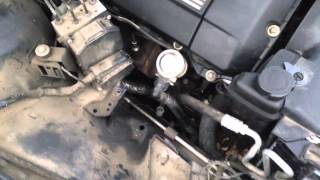
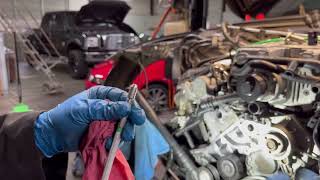
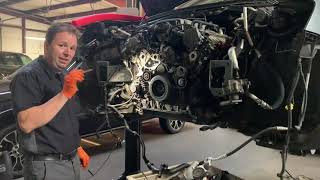
Helpful Videos
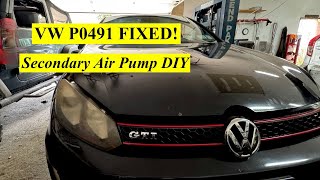
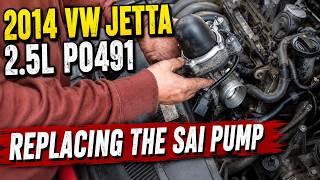
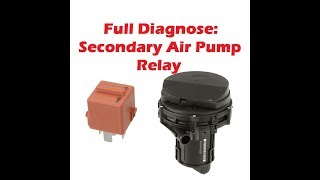
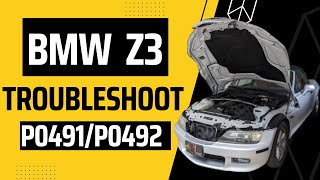

The information in this article is provided for general reference and educational purposes only. Vehicle specifications, procedures, and part compatibility can vary by production date, trim level, and region. Always consult your vehicle's factory service manual and verify part numbers before purchasing or performing repairs. Safety-critical components such as airbags, seat belts, and braking systems should be installed by a qualified professional.
- 🎬 Helpful Videos
- What Does P0491 Mean?
- Can I Drive With P0491?
- Common Causes
- Symptoms
- Diagnostic Flowchart
- Common Fixes & Costs
- Used vs. New Parts: Buying Guide
- What Happens If You Wait — Timeline
- Cost of Not Fixing It
- Diagnosis Steps
- When This Code Triggers (Freeze-Frame Conditions)
- Related Codes
- Climate & Environmental Factors
- How to Talk to a Mechanic About This Code
- Where to Take It: Dealer vs Independent vs Chain
- When to Walk Away From the Repair
- What Scan Tool You Need for This Code
- How to Clear the Code After You Fix It
- Will This Fail Emissions / State Inspection?
- Most Commonly Affected Vehicles
- Manufacturer-Specific Notes
- Real Owner Stories
- 2012 VW Jetta 2.5L at 110K miles - Easy Fix
- 2013 Audi S4 3.0T at 100K miles - Misdiagnosis & High Cost
- 2005 Porsche Cayenne at 125K miles - Unusual Root Cause
- How to Prevent This Code From Triggering
- Frequently Asked Questions
- What is the most common misdiagnosis for P0491?
- Can I fix P0491 myself?
- Will a P0491 code clear itself?
- Can I just 'tune out' or delete the P0491 code?
- Can P0491 be an intermittent problem?
- What happens if I ignore code P0491?
- Why does this problem seem to happen more in cold weather?
- Can a bad gas cap cause a P0491 code?
- Key Takeaways
- 🎟️ Get 5% Off