

OBD-II Code P0305: Cylinder 5 Misfire Detected
An ASE-Certified Master Technician's In-Depth Guide to P0305
- Stop driving immediately if the Check Engine Light flashes; an active P0305 misfire dumps raw fuel into the exhaust and will melt a $1,500 catalytic converter in minutes.
- Swap the cylinder 5 ignition coil with cylinder 3 before buying parts; if the code changes to P0303, you have definitively proven the coil is bad.
- Replace the spark plug and ignition coil first, as these two routine wear items cause over 80% of isolated single-cylinder misfires.
- Listen for a distinct ticking noise from the engine bay; on Jeep 3.6L or GM 5.3L engines, this sound paired with P0305 indicates a $2,000+ valvetrain failure, not a simple tune-up issue.
What Does P0305 Mean?

Your car's Powertrain Control Module (PCM) detected that cylinder 5 is not firing correctly. A misfire happens when the fuel and air mixture fails to ignite at the correct time, reducing engine power, increasing emissions, and causing a rough ride.
Technical definition: The SAE definition for P0305 is "Cylinder 5 Misfire Detected." 🎬 Watch: A complete diagnosis and repair guide for P0305. The PCM identifies misfire events by monitoring the crankshaft's rotational speed. During a misfire, the crankshaft momentarily slows down. The crankshaft position sensor detects this fluctuation, allowing the PCM to pinpoint the specific failing cylinder.
Can I Drive With P0305?

Yes, But With Caution. Driving with a solid Check Engine Light should be limited to essential trips under 50 miles. A consistent misfire dumps raw fuel into the exhaust, which destroys the catalytic converter, adding $800 to $2,500+ to your repair bill. If the Check Engine Light is flashing, pull over and turn off the engine immediately; this indicates a severe, active misfire that melts the catalytic converter in minutes.
Common Causes

- Faulty or Worn Spark Plug (Very Common) — The spark plug in cylinder 5 cannot produce a strong enough spark to ignite the air/fuel mixture. This is the most frequent cause, as spark plugs are routine wear items. The electrode wears down, gaps widen, or the insulator cracks and fouls with oil or carbon.
- Failed Ignition Coil or Coil Boot (Very Common) — The ignition coil provides the high voltage needed for the spark plug to fire. If the cylinder 5 coil fails, the spark is insufficient or absent. The rubber boot degrades from heat or oil, allowing the spark to arc to the cylinder head instead of the plug.
- Clogged or Faulty Fuel Injector (Common) — The cylinder 5 fuel injector fails to deliver the correct amount of fuel. It clogs with debris, suffers an internal electrical failure, or leaks, creating a lean or rich mixture that refuses to ignite.
- Damaged Wiring or Connector (Less Common) — The wiring harness or connector for the cylinder 5 ignition coil or fuel injector is damaged, loose, or corroded. This interrupts the electrical signal, preventing the component from functioning.
- Vacuum Leak (Less Common) — A leak in the intake manifold gasket or a vacuum hose near cylinder 5 introduces unmetered air. This disrupts the precise air-to-fuel ratio, causing a lean misfire often accompanied by P0171 or P0174 codes.
- Low Engine Compression (Rare) — Worn piston rings, a burnt valve, a leaking head gasket, or a wiped camshaft lobe prevent the cylinder from squeezing the air/fuel mixture enough to ignite. This requires major engine repair.
- Failed PCV System (Rare) — A stuck-open PCV valve creates a massive vacuum leak, leading to a lean condition and misfires. A failed PCV system also increases oil consumption, rapidly fouling the spark plugs.
- Faulty Powertrain Control Module (PCM) (Very Rare) — A software glitch or internal hardware failure in the engine computer incorrectly commands the cylinder 5 ignition or fuel systems. Consider this only after exhaustively ruling out all other physical parts.
Symptoms

- Flashing or Solid Check Engine Light — A solid light indicates a detected misfire. A flashing light signals a severe, ongoing misfire that actively destroys the catalytic converter.
- Rough Idle and Engine Vibration — The engine shakes noticeably, especially when stopped or at low speeds. You feel the vibration in the steering wheel, seats, or brake pedal.
- Reduced Power and Hesitation — The car feels sluggish during acceleration. The engine stumbles, jerks, or hesitates when you press the gas pedal, especially climbing hills.
- Poor Fuel Economy — The vehicle burns more fuel than usual, causing a 10-15% drop in MPG because unburnt fuel is wasted.
- Fuel Smell from Exhaust — A raw gasoline smell from the tailpipe confirms unburnt fuel from cylinder 5 is dumping directly into the exhaust system.
- Stalling or Difficulty Starting — The engine stalls when coming to a stop or cranks longer than usual before starting. A hot engine that is hard to start points directly to a leaking fuel injector.
Diagnostic Flowchart
Tap your situation to follow the diagnostic path that matches what you're seeing on this code.
Common Fixes & Costs
- Replace Spark Plugs — Parts: $10-$40 (per plug), Labor: $80-$200 (parts and labor for one bank), ~0.8 hr book time (DIY)
- Replace Ignition Coil — Parts: $50-$150, Labor: $120-$400 (parts and labor, depending on accessibility), ~0.5 hr book time (DIY)
- Replace Fuel Injector — Parts: $100-$350, Labor: $250-$750 (parts and labor for a single injector), ~1.5 hr book time (Intermediate)
- PCV Valve/Hose Replacement — Parts: $15-$75, Labor: $70-$180 (parts and labor), ~0.8 hr book time (DIY)
- Replace Intake Manifold Gasket — Parts: $40-$360, Labor: $450-$900 (parts and labor), ~4.5 hr book time (Professional)
- Engine Mechanical Repair (e.g., Head Gasket, Lifters, Camshaft) — Parts: $500-$1500+, Labor: $1500-$5500+ (parts and labor, varies greatly by issue), ~8.0 hr book time (Professional)
Used vs. New Parts: Buying Guide
When a used part is worth it: For electronic components like ignition coils and fuel injectors, buying new is strongly recommended due to their wear characteristics. Used parts make sense for high-cost, non-wear items from low-mileage vehicles, but not for common P0305 failure parts.
Donor-vehicle mileage cap: roughly under 50000 miles for the part to have meaningful remaining life.
Donor quality checklist:
- Verify the donor vehicle was not scrapped for engine or emissions-related failures.
- Buy from a reputable seller who offers testing or a functional guarantee.
- Match the part number exactly; visually identical parts have different internal specifications.
Decision logic:
- If Part is a spark plug or ignition coil → Always buy new. The cost savings of a used part are minimal and not worth the risk of premature failure.
- If Part is a fuel injector and budget is extremely tight → A professionally remanufactured injector with a warranty is an acceptable alternative to new. Avoid untested, used 'as-is' injectors.
- If Part is a major engine component (e.g., cylinder head) → A used part from a low-mileage, accident-damaged vehicle is a viable option, but requires careful inspection.
Warranty tradeoff: Used parts typically have a 30-90 day warranty. Aftermarket new parts carry a 1-year to limited lifetime warranty. New OEM parts offer a 1-2 year warranty.
Worst-case if a used part fails: 200-800. If a used coil or injector fails, you must pay for the part again and repeat the labor for installation.
What Happens If You Wait — Timeline
- 0-100 miles: Solid Check Engine Light appears. Driver notices a slight rough idle or hesitation on acceleration. The misfire is intermittent. (MPG impact: 1-5%% · Added cost: $0-$10 in wasted fuel)
- 100-500 miles (or minutes if CEL is flashing): Misfire becomes consistent. Engine vibration is obvious at stops. Unburnt fuel enters the exhaust, raising the catalytic converter temperature above its normal operating range. (MPG impact: 5-15%% · Added cost: $50-$100 in wasted fuel)
- 500-2,000 miles: The catalytic converter's internal honeycomb substrate overheats and melts from the raw fuel. This creates a partial exhaust restriction, reducing engine power. A P0420 or P0430 code appears. (MPG impact: 15-25%% · Added cost: $1,200-$2,800 (catalytic converter replacement is now required))
- 2,000+ miles: Complete catalytic converter meltdown causes a major exhaust blockage, leading to extreme backpressure and engine stalling. Prolonged misfires cause 'cylinder wash,' stripping oil from cylinder walls and requiring an engine rebuild. (MPG impact: 25-50%+% · Added cost: $3,000-$7,000+ (catalytic converter plus potential engine repair/replacement))
Cost of Not Fixing It
- 0-1 month: Noticeable drop in fuel economy (5-15%), rough engine performance, and increased hydrocarbon emissions. (Added cost: Negligible)
- 1-6 months: Severe risk of catalytic converter damage. Unburnt fuel from the misfire superheats the converter, melting its internal structure and causing a blockage. (Added cost: 1200-2800)
- 6+ months: Internal engine damage. 'Cylinder wash' from raw fuel strips oil from the cylinder wall, accelerating wear on the piston rings and cylinder bore. (Added cost: 3000-7000+)
Diagnosis Steps

- Read Codes and Freeze Frame Data
Use an OBD-II scanner to confirm P0305 and check for related codes (e.g., P0205 for injector, P0171 for vacuum leak). Note the freeze-frame data to see engine RPM, load, and temperature when the code triggered, allowing you to recreate the exact conditions during testing.
Tools: OBD-II Scanner (Beginner) - Swap the Ignition Coil
Swap the cylinder 5 ignition coil with an easily accessible adjacent cylinder (e.g., cylinder 3). Clear the codes and drive. If the code changes to P0303, the ignition coil is definitively bad. If it remains P0305, the coil is good.
Tools: Basic socket/wrench set (Beginner) - Inspect and Swap the Spark Plug
Remove the cylinder 5 spark plug and inspect it for worn electrodes, oil fouling, or cracked ceramic. If the coil swap didn't isolate the issue, swap this spark plug with another cylinder. If the misfire moves, replace the spark plug.
Tools: Spark plug socket, ratchet, extension (Intermediate) - Test the Fuel Injector and Circuit
Listen to the cylinder 5 fuel injector with a mechanic's stethoscope; you must hear a consistent, rapid clicking. Use a noid light on the injector connector to confirm the PCM is sending a steady electrical pulse while the engine runs.
Tools: Mechanic's stethoscope, Noid light kit, Multimeter (Intermediate) - Visually Inspect Wiring and Vacuum Lines
Inspect the wiring and connectors for the cylinder 5 coil and injector for melted plastic, corrosion, or rodent damage. Check vacuum hoses around the intake manifold for obvious cracks or disconnections.
Tools: Flashlight (Beginner) - Check for Vacuum Leaks
Spray short bursts of brake cleaner around the intake manifold gasket near cylinder 5 while the engine idles. If the engine RPM surges or drops, you found the vacuum leak. A professional smoke test is the safest, most definitive method.
Tools: Brake cleaner, Smoke machine (professional) (Intermediate) - Perform a Compression Test
Thread a compression tester into cylinder 5. A healthy cylinder reads 125-160 PSI, and the lowest cylinder must be within 10% of the highest. If cylinder 5 reads below 100 PSI, stop DIY diagnosis and tow to a shop for internal engine repairs.
Tools: Compression tester kit (Advanced) - Analyze Live Misfire Data (PID)
Monitor live Mode $06 misfire data on an advanced OBD-II scanner. Drive under the exact conditions noted in the freeze-frame data. Accumulating misfire counts on cylinder 5 confirm the issue is active and verify if a repair succeeds.
Tools: Advanced OBD-II Scanner (Advanced) - Test Ignition Coil Resistance
Disconnect the battery, remove the coil, and measure primary resistance (typically 0.4-2 ohms) and secondary resistance (6,000-10,000 ohms) with a multimeter. Compare readings to a known good coil; significant deviations confirm failure.
Tools: Multimeter, Basic socket/wrench set (Advanced) - Test Fuel Injector Resistance
Measure the resistance across the two pins of the disconnected fuel injector. Standard port injectors read 11-17 ohms. An infinite reading means an open circuit, and near zero means a short; both require replacement.
Tools: Multimeter (Advanced) - Check Fuel Pressure
Connect a gauge to the fuel rail service port. Key on, engine off pressure must meet manufacturer specs (typically 40-60 PSI). While low pressure usually causes random P0300 misfires, verify it before replacing expensive injectors.
Tools: Fuel pressure gauge kit (Advanced) - Perform a Cylinder Leak-Down Test
Feed compressed air into cylinder 5 at top-dead-center. Listen for escaping air: hissing from the intake means a bad intake valve, the tailpipe means an exhaust valve, the oil cap means worn rings, and coolant bubbles mean a blown head gasket.
Tools: Cylinder leak-down tester, Air compressor (Professional) - Analyze Ignition Waveform
View the secondary ignition waveform for cylinder 5. A low firing line indicates low compression or a fouled plug. A short spark duration points to a lean mixture. Compare the waveform to a known good cylinder to pinpoint the exact electrical fault.
Tools: Automotive Oscilloscope with secondary ignition pickup (Professional)
When This Code Triggers (Freeze-Frame Conditions)
- Engine Coolant Temp: 180-200°F (Fully warmed up, during closed-loop operation.)
- RPM: 1500-3000 (Light acceleration or steady-state cruise.)
- Engine Load: 20-50% (Moderate load, such as climbing a slight incline or maintaining speed.)
- Vehicle Speed: 40-65 mph (Highway or steady suburban driving.)
Related Codes
- P0300 — P0300 means "Random/Multiple Cylinder Misfire Detected." If paired with P0305, the misfire isn't isolated to cylinder 5. This points to a systemic problem like a large vacuum leak, low fuel pressure, or a bad MAF sensor.
- P0171 / P0174 — These are "System Too Lean" codes. If one appears with P0305, the misfire is caused by too much air or not enough fuel. The root cause is a vacuum leak near cylinder 5 or a clogged cylinder 5 fuel injector.
- P0205 — This means "Cylinder 5 Injector Circuit Malfunction." If paired with P0305, the problem is an electrical fault (open or short) in the cylinder 5 fuel injector circuit. Skip testing spark and focus directly on the injector wiring.
- P0430 / P0420 — These mean "Catalyst System Efficiency Below Threshold." These codes appear as a result of ignoring P0305. Unburnt fuel from the misfiring cylinder overheats and destroys the catalytic converter.
Climate & Environmental Factors
- Cold Weather: Cold starts exacerbate a weak battery or failing ignition components, making a borderline misfire more pronounced.
- High Humidity: Moisture compromises ignition components. High humidity lowers the insulating properties of coil housings and boots, allowing spark to arc to ground instead of firing the plug.
- High Altitude: Less dense air challenges the fuel system's ability to maintain the correct air-fuel ratio, exposing underlying weaknesses in the fuel or ignition system.
How to Talk to a Mechanic About This Code
Say this: "I have a P0305 code and a rough idle. I'd like to book a diagnostic appointment. Can you please start by swapping the cylinder 5 ignition coil with another cylinder to see if the fault follows the coil before replacing any parts?"
This signals you have done your research and are requesting a specific, logical diagnostic step. It prevents the shop from immediately selling you a new coil and plug without confirming the failure, saving you money.
Avoid saying:
- 'My check engine light is on, can you just fix it?'
- 'The car is shaking, I think it needs a tune-up.'
- 'Just do whatever you think is necessary.'
Questions to ask before authorizing the repair:
- If the coil and spark plug swap didn't move the misfire, what was the result of the compression test for cylinder 5?
- Did you test the fuel injector signal with a noid light to confirm it's receiving a pulse?
- Will you provide a printout of the freeze-frame data and any other stored codes?
- What is the warranty on the parts and labor for this specific repair?
Where to Take It: Dealer vs Independent vs Chain
- Dealer:
Best for: Vehicles under powertrain warranty, Known, complex manufacturer-specific issues (e.g., Jeep 3.6L camshafts, Chevy 5.3L AFM lifters), High-end or German vehicles requiring proprietary diagnostic software (e.g., BMW injector coding)
Downsides: Highest labor rates, typically $150-$250 per hour., May recommend replacing a full set of coils or injectors when only one has failed. (Typical cost: +50% vs. baseline) - Independent Shop:
Best fit for most P0305 situations. A reputable independent shop easily handles the most common ignition and fuel-related causes. If a major mechanical issue is suspected, ensure they have experience with that specific engine.
Best for: Most out-of-warranty vehicles., Diagnosing and repairing common causes like spark plugs, ignition coils, and fuel injectors., Cost-conscious owners who want a good balance of expertise and value.
Downsides: Quality and diagnostic capabilities vary widely. Vet shops based on reviews and ASE certifications., May lack expensive, specialized tools for very new or complex models. (Typical cost: +0% vs. baseline) - Chain Shop:
Use with caution. Acceptable for a straightforward spark plug or ignition coil replacement if you are certain that is the problem. AVOID for initial diagnosis, as they are incentivized to sell parts rather than perform detailed troubleshooting.
Best for: Simple part replacement *after* a definitive diagnosis has already been made elsewhere.
Downsides: Technician skill varies dramatically., High pressure to upsell unnecessary services like full tune-ups, fuel system flushes, or replacing all coils/plugs for a single-cylinder misfire. (Typical cost: -10% vs. baseline)
When to Walk Away From the Repair
If the estimated repair cost exceeds 40-50% of the car's private-party value (check Kelley Blue Book), it's time to seriously consider selling or trading it in.
- Car worth $8000, fix is $400: Fix it. A simple coil or plug replacement is a minor cost relative to the car's value.
- Car worth $4000, fix is $2200: Walk away. The repair (e.g., a head gasket) costs more than half the car's value. The risk of other age-related failures is high.
- Car worth $5000, fix is $5200: Walk away. The repair cost for a known major engine failure (like a Jeep camshaft) exceeds the vehicle's value.
What Scan Tool You Need for This Code
Minimum: An OBD-II reader that displays live data and accesses Mode $06 misfire counters.
A $20 code reader only gives you the 'P0305' code, forcing you to guess the cause. A scanner with live misfire data allows you to watch the misfire counts for each cylinder in real-time, confirming the problem is on cylinder 5 and verifying that your repair succeeded.
Budget: BlueDriver Pro Scan Tool (~$100) — Connects to your smartphone and reads/clears codes, shows freeze-frame data, and accesses Mode $06 to view individual cylinder misfire counts.
Mid-range: XTOOL D7 or Foxwell NT510 Elite (~$350) — Tablet-style scanners that offer everything the budget pick does, plus manufacturer-specific codes and bidirectional controls. This helps diagnose issues in other modules and is a good investment for a serious DIYer.
Professional: Autel MaxiCOM MK808 / MK906BT (~$500-1200) — Provides full bidirectional control to test components, advanced coding functions (like programming a new BMW injector), and access to all vehicle modules at a professional level.
Rent vs buy: For a one-time diagnosis, auto parts stores like AutoZone and O'Reilly Auto Parts have a tool loaner program. You pay a deposit equal to the tool's cost, which is fully refunded when you return it. Buy a scanner only if you plan to do your own diagnostics more than once a year.
How to Clear the Code After You Fix It
- Use an OBD-II scan tool to clear the P0305 code.
- Ensure the fuel tank is between 1/4 and 3/4 full.
- Perform a complete OBD-II drive cycle to allow readiness monitors to run.
Drive cycle (~30 minutes): A generic drive cycle includes a cold start (after sitting 8+ hours), 2-3 minutes of idling, 10-15 minutes of mixed city/highway driving including steady speeds around 55 mph, and some stop-and-go conditions.
Readiness monitors affected: Catalyst Monitor, Evaporative System Monitor, Oxygen Sensor Monitor
Before emissions retest: drive at least 100 miles to fully set monitors.
Watch out for:
- Disconnecting the battery clears the code but resets all readiness monitors to 'Not Ready', guaranteeing an emissions test failure.
- The code returns immediately if the root cause of the misfire was not correctly repaired.
- Not completing a full drive cycle leaves monitors 'Not Ready', preventing a pass at an inspection station.
Will This Fail Emissions / State Inspection?
Yes — this code typically fails an OBD-II emissions inspection.
- California: An active P0305 code is an automatic smog check failure. After repair, a complete drive cycle must be performed to set all readiness monitors to 'Ready' before a retest is possible.
- New York: The NYS DMV inspection includes an OBD-II scan. A Check Engine Light with code P0305 results in an automatic failure of the emissions portion of the test.
- Texas: In counties requiring emissions testing, an illuminated Check Engine Light for P0305 is an automatic failure. After clearing the code, you must drive 50-100 miles to ensure readiness monitors are set before re-inspection.
Most Commonly Affected Vehicles
- Jeep Wrangler, Grand Cherokee, Gladiator (2011-2023) — The 3.6L Pentastar V6 is notorious for a valvetrain issue where a failed rocker arm bearing destroys the camshaft lobe, causing a P0305 misfire. This is accompanied by a distinct ticking noise from the passenger side (TSB 09-011-25).
- Ford F-150, Mustang, Explorer (2004-2018) — On 5.4L 3V Triton engines, P0305 is caused by faulty ignition coils or spark plugs that break during removal. On 3.5L EcoBoost engines, TSB 14-0180 addresses misfires from faulty coil boots.
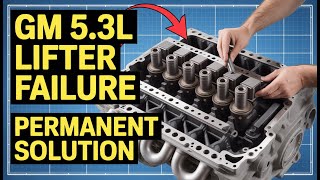
- Chevrolet / GMC Silverado, Sierra, Tahoe, Yukon (2007-2014) — Vehicles with Active Fuel Management (AFM) on 5.3L and 6.2L V8s suffer from lifter failure. A collapsed AFM lifter on cylinder 5 prevents valves from opening, causing a persistent misfire (TSBs PIP4568 and 19-NA-218).
- BMW Various models with N54/N55 Engines (2006-2016) — These engines feature failure-prone piezoelectric fuel injectors. A faulty injector is a very common cause of P0305. Injectors must be 'coded' to the DME upon replacement (SIB B01 02 15).
- Honda Odyssey, Pilot, Accord V6 (2008-2017) — Models with Variable Cylinder Management (VCM) experience P0305 due to oil fouling on the spark plug. The VCM system deactivates cylinders, leading to oil consumption and deposits (TSB 13-081).
- Toyota Tacoma, Highlander, Camry (V6 models) (2003-2022) — For Toyota V6 engines (1MZ-FE, 2GR-FE), P0305 is frequently traced to a failed ignition coil located on the harder-to-access rear bank. Clogged fuel injectors are common on higher mileage models.
- Nissan Altima, Maxima, Frontier (V6 models) (2005-2015) — On VQ-series V6 engines, P0305 links to a failing ignition coil or clogged fuel injector. Rear bank ignition coils are under the intake manifold, making them labor-intensive to replace.
- Volkswagen / Audi Jetta, Passat, A3 (2.5L 5-Cylinder) (2006-2014) — On the 2.5L inline-5, common causes include ignition coil failure and massive vacuum leaks from a failed PCV valve/oil separator integrated into the valve cover.
Manufacturer-Specific Notes
- Jeep/Dodge/Chrysler: On 3.6L Pentastar engines, a P0305 code accompanied by a ticking sound indicates rocker arm/camshaft failure. This is a mechanical failure requiring major repair, not a tune-up part (TSB 09-011-25).
- Chevrolet/GMC: On V8 engines with Active Fuel Management (AFM), P0305 is caused by a collapsed AFM lifter on cylinder 5. This requires significant mechanical repair and is preceded by a ticking noise (TSBs PIP4568 and 19-NA-218).
- BMW: N54/N55 engines require new fuel injectors to be coded to the vehicle's computer (DME). Swapping an injector without proper programming causes performance issues and triggers misfire codes.
- Honda: On V6 models with direct injection, faulty fuel injectors are a common cause for misfires. Issues with the VCM system fouling plugs have led to warranty extensions on Odyssey and Pilot models.
- Ford: On 2.7L EcoBoost engines (2016-2017), TSB 17-2235 notes that a P0305 code combined with oil consumption is due to faulty cylinder head valve guides, requiring major engine repair.
- Volkswagen/Audi: On 2.5L 5-cylinder engines, P0305 is commonly caused by a failed PCV valve built into the valve cover. This creates a significant vacuum leak that the system cannot compensate for.
Real Owner Stories
2016 Jeep Wrangler Unlimited at 117k miles
Check Engine Light came on with code P0305, accompanied by a tapping/ticking engine noise.
What they tried:
- Took to a dealer for diagnosis. Initial teardown for diagnosis cost $900.
Outcome: Dealer diagnosed collapsed lifters, worn rocker arms, and worn camshafts on both sides of the 3.6L Pentastar engine. The total repair estimate was $5,200. This is a widely documented mechanical failure on this engine.
Lesson: On a Jeep 3.6L V6, a P0305 code with a ticking noise is a classic symptom of a serious valvetrain failure. Do not waste money on spark plugs or coils before investigating the camshaft and rocker arms (TSB #09-011-25).
2008 Ford Explorer at ~100k miles
Customer complained of a bucking and jerking feeling when driving uphill under load, and the Check Engine Light was on.
What they tried:
- Technician scanned for codes and found P0305 and P0316.
- A visual inspection of the cylinder 5 ignition coil was performed.
Outcome: The technician found the ignition coil boot saturated with engine coolant from a leaking intake manifold. The moisture destroyed the boot, causing the spark to arc and misfire. Replacing the coil pack and addressing the coolant leak resolved the issue.
Lesson: A visual inspection is critical. Sometimes the cause of the misfire is a secondary issue, like a fluid leak destroying the electrical component. Replacing the coil without fixing the coolant leak results in the code returning.
High-mileage GM 3800 V6
Car experienced a misfire under load and smelled of gasoline. Scanned code was P0305.
What they tried:
- Owner suspected a bad ignition coil pack. They swapped the coil pack for cylinders 2 and 5 with the pack for cylinders 3 and 6.
- They cleared the codes and drove the car again under the same conditions.
Outcome: The misfire moved. The scanner showed a P0303 code. This confirmed the ignition coil pack was faulty. Replacing the bad coil pack fixed the problem.
Lesson: The 'component swap' is the most effective diagnostic step for ignition coils. Swapping the suspected bad part with a known good one definitively proves what needs to be replaced, avoiding wasted money.
2010 Dodge Journey 3.5L V6
Car set a P0305 code. Owner was a DIYer.
What they tried:
- Replaced the cylinder 5 ignition coil and spark plug. Code returned.
- Used various chemical cleaners (Sea Foam, Mopar Combustion Chamber Cleaner). Code returned.
Outcome: Owner performed a compression test and found cylinder 5 was at 60-70 PSI, while other cylinders were at 190 PSI. This massive difference confirmed a serious internal mechanical issue, not a simple ignition or fuel problem.
Lesson: Don't keep throwing parts and chemicals at a problem. If the basic fixes don't work, perform a compression test to confirm the mechanical health of a cylinder before spending more money on fuel or ignition parts.
How to Prevent This Code From Triggering
- Replace spark plugs at the manufacturer's recommended interval (Every 60,000 to 100,000 miles, depending on the plug type) — Spark plugs are wear items. As the electrodes wear, the gap widens, requiring more voltage to create a spark. A weak spark leads to incomplete combustion and misfires.
- Use Top Tier certified gasoline (Every fill-up, if possible) — Top Tier fuels contain a higher concentration of detergents that prevent and clean carbon deposits from fuel injectors and intake valves. Clogged injectors cause single-cylinder misfires.
- Perform periodic fuel system cleaning (Every 15,000-30,000 miles) — Using a high-quality fuel additive cleaner dissolves carbon deposits that build up on fuel injectors, ensuring a proper spray pattern and preventing lean misfires.
- Regularly inspect ignition system components (During every oil change or every 10,000 miles) — Visually check for cracked ignition coil housings, damaged wiring, or corrosion on connectors. Catching physical damage early prevents an electrical failure that leads to a misfire.
- Change engine oil with the correct grade and at the proper interval (Per manufacturer's schedule (e.g., 5,000-10,000 miles)) — Clean oil is crucial for engines with complex valvetrains like VVT, VCM, or AFM. Dirty oil causes lifters or phasers to stick, leading to valve timing issues and mechanical misfires.
Frequently Asked Questions
What does it mean if my Check Engine Light is flashing?
A flashing Check Engine Light indicates a severe, active misfire. This allows unburnt fuel to enter the exhaust, which destroys your catalytic converter in minutes, leading to a $1,200+ repair. Pull over and shut off the engine as soon as it is safe.
My code is P0305. Should I replace all my spark plugs and ignition coils?
While not strictly necessary, replacing all plugs and coils is recommended on high-mileage vehicles. Ignition coils and spark plugs have similar lifespans, so if one fails, the others are close behind. Replacing them together saves future labor costs, especially if accessing them requires removing the intake manifold.
How do I find cylinder 5 on my engine?
The location of cylinder 5 varies by manufacturer and engine layout. Search online for your vehicle's year, make, model, and engine size followed by 'cylinder 5 location' to find a diagram. For most V-type engines, cylinder 5 is on the opposite bank from cylinder 1.
What is the most common misdiagnosis for P0305?
A common mistake is replacing parts without confirming the failure. Always perform the 'coil swap' diagnostic step to avoid buying unnecessary parts. Ignoring related codes like P0205 (injector circuit) or P0171 (lean condition) is another major pitfall that leads to misdiagnosis.
I replaced the spark plug and coil, but the P0305 code came back. What now?
If you replaced the spark plug and confirmed the ignition coil is good, investigate the fuel injector and its wiring next. After that, check for a vacuum leak near cylinder 5's intake runner. If those check out, perform a compression test to rule out internal mechanical damage.
Can bad gas cause a P0305 code?
Poor quality or low-octane fuel typically affects multiple cylinders, triggering a P0300 random misfire code. A misfire isolated to a single cylinder like P0305 is almost always caused by a component specific to that cylinder. Bad gas is rarely the culprit for a single-cylinder code.
P0305 keeps coming back, why?
If P0305 returns after a repair, the root cause was not correctly identified. This happens when a simple part like a spark plug is replaced, but the underlying issue is a clogged fuel injector or intermittent wiring fault. It also indicates developing mechanical problems, like low compression, that were initially overlooked.
Can fuel additives or a 'tune-up in a can' fix a P0305 misfire?
Fuel additives rarely fix a dedicated P0305 code. While a high-quality cleaner helps a mildly clogged injector, it cannot fix a failed ignition coil, worn spark plug, vacuum leak, or mechanical engine problem. These products are not a substitute for proper physical diagnosis.
Key Takeaways
- Stop driving immediately if the Check Engine Light flashes; an active P0305 misfire dumps raw fuel into the exhaust and will melt a $1,500 catalytic converter in minutes.
- Swap the cylinder 5 ignition coil with cylinder 3 before buying parts; if the code changes to P0303, you have definitively proven the coil is bad.
- Replace the spark plug and ignition coil first, as these two routine wear items cause over 80% of isolated single-cylinder misfires.
- Listen for a distinct ticking noise from the engine bay; on Jeep 3.6L or GM 5.3L engines, this sound paired with P0305 indicates a $2,000+ valvetrain failure, not a simple tune-up issue.
Helpful Videos


The information in this article is provided for general reference and educational purposes only. Vehicle specifications, procedures, and part compatibility can vary by production date, trim level, and region. Always consult your vehicle's factory service manual and verify part numbers before purchasing or performing repairs. Safety-critical components such as airbags, seat belts, and braking systems should be installed by a qualified professional.
- 🎬 Helpful Videos
- What Does P0305 Mean?
- Can I Drive With P0305?
- Common Causes
- Symptoms
- Diagnostic Flowchart
- Common Fixes & Costs
- Used vs. New Parts: Buying Guide
- What Happens If You Wait — Timeline
- Cost of Not Fixing It
- Diagnosis Steps
- When This Code Triggers (Freeze-Frame Conditions)
- Related Codes
- Climate & Environmental Factors
- How to Talk to a Mechanic About This Code
- Where to Take It: Dealer vs Independent vs Chain
- When to Walk Away From the Repair
- What Scan Tool You Need for This Code
- How to Clear the Code After You Fix It
- Will This Fail Emissions / State Inspection?
- Most Commonly Affected Vehicles
- Manufacturer-Specific Notes
- Real Owner Stories
- 2016 Jeep Wrangler Unlimited at 117k miles
- 2008 Ford Explorer at ~100k miles
- High-mileage GM 3800 V6
- 2010 Dodge Journey 3.5L V6
- How to Prevent This Code From Triggering
- Frequently Asked Questions
- What does it mean if my Check Engine Light is flashing?
- My code is P0305. Should I replace all my spark plugs and ignition coils?
- How do I find cylinder 5 on my engine?
- What is the most common misdiagnosis for P0305?
- I replaced the spark plug and coil, but the P0305 code came back. What now?
- Can bad gas cause a P0305 code?
- P0305 keeps coming back, why?
- Can fuel additives or a 'tune-up in a can' fix a P0305 misfire?
- Key Takeaways
- 🎟️ Get 5% Off