

P0300 on 2006-2010 Pontiac Solstice LNF 2.0L Turbo: Random Misfire Causes and Fixes
For a P0300 code on a Pontiac Solstice GXP with the 2.0L Turbo engine, the most common causes are worn spark plugs or failing ignition coils. However, due to its direct-injection design, also suspect a failing high-pressure fuel pump (HPFP) or carbon buildup on the intake valves. A tune-up with new ACDelco 41-108 iridium plugs, gapped to 0.032", is the best first step.
- P0300 means random misfires are occurring, not tied to one cylinder.
- On the Solstice GXP, always start by replacing the spark plugs with correct ACDelco iridium parts, gapped to 0.032".
- If plugs and coils don't fix it, the two most likely platform-specific causes are carbon buildup on the intake valves or a failing high-pressure fuel pump (HPFP).
- Do NOT ignore a flashing check engine light, as this can quickly destroy your catalytic converter, a very expensive repair.
What's Unique About the 2006-2010 Pontiac Solstice
The Pontiac Solstice GXP uses the LNF 2.0L, an early turbocharged gasoline direct-injection (GDI) engine. This design introduces unique causes for a P0300 code not typically seen on the base model's port-injected engine. Specifically, the LNF is known for failures of the camshaft-driven high-pressure fuel pump (HPFP) and significant carbon buildup on the intake valves. Because fuel is injected directly into the cylinder, it never washes over the intake valves, allowing oil vapors from the PCV system to bake on and disrupt airflow, causing random misfires at idle. This issue can begin to manifest in as few as 20,000-30,000 miles.
Symptoms You May Notice
- Flashing or solid Check Engine Light
- Rough or shaking idle
- Engine hesitation or stumbling during acceleration
- Noticeable loss of power
- Reduced fuel economy
- Hard starting
- Engine stalling at low RPMs
- Replacing only the spark plugs when the ignition coils are also weak.
- Replacing fuel injectors when the issue is the high-pressure fuel pump or carbon buildup.
- Using fuel additives to clean intake valves, which is ineffective on GDI engines as the fuel never touches the back of the valves.
- Replacing the Mass Airflow (MAF) sensor without first attempting to clean it with a dedicated MAF sensor cleaner.
Most Likely Causes
- Worn or Incorrectly Gapped Spark Plugs 🔴 High Probability The LNF engine is highly sensitive to spark plug condition and gap. An incorrect gap can cause 'spark blowout' under boost. TSB #07-06-04-010B was issued for cold start misfires, recommending an updated plug and confirming the importance of correct gapping. Short-trip driving also contributes to fouling.
How to confirm: Visually inspect the spark plugs for wear, corrosion, or black sooty deposits. Critically, check the gap with a feeler gauge or wire-style tool (do not use a coin-style tool on iridium plugs). The correct gap for the LNF is 0.032" - 0.035".
Typical fix: Replace all four spark plugs as a set. Use the correct OEM-specification iridium plugs, ACDelco 41-108 (GM part #12625058). Always verify the gap before installation. Be wary of counterfeit plugs from online marketplaces.
Est. part cost: $40-$80 - Failing Ignition Coils 🔴 High Probability Ignition coils are a common failure item on most modern vehicles. Heat and vibration cause them to degrade over time, leading to a weak spark. The LNF uses the same coil as the base 2.4L engine (OEM #12638824).
How to confirm: Use a scan tool with live data to view misfire counts per cylinder (Mode $06). Identify a frequently misfiring cylinder (e.g., P0302) and swap that cylinder's coil with a known good one (e.g., from cylinder 1). Clear codes and drive. If the misfire code follows the coil (e.g., changes to P0301), the coil is bad.
Typical fix: Replace the faulty ignition coil. It is best practice to replace all four coils and spark plugs at the same time for long-term reliability.
Est. part cost: $30-$70 per coil - Carbon Buildup on Intake Valves 🟡 Medium Probability As a GDI engine, the LNF does not spray fuel over the intake valves. Oil vapor from the PCV system bakes onto the hot valves, creating carbon deposits that restrict and disrupt airflow, especially at idle, causing random misfires. This is a very common issue on all LNF-powered vehicles.
How to confirm: This is difficult to confirm without special tools. A borescope inserted into the intake manifold is the only way to visually inspect the valves. This is often diagnosed after new plugs and coils fail to resolve a P0300 code, especially if the idle is rough but smooths out with RPM.
Typical fix: Mechanical cleaning of the intake valves via walnut shell blasting is the most effective method. This procedure involves removing the intake manifold and using a specialized tool to blast crushed walnut shells into the intake ports to scrub off the carbon without damaging the engine components. Chemical 'fogging' cleaners are a less effective alternative.
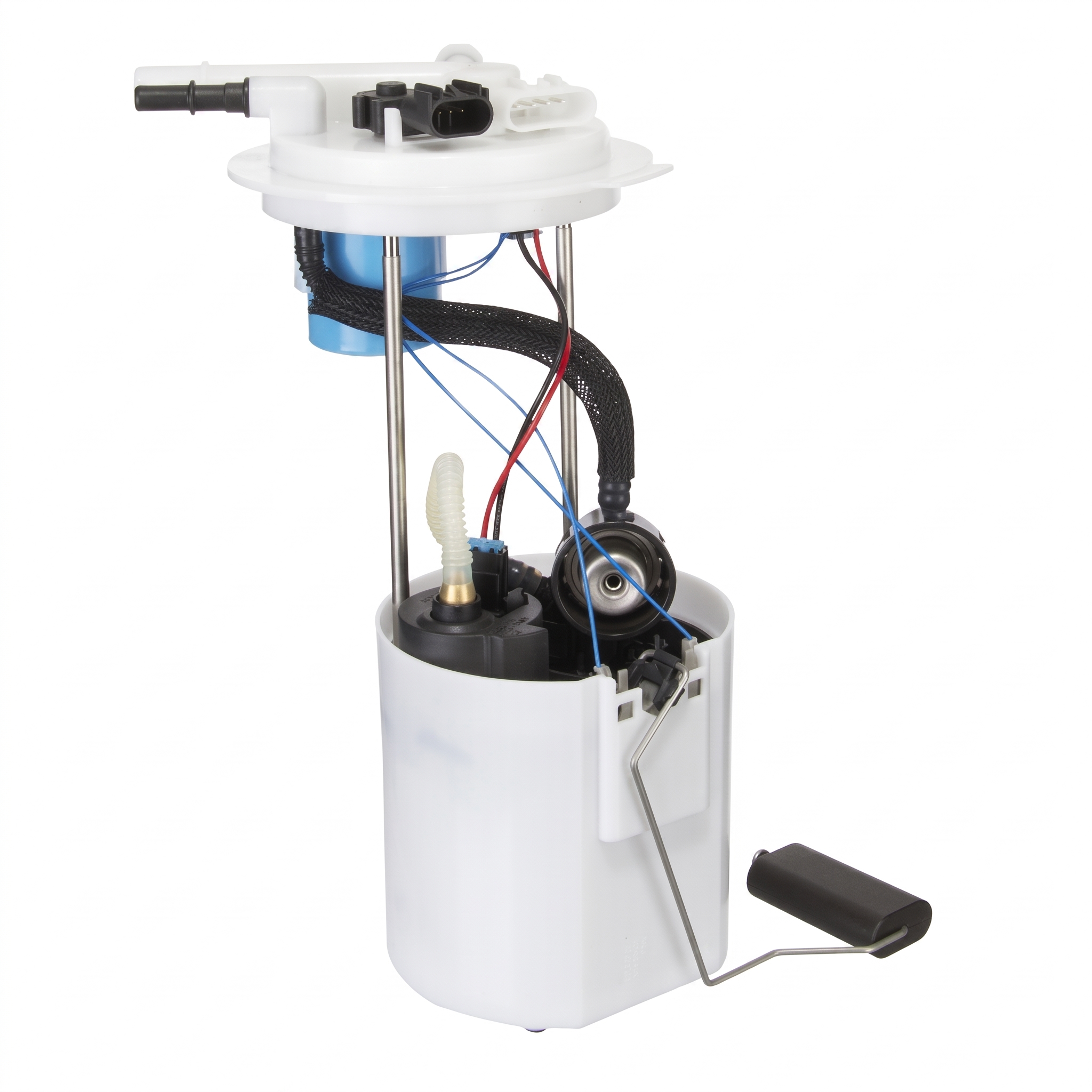
Est. part cost: $50 (walnut media for DIY) to $500-$800 for professional service - Failing High-Pressure Fuel Pump (HPFP) 🟡 Medium Probability The LNF engine's HPFP is a known failure point. It is mechanically driven by a dedicated lobe on the camshaft and can wear out, failing to provide the high fuel pressure (up to ~2,200 PSI) needed for direct injection, especially under load.
How to confirm: Use a scan tool to monitor both 'Desired Fuel Rail Pressure' and 'Actual Fuel Rail Pressure'. At idle, pressure should be several hundred PSI. Under acceleration, it should climb rapidly. If the actual pressure cannot keep up with the desired pressure, or if you see code P0087 (Fuel Rail/System Pressure - Too Low), the HPFP is the primary suspect.
Typical fix: Replace the high-pressure fuel pump. The OEM part is GM #12641847, which supersedes several older numbers. If the pump has failed internally and sent metal debris into the system, the entire fuel system may need to be flushed and injectors cleaned or replaced.
Est. part cost: $250-$500 - Vacuum Leak ⚪ Low Probability
How to confirm: Perform a smoke test by introducing smoke into the intake system post-MAF sensor and looking for leaks from cracked hoses (especially PCV lines), the intake manifold gasket, or other seals. A leak allows unmetered air into the engine, leaning out the mixture and causing misfires.
Typical fix: Replace the leaking gasket or hose.
Est. part cost: $10-$100
Rare But Worth Checking
- Faulty Camshaft Position Actuator Solenoids: These solenoids control the variable valve timing (VVT). If they become clogged with dirty oil or fail, they can cause incorrect cam timing, leading to rough running and misfires. This may also set codes like P0010, P0011, P0013, or P0014. They are located on the top of the engine and are relatively easy to replace.
- Low Engine Compression: This indicates a serious internal engine issue like worn piston rings, a burnt valve, or a failed head gasket. A compression test followed by a leak-down test is needed to confirm. This is an unlikely cause on a low-mileage engine but possible.
- Stretched Timing Chain: While not as common as on other GM engines, the LNF's timing chain can stretch over time, affecting cam/crank correlation and causing misfires. This is usually accompanied by rattling noises from the front of the engine, especially on cold starts.
Diagnosis Steps
- Read all stored fault codes with an OBD-II scanner. Note any codes accompanying P0300, such as specific cylinder misfires (P0301-P0304) or fuel pressure codes (P0087). Check freeze frame data to see the conditions when the misfire occurred.
- Inspect and replace spark plugs. Given their high probability as a cause, this is the best starting point. Use ACDelco 41-108 and ensure they are gapped correctly to 0.032".
- Test ignition coils. Use a scan tool to check live misfire data. Swap the coil from a misfiring cylinder with a known good cylinder. If the misfire code follows the coil, replace the faulty coil.
- Test fuel pressure. Use a scan tool to monitor the 'Desired' vs 'Actual' high-pressure fuel rail pressure under load. A significant discrepancy points to the HPFP.
- Check for vacuum leaks. Perform a smoke test on the intake system to identify any cracked hoses or leaking gaskets, particularly around the PCV system and intake manifold.
- Inspect for carbon buildup. If other steps do not resolve the issue, remove the intake manifold and use a borescope to visually inspect the intake valves for heavy carbon deposits.
- Test Camshaft Actuator Solenoids. If codes like P0011 or P0014 are present, test the solenoids. They can often be cleaned, but replacement is a more reliable fix.
- Perform a compression test. If all else fails, a compression test can check for internal mechanical engine problems like bad rings or valves.
Parts You'll Likely Need
- Iridium Spark Plugs
(OEM #12625058 (ACDelco 41-108))— These are the most common failure point for a P0300 code on the LNF engine. They are a routine maintenance item and sensitive to wear and fouling.
Trusted brands: ACDelco (OEM), NGK - Ignition Coil
(OEM #12638824)— Second most common cause after spark plugs. A weak coil fails to provide enough energy to ignite the mixture, especially under boost.
Trusted brands: ACDelco (OEM), Delphi, NGK - High-Pressure Fuel Pump (HPFP)
(OEM #12641847)— A known weak point on the LNF engine that fails to deliver required fuel pressure, causing misfires and the P0087 code.
Trusted brands: GM Genuine / ACDelco (OEM)
Related Codes That Often Appear With This One
- P0301, P0302, P0303, P0304 — These codes indicate a misfire on a specific cylinder. They often appear with P0300 if the misfire is happening frequently on certain cylinders but also randomly on others.
- P0087 — This code means "Fuel Rail/System Pressure - Too Low" and strongly points to a failing high-pressure fuel pump (HPFP) on the GXP model.
- P0171 — This code for "System Too Lean" often indicates a vacuum leak, which allows unmetered air into the engine and is a common cause of random misfires.
- P0011, P0014 — These codes relate to camshaft timing over-advanced or system performance, pointing towards issues with the Camshaft Position Actuator Solenoids (VVT), which can also cause P0300.
Technical Service Bulletins (TSBs) & Recalls
- 07-06-04-010B: This GM bulletin addresses customer complaints of misfires on cold starts for 2007 LNF-equipped vehicles. It acknowledges that some original spark plugs may contribute to the condition and recommends replacing them with a specific updated part number and ensuring the correct gap. This confirms spark plugs as a primary and officially recognized issue.
- Bulletin #PIP5628G: This manufacturer bulletin provides preliminary information to aid in diagnosing vehicles that present with misfires and DTC codes P0300 through P0308 and/or P050D.
Platform-Specific Known Issues
- Intake Valve Carbon Buildup: The GDI design means fuel doesn't clean the intake valves. PCV oil vapors bake onto the valves, restricting airflow and causing a rough idle and random misfires (P0300). This is not a matter of 'if' but 'when' for most LNF engines. The only true fix is mechanical cleaning (walnut blasting).
- High-Pressure Fuel Pump (HPFP) Failure: The camshaft-driven HPFP is a common failure item. Wear on the pump's internal components or the cam follower leads to insufficient fuel pressure, causing hesitation under acceleration, stalling, and codes P0300 and P0087.
- Spark Plug Gap Sensitivity: The LNF engine is very sensitive to correct spark plug gap due to the high cylinder pressures under boost. A gap that is too wide can be 'blown out' by the boost pressure, preventing a spark from forming and causing a misfire. The recommended gap is a tight 0.032 inches.
Mechanic-Grade Diagnostic Values
- High-Pressure Fuel Pump (HPFP) Actual vs. Desired Pressure — expected: At idle, pressure should be several hundred PSI (e.g., ~290-500 PSI). Under load/WOT, pressure should climb to meet desired pressure, up to ~2,250 PSI. Actual pressure should closely track desired pressure on a scan tool.. Failure: If 'Actual' pressure consistently lags behind 'Desired' pressure, especially under acceleration, or if codes like P0087 are present, the HPFP is likely failing.
- Low-Pressure Fuel Pump (In-tank) — expected: The low-pressure pump feeding the HPFP should maintain around 50 PSI.. Failure: A drop in low-side pressure under load will starve the HPFP, causing a high-side pressure drop and misfires. This can be checked with a gauge at the Schrader valve (if equipped) or via scan tool data if a sensor is present.
- VVT Camshaft Position Actuator Solenoid Resistance — expected: 5 to 15 Ohms. A new, healthy solenoid typically measures between 12.0 and 12.8 Ohms.. Failure: A reading of infinite resistance (open circuit) or a value significantly outside the 5-15 Ohm range indicates a faulty solenoid that requires replacement.
- Ignition Coil Primary Resistance — expected: Approximately 0.4 to 2.0 Ohms. Some sources state a tighter range of 0.49-0.57 Ohms.. Failure: A reading outside of the specified range indicates a faulty coil. This test is less reliable than swapping coils, as heat can cause failures that don't show up during a cold resistance test.
Scan Tool Commands That Help
- Tech2 / GDS2: Misfire Graphic — To view real-time and historical misfire counts for each cylinder. This is more detailed than generic OBD-II Mode $06 data and can help identify if the 'random' misfire has a preference for certain cylinders, aiding in diagnosing coils, plugs, or injectors.
- Tech2 / GDS2: Fuel System Tests — To command the fuel pump on/off and to monitor high and low pressure sensor readings directly. This can help isolate a fuel delivery issue between the in-tank pump and the HPFP without having to perform manual pressure tests initially.
Wiring & Ground Locations
- Engine Wiring Harness Chafe Points — A known issue involves the engine harness chafing against the ECM/TCM bracket, the driver's side upper control arm, and the shock tower bolt.. Chafing can cause short-to-ground faults in various circuits within the harness, including those for ignition coils, fuel injectors, or critical sensors. An intermittent short in one of these circuits can cause random misfires that are extremely difficult to trace, mimicking a component failure. TSB #21-NA-149 addresses this issue.
Real Owner Repair Stories
- Reddit user on r/MechanicAdvice (2009 Pontiac Solstice GXP, 24k miles) — Blinking CEL on throttle, codes P0300, P0302, P0304.
❌ Tried (didn't work) Replaced all spark plugs and ignition coils.
✅ What actually fixed it The user was advised that after replacing plugs and coils, the next logical steps for the LNF engine are to suspect either carbon buildup on the valves or a failing High-Pressure Fuel Pump (HPFP), which are the other two most common causes for these specific symptoms on this platform. - Cobalt SS Network forum user (2010 Cobalt SS (LNF Engine), 29k miles) — Misfire in 3rd gear at WOT, flashing CEL, P0301 pending code.
❌ Tried (didn't work) Swapped spark plug from cylinder 1 to 2., Swapped ignition coil from cylinder 1 to another cylinder.
✅ What actually fixed it The user's problem remained on cylinder 1 after swapping the plug and coil, indicating the issue was not with those common components. The community pointed towards either a clogged fuel injector or, more likely on the LNF, significant carbon buildup on the intake valve for cylinder 1, which would require physical cleaning (walnut blasting) to resolve.
OEM Part Supersession History
12608371, 12633115, 12633423, 12639694→12641847— These are previous part numbers for the High-Pressure Fuel Pump (HPFP) that have been consolidated into the latest revision. The updates often address reliability issues found in earlier versions.
Heads up: While all are for the LNF/related Ecotec engines, it is always recommended to use the latest part number (12641847) to benefit from the most recent engineering revisions for reliability.
Model Year Variations Within This Range
- 2008-2010: A dealer-installed GM Performance Parts (GMPP) Turbo Upgrade Kit was available. This kit included a different engine calibration (ECU tune) and upgraded MAP sensors, raising output to 290 hp. A vehicle with this tune will have different expected performance parameters and fuel requirements (premium fuel mandatory). This can affect diagnostics, as the engine is operating under higher boost and fueling demands than a standard GXP.
Diagnostic Flowchart
Real Owner Stories
Aggregated from forums and TSBs cited above. Mileages and costs reflect what owners reported in those sources.
2009 Pontiac Solstice GXP — ~40000 miles
Symptoms: Immediately after buying the low-mileage vehicle, experienced cylinder misfires triggering P0300, P0302, and P0304 codes.
What fixed it: Replaced spark plugs and ignition coils, which only temporarily fixed the issue, indicating a deeper problem like HPFP failure or carbon buildup.
Source hint: Reddit: 2009 Pontiac Solstice GXP cylinder misfires - P0300, P0302, P0304
2007 Pontiac Solstice LNF 2.0L Turbo
Symptoms: Intermittent SES light, engine misfire, and rough idle specifically on cold starts.
What fixed it: Replaced original spark plugs with a specific updated part number and ensured the correct gap as per GM bulletin.
Source hint: TSB 07-06-04-010B
Related OBD-II Codes
Frequently Asked Questions
Does TSB 07-06-04-010B apply to my Solstice?
What spark plugs should I use for the LNF 2.0L Turbo to fix a P0300?
Why does my Solstice GXP have carbon buildup on the intake valves?
How do I know if my High-Pressure Fuel Pump (HPFP) is causing the P0300 code?
Can I use chemical cleaners to fix the carbon buildup misfire on my LNF engine?
Are the ignition coils on the 2.0L Turbo different from the base 2.4L engine?
We Have This Part in Stock


The information in this article is provided for general reference and educational purposes only. Vehicle specifications, procedures, and part compatibility can vary by production date, trim level, and region. Always consult your vehicle's factory service manual and verify part numbers before purchasing or performing repairs. Safety-critical components such as airbags, seat belts, and braking systems should be installed by a qualified professional.
- Pontiac Solstice:
- 🛍️ Shop This Part
- What's Unique About the 2006-2010 Pontiac Solstice
- Symptoms You May Notice
- Most Likely Causes
- Rare But Worth Checking
- Diagnosis Steps
- Parts You'll Likely Need
- Related Codes That Often Appear With This One
- Technical Service Bulletins (TSBs) & Recalls
- Platform-Specific Known Issues
- Mechanic-Grade Diagnostic Values
- Scan Tool Commands That Help
- Wiring & Ground Locations
- Real Owner Repair Stories
- OEM Part Supersession History
- Model Year Variations Within This Range
- Diagnostic Flowchart
- Real Owner Stories
- 2009 Pontiac Solstice GXP — ~40000 miles
- 2007 Pontiac Solstice LNF 2.0L Turbo
- Related OBD-II Codes
- Frequently Asked Questions
- 🎟️ Get 5% Off