

P0300 on 2016-2019 Ford Explorer 2.3L EcoBoost: Random Misfire Causes and Fixes
For a 2016-2019 Explorer with the 2.3L EcoBoost, a P0300 code is most often caused by worn spark plugs or failing ignition coils. Replacing all four spark plugs is the most common and effective first step. However, be aware of more serious potential issues like carbon buildup on intake valves and coolant intrusion into the cylinders, a known issue on some EcoBoost engines. Expect to pay around $40-$80 for OEM-quality plugs.
- P0300 means multiple cylinders are misfiring randomly.
- Start your diagnosis by replacing the spark plugs with high-quality OEM-equivalent parts; this is the most likely and affordable fix.
- Because this is a direct-injection engine, carbon buildup on the intake valves is a known cause of misfires and may require professional cleaning on higher-mileage vehicles.
- Do not ignore a flashing check engine light, as it signals a severe misfire that can quickly destroy your catalytic converter.
- If spark plugs and ignition coils do not solve the issue, check for vacuum leaks, particularly from the EVAP purge valve, before moving to more complex diagnoses.
What's Unique About the 2016-2019 Ford Explorer

The 2.3L EcoBoost is a turbocharged, direct-injection (DI) engine. This design is a key factor for P0300 codes. Direct injection is efficient but allows for carbon deposits to build up on intake valves over time, as fuel is no longer sprayed over them to keep them clean. This carbon buildup can disrupt airflow and cause misfires, particularly on cylinders 2 and 3 where PCV system vapors are often concentrated. Additionally, the high pressures and temperatures in a turbocharged engine place greater stress on ignition components, leading to a shorter lifespan for spark plugs and coils compared to naturally aspirated engines. Some earlier 2.3L EcoBoost engines also had an engine block design that was more susceptible to head gasket failure and coolant intrusion between cylinders, which is a severe cause of misfires.
Symptoms You May Notice
- Rough or shaking idle
- Hesitation or stumbling during acceleration
- Reduced engine power
- Poor fuel economy
- Flashing check engine light (in severe cases)
- Difficulty starting the engine
- White exhaust smoke, especially on cold start (indicates potential coolant leak)
- Unexplained coolant loss (indicates potential coolant leak)
- Replacing only one spark plug or coil when multiple are worn.
- Replacing oxygen sensors, which are rarely the root cause of a P0300 despite potentially being flagged by the system.
- Assuming a major engine mechanical failure before checking the more common and simpler ignition and fuel system components.
- Confusing a flashing check engine light for a transmission problem, as severe misfires can cause significant shaking and hesitation.
Most Likely Causes


- Worn or Fouled Spark Plugs 🔴 High Probability Turbocharged engines like the 2.3L EcoBoost are harder on spark plugs, requiring more frequent changes. Ford recommends replacement around every 60,000-100,000 miles, but issues can arise sooner, especially if the engine is tuned.
How to confirm: Remove and inspect the spark plugs. Look for worn electrodes, carbon fouling, oil contamination, or cracks in the porcelain insulator. Ensure the gap is correct for the application; incorrect gaps can cause misfires under boost. The correct gap is 0.028–0.031 in (0.7–0.8 mm).
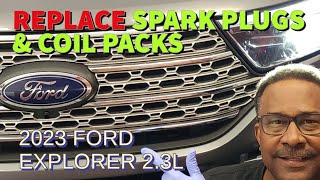
Typical fix: Replace all four spark plugs as a set. 🎬 Watch: How to replace spark plugs and coils on your Explorer. Use of OEM Motorcraft or equivalent high-quality (Iridium or Ruthenium) plugs is strongly recommended. Ensure they are gapped correctly before installation.
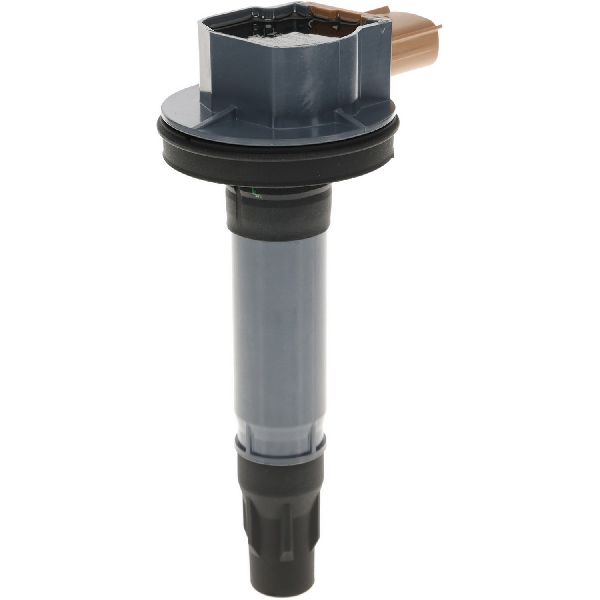
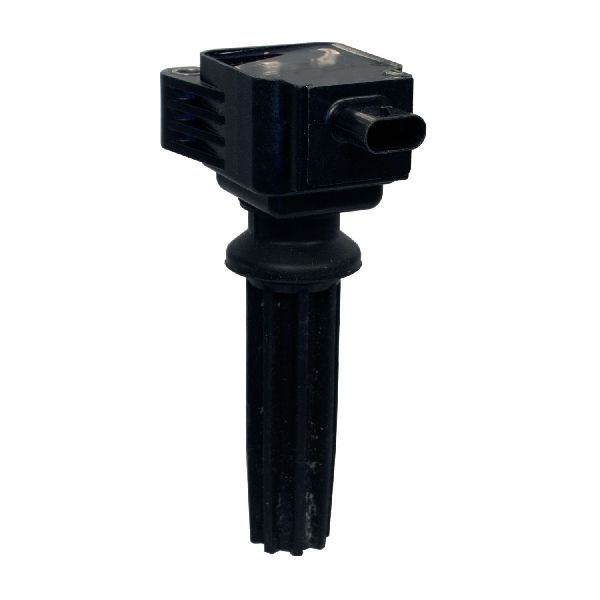
Est. part cost: $40-$80 - Failing Ignition Coil(s) 🔴 High Probability Heat and vibration in the engine bay cause ignition coils to degrade over time. While one failing coil typically sets a specific cylinder code (e.g., P0301), multiple coils failing intermittently or a single coil failing randomly can trigger a P0300.
How to confirm: If you also have a specific cylinder misfire code, swap the coil from the misfiring cylinder with a known good one and see if the code follows the coil. For a random P0300, diagnosis is harder and may require a mechanic with an oscilloscope to test coil performance.
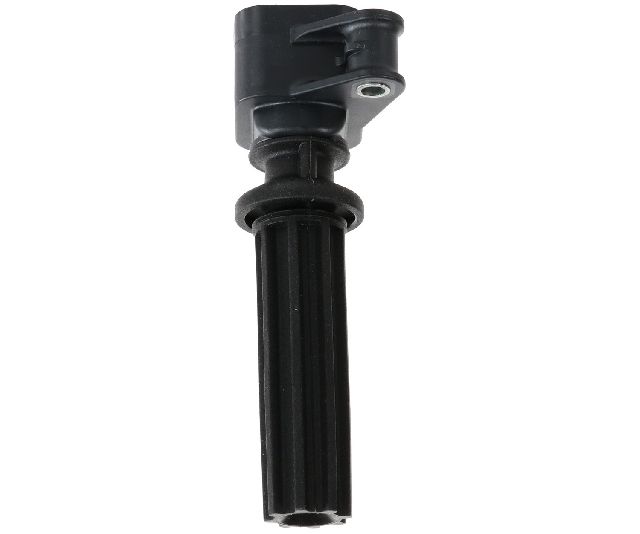
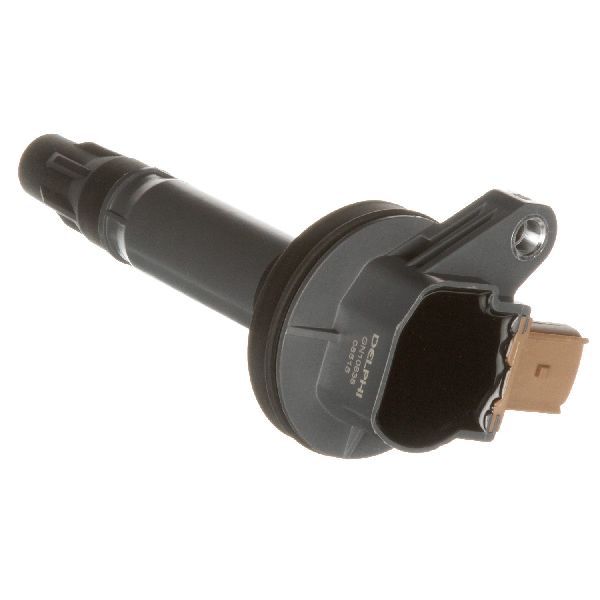
Typical fix: Replace the faulty ignition coil(s). It is often recommended to replace all coils at the same time as the spark plugs, especially on higher-mileage vehicles.
Est. part cost: $40-$70 per coil - Carbon Buildup on Intake Valves 🟡 Medium Probability As a direct-injection engine, the 2.3L EcoBoost does not wash its intake valves with fuel. Oil vapor from the PCV system bakes onto the hot valves, forming hard carbon deposits that disrupt airflow and cause misfires, especially on cold starts. This is a well-documented issue on EcoBoost engines, often causing misfires by 50,000 miles.
How to confirm: This requires a visual inspection using a borescope inserted into the intake ports after removing the intake manifold. The carbon deposits will look like black, crusty buildup on the valve stems and head.
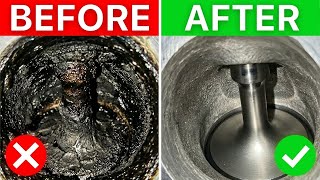
Typical fix: The most effective cleaning method is walnut shell blasting, a professional service that removes deposits without damaging engine components. 🎬 See the safest way to clean carbon from EcoBoost intake valves. Chemical cleaning methods are less effective for heavy buildup.
Est. part cost: $0 (service is labor-based, typically $400-$800) - Leaking or Faulty EVAP Purge Valve ⚪ Low Probability A purge valve stuck open creates a constant vacuum leak, introducing unmetered fuel vapors into the intake manifold. This disrupts the air-fuel mixture and can cause random misfires across all cylinders, often at idle.
How to confirm: With the engine running, disconnect the electrical connector and the vapor line from the purge valve. Place your finger over the valve's port; if you feel any suction, the valve is stuck open and needs replacement. It may also be accompanied by fuel trim codes or specific EVAP codes like P0441 or P0443.
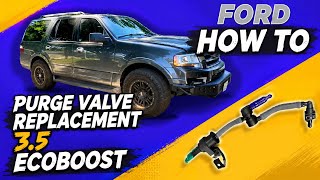
Typical fix: Replace the EVAP canister purge valve. The OEM part number is often cited as Motorcraft CX2349 or Ford part number BB5Z-9C915-A.
Est. part cost: $30-$60
Rare But Worth Checking
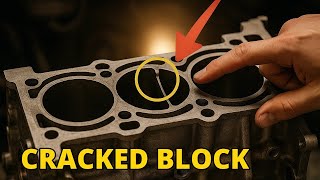
- Internal Coolant Leak (Head Gasket/Cracked Block): Some 2.3L EcoBoost engines, particularly earlier models, have a known design weakness in the engine block between cylinders that can lead to coolant intrusion. This causes misfires (especially on cold start), white smoke, and unexplained coolant loss. Ford issued TSB 19-2346 for the related 2.0L engine, which describes similar symptoms (P0300, P0316, white smoke) and dictates a long block replacement. While the TSB is not for the 2.3L Explorer specifically, the failure mode is similar and considered a serious issue that can lead to catastrophic engine failure. 🎬 Watch this breakdown of the EcoBoost coolant intrusion and block issue.
- Failing High-Pressure Fuel Pump (HPFP): The direct injection system relies on a high-pressure fuel pump. If it fails to deliver adequate pressure, it can cause lean conditions and misfires under load. This may also be accompanied by code P0087 (Fuel Rail/System Pressure - Too Low). Pressure should be over 1,600 PSI under load.
- Leaking Fuel Injectors: A fuel injector can leak or become clogged, disrupting the air-fuel ratio in one or more cylinders. This can sometimes be addressed with a professional fuel system cleaning service, but may require injector replacement.
- Vacuum Leak: A cracked hose or leaking intake manifold gasket can introduce unmetered air, leading to a lean condition and random misfires. A smoke test is the most effective way to diagnose these leaks.
- Timing Chain and Compression Issues: While less common on newer models, mechanical issues can trigger P0300. NHTSA ODI #10220462 describes a case where a P0300 was accompanied by weak compression in multiple cylinders and a damaged timing chain.
Diagnosis Steps

- Check for any other stored DTCs with an OBD-II scanner. Specific cylinder misfire codes (P0301-P0304) can help narrow the search. NHTSA ODI #11681823 notes a case where P0300 appeared alongside multiple specific cylinder codes (P0304, P0305, P0306) and an ignition coil circuit code (P0352).
- Inspect all four spark plugs. Replace them if they are worn, fouled, or if their replacement history is unknown. Ensure they are gapped correctly to manufacturer specifications (0.028–0.031 in).
- Inspect the ignition coils for any signs of damage or carbon tracking. If a specific cylinder code is present, swap that coil with another to see if the misfire follows.
- Check for TSBs. Some misfire issues on EcoBoost engines have been addressed with a PCM software update.
- Perform a smoke test to check for vacuum leaks from hoses, gaskets, or the intake manifold. Pay attention to the PCV hoses.
- Test the EVAP purge valve for leakage by checking for suction at its port while the engine is running and the valve is unplugged.
- If misfires persist, especially on cold starts with coolant loss, a professional diagnosis is needed. This should include a cooling system pressure test and a chemical test for combustion gases in the coolant to check for a failed head gasket or cracked block.
- If carbon buildup is suspected, a borescope inspection of the intake valves is the definitive diagnostic step.
Parts You'll Likely Need
- Spark Plugs
(OEM #Motorcraft SP-537 (CYFS-12Y-T3))— This is the most frequent cause of random misfires on the 2.3L EcoBoost due to the high demands of the turbocharged engine.
Trusted brands: Motorcraft, NGK Ruthenium HX
OEM price range: $40-$60 (set of 4)
Aftermarket price range: $30-$50 (set of 4) - Ignition Coil
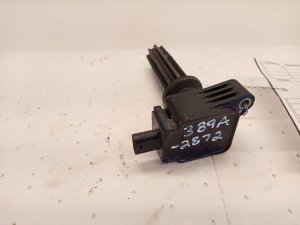
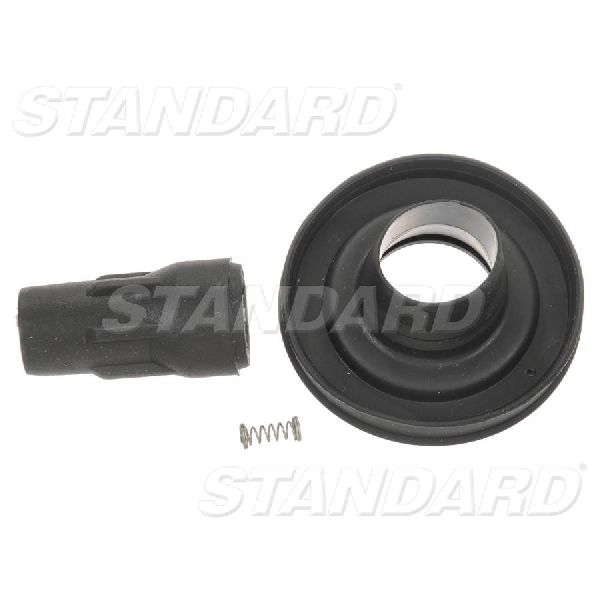
(OEM #Motorcraft DG-557)— Ignition coils are a common failure item
Related Codes That Often Appear With This One
- P0301, P0302, P0303, P0304 — These codes indicate a misfire on a specific cylinder. They often appear alongside P0300 if the misfire is happening frequently on one cylinder but also randomly on others.
- P0316 — Misfire Detected on Startup (First 1000 Revolutions). This code often accompanies misfire codes on Fords and points to a problem that is most apparent when the engine is cold, such as coolant intrusion or heavy carbon buildup.
- P0087 — Fuel Rail/System Pressure - Too Low. This code can appear with P0300 if the random misfires are being caused by a failing high-pressure fuel pump.
- P0420/P0430 — Catalyst System Efficiency Below Threshold. These codes can appear after extended driving with a misfire, as unburnt fuel damages the catalytic converters.
Technical Service Bulletins (TSBs) & Recalls
- TSB 19-2346: While officially for 2.0L EcoBoost engines, it details the diagnosis and repair (long block replacement) for coolant intrusion causing misfires (P0300, P0316) and white smoke, symptoms which are mirrored in failing 2.3L engines.
- TSB 20-2271: Addresses a vibration/rough idle condition when the vehicle is in gear on some 2016-2019 Explorers with the 2.3L engine.
- SSM 47557: Notes that some white smoke on cold start can be considered normal for EcoBoost engines, which can complicate diagnosis of coolant intrusion. However, owners report dealers using this to dismiss legitimate leak concerns.
Platform-Specific Known Issues
- Coolant Intrusion into Cylinders: A significant issue for some 2.3L EcoBoost engines is a design flaw in the engine block or head gasket that allows coolant to leak into cylinders 2 and/or 3. This causes cold start misfires (P0302, P0303, P0316), rough idle, white exhaust smoke, and steady coolant loss. While Ford issued TSB 19-2346 for the 2.0L engine with these exact symptoms, the 2.3L is also known to suffer from this 'Ecoboom' failure. The official fix is often a complete long block engine replacement. This issue has led to class-action lawsuits.
- Vibration/Rough Idle TSB: Ford issued TSB 20-2271 for some 2016-2019 Explorer models with the 2.3L engine that may exhibit a vibration or rough idle when in Drive or Reverse. This could be a contributing factor or a separate issue from a P0300 misfire code.
Mechanic-Grade Diagnostic Values
- Spark Plug Gap — expected: 0.028–0.031 in (0.7–0.8 mm). Failure: An incorrect or overly wide gap can cause misfires, especially under boost.
- High-Pressure Fuel System Pressure (HPFP) — expected: Pressurizes fuel up to over 1,600 PSI.. Failure: Significantly lower pressure, especially under load (may set P0087), can cause lean misfires across all cylinders.
- Low-Pressure Fuel System Pressure (In-tank pump) — expected: 50-60 PSI. Failure: Low pressure from the in-tank pump will starve the HPFP, leading to random misfires.
- Mode $06 Misfire Counter — expected: Near zero misfire counts per cylinder during a drive cycle.. Failure: A high number of registered misfires on multiple cylinders, even without setting a specific P030x code, confirms a random misfire condition.
Hidden / Shadow Codes Worth Checking
- Mode $06, Test ID $A2-$AF: These are not codes but Test IDs within Mode $06 data that correspond to misfire counts for each cylinder (e.g., $A2 for Cylinder 1, $A3 for Cylinder 2, etc.). A technician can view these raw counts to see which cylinders are misfiring before a P030x code is officially set. (see via A professional scan tool with Mode $06 capability (e.g., Ford IDS, FORScan, high-end Autel/Snap-on scanners).)
Scan Tool Commands That Help
- Ford IDS (or equivalent high-end scanner): Power Balance Test — This test allows a technician to disable one cylinder at a time and observe the RPM drop. For a P0300, if multiple cylinders show a smaller-than-normal RPM drop, it indicates they are all contributing less power, helping to confirm a random misfire affecting the whole engine rather than a single dead cylinder.
- Ford IDS (or equivalent high-end scanner): Relative Compression Test — This is a quick, non-invasive way to check for major compression issues without removing spark plugs. The tool measures crankshaft speed variations during cranking to detect a cylinder with low compression, which could be a cause for P0300.
- Ford IDS / FORScan: PCM Reprogram / Software Update — Ford has issued TSBs for some EcoBoost models where the PCM's sensitivity to misfire detection was incorrect, causing false P0300/P0316 codes, especially on cold starts. Checking for and applying a PCM update can be a required fix.
Real Owner Repair Stories
- Reddit user in r/ecoboostmustang (2015 Ford Mustang 2.3L EcoBoost (Manual Transmission)) — Random misfire on cold start, CEL with P0300 and P0316.
❌ Tried (didn't work) Replacing all spark plugs, Replacing all ignition coils
✅ What actually fixed it A PCM update as described in Ford TSB 15-0097. The bulletin was specifically for false misfire detection on certain 2015 models. - Bronco6G Forum User (Ford Bronco with 2.3L EcoBoost, 48k miles) — Random misfire and CEL only at first start of the day, lasting 30-60 seconds. Started occurring at 15k miles.
❌ Tried (didn't work) Dealer replaced a DPFE sensor for $865, which did not fix the issue.
✅ What actually fixed it The user was still diagnosing, but other experienced users immediately pointed to cold-start misfires being a classic symptom of coolant intrusion on 4-cylinder Ford engines, recommending a borescope inspection of the cylinders as the next step. - NHTSA ODI #11614991 — An owner reported an engine misfire and retrieved code P0300. Despite replacing the coil pack and spark plugs, the issue persisted.
- NHTSA ODI #11635503 — An owner described the check engine light coming on and the vehicle running poorly before returning to normal; a scan revealed code P0300 for a random misfire.
Model Year Variations Within This Range
- 2016-2019: The 2.3L EcoBoost engine block design was a point of concern for coolant intrusion issues, similar to those seen in the 1.5L, 1.6L, and 2.0L engines. While the issue was more prominent on earlier EcoBoost engines, some failures have been reported on these model years. Engines produced after 2019 are believed to have an updated block design that is less prone to this failure.
- 2019: The 2019 model year Explorer with the 2.3L EcoBoost received engine refinements and transmission upgrades that slightly improved fuel economy compared to the 2016-2018 models.
Diagnostic Flowchart
Other Known Issues on This Vehicle
Issues unrelated to this code that are worth knowing about as an owner of this generation:
- Internal Water Pump Failure (3.5L Engine) 🔴 High — Common on the V6 engines in this platform, typically between 80,000-150,000 miles. Not applicable to the 2.3L EcoBoost which has an external water pump.
- Power Transfer Unit (PTU) Failure 🔴 High — A very common failure on AWD models. The lubricant overheats due to proximity to the exhaust, leading to seal and gear failure. Often occurs without warning and can cause transmission damage. Symptoms include grinding noises or a propane-like smell.
- Coolant Intrusion / Head Gasket Failure 🔴 High — A known defect on 2.3L EcoBoost engines from this era, though less frequent than on the 2.0L. Can occur at relatively low mileage (under 100k). Caused by a flaw in the engine block design allowing coolant to enter the cylinders. (Ref: Related to TSB 19-2346 for the 2.0L engine.)
- Cracked Flex Plate 🟠 Medium — Some owners report a cracked flex plate, causing a ticking or knocking sound that can be mistaken for engine noise. This is a known issue on various Ford models with EcoBoost engines.
- Roof Rail Cover Detachment 🟡 Low — Widespread enough to cause a recall. The retention pins for the roof rail covers can loosen, causing the covers to detach from the vehicle while driving. (Ref: Recall 21S22)
Used vs. New Parts: Buying Guide for This Vehicle
When a used part is the smart pick: For this repair, obtaining a used ignition coil from a low-mileage donor vehicle can be a cost-effective way to perform a 'swap test' to diagnose a faulty coil. A used intake manifold or EVAP purge valve could also be a reasonable purchase if inspected for cracks or damage.
Donor-vehicle mileage cap: roughly under 60000 miles for the part to have meaningful remaining life.
What to inspect on the donor part:
- Check for a clean, low-mileage donor vehicle.
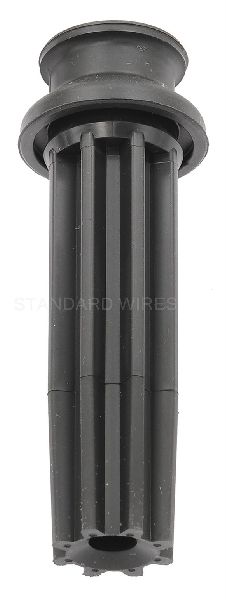
- For ignition coils, inspect the boot for any tears, carbon tracking, or swelling.
- For hard parts like manifolds, ensure there are no visible cracks, especially around mounting points.
- Verify the part number from the donor vehicle matches the required part for your Explorer, as variations exist.
OEM-only on this vehicle (don't cheap out):
- Spark Plugs: The cost savings are minimal, and the risk of counterfeit or worn-out used plugs is high. Always buy new from a reputable source.
- High-Pressure Fuel Pump (HPFP): This is a critical component. A used pump has an unknown history and is a high-risk purchase. New OEM or a high-quality equivalent is recommended.
- Head Gasket / Engine Internals: These parts are single-use and require new replacements for any internal engine repair.
Aftermarket brands forum-validated for this vehicle:
- NGK: Often considered an OEM-equivalent or superior brand for spark plugs (e.g., Ruthenium HX line).
- Motorcraft: This is Ford's OEM parts brand and is the safest bet for all electronic sensors and ignition components.
Brands owners have reported issues with on this vehicle:
- Unnamed/white-box ignition coils and sensors: Cheaply made electronic parts from online marketplaces are a frequent cause of repeat failures and are a common misstep in DIY repairs.
Real Owner Stories
Aggregated from forums and TSBs cited above. Mileages and costs reflect what owners reported in those sources.
2017 Ford Explorer 2.3L EcoBoost
Symptoms: Misfire and stalling issues.
What fixed it: The owner and forum members discussed causes ranging from bad spark plugs and coils to the more severe coolant intrusion issue requiring engine replacement.
Source hint: explorerforum.com thread titled '2017-explorer-2-3-ecoboost-misfire-and-stalling.495015/'
2016-2019 Ford Explorer 2.3L EcoBoost
Symptoms: Vibration or rough idle specifically when the vehicle is in Drive or Reverse.
What fixed it: Addressed by Ford via TSB 20-2271.
Source hint: TSB 20-2271
2016-2019 Ford Explorer 2.3L EcoBoost — ~50000 miles
Symptoms: Misfires, especially on cold starts, caused by oil vapor baking onto hot intake valves.
What fixed it: Walnut shell blasting to remove carbon deposits from the intake valves.
Source hint: Carbon Buildup on Intake Valves section / vehicle_specific_issues
Ford Explorer
Symptoms: Several cylinder misfires detected after being towed.
What fixed it: A diagnostic scan retrieved DTCs P0300, P0304, P0305, P0306, and P0352.
Source hint: NHTSA ODI #11681823
Related OBD-II Codes
Frequently Asked Questions
Does TSB 19-2346 apply to my 2.3L EcoBoost Explorer if I have white smoke and misfires?
What is the correct spark plug gap for my 2016-2019 Explorer 2.3L to prevent misfires?
My Explorer vibrates specifically when in Drive or Reverse; is this related to P0300?
Can a faulty EVAP component cause a random misfire on this vehicle?
Is white smoke on a cold start always a sign of a head gasket failure?
How often should I change the spark plugs on my 2.3L EcoBoost to avoid P0300?
Helpful Videos
Used OEM Parts in Stock



New Aftermarket Parts Available

The information in this article is provided for general reference and educational purposes only. Vehicle specifications, procedures, and part compatibility can vary by production date, trim level, and region. Always consult your vehicle's factory service manual and verify part numbers before purchasing or performing repairs. Safety-critical components such as airbags, seat belts, and braking systems should be installed by a qualified professional.
- Ford Explorer:
- 🎬 Helpful Videos
- 🛍️ Shop This Part
- What's Unique About the 2016-2019 Ford Explorer
- Symptoms You May Notice
- Most Likely Causes
- Rare But Worth Checking
- Diagnosis Steps
- Parts You'll Likely Need
- Related Codes That Often Appear With This One
- Technical Service Bulletins (TSBs) & Recalls
- Platform-Specific Known Issues
- Mechanic-Grade Diagnostic Values
- Hidden / Shadow Codes Worth Checking
- Scan Tool Commands That Help
- Real Owner Repair Stories
- Model Year Variations Within This Range
- Diagnostic Flowchart
- Other Known Issues on This Vehicle
- Used vs. New Parts: Buying Guide for This Vehicle
- Real Owner Stories
- 2017 Ford Explorer 2.3L EcoBoost
- 2016-2019 Ford Explorer 2.3L EcoBoost
- 2016-2019 Ford Explorer 2.3L EcoBoost — ~50000 miles
- Ford Explorer
- Related OBD-II Codes
- Frequently Asked Questions
- 🎟️ Get 5% Off