

P0300 on 2009-2016 Audi A4 2.0T: Random Misfire Causes and Fixes
P0300 on a 2009-2016 Audi A4 2.0T most often means it's time for new ignition coils and spark plugs. However, a failed PCV valve or significant carbon buildup on the intake valves are also extremely common culprits. Start with ignition components, but be prepared to check the PCV system and investigate carbon cleaning if the car has over 50,000 miles.
- P0300 indicates a random misfire affecting multiple cylinders, often caused by a system-wide issue.
- On the 2009-2016 A4 2.0T, always start diagnosis with the most common and cheapest fixes: spark plugs and ignition coils.
- The second most likely cause is a failed PCV valve, which can be easily diagnosed by checking for strong suction at the oil cap while the engine is running.
- Due to the direct-injection design, carbon buildup on intake valves is a common cause of misfires on higher-mileage cars and requires professional cleaning.
- If the check engine light is flashing, limit driving immediately to prevent expensive damage to the catalytic converters.
What's Unique About the 2009-2016 Audi A4

The EA888 engine in the B8/B8.5 generation A4 is a direct-injection engine, making it inherently susceptible to specific issues that cause a P0300 code. Unlike port-injected engines, fuel doesn't wash over the intake valves, leading to significant carbon buildup that disrupts airflow and causes misfires, often starting around 40,000-60,000 miles. Furthermore, this engine platform is known for a high failure rate of its PCV (crankcase ventilation) valve, which can create a large vacuum leak and trigger random misfires. While ignition components are a common cause on any car, these two issues are particularly prevalent on this specific Audi.
Generation note: This guide covers the Audi A4 B8 (2009-2012) and B8.5 (2013-2016) generations, both of which use the 2.0L TFSI EA888 engine. The underlying causes for P0300 are largely the same across these years. However, earlier models (approx. 2009-2012) are more known for excessive oil consumption issues due to a poor piston ring design, which can foul spark plugs and contribute to misfires. These early models also feature a timing chain tensioner design that is prone to failure.
Symptoms You May Notice
- Flashing or solid Check Engine Light
- Rough or vibrating idle, especially on cold starts
- Engine hesitation or stumbling during acceleration
- Noticeable loss of power
- Reduced fuel economy
- Engine shaking
- Whistling noise from the engine bay at idle
- Replacing only one ignition coil when others are old and likely to fail soon.
- Replacing oxygen sensors. A misfire or vacuum leak can cause O2 sensor codes (like P0171), but the sensor itself is rarely the root cause of the misfire.
- Assuming the issue is catastrophic (like low compression) before thoroughly checking the much more common ignition and PCV system failures.
- Replacing the PCV valve with a cheap, non-OEM part, which often fails quickly or doesn't seal properly, leading to a continuation of the problem.
Most Likely Causes


- Worn Spark Plugs and/or Failing Ignition Coils 🔴 High Probability Ignition coils are a very common failure item on this platform, subject to high heat that causes internal failure. Some model years were subject to service bulletins for premature coil failure. Spark plugs can also become fouled with oil from the oil consumption issue or carbon, or simply wear out. The original black-top coils were particularly failure-prone and have been superseded.
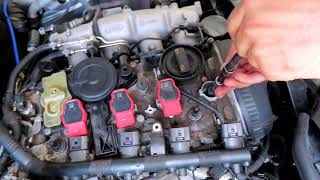
How to confirm: Inspect the spark plugs for wear, oil, or carbon fouling. Swap ignition coils between a known good cylinder and a misfiring one (if you have specific cylinder codes like P0301, etc.). If the misfire code follows the coil, the coil is bad. Given the random nature of P0300, it's often best to replace all plugs and coils if they are near the end of their service life (typically 40k-60k miles).
Typical fix: Replace all four spark plugs and all four ignition coils. 🎬 Watch: A step-by-step guide to replacing your plugs and coils. Use OEM-spec plugs (e.g., NGK PFR7S8EG) and reputable OEM or aftermarket coils (e.g., Bosch, Eldor, or the popular red-top 'R8' coils). OEM Part Numbers for coils have been superseded multiple times; common replacements include 06H905115B and 07K905715G.
Est. part cost: $120-$300 - Failed PCV Valve / Oil Separator 🔴 High Probability The rubber diaphragm inside the PCV valve is known to tear, creating a significant unmetered vacuum leak. This leads to a lean air-fuel mixture (often triggering a P0171 code) and random misfires at idle. Failure is common around the 60,000-80,000 mile mark.
How to confirm: With the engine running, try to remove the oil filler cap. If there is a very strong vacuum holding it down, the PCV valve has likely failed. You may also hear a distinct whistling or sucking sound near the PCV valve itself. A smoke test will definitively confirm a leak at the PCV assembly or its associated hoses.
Typical fix: Replace the entire PCV valve assembly. It is located on top of the valve cover. The latest OEM part number should be used for reliability (e.g., 06H103495AK supersedes older versions like 06H103495E and 06H103495J). Aftermarket diaphragm-only repair kits exist but are not recommended as other parts of the assembly can fail.
Est. part cost: $50-$180 - Carbon Buildup on Intake Valves 🟡 Medium Probability As a direct-injection (GDI) engine, fuel is sprayed directly into the cylinders, so it never washes over the intake valves. Oil vapor from the PCV system bakes onto the hot valves, forming hard carbon deposits that restrict and disrupt airflow, causing misfires, especially on cold starts. Symptoms often appear between 40,000 and 70,000 miles.
How to confirm: This requires visual inspection. The intake manifold must be removed to see the valves. A mechanic can use a borescope to inspect the valves without full removal. This is typically suspected after ignition and PCV issues have been ruled out, especially on cars with over 50,000 miles that have never been cleaned.
Typical fix: The intake valves need to be manually cleaned. The most effective and industry-standard method is walnut shell blasting, which uses crushed walnut shells to safely scour the carbon off without damaging the metal valves. This service typically costs between $700 and $1,200 at a repair shop.
Est. part cost: $20-$50 (for gaskets and seals) - Clogged or Failing Fuel Injectors ⚪ Low Probability Fuel injectors can become clogged with carbon deposits or fail electronically, leading to poor fuel atomization and misfires. While less common than coils or PCV issues, it's a known problem, especially on higher-mileage vehicles. Forum users often report this as the final fix after other common causes are addressed.
How to confirm: This is more difficult to diagnose. A technician can check fuel trims with an advanced scan tool like VCDS. The definitive test is to remove the injectors and have them professionally cleaned and flow-tested. A strong fuel smell can also indicate a leaking injector.
Typical fix: Replace the faulty fuel injector(s). It is often recommended to replace them as a set, along with their seals. This is a more involved job as it requires removing the intake manifold.
Est. part cost: $70-$200 per injector, with full replacement costing $840 to $1,560.
Rare But Worth Checking
- Stretched Timing Chain or Failed Tensioner: While less likely to cause only a P0300 code without other timing-related faults, a stretched chain can alter cam timing enough to cause misfires. This is a known issue on early EA888 engines (pre-2013) and is often preceded by a distinct 'chain rattle' noise on cold starts for a few seconds.
- Vacuum Leak (other than PCV): A cracked hose (like the turbo inlet pipe), a leaking intercooler, or a failed intake manifold gasket can introduce unmetered air and cause lean misfires. A smoke test is the best way to identify these hard-to-see leaks.
- Low Compression: Mechanical engine damage, such as a burnt valve, damaged piston, or worn piston rings (related to the oil consumption issue), can cause a loss of compression leading to misfires. This is a worst-case scenario and should be confirmed with a compression and leak-down test after all other possibilities are exhausted.
Diagnosis Steps

- Read all fault codes using an OBD-II scanner. Note any specific cylinder misfire codes (P0301-P0304) or lean codes (P0171/P2187). Note if misfires occur primarily on cold starts.
- Inspect all spark plugs. Look for signs of wear, carbon fouling, or oil contamination (a sign of the piston ring issue). If they are old or fouled, replace all four with OEM-spec plugs.
- Inspect the ignition coils. If you have a specific cylinder misfire code, swap that coil with one from a non-misfiring cylinder. Clear codes and see if the misfire follows the coil. If the plugs and coils are over 40,000 miles old, it's best practice to replace them all as a set.
- Test the PCV valve. With the engine idling, check for a strong vacuum at the oil filler cap. If it's difficult to remove or there's a loud whistling, the PCV diaphragm has likely failed and the assembly needs replacement with the latest OEM revision.
- Perform a smoke test. If the PCV seems okay, introduce smoke into the intake system to check for any other vacuum leaks from cracked hoses, the intercooler, or intake gaskets.
- Inspect intake valves for carbon buildup. This is a highly probable cause if the vehicle has over 50,000 miles and has never been cleaned. Use a borescope or remove the intake manifold for visual confirmation. If significant buildup is present, a walnut blast cleaning is necessary.
- If all else fails, investigate the fuel delivery system. Check fuel trims with a diagnostic tool and consider having the fuel injectors professionally tested and cleaned, as they can get clogged.
Parts You'll Likely Need

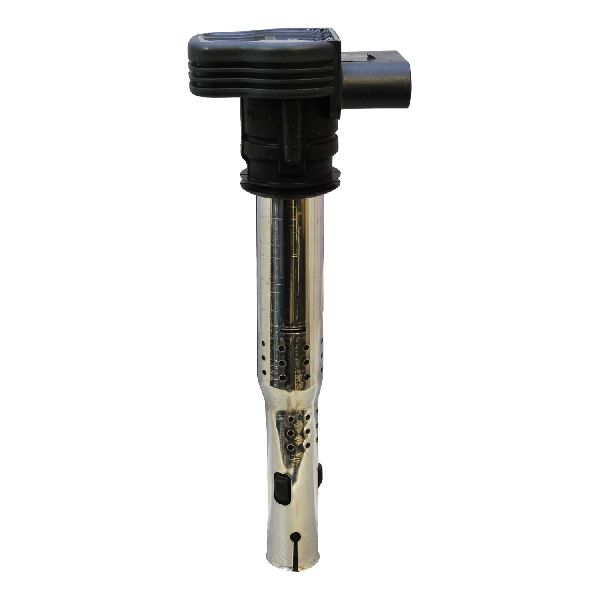
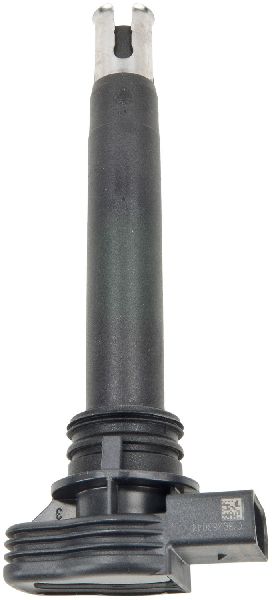
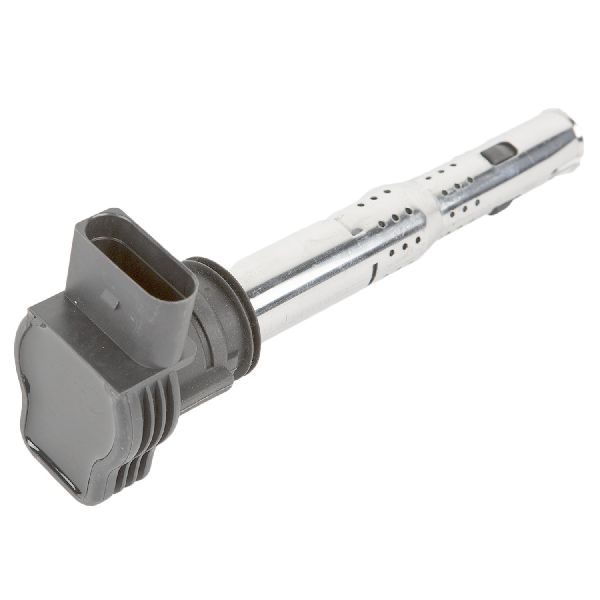
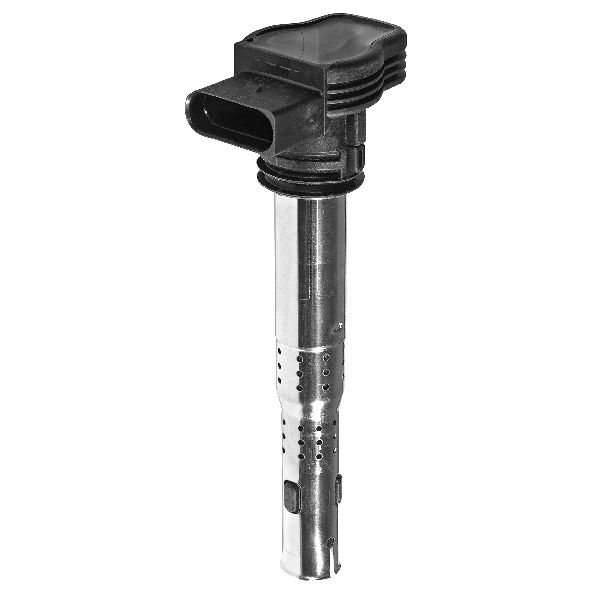
- Ignition Coil
(OEM #06E905115E)— Ignition coils are a primary point of failure on the 2.0T engine and a leading cause of misfires.
Trusted brands: Bosch, NGK, Eldor
OEM price range: $40-$60 each
Aftermarket price range: $25-$45 each - Spark Plug
(OEM #06H905601A)— Worn or fouled spark plugs cannot produce a strong enough spark, leading to incomplete combustion and misfires. They are a routine maintenance item.
Trusted brands: NGK, Bosch
OEM price range: $15-$25 each
Aftermarket price range: $10-$20 each - PCV Valve / Oil Separator
(OEM #06H103495AH)— The diaphragm in the PCV valve is a known weak point. Its failure causes a major vacuum leak, triggering lean conditions and random misfires.
Trusted brands: Audi Genuine, Vaico
OEM price range: $150-$180
Aftermarket price range: $50-$100
Related Codes That Often Appear With This One
- P0301, P0302, P0303, P0304 — These codes indicate a misfire on a specific cylinder. They often accompany P0300 when the misfire is happening on multiple cylinders but is sometimes more frequent on one or two in particular.
- P0171 or P2187 — These codes mean 'System Too Lean (Bank 1)' or 'System Too Lean at Idle'. They are commonly triggered alongside P0300 when the cause is a vacuum leak, such as a failed PCV valve, which allows too much unmetered air into the engine.
Technical Service Bulletins (TSBs) & Recalls
- TSB 2027731/5 (Supersedes previous versions): Addresses excessive oil consumption on 2009-2011 2.0L TFSI engines. The fix involves a multi-stage process, starting with replacing the PCV valve (oil separator) and updating ECM software. If consumption is still high, it proceeds to piston and ring replacement. This is relevant as oil consumption can foul spark plugs, leading to misfires.
- A similar TSB for later models (2012-2014) also exists, extending warranty coverage for piston-related oil consumption issues.
- Manufacturer TSB Bulletin #A0124212069038_5 and Bulletin #A0123912069038_5 provide technical information for instances where the MIL is illuminated specifically for cylinder misfires including P0300, P0301, P0302, P0303, and P0304.
Platform-Specific Known Issues
- Piston Ring Oil Consumption (2009-2012): Early EA888 Gen 1 engines are notorious for excessive oil consumption due to poorly designed piston rings. This issue causes oil to enter the combustion chamber, fouling spark plugs and contributing directly to misfires and P0300 codes. Audi addressed this with a TSB and later, a class-action lawsuit settlement, but many vehicles still suffer from it. A piston soak or engine flush is a DIY attempt to free the rings, but the ultimate fix is new pistons and rings.
- Timing Chain Tensioner Failure (Early Models): The original timing chain tensioner on EA888 engines made up to ~2013 is a known failure point. The plastic and spring mechanism can fail, causing the chain to jump time, which can lead to misfires or catastrophic engine damage. A rattling noise on a cold start is the primary warning sign. An updated tensioner design resolved the issue.
- PCV Part Number Evolution: The PCV valve has been revised multiple times by Audi to improve reliability. Early part numbers like 06H103495A/E/J have been superseded by newer versions, with 06H103495AK being a common recent revision for the EA888 Gen 2. Using the latest OEM revision is critical for a lasting repair.
Mechanic-Grade Diagnostic Values
- High-Pressure Fuel Pump (HPFP) pressure at idle — expected: Approximately 40 Bar (580 PSI).. Failure: A failing pump may only show 6-10 Bar at idle, leading to lean conditions and misfires.
- High-Pressure Fuel Pump (HPFP) maximum requested pressure — expected: Up to 190-200 Bar (2760-2900 PSI) under load.. Failure: If the actual pressure cannot meet the requested pressure under acceleration, it indicates a weak HPFP or a leak.
- Live Misfire Counts via VCDS — expected: Zero misfires at idle and under load on a healthy engine.. Failure: Using Measuring Blocks 014, 015, and 016, a technician can see the raw misfire count for each cylinder in real-time. This can identify cylinders that are misfiring intermittently before a hard code is set.
- High-Pressure Fuel Rail Sensor Resistance — expected: A new, good sensor should read a stable value, for example, 0.55 MΩ (Megaohms).. Failure: A faulty sensor may show erratic resistance readings that change with temperature, such as fluctuating between 2.4 kΩ and 6.5 kΩ, providing incorrect data to the ECU.
Hidden / Shadow Codes Worth Checking
- VCDS Misfire Counter (Meas. Blocks 014, 015, 016): These are not traditional fault codes but live data blocks that show the exact number of misfires per cylinder. This allows a technician to see which cylinders are problematic even if the misfire count is not yet high enough to trigger a specific P030x code. It's the VAG-equivalent of 'hidden' diagnostic data for misfires. (see via Using VCDS or a compatible advanced scan tool, navigate to Engine (01) -> Measuring Blocks -> and enter groups 014, 015, and 016.)
Scan Tool Commands That Help
- VCDS (VAG-COM): Output Test for Fuel Injectors (N30-N33) — This function is used with the engine OFF to individually activate each fuel injector. A technician can listen for a distinct 'click' from each injector to confirm it is receiving the signal and is not mechanically seized. This helps isolate a single dead injector that could be contributing to a random misfire code.
Wiring & Ground Locations
- Ignition Coil Connector Harness — The plastic wiring harness and connectors that plug directly into the four ignition coils on top of the valve cover.. The plastic connectors and wiring insulation become extremely brittle with age and heat cycles. They frequently crack or break when being removed for spark plug service, leading to poor electrical connections, arcing, and intermittent misfires that can trigger a P0300. Inspecting these connectors for cracks is crucial.
- Main Engine Ground Strap — Typically located on the driver's side frame rail, connecting the chassis to the engine block or transmission.. A loose or corroded main engine ground can cause a host of floating electrical issues, including weak spark and erratic sensor readings, which can manifest as random misfires. While not a specific part failure, ensuring this connection is clean and tight is a fundamental step in diagnosing electrical-related misfires.
Real Owner Repair Stories
- YouTube channel 'Home Garage' (Audi A4 (B7, but same principle applies to B8)) — Aggressive misfire and flashing check engine light specifically under hard acceleration/load. The misfire counter would skyrocket.
❌ Tried (didn't work) Cleaning spark plugs., Swapping a coil from a misfiring cylinder to a good one did not make the specific misfire code follow the coil.
✅ What actually fixed it Replacing all four ignition coils and all four spark plugs. The conclusion was that the old coils were too weak to provide a strong enough spark under high cylinder pressures (load), even though they functioned at idle. - YouTube channel 'Fix Your Car' (2011 Audi Q5 2.0T (EA888)) — Long crank / hard start, with a noticeble smell of gasoline from the engine bay. No misfire codes were present initially, but a leaking injector can cause misfires.
❌ Tried (didn't work) General inspection of connectors and spark plugs.
✅ What actually fixed it The root cause was a leaking fuel injector seal on cylinder 1, which was diagnosed by the smell of fuel and visually seeing fuel seeping from the base of the injector. This leak prevented the fuel rail from holding pressure when the car was off, causing the long crank. Replacing the injector seals resolved the issue. - NHTSA ODI #11402605 — An owner reported that while driving on the highway and a city road, the engine light began blinking. A code reader initially showed P0300, P0301, and P0302, indicating multiple cylinder misfires. The vehicle was towed to a dealership for a complete maintenance service.
"I Checked Everything" — The Actual Cause
- If a smoke test is performed and comes back negative (no vacuum leaks found), the diagnostic path must immediately pivot away from unmetered air issues. The next most likely causes are ignition system weakness or a fuel delivery problem. A 'weak' ignition coil may function perfectly at idle but fail to deliver a spark under high-cylinder-pressure conditions (i.e., under load), causing misfires that a smoke test would never reveal. Similarly, a failing high-pressure fuel pump (HPFP) might provide adequate pressure at idle but fail to meet demand under load, causing lean misfires without any vacuum leaks.
When the Usual Fixes Don't Work
- While Pass 2 correctly identifies common causes, a recurring theme in owner forums is the misdiagnosis of 'weak' ignition coils. A coil can be functional enough to pass a basic swap test at idle but still be too weak to fire the spark plug under the high cylinder pressures of engine load (e.g., hard acceleration). This results in a misfire code (P0300 or a specific cylinder) only appearing during aggressive driving. In these cases, replacing all four coils and plugs as a set is often the final fix, even when initial component-level testing was inconclusive.
OEM Part Supersession History
06H103495E, 06H103495AC→06H103495AH, 06H103495AJ, 06H103495AK (latest recommended for Gen 1/2 EA888)— The diaphragm inside the PCV is prone to tearing. Later revisions use improved materials and design to increase longevity and prevent premature failure leading to vacuum leaks.
Heads up: While physically similar, using an older part number is not advised as it will be prone to the original failure mode. Aftermarket units are widely reported to fail quickly; use of a Genuine OEM latest revision is strongly recommended.Black-top ignition coils (various PNs)→06H905115B (OEM replacement), 07K905715G (popular 'R8' red-top upgrade)— Original ignition coils had a high rate of internal failure, causing weak spark and misfires. Revised parts offer greater reliability and heat resistance.
Model Year Variations Within This Range
- 2009-2012 (B8 Pre-Facelift): These earlier models are notorious for high oil consumption due to faulty piston ring design. This directly contributes to P0300 by fouling spark plugs with oil. They also came from the factory with an older, failure-prone timing chain tensioner design.
- 2013-2016 (B8.5 Facelift): These models have revised piston rings that largely fixed the oil consumption issue. They also received the updated, more reliable timing chain tensioner from the factory. While still prone to PCV failure and carbon buildup, they are less likely to have P0300 caused by oil-fouled plugs from inherent design flaws.
- B8 vs B8.5: The facelift from B8 to B8.5 in 2013 included different headlights, grille, and bumpers. More relevantly, the MMI system was updated from 3G to 3G+, and the steering changed from hydraulic to electromechanical. While the core engine remained the EA888 Gen 2 (in the US), these changes can affect diagnostic approaches and module communication.
Diagnostic Flowchart
Real Owner Stories
Aggregated from forums and TSBs cited above. Mileages and costs reflect what owners reported in those sources.
Audi A4 B8 2.0L TFSI
Symptoms: Experienced a P0300 code accompanied by PCV and vacuum-related issues.
What fixed it: Replacing the PCV valve assembly.
Source hint: AudiWorld Forums - 'A4 B8 - PCV/Vacuum issues' (2020)
2009-2011 Audi A4 2.0L TFSI
Symptoms: Excessive oil consumption that fouled the spark plugs, leading directly to misfires and P0300 codes.
What fixed it: Followed the multi-stage TSB process: replaced the PCV valve (oil separator), updated ECM software, and ultimately replaced the pistons and rings.
Source hint: TSB 2027731/5
Related OBD-II Codes
Frequently Asked Questions
Does TSB 2027731/5 apply to my Audi A4 for misfire and oil consumption issues?
I have a P0300 code and hear a loud whistling noise from the engine bay at idle. What is wrong?
Which ignition coils should I buy to fix misfires on my 2.0L TFSI?
Why is my A4 misfiring and vibrating only on cold starts?
What is the correct updated PCV valve part number for the 2009-2016 A4?
Can a failing timing chain tensioner cause a P0300 code on my 2010 A4?
Helpful Videos
Used OEM Parts in Stock


New Aftermarket Parts Available


The information in this article is provided for general reference and educational purposes only. Vehicle specifications, procedures, and part compatibility can vary by production date, trim level, and region. Always consult your vehicle's factory service manual and verify part numbers before purchasing or performing repairs. Safety-critical components such as airbags, seat belts, and braking systems should be installed by a qualified professional.
- Audi A4:
- 🎬 Helpful Videos
- 🛍️ Shop This Part
- What's Unique About the 2009-2016 Audi A4
- Symptoms You May Notice
- Most Likely Causes
- Rare But Worth Checking
- Diagnosis Steps
- Parts You'll Likely Need
- Related Codes That Often Appear With This One
- Technical Service Bulletins (TSBs) & Recalls
- Platform-Specific Known Issues
- Mechanic-Grade Diagnostic Values
- Hidden / Shadow Codes Worth Checking
- Scan Tool Commands That Help
- Wiring & Ground Locations
- Real Owner Repair Stories
- "I Checked Everything" — The Actual Cause
- When the Usual Fixes Don't Work
- OEM Part Supersession History
- Model Year Variations Within This Range
- Diagnostic Flowchart
- Real Owner Stories
- Audi A4 B8 2.0L TFSI
- 2009-2011 Audi A4 2.0L TFSI
- Related OBD-II Codes
- Frequently Asked Questions
- 🎟️ Get 5% Off