

OBD-II Code P2187: System Too Lean at Idle (Bank 1)
What P2187 means, why it triggers, and how to fix it
- Code P2187 indicates your engine's air-fuel mixture is running lean (too much air, not enough fuel) specifically at idle speeds below 1,000 RPM.
- Vacuum leaks, a ruptured PCV valve diaphragm, or a stuck-open EVAP purge valve cause over 80% of P2187 codes.
- Monitor Long-Term Fuel Trims (LTFT) with a scan tool: if LTFT exceeds +15% at idle but drops near 0% at 2,500 RPM, a vacuum leak is the definitive cause.
- Fix P2187 within 1-3 months to prevent the lean condition from overheating the engine and destroying the catalytic converter, a $1,000 to $2,500 repair.
What Does P2187 Mean?

P2187 indicates the Powertrain Control Module (PCM) detects an overly lean air-fuel mixture (too much air, insufficient fuel) specifically at idle. This imbalance occurs on Bank 1, the engine side housing cylinder #1. The PCM attempts to add fuel to correct the mixture, but triggers the Check Engine Light once it hits its maximum adjustment limit (typically +25% fuel trim).
Technical definition: The official SAE/OBD-II definition for P2187 is "System Too Lean at Idle (Bank 1)." This indicates the engine control module (ECM) has detected that the long-term fuel trim adjustment has exceeded its maximum calibrated value while attempting to correct for an overly lean air-fuel ratio specifically at idle speed.
Can I Drive With P2187?
Yes, But With Caution. You can drive short distances to a repair shop, but extended driving damages the engine. A lean condition increases combustion temperatures, destroying spark plugs, pistons, and the catalytic converter over several hundred miles. Ignoring this code turns a $50 vacuum hose fix into a $1,500 to $2,500 catalytic converter replacement.
Common Causes


- Vacuum Leaks (Very Common) — Unmetered air enters the engine through cracked vacuum hoses, intake manifold gaskets, or seals, upsetting the air-fuel balance. These leaks severely impact idle when engine vacuum is highest.
- Faulty Positive Crankcase Ventilation (PCV) Valve or System (Very Common) — A stuck-open PCV valve or ruptured oil separator diaphragm creates a massive vacuum leak, pulling unmetered air into the intake manifold.
- Faulty or Stuck-Open EVAP Purge Valve/Solenoid (Common) — The EVAP purge valve must remain closed at idle. A stuck-open valve draws fuel vapors from the charcoal canister into the intake manifold prematurely, creating a vacuum leak.
- Dirty or Faulty Mass Airflow (MAF) Sensor (Common) — The MAF sensor measures incoming air. Oil or debris contamination causes it to under-report airflow, prompting the PCM to inject insufficient fuel.
- Exhaust Leak (before the O2 Sensor) (Less Common) — A crack in the exhaust manifold before the upstream O2 sensor draws in outside air. This tricks the O2 sensor into reporting a false lean condition, forcing the PCM to over-fuel.
- Low Fuel Pressure or Volume (Less Common) — A weak fuel pump, clogged filter, or faulty regulator restricts fuel delivery. While this affects all engine speeds, the PCM often flags it first at idle.
- Faulty Front Oxygen (O2) Sensor (Less Common) — A failing upstream O2 sensor sends biased, incorrect voltage signals, tricking the PCM into reading a lean mixture.
- Leaking or Clogged Fuel Injectors (Rare) — Clogged injectors fail to deliver adequate fuel. Leaking injectors disrupt precise fuel timing, unbalancing the air-fuel ratio.
- Damaged MAF Sensor Wiring/Connector (Rare) — Corroded connections or broken ground wires in the MAF sensor harness cause erratic readings, triggering P2187 even with a functional sensor.
- PCM Software Issue (Very Rare) — Outdated PCM calibration tables incorrectly trigger P2187. Update software only after exhausting all mechanical diagnostics.
Symptoms

- Check Engine Light is On — Illuminates immediately upon the PCM detecting the lean condition.
- Rough or Erratic Idle — The engine shakes, stumbles, or experiences fluctuating RPMs when stopped in gear or park.
- Engine Hesitation or Stalling — The vehicle hesitates during acceleration from a stop or stalls completely at idle due to fuel starvation.
- Hissing or Whistling Noises — A distinct hissing or whistling sound from the engine bay indicates a severe vacuum leak or torn PCV diaphragm.
- Reduced Fuel Economy — The PCM's aggressive attempts to compensate for the lean condition by dumping excess fuel drops gas mileage by 5-15%.
- Difficulty Starting — Extended cranking times occur, especially when the engine is warm, due to the imbalanced air-fuel ratio.
Diagnostic Flowchart
Tap your situation to follow the diagnostic path that matches what you're seeing on this code.
Common Fixes & Costs
- Repairing a Vacuum Leak (Hose) — Parts: $10-$50, Labor: $75-$200, ~0.5 hr book time (DIY)
- Replacing the PCV Valve / Oil Separator
— Parts: $50-$200, Labor: $150-$450, ~1.2 hr book time
(DIY)
: OEM 06H103495AH (Alt: Dorman 917-064) - Replacing the EVAP Purge Valve
— Parts: $25-$100, Labor: $100-$250, ~0.8 hr book time
(DIY)
: OEM LF3T-18-741 or PE01-18-751 (Alt: Dorman 911-490, Bosch 0280142485) - Replacing the Mass Airflow (MAF) Sensor — Parts: $150-$300, Labor: $200-$450, ~0.5 hr book time (Intermediate)
- Replacing the Front Oxygen (O2) Sensor — Parts: $50-$220, Labor: $150-$500, ~1 hr book time (Intermediate)
- Replacing a Faulty Fuel Pump
— Parts: $200-$700, Labor: $500-$1200, ~2.5 hr book time
(Advanced)
: OEM 17045-TBA-A03 (Alt: Denso 951-0004)
DIY vs Professional
- Repairing a Vacuum Leak (Hose) — Beginner: Yes
Tools: Pliers, flashlight, possibly a hose pick. - Replacing the PCV Valve / Oil Separator — Beginner: Yes, with patience.
Tools: T30 Torx socket/driver, 10mm socket, pliers, small pick or flathead screwdriver. A low-torque torque wrench (to ~9 Nm) is highly recommended. - Replacing the EVAP Purge Valve — Beginner: Yes.
Tools: Pliers to release hose clamps, flathead screwdriver. - Replacing the Mass Airflow (MAF) Sensor — Beginner: Yes.
Tools: Screwdriver (often a security Torx bit), pliers for the intake hose clamp. - Replacing the Front Oxygen (O2) Sensor — Beginner: No, this is intermediate.
Tools: Special O2 sensor socket, ratchet with extensions, penetrating oil. - Replacing a Faulty Fuel Pump — Beginner: No, this is advanced.
Tools: Socket set, screwdrivers, pliers, special lock ring tool, fire extinguisher.
Used vs. New Parts: Buying Guide
When a used part is worth it: Always buy new parts for common P2187 fixes (PCV, EVAP valve, MAF sensor). These are inexpensive wear items; used parts risk immediate failure.
Donor-vehicle mileage cap: roughly under 40000 miles for the part to have meaningful remaining life.
Donor quality checklist:
- For electronic parts like MAF sensors or solenoids, avoid used parts entirely as their remaining lifespan is unknown.
- If considering a used mechanical part, verify the donor vehicle's mileage and ensure it wasn't scrapped for a related engine issue.
- Match part numbers exactly, as even slight variations cause compatibility problems.
Decision logic:
- If Part is electronic (MAF, O2 sensor, EVAP solenoid) → Always buy new. Used electronic parts are a gamble.
- If Part is a known high-failure item (e.g., PCV valve) → Buy a new, updated version of the part to avoid repeating the original failure.
- If Budget is extremely tight and the part is purely mechanical → A low-mileage used part is a possibility, but accept the risk of a shorter lifespan.
Warranty tradeoff: Used parts from salvage yards typically offer a 30-90 day warranty. New aftermarket parts often have a 1-year to limited lifetime warranty. New OEM parts carry a 1-2 year warranty.
Worst-case if a used part fails: $150-500 if a used part fails shortly after installation, as you will have to pay for repeat labor costs plus the cost of another part.
What Happens If You Wait — Timeline
- 0-1 month: Check Engine Light illuminates. Slightly rough idle when stopped. (MPG impact: 2-5%% · Added cost: $0-$50 wasted fuel)
- 1-3 months: Rough idle worsens; engine hesitates during acceleration. Engine runs consistently hot. (MPG impact: 5-10%% · Added cost: $50-$150 wasted fuel and fouled spark plugs)
- 3-6 months: Engine stalls at stoplights. Elevated exhaust temperatures degrade catalytic converter precious metals. (MPG impact: 10-15%% · Added cost: $300-$800 in early catalytic converter damage)
- 6+ months: Severe overheating melts the catalytic converter and burns exhaust valves. (MPG impact: 15-25%% · Added cost: $1,200-$4,000+ for full catalytic converter and internal engine repair)
Cost of Not Fixing It
- 0-1 month: Noticeable rough idle, potential stalling, and a 5-15% drop in fuel economy. (Added cost: Negligible, other than increased fuel cost.)
- 1-6 months: Increased engine temperatures destroy spark plugs and degrade catalytic converter efficiency. (Added cost: $100-$300 (Spark Plugs))
- 6+ months: Severe catalytic converter damage requiring replacement, or burnt exhaust valves and piston damage. (Added cost: $1,000-$4,000 (Catalytic Converter Replacement))
Diagnosis Steps

- Visually Inspect for Obvious Issues
Look and listen for obvious problems. Check for cracked, disconnected, or collapsed vacuum hoses around the intake manifold and PCV system. Listen for a clear hissing sound, which is a tell-tale sign of a vacuum leak. Check that the air filter box is sealed and the oil cap is tight.
Tools: Flashlight (Beginner) - Check Live Data with a Scan Tool
Observe the Short-Term (STFT) and Long-Term Fuel Trim (LTFT) values at idle for Bank 1. For P2187, you will see LTFT well above +10%, often exceeding +20%. Raise the engine RPM to 2,500 and hold it. If the LTFT value drops significantly (moves closer to 0), a vacuum leak is the definitive cause. If the trim remains high, the issue is related to fuel delivery or a faulty MAF sensor.
Tools: OBD-II Scan Tool with Live Data (Intermediate) - Manually Test PCV and Purge Valves
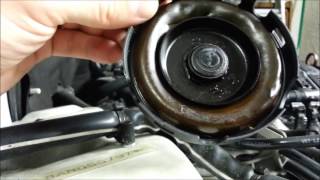
For the PCV system, check for suction at the oil filler cap at idle. If there is a strong vacuum making the cap difficult to remove, the PCV diaphragm has failed. For the EVAP purge valve, disconnect it and apply 12V power to see if the solenoid clicks. Blow through it when unpowered; it must be closed and not allow air to pass.
Tools: Pliers, flashlight, 12V power source (Intermediate) - Clean the Mass Airflow (MAF) Sensor
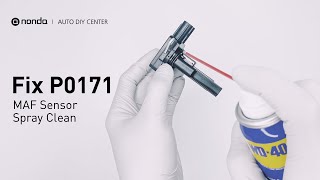
Carefully remove the sensor and clean it ONLY with a dedicated MAF sensor cleaner spray. Do not touch the delicate wires or use other chemicals like brake cleaner. Let it dry completely before reinstalling.
Tools: Screwdriver/socket set, MAF sensor cleaner (Beginner) - Perform a Smoke Test
This is the most effective way to find hard-to-see vacuum leaks. A smoke machine forces low-pressure smoke into the intake system. Any leaks from gaskets, hoses, the PCV system, or seals will be revealed by smoke seeping out.
Tools: Smoke machine (Intermediate) - Inspect for Exhaust Leaks
Carefully inspect the exhaust manifold and all piping before the first O2 sensor. Look for black soot trails or cracks that indicate a leak. A leak here pulls in oxygen and causes a false lean reading from the O2 sensor.
Tools: Flashlight, mechanic's mirror (Intermediate) - Advanced MAF Sensor Analysis
Using a scan tool, monitor the MAF sensor's reading in grams per second (g/s) at idle. A typical 2.0L engine reads around 2.0-5.0 g/s at a stable idle. The g/s reading should be roughly 80% of the engine's displacement in liters (e.g., a 2.0L engine should be around 1.6-2.0 g/s). A reading significantly lower than expected proves unmetered air is entering the engine after the MAF sensor.
Tools: OBD-II Scan Tool with Live Data (Advanced) - Test Upstream O2 Sensor Voltage
Using a scan tool with graphing capabilities, monitor the Bank 1 Sensor 1 (upstream) O2 sensor voltage at idle. A healthy sensor shows voltage fluctuating rapidly between approximately 0.1V (lean) and 0.9V (rich). If the sensor's reading is 'lazy' or stuck low (e.g., below 0.45V), it is faulty or confirming a true lean condition.
Tools: Graphing OBD-II Scan Tool (Advanced) - EVAP Purge Valve Resistance Test
Disconnect the EVAP purge valve's electrical connector. Using a multimeter set to Ohms (Ω), measure the resistance between the two pins on the valve. Compare this reading to the manufacturer's specification, typically 15-30 Ohms. A reading that is significantly higher (open circuit) or lower (short circuit) indicates a failed solenoid coil.
Tools: Multimeter, Service manual (Advanced) - Check Fuel Pressure (KOEO and Idle)
Connect a fuel pressure gauge to the fuel rail's test port. With the Key On, Engine Off (KOEO), the fuel pump primes the system to a specific pressure, typically 40-60 PSI. Once the engine is started and idling, the pressure drops slightly. Low pressure at KOEO or a significant drop at idle proves a weak fuel pump, clogged fuel filter, or failing regulator.
Tools: Fuel pressure gauge, Service manual (Advanced)
When This Code Triggers (Freeze-Frame Conditions)
- Engine RPM: 600-850 RPM (Engine at idle speed)
- Engine Coolant Temp: 175-215°F (Engine at normal operating temperature)
- Long Term Fuel Trim (Bank 1): > +15% (PCM has been adding significant fuel over time)
- Vehicle Speed: 0 mph (Vehicle is stationary)
- Engine Load: 15-30% (Low load, consistent with idling)
Related Codes
- P0171 — System Too Lean (Bank 1). P0171 affects all RPMs; P2187 is strictly at idle.
- P2189 — System Too Lean at Idle (Bank 2).
- P0300 — Random/Multiple Cylinder Misfire Detected.
- P0507 — Idle Control System RPM Higher Than Expected.
Climate & Environmental Factors
- Cold Weather: Shrinks and hardens plastic vacuum hoses and PCV diaphragms, causing them to crack and leak.
- High Altitude: Thinner air reduces the PCM's margin of error. Minor vacuum leaks that go unnoticed at sea level trigger P2187 at altitude.
- High Humidity: Accelerates electrical connector corrosion and skews readings on contaminated MAF sensors.
How to Talk to a Mechanic About This Code
Say this: "I have code P2187. My fuel trims are high at idle but drop when revving the engine. I suspect a vacuum leak and want to authorize a smoke test."
Directs the mechanic to a specific, efficient test (smoke test) rather than open-ended troubleshooting, saving diagnostic fees.
Avoid saying:
- 'Just fix whatever's wrong'
- 'My check engine light is on, can you look at it?'
- 'My buddy said it's the O2 sensor, just replace that'
Questions to ask before authorizing the repair:
- Did the smoke test reveal a leak? If so, where is it and what is the cost to repair it?
- If the smoke test was negative, what were the MAF sensor readings in grams per second at idle?
- Can you provide a printout or photo of the freeze-frame data and the fuel trim values you observed?
- What is the warranty on this specific repair, covering both parts and labor?
Where to Take It: Dealer vs Independent vs Chain
- Dealer:
Best for: Vehicles still under powertrain or emissions warranty., Known manufacturer-specific issues that may have a recall or technical service bulletin (TSB), like the Honda fuel pump recall or VW PCV valve warranty extension., Complex electrical issues or when an independent shop is unable to diagnose the problem.
Downsides: Significantly higher labor rates, often 40% or more than independent shops., May recommend replacing an entire assembly when only a smaller component has failed. (Typical cost: +40% vs. baseline) - Independent Shop:
Best fit. P2187 is a common code and its primary causes are well within the diagnostic capabilities of a competent independent shop. They are more likely to offer flexible and cost-effective repair options.
Best for: Most out-of-warranty P2187 repairs., Diagnosing and fixing common causes like vacuum leaks, PCV valves, and MAF/EVAP sensor issues., Vehicle owners who value cost-effectiveness and building a relationship with their mechanic.
Downsides: Quality and expertise can vary widely; it's important to choose a shop with good reviews and ASE-certified technicians., May not have immediate access to the very latest manufacturer-specific tools or software for brand-new models. (Typical cost: +0% vs. baseline) - Chain Shop:
Use with caution. Acceptable for a straightforward part replacement if you have already confirmed the diagnosis yourself. AVOID for initial diagnosis of a P2187 code, as they may lack the specialized tools (smoke machine) or expertise for an accurate diagnosis.
Best for: Simple, pre-diagnosed part replacements (e.g., 'I know my EVAP purge valve is bad, please replace it').
Downsides: Technician skill and diagnostic equipment can be inconsistent., Business models may incentivize upselling unnecessary services or parts, potentially leading to misdiagnosis of a P2187 code. (Typical cost: -10% vs. baseline)
When to Walk Away From the Repair
Sell the car if the estimated repair cost exceeds 50% of its private-party market value.
- Car worth $3000, fix is $1200: Walk away. Repair is 40% of value. Sell as a mechanic special.
- Car worth $12000, fix is $450: Fix it. Repair is 3.75% of value. Routine maintenance.
- Car worth $4000, fix is $1800: Walk away. Repair is 45% of value. Trade it in or sell to a junkyard.
What Scan Tool You Need for This Code
Minimum: OBD-II reader displaying live Short-Term (STFT) and Long-Term Fuel Trim (LTFT) data.
A $20 reader only shows 'P2187'. You need live fuel trims to see if values drop at 2,500 RPM, which proves a vacuum leak exists.
Budget: BlueDriver Pro or OBDLink MX+ (~$100) — Bluetooth dongles providing live data graphing for fuel trims and MAF readings.
Mid-range: Foxwell NT510/NT530 Elite or Innova 5610 (~$180) — Handhelds with bidirectional controls to manually open/close the EVAP purge valve.
Professional: Autel MaxiCOM MK808S or XTOOL D7/D8S (~$500-800) — Professional tablets with full bidirectional control and OEM-level diagnostics.
Rent vs buy: Use AutoZone's 'Loan-A-Tool' program to borrow a scanner for free with a refundable deposit.
How to Clear the Code After You Fix It
- Use an OBD-II scan tool to clear the diagnostic trouble code.
- Reconnect the battery if it was disconnected for the repair.
- Perform a complete drive cycle to allow readiness monitors to run.
Drive cycle (~30 minutes): Cold start the vehicle (after sitting for 8+ hours). Idle for 2-3 minutes with accessories like A/C on. Drive for 15-20 minutes with mixed city/highway speeds, including a period of steady cruising at 55 mph for at least 5 minutes. Allow the vehicle to cool down.
Readiness monitors affected: Catalyst Monitor, O2 Sensor Monitor, EVAP System Monitor
Before emissions retest: drive at least 100 miles to fully set monitors.
Watch out for:
- Simply clearing the code with a scanner does not reset the readiness monitors; a drive cycle is required.
- If the root cause of the lean condition is not fully repaired, the P2187 code will return during the drive cycle.
- In some states, having too many 'Not Ready' monitors results in an automatic emissions test failure.
Will This Fail Emissions / State Inspection?
Yes — this code typically fails an OBD-II emissions inspection.
- California: An illuminated Check Engine Light is an automatic failure of the smog inspection. All readiness monitors must be 'Ready' for the test to proceed.
- New York: A vehicle with an active Check Engine Light automatically fails the OBD-II emissions portion of the annual state inspection.
- Texas: In counties requiring emissions testing, an illuminated Check Engine Light results in an automatic test failure. Even after repair, most readiness monitors must be set to 'Ready'.
Most Commonly Affected Vehicles
- Volkswagen/Audi Various with 2.0T & 1.8T Engines (GTI, A4, Jetta, etc.) (2008-2016) — Notorious for PCV valve/oil separator diaphragm ruptures. This is the #1 cause for P2187 on 2.0T engines.
- Mazda 3, 6, CX-7 (2007-2013) — Stuck-open EVAP purge valve solenoids are the primary culprit. Replacement is cheap and easy.
- Honda Civic, Accord, CR-V, Fit, Odyssey (2017-2020) — Subject to NHTSA Recall #23V858000 for failing low-pressure fuel pumps causing lean conditions.
- Kia/Hyundai Optima, Sonata, Sportage, Sorento (GDI Engines) (2011-2018) — Hardened PCV hoses and carbon buildup on intake valves trigger lean codes.
- BMW 3-Series, 5-Series (E90, E60, etc.) (2006-2013) — Brittle plastic valve covers, intake boots, and crankcase ventilation hoses crack and leak.
- Mercedes-Benz Various C-Class, E-Class (e.g. with M272, M156 engines) (2006-2014) — M272/M156 engines suffer from broken PCV breather hoses and leaking intake manifold gaskets.
- Ford S-Max, Focus ST (with 2.5T Engine) (2006-2010) — Volvo-derived 2.5T engines experience torn diaphragms inside the PCV oil filter housing, creating a loud whistle.
- Subaru Impreza, Forester, Outback (2008-2016) — Intake manifold gaskets shrink and leak. Failing front Air/Fuel Ratio sensors are common at high mileage.
Manufacturer-Specific Notes
- Volkswagen/Audi: Try removing the oil cap while idling. Strong suction or a loud sucking sound confirms a ruptured PCV diaphragm.
- Mazda: A stuck-open EVAP purge solenoid dumps un-commanded fuel vapors into the intake at idle. Replace this $40 part before buying expensive sensors.
- Honda: Verify your VIN against NHTSA Recall #23V858000. A failing low-pressure fuel pump causes P2187 and stalling.
- Mercedes-Benz: Plastic PCV breather assemblies and intake manifold gaskets on M272/M156 engines become brittle and shatter, causing massive vacuum leaks.
Real Owner Stories
2013 VW GTI with 85K miles
Check Engine Light came on with a rough, surging idle. A noticeable hissing sound was coming from the engine bay.
What they tried:
- Initially suspected a simple vacuum hose leak but couldn't find one visually.
Outcome: Mechanic diagnosed a failed PCV valve diaphragm. The owner reported strong suction from the oil filler cap, confirming the diagnosis. Replaced the PCV valve assembly (OEM part 06H103495AH) for $250.
Lesson: On VW/Audi 2.0T engines, a hissing sound plus a rough idle strongly points to the PCV valve. Use the oil cap suction test for a quick confirmation before spending money on a smoke test.
2010 Mazda 3 with 110K miles
P2187 code appeared with no major symptoms other than a slightly rough idle and a 1-2 MPG drop in fuel economy.
What they tried:
- Cleaned the MAF sensor; the code returned within a day.
- Replaced the front O2 sensor based on a general recommendation, but the code came back.
Outcome: Cleaned MAF and replaced O2 sensor to no avail. Replaced the EVAP purge valve (Dorman 911-490) for $40 in 15 minutes, permanently clearing the code.
Lesson: Don't just replace the O2 sensor for a lean code. On many Mazda models, the EVAP purge valve is a more common and much cheaper part to fail. It's an easy DIY replacement that should be checked early in the diagnostic process.
2013 Jaguar XJ 5.0L
Vehicle presented with both P2187 (Bank 1) and P2189 (Bank 2) codes, a very rough idle, and a loud hissing sound from the passenger side of the engine.
What they tried:
- A technician immediately suspected a large vacuum leak due to the sound and the fact that both banks were lean.
Outcome: Technician traced a loud hissing sound to the Bank 1 PCV valve. Plugging the hose improved fuel trims immediately. Replaced the ruptured PCV diaphragm (Part No. C2D60163).
Lesson: When both P2187 and P2189 appear together, it indicates a large vacuum leak affecting the entire engine. A failed PCV valve is a primary suspect. An audible hissing sound is a critical clue that should be investigated before replacing any sensors.
2006 Cadillac STS with 3.6L V6
Owner replaced rear O2 sensors to fix a different issue, but then new codes P2187 and P2189 appeared shortly after.
What they tried:
- The owner was tempted to replace the front O2 sensors but decided to diagnose further first.
- Observed fuel trims at +25% at idle, which dropped toward normal when revving the engine, confirming a vacuum leak.
Outcome: Smoke test revealed a disconnected PCV hose, a torn EVAP return hose, and a loose intake boot clamp. Fixing all three sealed the system and normalized fuel trims.
Lesson: Don't assume a new problem is related to the last part you replaced. Perform a full diagnosis. A smoke test is the most reliable way to find all vacuum leaks; fixing only the most obvious one might not solve the code.
How to Prevent This Code From Triggering
- Periodically inspect vacuum hoses and intake boots (Every oil change or at least once a year) — Plastic and rubber hoses become brittle and crack from heat cycles. Catching cracks early prevents vacuum leaks.
- Clean the Mass Airflow (MAF) sensor (Every time the air filter is replaced (approx. 15,000-30,000 miles)) — Oil vapor and dust coat the sensor wire, causing it to under-report airflow. Use dedicated MAF cleaner.
- Replace the PCV valve (Every 50,000 to 100,000 miles, or sooner on turbocharged engines.) — Internal diaphragms tear and springs weaken, creating constant vacuum leaks.
- Use a quality fuel system cleaner with PEA detergents (Every 5,000-10,000 miles or a few times per year) — Polyetheramine (PEA) detergents remove carbon deposits from injector tips, ensuring proper spray patterns.
Frequently Asked Questions
What is the most common misdiagnosis for P2187?
Immediately replacing the front oxygen (O2) sensor. While a faulty O2 sensor causes this code, the issue is almost always a vacuum leak, dirty MAF sensor, or failed PCV valve. Perform a smoke test before replacing sensors.
What are 'fuel trims' and how do they help diagnose P2187?
Fuel trims are computer adjustments to fuel injection, where positive numbers indicate added fuel to correct a lean condition. For P2187, expect a Long-Term Fuel Trim (LTFT) over +15% at idle. If LTFT drops significantly at 2,500 RPM, a vacuum leak is the definitive cause.
Can an exhaust leak cause a P2187 code?
Yes, but only if the leak is located before the upstream (Bank 1, Sensor 1) oxygen sensor. Ambient air enters the exhaust stream, tricking the O2 sensor into reporting a false lean condition. Leaks after the sensor do not trigger P2187.
Can aftermarket parts or modifications cause a P2187 code?
Yes. Cold air intakes (CAI) or catless downpipes alter engine airflow characteristics. Without a proper PCM tune, these modifications disrupt the factory air-fuel ratio and trigger P2187.
Can a loose gas cap cause a P2187 code?
No. A loose gas cap triggers EVAP system codes (P0455 or P0457). P2187 indicates unmetered air entering the engine intake, not a fuel tank vapor pressure issue.
Is it expensive to fix code P2187?
Costs range from $85 for a simple vacuum hose replacement to $650 for a PCV valve at a shop. If the fuel pump fails, expect bills exceeding $1,200.
What happens if I ignore the P2187 code?
The engine runs hot, destroying spark plugs and pistons. Over several months, the excess heat melts the catalytic converter, adding $1,000 to $2,500 to your repair bill.
Can a bad battery or alternator cause a P2187 code?
No. Low voltage causes electrical gremlins but does not create a physical lean air-fuel condition. P2187 requires a physical leak or sensor failure in the intake, fuel, or exhaust systems.
Key Takeaways
- Code P2187 indicates your engine's air-fuel mixture is running lean (too much air, not enough fuel) specifically at idle speeds below 1,000 RPM.
- Vacuum leaks, a ruptured PCV valve diaphragm, or a stuck-open EVAP purge valve cause over 80% of P2187 codes.
- Monitor Long-Term Fuel Trims (LTFT) with a scan tool: if LTFT exceeds +15% at idle but drops near 0% at 2,500 RPM, a vacuum leak is the definitive cause.
- Fix P2187 within 1-3 months to prevent the lean condition from overheating the engine and destroying the catalytic converter, a $1,000 to $2,500 repair.
Helpful Videos


The information in this article is provided for general reference and educational purposes only. Vehicle specifications, procedures, and part compatibility can vary by production date, trim level, and region. Always consult your vehicle's factory service manual and verify part numbers before purchasing or performing repairs. Safety-critical components such as airbags, seat belts, and braking systems should be installed by a qualified professional.
- 🎬 Helpful Videos
- What Does P2187 Mean?
- Can I Drive With P2187?
- Common Causes
- Symptoms
- Diagnostic Flowchart
- Common Fixes & Costs
- DIY vs Professional
- Used vs. New Parts: Buying Guide
- What Happens If You Wait — Timeline
- Cost of Not Fixing It
- Diagnosis Steps
- When This Code Triggers (Freeze-Frame Conditions)
- Related Codes
- Climate & Environmental Factors
- How to Talk to a Mechanic About This Code
- Where to Take It: Dealer vs Independent vs Chain
- When to Walk Away From the Repair
- What Scan Tool You Need for This Code
- How to Clear the Code After You Fix It
- Will This Fail Emissions / State Inspection?
- Most Commonly Affected Vehicles
- Manufacturer-Specific Notes
- Real Owner Stories
- 2013 VW GTI with 85K miles
- 2010 Mazda 3 with 110K miles
- 2013 Jaguar XJ 5.0L
- 2006 Cadillac STS with 3.6L V6
- How to Prevent This Code From Triggering
- Frequently Asked Questions
- What is the most common misdiagnosis for P2187?
- What are 'fuel trims' and how do they help diagnose P2187?
- Can an exhaust leak cause a P2187 code?
- Can aftermarket parts or modifications cause a P2187 code?
- Can a loose gas cap cause a P2187 code?
- Is it expensive to fix code P2187?
- What happens if I ignore the P2187 code?
- Can a bad battery or alternator cause a P2187 code?
- Key Takeaways
- 🎟️ Get 5% Off