

P0236 on 2011-2017 Chevrolet Cruze 1.4L Turbo: Boost Sensor Performance Causes and Fixes
On the 2011-2016 Cruze 1.4L (LUV), code P0236 is most often caused by a faulty boost pressure sensor or a failure in the engine's complex PCV system, such as a bad check valve in the intake manifold. This PCV failure often creates a chain reaction, rupturing the valve cover diaphragm. Replacing a sensor is ~$40-$80, while fixing the PCV system can range from $150 to over $500 depending on the failed components.
- For a 2011-2016 Cruze 1.4L, P0236 strongly suggests a problem with either the PCV system or the boost sensor itself.
- Before replacing any parts, always check for the common PCV failures: listen for a hissing valve cover and inspect the intake manifold for its internal check valve.
- Use a scan tool to compare boost, MAP, and BARO readings with the engine off. They should be nearly identical. This is a quick test for a bad sensor.
- If any work was recently done on the engine, double-check that the boost sensor and upstream O2 sensor electrical connectors are not swapped.
- Do not assume the turbo has failed. It is one of the least likely causes for this code on this specific vehicle.
What's Unique About the 2011-2017 Chevrolet Cruze

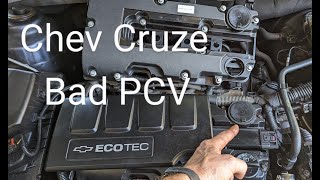
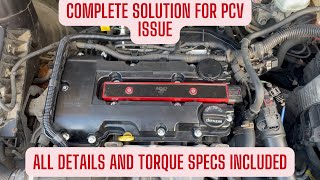
The first-generation Cruze (2011-2016) with the 1.4L LUV engine is uniquely prone to a cascade of failures within its Positive Crankcase Ventilation (PCV) system. A failed check valve inside the intake manifold is a very common root cause that allows boost pressure to enter the crankcase, leading to a ruptured diaphragm in the valve cover, blown seals, and erratic sensor readings that can trigger P0236. While a bad boost sensor is a possible cause, PCV system diagnosis is critical on this specific engine before replacing parts. This issue is so prevalent that multiple aftermarket kits have been developed to bypass the faulty factory design.
Generation note: The 2011-2017 year range covers two Cruze generations. This guide focuses on the first generation (2011-2016, including the 'Cruze Limited') with the 1.4L LUV engine, which has well-documented PCV system issues. The second generation (late 2016-2019) uses a different 1.4L LE2 engine with different common problems, such as charge air cooler icing in cold climates, which is addressed by TSB Bulletin #22-NA-007.
Symptoms You May Notice

- Check Engine Light is on
- Reduced engine power (limp mode)
- Poor or hesitant acceleration
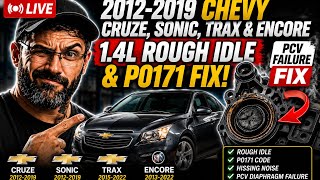
- Noticeable hissing or whistling sound from the engine bay (if valve cover diaphragm is ruptured)
- Increased oil consumption or new oil leaks
- Smoke from the tailpipe
- Rough or unstable idle
- Replacing the turbocharger assembly. Turbo failure is not a common cause for P0236 alone; it is more often a sensor, wiring, or PCV system issue.
- Replacing only the valve cover when the intake manifold check valve is the root cause. The new valve cover will likely fail again quickly.
- Replacing the boost sensor without checking for swapped connectors after a recent repair.
Most Likely Causes


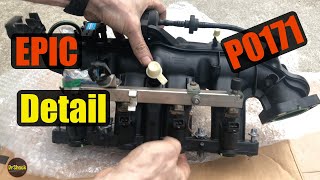
- Failed Intake Manifold Check Valve 🔴 High Probability The small, orange rubber check valve inside the intake manifold is a notorious failure point on the 1.4L LUV engine. It degrades, breaks apart, and can get sucked into the engine.
How to confirm: Remove the PCV tube from the intake manifold and look inside the port with a flashlight. If the orange, nipple-like check valve is missing or damaged, the manifold has failed. Even if the nipple is present, the valve behind it can fail, so this is not a 100% guarantee.
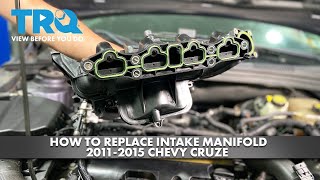
Typical fix: Replace the entire intake manifold. Aftermarket kits (e.g., from CruzeKits.com) exist to install an external check valve, but replacing the manifold with an updated OEM part is the standard repair.
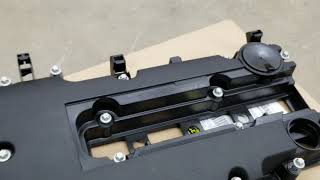
Est. part cost: $150-$300 - Ruptured PCV Regulator Diaphragm (in Valve Cover) 🔴 High Probability This often fails as a direct result of the intake manifold check valve failure, which exposes the diaphragm to unregulated boost and vacuum, causing it to tear.
How to confirm: With the engine running, listen for a distinct hissing or sucking sound from the valve cover. You can also place a finger over the small rectangular vent hole on the cover; if you feel strong suction, the diaphragm is torn.
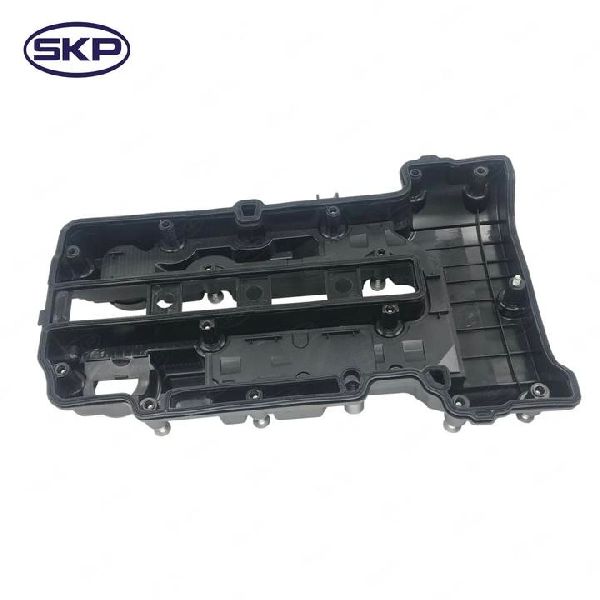
Typical fix: Replace the entire valve cover assembly. Use an OEM or high-quality ACDelco part, as some aftermarket versions fail quickly.
Est. part cost: $50-$100 - Faulty Turbocharger Boost Pressure Sensor ('A' Sensor) 🟡 Medium Probability
How to confirm: Using a scan tool, compare the 'Boost Pressure' reading to the 'MAP' and 'BARO' readings with the Key On, Engine Off. All three should be nearly identical (e.g., ~14.7 PSI at sea level). If the boost sensor reading is stuck or significantly different (e.g., 1.85 psi vs 14.21 psi), the sensor is likely bad.
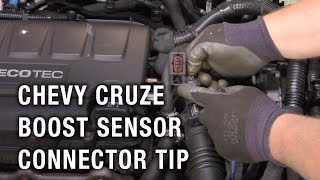
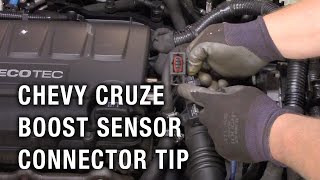
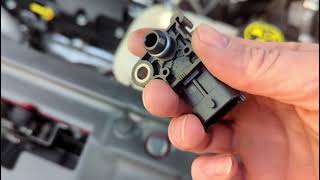
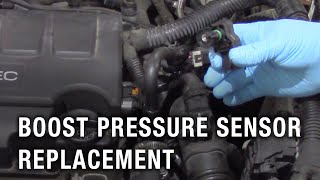
Typical fix: Replace the boost pressure sensor. On the LUV engine, this sensor is typically located on the charge pipe just before the throttle body. It is held in by a single T15 Torx screw. 🎬 Watch: Quick guide to replacing the turbo boost pressure sensor.
Est. part cost: $40-$80 - Swapped Electrical Connectors ⚪ Low Probability The electrical connector for the boost pressure sensor is physically identical to the connector for the upstream O2 sensor. It is a common mistake to swap them during reassembly after other repairs, such as replacing the valve cover or intake manifold.
How to confirm: Check the wire colors going into the boost sensor connector and the O2 sensor connector. Compare them to a wiring diagram. For the boost sensor, expect colors like Gray, Brown/Red, Black/Dark Green, and Dark Green. For the O2 sensor, expect Violet/Dark Blue, Gray/White, and Yellow/Brown. This mistake will typically set multiple codes at once, including O2 sensor codes (P0132, P0134) and other pressure sensor codes (P0237).
Typical fix: Swap the connectors back to their correct sensors and clear the codes.
Est. part cost: $0
Rare But Worth Checking
- Boost Leak in Charge Air System: A cracked charge pipe, loose clamp, or leaking intercooler can cause pressure readings to be out of range. A smoke test is the most effective way to find these leaks. One owner on CruzeTalk reported finding a loose intercooler pipe connection causing P0236.
- Damaged Wiring or Connector: Inspect the wiring harness and connector for the boost pressure sensor for any signs of corrosion, chafing, or broken wires, which can cause an intermittent or incorrect signal.
- Faulty Negative Battery Cable: A known issue on 2011-2015 Cruzes is an insufficient crimp on the negative battery cable, causing widespread, intermittent electrical issues. This can manifest as various seemingly unrelated codes and symptoms. GM issued a special coverage program (14311B) for this issue.
Diagnosis Steps
- Read all stored fault codes. Note any codes that accompany P0236, as they provide critical clues (e.g., P0171, P1101, P0106 point strongly to PCV issues).
- With the engine running at idle, listen for a loud hissing or whistling sound from the valve cover, which indicates a ruptured PCV diaphragm.
- Using a scan tool with live data, observe the Boost Pressure, MAP, and BARO sensor readings with the Key On, Engine Off (KOEO). They should all read atmospheric pressure and be very close to each other. If the boost sensor is an outlier, it is suspect.
- If the PCV system is suspected, remove the decorative engine cover. Remove the PCV hose connecting the valve cover to the intake manifold.
- Inspect the port on the intake manifold. Use a light to look for the small, orange, nipple-shaped check valve. If it is missing, the intake manifold must be replaced.
- If recent engine work was performed, verify the connectors for the boost pressure sensor and the upstream O2 sensor are not swapped. Check wire colors against a diagram.
- If no obvious PCV faults are found, perform a smoke test on the entire intake and charge air system to check for hidden vacuum or boost leaks.
- Inspect the wiring and connector for the boost pressure sensor for damage, corrosion, or loose pins.
Parts You'll Likely Need
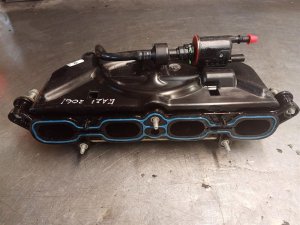
- Intake Manifold
(OEM #25200449 (Updated), 55573171 (Original))— The integrated PCV check valve fails, which is the root cause of many boost and oil consumption issues on this engine. The entire manifold must be replaced.
Trusted brands: ACDelco, GM Genuine, Dorman (Kit 615-380)
OEM price range: $200-$300
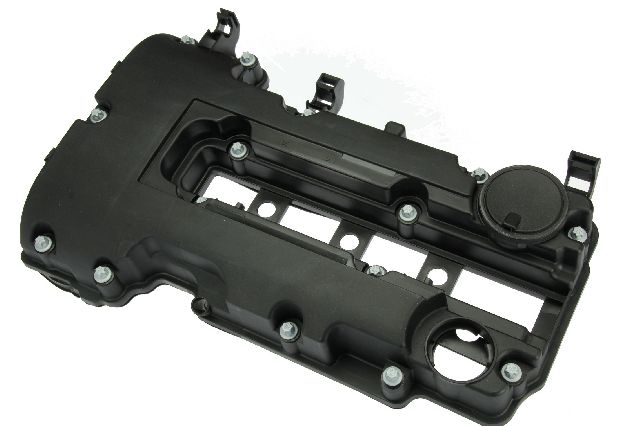
Aftermarket price range: $150-$250 - Valve Cover / Camshaft Cover
(OEM #25198874)— The PCV regulator diaphragm inside ruptures, causing a massive vacuum leak. This is often a secondary failure caused by the bad intake manifold check valve.
Trusted brands: ACDelco, GM Genuine
OEM price range: $70-$120
Aftermarket price range: $40-$80 - Turbocharger Boost Pressure Sensor
(OEM #55567257 (Also referred to as a MAP sensor in some catalogs))— This sensor provides the primary reading for boost pressure. It can fail, providing an illogical signal to the ECM.
Trusted brands: ACDelco, Bosch, Standard Motor Products
OEM price range: $40-$80
Aftermarket price range: $25-$60
Related Codes That Often Appear With This One
- P0299 — Indicates an underboost condition. A major vacuum leak from a failed PCV system or a boost leak can cause both codes.
- P1101 — Relates to MAF sensor performance. This code is very commonly triggered by the PCV system failures on the 1.4L LUV engine.
- P2227 — Indicates a Barometric Pressure sensor performance issue. Since the ECM compares the boost sensor to the BARO sensor, a fault in one can trigger a code for the other.
- P0171 — Indicates the engine is running lean. A ruptured valve cover diaphragm creates a large, unmetered vacuum leak, causing a lean condition and this code.
- P0106 — Indicates a MAP/Barometric Pressure Sensor Range/Performance problem. This is often set alongside P1101 and P0171 as part of the PCV failure cascade.
Technical Service Bulletins (TSBs) & Recalls
- 14311B: Special Coverage Adjustment - Negative Battery Cable Loose. Covers an insufficient crimp on the negative battery cable for 2011-2015 models, extending the warranty.
- PIP5102: This TSB (and its revisions) often relates to engine performance issues, including codes like P0299, P0171, and P1101, which are frequently seen with P0236 due to the PCV system failures.
- TSB Bulletin #22-NA-007: Notes that in extremely cold weather conditions, Charge Air Cooler (CAC) icing can illuminate the MIL with DTCs P0299, P0234, P0236, P2227, and P00C7.
Platform-Specific Known Issues
- The PCV system on the 1.4L LUV engine is a well-documented weak point. The failure of the intake manifold check valve often leads to a chain reaction, destroying the valve cover diaphragm and pressurizing the crankcase, which can force oil past seals.
- GM issued a technical service bulletin (22-NA-067) which mentions P0236 as a possible code resulting from contamination (ice, water, oil, sludge) in the charge air bypass valve, intake manifold, and charge air cooler, particularly in cold weather.
Mechanic-Grade Diagnostic Values
- Boost, MAP, and BARO Sensor Correlation (KOEO) — expected: All three sensors should read atmospheric pressure and be nearly identical (e.g., 14.21 psi).. Failure: The boost sensor reading is a significant outlier (e.g., 1.85 psi while others read 14.21 psi), indicating a faulty sensor.
- Boost Pressure Sensor Signal Voltage (KOEO) — expected: Typically between 0.5V and 4.5V. A known good replacement sensor produced 1.9V at the signal pin.. Failure: Voltage is 0V, stuck at 5V, or does not change with pressure, often indicating a bad sensor or wiring issue. A bad sensor can short the 5V reference circuit to ground.
- Boost Pressure Sensor Connector Voltage Test — expected: With the connector unplugged and Key On, Pin 1 (5V Reference) should have ~5V, Pin 2 (Low Reference) should have continuity to ground (0V), and Pin 3 is the signal wire.. Failure: Missing 5V reference or ground indicates a wiring or ECM problem. If reference and ground are good, the sensor is the likely fault.
- Boost Leak Down Test — expected: After pressurizing the intake system to 20 PSI, it should take at least 20 seconds for the pressure to drop to 10 PSI.. Failure: A rapid pressure drop (less than 20 seconds) indicates a significant leak in the charge pipes, intercooler, or intake gaskets.
Scan Tool Commands That Help
- GDS2 / High-End Scan Tool: Live Data Graphing: Desired Boost vs. Actual Boost — This is the primary method to confirm a performance issue. During a road test with wide-open throttle pulls, you can see if the actual boost pressure reported by the sensor fails to meet the target commanded by the ECM.
- GDS2 / High-End Scan Tool: Turbocharger Learn — This function should be performed after replacing the turbocharger assembly or wastegate actuator to reset learned values and allow the ECM to calibrate control of the new component.
- GDS2 / High-End Scan Tool: Wastegate Solenoid Command — Allows a technician to manually cycle the wastegate control solenoid to verify its mechanical and electrical operation, helping to rule out a stuck wastegate as the cause of the pressure correlation fault.
Wiring & Ground Locations
- Boost Sensor vs. O2 Sensor Connectors — The boost pressure sensor is on the charge air pipe leading to the throttle body. The upstream O2 sensor is on the exhaust manifold/turbocharger housing.. The 4-pin connectors are physically identical and located in the same general area. Swapping them during reassembly is a common mistake that will immediately set P0236 along with multiple O2 sensor codes. Verifying wire colors is the definitive check.
- Boost Pressure Sensor Wire Colors — At the sensor connector on the charge pipe.. To confirm the correct connector is attached. The wires are: Gray (5V Reference), Brown/Red (Signal), Black/Dark Green (Low Reference/Ground), and Dark Green (Intake Air Temp Signal).
- Upstream O2 Sensor Wire Colors — At the sensor connector on the exhaust manifold.. To differentiate from the boost sensor connector. The wires are typically: Violet/Dark Blue, Gray/White, and Yellow/Brown.
Real Owner Repair Stories
- Reddit user on r/cruze (2011 Chevrolet Cruze) — Check Engine Light with codes P0236, P1101, and P2227.
❌ Tried (didn't work) Initial testing showed 0V on the sensor's signal wire, leading to a suspicion of a bad ECU., Confirmed continuity on the wiring harness between the sensor and ECU.
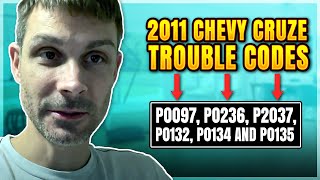
✅ What actually fixed it Replacing the turbocharger boost pressure sensor. The new sensor immediately resolved the codes and produced a correct 1.9V reading on the signal wire. - YouTube channel 'Electrical-Junky' (2011 Chevrolet Cruze 1.4L) — Check Engine Light, cooling fan running constantly, multiple codes including P0236, P0237, P0132, P0134, P0135.
❌ Tried (didn't work) The owner had already replaced the boost pressure sensor with a new part from the dealership, but the codes immediately returned.
✅ What actually fixed it The electrical connectors for the boost pressure sensor and the upstream O2 sensor had been swapped. Swapping the identical connectors back to their correct components and clearing the codes fixed all issues. - NHTSA ODI #11084536 — An owner reported the check engine light came on with a large cluster of error codes including P0106, P015B, P0236, P0237, P1101, and P112D.
"I Checked Everything" — The Actual Cause
- A common scenario for this code is when a smoke test reveals no vacuum or boost leaks, yet the code persists. The most frequent cause in this situation is either a faulty boost pressure sensor providing incorrect data despite no leak, or swapped electrical connectors between the boost sensor and O2 sensor after a previous repair, which a smoke test would not identify.
OEM Part Supersession History
55573171→25200449— Part update and design revision by GM for the Intake Manifold.25198550, 25199832→25201063— Part consolidation and update by GM for the complete Turbocharger Assembly.
Heads up: This part number is for the entire turbocharger with exhaust manifold, not the intake manifold.55573746→25198874— Part update by GM for the Valve Cover assembly.
Heads up: These part numbers are generally interchangeable for the 2011-2016 1.4L LUJ/LUV engines.
Model Year Variations Within This Range
- 2011-2016: The 1.4L turbo engine was produced under two RPO codes, LUJ and LUV. They are mechanically almost identical and both suffer from the same PCV system design flaw. Parts and repair procedures are interchangeable between them.
- 2016: The 2016 model year is a split. The 'Cruze Limited' is a carry-over of the first generation and uses the LUV engine with the known PCV issues. The all-new 'Cruze' model introduced the redesigned 1.4L LE2 engine, which has different common problems and parts.
Diagnostic Flowchart
Other Known Issues on This Vehicle
Issues unrelated to this code that are worth knowing about as an owner of this generation:
- Cooling System Leaks (Thermostat Housing & Water Pump) 🔴 High — Extremely common. The plastic thermostat housing and water outlet are prone to cracking and leaking coolant. The water pump also has a high failure rate. Many owners replace these components multiple times. (Ref: GM extended warranty coverage on the water pump for 10 years/150,000 miles for some vehicles due to the high failure rate.)
- Faulty Negative Battery Cable Connection 🟠 Medium — Common on 2011-2015 models. An insufficient crimp causes poor electrical contact, leading to a wide array of intermittent electrical problems, warning lights (Stabilitrak, Power Steering), and no-start conditions. (Ref: Special Coverage Adjustment 14311B was issued to replace the cable free of charge for 10 years/120,000 miles.)
- Oil Leaks (Oil Cooler, Valve Cover, Cam Seals) 🟠 Medium — Very common. Leaks frequently develop from the oil cooler lines/seals, the valve cover gasket, and camshaft position sensor seals.
- Transmission Control Module (TCM) & Shifting Issues 🟠 Medium — Owners report harsh shifts, flares, or slips. Some issues can be addressed with software updates or a 'Transmission Service Fast Learn' procedure. (Ref: TSB 16-NA-019 provides information for technicians on correcting harsh shifts and performing adaptive learning procedures.)
- Turbocharger Wastegate Failure 🟠 Medium — The wastegate actuator arm pivot can wear, or the retaining clip can fall off, causing the wastegate to stay open and trigger an underboost code (P0299). (Ref: Special coverage (N232395330) was issued for some platform mates, but not explicitly the Cruze, extending the turbo warranty.)
Used vs. New Parts: Buying Guide for This Vehicle
When a used part is the smart pick: Given the high failure rate of integrated PCV components, used parts are generally not recommended for this repair. A used intake manifold is only viable if the internal check valve can be visually inspected and confirmed to be intact and pliable, which is difficult. Other mechanical components like charge pipes or a low-mileage turbo assembly could be sourced used.
Donor-vehicle mileage cap: roughly under 60000 miles for the part to have meaningful remaining life.
What to inspect on the donor part:
- For an intake manifold, insist on clear photos of the PCV port to see if the orange check valve is present and not broken.
- For a turbo assembly, check for excessive shaft play and any signs of oil leaking from the seals.
- Avoid any parts from a donor vehicle that shows signs of oil sludge or poor maintenance.
OEM-only on this vehicle (don't cheap out):
- Valve Cover: The integrated PCV diaphragm is a critical wear item. OEM (GM Genuine / ACDelco) is the most reliable choice. Many cheap aftermarket plastic and aluminum versions are known to warp, leak, or have short-lived diaphragms.
Aftermarket brands forum-validated for this vehicle:
- Febi, Vaico: Mentioned by mechanics as reliable alternatives for the valve cover.
- Fel-Pro: A trusted brand for replacement gaskets if not included with the main part.
- CruzeKits.com, ZZPerformance: Well-known specialists for aftermarket PCV system bypass/fix kits, which are a popular alternative to replacing the OEM intake manifold.
Brands owners have reported issues with on this vehicle:
- Generic Aluminum Valve Covers (e.g., from Amazon/eBay): Widely reported to have quality control issues, including warping, poor gasket fitment, oil cap sealing problems, and internal screws backing out into the valvetrain.
Real Owner Stories
Aggregated from forums and TSBs cited above. Mileages and costs reflect what owners reported in those sources.
2013 Chevrolet Cruze 1.4L Turbo — ~95000 miles
Symptoms: The check engine light came on and the car had reduced power and poor acceleration. There was a distinct hissing sound coming from the top of the engine.
What fixed it: Diagnosis found the PCV diaphragm in the valve cover was ruptured and the check valve inside the intake manifold was missing. Replacing both the entire valve cover and the intake manifold resolved the codes.
Source hint: CruzeTalk.com: 2011-2016 Cruze 1.4 PCV Valve Cover/Intake Manifold Issues
2014 Chevrolet Cruze 1.4L Turbo
Symptoms: Immediately after replacing the valve cover, the check engine light came on with a host of codes, including P0236, P0237, P0132, and P0134.
What fixed it: The electrical connectors for the boost pressure sensor and the upstream O2 sensor had been accidentally swapped. Swapping them back to their correct sensors and clearing the codes fixed the issue instantly.
Source hint: YouTube: Swapped O2 and Boost Sensor Connectors
2016 Chevrolet Trax 1.4L Turbo
Symptoms: The vehicle was running rough, had poor acceleration, and the check engine light was on for P0236. A scan tool showed the boost pressure sensor reading was stuck at a very low value, while the MAP and BARO sensors read normal atmospheric pressure with the engine off.
What fixed it: The faulty turbocharger boost pressure sensor was replaced. The new sensor read correctly on the scan tool and the code was cleared.
Source hint: platform_mates section describing shared issues with Chevrolet Trax
Owner Complaint — NHTSA ODI #11084536
Symptoms: An owner reported that the check engine light illuminated with a series of error codes: P0106, P015B, P0236, P0237, P1101, and P112D.
What fixed it: While the specific repair was not detailed in the complaint, these codes often point to a combined failure of the PCV system and pressure sensors.
Related OBD-II Codes
Frequently Asked Questions
My 2014 Cruze has P0236 and a loud hissing sound. What's the most likely problem?
I just replaced my valve cover and now I have P0236 and O2 sensor codes like P0132. What did I do wrong?
How can I check for the failed intake manifold check valve on my 1.4L Cruze without special tools?
Are there any GM Technical Service Bulletins (TSBs) related to P0236 on this engine?
How can I test the boost pressure sensor itself before replacing it?
I have a 2015 Chevy Sonic with the 1.4L Turbo and code P0236. Is this article's advice still valid?
Helpful Videos
Used OEM Parts in Stock
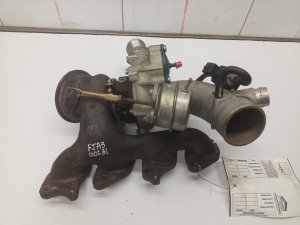
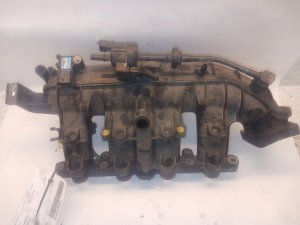
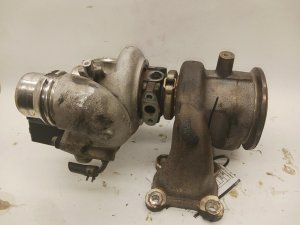
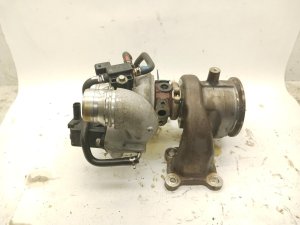
New Aftermarket Parts Available


The information in this article is provided for general reference and educational purposes only. Vehicle specifications, procedures, and part compatibility can vary by production date, trim level, and region. Always consult your vehicle's factory service manual and verify part numbers before purchasing or performing repairs. Safety-critical components such as airbags, seat belts, and braking systems should be installed by a qualified professional.
- Chevrolet Cruze:
- 🎬 Helpful Videos
- 🛍️ Shop This Part
- What's Unique About the 2011-2017 Chevrolet Cruze
- Symptoms You May Notice
- Most Likely Causes
- Rare But Worth Checking
- Diagnosis Steps
- Parts You'll Likely Need
- Related Codes That Often Appear With This One
- Technical Service Bulletins (TSBs) & Recalls
- Platform-Specific Known Issues
- Mechanic-Grade Diagnostic Values
- Scan Tool Commands That Help
- Wiring & Ground Locations
- Real Owner Repair Stories
- "I Checked Everything" — The Actual Cause
- OEM Part Supersession History
- Model Year Variations Within This Range
- Diagnostic Flowchart
- Other Known Issues on This Vehicle
- Used vs. New Parts: Buying Guide for This Vehicle
- Real Owner Stories
- 2013 Chevrolet Cruze 1.4L Turbo — ~95000 miles
- 2014 Chevrolet Cruze 1.4L Turbo
- 2016 Chevrolet Trax 1.4L Turbo
- Owner Complaint — NHTSA ODI #11084536
- Related OBD-II Codes
- Frequently Asked Questions
- 🎟️ Get 5% Off