

OBD-II Code P0132: Oxygen Sensor High Voltage
The Ultimate Guide to What P0132 Means, Why It Triggers, and How to Fix It for Good
- P0132 triggers when the Bank 1 upstream oxygen sensor gets stuck reporting a high voltage above 0.9V, falsely signaling a rich engine condition.
- Perform a 60-second sensor unplug test while watching live scanner data to definitively isolate a failed $100 sensor from a wiring harness short.
- Fix P0132 within two weeks to prevent unburned fuel from melting your catalytic converter, which turns a $200 repair into a $2,500 replacement.
- Always install an OEM oxygen sensor (like Denso or Bosch) because aftermarket sensors frequently cause the P0132 code to return on sensitive makes like Subaru and Honda.
What Does P0132 Mean?

The Powertrain Control Module (PCM) detected a persistent problem with the primary oxygen (O2) sensor on engine Bank 1. This 'Sensor 1' must rapidly switch its voltage signal between low (lean) and high (rich). The P0132 code sets because the sensor's signal is stuck at an abnormally high voltage (typically above 0.9 volts) for too long. This tells the computer the engine is running constantly 'rich' (too much fuel), disrupting fuel adjustments and triggering the Check Engine Light.
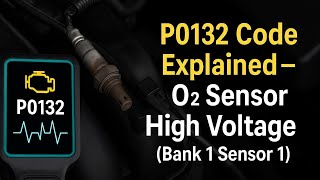
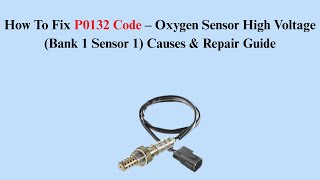
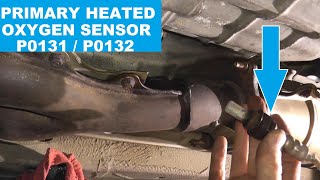
Technical definition: O2 Sensor Circuit High Voltage (Bank 1, Sensor 1). 🎬 Watch: A quick breakdown of what P0132 means for your car. The PCM sets this DTC when the upstream oxygen sensor for Bank 1 maintains a voltage signal above a specified threshold (typically over 0.9V, up to 1.2V) for an excessive period (often 20-60 seconds). This indicates a shorted sensor, a wiring short-to-power, or a persistent rich fuel condition.
Can I Drive With P0132?
Yes, But With Caution. Yes, but address the issue within two weeks. Driving with P0132 causes a 10-15% drop in fuel economy, rough engine performance, and stalling. The most significant risk is irreversible damage to your catalytic converter from unburned fuel, a repair costing between $800 and $2,500.
Common Causes

- Faulty Bank 1, Sensor 1 Oxygen (O2) Sensor (Very Common) — The sensor's internal zirconia element fails from age, heat, and constant exposure to exhaust gases, causing it to short to its own voltage supply and send a constant high voltage signal.
- Wiring or Connector Short-to-Power (Common) — The O2 sensor wiring harness lives in a harsh environment. Wires melt from hot exhaust contact, insulation frays, or connectors corrode. A short in the signal wire to a 5V or 12V power source forces a high voltage reading.
- Contaminated O2 Sensor (Common) — Engine fluid leaks destroy sensors prematurely. Contaminants from a coolant leak (antifreeze), oil leak (engine oil), or excessive silicone sealants foul the sensor's porous ceramic element, causing it to report a constant high voltage.
- Engine Running Rich (Less Common) — The O2 sensor is working perfectly and accurately reporting a rich condition. The root cause is a leaking fuel injector, a faulty fuel pressure regulator delivering too much fuel, or a bad coolant temperature sensor telling the PCM the engine is always cold.
- Exhaust Leaks (Upstream of Sensor) (Less Common) — A leak in the exhaust manifold or downpipe before the O2 sensor draws outside air into the exhaust stream. This confuses the sensor's readings and causes the PCM to overcompensate by dumping fuel, leading to a high voltage signal.
- Faulty Mass Airflow (MAF) Sensor (Rare) — A dirty or faulty MAF sensor under-reports the amount of air entering the engine. The PCM calculates an incorrect fuel delivery, injecting too much fuel. The O2 sensor correctly reports this rich condition.
- Faulty Powertrain Control Module (PCM) (Very Rare) — An internal fault in the PCM's voltage regulation circuit or O2 sensor driver causes it to misinterpret a normal signal as high voltage. Consider this only after exhausting all other possibilities.
Symptoms

- Check Engine Light is On — The PCM illuminates the light as soon as the P0132 fault condition is confirmed.
- Smell of Raw Fuel or Rotten Eggs — A strong gasoline smell indicates excess fuel dumping into the cylinders. A 'rotten egg' (sulfur) smell means the unburned fuel is overheating and destroying the catalytic converter.
- Black Smoke from Exhaust — Unburned fuel exits the tailpipe as visible black smoke, especially during hard acceleration.
- Poor Fuel Economy — The vehicle consumes up to 15% more gasoline because the PCM is incorrectly told the engine is rich, disrupting precise fuel mixture adjustments.
- Rough Idle or Engine Hesitation — The engine runs unevenly, shakes at stoplights, or stumbles upon acceleration due to the imbalanced air-fuel ratio.
- Negative Fuel Trims (scan-tool only — no driver-felt sign) — The PCM attempts to correct the perceived rich condition by commanding less fuel. On a scan tool, this appears as highly negative Short-Term (STFT) and Long-Term (LTFT) fuel trim values, often below -10%.
Diagnostic Flowchart
Tap your situation to follow the diagnostic path that matches what you're seeing on this code.
Common Fixes & Costs
- Replace Bank 1, Sensor 1 Oxygen Sensor — Parts: $50-$250, Labor: $100-$200, ~0.8 hr book time (DIY)
- Repair Damaged Wiring Harness or Connector — Parts: $10-$60, Labor: $150-$300, ~2.5 hr book time (Intermediate)
- Repair Rich Fuel Condition (e.g., replace fuel injector or pressure regulator) — Parts: $70-$300, Labor: $150-$400, ~2 hr book time (Professional)
- Perform PCM Software Update — Parts: $0, Labor: $100-$250, ~1 hr book time (Professional)
- Repair Exhaust Leak (e.g., replace manifold gasket) — Parts: $20-$80, Labor: $250-$600+, ~4.5 hr book time (Professional)
DIY vs Professional
- Replace Bank 1, Sensor 1 Oxygen Sensor — Beginner:
Tools: Jack and jack stands, O2 sensor socket set, ratchet, penetrating oil, safety glasses. - Repair Damaged Wiring Harness or Connector — Beginner:
Tools: Digital multimeter, vehicle-specific wiring diagram, wire cutters/strippers, soldering iron or quality crimp connectors, heat shrink tubing. - Replace Fuel Injector / Pressure Regulator — Beginner:
Tools: Fuel pressure gauge, fuel line disconnect tools, socket set, torque wrench, new O-rings/seals. - Repair Exhaust Leak (e.g., replace manifold gasket) — Beginner:
Tools: Extensive socket/wrench set, torque wrench, pry bars, gasket scrapers, potentially a torch for rusted bolts.
Used vs. New Parts: Buying Guide
When a used part is worth it: Never buy a used oxygen sensor. O2 sensors are wear-and-tear items with a finite lifespan, and a used part has an unknown history. The labor cost to install it outweighs any savings. However, for a related, more expensive part like a catalytic converter, a used OEM part makes sense.
Donor-vehicle mileage cap: roughly under 80000 miles for the part to have meaningful remaining life.
Donor quality checklist:
- For catalytic converters, verify the donor vehicle was not scrapped for emissions failure or high mileage.
- Look for OEM manufacturer logos and part numbers; aftermarket parts have lower precious metal content.
- Avoid parts from rust-belt regions, as corrosion damages the housing and mounting points.
- Match the part number exactly to ensure compatibility.
Decision logic:
- If The required part is an O2 sensor → Always buy new. The risk of premature failure and repeat labor costs with a used sensor is too high.
- If The required part is a catalytic converter and the vehicle is over 150K miles → A used OEM converter from a low-mileage donor is a viable budget option, but expect a shorter remaining life.
- If The vehicle is in a CARB-regulated state (e.g., California, New York) → Favor new OEM or new CARB-compliant aftermarket parts to guarantee passing emissions tests.
Warranty tradeoff: Used parts typically have a 30-90 day warranty. New aftermarket parts offer a 1-3 year warranty. New OEM parts carry a 1-year/12,000-mile warranty or longer.
Worst-case if a used part fails: $250-$500 if a used O2 sensor fails after installation, requiring repeat labor and the cost of another part.
What Happens If You Wait — Timeline
- 0-2 weeks: Check Engine Light is on. No other symptoms are noticeable to the driver. The code is stored in the PCM. (MPG impact: 0-5%% · Added cost: $0)
- 2 weeks - 3 months: A noticeable drop in fuel economy occurs. The driver experiences a slightly rough idle on cold starts and minor hesitation during acceleration. (MPG impact: 5-15%% · Added cost: $50-$150 in wasted fuel)
- 3-6 months: The constant rich exhaust overheats the catalytic converter. The internal ceramic substrate starts to crack or melt. The 'rotten egg' smell is present after hard acceleration. (MPG impact: 10-20%% · Added cost: $800-$2,500 (catalytic converter replacement is now likely required))
- 6+ months: The catalytic converter melts down completely, causing a significant exhaust blockage. This creates high backpressure, leading to severe power loss, stalling, and internal engine damage. (MPG impact: 20-40%+% · Added cost: $2,000-$4,000+ (for catalytic converter and potential engine repairs))
Cost of Not Fixing It
- 0-1 Month: Noticeable drop in fuel economy (up to 15%), rough idle, and hesitation. Your vehicle fails any emissions test. (Added cost: $50-$100 in wasted fuel.)
- 1-6 Months: A continuous rich condition overheats the catalytic converter, causing its internal substrate to melt. This leads to irreversible damage and exhaust blockages. (Added cost: $1,200 - $2,800 for catalytic converter replacement.)
- 6+ Months: Severe catalytic converter damage causes significant exhaust backpressure, leading to engine performance issues, stalling, and potential damage to exhaust valves or piston rings. (Added cost: $3,000+ for catalytic converter and potential engine repairs.)
Diagnosis Steps

- Read Codes and Analyze Freeze Frame Data
Use an OBD-II scanner to confirm P0132 is active and check for related codes (e.g., P0172, P0135). Analyze the 'freeze frame' data to see the engine's exact state (speed, load, temperature) when the problem happened.
Tools: OBD-II Scanner (Beginner) - Analyze Live Fuel Trim Data
Monitor Short-Term Fuel Trim (STFT) and Long-Term Fuel Trim (LTFT) for Bank 1. If the O2 sensor is stuck high, the PCM compensates by removing fuel, resulting in highly negative STFT values (-10% to -25%). Normal Bank 2 values confirm the issue is isolated to Bank 1.
Tools: OBD-II Scanner with Live Data (Beginner) - Graph Live O2 Sensor Data
With the engine warm and running, graph the voltage for 'O2S11' (Bank 1, Sensor 1). A healthy sensor rapidly fluctuates between ~0.1V and ~0.9V. A flat line stuck above 0.9V visually confirms the fault.
Tools: OBD-II Scanner with Live Data (Beginner) - Perform a 'Sensor Unplug' Test
Turn the engine off but leave the ignition on. Unplug the Bank 1, Sensor 1 O2 sensor. Watch the live data voltage on your scanner. If the voltage drops to near 0V, the sensor is internally shorted and must be replaced. If the voltage remains high, the short-to-power is in the vehicle's wiring harness.
Tools: OBD-II Scanner with Live Data (Intermediate) - Inspect Wiring and Connectors
Locate Bank 1, Sensor 1. Perform a close visual inspection of the sensor's wiring harness from the sensor to the main engine harness. Look for melted plastic, frayed insulation, green corrosion in the connector, or contact with hot exhaust components.
Tools: Flashlight, Safety Glasses (Beginner) - [PRO TIP] Test Harness for Shorts to Voltage
With the sensor unplugged and ignition on (engine off), set a multimeter to DC Volts. Connect the black lead to chassis ground. Probe the signal wire pin on the *harness* side of the connector. A healthy circuit shows a low bias voltage (~0.45V). A reading of 5V or 12V confirms a short-to-power in the wiring harness.
Tools: Digital Multimeter, Vehicle-Specific Wiring Diagram (Advanced) - [PRO TIP] Test Heater Circuit Resistance
With the sensor unplugged, set a multimeter to Ohms (Ω). Probe the two heater circuit pins on the *sensor* side of the connector. A good heater circuit reads between 2 and 30 ohms. An open loop (OL) means the heater is broken; 0 ohms indicates a short. Both require sensor replacement.
Tools: Digital Multimeter, Vehicle-Specific Wiring Diagram (Advanced) - [PRO TIP] Check Fuel Pressure
If the sensor and wiring test good, verify the fuel system. Connect a fuel pressure gauge to the fuel rail. With the key on, engine off (KOEO), pressure must match manufacturer specs (typically 45-60 PSI). Start the engine; pressure at idle should drop slightly and remain stable. High pressure indicates a faulty fuel pressure regulator.
Tools: Fuel Pressure Gauge, Service Manual (Advanced) - Check for Technical Service Bulletins (TSBs)
Check with the manufacturer or use an online service to see if any TSBs exist for your vehicle regarding P0132. A simple PCM software reflash is the definitive fix for false codes on certain Jeep and Chrysler models.
Tools: Online Subscription or Dealer Inquiry (Intermediate) - [PRO TIP] Analyze with an Oscilloscope
Connect an oscilloscope to the sensor's signal wire and ground. A healthy zirconia O2 sensor produces a clean square wave. For P0132, you will see a flat line stuck near the top of the graph, offering irrefutable proof the sensor is not switching.
Tools: Automotive Oscilloscope (Scope) (Professional)
When This Code Triggers (Freeze-Frame Conditions)
- Engine Coolant Temp: 180-200°F (The engine is fully warmed up to normal operating temperature.)
- RPM: 1500-2500 (The fault sets during steady-state cruising, not during heavy acceleration or deceleration.)
- Engine Load: 20-50% (Light to moderate engine load, consistent with highway or suburban cruising.)
- Vehicle Speed: 40-65 mph (The code triggers during steady highway driving.)
Related Codes
- P0131 — The direct opposite of P0132. P0131 indicates the O2 sensor voltage is stuck low (lean). P0132 points to a short-to-power, while P0131 suggests a short-to-ground or an open signal circuit.
- P0172 — Means 'System Too Rich (Bank 1)'. P0132 is an electrical circuit code, while P0172 is a fuel trim code. A faulty sensor stuck high (P0132) causes the PCM to set P0172. Conversely, a real rich condition causes a good O2 sensor to report high voltage, leading to P0172.
- P0133 — Means 'O2 Sensor Circuit Slow Response'. Indicates a 'lazy' sensor, not a 'stuck' one. With P0133, the sensor switches too slowly. With P0132, the sensor stops switching and is stuck high.
- P0135 — Means 'O2 Sensor Heater Circuit Malfunction'. The O2 sensor must be hot (over 600°F) to work. If the internal heater fails, the sensor sends slow or incorrect signals, sometimes leading to a P0132 code as a secondary fault.
Climate & Environmental Factors
- Road Salt / High Humidity: Moisture and road salt accelerate corrosion of the O2 sensor's electrical connector and wiring. This corrosion creates resistance or shorts in the circuit, directly causing the P0132 code. Visually inspect the connector for green or white crust in these climates.
- Extreme Cold: Extreme cold exacerbates pre-existing issues. The O2 sensor's internal heater must reach over 600°F. In cold weather, a weak heater circuit struggles to heat the sensor adequately, leading to erratic readings that contribute to a P0132 fault.
- High Altitude: At high altitudes, less dense air naturally creates a richer air-fuel mixture. If a vehicle has a borderline issue, like a lazy O2 sensor or minor fuel delivery problem, the additional enrichment from altitude pushes the sensor's reading over the high-voltage threshold, triggering P0132.
How to Talk to a Mechanic About This Code
Say this: "I have a P0132 code for the Bank 1 Sensor 1 O2 sensor. I'd like to schedule a diagnostic to confirm if the issue is the sensor itself, the wiring, or a rich fuel condition. Can you please check the live O2 sensor voltage graph and perform an unplug test before recommending part replacement?"
This signals you understand the common causes. It directs the technician to perform specific, efficient diagnostic steps rather than just replacing the most likely part, preventing you from being sold an expensive repair when the issue is electrical.
Avoid saying:
- 'My check engine light is on, can you just fix it?'
- 'I think I need a new oxygen sensor.'
- 'Just do whatever you think is best.'
Questions to ask before authorizing the repair:
- Did the live data show the sensor voltage stuck high, and did it drop to zero when you unplugged it? This confirms a bad sensor.
- If the voltage stayed high when unplugged, where did you find the short in the wiring harness?
- If the sensor and wiring are good, what were the fuel trim readings? Are you sure it's not a fuel delivery problem?
- What is the warranty on the parts and labor for this repair?
Where to Take It: Dealer vs Independent vs Chain
- Dealer:
Best for: Vehicles under an emissions or powertrain warranty., Known manufacturer-specific issues requiring a PCM software update (TSB)., Complex electrical issues on newer or European vehicles.
Downsides: Highest labor rates, often 1.5x to 2x more than independent shops., Quicker to recommend replacing a part than repairing a wire. (Typical cost: +50% vs. baseline) - Independent Shop:
Best fit for most scenarios. An experienced independent mechanic easily diagnoses and repairs the common causes of P0132 at a reasonable cost.
Best for: Out-of-warranty vehicles where cost is a factor., Straightforward sensor replacement or common wiring repairs.
Downsides: Shop quality and diagnostic skill vary widely. Look for ASE certifications., May lack access to the latest manufacturer TSBs or software flashing tools. (Typical cost: +0% vs. baseline) - Chain Shop:
Use with caution. Acceptable if you are certain only the sensor needs replacing. AVOID for initial diagnosis.
Best for: Simple, clear-cut oxygen sensor replacement when you have already confirmed the diagnosis yourself.
Downsides: Technician skill varies dramatically; often lacks experience in electrical diagnosis., High pressure to upsell services like unnecessary fuel system cleanings. (Typical cost: -10% vs. baseline)
When to Walk Away From the Repair
If the estimated repair cost exceeds 50% of the car's private-party value, seriously consider selling or trading it in rather than repairing it.
- Car worth $4000, fix is $2200: Walk away. The repair cost is over 50% of the car's value. It's not a sound financial decision.
- Car worth $12000, fix is $350: Fix it. The repair cost is minor compared to the vehicle's value.
- Car worth $2500, fix is $1500: Walk away. The repair cost is 60% of the car's value. Consider scrapping the vehicle or selling it for parts.
What Scan Tool You Need for This Code
Minimum: A scanner that reads and graphs live O2 sensor data. A basic code reader that only gives the P-code is insufficient.
A $20 code reader only tells you the P0132 code exists. It cannot show live voltage data, which is essential to confirm the sensor is actually stuck high. Without live data, you risk wasting money replacing a good part.
Budget: BlueDriver Pro (~$100) — Connects to your phone via Bluetooth to graph live O2 sensor voltage, read freeze-frame data, and access Mode 6 diagnostics. This is enough to correctly diagnose a bad sensor versus a wiring issue.
Mid-range: Foxwell NT510 Elite (~$180) — A handheld unit providing deep, manufacturer-specific diagnostics for one chosen car brand. Offers fast live data graphing and bidirectional tests to diagnose underlying issues.
Professional: Autel MaxiCOM MK808S (~$400) — A full-featured diagnostic tablet with broad vehicle coverage. Offers fast scanning, detailed live data graphing, and full bidirectional controls to actively test circuits and components.
Rent vs buy: Major auto parts stores like AutoZone and O'Reilly Auto Parts have free tool loaner programs. You pay a fully refundable deposit for a scanner. This is the best option for a one-time diagnosis.
How to Clear the Code After You Fix It
- Use an OBD-II scan tool to clear the P0132 code.
- Reconnect the battery if it was disconnected for the repair.
- Perform a complete OBD-II drive cycle to allow readiness monitors to run.
Drive cycle (~30 minutes): A general drive cycle includes a cold start (after sitting for 8+ hours), 2-3 minutes of idling, 10-15 minutes of mixed city/suburban driving with stop-and-go, and 10 minutes of steady highway driving between 55-60 mph. Do not use cruise control. The goal is to allow the O2 sensor and catalyst monitors to complete their self-tests.
Readiness monitors affected: Catalyst (CAT) monitor, Oxygen (O2) Sensor monitor, O2 Sensor Heater monitor
Watch out for:
- Clearing the code with a scanner resets all readiness monitors to 'Not Ready'. You must complete a drive cycle before an emissions test.
- Simply disconnecting the battery clears the code temporarily but does not fix the underlying issue.
- Going for an emissions test immediately after clearing the code results in an automatic failure.
Will This Fail Emissions / State Inspection?
Yes — this code typically fails an OBD-II emissions inspection.
- California: An active P0132 code is an automatic smog check failure. After repair, a full drive cycle must be completed to set all readiness monitors to 'Ready' before a re-test is possible.
- New York: The NYS DMV vehicle inspection includes an OBD-II scan. A Check Engine Light from code P0132 results in an automatic failure.
- Texas: In counties requiring emissions testing, an illuminated Check Engine Light is an automatic failure. After clearing the code, you can have at most one monitor 'Not Ready' to pass.
Most Commonly Affected Vehicles
- Ford F-150 (2004-2024) — Very common due to sensor exposure. On 2011-2014 models, wiring harness routing issues cause chafing. For some warm-start issues, a faulty sensor opens the circuit when hot.
- Chevrolet/GMC Silverado, Sierra, Tahoe (2000-2018) — A frequent code on V8 models. Leaking intake manifold gaskets on 2007-2013 Vortec engines cause coolant contamination that destroys the O2 sensor.
- Honda Accord, Civic (2003-2024) — Often a straightforward sensor failure. On 2003-2007 models, inspect the exhaust manifold for hairline cracks near the sensor bung, which cause the code.
- Toyota Camry, Corolla (2007-2024) — This code almost always points to a failing upstream air-fuel ratio sensor. Access is generally good. Using a quality DENSO replacement is highly recommended.
- Hyundai/Kia Sonata, Optima, Santa Fe (2010-2020) — Often caused by a failed sensor, but technicians strongly advise checking the 'Sensor 1' fuse in the engine bay fuse box before replacement, as a blown fuse causes this code.
- Nissan Frontier, Altima, Versa (2004-2019) — Commonly a bad oxygen sensor, but wiring issues are frequent. The harness becomes brittle from heat and cracks, causing a short. Inspect the harness where it clips to the engine.
- Subaru Outback, Forester, Impreza (2005-2015) — P0132 is a frequent code. Boxer engines are highly sensitive to the brand of O2 sensor used. Using a non-OEM sensor frequently causes the code to return.
- Volkswagen Golf, Passat, Jetta (1999-2015) — Triggered by a failing wideband O2 sensor. In over 80% of cases, replacing the sensor with a quality OEM part resolves the issue.
- Jeep/Dodge/Chrysler Grand Cherokee, Ram 1500, Durango (2001-2016) — Often related to sensor failure or wiring harness issues. For the Grand Cherokee (2011-2014), TSB 18-033-15 exists for a PCM software update to correct false P0132 codes set on a cold start.
Manufacturer-Specific Notes
- General Motors (Chevy/GMC): On V8 engines (especially 5.3L and 6.0L), a leaking intake manifold gasket causes coolant to be ingested and foul the Bank 1 O2 sensor, leading directly to a P0132 code. The fix requires replacing the gasket, not just the sensor.
- Honda: Before replacing the O2 sensor on 4-cylinder models, inspect the exhaust manifold for hairline cracks. A small crack introduces air and causes readings that trigger a P0132, fooling you into replacing a good sensor.
- Chrysler/Dodge/Jeep: A Technical Service Bulletin (TSB) exists to update the PCM software. An outdated calibration map causes the computer to falsely trigger a P0132 code. A dealer reflash is the correct fix if a new sensor doesn't solve the problem (e.g., TSB 18-033-15).
- Subaru: Subaru engines are notoriously picky about front oxygen (A/F) sensors. Using aftermarket sensors leads to the P0132 code returning. Use an OEM sensor from a Subaru dealer or the original equipment supplier (Denso) to ensure a lasting repair.
- Federal Emissions Warranty: Oxygen sensors are part of the emissions control system. Under the Federal Emissions Warranty, these components are covered for up to 8 years or 80,000 miles. Check with a dealer to see if a P0132 repair is covered.
Real Owner Stories
2001 Jeep Grand Cherokee with stalling issues
The vehicle suddenly lost power while driving, with revs dropping significantly. It had a rough, bouncing idle and sometimes stalled completely. The only code present was P0132.
What they tried:
- Initially, the owner was unsure if the symptoms were related to the O2 sensor code.
Outcome: The owner replaced the Bank 1, Sensor 1 oxygen sensor. This single repair fixed the stalling, power loss, and rough idle.
Lesson: Severe performance issues like stalling and power loss are absolutely caused by a faulty O2 sensor. The sensor's incorrect signal causes extreme fuel adjustments that make the car undrivable.
2000 Honda CR-V with 266k miles, code returned after repair
After replacing the catalytic converter and both O2 sensors to fix other codes, a new P0132 code appeared. The car ran poorly, feeling starved of fuel and almost stalling at idle.
What they tried:
- The owner had previously damaged the original O2 sensor wiring and repaired it. They installed a new aftermarket catalytic converter and new O2 sensors.
Outcome: The running issue was temporarily fixed by unplugging the new O2 sensor. The P0132 code persisted. The issue was related to using an aftermarket catalytic converter with different O2 sensor bung placement, combined with wiring issues from prior damage.
Lesson: When replacing a catalytic converter, aftermarket parts have different O2 sensor placements. If P0132 appears immediately after a repair, double-check your wiring work and all connections.
2007 Chevy Cobalt SS with a recurring fuse issue
A P0132 code appeared after a track day. The owner found the O2 sensor fuse was blown. Replacing the fuse fixed the issue temporarily, but it blew again under heavy use.
What they tried:
- Replaced the blown fuse multiple times.
- Swapped the upstream sensor with the downstream sensor.
Outcome: Even after swapping sensors, the P0132 code returned after two weeks. This pointed to an underlying short in the wiring harness exacerbated by the high heat and vibration of track driving.
Lesson: If P0132 is accompanied by a blown fuse for the O2 sensor circuit, you have a short-to-power in the wiring harness. Do not just replace the sensor; the harness must be inspected and repaired.
2012 VW Polo with 14k miles, intermittent light
The Check Engine Light for P0132 came on intermittently. It turned on for a few days, then turned off on its own, with no noticeable driving symptoms.
What they tried:
- The owner topped off coolant, which coincided with the light turning off, but the light later returned.
Outcome: The intermittent nature of the code on a low-mileage car suggested an early-stage sensor failure or a loose/corroded connection. The recommended action was to inspect the connection before replacing the sensor.
Lesson: An intermittent P0132 code suggests a loose connector. Check for simple issues before replacing parts. The light turns off and on as the connection waivers, but eventually becomes a hard fault.
How to Prevent This Code From Triggering
- Use Top Tier certified gasoline (Every fill-up) — Top Tier fuels contain a higher concentration of detergents that prevent fuel injector deposits, ensuring a proper spray pattern and preventing a rich condition that fouls the O2 sensor.
- Replace upstream O2 sensors proactively (Every 80,000 to 100,000 miles) — O2 sensors are wear items. As they age, their response time slows, leading to inefficient fuel control long before a code is set. Proactive replacement protects the catalytic converter.
- Fix oil and coolant leaks promptly (As soon as detected) — Leaking oil or coolant drips onto the O2 sensor or its wiring, contaminating the sensor's porous tip or corroding the electrical connector, causing premature failure.
- Clean the Mass Airflow (MAF) Sensor (Every 20,000-30,000 miles or with air filter change) — A dirty MAF sensor under-reports airflow, causing the PCM to inject too much fuel. This creates a genuine rich condition that triggers P0132.
- Avoid long periods of engine idling (Daily habit) — Extended idling leads to incomplete combustion, increasing carbon buildup on the O2 sensor tip. This insulates the sensor, slows its response, and leads to failure.
Frequently Asked Questions
What does 'Bank 1, Sensor 1' actually mean?
Bank 1 is the side of the engine containing cylinder #1. For inline engines, there is only one bank. Sensor 1 is the 'upstream' oxygen sensor, located in the exhaust system before the catalytic converter.
What's the biggest mistake people make when diagnosing P0132?
The most common mistake is replacing the oxygen sensor without performing the 60-second 'unplug test'. Unplugging the sensor and watching live scanner data quickly determines if the fault is the sensor itself or the wiring harness. This prevents wasting money on a part that isn't broken.
Can a vacuum leak cause a P0132 code?
Yes, indirectly. A large vacuum leak introduces unmetered air, causing the engine to run lean. The PCM compensates by drastically increasing fuel injection, creating an actual rich condition that the O2 sensor correctly reports as high voltage.
Why did P0132 come back after I replaced the O2 sensor?
The sensor was not the root cause. The likely culprits are a short-to-power in the wiring harness, an underlying rich fuel condition (like a leaking injector), or you used an incompatible aftermarket sensor.
Will a P0132 code cause me to fail an emissions test?
Yes, absolutely. An active Check Engine Light is an automatic failure in any jurisdiction that has emissions testing, as it indicates a critical failure in the emissions control system.
What is the difference between an upstream and downstream O2 sensor?
The upstream sensor (Sensor 1) measures the air-fuel mixture exiting the engine, allowing the PCM to make constant fuel adjustments. The downstream sensor (Sensor 2) is located after the catalytic converter and monitors the converter's health and efficiency.
Can a bad MAF sensor cause P0132?
Yes. A dirty Mass Airflow (MAF) sensor under-reports airflow, causing the PCM to command more fuel than needed, creating a rich condition that the O2 sensor reports.
Key Takeaways
- P0132 triggers when the Bank 1 upstream oxygen sensor gets stuck reporting a high voltage above 0.9V, falsely signaling a rich engine condition.
- Perform a 60-second sensor unplug test while watching live scanner data to definitively isolate a failed $100 sensor from a wiring harness short.
- Fix P0132 within two weeks to prevent unburned fuel from melting your catalytic converter, which turns a $200 repair into a $2,500 replacement.
- Always install an OEM oxygen sensor (like Denso or Bosch) because aftermarket sensors frequently cause the P0132 code to return on sensitive makes like Subaru and Honda.
Helpful Videos
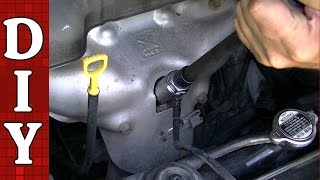

![How to Fix P0132 Engine Code in 3 Minutes [2 DIY Methods / Only $8.78]](https://img.youtube.com/vi/z01JETB0ezI/mqdefault.jpg)

The information in this article is provided for general reference and educational purposes only. Vehicle specifications, procedures, and part compatibility can vary by production date, trim level, and region. Always consult your vehicle's factory service manual and verify part numbers before purchasing or performing repairs. Safety-critical components such as airbags, seat belts, and braking systems should be installed by a qualified professional.
- 🎬 Helpful Videos
- What Does P0132 Mean?
- Can I Drive With P0132?
- Common Causes
- Symptoms
- Diagnostic Flowchart
- Common Fixes & Costs
- DIY vs Professional
- Used vs. New Parts: Buying Guide
- What Happens If You Wait — Timeline
- Cost of Not Fixing It
- Diagnosis Steps
- When This Code Triggers (Freeze-Frame Conditions)
- Related Codes
- Climate & Environmental Factors
- How to Talk to a Mechanic About This Code
- Where to Take It: Dealer vs Independent vs Chain
- When to Walk Away From the Repair
- What Scan Tool You Need for This Code
- How to Clear the Code After You Fix It
- Will This Fail Emissions / State Inspection?
- Most Commonly Affected Vehicles
- Manufacturer-Specific Notes
- Real Owner Stories
- 2001 Jeep Grand Cherokee with stalling issues
- 2000 Honda CR-V with 266k miles, code returned after repair
- 2007 Chevy Cobalt SS with a recurring fuse issue
- 2012 VW Polo with 14k miles, intermittent light
- How to Prevent This Code From Triggering
- Frequently Asked Questions
- What does 'Bank 1, Sensor 1' actually mean?
- What's the biggest mistake people make when diagnosing P0132?
- Can a vacuum leak cause a P0132 code?
- Why did P0132 come back after I replaced the O2 sensor?
- Will a P0132 code cause me to fail an emissions test?
- What is the difference between an upstream and downstream O2 sensor?
- Can a bad MAF sensor cause P0132?
- Key Takeaways
- 🎟️ Get 5% Off