

P0198 on 2019-2024 Mazda 3 SKYACTIV-X: Engine Oil Temperature Sensor Circuit High Causes and Fixes
This code points to a problem with the Engine Oil Temperature (EOT) sensor circuit. On the SKYACTIV-X engine, this sensor is combined with the oil pressure sensor. The most likely cause is a faulty sensor, followed by wiring issues. Expect to pay $50-$150 for a new sensor.
- P0198 on your Mazda 3 SKYACTIV-X points to an electrical fault in the oil temperature sensor circuit, not necessarily hot oil.
- The most common fix is replacing the combined Engine Oil Temperature and Pressure Sensor (OEM Part #: PX9R-18-541).
- Before buying parts, always inspect the sensor's wiring and connector for damage, as a simple wiring repair could solve the problem.
- This is a DIY-friendly repair for those comfortable with basic automotive work, with a difficulty of 2 out of 5.
What's Unique About the 2019-2024 Mazda 3
On the Mazda SKYACTIV-X engine, the Engine Oil Temperature (EOT) sensor is not a standalone part. It is integrated into a single unit with the Engine Oil Pressure sensor. This means that if the temperature sensing element fails and triggers a P0198, the entire combined sensor assembly must be replaced. This design simplifies some aspects of the engine but means you cannot replace just the temperature sensor on its own. The sensor is typically located threaded into the engine block, often near the oil filter housing.
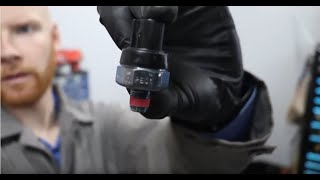
🎬 See this walkthrough for replacing a Mazda oil pressure switchSymptoms You May Notice
- Check Engine Light is on
- Engine may enter limp mode, limiting RPM and power
- Reduced fuel economy
- In some cases, the engine cooling fans may run constantly as a precaution
- Erratic or incorrect oil temperature gauge readings (if equipped)
- Replacing the sensor without first testing the wiring. A broken wire can mimic the symptoms of a failed sensor perfectly, leading to unnecessary parts replacement.
Most Likely Causes
- Faulty Engine Oil Temperature/Pressure Sensor 🔴 High Probability Sensors are electronic components that operate in a harsh environment of heat and vibration, and they can fail internally over time. The thermistor inside can break, creating an open circuit that the PCM interprets as high voltage.
How to confirm: With the engine off, use a multimeter to check the resistance of the sensor. Compare the reading to the specifications in the factory service manual. A reading of infinite resistance (open loop) indicates a failed sensor. Alternatively, monitor the sensor voltage with a scan tool; a reading stuck near 5 volts points to a sensor or wiring issue. 🎬 Watch: How to test and replace the oil temperature sensor
Typical fix: Replace the combined engine oil temperature and pressure sensor assembly.
Est. part cost: $50-$150 - Wiring or Connector Issue 🟡 Medium Probability The wiring harness near the engine block is exposed to heat and vibration, which can cause wires to fray, break, or melt over time. Connectors can also become corroded or have pins back out, causing a poor connection or an open circuit.
How to confirm: Visually inspect the wiring harness and connector leading to the oil temperature/pressure sensor for any signs of damage, melting, or corrosion. Perform a continuity test on the signal and ground wires between the sensor connector and the PCM connector to check for an open circuit.
Typical fix: Repair the damaged section of the wiring harness or clean/replace the faulty connector.
Est. part cost: $5-$50
Rare But Worth Checking
- Powertrain Control Module (PCM) Malfunction: This is the least likely cause. The PCM is a robust computer, and internal failures are rare. All other possibilities, especially the sensor and its wiring, should be exhaustively ruled out before considering PCM replacement.
Diagnosis Steps
- Record Freeze Frame Data: Use an OBD-II scanner to read the code and any associated freeze frame data to understand the conditions when the fault occurred.
- Inspect the Sensor and Connector: Locate the combined oil temperature/pressure sensor on the engine block. Visually inspect the sensor and its electrical connector for any obvious signs of damage, corrosion, or loose connections.
- Check for Reference Voltage: Disconnect the sensor and turn the ignition to the 'On' position (engine off). Use a multimeter to check for a 5-volt reference signal at the connector from the PCM. Check the ground pin for good continuity to the chassis ground.
- Test the Wiring: If the reference voltage or ground is missing, inspect the wiring harness between the sensor and the PCM for an open circuit or a short to power. Pay close attention to areas where the harness is close to hot exhaust components or sharp edges.
- Test the Sensor: If wiring is confirmed to be good, the sensor itself is the most likely culprit. You can test the sensor's internal resistance with a multimeter and compare it to the manufacturer's specifications. An infinite resistance reading indicates a failed sensor.
- Replace the Sensor: If the sensor is determined to be faulty, replace the combined oil temperature/pressure sensor assembly. The Mazda repair manual provides specific instructions for removal and installation.
- Clear Codes and Verify: After replacing the part, clear the trouble code with your scanner and perform a drive cycle to ensure the code does not return.
Parts You'll Likely Need
- Engine Oil Temperature and Pressure Sensor
(OEM #PX9R-18-541)— This is the most common cause of a P0198 code, as the sensor's internal thermistor can fail, creating an open circuit. On the SKYACTIV-X, temperature and pressure functions are integrated into this single part.
Trusted brands: Mazda (OEM), Bosch
OEM price range: $80-$150
Aftermarket price range: $50-$100
Related Codes That Often Appear With This One
- P0197 — This code is for 'Engine Oil Temperature Sensor Circuit Low'. While P0198 indicates an open circuit or short to power, P0197 indicates a short to ground. They are two sides of the same coin related to the EOT sensor circuit.
- P0520-P0524 — Since the temperature sensor is combined with the oil pressure sensor on the SKYACTIV-X engine, a fault in the shared unit or its connector could potentially trigger oil pressure-related codes as well.
Mechanic-Grade Diagnostic Values
- Engine Oil Temperature Sensor Resistance — expected: Approximately 2.0 kΩ to 2.6 kΩ at 21°C (70°F). Resistance decreases as temperature increases.. Failure: Infinite resistance (OL) indicates an open circuit within the sensor, which is a direct cause for P0198.
- EOT Sensor Signal Voltage (Live Data) — expected: Should fluctuate between ~0.5V (cold) and ~4.5V (hot).. Failure: A reading stuck at or near 5.0V, regardless of engine temperature, points to an open circuit or a short to power.
- PCM Terminal Voltage (Reference from SKYACTIV-D) — expected: At the harness connector (sensor unplugged, key on), expect a 5V reference from the PCM on one pin and a good ground (<1.0V) on another.. Failure: Missing 5V reference or high voltage on the ground pin indicates a wiring or PCM issue, not a sensor failure.
Scan Tool Commands That Help
- Mazda Diagnostic and Repair Software (MDARS): Live Data Monitoring (PID: EOT_V, EOT_C) — To observe the raw voltage and calculated temperature from the EOT sensor in real-time. A static high voltage reading immediately confirms the fault condition. MDARS is the OEM-level tool for 2019+ models.
- Mazda Diagnostic and Repair Software (MDARS): Active Test / Bidirectional Control — Advanced scan tools may offer a bidirectional test to command the sensor circuit to specific values, helping to differentiate between a wiring fault and a sensor fault without physical probing.
Wiring & Ground Locations
- PCM Terminals (from SKYACTIV-D 1.5L) — At the main Powertrain Control Module connector.. A service manual for the similar SKYACTIV-D engine identifies the EOT signal wire at PCM terminal 1W and the sensor ground at PCM terminal 1BV. This provides a highly probable starting point for continuity testing from the sensor to the PCM on the SKYACTIV-X.
- Engine Block Ground (G6) — A wiring diagram for a similar generation Mazda 3 shows a primary engine ground point (G6) on the left rear of the engine.. While the sensor has a dedicated ground return to the PCM, a poor main engine ground can cause floating voltages and erratic sensor behavior across the system. Verifying this ground is tight and clean is a good practice during diagnosis.
OEM Part Supersession History
sh0118541, py8v18541b→PX9R-18-541— Standard part number updates and revisions by Mazda.
Heads up: All listed part numbers are considered interchangeable for this application.Bosch 0 261 230 340 / 0 261 230 482→Bosch 0 261 544 01F— This is the underlying Bosch part that Mazda re-brands. The history shows Bosch's own internal supersessions.
Heads up: The Mazda OEM part is a re-branded Bosch sensor. Purchasing the Bosch equivalent (e.g., 0 261 544 01F) is a direct, OEM-quality replacement.
Diagnostic Flowchart
Other Known Issues on This Vehicle
Issues unrelated to this code that are worth knowing about as an owner of this generation:
- Fuel Injector Carbon Buildup 🟠 Medium — More common on first-generation SKYACTIV-X engines (late 2019-early 2021), especially with frequent short trips. Can appear before 40,000 km.
- Infotainment System Glitches 🟡 Low — Owners report occasional reboots or freezes of the Mazda Connect system, often resolved by software updates from the dealer.
- Engine Struggling to Reach Operating Temperature in Cold Weather 🟡 Low — Some owners of SKYACTIV engines (including non-X variants) report that the engine takes a very long time to warm up in cold climates, which can affect cabin heat and long-term emissions system health. A TSB exists for some models related to a coolant control valve. (Ref: MC-10248393-0001 (Note: This TSB is for the 2.5L engine but highlights a known platform issue with coolant control).)
Used vs. New Parts: Buying Guide for This Vehicle
When a used part is the smart pick: For this specific repair, using a used part is not recommended. The part is a relatively low-cost electronic sensor that operates in a high-heat, high-vibration environment. The risk of a used part failing shortly after installation outweighs the small cost savings.
What to inspect on the donor part:
- Not applicable as a used part is not advised.
OEM-only on this vehicle (don't cheap out):
- While not strictly 'OEM-only', using either the Mazda-branded part or the confirmed Bosch equivalent is strongly recommended to ensure accurate temperature and pressure readings for the PCM.
Aftermarket brands forum-validated for this vehicle:
- Bosch (This is the original equipment manufacturer for the Mazda part).
Brands owners have reported issues with on this vehicle:
- Unknown, no-name brands found on online marketplaces should be avoided, as their internal thermistors and pressure diaphragms may not match the precise specifications the SKYACTIV-X PCM expects, potentially leading to incorrect engine management or persistent codes.
Related OBD-II Codes
Frequently Asked Questions
My 2020 Mazda 3 SKYACTIV-X has a P0198 code. Should I buy a cheap sensor online or stick with an OEM part?
I have a P0198 code and my engine cooling fans are running constantly. Is this related?
Does this P0198 issue also affect the Mazda CX-30 with the SKYACTIV-X engine?
How can I test the oil temperature sensor myself on my Mazda 3 before buying a new one?
Besides the sensor itself, what is the next most likely cause for a P0198 code on this vehicle?
Are there any other common engine issues on the early (2019-2021) SKYACTIV-X engines I should be aware of?
Helpful Videos

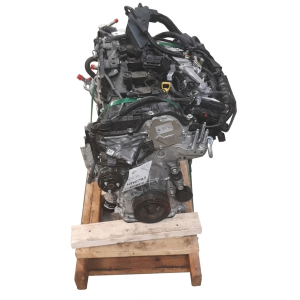
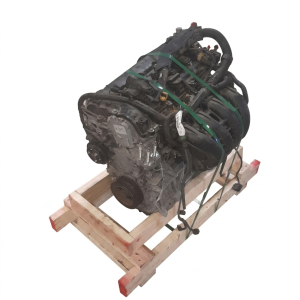
We Have This Part in Stock



The information in this article is provided for general reference and educational purposes only. Vehicle specifications, procedures, and part compatibility can vary by production date, trim level, and region. Always consult your vehicle's factory service manual and verify part numbers before purchasing or performing repairs. Safety-critical components such as airbags, seat belts, and braking systems should be installed by a qualified professional.
- Mazda 3:
- 🎬 Helpful Videos
- 🛍️ Shop This Part
- What's Unique About the 2019-2024 Mazda 3
- Symptoms You May Notice
- Most Likely Causes
- Rare But Worth Checking
- Diagnosis Steps
- Parts You'll Likely Need
- Related Codes That Often Appear With This One
- Mechanic-Grade Diagnostic Values
- Scan Tool Commands That Help
- Wiring & Ground Locations
- OEM Part Supersession History
- Diagnostic Flowchart
- Other Known Issues on This Vehicle
- Used vs. New Parts: Buying Guide for This Vehicle
- Related OBD-II Codes
- Frequently Asked Questions
- 🎟️ Get 5% Off