

P0123 on 2007-2009 Saturn Aura 2.4L: Throttle Position Sensor Circuit High Causes and Fixes
On a 2007-2009 Saturn Aura with the 2.4L engine, code P0123 is almost always caused by a failed throttle position sensor. Because the sensor is integrated into the electronic throttle body, the entire throttle body assembly must be replaced. Expect to pay between $100 and $250 for the part. Before replacing, a visual inspection of the wiring harness for chafing is highly recommended.
- P0123 on a 2007-2009 Saturn Aura almost always points to a failed throttle body assembly, which must be replaced as a unit.
- Before ordering parts, visually inspect the wiring harness for chafing, especially near brackets, and check the connector at the throttle body for damage or corrosion.
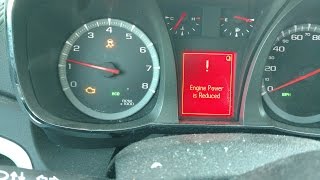
- This fault will trigger 'Reduced Engine Power' mode, making the vehicle unsafe for normal driving.
- Codes P2135 and P0223 are commonly seen with P0123 and further confirm a failure in the throttle body or its related wiring.
- A throttle relearn procedure is necessary after replacing the throttle body.
What's Unique About the 2007-2009 Saturn Aura
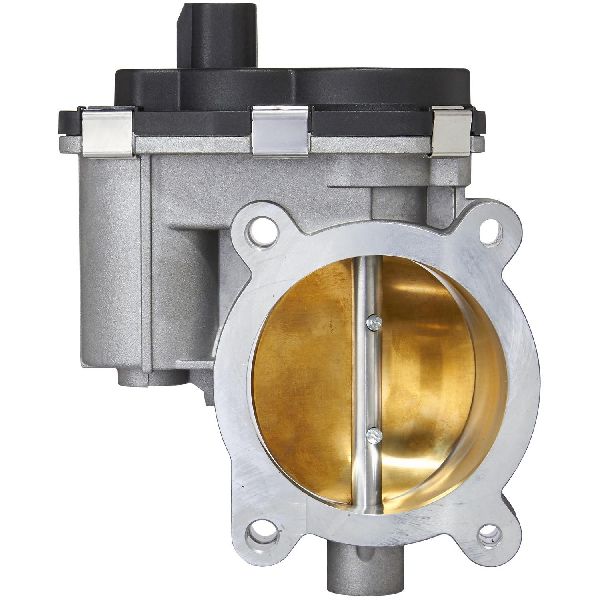
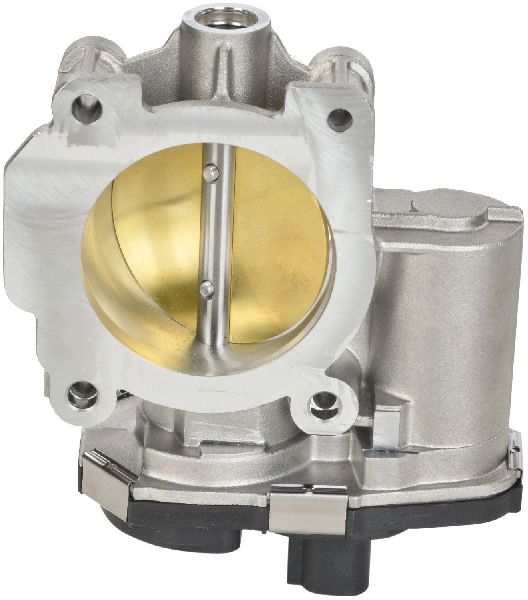
The Saturn Aura uses the common GM Ecotec engine family with a 'drive-by-wire' system. The key thing to know is that the throttle position sensor (TPS) is not a separate, replaceable part. It is permanently integrated into the electronic throttle body assembly. This design means that when the sensor fails—the most common cause for P0123—the entire throttle body unit must be replaced. This makes the repair more expensive and complex than on older vehicles where the sensor could be changed independently. This integrated design is shared across many GM vehicles of this era using the Ecotec engine.
Symptoms You May Notice
- Check Engine Light is on
- "Reduced Engine Power" message displayed on the dashboard
- Poor, hesitant, or unpredictable acceleration
- Rough or unstable idle
- Engine may stall unexpectedly, especially when slowing to a stop
- Vehicle is stuck in 'limp mode' with limited speed
- Hard starting
- Bucking or jerking during driving
- Replacing the accelerator pedal position (APP) sensor. While the APP sensor is part of the throttle control system, P0123 specifically points to the 'A' circuit at the throttle body, not the pedal sensor. A faulty pedal sensor would typically set different codes (e.g., P2138).
- Only cleaning the throttle body. While a dirty throttle body can cause idle and performance issues, it will not cause an electrical 'circuit high' fault like P0123. The problem is electronic, not a result of carbon buildup.
Most Likely Causes
- Failed Electronic Throttle Body Assembly 🔴 High Probability The internal, non-serviceable throttle position sensor (TPS) is a known weak point on this GM engine platform. Wear and tear on the sensor's internal electronic contacts or failure of the internal circuitry leads to voltage readings that are out of range. This is the most frequent failure point for P0123 on Ecotec engines.
How to confirm: After ruling out wiring issues, this is the most likely cause. Using a scan tool's live data, the voltage for 'TPS Sensor 1' will be stuck high (above 4.5V) regardless of pedal position. This confirms the sensor is sending a faulty signal. The part is not sold separately, so the entire assembly is condemned.
Typical fix: Replace the entire throttle body assembly. A throttle relearn procedure is required after installation to ensure proper idle and performance.
Est. part cost: $100-$250 - Wiring Harness or Connector Issue 🟡 Medium Probability On similar GM platforms like the Chevrolet Cobalt and HHR, the engine wiring harness is known to chafe against nearby brackets, such as the EVAP purge solenoid bracket, leading to shorts. The 6-pin connector at the throttle body is also exposed to significant engine heat and vibration, which can cause wires to break internally, pins to corrode, or the connector housing to become brittle and fail.
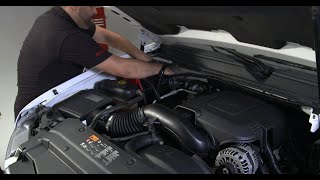
How to confirm: Visually inspect the wiring harness leading to the throttle body for any signs of rubbing, melting, or exposed wires, especially near the EVAP purge solenoid bracket. 🎬 See: How to find and fix GM wiring harness issues Unplug the connector and check for corrosion, moisture, or backed-out pins. Perform a 'wiggle test' on the connector and harness with the engine running (or while monitoring live data) to see if it triggers the fault or causes the voltage to jump.
Typical fix: Repair the damaged section of wire using solder and heat shrink. If the connector itself is damaged, it can be replaced with a new pigtail connector.
Est. part cost: $15-$40
Rare But Worth Checking
- Faulty Powertrain Control Module (PCM): This is extremely rare and should be considered a last resort. The PCM should only be suspected after the throttle body, all related wiring, and ground connections have been exhaustively tested and confirmed to be in perfect working order. A failing PCM will often present with multiple, unrelated fault codes.
Diagnosis Steps
- Connect an OBD-II scanner and confirm P0123 is present. Check for other related codes like P2135, P0223, or P1516, and review freeze frame data.
- Using the scanner's live data function, observe the voltage for 'TPS Sensor 1' (or 'A'). With the Key On, Engine Off (KOEO), the voltage will be stuck high, likely above 4.5V. If you attempt to press the gas pedal, this reading will not change.
- Turn the vehicle off. Perform a detailed visual inspection of the wiring harness leading to the throttle body. Pay close attention to areas where it might rub against other components, like the EVAP purge solenoid bracket.
- Disconnect the 6-pin electrical connector at the throttle body. Inspect the pins and terminals on both the harness side and the throttle body side for any signs of corrosion, moisture, or damage. Ensure the pins are not bent or pushed back.
- If wiring and the connector appear intact, perform a 'wiggle test'. Reconnect the connector, start the engine (or turn to KOEO), and monitor the live TPS voltage while gently wiggling the harness and connector. If the voltage fluctuates wildly or corrects itself, you have an intermittent wiring issue.
- If the wiring and connector are confirmed to be good and the voltage reading is consistently high, the throttle body assembly has failed internally.
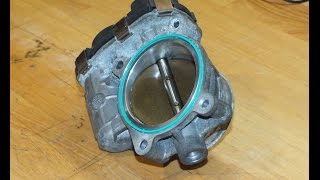
- Replace the throttle body assembly. 🎬 Watch: How to test and replace the electronic throttle body Ensure you also get a new gasket.
- After installation, perform a throttle relearn procedure. A common GM method is to turn the key to 'ON' (without starting) for 10-30 seconds, then 'OFF' for 10-30 seconds, and repeat twice before starting the engine. This allows the PCM to learn the new sensor's closed-throttle position. An alternative is to let the car idle for several minutes.
Parts You'll Likely Need
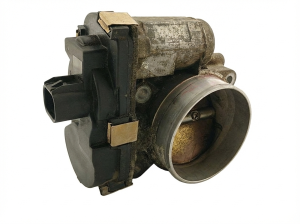
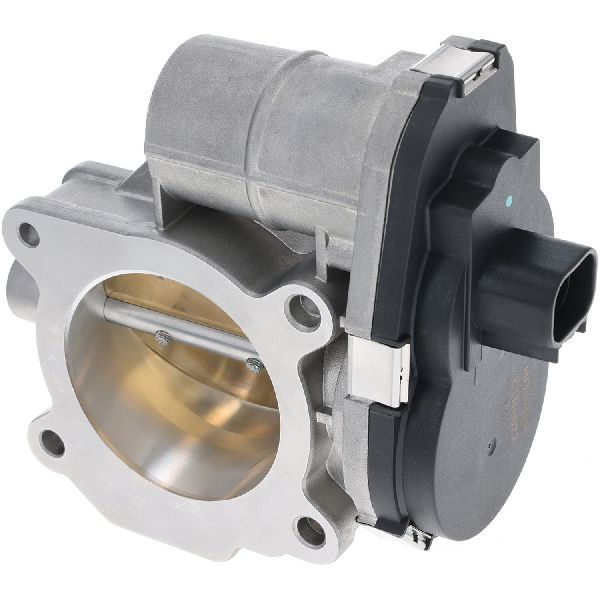
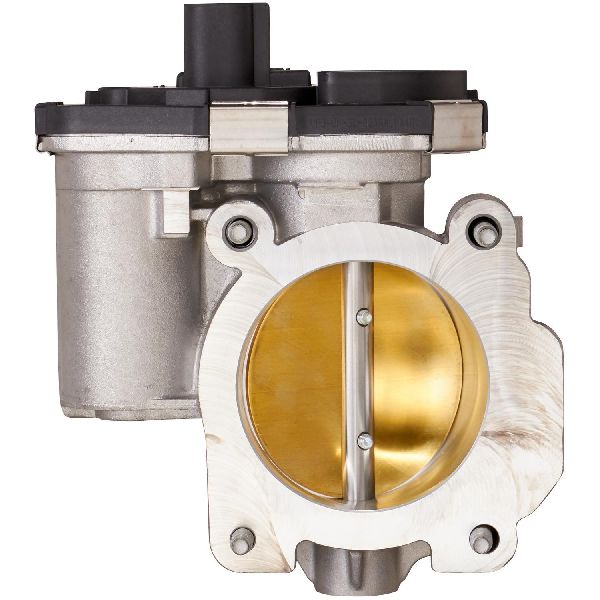
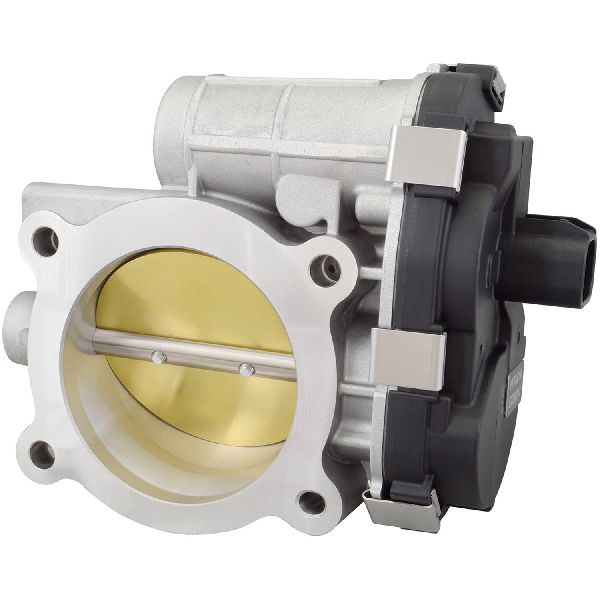
- Electronic Throttle Body Assembly
(OEM #12616994)— This is the primary fix, as the faulty throttle position sensor is integrated into this assembly and is not sold separately for this vehicle. The ACDelco part number is 217-3103, which corresponds to GM part number 12616994.
Trusted brands: ACDelco (Genuine GM), Delphi, Standard Motor Products (SMP), Dorman, Hitachi
OEM price range: $200-$300
Aftermarket price range: $100-$180
Related Codes That Often Appear With This One
- P2135 — This code indicates a 'Throttle/Pedal Position Sensor/Switch A/B Voltage Correlation' error. The PCM compares the signals from the two internal TPS sensors (A and B). If their readings don't match what is expected, this code is set. Seeing P2135 alongside P0123 is a very strong indicator of an internal failure within the throttle body assembly.
- P0223 — This is the 'Circuit High' code for the second throttle position sensor ('B' circuit). If both P0123 and P0223 are present, it's almost certainly a failed throttle body or a major issue with the connector or wiring harness affecting both sensor circuits.
- P1516 — This is a GM-specific code for Throttle Actuator Control (TAC) performance. It means the PCM has commanded the throttle to a certain position, but the feedback from the TPS doesn't match what the PCM expects to see. This conflict often triggers limp mode and points directly to a problem in the throttle control system.
Platform-Specific Known Issues
- Harness Chafing: The wiring harness on GM Ecotec platforms has a documented tendency to chafe against the EVAP purge solenoid bracket, which can cause shorts in various circuits, including the throttle body. While a TSB (PIC4125B) was issued for other models like the Cobalt, the same design principle applies here and is worth inspecting.
- Owner Repair Story: A user on SaturnFans forum described a scenario with multiple TPS and APP sensor codes (P0122, P0123, P0223) on a Saturn Vue. After replacing the pedal sensor, throttle body, and even the PCM to no avail, the underlying issue was suspected to be a hard-to-find wiring problem within the main harness, highlighting the importance of exhaustive wiring checks.
Mechanic-Grade Diagnostic Values
- Throttle Position Sensor 1 (TPS1) Signal Voltage — expected: Approx. 0.45V - 0.8V at closed throttle, sweeping smoothly to ~4.5V at wide-open throttle.. Failure: For P0123, the voltage is stuck above the maximum threshold (typically >4.5V) regardless of throttle plate angle.
- Throttle Actuator Control (TAC) Motor Resistance — expected: 2 to 15 Ohms between pins A and B on the throttle body.. Failure: A reading below 1 Ohm indicates a short; an open circuit (OL) indicates a broken motor winding.
- TPS1 Resistance Sweep — expected: Approx. 2.7 kOhms between pins D and E with throttle closed. Resistance should increase smoothly as the throttle is opened.. Failure: Resistance is stuck, does not change, or has dead spots/jumps as the throttle plate moves.
- TPS2 Resistance Sweep — expected: Approx. 2.2 kOhms between pins E and F with throttle closed. Resistance should decrease smoothly as the throttle is opened.. Failure: Resistance is stuck, does not change, or has dead spots/jumps as the throttle plate moves.
- 5-Volt Reference at Connector — expected: 4.8V to 5.2V at the 5V reference wire (Pin E) with Key On, Engine Off.. Failure: Voltage is near zero or significantly below 5V, indicating a wiring issue or a problem with the PCM's reference circuit.
Scan Tool Commands That Help
- GM Tech2 / GDS2 or equivalent professional scanner: Idle Learn Reset / Reset Idle Learn — This function must be used after replacing or cleaning the throttle body. It erases the PCM's stored idle position values, forcing it to relearn the new closed-throttle position. Failing to do this often results in a high or unstable idle. The command is typically found in the 'Module Set Up' or 'Special Functions/TAC System' menu.
Wiring & Ground Locations
- Throttle Body Connector (6-Pin) — The electrical connector on the electronic throttle body assembly.. This is the central connection point for both TPS sensors and the throttle motor. Corrosion, backed-out pins, or harness damage here is a direct cause of P0123. The pinout is typically: Pin A (Yellow): TAC Motor (-), Pin B (Brown): TAC Motor (+), Pin C (Low Reference/Ground), Pin D (TPS1 Signal), Pin E (5V Reference), Pin F (TPS2 Signal). Note: Wire colors can vary slightly by year and specific harness, always verify with a multimeter.
- Harness Chafing Point — The engine wiring harness where it passes by the metal bracket for the EVAP canister purge solenoid, located on the side of the cylinder head.. This is a well-documented failure point on Ecotec engines. The sharp edge of the bracket can rub through the loom and short out the TPS signal, 5V reference, or ground wires, causing P0123 and other related codes.
- G106 — An engine-to-chassis ground point. For the 2.4L LE5 engine, its location can vary slightly: on VIN 'B' engines, it's at the left rear of the engine. On VIN '5' engines, it's at the rear of the engine near the Park/Neutral Position (PNP) switch.. This is a critical ground for the engine sensors. A loose or corroded G106 can cause unstable reference voltages for the TPS, leading to erratic signals and false codes like P0123.
Real Owner Repair Stories
- SaturnFans.com forum user 'oldmarine' (2004 Saturn Vue 2.2L Ecotec (manual trans) - wiring principles are highly similar to the Aura LE5.) — Sudden hesitation, then stall. Would run horribly but not idle. Multiple codes appeared: P0068, then P0122, P0123, P0223.
❌ Tried (didn't work) Replaced MAP sensor, Replaced Accelerator Pedal Position (APP) sensor, Replaced entire throttle body assembly, Replaced PCM with a reprogrammed unit from Flagship One
✅ What actually fixed it The final resolution was not posted, but expert diagnosis concluded the simultaneous pedal and throttle codes after replacing all components strongly indicated a wiring fault. The likely cause was identified as a broken common ground or reference wire shared between the APP and TPS circuits, likely in the engine harness where it could chafe or vibrate.
Diagnostic Flowchart
Other Known Issues on This Vehicle
Issues unrelated to this code that are worth knowing about as an owner of this generation:
- Cracked 3-5-R Wave Plate (6T70/6T75 Transmission) 🔴 High — Common on vehicles with the 6-speed automatic transmission, often occurring between 70,000 and 120,000 miles. Results in loss of 3rd, 5th, and Reverse gears. (Ref: GM Special Coverage 14404B extended warranty to 10 years/120,000 miles for this specific failure.)
- Timing Chain Stretch / Tensioner Failure 🔴 High — A well-documented issue on high-mileage Ecotec engines (typically over 100,000 miles). Failed tensioners or stretched chains can cause rattling noises, camshaft correlation codes (P0011, P0014), and can lead to catastrophic engine damage if the chain jumps time.
- Loss of Electric Power Steering (EPS) Assist 🔴 High — A sudden loss of power steering assist could occur at any time while driving, making the vehicle very difficult to steer. (Ref: Recall 14V153000 (NHTSA ID). GM recalled these vehicles to fix the condition.)
- Transmission Shift Cable Failure 🟠 Medium — The clip on the transmission shift cable may not be fully engaged, causing a mismatch between the gear selected by the driver and the actual gear in the transmission. This could lead to a rollaway risk. (Ref: Recall 09V073000 (NHTSA ID).)
Used vs. New Parts: Buying Guide for This Vehicle
When a used part is the smart pick: A used OEM throttle body from a reputable salvage yard can be a cost-effective option, especially if it comes from a low-mileage, rear-ended vehicle. The failure mode is typically electronic wear, so a newer, lower-mileage part has significant life left.
Donor-vehicle mileage cap: roughly under 80000 miles for the part to have meaningful remaining life.
What to inspect on the donor part:
- Check for a clean throttle plate; heavy carbon buildup suggests a hard life or other engine issues.
- Inspect the electrical connector pins for any signs of green or white corrosion or moisture.
- If possible, bring a multimeter and perform the resistance checks outlined in 'specific_diagnostic_values' before purchasing.
- Ensure there is no physical damage to the housing or connector.
OEM-only on this vehicle (don't cheap out):
- Powertrain Control Module (PCM). While refurbished units exist, they can be hit-or-miss. A new or known-good OEM unit is the safest bet if the PCM is condemned.
Aftermarket brands forum-validated for this vehicle:
- ACDelco (Genuine GM)
- Delphi
- Standard Motor Products (SMP)
- Hitachi
Brands owners have reported issues with on this vehicle:
- No specific brands are consistently reported as problematic in forums, but ultra-low-cost, unbranded parts from online marketplaces carry a higher risk of premature failure or out-of-spec sensor readings.
Real Owner Stories
Aggregated from forums and TSBs cited above. Mileages and costs reflect what owners reported in those sources.
Saturn Vue (Ecotec 2.4L)
Symptoms: Multiple TPS and APP sensor codes including P0122, P0123, and P0223. The owner experienced 'Reduced Engine Power' mode.
What fixed it: The owner replaced the pedal sensor, throttle body, and PCM, but the issue persisted, pointing to a hard-to-find wiring problem within the main harness.
Source hint: SaturnFans.com thread titled 'P0122 P0123 P0223 no matter what I do'
2006-2008 Chevrolet Cobalt SS (2.4L LE5)
Symptoms: A mix of codes including P0122 and P0223, indicating a fault in the throttle system electronics.
What fixed it: Replacement of the throttle body assembly, as the integrated TPS is a frequent failure point on this engine family.
Source hint: CobaltSS.net forum discussion regarding 2.4L engine throttle faults
Related OBD-II Codes
Frequently Asked Questions
Can I just replace the sensor on my 2007-2009 Saturn Aura's throttle body to fix P0123?
Is there a specific wiring area I should check on my Aura for this code?
What is the 'Reduced Engine Power' message on my dashboard?
Do I need a special tool to program the new throttle body after installation?
Is the P0123 code related to the Electric Power Steering recall on the Saturn Aura?
Could a bad connector cause an intermittent P0123 on my Ecotec engine?
Helpful Videos

Used OEM Parts in Stock
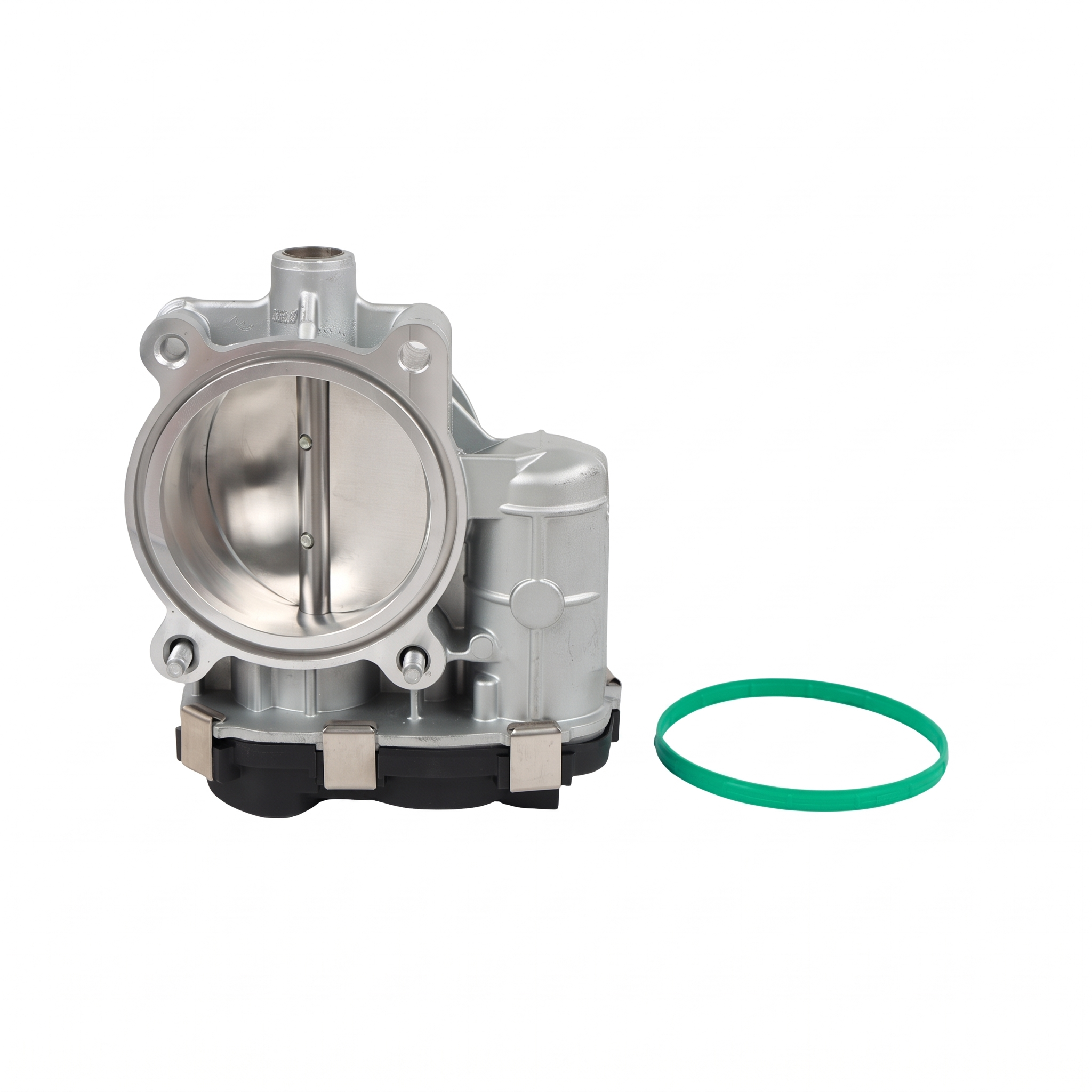

New Aftermarket Parts Available


The information in this article is provided for general reference and educational purposes only. Vehicle specifications, procedures, and part compatibility can vary by production date, trim level, and region. Always consult your vehicle's factory service manual and verify part numbers before purchasing or performing repairs. Safety-critical components such as airbags, seat belts, and braking systems should be installed by a qualified professional.
- Saturn Aura:
- 🎬 Helpful Videos
- 🛍️ Shop This Part
- What's Unique About the 2007-2009 Saturn Aura
- Symptoms You May Notice
- Most Likely Causes
- Rare But Worth Checking
- Diagnosis Steps
- Parts You'll Likely Need
- Related Codes That Often Appear With This One
- Platform-Specific Known Issues
- Mechanic-Grade Diagnostic Values
- Scan Tool Commands That Help
- Wiring & Ground Locations
- Real Owner Repair Stories
- Diagnostic Flowchart
- Other Known Issues on This Vehicle
- Used vs. New Parts: Buying Guide for This Vehicle
- Real Owner Stories
- Saturn Vue (Ecotec 2.4L)
- 2006-2008 Chevrolet Cobalt SS (2.4L LE5)
- Related OBD-II Codes
- Frequently Asked Questions
- 🎟️ Get 5% Off