

P0101 on 2014-2015 Chevrolet Cruze 2.0L Diesel: MAF Sensor Causes and Fixes
On the 2.0L Cruze Diesel, code P0101 is most often caused by a dirty Mass Airflow (MAF) sensor or an air leak in the intake system, especially a loose or cracked charge air pipe from the turbo. Cleaning the MAF sensor and inspecting all intake hoses for leaks is the most common and effective fix. This issue is often accompanied by code P0299 (Turbo Underboost) when a significant leak is present.
- For the 2.0L Diesel Cruze, P0101 is most likely an air leak or a dirty sensor, not a major component failure.
- Always check for air leaks in the intake and especially the charge air pipes (from the turbo to the engine) before replacing any parts.
- Cleaning the MAF sensor with dedicated cleaner is a cheap and highly effective first step.
- If you also have a P0299 underboost code, you almost certainly have an air leak in the pressurized charge pipe system.
- Do not confuse this issue with the common PCV/intake manifold failure on the 1.4L gasoline Cruze; the causes are different.
What's Unique About the 2014-2015 Chevrolet Cruze

Unlike the 1.4L gasoline Cruze, which has a very common and well-documented PCV system failure that causes P0101, the 2.0L LUV Diesel engine does not have a single, widely reported design flaw tied to this code. Instead, the causes are more typical for a turbocharged diesel engine. The diagnostic focus should be on the integrity of the entire air intake path, including the pressurized hoses (charge pipes) between the turbocharger and the intake manifold. A leak in this section is a common cause for P0101, often accompanied by a P0299 (Turbo Underboost) code. GM has issued a technical service bulletin (PIP5128) that lists P0101 and P0299 together, pointing towards potential charge air system leaks.
Symptoms You May Notice
- Check Engine Light is on
- Reduced engine power or sluggish acceleration
- Hesitation or stumbling during acceleration
- Rough or unstable idle
- Poor fuel economy
- Black smoke from the exhaust if the engine is running rich
- Audible 'whooshing' or hissing sound from the engine bay during acceleration, indicating a boost leak
- Replacing the MAF sensor without first cleaning it and checking for air leaks. A dirty sensor or a simple vacuum/boost leak are far more common than outright sensor failure.
- Confusing the issue with the 1.4L gas engine's PCV problem. The diagnostic path for the 2.0L diesel is different and should focus on boost leaks first.
Most Likely Causes

- Air Leak in Intake or Charge Air System 🔴 High Probability As a turbocharged engine, the intake system is pressurized. Hoses, clamps, and intercooler connections can loosen, crack, or have their O-rings fail over time, causing unmetered air to enter (or boost pressure to leak out), which confuses the MAF sensor. These leaks are a very common cause for P0101, often paired with P0299.
How to confirm: Visually inspect all intake ducting from the air filter box to the turbo and from the turbo to the intake manifold. Check for cracked hoses, loose clamps, or oil residue which can indicate a boost leak. A user on YouTube fixed their P0101/P0299 codes by finding a charge air cooler hose had come loose. A smoke test is the most effective way to find small leaks that may not be visible.
Typical fix: Tighten loose clamps or replace the cracked/leaking hose or seal. Common failure points are the rubber charge air hoses.
Est. part cost: $20-$200 - Dirty or Contaminated MAF Sensor 🔴 High Probability The MAF sensor's delicate sensing elements can become contaminated with dirt, oil vapor from the crankcase ventilation system, or residue from aftermarket oiled air filters. This contamination insulates the sensor, causing it to read airflow incorrectly.
How to confirm: Remove the MAF sensor and visually inspect the small wires or elements inside. If they appear coated in grime or oil, they need cleaning.
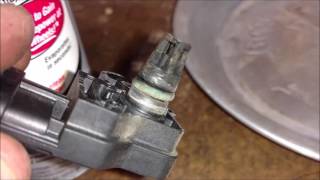
Typical fix: Clean the sensor using only dedicated Mass Airflow Sensor cleaner spray. Do not touch the internal elements or use other chemicals like brake cleaner. Allow it to dry completely before reinstalling. 🎬 See how to properly remove and clean the sensor
Est. part cost: $10-$15 for cleaner spray - Clogged Engine Air Filter 🟡 Medium Probability A severely clogged air filter restricts the amount of air entering the engine. The MAF sensor will report a lower-than-expected airflow value, which can trigger P0101, especially under high engine load. One technician noted that a restricted filter can cause the throttle angle to increase beyond its expected range, triggering the code.
How to confirm: Remove and inspect the engine air filter. If it is visibly dirty, dark, or full of debris, it should be replaced.
Typical fix: Replace the engine air filter.
Est. part cost: $25-$50 - Faulty MAF Sensor ⚪ Low Probability
How to confirm: If the code returns after cleaning the sensor and confirming there are no air leaks, the sensor itself may have failed electronically. This can be confirmed by monitoring its output (g/s) with a scan tool to see if the readings are erratic, stuck, or do not increase smoothly with engine RPM. A tap test on the sensor while monitoring data can also reveal intermittent faults.
Typical fix: Replace the Mass Airflow sensor. The OEM part number is GM 22821558.
Est. part cost: $100-$250
Rare But Worth Checking
- Leaking Intake Manifold or Gasket: While not a widely documented common failure on the diesel, a significant air leak post-MAF sensor from a bad intake manifold or gasket could theoretically cause a P0101 code.
- Clogged Catalytic Converter / Diesel Particulate Filter (DPF): A severe exhaust restriction can reduce the amount of air the engine is able to draw in, causing the MAF reading to be lower than expected and potentially triggering a P0101 code. This would typically be accompanied by a severe lack of power and likely other DPF-related codes like P2463 or P2002, which are mentioned in GM TSB PIP5128.
- Wiring or Connector Issue: A damaged wire or a corroded/loose pin in the MAF sensor connector can cause an intermittent or incorrect signal, triggering P0101. A wiggle test of the connector and harness while monitoring live data can help identify this. The ground for the MAF sensor is G101.
Diagnosis Steps

- Read all stored fault codes. Note if P0299 or P1101 are present, as this strongly suggests an air leak in the charge air system.
- Inspect the engine air filter. Replace if dirty.
- Thoroughly inspect the entire air intake tract. Start at the airbox, check the duct to the MAF sensor, and pay close attention to the charge air pipes from the turbo, through the intercooler, and to the intake manifold. Look for loose clamps, cracked plastic, or split rubber hoses. 🎬 Watch: How to temporarily repair a split boost hose A common failure is a split in a rubber hose or a connection that has popped off.
- Inspect the MAF sensor electrical connector for corrosion or loose pins.
- Remove the MAF sensor. Carefully inspect the sensing elements for any dirt, oil, or debris.
- If dirty, clean the sensor using only dedicated MAF Sensor Cleaner. Let it dry completely before reinstalling.
- Clear the codes and perform a test drive, preferably including uphill acceleration where the issue is often more apparent. See if the code returns.
- If the code persists, use a scan tool to monitor the MAF sensor data in grams per second (g/s). The reading should be stable at idle and increase smoothly as you raise the engine RPM. Sudden drops or erratic readings suggest a faulty sensor or wiring.
- If air leaks are suspected but not visible, perform a smoke test on the intake and charge air system to pinpoint the leak location. Note that some cracks in charge pipes may only open under boost pressure and may not be revealed by a low-pressure smoke test.
Parts You'll Likely Need

- Mass Airflow Sensor Cleaner — Often, the sensor is just dirty, not broken. This is the first and cheapest step in attempting a fix.
Trusted brands: CRC, Liqui Moly
Aftermarket price range: $10-$15 - Mass Airflow (MAF) Sensor
(OEM #22821558)— If cleaning the sensor and confirming no air leaks doesn't resolve the code, the sensor itself has likely failed.
Trusted brands: ACDelco / GM Genuine, Bosch, Delphi
OEM price range: $150-$250
Aftermarket price range: $70-$150 - Charge Air Cooler Hose (Intake Boot)
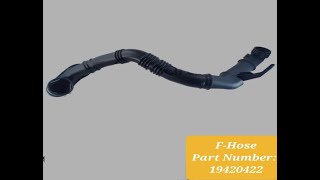
(OEM #19420422 (Inlet, Replaces 95472182), 95472183 (Outlet, Replaces 23211879))— These pressurized rubber or plastic hoses can crack or split, causing a boost leak that triggers P0101 and often P0299.
Trusted brands: ACDelco, GM Genuine
OEM price range: $75-$220
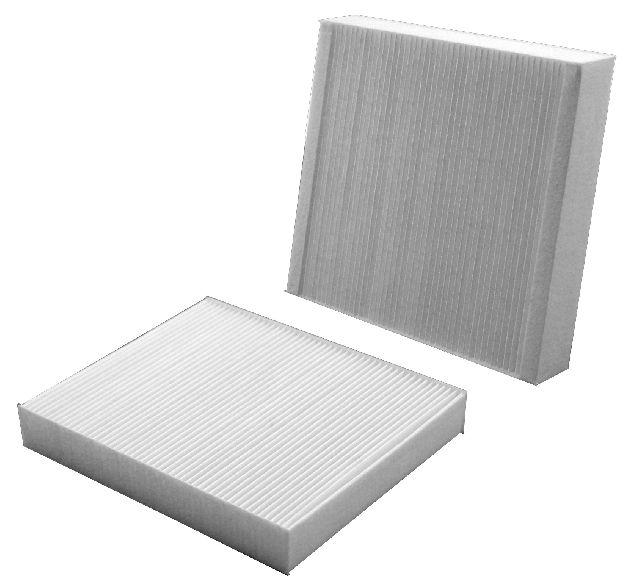
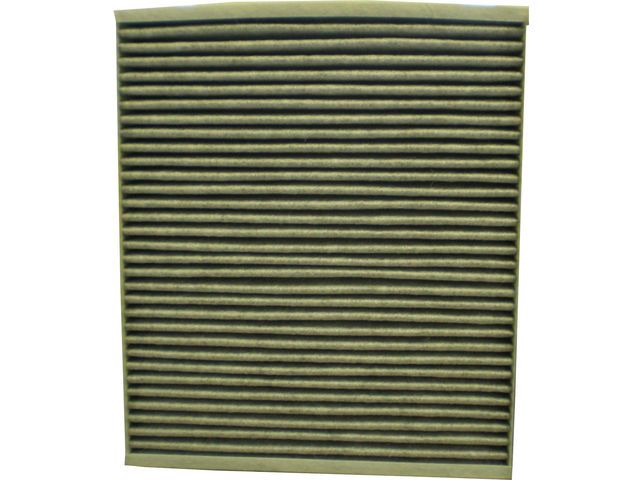
Aftermarket price range: $40-$120 - Engine Air Filter — A clogged air filter is a simple and common cause of restricted airflow that can lead to a P0101 code.
Trusted brands: ACDelco, Wix, Fram
Aftermarket price range: $25-$50
Related Codes That Often Appear With This One
- P0299 — Stands for 'Turbocharger/Supercharger Underboost'. This code often appears with P0101 because a significant air leak in the charge air system (after the turbo) will cause both a loss of boost pressure (P0299) and an incorrect airflow reading at the MAF sensor (P0101). Multiple owner experiences and videos confirm this pairing.
- P1101 — A manufacturer-specific code that often means 'MAF Sensor Out of Self-Test Range'. It is very closely related to P0101 and points to the same set of potential causes, indicating the MAF reading is not rational to the ECM. It is frequently seen alongside P0101 and P0299.
Technical Service Bulletins (TSBs) & Recalls
- PIP5128: Mentions the possibility of P0101, P0299, P2002, P2263 or P2463 DTCs being set, which links MAF/boost issues with potential exhaust restrictions.
Platform-Specific Known Issues
- Charge Air Hose Failure: The most common vehicle-specific cause for P0101 on the Cruze Diesel is a failure of the charge air hoses. Owners on forums and in repair videos frequently report finding a split hose or a hose that has popped off its connection at the intercooler or throttle body, which immediately resolves P0101 and P0299 codes upon repair.
Mechanic-Grade Diagnostic Values
- MAF Sensor Reading at Idle (g/s) — expected: 2 to 7 g/s, depending on engine size and conditions.. Failure: A reading significantly outside this range, or one that is stuck or erratic.
- MAF Sensor Reading at 2500 RPM (g/s) — expected: 15 to 25 g/s, should rise linearly from idle.. Failure: A reading that does not rise smoothly with RPM, rises too slowly (indicating a dirty sensor or leak), or rises too quickly.
- MAF Sensor Power Supply Voltage — expected: 12V (Battery Voltage) at the power supply pin on the harness connector with Key On, Engine Off.. Failure: No voltage or significantly low voltage indicates a wiring or fuse issue.
- Throttle Angle at Idle (GDS2 Scan Tool) — expected: 8% to 12%. Failure: A reading higher than 12% (e.g., 19-20%) can indicate an airflow restriction, such as a clogged air filter, which forces the throttle to open wider than expected to achieve target idle.
Scan Tool Commands That Help
- GDS2 / Tech2: Graph MAF Sensor (g/s) vs. Engine RPM — This is a primary diagnostic step to visually check if the MAF sensor's output is linear and responds correctly to changes in engine speed. A choppy or flat graph indicates a faulty sensor or wiring issue.
- GDS2 / Tech2: Compare Barometric Pressure (BARO) vs. Manifold Absolute Pressure (MAP) at Idle — At idle with the engine running, the BARO and MAP sensor readings should be very close to each other. A significant discrepancy can point to a sensor issue or a leak that is confusing the system's calculations related to airflow.
Wiring & Ground Locations
- G101 — Located at the front of the engine, on the lower block. It may jumper to G106.. This is the primary ground for the Mass Air Flow Sensor, Intake Air Temperature Sensor, Engine Control Module, and Transmission Control Module. A poor connection at this point can cause erratic sensor readings and trigger a P0101 code.
- G103 — Located on the left front shock tower in the engine compartment.. This ground serves multiple components including the Body Control Module (BCM) and Instrument Panel Cluster. While not directly for the MAF, a poor ground here can cause various electrical issues that could be misdiagnosed.
- G105 — Located at the left front of the engine compartment, near the underhood fuse block.. This is another major engine bay ground point. Verifying its integrity is good practice when diagnosing any electrical fault code.
- MAF Sensor Connector — On the air intake tube, between the air filter box and the flexible duct leading to the turbocharger.. This is the direct connection point for the sensor. Check for pushed-out pins, corrosion, or damaged wires. A wiggle test on this connector while monitoring live data can reveal intermittent connection problems.
Real Owner Repair Stories
- YouTube user 'Fix It All' (2016 Chevrolet Cruze (Note: while a 2016 model, the engine and codes P0101/P1101/P0299 are highly relevant to the 2014-2015 diesel)) — Check Engine Light on, car was stalling, idling at different RPMs, poor acceleration, and loss of horsepower.
❌ Tried (didn't work) Initial inspection of hoses, air intake box, and MAF sensor did not immediately reveal the problem.
✅ What actually fixed it The Turbo Boost Intercooler Hose (charge air pipe) was found to be loose. After reconnecting the hose securely, all symptoms were resolved and the codes were cleared.
OEM Part Supersession History
95472182→19420422— This is the Charge Air Cooler Inlet Hose. Part supersessions often indicate a design improvement to address a known failure point, such as cracking or poor connection.23211879→95472183— This is the Charge Air Cooler Outlet Hose. Like the inlet hose, this part was likely updated for improved durability.
Diagnostic Flowchart

Other Known Issues on This Vehicle
Issues unrelated to this code that are worth knowing about as an owner of this generation:
- DEF Reductant Heater Failure 🔴 High — Very common failure. Can occur multiple times. GM extended the warranty to 10 years/120k miles for this part on some vehicles. Failures reported in as little as 60k miles. (Ref: Warranty Extension (Not a TSB). Common codes are P21DD, P20EE.)
- Timing Belt Replacement 🔴 High — This is a maintenance item, not a failure. The engine is an interference design, so a snapped belt will cause catastrophic engine damage. GM recommends replacement at 150,000 miles/10 years, but many experts and owners recommend a shorter interval of 60,000-90,000 miles.
- Oil Pickup Tube Seal Hardening 🔴 High — The rubber seal for the oil pickup tube can harden over time, typically around 150k miles, allowing air to be sucked into the oil system. This leads to oil starvation, which can destroy the turbocharger and then the entire engine.
- Oil Cooler Leaks 🟠 Medium — The seals in the oil cooler assembly can degrade, causing external oil leaks (often dripping onto the exhaust) or internal leaks that mix oil and coolant.
- Diesel Particulate Sensor (DPS) Failure 🟡 Low — This sensor, similar to an O2 sensor, can fail and trigger code P24AE. It is a relatively simple part to replace.
Used vs. New Parts: Buying Guide for This Vehicle
When a used part is the smart pick: For structural, non-electronic parts like charge air cooler hoses, a used part from a low-mileage donor vehicle can be a cost-effective option. If the plastic and rubber are pliable and free of cracks, it can be a viable repair.
Donor-vehicle mileage cap: roughly under 60000 miles for the part to have meaningful remaining life.
What to inspect on the donor part:
- For charge air hoses, inspect thoroughly for any hairline cracks, especially near connection points and bends.
- Squeeze the rubber sections to ensure they are not brittle or overly soft/swollen from oil contamination.
- Check that all mounting tabs and connector clips are intact and not broken.
- For a used MAF sensor, visually inspect the sensing elements to ensure they are not physically damaged or coated in oil, though its electronic health cannot be guaranteed.
OEM-only on this vehicle (don't cheap out):
- Mass Airflow (MAF) Sensor: Owner and mechanic experiences strongly suggest that many aftermarket MAF sensors have calibration issues on the Cruze, leading to persistent codes or poor performance. Sticking with OEM/Genuine GM (ACDelco) or a top-tier OE supplier like Bosch is highly recommended for sensor reliability.
Aftermarket brands forum-validated for this vehicle:
- Bosch (for MAF Sensor - often the OE supplier)
- Delphi (for MAF Sensor - also a major OE supplier)
Brands owners have reported issues with on this vehicle:
- Unbranded or 'white-box' MAF sensors from online marketplaces. While cheap, they are a very common source of repeat failures and incorrect diagnostics.
Real Owner Stories
Aggregated from forums and TSBs cited above. Mileages and costs reflect what owners reported in those sources.
2016 Chevrolet Cruze (Gen 2)
Symptoms: The vehicle was throwing P0299 and P1101 codes. A smoke test was performed but did not initially reveal the issue.
What fixed it: Replacing the charge pipe. The owner discovered a crack in the pipe that only opened up under actual boost pressure, making it invisible during a standard smoke test.
Source hint: Reddit r/cruze - A user with P0299 and P1101 (related to P0101) ultimately found a crack in the charge pipe
2014-2015 Chevrolet Cruze 2.0L Diesel
Symptoms: P0101 and P0299 codes were present, accompanied by a loss of power.
What fixed it: Reconnecting a charge air cooler hose that had come loose.
Source hint: YouTube video cited in common_causes and diagnosis_steps
2014-2015 Chevrolet Cruze 2.0L Diesel
Symptoms: P0101 and P0299 codes; the owner found a split in the rubber intake components.
What fixed it: Replacing a split charge air hose at the intercooler or throttle body connection.
Source hint: vehicle_specific_issues: Charge Air Hose Failure
Related OBD-II Codes
Frequently Asked Questions
I have a P0101 and P0299 on my 2014 Cruze Diesel; could this be related to a TSB?
What is the specific replacement part number for the MAF sensor on the 2.0L Diesel engine?
I hear a 'whooshing' sound when I accelerate. Is this a symptom of P0101?
Can a dirty air filter really trigger a P0101 code on the Cruze Diesel?
Are there other vehicles that share this specific engine and MAF issue?
How should I clean the MAF sensor on my 2015 Cruze Diesel?
Helpful Videos
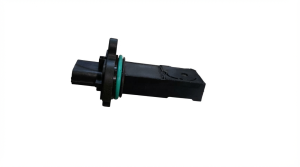
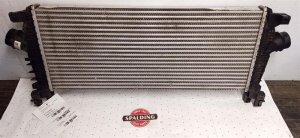
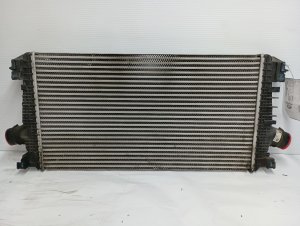
Used OEM Parts in Stock



New Aftermarket Parts Available
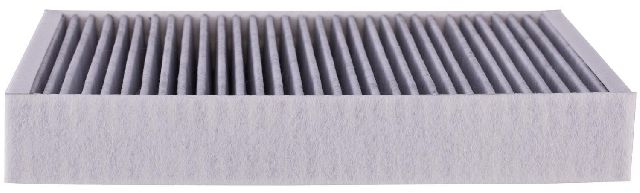




The information in this article is provided for general reference and educational purposes only. Vehicle specifications, procedures, and part compatibility can vary by production date, trim level, and region. Always consult your vehicle's factory service manual and verify part numbers before purchasing or performing repairs. Safety-critical components such as airbags, seat belts, and braking systems should be installed by a qualified professional.
- Chevrolet Cruze:
- 🎬 Helpful Videos
- 🛍️ Shop This Part
- What's Unique About the 2014-2015 Chevrolet Cruze
- Symptoms You May Notice
- Most Likely Causes
- Rare But Worth Checking
- Diagnosis Steps
- Parts You'll Likely Need
- Related Codes That Often Appear With This One
- Technical Service Bulletins (TSBs) & Recalls
- Platform-Specific Known Issues
- Mechanic-Grade Diagnostic Values
- Scan Tool Commands That Help
- Wiring & Ground Locations
- Real Owner Repair Stories
- OEM Part Supersession History
- Diagnostic Flowchart
- Other Known Issues on This Vehicle
- Used vs. New Parts: Buying Guide for This Vehicle
- Real Owner Stories
- 2016 Chevrolet Cruze (Gen 2)
- 2014-2015 Chevrolet Cruze 2.0L Diesel
- 2014-2015 Chevrolet Cruze 2.0L Diesel
- Related OBD-II Codes
- Frequently Asked Questions
- 🎟️ Get 5% Off