

OBD-II Code P2463: Diesel Particulate Filter Restriction - Soot Accumulation
An ASE-Certified Master Technician's Expanded Guide to P2463
- Code P2463 indicates your Diesel Particulate Filter (DPF) has exceeded its maximum soot load threshold, typically over 70 grams or 140% capacity, disabling automatic regeneration.
- Never replace the $2,000+ DPF assembly without first testing the $150 DPF differential pressure sensor and its rubber hoses for clogs or false readings.
- Driving more than 50 miles with an active P2463 code forces the engine into limp mode and risks blowing turbocharger seals due to extreme exhaust backpressure.
- Fixing P2463 requires a bi-directional scan tool to read live soot accumulation percentages, verify sensor voltages at 0 PSI (Key On, Engine Off), and command a forced regeneration.
What Does P2463 Mean?

Code P2463 indicates the engine control module (ECM) detects a critically clogged Diesel Particulate Filter (DPF). The DPF captures soot from exhaust gases. When the filter fills, exhaust backpressure increases. The ECM monitors this using a differential pressure sensor; when the pressure difference or calculated soot load exceeds a hard limit, it triggers P2463.
Technical definition: The SAE/OBD-II definition is "Diesel Particulate Filter Restriction – Soot Accumulation." The powertrain control module (PCM) determines exhaust backpressure has surpassed a predetermined limit due to soot buildup. This code sets when the PCM's internal soot load calculation exceeds a critical threshold (e.g., 70 grams or 140%), disabling automatic regeneration for safety.
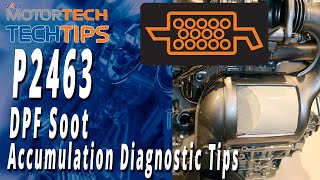
🎬 See these expert diagnostic tips for DPF soot accumulation.Can I Drive With P2463?
Yes, But With Caution. You can drive short distances, but doing so risks severe damage. Driving with P2463 active forces the vehicle into a reduced-power 'limp mode'. Ignoring the warning causes irreversible damage to the Diesel Particulate Filter (DPF), costing $1,000 to $5,000+ to replace, and destroys the turbocharger, adding $1,500-$3,000 in repairs.
Common Causes

- Insufficient DPF Regeneration (Very Common) — The DPF's self-cleaning process (regeneration) requires high exhaust temperatures. Frequent short trips, excessive idling, or stop-and-go driving prevent the vehicle from completing this process, causing soot to accumulate rapidly.
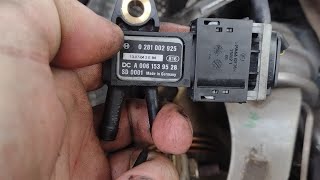
- Faulty DPF Pressure Sensor or Hoses (Very Common) — The DPF pressure sensor and its connecting rubber hoses are primary failure points. Hoses become clogged with soot, crack, melt, or develop pinhole leaks. The sensor itself fails internally, sending false high-pressure readings to the ECM. 🎬 Watch: How to test the DPF differential pressure sensor.
- Faulty Exhaust Temperature Sensor (EGT) (Common) — The ECM requires precise exhaust temperature data to initiate and sustain a regeneration cycle. If an EGT sensor provides inaccurate data (e.g., reading too cool), the ECM blocks regeneration to prevent a fire, leading to soot accumulation.
- Active Regeneration System Failure (Common) — Active regeneration requires a dedicated fuel injector (a '7th' or '9th' injector) to spray fuel into the exhaust. When this injector clogs or fails, the exhaust never reaches the temperature required to burn off soot.
- Upstream Component Failures (Injectors, EGR, Turbo, Boost Leaks) (Less Common) — The DPF only handles a normal amount of soot. Leaking fuel injectors, a stuck-open EGR valve, a failing turbocharger, or a boost leak create an improper air/fuel ratio. This incomplete combustion creates excessive black smoke that overwhelms the DPF.
- PCM Software Issues (Rare) — Outdated PCM software contains inefficient parameters for managing DPF regeneration. Manufacturers frequently release software updates to improve regeneration logic and prevent false codes or premature clogging.
- Use of Incorrect Engine Oil or Fuel (Rare) — Using engine oil not certified as 'low-ash' (e.g., API CJ-4, CK-4, or ACEA C-spec) clogs the DPF with non-burnable ash. Poor quality diesel fuel produces excessive soot, overwhelming the filter.
Symptoms

- Reduced Engine Power ('Limp Mode') — To prevent catastrophic damage from excessive backpressure, the ECM severely limits engine power, torque, and speed. The vehicle feels extremely sluggish.
- Frequent or Failed Active Regeneration Cycles — Engine idle speed increases, cooling fans run constantly, and a distinct burning smell emits from the exhaust as the vehicle repeatedly tries and fails to complete a regeneration cycle.
- Increased Fuel Consumption — A clogged DPF acts like a potato in the tailpipe. The engine works harder to push exhaust gases out, causing a 10-25% drop in fuel economy.
- Black Smoke from Exhaust — Extreme backpressure forces soot past seals or causes rich combustion during failed regeneration attempts, resulting in visible black smoke exiting the tailpipe.
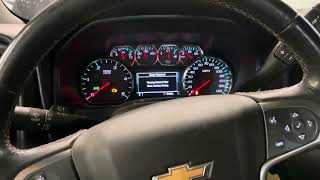
- Check Engine Light and DPF Warning Light (also visible on scanner) — The Check Engine Light illuminates alongside a dedicated DPF warning light (a filter icon with dots) that stays solid or flashes to indicate severity.
Diagnostic Flowchart
Tap your situation to follow the diagnostic path that matches what you're seeing on this code.
Common Fixes & Costs
- DPF Pressure Sensor Hose Replacement — Parts: $20 - $80, Labor: $50 - $150, ~0.8 hr book time (Beginner)
- DPF Pressure Sensor Replacement
— Parts: $65 - $250, Labor: $100 - $200, ~1 hr book time
(Intermediate)
: OEM BC3Z-5L227-A (Alt: Bosch: 0281006005, Dorman: 904-7103)
: OEM 12643955 (Alt: ACDelco: 12643955, Denso: DPS-0100)
: OEM 68087322AA (Alt: Bosch: 0281002929, Standard Motor Products: DPF8) - Forced DPF Regeneration — Parts: $0, Labor: $150 - $400, ~1.5 hr book time (Professional)
- Professional DPF Cleaning (Off-Vehicle) — Parts: $0, Labor: $300 - $650, ~3.5 hr book time (Professional)
- DPF Replacement
— Parts: $1,200 - $5,000+, Labor: $250 - $500+, ~4 hr book time
(Professional)
: OEM HC3Z-5H270-A (Alt: Walker: 16673, AP Exhaust: 910127)
: OEM 12665518 (Alt: Dorman: 674-5011, Walker: 16603)
: OEM 68474322AB (Alt: AP Exhaust: 910058, MagnaFlow: 10005)
Used vs. New Parts: Buying Guide
When a used part is worth it: A used OEM DPF from a low-mileage vehicle (under 80,000 miles) scrapped for non-engine reasons (e.g., collision) is viable for older, high-mileage trucks where a new OEM part is not cost-effective.
Donor-vehicle mileage cap: roughly under 80000 miles for the part to have meaningful remaining life.
Donor quality checklist:
- Verify the donor vehicle was not scrapped due to engine or emissions failure.
- Check the VIN service history for upstream failures (like a bad turbo) that damage the DPF.
- Visually inspect the ceramic honeycomb core for cracks, melting, or oil/coolant contamination.
- Ensure the part number is an exact match to avoid compatibility issues.
Decision logic:
- If Vehicle has less than 100,000 miles and is still under an emissions warranty → Use a new OEM part from the dealer to ensure warranty compliance.
- If Vehicle is over 150,000 miles and budget is the primary concern → A professionally cleaned/reconditioned DPF or a verified low-mileage used OEM part is an acceptable risk.
- If The cause of the original DPF failure was oil or coolant contamination → Buy a new DPF. A used part may have hidden contamination.
Warranty tradeoff: Used parts carry a 30-90 day warranty covering only the part. New aftermarket DPFs offer a 1-5 year warranty. New OEM parts carry a 1-2 year warranty, often covering labor if installed at a dealership.
Worst-case if a used part fails: $500 - $1,000 in repeat labor to remove a failed used part and install a replacement.
What Happens If You Wait — Timeline
- 0-1 week: DPF warning light appears on the dash. Automatic regeneration cycles become more frequent. No noticeable performance loss yet. (MPG impact: 0-5%% · Added cost: $0)
- 1-4 weeks: The Check Engine Light illuminates, and code P2463 is stored. The PCM disables automatic regeneration. The vehicle enters a reduced power 'limp mode,' limiting speed and acceleration. (MPG impact: 10-25%% · Added cost: $50 - $200 in wasted fuel.)
- 1-3 months: Sustained high backpressure puts extreme stress on the turbocharger's seals and bearings. The DPF becomes so packed with soot that the heat from failed regen attempts cracks the internal ceramic filter. (MPG impact: 20-30%% · Added cost: $1,500 - $8,500 (Cost of a new turbocharger and DPF).)
- 3+ months: Catastrophic damage occurs. Extreme exhaust backpressure fails exhaust valves, damages pistons, and forces exhaust gases into the crankcase, contaminating engine oil and leading to complete engine failure. (MPG impact: >30%% · Added cost: $7,000 - $20,000+ (Cost of a new DPF, turbo, and engine rebuild or replacement).)
Cost of Not Fixing It
- Immediate (0-1 month): Vehicle enters 'limp mode,' severely reducing power and speed. Fuel economy drops by 10-25% as the engine struggles against backpressure. (Added cost: $50 - $200 in wasted fuel.)
- Short-Term (1-3 months): Extreme backpressure destroys turbocharger seals and bearings. The DPF becomes so clogged it cracks internally from the heat of failed regeneration attempts. (Added cost: $1,500 - $3,500 (Turbocharger) + $1,200 - $5,000 (DPF).)
- Long-Term (3+ months): Catastrophic engine damage occurs. Sustained high exhaust backpressure fails exhaust valves, damages pistons, and contaminates engine oil, requiring a complete engine rebuild. (Added cost: $5,000 - $15,000+ (Engine repair or replacement).)
Diagnosis Steps

- Read Codes and Analyze Live Data
Use an advanced OBD-II scanner to confirm P2463. Document all other codes. Check live data for 'Soot Load Percentage' or 'Soot Mass'. A value over 100% confirms the ECM believes the filter is clogged.
Tools: Advanced OBD-II Scanner (Beginner) - Visually Inspect DPF Pressure Sensor Hoses
Carefully inspect the two small rubber hoses connected to the DPF pressure sensor. Look for cracks, melting, swelling, or kinks. Disconnect them and check for soot clogs or ice. A clogged hose is as common as a failed sensor.
Tools: Flashlight, Pliers, Safety Glasses (Beginner) - Check DPF Pressure Sensor Live Data (KOEO & Idle)
With Key On, Engine Off (KOEO), the DPF pressure sensor reading must be 0 PSI / 0 kPa / ~0.5V. If it shows pressure or high voltage (>1.0V) with the engine off, the sensor is biased and faulty. At idle, pressure should be under 0.5 PSI. High readings at idle point to a true blockage or bad sensor.
Tools: Advanced OBD-II Scanner with Live Data (Intermediate) - Attempt a Manual (Forced) Regeneration
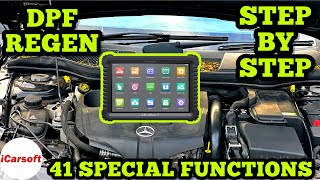
If sensors and hoses are clear and soot levels are high, use a bi-directional scanner to command a 'Forced' Regeneration. Do this outdoors in a safe area, as the exhaust reaches over 1000°F (540°C). Follow all on-screen safety warnings.
Tools: Advanced OBD-II Scanner with bi-directional control (Intermediate) - Inspect for Upstream Air and Fluid Leaks
If regeneration fails or the code returns quickly, the engine is producing excessive soot. Inspect the air induction path for boost leaks, especially cracked intercooler hoses. Check for oil (turbo seals) or coolant (EGR cooler) leaks contaminating the exhaust.
Tools: Smoke Machine, Flashlight, Comprehensive Tool Set (Advanced) - Analyze Engine Hours vs. Mileage
Check engine hours in the scanner data. A vehicle with low mileage but extremely high engine hours (e.g., 80,000 miles but 4,800 hours) spends excessive time idling. This driving style causes P2463 and accelerates permanent ash loading.
Tools: Advanced OBD-II Scanner (Advanced) - Test DPF Pressure Sensor Voltage Manually
Use a Digital Multimeter (DVOM). Disconnect the sensor and verify a 5V reference and ground. Reconnect and back-probe the signal wire. At KOEO, it should be ~0.5V. At idle, ~0.8V. At 2500 RPM, 1.0-1.5V. Readings that stick or don't change confirm a bad sensor.
Tools: Digital Multimeter (DVOM), Back-probe Kit (Advanced) - Assess for Ash Accumulation
If a forced regen completes but pressure remains high or P2463 returns immediately, the DPF is full of non-burnable ash. Common on vehicles over 150,000 miles, ash requires professional off-vehicle cleaning or DPF replacement.
Tools: Vehicle Lift or Jack Stands (Advanced)
When This Code Triggers (Freeze-Frame Conditions)
- Engine Coolant Temp: 180-205°F (82-96°C) (The engine must reach full operating temperature for the PCM to accurately assess DPF restriction or attempt regeneration.)
- RPM: 1200-2500 RPM (The code sets during steady-state driving, such as highway cruising, when the PCM expects stable exhaust flow for accurate pressure readings.)
- Engine Load: 30-70% (Moderate engine load generates sufficient exhaust flow and heat, which are critical parameters for DPF monitoring and regeneration cycles.)
- Vehicle Speed: 40-65 mph (65-105 km/h) (Triggered frequently during highway driving, the ideal condition for the PCM to run its DPF diagnostic checks.)
Related Codes
- P242F — P242F signifies 'DPF Restriction - Ash Accumulation.' P2463 is for burnable soot, while P242F is for non-burnable ash. If a forced regeneration temporarily fixes P2463 on a high-mileage vehicle, the underlying problem is P242F, requiring professional cleaning or replacement.
- P2002 — P2002 means 'DPF Efficiency Below Threshold.' P2463 means the filter is blocked. P2002 means the filter flows too freely, indicating it is cracked, missing, or illegally deleted.
- P2452, P2453, P2454, P2455 — These codes indicate an electrical fault in the DPF differential pressure sensor circuit (e.g., P2454 for 'Circuit Low'). If present with P2463, the sensor circuit fault is the root cause and must be repaired first.
- P246C — P246C ('Diesel Particulate Filter Restriction - Forced Limited Power') is a direct companion to P2463. It confirms the DPF restriction is so severe the ECM has drastically limited engine power to prevent damage.
Climate & Environmental Factors
- Cold Weather: Short trips in cold weather prevent the exhaust from reaching regeneration temperatures. Moisture collects in the DPF pressure sensor hoses, freezes, and causes a blockage, triggering a false P2463 code.
- High Altitude: Lower air density leads to less efficient combustion, producing more soot. The engine struggles to generate and maintain the high exhaust temperatures required for a successful regeneration.
- High Humidity: High humidity contributes to moisture accumulation in the exhaust and sensor lines. This moisture mixes with soot to form a sludge that clogs pressure sensor hoses.
How to Talk to a Mechanic About This Code
Say this: "I have a P2463 code on my vehicle and it's in limp mode. I'd like to book a diagnostic appointment. Please start by checking the DPF pressure sensor live data with the key on, engine off, and at idle. Also, please inspect the sensor's hoses for clogs, cracks, or freezing before quoting a DPF replacement."
This signals to the shop that you understand the most common and cheapest failures (sensors and hoses) should be checked first. It prevents them from immediately quoting an expensive DPF replacement.
Avoid saying:
- 'My check engine light is on, can you just fix it?'
- 'My truck is running rough, I think it's the DPF.'
- 'Just do whatever you think is necessary.'
Questions to ask before authorizing the repair:
- What was the DPF pressure sensor reading in volts or PSI with the engine off? What was it at idle?
- Did you physically inspect the sensor hoses for blockages or damage? Were they clear?
- If you are recommending a forced regeneration, what is the current soot load percentage?
- If you are recommending a DPF replacement, can you confirm that the pressure sensor, its hoses, and the regeneration system are all functioning correctly?
- Will you check for any available TSBs or PCM software updates related to this code?
Where to Take It: Dealer vs Independent vs Chain
- Dealer:
Recommended if a software update is the likely fix or if the vehicle is still under an emissions warranty. Also a good choice for complex European models.
Best for: Vehicles under warranty., Vehicles with known TSBs or requiring PCM software updates (common for Ford, Ram)., Complex regeneration system issues on brands like BMW, Mercedes, or VW.
Downsides: Highest labor rates and OEM part costs., May be quicker to recommend full DPF replacement over in-depth diagnosis of upstream components. (Typical cost: +50% vs. baseline) - Independent Shop:
Best fit for most out-of-warranty repairs, provided it is a reputable diesel-specific independent shop. They are more likely to explore all diagnostic avenues before suggesting a costly DPF replacement.
Best for: Out-of-warranty vehicles, especially common domestic trucks (Ford, GM, Ram)., Diagnosing and replacing common failure parts like DPF pressure sensors and hoses., Owners who have a trusted relationship with a shop that has diesel expertise.
Downsides: Quality and expertise vary greatly. Must be a shop specializing in diesel repair., May not have access to the very latest manufacturer software updates or specialized bi-directional tools. (Typical cost: +0% vs. baseline) - Chain Shop:
AVOID for initial diagnosis. The complexity of the DPF system and the need for specialized tools make this a poor choice for a P2463 code.
Best for: Simple part replacement IF a definitive diagnosis has already been made (e.g., you've diagnosed a bad sensor yourself).
Downsides: Technician skill is highly variable., Often lack the advanced, bi-directional scan tools required for forced regeneration or DPF-specific functions., High pressure to sell parts leads to misdiagnosis and unnecessary replacement of the expensive DPF assembly. (Typical cost: -10% vs. baseline)
When to Walk Away From the Repair
If the estimated repair cost for a worst-case scenario (DPF and/or turbo replacement) exceeds 50% of the vehicle's current private-party market value, it's time to seriously consider alternatives.
- Car worth $25000, fix is $8000: Borderline. This is a major repair. Get a second and third opinion. If the rest of the truck is in excellent condition, it might be worth fixing. If it has other pending issues, it's time to walk away.
- Car worth $35000, fix is $1500: Fix it. A repair cost for a sensor replacement, cleaning, or even a forced regeneration is well below the threshold and restores significant vehicle value.
- Car worth $12000, fix is $6000: Walk away. The repair cost is 50% of the vehicle's value. It's not economically viable unless the truck has significant sentimental value.
What Scan Tool You Need for This Code

Minimum: A scanner that reads manufacturer-specific codes and displays live data PIDs for the DPF system, including 'DPF Soot Load %', 'DPF Pressure', and 'Exhaust Gas Temperatures'.
A basic $20 code reader only shows 'P2463'. It cannot show if the cause is a lying sensor (reading 5 PSI with the engine off) or a genuinely clogged filter (soot load at 150%). Without live data, you will replace the wrong parts.
Budget: BlueDriver Pro Scan Tool (~$100) — Reads and clears the code, views freeze frame data, and displays live data for DPF pressure and soot levels on many models. It allows initial diagnosis but CANNOT command a forced regeneration.
How to Clear the Code After You Fix It
- Use an advanced OBD-II scan tool to clear the P2463 code.
- Perform a DPF pressure sensor reset/relearn procedure if a new sensor was installed.
- Complete a full OBD-II drive cycle to allow all emissions monitors to run.
Drive cycle (~45 minutes): Start with a cold soak (engine off for 8+ hours). Start the engine and idle for 3 minutes. Drive at a steady 55 mph (90 km/h) for 20 minutes to heat the exhaust. Perform 15 minutes of mixed city/highway driving with several stops. Idle for 5 minutes before shutting down.
Readiness monitors affected: Catalyst Monitor, EGR System Monitor, Oxygen Sensor Monitor, NOx Aftertreatment Monitor
Before emissions retest: drive at least 100 miles to fully set monitors.
Watch out for:
- Clearing the code without fixing the root cause results in the code returning immediately.
- Failing to perform the DPF sensor relearn procedure causes the system to use incorrect baseline values.
- Not completing the full drive cycle leaves readiness monitors 'incomplete', causing an automatic emissions test failure.
Will This Fail Emissions / State Inspection?
Yes — this code typically fails an OBD-II emissions inspection.
- California: An active P2463 code is an automatic failure. CARB requires all OBD-II readiness monitors to be 'Ready'. After repair, a specific drive cycle taking 100-200 miles must be completed before re-testing.
- New York: The NYS DMV inspection includes an OBD-II scan. The Check Engine Light and code P2463 result in immediate failure. Readiness monitors must be set to 'Ready'.
- Texas: In the 17 counties requiring emissions testing, an illuminated Check Engine Light from P2463 causes an automatic OBD failure. The vehicle cannot pass until repaired and cleared.
Most Commonly Affected Vehicles
- Ford F-250/F-350 with Power Stroke (2011-2019) — Extremely common on trucks with high idle time. Ford issued multiple TSBs (e.g., TSB 17-2234, TSB 21-2052) for PCM updates and enabling Operator Commanded Regeneration (OCR).
- Chevrolet/GMC Silverado/Sierra with Duramax (2011-2016) — The LML Duramax 9th injector is prone to clogging, preventing regeneration. GM TSB #10-06-05-002M details how ignoring the 'Clean Exhaust Filter' message leads to P2463.
- Ram 2500/3500 with Cummins (2013-2022) — Sensitive to driving cycles and sensor failures. TSB 18-093-22 addresses P2463 via PCM flash. Pressure sensor hoses collect moisture and freeze in cold climates, causing false codes.
- Mercedes-Benz Sprinter (2010-2018) — Commercial Sprinters suffer from high idle time and stop-and-go driving, preventing regeneration. DPF pressure sensors are a highly common failure item.
- Volkswagen Jetta/Golf/Passat with TDI (2009-2015) — TDI models are susceptible if not driven on the highway regularly. TSB V011609_2034898 links P2463 with EGR issues. The 'Dieselgate' warranty extension may cover DPF replacement.
- Mazda CX-5, Mazda6 with Skyactiv-D (2012-2018) — The 2.2L Skyactiv-D engine sets P2463 along with P242F due to fuel injector seals leaking, contaminating engine oil and leading to rapid soot and ash buildup.
- BMW 3-Series, 5-Series, X5 with Diesel Engines (2009-2018) — Prone to P2463 when used strictly for city driving in North America. Diagnosis frequently points to interrupted regenerations or a failed pressure sensor.
- Toyota Hilux / Fortuner with Diesel Engines (2015-2020) — A known issue on the 2.8L (1GD-FTV) engine. The fix involves a dealer-installed manual regeneration switch and an updated DPF design under warranty or recall campaigns.
Manufacturer-Specific Notes
- GM (Duramax): Per TSB #10-06-05-002M, ignoring the 'Clean Exhaust Filter' message directly leads to P2463. On LML engines, the 9th injector fuel supply line clogs, starving the DPF of fuel needed for regeneration.
- Ford (Power Stroke): Ford issued numerous TSBs (17-2234, 18-2271) requiring PCM software updates to correct regeneration logic. TSB 21-2052 enables Operator Commanded Regeneration (OCR) for trucks with high idle time.
- Ram (Cummins): Ram TSB 18-093-22 REV A is a major PCM software update for 2021+ Ram HD trucks to address P2463. The pressure sensor location makes its hoses susceptible to collecting moisture, which freezes and causes false codes.
- Toyota (1GD-FTV): The DPF system on early 2.8L diesel engines was unsuited for city driving. Toyota responded with a campaign to install a manual DPF regeneration switch on the dashboard and update the PCM.
Real Owner Stories
2018 Ram 2500 Cummins in a cold climate
Truck went into limp mode with P2463 code during winter. Owner primarily used the truck for short trips around town.
What they tried:
- A local shop quoted for a full DPF replacement, costing thousands.
Outcome: Owner inspected the DPF pressure sensor hoses and found one full of ice, creating a blockage. After thawing the hose and clearing the code, the truck returned to normal. A forced regeneration was performed for good measure.
Lesson: In cold climates, moisture freezes in the DPF pressure sensor lines, creating a false blockage and triggering P2463. Always check for clogged or frozen hoses before agreeing to an expensive DPF replacement.
2015 Ford F-250 Power Stroke with 110K miles
P2463 code and limp mode appeared. The truck was used for a mix of city driving and occasional towing.
What they tried:
- Owner took it to a general mechanic who performed a forced regeneration. The code returned within 50 miles.
- The mechanic replaced the DPF pressure sensor, but the code came back again.
Outcome: The owner took the truck to a Ford dealership. The technician found TSB 17-2234, specifying a PCM software update for P2463. After reprogramming the PCM, the issue was resolved permanently.
Lesson: Always check for manufacturer Technical Service Bulletins (TSBs). The root cause of P2463 is often a logic issue in the vehicle's software that a simple PCM update fixes.
2012 GM 2500HD Duramax (LML) with 150K miles
Vehicle repeatedly showed 'Clean Exhaust Filter' messages, which were ignored. It went into limp mode with code P2463.
What they tried:
- A forced regeneration was attempted but failed to complete.
- The DPF pressure sensor and hoses were checked and found clear.
Outcome: A diesel specialist diagnosed a clogged 9th injector. It was starved of fuel and couldn't get the DPF hot enough to clean itself. Replacing the 9th injector and its fuel line, followed by a successful forced regeneration, fixed the issue.
Lesson: If regeneration repeatedly fails, the problem is the system that enables regeneration. On Duramax engines, the 9th injector is a common failure point that prevents regen and leads to P2463.
2017 Mercedes-Benz Sprinter Van with high idle hours
Delivery van had P2463 and was stuck in limp mode. The van had low mileage but extremely high engine idle hours.
What they tried:
- A forced regeneration was completed successfully and cleared the code.
- The code returned about a month later.
Outcome: Diagnosis revealed a faulty DPF pressure sensor giving intermittent false readings. After replacing the sensor, the technician noted the high idle time was the ultimate cause, and the DPF was partially filled with ash. The owner was advised to use a high-idle function and ensure frequent highway driving.
Lesson: For work vehicles, high idle time prevents regeneration and accelerates ash buildup. If your driving style involves heavy idling, you must be proactive with maintenance to avoid recurring P2463 issues.
How to Prevent This Code From Triggering
- Perform regular highway driving. (At least once per tank of fuel) — Driving at sustained highway speeds (over 50 mph) for 20-30 minutes allows the exhaust to reach and maintain the high temperatures (~570°F / 300°C) required for passive regeneration.
- Use the correct 'low-ash' engine oil. (Every oil change) — Using oil not rated as low-ash (API CJ-4, CK-4, or ACEA C-spec) dramatically accelerates the permanent clogging of the DPF with non-combustible ash.
- Minimize engine idling. (Daily habit) — Idling produces high amounts of soot but does not generate enough exhaust heat for regeneration. This combination is the fastest way to clog a DPF.
- Use high-quality diesel fuel. (Every fill-up) — Higher quality diesel fuel burns cleaner, producing less particulate matter (soot), lessening the overall load on the DPF.
- Enable/Use Operator Commanded Regeneration (OCR) if available. (As needed, when prompted by the vehicle) — OCR allows the driver to manually start a parked regeneration cycle, preventing the DPF from reaching a critical soot level on trucks with high-idle duty cycles.
Frequently Asked Questions
What is the most common misdiagnosis for a P2463 code?
The most common and expensive mistake is immediately replacing the Diesel Particulate Filter. The actual fault is often a cheaper part, like a clogged $20 hose, a faulty $150 DPF pressure sensor, or an outdated software calibration. Always diagnose the complete system before condemning a multi-thousand dollar DPF.
Can I fix the P2463 code by just driving on the highway?
Only if you catch it very early before the vehicle enters limp mode. A 30-45 minute drive at sustained highway speeds (over 50 mph) initiates a passive regeneration. Once P2463 sets and power drops, the ECM locks out automatic regeneration, requiring a forced regeneration with a scan tool.
Why did P2463 come back right after a forced regeneration?
A forced regeneration treats the symptom, not the root cause. If the code returns quickly, an underlying issue is creating excessive soot or preventing normal regeneration. Common culprits include a faulty DPF pressure sensor, leaking fuel injectors, a bad EGR valve, or a filter permanently clogged with ash.
What is the difference between soot and ash in the DPF?
Soot is black carbon from incomplete combustion that burns off during regeneration. Ash is a non-combustible metallic residue from engine oil and fuel additives. Ash permanently clogs the DPF over time, requiring professional off-vehicle cleaning or complete replacement.
Will a fuel additive or 'DPF cleaner in a bottle' fix P2463?
No. Additives act as preventative maintenance to lower the temperature at which soot burns. They cannot fix a filter that is already critically clogged and in limp mode. Once P2463 sets, you need mechanical diagnostics and a forced regeneration.
Is it illegal to remove or 'delete' the DPF?
Yes. In the United States, removing or disabling emissions control devices like the DPF violates the federal Clean Air Act. This results in massive fines for both the vehicle owner and the shop performing the work.
Does P2463 always mean the DPF is clogged?
No. A faulty DPF pressure sensor or a leak in its connecting hoses tricks the ECM into logging P2463 on a perfectly clean filter. You must test the sensor and hoses before replacing the DPF.
How serious is code P2463?
It is extremely serious. Ignoring it leads to a complete loss of performance and causes cascading failures. Extreme backpressure destroys the turbocharger and cracks the DPF, turning a simple sensor repair into a $5,000+ bill.
Key Takeaways
- Code P2463 indicates your Diesel Particulate Filter (DPF) has exceeded its maximum soot load threshold, typically over 70 grams or 140% capacity, disabling automatic regeneration.
- Never replace the $2,000+ DPF assembly without first testing the $150 DPF differential pressure sensor and its rubber hoses for clogs or false readings.
- Driving more than 50 miles with an active P2463 code forces the engine into limp mode and risks blowing turbocharger seals due to extreme exhaust backpressure.
- Fixing P2463 requires a bi-directional scan tool to read live soot accumulation percentages, verify sensor voltages at 0 PSI (Key On, Engine Off), and command a forced regeneration.
Helpful Videos

The information in this article is provided for general reference and educational purposes only. Vehicle specifications, procedures, and part compatibility can vary by production date, trim level, and region. Always consult your vehicle's factory service manual and verify part numbers before purchasing or performing repairs. Safety-critical components such as airbags, seat belts, and braking systems should be installed by a qualified professional.
- 🎬 Helpful Videos
- What Does P2463 Mean?
- Can I Drive With P2463?
- Common Causes
- Symptoms
- Diagnostic Flowchart
- Common Fixes & Costs
- Used vs. New Parts: Buying Guide
- What Happens If You Wait — Timeline
- Cost of Not Fixing It
- Diagnosis Steps
- When This Code Triggers (Freeze-Frame Conditions)
- Related Codes
- Climate & Environmental Factors
- How to Talk to a Mechanic About This Code
- Where to Take It: Dealer vs Independent vs Chain
- When to Walk Away From the Repair
- What Scan Tool You Need for This Code
- How to Clear the Code After You Fix It
- Will This Fail Emissions / State Inspection?
- Most Commonly Affected Vehicles
- Manufacturer-Specific Notes
- Real Owner Stories
- 2018 Ram 2500 Cummins in a cold climate
- 2015 Ford F-250 Power Stroke with 110K miles
- 2012 GM 2500HD Duramax (LML) with 150K miles
- 2017 Mercedes-Benz Sprinter Van with high idle hours
- How to Prevent This Code From Triggering
- Frequently Asked Questions
- What is the most common misdiagnosis for a P2463 code?
- Can I fix the P2463 code by just driving on the highway?
- Why did P2463 come back right after a forced regeneration?
- What is the difference between soot and ash in the DPF?
- Will a fuel additive or 'DPF cleaner in a bottle' fix P2463?
- Is it illegal to remove or 'delete' the DPF?
- Does P2463 always mean the DPF is clogged?
- How serious is code P2463?
- Key Takeaways
- 🎟️ Get 5% Off