

P0031 on 1997-2006 BMW 3-Series (E46) 2.0L: Oxygen Sensor Heater Circuit Causes and Fixes
On a 2.0L E46, code P0031 is almost always a failed pre-catalyst oxygen sensor or a blown 30A fuse that powers it. Check the fuse in the engine bay's electronics box first. A new Bosch sensor costs ~$70-$120, and the fix is a 2/5 DIY difficulty.
- Before buying any parts for a P0031 code, check the 30A fuse in the engine bay's electronics box, especially if other O2 heater codes are present.
- The most likely failed part is the pre-catalyst (Bank 1, Sensor 1) oxygen sensor itself.
- Always inspect the sensor's wiring for heat damage or chafing before replacing the sensor.
- Use a quality OEM brand like Bosch for the replacement sensor to ensure compatibility and longevity.
What's Unique About the 1997-2006 BMW 3-Series (E46)
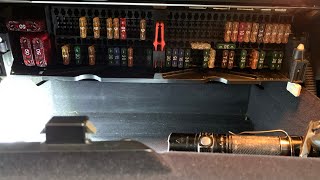
What often trips up E46 owners is the location of the fuse for the oxygen sensor heaters. It is not in the main glove box fuse panel. Instead, it's a 30-amp fuse located in a small, separate five-fuse carrier inside the main electronics box (DME box) in the engine bay, typically under the passenger-side cabin air filter housing on left-hand-drive cars. If you see multiple oxygen sensor heater codes at once (like P0037, P0051, P0057), this fuse is the most likely culprit, as documented by owners who found all four codes present simultaneously.
Generation note: The 1997-2006 range covers the entire E46 generation. However, a major 'facelift' occurred around 2001-2002. Pre-facelift 2.0L models often used the M43 engine, while post-facelift models (like the 318i) used the newer N42 or N46 engine. While the diagnostic principle for P0031 is the same, the exact oxygen sensor part number varies between these engine families. M43 engines use a traditional sensor, while N42/N46 engines use a more modern wideband sensor.
Symptoms You May Notice
- Check Engine Light is on
- Increased fuel consumption
- Rough idle, particularly when the engine is cold
- Hesitation or reduced engine power
- Failing a vehicle emissions test
- Replacing the oxygen sensor without first checking the 30A fuse in the DME box. If the fuse is blown, a new sensor will not fix the problem and the code will return immediately.
Most Likely Causes
- Failed Pre-Catalyst Oxygen Sensor (Bank 1) 🔴 High Probability The internal heater element of the oxygen sensor is a common failure point due to age and constant heat cycles.
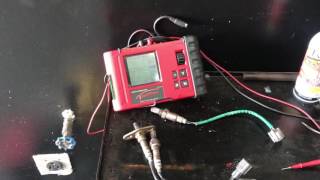
How to confirm: After confirming the fuse and wiring are good, test the resistance of the heater circuit at the sensor's connector using a multimeter. The two wires for the heater are almost always the same color (e.g., two white or two black wires). 🎬 See how to test the oxygen sensor heater control circuit A healthy heater should have a resistance between 2 and 10 ohms when cold. An open circuit (infinite resistance or 'OL') or a dead short (near zero ohms) confirms failure.
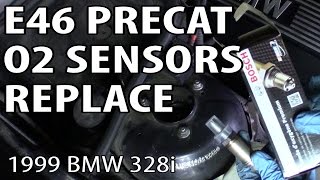
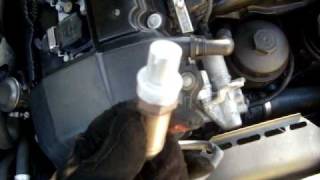
Typical fix: Replace the Bank 1, Sensor 1 (pre-catalyst) oxygen sensor. 🎬 Watch this DIY walkthrough for replacing pre-cat oxygen sensors
Est. part cost: $70-$150 - Blown Oxygen Sensor Heater Fuse 🟡 Medium Probability A short circuit in the wiring or within any of the oxygen sensors can cause the shared fuse to blow. This is especially common if other work was recently performed near the exhaust or valve cover.
How to confirm: Locate the electronics box (DME box) in the engine bay. Inside, find a small black fuse holder containing five fuses. Check the 30A fuse that powers the O2 sensor heaters (often the fourth from the top). If multiple O2 heater codes (e.g., P0031, P0037, P0051) are present, a blown fuse is almost certain. A real-world example from a BMW forum describes an owner with a 2.0L E46 seeing all four heater codes, tracing it to a 30A fuse in the DME box that repeatedly blew, indicating a short circuit somewhere in the system.
Typical fix: Replace the blown 30A fuse. If it blows again, you must find the short circuit in the wiring to one of the O2 sensors.
Est. part cost: $1-$5 - Damaged Wiring or Connector ⚪ Low Probability The wiring harness for the oxygen sensor runs close to the hot exhaust, making it susceptible to melting or becoming brittle and cracking over time. Wires can also be pinched or damaged during unrelated repairs, such as an intake manifold removal.
How to confirm: Visually inspect the entire wiring harness from the oxygen sensor to its connection point. Look for melted insulation, chafed sections, or corrosion in the connector pins. With the sensor unplugged and key on, check for 12V power on the heater supply wire at the connector. A simple test light can also be used across the two heater pins on the harness side; if it lights up with the engine running, the car's wiring, fuse, and DME control are likely good.
Typical fix: Repair the damaged section of the wiring harness or clean/replace the connector. BMW offers replacement terminals (p/n 61130007657) that can be spliced in.
Est. part cost: $5-$50
Rare But Worth Checking
- Faulty Engine Computer (DME): This is very uncommon. The DME's driver for the heater circuit can fail, but all other possibilities should be exhaustively ruled out before considering DME replacement.
Diagnosis Steps
- Read the codes with an OBD-II scanner. Note if any other O2 sensor heater codes are present (P0037, P0051, etc.), as this strongly suggests a fuse issue.
- Disconnect the battery. Locate the main electronics box (DME box) in the engine bay, under the passenger-side cabin air filter cowl (for LHD vehicles).
- Open the DME box and find the small black fuse carrier holding five fuses.
- Inspect the 30A fuse for the oxygen sensor heaters (typically the 4th fuse down). If it's blown, replace it, reconnect the battery, clear the codes, and start the engine to see if the code returns. If it blows again, a short circuit exists in the wiring for one of the O2 sensors.
- If the fuse is good, visually inspect the wiring harness for the pre-cat oxygen sensor. Trace it from the sensor to the main harness, looking for any signs of melting, chafing, or damage, especially where it might have been disturbed by other repairs.
- If the wiring appears intact, disconnect the sensor. Use a multimeter set to Ohms to measure the resistance across the two heater pins on the sensor itself (they are usually the same color). A reading between 2-10 Ohms is good. A reading of 'OL' (over-limit/open) or near 0 Ohms indicates a failed sensor.
- To be certain, turn the ignition to the 'On' position (engine off). Carefully probe the vehicle-side connector to confirm there is ~12V power at the heater supply pin and good continuity to ground on the ground pin.
- If the sensor's resistance is bad, replace the sensor. If power or ground is missing at the connector (and the fuse is good), you have a wiring issue to trace.
Parts You'll Likely Need
- Pre-Catalyst Oxygen Sensor (for N42/N46 Engines)
(OEM #11787512975)— This is the most common part to fail on post-facelift 2.0L models. The internal heater element burns out over time. This is a wideband-type sensor.
Trusted brands: Bosch, NTK, Genuine BMW
OEM price range: $120-$180
Aftermarket price range: $70-$120 - Pre-Catalyst Oxygen Sensor (for M43 Engines)
(OEM #11781742050)— This is the correct sensor for pre-facelift 2.0L models with the M43 engine. The heater element is the common failure point.
Trusted brands: Bosch, NTK, Genuine BMW
OEM price range: $100-$150
Aftermarket price range: $60-$100 - 30 Amp Blade Fuse
(OEM #61138365901)— This fuse protects the heater circuit and can blow if a sensor or its wiring shorts out. It's a common cause when multiple O2 heater codes appear simultaneously.
Trusted brands: Bosch, Littlefuse, Genuine BMW
OEM price range: $1-$5
Aftermarket price range: $1-$5
Related Codes That Often Appear With This One
- P0037 — This code is for 'HO2S Heater Control Circuit Low (Bank 1 Sensor 2)'. If both P0031 and P0037 appear together, it strongly points to a common power supply problem, like the shared 30A fuse being blown.
- P0051 — This code is for 'HO2S Heater Control Circuit Low (Bank 2 Sensor 1)'. On a 4-cylinder engine, this code would not appear as there is no Bank 2. However, if seen on a 6-cylinder E46 along with P0031, it is a near-certain indicator of a blown shared heater fuse. Some diagnostic tools may erroneously report this on a 4-cylinder if all heater circuits are down.
Technical Service Bulletins (TSBs) & Recalls
- No public-facing Technical Service Bulletins (TSBs) were found specifically for P0031 on this platform during research.
Platform-Specific Known Issues
- The primary vehicle-specific issue is the location of the 30A O2 sensor heater fuse. It is hidden within the DME/ECU electronics box in the engine bay, not in the main glovebox fuse panel, leading to frequent misdiagnosis.
- Simultaneous logging of multiple heater circuit codes (P0031, P0037, P0051, P0057) is a very strong indicator of this specific fuse being blown, rather than multiple sensors failing at once.
Mechanic-Grade Diagnostic Values
- O2 Sensor Heater Element Resistance (Cold) — expected: 2 to 10 Ohms. Some sources cite 3 Ohms as a common reading for a healthy sensor.. Failure: Near 0 Ohms (short circuit) or infinite/'OL' (open circuit).
- Heater Circuit Voltage at Connector (Harness Side) — expected: ~12V (Battery Voltage) with key on, engine off.. Failure: No voltage indicates a blown fuse or an open in the power supply wire.
- Heater Circuit Ground at Connector (Harness Side) — expected: Good continuity to chassis ground (less than 1 Ohm).. Failure: High resistance indicates a corroded or broken ground wire or a bad engine ground strap.
Hidden / Shadow Codes Worth Checking
- 2C9C: DME: Oxygen sensor heater before catalytic converter. This is a common BMW-specific fault code that directly corresponds to the generic P0031. (see via BMW-specific diagnostic software like INPA, ISTA, or high-end scanners (Autel, Snap-on) with BMW profiles.)
- 0x2C9C: Hexadecimal representation of the 2C9C fault code, often seen in more advanced diagnostic tools. (see via BMW-specific diagnostic software like INPA, ISTA.)
Scan Tool Commands That Help
- ISTA/D: Call Up ECU Functions -> DME -> Component Triggering -> Oxygen sensor heater before catalytic converter — This function allows the technician to command the DME to activate the heater circuit directly. By monitoring voltage or current with a multimeter at the sensor connector while running this test, you can confirm if the DME driver and wiring are capable of supplying power, isolating the fault to the sensor itself.
- ISTA/D: Service Functions -> Powertrain -> Engine Electronics -> Oxygen sensor test — This is a guided test plan that walks the user through diagnosing O2 sensor faults. It will check for faults, prompt the user to check voltages, and analyze sensor response to determine the cause of the code, including potential heater issues.
Wiring & Ground Locations
- Engine Ground Strap — Connects the engine block to the chassis, typically on the passenger side (for LHD) near the engine mount.. The O2 sensor heater circuit relies on a solid engine ground to complete its circuit. A corroded or broken main engine ground strap can cause high resistance, leading to intermittent or persistent heater circuit codes and other electrical gremlins.
- X6454 — A main grounding point located on the firewall bulkhead, behind the electronics box (E-box) in the engine compartment.. This is a critical ground distribution point for many engine electronics. While less likely to be the sole cause for a single O2 sensor code, corrosion here can cause widespread issues, including sensor faults.
- O2 Sensor Connector Pins (N42/N46) — On the sensor-side connector for the wideband sensor (11787512975), the two heater wires are typically the same color.. Knowing which pins are for the heater is essential for performing accurate resistance and voltage tests directly at the sensor and harness connector.
Real Owner Repair Stories
- r/BmwTech on Reddit (BMW E46 (engine not specified, but behavior is universal)) — Upstream Bank 2 O2 sensor suddenly stopped working, throwing a fault code.
❌ Tried (didn't work) Initial diagnosis pointed towards a bad sensor.
✅ What actually fixed it The owner discovered the O2 sensor connector had fallen out of its mounting bracket and melted on the exhaust manifold. The fix required replacing the connector and splicing the wires. The user noted that BMW sells replacement connector terminals (p/n 61130007657) to facilitate this repair. - Bimmerpost Forum (2006 BMW 325i (E90, but shares DME logic and components)) — Engine issue, suspected O2 sensor failure.
❌ Tried (didn't work) The owner purchased a new oxygen sensor, assuming the old one was faulty.
✅ What actually fixed it The actual problem was an unplugged wire from the DME box. The original oxygen sensor was still good. This highlights the importance of checking fuses and wiring in the DME box before replacing parts.
OEM Part Supersession History
11787512975→This part number is still listed as active for N42/N46 engines but is also cross-referenced with aftermarket replacements like Bosch 0258007142. Some suppliers list it as no longer available, indicating reliance on OEM-equivalent aftermarket parts.— Standard part lifecycle.
Heads up: This is a 5-wire wideband sensor specific to the N42/N46 engines and is not interchangeable with the 4-wire traditional sensors used on the older M43 engine.
Model Year Variations Within This Range
- 2001-2004: Models in this range were typically equipped with the N42 engine. While very similar to the later N46, some sources suggest the N42 was less reliable, and the N46 was a revision with improvements.
- 2004-2006: Later 2.0L models used the N46 engine. The N46 featured a revised valvetrain and intake manifold compared to the N42. In 2007 (post-E46), the N46N revision received a different engine control unit (Bosch MV17.4.6 instead of ME9.2), but this does not apply to the E46. For the purpose of P0031, diagnosis on N42 and N46 engines is identical.
Diagnostic Flowchart
Used vs. New Parts: Buying Guide for This Vehicle
When a used part is the smart pick: A used wiring harness pigtail from a junkyard is a smart choice if only your connector is melted or damaged. A used DME can be a cost-effective option if the original is confirmed faulty, but it will require professional programming/coding to the car's VIN and security system.
Donor-vehicle mileage cap: roughly under 80000 miles for the part to have meaningful remaining life.
What to inspect on the donor part:
- For a wiring pigtail, inspect for any signs of melting, brittleness, or cracked insulation.
- Ensure connector locking tabs are intact.
- For a used DME, check for any signs of water intrusion or corrosion on the case and pins.
OEM-only on this vehicle (don't cheap out):
- Oxygen Sensor: Strongly recommended to use OEM (Genuine BMW) or a proven OEM supplier like Bosch or NTK. Aftermarket sensors are notoriously unreliable for BMWs and can cause persistent codes or incorrect fuel trims.
- Fuse: While any quality 30A blade fuse will work, using a reputable brand is wise for a critical circuit.
Aftermarket brands forum-validated for this vehicle:
- Bosch (for oxygen sensors)
- NTK (for oxygen sensors)
Brands owners have reported issues with on this vehicle:
- Unnamed or generic 'no-brand' oxygen sensors from online marketplaces. Forum consensus is overwhelmingly against using them due to high failure rates and incorrect readings.
Real Owner Stories
Aggregated from forums and TSBs cited above. Mileages and costs reflect what owners reported in those sources.
BMW 3-Series (E46) 2.0L
Symptoms: The Check Engine Light came on and the scanner showed all four oxygen sensor heater codes at once: P0031, P0037, P0051, and P0057.
What fixed it: The owner diagnosed a 30A fuse in the DME box that was repeatedly blowing. This confirmed a short circuit somewhere in the oxygen sensor wiring system which had to be located and repaired before the new fuse would hold.
Source hint: bmw-sport.pl - 'Problem z sonda/mi p0031, p0037, p0051, p0057'
Related OBD-II Codes
Frequently Asked Questions
I have P0031, P0037, and P0051 all at once on my E46. Did all my oxygen sensors fail at the same time?
Where is the fuse for the oxygen sensors on my E46? I checked the glovebox panel and can't find it.
What brand of oxygen sensor should I buy for my E46? Are the cheap ones online okay?
I need to test the heater element on my Bank 1 oxygen sensor. What resistance reading should I be looking for with my multimeter?
The plastic connector for my oxygen sensor is melted. Do I have to replace the entire engine wiring harness?
Are there any official BMW Technical Service Bulletins (TSBs) for code P0031 on the E46?
Helpful Videos
We Have This Part in Stock



The information in this article is provided for general reference and educational purposes only. Vehicle specifications, procedures, and part compatibility can vary by production date, trim level, and region. Always consult your vehicle's factory service manual and verify part numbers before purchasing or performing repairs. Safety-critical components such as airbags, seat belts, and braking systems should be installed by a qualified professional.
- BMW 3-Series (E46):
- 🎬 Helpful Videos
- 🛍️ Shop This Part
- What's Unique About the 1997-2006 BMW 3-Series (E46)
- Symptoms You May Notice
- Most Likely Causes
- Rare But Worth Checking
- Diagnosis Steps
- Parts You'll Likely Need
- Related Codes That Often Appear With This One
- Technical Service Bulletins (TSBs) & Recalls
- Platform-Specific Known Issues
- Mechanic-Grade Diagnostic Values
- Hidden / Shadow Codes Worth Checking
- Scan Tool Commands That Help
- Wiring & Ground Locations
- Real Owner Repair Stories
- OEM Part Supersession History
- Model Year Variations Within This Range
- Diagnostic Flowchart
- Used vs. New Parts: Buying Guide for This Vehicle
- Real Owner Stories
- BMW 3-Series (E46) 2.0L
- Related OBD-II Codes
- Frequently Asked Questions
- 🎟️ Get 5% Off