

OBD-II Code P0032: HO2S Heater Control Circuit High
A comprehensive, expert-level guide to diagnosing and fixing P0032
- Test the Bank 1 Sensor 1 oxygen sensor's internal resistance with a multimeter before buying parts; a reading of 'OL' confirms the heater element is dead.
- Fix a P0032 code within 1 to 2 weeks to prevent the engine's rich-running condition from destroying the catalytic converter, which costs upwards of $2,000 to replace.
- Always install an OEM or exact-equivalent oxygen sensor (like Denso or NTK), as cheap aftermarket sensors frequently have incorrect resistance values that immediately trigger the code again.
- Inspect the oxygen sensor wiring harness for melted insulation or chafed wires near the hot exhaust manifold, as physical wire damage is the second most common cause of this code.
What Does P0032 Mean?

P0032 means the Powertrain Control Module (PCM) detects voltage in the Bank 1 Sensor 1 upstream oxygen sensor heater circuit is above the normal range. This internal heater warms the sensor to its 600°F operating temperature, allowing the engine to run efficiently from a cold start.
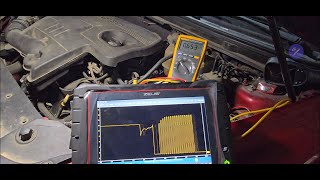
Technical definition: HO2S Heater Control Circuit High (Bank 1 Sensor 1). 🎬 Watch: A complete guide to troubleshooting and repairing P0032. The PCM sets this code when it commands the heater 'on' (by grounding the circuit) but sees voltage remain near battery voltage. This indicates a lack of current flow, typically due to an open circuit or a short to power.
Can I Drive With P0032?
Yes, But With Caution. Yes, you can drive with P0032, but fix it as soon as possible. Continued driving causes poor fuel economy and guaranteed emissions test failure. Ignoring it for several hundred miles destroys the catalytic converter, a repair costing $1,000 to $4,000+.
Common Causes

- Faulty Bank 1, Sensor 1 Oxygen Sensor (Very Common) — The internal heater element within the oxygen sensor fails due to age or shorts out. This is a standard wear item, failing frequently after 80,000-100,000 miles.
- Wiring or Connector Damage (Open/Short) (Common) — The wiring harness sits near the hot exhaust, making it susceptible to melting, chafing, or physical damage. Moisture and road salt also infiltrate the connector, causing pin corrosion. Both scenarios create high resistance or open circuits.
- Blown Fuse or Faulty Relay (Less Common) — A short circuit in the sensor or wiring blows the O2 sensor heater circuit fuse. If a new fuse blows immediately, it confirms a persistent short.
- Poor Ground Connection (Less Common) — A corroded engine or chassis ground strap creates an unstable voltage reference, causing the PCM to incorrectly interpret the O2 sensor heater circuit voltage.
- Incorrect or Low-Quality Aftermarket Sensor (Less Common) — Cheap or universal aftermarket sensors have different internal heater resistance values than the Original Equipment (OE) part, which the PCM immediately flags as a fault.
- Faulty Powertrain Control Module (PCM) (Very Rare) — The internal driver circuit within the PCM that controls the heater fails. This is a diagnosis of last resort after ruling out the sensor, wiring, fuses, and grounds.
Symptoms

- Failed Emissions Test — P0032 is an automatic failure for any emissions inspection, as the heater circuit is a critical emissions control component.
- Worse Gas Mileage — Without a working heater, the engine runs in an inefficient 'open-loop' mode longer, increasing fuel consumption by 2-4 MPG.
- Rough Idle or Hesitation — The engine runs rough or hesitates during the first few minutes after a cold start before exhaust heat warms the sensor.
- Strong Fuel Smell or Black Smoke — An inefficient, rich air-fuel mixture pushes unburned fuel into the exhaust, creating a gasoline smell or visible black smoke.
- Check Engine Light is On (also visible on scanner) — The light illuminates as soon as the PCM detects the fault.
Common Fixes & Costs

- Replace Bank 1, Sensor 1 Oxygen Sensor
— Parts: $70-$250, Labor: $100-$200, ~1 hr book time
(DIY)
: OEM
: OEM
: OEM
: OEM - Repair Wiring or Replace Connector Pigtail
— Parts: $20-$150, Labor: $100-$300, ~1.5 hr book time
(Intermediate)
: OEM - Replace Blown Fuse — Parts: $1-$10, Labor: $0-$50, ~0.2 hr book time (DIY)
- Clean or Repair Main Engine/Chassis Ground — Parts: $5-$30, Labor: $50-$150, ~1 hr book time (DIY)
- Replace Powertrain Control Module (PCM) — Parts: $600-$1200, Labor: $200-$400, ~2 hr book time (Professional)
DIY vs Professional
- Replace Oxygen Sensor — Beginner:
- Repair Wiring / Replace Pigtail — Beginner:
- Replace Fuse — Beginner:
- Replace PCM — Beginner:
Used vs. New Parts: Buying Guide
When a used part is worth it: Never buy a used oxygen sensor. They are wear-and-tear items with a finite lifespan. The labor cost to install often exceeds the part's cost.
Donor-vehicle mileage cap: roughly under 20000 miles for the part to have meaningful remaining life.
Donor quality checklist:
- Only consider if from a very low-mileage wrecked vehicle.
- Never buy if the donor vehicle had engine or emissions problems.
- Ensure the part number is an exact match.
Decision logic:
- If The cost of a new OEM or high-quality aftermarket sensor is under $200 → Always buy new. The risk of premature failure with a used part is not worth the savings.
- If The vehicle is very old and has low value → A used sensor is a last resort, but expect a high probability of the code returning.
- If The part is an O2 sensor → Favor new. Sensors degrade with use and time, not just mileage.
Warranty tradeoff: Used parts: 30-day max. Aftermarket new: 1-year or 12,000-mile warranty. OEM new: 1-2 year parts warranty if installed by a dealer.
Worst-case if a used part fails: $150-$300 if a used sensor fails, requiring repeat labor plus a new part.
Cost of Not Fixing It
- 0-1 month: Noticeable drop in fuel economy (up to 15-20%) and automatic failure of any emissions test. (Added cost: Negligible, other than increased fuel cost.)
- 1-6 months: The engine runs in a default rich condition, causing the catalytic converter to overheat and degrade internally. (Added cost: $1,000-$3,000)
- 6+ months: Complete failure of the catalytic converter. The internal substrate melts, causing severe exhaust restriction and power loss. (Added cost: $1,200-$4,000+)
Diagnosis Steps

- Scan for Codes & Review Freeze Frame Data
Confirm P0032 is active. Check for related codes (P0031, P0052, P0135) for clues. Review freeze frame data to see engine conditions when the code set.
Tools: OBD-II Scanner (Beginner) - Test the Sensor's Heater Circuit Resistance
Disconnect the sensor. Use a multimeter set to Ohms (Ω) to probe the two heater circuit pins on the sensor side (often the same color wires). A good sensor reads between 2 and 30 ohms. A reading of 'OL' (Over Limit) confirms a failed, open heater element. 🎬 See how to test oxygen sensor heater circuits with a multimeter. Zero ohms indicates an internal short.
Tools: Multimeter, Vehicle Service Manual (Intermediate) - Visually Inspect Wiring and Connector
Inspect the entire wiring harness for the Bank 1 Sensor 1 O2 sensor. Look for melted insulation, chafed wires, and rodent damage. Disconnect the sensor and check for corroded or bent pins inside the connector.
Tools: Flashlight, Inspection Mirror (Beginner) - Check the Fuse
Locate the fuse for the O2 sensor heater circuit (often labeled 'O2 HTR'). Visually inspect and replace if blown. If the new fuse blows instantly, you have a dead short in the circuit.
Tools: Owner's Manual, Fuse Puller (Beginner) - Test for Voltage and Ground at the Connector
With the sensor disconnected and key 'On' (engine off), test the harness-side connector. The power feed pin must have battery voltage (12V). Start the engine; the PCM grounds the control wire, dropping its voltage to near 0V. If control wire voltage stays near 12V, it confirms the 'Circuit High' fault.
Tools: Multimeter, Vehicle Service Manual (Intermediate) - Check for a Short to Power
Disconnect the sensor and the PCM. Set a multimeter to continuity (beep mode). Check for continuity between the heater control wire at the sensor connector and the battery positive terminal. A beep confirms the wire is shorted to power.
Tools: Multimeter, Vehicle Wiring Diagram (Advanced) - Advanced: Check Live Data PIDs
Monitor live data PIDs for the Bank 1 Sensor 1 heater (e.g., 'O2 Heater B1S1'). The status switches from 'Off' to 'On' after engine start. If the command is 'On' but multimeter tests show high voltage on the control wire, you have an open circuit or failed sensor heater.
Tools: Advanced OBD-II Scan Tool (Advanced) - Pro Tip: Perform a Ground-Side Voltage Drop Test
Reconnect the sensor. Back-probe the ground wire at the O2 sensor connector with the multimeter's positive lead and place the negative lead on the battery's negative terminal. With the engine running, voltage must be under 100mV (0.1V). Higher readings indicate excessive ground resistance.
Tools: Multimeter with Back-Probes (Advanced) - Pro Tip: Analyze the Circuit with a Lab Scope
Back-probe the heater control wire. When the engine starts, the PCM pulls the circuit to ground using a pulse-width modulated (PWM) signal. You must see a square wave pattern fluctuating between battery voltage and near-zero volts. A signal stuck at battery voltage confirms an open circuit or faulty PCM driver.
Tools: Oscilloscope, Back-Probes, Wiring Diagram (Professional)
When This Code Triggers (Freeze-Frame Conditions)
- Engine Coolant Temp: 170-220°F (Fully warmed up)
- RPM: 1000-2500 (Idle or steady cruise)
- Engine Load: 15-40% (Light to moderate throttle application)
- Vehicle Speed: 30-60 mph (Steady state or city/highway driving)
Related Codes
- P0031 — The direct opposite code, indicating 'Heater Control Circuit Low' (short to ground). Seeing both intermittently indicates a wire alternately shorting to power and ground.
- P0052 — The identical 'Heater Control Circuit High' fault for Bank 2, Sensor 1. Having both simultaneously points to a shared power or ground issue, like a blown fuse.
- P0132 — Refers to the sensor's signal circuit, not the heater. A severe internal short within the sensor triggers both codes.
- P0135 — A generic code for 'O2 Sensor Heater Circuit Malfunction'. P0032 specifies the fault is a 'high voltage' condition.
Climate & Environmental Factors
- Road Salt (Winter Climates): Accelerates corrosion on electrical connectors and chassis grounds, creating high resistance or open circuits that trigger P0032.
- High Humidity: Promotes moisture intrusion into unsealed electrical connectors, leading to pin corrosion and intermittent high-resistance faults.
- Extreme Temperature Cycles: Constant cycling from cold ambient temperatures to hot exhaust temperatures causes the fine wire inside the sensor's heater element to become brittle and break.
How to Talk to a Mechanic About This Code
Say this: "I have a P0032 code for the Bank 1 Sensor 1 heater circuit. Please test the sensor's internal resistance and verify power and ground at the harness connector before recommending a replacement part."
This signals you understand the fault is electrical. It directs the mechanic to isolate the problem (sensor vs. wiring) and prevents them from swapping parts without a proper diagnosis.
Avoid saying:
- 'My check engine light is on, can you look at it?'
- 'Just replace the O2 sensor.'
- 'I think it's the oxygen sensor.'
Questions to ask before authorizing the repair:
- What was the resistance reading on the sensor's heater circuit? Was it open (OL)?
- Did you confirm 12-volt power and a good ground on the harness side of the connector?
- If the sensor and wiring are good, what is the next diagnostic step before considering the PCM?
- What is the warranty on the recommended parts and labor?
Where to Take It: Dealer vs Independent vs Chain
- Dealer:
Best for: Vehicles under powertrain or emissions warranty., Vehicles with known TSBs or software updates for P0032 (common on Chrysler/Jeep)., Complex electrical issues requiring manufacturer-specific diagnostic tools.
Downsides: Highest labor rates, often 50-100% more than independent shops., Defaults to expensive OEM parts when high-quality equivalents are available. (Typical cost: +50% vs. baseline) - Independent Shop:
Best fit for most cases. P0032 is a common code with a well-understood diagnostic path. A reputable independent shop performs the necessary circuit tests and sensor replacement at a much lower cost than a dealer.
Best for: Out-of-warranty vehicles where cost is a major factor., Diagnosing and repairing common codes like P0032, a routine job for experienced technicians.
Downsides: Quality varies greatly; vet the shop through reviews and ASE certifications., Lacks access to the very latest manufacturer software updates. (Typical cost: +0% vs. baseline) - Chain Shop:
Use with caution. Acceptable if you already diagnosed a bad sensor and just need it replaced. AVOID for initial diagnosis, as they lack the expertise for wiring or PCM faults.
Best for: Simple part replacements when you have already confirmed the diagnosis yourself.
Downsides: Technician skill and diagnostic ability are inconsistent., High pressure to upsell unnecessary services. (Typical cost: -10% vs. baseline)
When to Walk Away From the Repair
If the estimated repair cost exceeds 40-50% of the car's private-party value, seriously consider selling the car as-is or trading it in.
- Car worth $4000, fix is $350: Fix it. This is a standard repair cost well below the threshold.
- Car worth $3000, fix is $1800: Walk away. This repair cost suggests a worst-case scenario (PCM failure plus a damaged catalytic converter) exceeding 50% of the car's value.
- Car worth $8000, fix is $1200: Borderline. This implies more than just a sensor (e.g., wiring harness repair or PCM replacement). Get a second opinion before authorizing the repair.
What Scan Tool You Need for This Code
Minimum: A tool that reads codes, clears codes, and displays live sensor data.
A basic $20 code reader only gives you the 'P0032' code. It cannot show live voltage on the circuit or the heater command status from the PCM, which is essential to isolate the sensor, wiring, or computer.
Budget: Ancel BD310 or similar Bluetooth scanner with app (~$60) — Connects to your smartphone to read/clear codes, view freeze frame data, and see live data streams for the O2 sensor heater circuit voltage. This confirms the 'Circuit High' condition and guides multimeter testing.
Mid-range: Innova 5610 or Foxwell NT510 Elite (~$350) — Offers graphing of live data to easily see voltage changes. Provides manufacturer-specific data and runs on-board monitor tests for the O2 heater circuit.
Professional: Autel MaxiCOM MK808 / MK906BT (~$500-1200) — Provides full bidirectional control, allowing a technician to command the O2 sensor heater 'on' and 'off' directly from the scan tool to test the PCM driver and wiring integrity.
Rent vs buy: AutoZone reads codes for free, but liability laws in states like California prevent them from renting tools that clear codes. Buying a budget-friendly live-data scanner is a mandatory investment for DIY diagnosis.
How to Clear the Code After You Fix It
- Reconnect battery if disconnected.
- Use an OBD-II scan tool to clear the diagnostic trouble code.
- Perform a complete drive cycle to allow readiness monitors to run.
Drive cycle (~20 minutes): Start cold. Idle 2-3 minutes with A/C on. Accelerate to 55 mph and hold steady for 3-5 minutes. Coast down to 20 mph without braking. Accelerate back to 55-60 mph and hold steady for 5 minutes. Coast to a stop.
Readiness monitors affected: Catalyst monitor, O2 sensor monitor, O2 sensor heater monitor
Before emissions retest: drive at least 50 miles to fully set monitors.
Watch out for:
- Disconnecting the battery clears the code but resets all readiness monitors, guaranteeing an immediate emissions test failure.
- The code returns immediately if the root cause (bad sensor, wiring fault) is not repaired.
- Failing to complete the specific drive cycle leaves monitors in a 'not ready' state.
Will This Fail Emissions / State Inspection?
Yes — this code typically fails an OBD-II emissions inspection.
- California: P0032 is an automatic failure. All required OBD readiness monitors must be set to 'Ready' to pass the smog check.
- New York: The NYS DMV inspection includes an OBD-II scan. P0032 causes immediate failure. The O2 sensor and heater monitors must be 'Ready'.
- Texas: In emissions-testing counties, P0032 results in a failed inspection until repaired and readiness monitors are set.
Most Commonly Affected Vehicles
- Chrysler/Dodge/Jeep Town & Country, Grand Caravan, Wrangler, Ram (2008-2018) — Prone to wiring issues and PCM driver failures. 🎬 Watch: Real-world diagnosis of P0032 on a Dodge Caravan. Always check for TSBs regarding PCM software updates before replacing parts.
- Toyota Camry (2007-2017) — Extremely common due to heater element failure after 100,000 miles. Using an OEM/Denso sensor is critical; aftermarket versions cause the code to return.
- Honda Accord, Civic (2013-2018) — Frequently experience P0032 due to the oxygen sensor heater failing with age. OEM or NTK/Denso sensors are highly recommended.
- Ford F-150 (2004-2020) — Wiring damage from heat is common. For 2018-2020 2.7L EcoBoost models, check Emission Recall 24E12 (PCM update) before replacing parts.
- Chevrolet Silverado, Malibu (2007-2017) — P0032 is sometimes an early sign of a failing PCM driver circuit, though wiring and sensor failure remain the most common causes.
- Hyundai/Kia Sonata, Optima, Santa Fe, Sorento (2007-2018) — Inspect for oil leaks from the valve cover gasket, as dripping oil contaminates the sensor connector and wiring.
Manufacturer-Specific Notes
- Chrysler/Dodge/Jeep: A PCM software update is a frequent fix. TSB #18-059-16 (Town & Country) and #18-050-22 (Pacifica) specifically address P0032.
- Jeep: On Wranglers and Gladiators, the O2 sensor wiring harness rubs against the frame or fender liner, breaking wires. TSB #18-065-24 REV. A notes P0032 requires a PCM software update.
- Ram: On 6.7L Cummins diesels, TSB #25-002-14 recommends installing a robust overlay harness (P/N 68250763AA) to bypass faulty factory wiring.
- Toyota: Sensor failure is a maintenance item around 100,000 miles. Using non-Denso aftermarket brands guarantees the P0032 code returns immediately.
- Ford: F-150 models have Emission Recall 24E12 (issued Oct 2024) involving PCM reprogramming to address false codes.
Frequently Asked Questions
Can I fix P0032 myself?
Yes, replacing the oxygen sensor is a manageable DIY repair requiring basic hand tools and a slotted O2 sensor socket. Always test the fuse and wiring before replacing parts.
What is the most common mistake when fixing a P0032 code?
The biggest mistake is replacing the oxygen sensor without testing the circuit first. The second is using a cheap aftermarket sensor, which often has the wrong resistance and triggers the code again.
What if the P0032 code returns after replacing the sensor?
If a new OEM sensor doesn't fix the code, the fault lies in the wiring or the PCM. Look for an overlooked open wire, a short in the harness, a corroded connector, or a bad ground. Only suspect the PCM after ruling out all electrical connections.
What is 'Bank 1, Sensor 1' and where is it?
Bank 1 is the side of the engine containing cylinder #1. Sensor 1 is the 'upstream' oxygen sensor. It is located in the exhaust manifold or downpipe before the catalytic converter.
Can I clean the oxygen sensor to fix P0032?
No. Cleaning an oxygen sensor removes carbon buildup but cannot fix an internal electrical fault. P0032 indicates a failure in the sealed heater circuit, requiring complete sensor replacement.
What is the difference between an upstream and downstream oxygen sensor?
The upstream sensor (Sensor 1) sits before the catalytic converter and controls the engine's air-fuel mixture. The downstream sensor (Sensor 2) sits after the converter and monitors its efficiency.
Can a vacuum leak cause a P0032 code?
No. A vacuum leak introduces unmetered air and triggers fuel trim codes like P0171. P0032 is strictly an electrical fault code for the sensor's internal heater circuit.
Key Takeaways
- Test the Bank 1 Sensor 1 oxygen sensor's internal resistance with a multimeter before buying parts; a reading of 'OL' confirms the heater element is dead.
- Fix a P0032 code within 1 to 2 weeks to prevent the engine's rich-running condition from destroying the catalytic converter, which costs upwards of $2,000 to replace.
- Always install an OEM or exact-equivalent oxygen sensor (like Denso or NTK), as cheap aftermarket sensors frequently have incorrect resistance values that immediately trigger the code again.
- Inspect the oxygen sensor wiring harness for melted insulation or chafed wires near the hot exhaust manifold, as physical wire damage is the second most common cause of this code.
Helpful Videos

The information in this article is provided for general reference and educational purposes only. Vehicle specifications, procedures, and part compatibility can vary by production date, trim level, and region. Always consult your vehicle's factory service manual and verify part numbers before purchasing or performing repairs. Safety-critical components such as airbags, seat belts, and braking systems should be installed by a qualified professional.
- 🎬 Helpful Videos
- What Does P0032 Mean?
- Can I Drive With P0032?
- Common Causes
- Symptoms
- Common Fixes & Costs
- DIY vs Professional
- Used vs. New Parts: Buying Guide
- Cost of Not Fixing It
- Diagnosis Steps
- When This Code Triggers (Freeze-Frame Conditions)
- Related Codes
- Climate & Environmental Factors
- How to Talk to a Mechanic About This Code
- Where to Take It: Dealer vs Independent vs Chain
- When to Walk Away From the Repair
- What Scan Tool You Need for This Code
- How to Clear the Code After You Fix It
- Will This Fail Emissions / State Inspection?
- Most Commonly Affected Vehicles
- Manufacturer-Specific Notes
- Frequently Asked Questions
- Can I fix P0032 myself?
- What is the most common mistake when fixing a P0032 code?
- What if the P0032 code returns after replacing the sensor?
- What is 'Bank 1, Sensor 1' and where is it?
- Can I clean the oxygen sensor to fix P0032?
- What is the difference between an upstream and downstream oxygen sensor?
- Can a vacuum leak cause a P0032 code?
- Key Takeaways
- 🎟️ Get 5% Off