

OBD-II Code P0057: Oxygen Sensor Heater Control Circuit Low (Bank 2, Sensor 2)
The Ultimate Guide to Diagnosing and Fixing P0057
- Code P0057 indicates an electrical failure in the Bank 2, Sensor 2 oxygen sensor heater circuit, with a burnt-out internal sensor resistor causing over 80% of cases.
- Driving with an active P0057 code reduces fuel economy by 10-20% and guarantees an automatic failure during state OBD-II emissions testing.
- Test before replacing parts by measuring the sensor's heater pins with a multimeter; a healthy sensor reads between 4 and 30 ohms, while an infinite reading confirms a dead sensor.
- Fix this issue within 2 months to prevent the engine's default rich fuel mixture from melting the catalytic converter, which escalates a $150 repair into a $2,500 replacement.
What Does P0057 Mean?

The Powertrain Control Module (PCM) detected a problem with the heater inside the oxygen sensor located on 'Bank 2' after the catalytic converter ('Sensor 2'). This heater brings the sensor to its ideal operating temperature of 600-850°C (1100-1560°F) quickly. Rapid warm-up allows the engine to enter its fuel-efficient 'closed-loop' mode sooner and reduces cold-start emissions. The 'low circuit' designation means the computer sees lower than expected voltage or amperage in the heater's electrical circuit, indicating an open circuit, a short to ground, or a burnt-out heating element.
Technical definition: P0057 stands for HO2S (Heated Oxygen Sensor) Heater Control Circuit Low (Bank 2, Sensor 2). The code sets when the PCM detects the voltage or current on the heater control circuit falls below the manufacturer's specified threshold (e.g., <0.25 Amps or <0.5V) for a set period while the heater is commanded on. This indicates a hard electrical fault such as an open circuit, a short to ground, or excessive resistance.
Can I Drive With P0057?
Yes, But With Caution. Yes, you can drive with a P0057 code, as it does not cause immediate drivability issues. However, ignoring it is a costly mistake. Continued driving over weeks or months leads to a 10-20% drop in fuel economy and guaranteed failure of an emissions test. The most significant risk is long-term damage to the catalytic converter from an overly rich fuel mixture, a repair costing between $800 and $2,500.
Common Causes

- Faulty Bank 2, Sensor 2 Oxygen Sensor (Very Common) — The internal heating element is a resistor that burns out or breaks with age, creating an open circuit. This causes over 80% of P0057 codes.
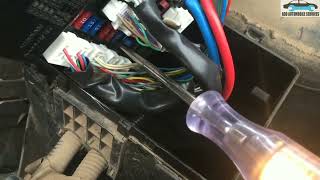
- Blown Heater Circuit Fuse (Common) — The O2 sensor heater circuit is protected by a 10-15 Amp fuse. A short circuit blows this fuse, cutting power to the heater. If P0037 (Bank 1, Sensor 2) is also present, a blown shared fuse is the guaranteed cause.
- Damaged Wiring or Connectors (Common) — The wiring harness is exposed to extreme heat and road debris. Wires melt on the exhaust, fray from vibration, or corrode at the connector pins, causing a short to ground or an open circuit.
- Poor Ground Connection (Less Common) — The heater circuit relies on a solid ground to complete its path. A corroded or broken ground strap for the engine or chassis introduces high resistance, causing a voltage drop that triggers the code.
- Weak or Failing Battery (Rare) — A battery dropping below 11V during operation fails to supply sufficient power to the heater circuit during startup, temporarily triggering the code.
- ECM/PCM Software Calibration Issue (Rare) — On specific vehicles (notably Jaguar and GM), outdated PCM software misinterprets a normal voltage reading as low. A technical service bulletin (TSB) dictates a software update to fix this.
- Faulty Powertrain Control Module (PCM) (Very Rare) — The internal driver circuit within the PCM that controls the oxygen sensor heater fails. This is the absolute last item to diagnose 🎬 Watch: A complete diagnostic walkthrough for fixing the P0057 code after ruling out all wiring and sensor faults.
Symptoms
- Check Engine Light is On — This is the most common and often the only symptom. The light remains illuminated as long as the PCM detects the electrical fault.
- Decreased Fuel Economy — With the heater malfunctioning, the engine remains in 'open-loop' mode longer, running a default rich fuel mixture that decreases fuel economy by 10-20%.
- Failed Emissions Test — A non-operational heater prevents the sensor from monitoring catalytic converter efficiency accurately, leading to high hydrocarbon and carbon monoxide levels and an automatic emissions failure.
- Slight Exhaust or Fuel Smell (also visible on scanner) — An inefficient, rich fuel mixture causes a noticeable smell of gasoline or a sulfur-like 'rotten egg' odor from the exhaust.
Diagnostic Flowchart
Tap your situation to follow the diagnostic path that matches what you're seeing on this code.
Common Fixes & Costs
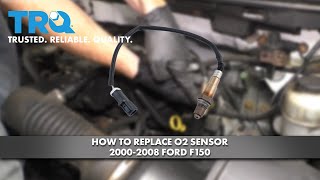
- Replace the Bank 2, Sensor 2 Oxygen Sensor
— Parts: $50-$250, Labor: $100-$250, ~1.2 hr book time
(DIY)
Ford F-150 (2015-2023): OEM BL3Z-9G444-A (Alt: Bosch 17475 ($50-$70), Denso 234-4514 ($60-$80))
Chevrolet Silverado (2016-2023): OEM ACDelco 12673832 / GM 12718669 (Alt: Denso 234-4668 ($45-$65), Bosch 15150 ($50-$70))
Toyota Tundra (2014-2021): OEM 89465-0C190 (Alt: Denso 234-4953 ($80-$110), NTK (NGK) 24594 ($90-$120)) - Replace a Blown Fuse — Parts: $1-$10, Labor: $0-$50, ~0.2 hr book time (DIY)
- Repair Damaged Wiring or Connector — Parts: $10-$50, Labor: $100-$300, ~2 hr book time (Intermediate)
- ECM/PCM Reprogramming — Parts: $0, Labor: $120-$250, ~1.2 hr book time (Professional)
- Replace the Powertrain Control Module (PCM) — Parts: $800-$1500, Labor: $150-$300, ~1.5 hr book time (Professional)
DIY vs Professional
- Replace a Blown Fuse — Beginner:
Tools: Fuse puller, owner's manual. - Replace the Oxygen Sensor — Beginner:
Tools: Jack and jack stands, socket wrench, O2 sensor socket, penetrating oil, torque wrench, anti-seize compound. - Repair Damaged Wiring or Connector — Beginner:
Tools: Multimeter, wire strippers, wire cutters, heat shrink tubing, soldering iron, wiring diagrams. - ECM/PCM Reprogramming or Replacement — Beginner:
Tools: Specialized dealer-level scan tools and software.
Used vs. New Parts: Buying Guide
When a used part is worth it: Buying a used oxygen sensor is never recommended, as they are wear items with finite lifespans. However, if ignoring this fault destroyed your catalytic converter, a used converter from a low-mileage donor vehicle is a cost-effective alternative to a new OEM unit.
Donor-vehicle mileage cap: roughly under 60000 miles for the part to have meaningful remaining life.
Donor quality checklist:
- Verify the donor vehicle was not scrapped for emissions failure or high mileage.
- Avoid parts from regions with heavy road salt usage to minimize rust.
- Match the part number exactly; visual similarities do not guarantee compatibility.
Decision logic:
- If The part is an oxygen sensor → Always buy new from a reputable OEM or aftermarket brand (e.g., Denso, Bosch, NTK). The savings on a used sensor are not worth the risk of repeat labor.
- If The part is a catalytic converter and the vehicle is >150K miles → A used converter from a donor with under 60k miles is a reasonable choice if on a tight budget.
- If The part is a PCM/ECM → A used, professionally tested and reprogrammed module is a viable option, provided it comes with a warranty.
Warranty tradeoff: Used parts typically have a 30-90 day warranty covering the part only. New aftermarket parts carry a 1-3 year warranty. New OEM parts carry a 1-year/12,000-mile warranty.
Worst-case if a used part fails: $250-$400 if a used O2 sensor fails after installation (cost of new sensor + repeat labor). $1500+ if a used catalytic converter is defective.
What Happens If You Wait — Timeline

- 0-2 weeks: The Check Engine Light is on with code P0057 stored. No other symptoms are noticeable. The vehicle passes through the initial cold-start 'open-loop' phase slightly slower. (MPG impact: 0-3%% · Added cost: $0)
- 2 weeks - 3 months: A measurable drop in fuel economy becomes apparent (1-3 MPG less). The vehicle automatically fails any OBD-II emissions test. A slightly rough idle occurs during cold starts. (MPG impact: 3-10%% · Added cost: $20-$50 in wasted fuel)
- 3-8 months: The engine consistently runs a richer fuel mixture. This elevates the catalytic converter's temperature, causing the internal ceramic substrate to crack and degrade from thermal stress. (MPG impact: 10-15%% · Added cost: $400-$1000 (Risk of permanent catalytic converter damage is high))
- 8+ months: Catastrophic failure of the catalytic converter occurs. The internal honeycomb melts, creating a severe exhaust blockage. Symptoms include significant power loss and a glowing red converter. (MPG impact: 15-25%+% · Added cost: $1500-$3000 (Catalytic converter replacement is mandatory))
Cost of Not Fixing It
- 0-2 Months: A 10-20% decrease in fuel economy, resulting in higher fuel costs. Guaranteed failure of any state emissions inspection. (Added cost: $20-$60 per month in wasted fuel.)
- 2-8 Months: The engine runs a default rich fuel mixture, which overheats the catalytic converter and degrades its internal structure. (Added cost: Potential for premature failure of spark plugs and upstream O2 sensor due to carbon fouling.)
- 8+ Months: Catastrophic failure of the catalytic converter. The internal substrate melts, causing a major exhaust restriction and requiring immediate replacement. (Added cost: $1,200 - $2,800 for catalytic converter replacement.)
Diagnosis Steps

- Scan for Codes and Review Freeze Frame Data
Use an OBD-II scanner to confirm P0057 is active. Look for related codes like P0037. Review the freeze frame data to understand the engine conditions when the fault was first detected.
Tools: OBD-II Scanner (Beginner) - Visually Inspect the Sensor, Wiring, and Fuse
Locate Bank 2, Sensor 2 (after the catalytic converter, on the side opposite cylinder #1). Inspect the sensor, connector, and harness for melting or corrosion. Check the fuse box for a blown 'A/F HEATER' or O2 sensor fuse.
Tools: Flashlight, Safety Glasses, Fuse Puller (Beginner) - Test the Sensor's Heater Circuit Resistance
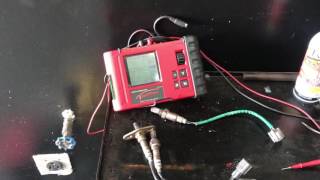
Disconnect the sensor. Set a multimeter to Ohms (Ω). Measure the resistance between the two heater circuit pins on the sensor (usually same-colored wires). A good sensor reads between 4 and 30 ohms. An infinite reading (OL) confirms a dead sensor.
Tools: Multimeter, Service Manual (Intermediate) - Test for Voltage and Ground at the Harness Connector
With the sensor disconnected and ignition ON (engine off), use a multimeter set to DC Volts. Check for battery voltage (11.5V-13.5V) on the power supply pin of the vehicle-side connector. Switch to Ohms and check resistance between the ground pin and the battery negative terminal. A good ground reads less than 1 ohm.
Tools: Multimeter (Intermediate) - Check for a Short to Ground in the Control Circuit
Disconnect the sensor and the PCM connector. Use a multimeter to check for continuity between the heater control wire and a known good chassis ground. There must be no continuity (OL). A reading indicates a short to ground in the harness.
Tools: Multimeter, Vehicle-Specific Wiring Diagram (Advanced) - Advanced: Check Live Data for Heater Command and Amperage
Using an advanced scan tool, monitor the live data PID for the B2S2 heater command. Command the heater ON. A healthy circuit draws between 0.5 and 2.0 Amps. A reading near zero indicates an open circuit; an abnormally high reading indicates a short.
Tools: Advanced Bi-Directional Scan Tool (Advanced) - Advanced: Perform a Heater Circuit Voltage Drop Test
Connect the sensor. Back-probe the ground wire with the multimeter's positive lead and connect the negative lead to the battery negative post. Start the engine. The voltage reading must be under 100mV (0.1V). Higher readings indicate excessive resistance in the ground wire.
Tools: Multimeter with back-probe pins (Advanced) - Professional: Use a Scan Tool's Bi-Directional Control
Command the B2S2 heater circuit ON and OFF. If the PCM commands the heater on but voltage doesn't drop or current doesn't flow (and all wiring is confirmed good), the PCM driver is faulty.
Tools: Advanced Bi-Directional Scan Tool (Professional) - Professional: Analyze the Heater Circuit Waveform
Back-probe the heater control wire with an oscilloscope. You must see a square wave pattern (pulse-width modulated signal) as the PCM cycles the heater. A flat line at 0V or 12V confirms a PCM driver failure or a complete circuit short/open.
Tools: Oscilloscope, Back-probe pins (Professional)
When This Code Triggers (Freeze-Frame Conditions)
- Engine Coolant Temp: 180-210°F (82-99°C) (Engine is fully warmed up and in closed-loop operation.)
- RPM: 1200-2500 RPM (Steady cruise or light acceleration, not at idle.)
- Engine Load: 25-60% (The engine is under a moderate, stable load.)
- Vehicle Speed: 30-60 mph (48-97 kph) (Sustained city or highway driving, allowing the monitor to run.)
Related Codes
- P0037 — This is the identical fault (Heater Control Circuit Low) for Bank 1, Sensor 2. Seeing P0057 and P0037 together guarantees a shared problem, like a blown fuse or faulty relay powering both heaters.
- P0058 — This is the opposite fault for the same sensor: 'Heater Control Circuit High.' It indicates too much voltage, usually from a short to a power source.
- P0157 — This code is for 'O2 Sensor Circuit Low Voltage.' P0057 is the HEATER circuit; P0157 is the SIGNAL circuit. A completely failed sensor triggers both.
- P0056 — This is a generic 'HO2S Heater Control Circuit' fault. P0057 is more specific, indicating a 'low' condition, whereas P0056 covers a wider range of performance issues within the circuit.
Climate & Environmental Factors
- Cold Climates / Road Salt: Regions using road salt see a higher incidence of P0057. Salt spray accelerates corrosion on the sensor's connector pins and wiring, leading to high resistance or open circuits.
- Extreme Heat Cycling: Constant cycling from ambient temperature to extreme exhaust heat (over 600°C) stresses the internal heater element and external wiring, eventually causing failure.
- High Humidity: Humid environments promote moisture intrusion into unsealed connectors, leading to pin corrosion and intermittent electrical faults in the heater circuit.
- Off-Road Driving: Off-road use significantly increases the risk of physical damage. Rocks and mud directly impact the sensor, rip wiring from clips, or pack the connector with debris.
How to Talk to a Mechanic About This Code
Say this: "I have an active P0057 code and I'd like to schedule a diagnostic. I want to confirm if the issue is the sensor's heater element, the wiring, or a fuse before replacing any parts. Please start by testing the heater circuit's power, ground, and resistance."
This signals you have done your research and prevents a shop from immediately replacing the O2 sensor without proper diagnosis. It directs them to perform specific electrical tests first.
Avoid saying:
- 'My check engine light is on, can you just fix it?'
- 'I think I need a new oxygen sensor.'
- 'Just do whatever you think is best.'
Questions to ask before authorizing the repair:
- Did you test the resistance of the old sensor's heater element? What was the reading?
- Did you confirm 12-volt power and a good ground are present at the harness connector?
- Did you check the O2 heater circuit fuse? Was it intact?
- What is the warranty on the new part and your labor?
Where to Take It: Dealer vs Independent vs Chain
- Dealer:
Best for: Vehicles still under the 8-year/80,000-mile federal emissions warranty., Vehicles with known TSBs or software updates for P0057., Complex electrical issues where a PCM failure is suspected.
Downsides: Highest labor rates, typically 1.5-2x more than an independent shop., May recommend replacing more parts than necessary as a precaution. (Typical cost: +50% vs. baseline) - Independent Shop:
Best overall fit. P0057 is a common code that any competent independent shop diagnoses and repairs effectively and affordably.
Best for: Most out-of-warranty vehicles., Straightforward diagnosis and replacement of the sensor or wiring., Cost-conscious owners who want a reliable repair.
Downsides: Quality varies; it is crucial to find a shop with ASE-certified technicians specializing in diagnostics. (Typical cost: +0% vs. baseline) - Chain Shop:
Use with caution. Acceptable for a simple sensor swap if you are confident in your own diagnosis, but avoid them for initial diagnostic work.
Best for: You have already diagnosed the problem yourself and are certain only a sensor replacement is needed.
Downsides: Technician skill varies dramatically; they often lack diagnostic expertise for electrical faults., High pressure to upsell services; P0057 might be incorrectly blamed on a catalytic converter. (Typical cost: -10% vs. baseline)
When to Walk Away From the Repair
If the estimated repair cost exceeds 40-50% of the car's private-party value, it is time to seriously consider selling or trading it in.
- Car worth $3500, fix is $350: Fix it. The repair cost is only 10% of the car's value and is a standard maintenance item.
- Car worth $4000, fix is $2200: Walk away. The code was ignored, leading to catalytic converter failure. The repair cost is 55% of the car's value and not economical.
- Car worth $15000, fix is $2200: Fix it. Even though the repair is expensive (catalytic converter), it is still well below the 40% threshold and protects the vehicle's value.
What Scan Tool You Need for This Code
Minimum: A code reader that displays live data for O2 sensor voltage and heater status. A simple code reader is not enough for diagnosis.
A basic $20 reader only shows the P0057 code. It cannot show if the PCM is commanding the heater on or what the circuit voltage is, which is essential to determine if the fault is the sensor, wiring, or fuse.
Budget: BlueDriver Pro Scan Tool (~$100) — Connects to your smartphone and displays live data, including O2 sensor voltages and fuel system status, allowing you to see if the circuit is active.
Mid-range: Foxwell NT510 Elite (~$180) — Offers bi-directional control, allowing you to manually command the O2 sensor heater circuit ON and OFF to test its function directly.
Professional: Autel MaxiCOM MK808 / MK808BT (~$450-550) — Provides full OEM-level diagnostics, including comprehensive bi-directional control, advanced live data graphing, and access to all vehicle modules.
How to Clear the Code After You Fix It
- Fix the underlying electrical fault (e.g., replace sensor, repair wire).
- Use a quality OBD-II scan tool to erase the stored trouble codes.
- Perform a complete OBD-II drive cycle to allow the readiness monitors to run.
Drive cycle (~20 minutes): Start the engine from cold and let it idle for 2-3 minutes. Drive in mixed city traffic (stop-and-go) for 5-10 minutes. Drive at a steady highway speed (between 45-60 mph) for at least 10 minutes. Let the vehicle cool down completely.
Readiness monitors affected: Oxygen Sensor Monitor, Catalyst Monitor
Watch out for:
- Disconnecting the battery clears the code but resets all readiness monitors to 'Not Ready', guaranteeing an emissions test failure.
- The code returns within one or two drive cycles if the root cause of the electrical fault was not properly repaired.
- Failing to complete the full drive cycle leaves readiness monitors incomplete, preventing an emissions test from being run.
Will This Fail Emissions / State Inspection?
Yes — this code typically fails an OBD-II emissions inspection.
- California: An active P0057 code is an automatic failure. All OBD-II readiness monitors must be 'Ready' for the test to proceed. After repair, a full drive cycle is required before re-testing.
- New York: The NYS DMV inspection includes an OBD-II scan. An illuminated Check Engine Light with code P0057 results in an immediate failure.
- Texas: In the 17 counties requiring emissions testing, a vehicle fails the OBD-II portion if P0057 is present. The O2 sensor and Catalyst readiness monitors must also be set to 'Ready'.
Most Commonly Affected Vehicles
- Ford F-150, Expedition (2015-2023) — Wiring harnesses routed near the exhaust are susceptible to melting or corrosion, especially in rust-belt regions.
- Chevrolet / GMC Silverado, Tahoe, Sierra (2016-2023) — Sensor failure is common. Some GM vehicles have a TSB related to ECM software glitches triggering this code, requiring a dealer update.
- Toyota Tundra, Sequoia, Camry V6 (2014-2022) — A blown 'A/F HEATER' fuse is a very common cause on these models, especially if other O2 heater codes are present.
- Dodge / Ram Ram 1500, Charger, Durango (2017-2023) — These models have a higher-than-average incidence of wiring harness issues and rare PCM driver failures for this code.
- Jeep Wrangler (JK/JL), Grand Cherokee (WK2) (2015-2023) — Off-road use increases physical damage risks. On 2005-2009 Grand Cherokee models, a faulty PCM is a notoriously common cause for recurring codes.
- Hyundai / Kia Sonata, Santa Fe, Azera, Optima (V6 models) (2006-2016) — Frequently reported on V6 engines due to sensor failure or wiring damage near the exhaust flex pipe.
- BMW 3-Series (E90), 5-Series (E60), X3, X5 (1998-2015) — Often caused by a single 30-amp fuse in the engine bay E-box powering multiple O2 sensor heaters. If P0037 is present, this fuse is the cause.
- Audi / Volkswagen A4, A6, Golf, Passat, Tiguan (2000-2018) — Sensor failure and wiring harness issues, particularly brittle connectors and chafed wires near heat shields, are common culprits.
- Nissan / Infiniti Pathfinder, QX4, 350Z (2003-2008) — A frequent code resolved by replacing the sensor with an OEM-spec part (like NTK). Aftermarket sensors cause the code to return.
Manufacturer-Specific Notes
- Toyota/Lexus: A P0057 code triggers the VSC (Vehicle Stability Control) and TRAC warning lights to grab the driver's attention. It does not indicate a stability system problem.
- Subaru: Subaru vehicles are notoriously sensitive to the brand of oxygen sensor. Using a generic aftermarket sensor instead of an OEM equivalent (Denso) causes the P0057 code to return immediately.
- Jaguar: Jaguar issued Technical Service Bulletins (e.g., JTB-00392-NAS-3) stating P0057 is caused by a software error. The official procedure requires replacing the sensor and updating the PCM software.
- Federal Emissions Warranty: The PCM and catalytic converters are covered by a federal warranty for 8 years or 80,000 miles. If diagnosis points to a failed PCM within this window, the repair is covered at no cost.
Real Owner Stories
2006 Jeep Wrangler TJ at 113K miles
Check Engine Light came on with code P0057. Owner took it to a shop for a valve cover gasket replacement and added the O2 sensor replacement to the work order.
What they tried:
- Shop replaced the Bank 2, Sensor 2 oxygen sensor.
Outcome: The P0057 code returned a week later. The shop suspected a PCM issue, as the owner had replaced the PCM with a remanufactured unit two years prior.
Lesson: If a new sensor doesn't fix the code, investigate other causes. On 2005-2006 Jeeps, a faulty PCM is a common culprit for recurring O2 sensor heater codes. Always use OEM or NTK/NGK sensors on Jeeps.
2005 Toyota Sequoia with P0057 and P0037
Check Engine Light came on with codes P0057 (Bank 2, Sensor 2 heater) and P0037 (Bank 1, Sensor 2 heater).
What they tried:
- Visual inspection revealed torn wires on the upstream O2 sensor on the driver's side.
Outcome: The owner correctly identified that since both downstream sensor heater codes were present, a shared power source was the issue. A blown fuse affected both sensors.
Lesson: When two related codes appear simultaneously, always suspect a shared component first, such as a fuse or relay. This saves you from replacing multiple sensors unnecessarily.
2017 Nissan Frontier, DIY repair
P0057 code appeared. The owner wanted to know whether to take it to the dealer or attempt a DIY repair.
What they tried:
- The owner replaced the sensor themselves.
Outcome: Replacing the Bank 2, Sensor 2 was a straightforward repair, saving a significant amount of money compared to a dealer visit.
Lesson: Replacing a downstream O2 sensor is a manageable DIY job with basic tools, making it a highly cost-effective first step after verifying the code.
Lexus LS430 with recurring P0057
Check engine light with code P0057 appeared. The owner replaced the O2 sensors, but the code returned after a few miles.
What they tried:
- Replaced O2 sensors.
Outcome: The code came back, indicating the problem was not the sensor itself. The next step was diagnosing the wiring and heater circuit for faults.
Lesson: Don't assume the sensor is the problem. A recurring code points towards a wiring issue, a bad connection, or a PCM fault. Always test the circuit before and after replacing parts.
How to Prevent This Code From Triggering
- Use high-quality, top-tier gasoline (Every fill-up) — Top-tier fuels contain detergents that prevent carbon buildup, reducing unburnt fuel and contaminants that foul the O2 sensor and damage the catalytic converter.
- Replace upstream O2 sensors proactively (Every 100,000 miles) — Aging upstream sensors slow down, leading to a richer fuel mixture. This raises the catalytic converter's operating temperature, shortening its life and the downstream sensor's life.
- Address engine misfires immediately (As needed) — An engine misfire dumps raw fuel into the exhaust. This fuel ignites in the catalytic converter, causing it to overheat and melt internally, destroying both the converter and the O2 sensor.
- Avoid short trips and extended idling (Daily habit) — The exhaust system must reach high temperatures to burn off contaminants. Short trips prevent this, leading to moisture and carbon buildup that shortens sensor life.
- Regularly inspect for oil and coolant leaks (Every oil change) — Engine oil or coolant leaking into the exhaust contaminates the oxygen sensor's delicate sensing element and clogs the catalytic converter.
Frequently Asked Questions
What is the most common mistake when fixing a P0057 code?
The most common mistake is immediately replacing the oxygen sensor without performing any diagnosis. While the sensor is often the culprit, the fault is sometimes a simple $5 blown fuse or a damaged wire. Always test the circuit before buying parts.
What is the difference between Bank 2 and Sensor 2?
'Bank 2' is the side of the engine that does NOT contain cylinder #1, typically the passenger side on US V-type engines. 'Sensor 2' refers to the 'downstream' sensor located in the exhaust pipe immediately after the catalytic converter.
Can I fix P0057 myself?
Yes, replacing the sensor or a blown fuse is a straightforward DIY repair requiring basic tools and an O2 sensor socket. Diagnosing wiring issues is more complex and requires a multimeter. If you lack electrical testing experience, take the vehicle to a diagnostic shop.
What's the difference between an upstream and downstream O2 sensor?
The upstream sensor (Sensor 1) sits before the catalytic converter and controls the engine's air-fuel ratio. The downstream sensor (Sensor 2) sits after the converter and monitors the converter's efficiency.
Can a bad ground cause a P0057 code?
Yes. The heater circuit requires a complete path to ground to function. A corroded or loose engine ground strap creates high resistance, leading to a voltage drop that the PCM interprets as a 'low circuit' fault.
Will a P0057 code clear itself?
No, P0057 indicates a hard electrical fault requiring physical repair. After fixing the underlying open or short circuit, you must manually clear the code with an OBD-II scanner. The code returns on the next drive cycle if the root cause remains.
I just replaced my battery and now I have a P0057 code. Are they related?
A weak battery causes transient low-voltage codes during cranking. Clear the code and see if it returns with the new battery installed. If the code persists, diagnose the heater circuit as a separate electrical fault.
What happens if I don't fix P0057?
In the short term, you waste money on gas and fail any emissions test. Over the long term, the engine runs consistently rich, which overheats and destroys the catalytic converter. This turns a $200 sensor repair into a $2,500 exhaust system overhaul.
Key Takeaways
- Code P0057 indicates an electrical failure in the Bank 2, Sensor 2 oxygen sensor heater circuit, with a burnt-out internal sensor resistor causing over 80% of cases.
- Driving with an active P0057 code reduces fuel economy by 10-20% and guarantees an automatic failure during state OBD-II emissions testing.
- Test before replacing parts by measuring the sensor's heater pins with a multimeter; a healthy sensor reads between 4 and 30 ohms, while an infinite reading confirms a dead sensor.
- Fix this issue within 2 months to prevent the engine's default rich fuel mixture from melting the catalytic converter, which escalates a $150 repair into a $2,500 replacement.
Helpful Videos

The information in this article is provided for general reference and educational purposes only. Vehicle specifications, procedures, and part compatibility can vary by production date, trim level, and region. Always consult your vehicle's factory service manual and verify part numbers before purchasing or performing repairs. Safety-critical components such as airbags, seat belts, and braking systems should be installed by a qualified professional.
- 🎬 Helpful Videos
- What Does P0057 Mean?
- Can I Drive With P0057?
- Common Causes
- Symptoms
- Diagnostic Flowchart
- Common Fixes & Costs
- DIY vs Professional
- Used vs. New Parts: Buying Guide
- What Happens If You Wait — Timeline
- Cost of Not Fixing It
- Diagnosis Steps
- When This Code Triggers (Freeze-Frame Conditions)
- Related Codes
- Climate & Environmental Factors
- How to Talk to a Mechanic About This Code
- Where to Take It: Dealer vs Independent vs Chain
- When to Walk Away From the Repair
- What Scan Tool You Need for This Code
- How to Clear the Code After You Fix It
- Will This Fail Emissions / State Inspection?
- Most Commonly Affected Vehicles
- Manufacturer-Specific Notes
- Real Owner Stories
- 2006 Jeep Wrangler TJ at 113K miles
- 2005 Toyota Sequoia with P0057 and P0037
- 2017 Nissan Frontier, DIY repair
- Lexus LS430 with recurring P0057
- How to Prevent This Code From Triggering
- Frequently Asked Questions
- What is the most common mistake when fixing a P0057 code?
- What is the difference between Bank 2 and Sensor 2?
- Can I fix P0057 myself?
- What's the difference between an upstream and downstream O2 sensor?
- Can a bad ground cause a P0057 code?
- Will a P0057 code clear itself?
- I just replaced my battery and now I have a P0057 code. Are they related?
- What happens if I don't fix P0057?
- Key Takeaways
- 🎟️ Get 5% Off