

P0024 on 2019-2024 Chevrolet Silverado: Exhaust Cam Timing Causes and Fixes
On a 2019-2024 Silverado with a V8 engine, P0024 is most often caused by low or dirty engine oil, or a faulty Bank 2 (passenger side) exhaust VVT solenoid. Always check your oil first. If the oil is clean and full, replacing the solenoid is the next logical step, with the part costing around $40-$80.
- Always check the engine oil level and condition first. An oil change with the correct 0W-20 synthetic oil can often fix this code.
- The most likely failed part is the Bank 2 (passenger side) exhaust VVT solenoid, OEM part number 12679100.
- A simple diagnostic test is to swap the exhaust and intake solenoids on Bank 2 to see if the trouble code follows the part (changes from P0024 to P0021).
- If you hear a persistent ticking noise along with this code, it could indicate a more serious DFM lifter issue, which is a known problem on these engines.
What's Unique About the 2019-2024 Chevrolet Silverado
The V8 engines in this generation of Silverado (5.3L L84 and 6.2L L87) feature Dynamic Fuel Management (DFM), a sophisticated cylinder deactivation system. The entire VVT and DFM system is highly dependent on clean oil of the correct viscosity (0W-20 synthetic) for proper operation. While P0024 is most often a simple solenoid or oil issue, these engines have a widely documented history of DFM lifter failures. These failures can cause ticking noises, misfires, and in some cases, may be preceded by or accompanied by VVT codes due to oil pressure irregularities. Therefore, while the fix for P0024 is usually simple, any accompanying ticking noise warrants a more thorough investigation into the valvetrain's health.
Symptoms You May Notice
- Check Engine Light is on
- Rough or unstable idle
- Engine stalling, especially at low speeds or when coming to a stop
- Reduced engine power and sluggish acceleration
- Decreased fuel economy
- Hard starting condition
- A ticking or rattling sound from the engine bay 🎬 Watch: Understanding P0024 causes and fixes
- Replacing the camshaft position sensor when the issue is the solenoid (actuator).
- Replacing the camshaft phaser before properly diagnosing the VVT solenoid and oil condition.
Most Likely Causes
- Low, Dirty, or Incorrect Viscosity Engine Oil 🔴 High Probability The VVT and DFM systems are hydraulic and extremely sensitive to oil pressure, volume, and cleanliness. Using oil other than the specified 0W-20 full synthetic or extending change intervals can cause sludge and blockages in the narrow oil passages of the VVT solenoids and cam phasers.
How to confirm: Check the engine oil level on the dipstick and inspect its color and condition. If the level is low or the oil is dark, thick, or past its service interval, this is the most likely cause.
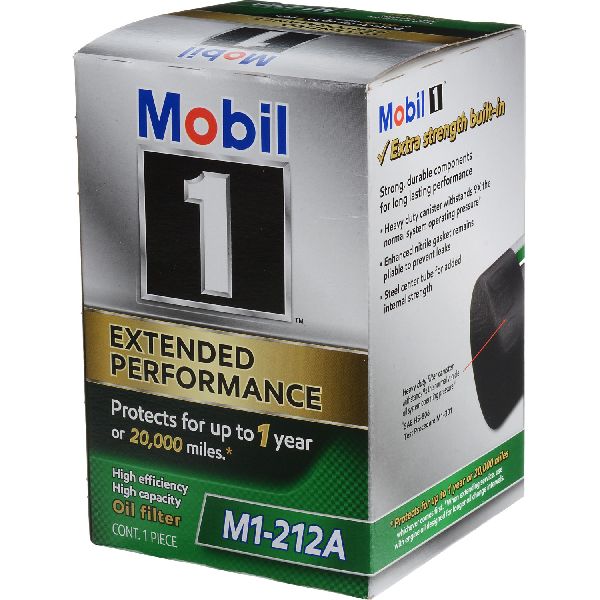
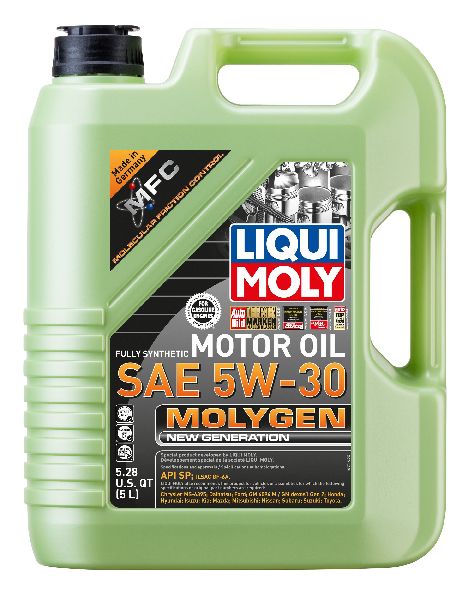
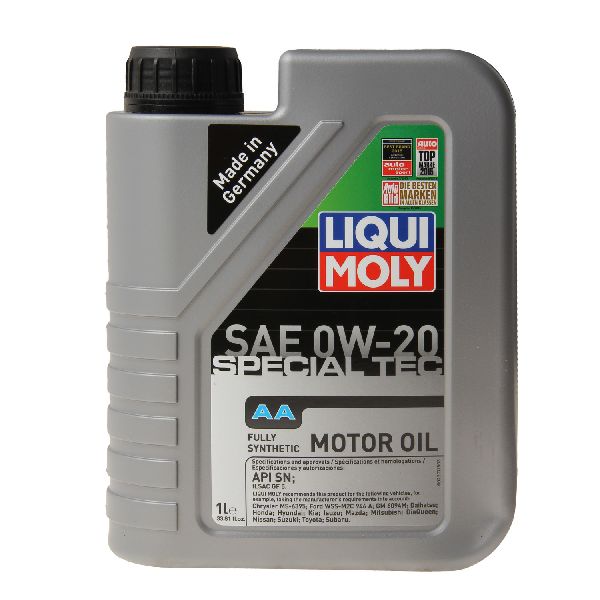
Typical fix: Perform an oil and filter change using a manufacturer-specified Dexos1-approved 0W-20 full synthetic oil and a quality oil filter.
Est. part cost: $50-$100 - Faulty Bank 2 Exhaust VVT Solenoid (Camshaft Position Actuator) 🔴 High Probability The solenoid can become clogged with debris from dirty oil or fail electrically over time, causing it to stick in one position and not properly regulate oil flow to the cam phaser.
How to confirm: Use a scan tool to monitor desired vs. actual cam angle. A common DIY method is to swap the Bank 2 exhaust solenoid with the Bank 2 intake solenoid. If the code changes to P0021 (Intake 'A' Cam - Bank 2), the solenoid is confirmed bad. The resistance of a good solenoid should be between 6.9 and 7.9 ohms.
Typical fix: Replace the Bank 2 (passenger side) exhaust VVT solenoid. It is located on the passenger side valve cover, typically the rearmost of the two solenoids. 🎬 Watch: How to diagnose and replace VVT solenoids
Est. part cost: $40-$80
Rare But Worth Checking
- Stretched Timing Chain: While not common on low-mileage trucks, a stretched timing chain can cause the mechanical timing to be off, leading to this code. This is usually accompanied by a rattling noise on startup.
- Failed Camshaft Phaser: The mechanical actuator (phaser) on the end of the camshaft can fail or get stuck due to debris or internal failure, but this is much less common than a solenoid failure.
- Faulty Camshaft Position Sensor: The sensor that reads the camshaft's position can fail, but it will typically set a different, sensor-specific circuit code (e.g., P0345-P0349).
- Wiring Harness Issue: Damage or corrosion on the wiring or connector for the VVT solenoid can cause this code. GM has noted issues with harness chafing on this platform. TSB 21-NA-149 specifically addresses engine wire harness chafing against various underhood components which can cause a wide variety of DTCs.
Diagnosis Steps
- Verify the engine oil level and condition. If low or dirty, perform an oil and filter change with GM-specified 0W-20 Dexos1 oil, clear the code, and drive to see if it returns.
- If the oil is good, use a capable OBD-II scanner to view live data for the desired vs. actual camshaft position for Bank 2 Exhaust.
- Locate the VVT solenoids on the passenger side valve cover. The exhaust solenoid is the rearward one, and the intake is the forward one.
- For a definitive test, swap the Bank 2 exhaust solenoid with the Bank 2 intake solenoid. They are identical parts.
- Clear the codes and drive the vehicle. If the code changes to P0021 ('A' Camshaft Position - Over-Advanced Bank 2), the original exhaust solenoid is faulty and must be replaced.
- If the P0024 code returns after the swap, the problem is not the solenoid. Inspect the solenoid's wiring connector for damage, corrosion, or chafing as noted in TSB 21-NA-149.
- If wiring is okay, the issue may be a clogged oil passage or a more serious mechanical problem like a faulty cam phaser or timing chain, which may require professional diagnosis.
Parts You'll Likely Need
- Engine Variable Valve Timing (VVT) Solenoid / Actuator (Bank 2, Exhaust)
(OEM #12679100 (supersedes 12655421, 12628348, 12578518, 12646784))— This solenoid controls oil flow to the cam phaser. It is the most common part to fail or clog, causing the P0024 code. The intake and exhaust solenoids are the same part.
Trusted brands: ACDelco, GM Genuine Parts
OEM price range: $40-$70
Aftermarket price range: $25-$60 - Engine Oil and Filter — Low or incorrect oil is a primary cause. A fresh oil change with the correct 0W-20 synthetic oil is a critical first step and the cheapest potential fix.
Trusted brands: ACDelco, Mobil 1, Pennzoil
OEM price range: $70-$100
Aftermarket price range: $50-$80
Related Codes That Often Appear With This One
- P0021 — This is the code for the intake camshaft on the same bank (Bank 2). If you swap the intake and exhaust solenoids for diagnosis, P0024 will turn into P0021 if the solenoid is bad.
- P0011, P0014, P0021 — Seeing all four camshaft position codes together can indicate a systemic problem like extremely low oil pressure or a software anomaly, particularly after an engine auto-stop/restart event. GM's internal document PIP5568E was created to investigate this exact scenario.
Technical Service Bulletins (TSBs) & Recalls
- PIP5568E: An internal GM investigation into the cause of multiple camshaft position DTCs (P0011, P0014, P0021, P0024) setting simultaneously, possibly due to a software anomaly after an auto-stop event.
- 21-NA-149: Details procedures to inspect for and protect the engine wiring harness from chafing on various engine and chassis components, which can cause shorts and unpredictable DTCs.
Platform-Specific Known Issues
- The VVT system is very sensitive to oil quality. Failure to use Dexos1 Gen 2 0W-20 oil can lead to sludge and premature failure of VVT components.
- A widespread and well-documented issue with DFM (Dynamic Fuel Management) lifter failure exists on these engines, which can cause ticking noises and, in severe cases, lead to other engine performance codes or catastrophic engine damage. While not a direct cause of P0024, it's important platform context.
- GM Preliminary Information bulletin PIP5568E notes that multiple VVT codes (P0011, P0014, P0021, P0024) can set simultaneously due to software anomalies, particularly after an engine auto-stop/restart event. The initial dealer instruction was often just to clear the codes.
- TSB 21-NA-149 describes a condition where the engine wiring harness can chafe on various points, including the cylinder head and brackets, causing shorts and a wide range of DTCs.
Mechanic-Grade Diagnostic Values
- VVT Solenoid (Camshaft Position Actuator) Coil Resistance — expected: 6.9 to 7.9 ohms. Failure: A reading outside this range, or a reading that is unstable/fluctuates when tapping on the solenoid, indicates an internal failure. An open circuit (infinite resistance) or a short (near zero resistance) also confirms failure.
- VVT Solenoid Low Reference Circuit to Ground Resistance — expected: Less than 5.0 ohms. Failure: A reading greater than 5.0 ohms indicates high resistance or an open in the ground circuit (G114) for the solenoid, which can prevent it from activating correctly.
Scan Tool Commands That Help
- GDS2 (GM Global Diagnostic System): Camshaft Position Actuator Solenoid Control/Test — With the engine idling, a technician can use this function to command the Bank 2 exhaust solenoid to a specific percentage (e.g., 0%, 50%, 100%) and observe the 'Desired vs. Actual' camshaft angle PIDs. If the actual angle does not change when the solenoid is commanded, it confirms a fault in the solenoid, its wiring, or the oil passages. This is a definitive test before replacing parts.
Wiring & Ground Locations
- G114 — Rear of the driver's side cylinder head.. This is a primary ground point for the engine harness. A loose or corroded G114 ground can cause a variety of engine control issues, including erratic behavior or failure of the VVT solenoids. GM issued engineering information (PIE0548) to investigate loose connections at G110 and G114 on 2019-2020 models.
- VVT Solenoid Connector (Bank 2) — On the passenger side valve cover. There are two solenoids; the exhaust solenoid is the rearward one (closer to the firewall).. This is the electrical connection point for the actuator. The two pins are for the control circuit and the low reference (ground) circuit. Check for 12V on the control wire with the key on and check the ground wire for continuity back to G114. The connector itself can become brittle and fail.
Real Owner Repair Stories
- GM-Trucks.com forum user (2021 Silverado 1500) — Cylinder 7 misfire, loss of power.
❌ Tried (didn't work) Initial dealer repair replaced a lifter that was in two pieces and bent pushrods on another cylinder. The VLOM screen was cleaned, not replaced.
✅ What actually fixed it The same lifter failed again in under 100 miles. The user noted that GM's standard operating procedure is to replace the VLOM (Valve Lifter Oil Manifold) and lifter trays, not just clean them. The repeat failure suggests either a parts quality issue or that the initial repair was incomplete, leading to a second failure.
OEM Part Supersession History
12578518→12628348, 12646784, 12655421, 12679100— Incremental design improvements for reliability and performance.
Heads up: All listed part numbers are interchangeable for this application. The latest number, 12679100, is the current recommended replacement.
Model Year Variations Within This Range
- 2022 (refresh) - 2024: The refreshed 2022+ models paired the 5.3L L84 V8 with a 10-speed automatic transmission as standard on more trims, whereas earlier models often used an 8-speed. While not directly affecting the P0024 code's cause, the transmission and engine control software are different. Also, for 2022, a version of the 5.3L V8 was offered *without* DFM on certain trims to navigate chip shortages, which would not have the same lifter-related concerns.
- 2019-2020: These early model years were the focus of GM Engineering Information bulletin PIE0548 regarding potentially loose G110 and G114 ground connections from the factory, which could contribute to electrical codes like P0024.
Diagnostic Flowchart
Other Known Issues on This Vehicle
Issues unrelated to this code that are worth knowing about as an owner of this generation:
- DFM/AFM Lifter Failure 🔴 High — Widespread across 5.3L & 6.2L V8s from 2014-2024. Can occur at low mileage (under 50k miles) but becomes more common with age. (Ref: Multiple TSBs exist, but no universal recall. Class action lawsuits have been filed.)
- 8-Speed (8L90) Transmission Shudder 🟠 Medium — Common in 2019 models with the 8-speed. Typically manifests as a vibration or shudder during light acceleration between 25-80 mph. (Ref: TSB 18-NA-355 and 19-NA-121 recommend a fluid flush with a specific Mobil 1 ATF. If that fails, torque converter replacement may be needed.)
- Cracked Cylinder Heads (6.2L L87) 🔴 High — Less common than lifter failure but a known issue where heads can crack, sometimes due to manufacturing defects or overheating events.
- Engine Wire Harness Chafing 🟡 Low — Affects various engines on the T1 platform. Can cause a wide array of intermittent electrical issues and DTCs. (Ref: TSB 21-NA-149)
- 10-Speed Transmission Harsh Shifting/Shudder 🟠 Medium — Affects 2021-2023 models. Can present as harsh shifts, shuddering, or surging. (Ref: TSB 24-NA-167 suggests a TCM software update. Other TSBs address potential twisted cooler lines.)
- Major Internal Engine Failures (6.2L L87) 🔴 High — Affects 2021-2024 models with the 6.2L L87. Failures are often related to connecting rods or crankshafts, leading to catastrophic damage. (Ref: GM Recall N252494000 / NHTSA 25V274000)
Used vs. New Parts: Buying Guide for This Vehicle
When a used part is the smart pick: For this repair, using a used VVT solenoid is generally not recommended. The cost of a new, quality aftermarket or OEM part is low enough ($40-$80) that the risk of installing a used part with unknown history and limited remaining lifespan is not worth the small savings. The labor to replace it a second time would negate any initial cost benefit.
Donor-vehicle mileage cap: roughly under 60000 miles for the part to have meaningful remaining life.
What to inspect on the donor part:
- If considering a used part, ensure it comes from a vehicle with a documented low mileage.
- Inspect the fine mesh screens on the solenoid for any tears, clogs, or debris. Cleanliness is a sign of a well-maintained engine.
- Test the resistance with a multimeter before purchase; it should fall within the 6.9-7.9 ohm specification.
OEM-only on this vehicle (don't cheap out):
- While not strictly 'OEM-only', using a GM Genuine Parts or ACDelco VVT solenoid is highly recommended due to the sensitivity of the VVT system. These parts have guaranteed fitment and are built to the original specifications.
Aftermarket brands forum-validated for this vehicle:
- Standard Motor Products (SMP) is a well-regarded aftermarket manufacturer, with some users reporting their parts are re-boxed OEM or of equivalent quality.
Brands owners have reported issues with on this vehicle:
- Unbranded 'white box' solenoids from online marketplaces should be avoided. Forum discussions frequently mention these parts failing quickly, sometimes within weeks, leading to the code returning.
Real Owner Stories
Aggregated from forums and TSBs cited above. Mileages and costs reflect what owners reported in those sources.
2019 Chevrolet Silverado 5.3L
Symptoms: The owner experienced repeat lifter failures, which is a common concern on this platform that can present with ticking noises alongside VVT-related issues.
What fixed it: While the lifter issue is separate, the VVT codes on this engine are frequently resolved by checking oil or replacing the corresponding VVT solenoid.
Source hint: reddit.com/r/Silverado
2019-2024 Chevrolet Silverado 5.3L/6.2L
Symptoms: Owners reported P0021 or P0024 codes appearing on the 5.3L and 6.2L engines.
What fixed it: Owners confirmed that swapping the Bank 2 exhaust solenoid with the Bank 2 intake solenoid is an effective diagnostic step; if the code moves, the solenoid is replaced.
Source hint: silveradosierra.com
Related OBD-II Codes
Frequently Asked Questions
My 2019 Silverado 5.3L has P0024 and P0021 codes appearing at the same time after the engine restarts at a stoplight. Is there a software fix?
Could the P0024 code on my 2022 Silverado be caused by a wiring issue instead of a bad sensor?
What specific oil should I use in my 2019-2024 Silverado to prevent VVT solenoid failures?
I hear a ticking noise along with my P0024 code; is this related to the VVT system?
Which solenoid do I need to replace for a P0024 code on my 6.2L Silverado?
Is there a recall for the internal engine failures mentioned for the 2021-2024 6.2L models?
Helpful Videos
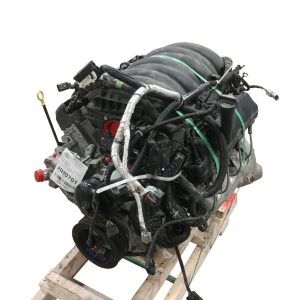
Used OEM Parts in Stock



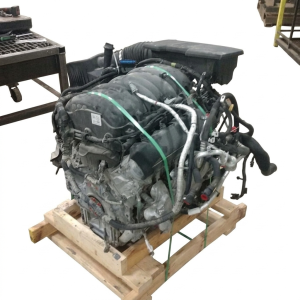

New Aftermarket Parts Available
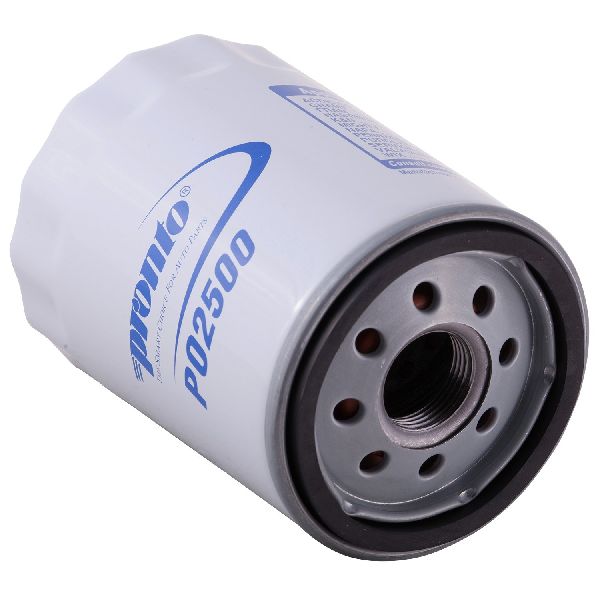

The information in this article is provided for general reference and educational purposes only. Vehicle specifications, procedures, and part compatibility can vary by production date, trim level, and region. Always consult your vehicle's factory service manual and verify part numbers before purchasing or performing repairs. Safety-critical components such as airbags, seat belts, and braking systems should be installed by a qualified professional.
- Chevrolet Silverado:
- 🎬 Helpful Videos
- 🛍️ Shop This Part
- What's Unique About the 2019-2024 Chevrolet Silverado
- Symptoms You May Notice
- Most Likely Causes
- Rare But Worth Checking
- Diagnosis Steps
- Parts You'll Likely Need
- Related Codes That Often Appear With This One
- Technical Service Bulletins (TSBs) & Recalls
- Platform-Specific Known Issues
- Mechanic-Grade Diagnostic Values
- Scan Tool Commands That Help
- Wiring & Ground Locations
- Real Owner Repair Stories
- OEM Part Supersession History
- Model Year Variations Within This Range
- Diagnostic Flowchart
- Other Known Issues on This Vehicle
- Used vs. New Parts: Buying Guide for This Vehicle
- Real Owner Stories
- 2019 Chevrolet Silverado 5.3L
- 2019-2024 Chevrolet Silverado 5.3L/6.2L
- Related OBD-II Codes
- Frequently Asked Questions
- 🎟️ Get 5% Off