

P0021 on 2006-2011 Mercedes-Benz C-Class: Camshaft Timing Causes and Fixes
On the M272 V6 engine, P0021 is most often caused by a faulty camshaft adjuster magnet (solenoid), a ~$50 part that is easy to replace. However, on models with an engine serial number before 2729..30 468993 (roughly pre-2009), this code can be an early warning of a catastrophic balance shaft failure, a major engine-out repair costing thousands.
- P0021 on this car is most likely a bad camshaft adjuster magnet (solenoid) on the driver's side cylinder head.
- ALWAYS diagnose by swapping the suspect magnet with a known good one before buying parts. This simple test can save you time and money.
- If your C-Class is a 2006-2008 model, you MUST investigate the possibility of balance shaft failure. Check the engine serial number; if it's below 2729..30 468993, the risk is high.
- Never ignore this code. While the fix might be simple, it can also be a warning of impending, catastrophic engine failure.
What's Unique About the 2006-2011 Mercedes-Benz C-Class
For the M272 engine, this code presents a critical diagnostic challenge. While the most frequent cause is a simple, inexpensive camshaft adjuster magnet (solenoid), a significant number of early M272 engines (manufactured before engine serial number 2729..30 468993) were built with a balance shaft sprocket made of a soft metal that wears out prematurely. This wear causes incorrect timing that can trigger P0021 and related codes, and if left unaddressed, can lead to catastrophic engine failure. A class-action lawsuit was filed in the U.S. over this issue. Therefore, diagnosing P0021 on this specific engine requires ruling out this severe mechanical fault before assuming it's a simple sensor or solenoid issue.
Generation note: This range covers the end of the W203 generation (2006-2007) and the beginning of the W204 generation (2008-2011). Both used the M272 engine. The most significant difference is that models with an engine serial number below 2729..30 468993 are at high risk for the premature balance shaft failure. This primarily affects 2006-2008 models, though some failures outside the official range have been reported by owners.
Symptoms You May Notice
- Check Engine Light is on
- Rough or unstable idle
- Engine hesitation or stalling, especially during acceleration or when coming to a stop
- Reduced engine power
- Decreased fuel economy
- Rattling noise from the front of the engine, especially on a cold start
- Replacing the camshaft position sensor before testing the camshaft adjuster magnet. The magnet is a more frequent failure point and should be tested first via the swapping method.
- Assuming a simple electrical fault on an early (2006-2008) M272 engine without considering the high probability of a mechanical balance shaft issue, leading to wasted money on parts that don't solve the root problem.
Most Likely Causes
- Faulty Camshaft Adjuster Magnet (Solenoid) 🔴 High Probability These solenoids are a known failure point on many Mercedes-Benz engines from this era. They can get stuck or fail electronically, disrupting the oil flow that controls the camshaft phasers. They are considered a maintenance item by some owners, needing replacement every few years.
How to confirm: Swap the Bank 2 (driver's side) intake magnet with the exhaust magnet on the same bank, or with the intake magnet from Bank 1 (passenger's side). Clear the codes and run the engine. If the code changes to P0024 (Bank 2 exhaust) or P0011 (Bank 1 intake), the magnet is confirmed to be faulty. Also inspect the electrical connector for oil, as they are known to leak.
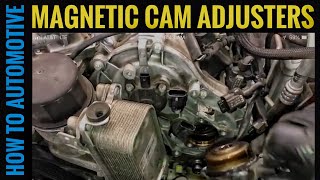
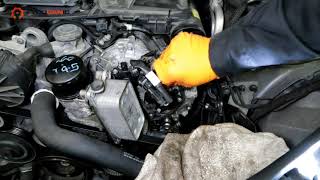
Typical fix: Replace the faulty magnet. It is often recommended to replace all four magnets at the same time as a preventative measure. The replacement is a DIY-friendly job that can be done with basic tools, including an E8 Torx socket. 🎬 Watch: Step-by-step guide to replacing the magnetic cam adjusters.
Est. part cost: $30-$60 for one aftermarket (Pierburg/Bosch), $120-$240 for a set of four. - Worn Balance Shaft Sprocket 🟡 Medium Probability M272 engines manufactured before engine serial number 2729..30 468993 (roughly pre-2009 models) used a softer metal for the balance shaft sprocket, which wears down prematurely from the timing chain.
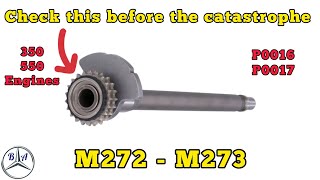
How to confirm: First, check the engine serial number against the known affected range. The presence of codes P0016, P0017, P0018, or P0019 alongside P0021 is a very strong indicator of this failure. A definitive diagnosis requires removing the camshaft position sensors and checking the timing marks through the sensor holes at a specific crankshaft position 🎬 See how to check the balance shaft sprocket before failure. (305 degrees), or a more labor-intensive physical inspection.
Typical fix: This is a major, engine-out repair that involves replacing the balance shaft with an updated part, along with the timing chain, tensioner, and guides. The cost is substantial, with independent shops quoting between $3,000 and $7,500.
Est. part cost: $550-$800 for a full repair kit (balance shaft, chain, guides, tensioner). - Low or Incorrect Engine Oil 🟡 Medium Probability The variable valve timing system is operated by oil pressure. Using oil of the wrong viscosity, or having low or dirty/sludged oil, can clog the small passages in the camshaft adjusters and solenoids, preventing them from functioning correctly. Mercedes-Benz specifies using MB 229.5 spec oil and a fleece filter.
How to confirm: Check the oil level on the dipstick and inspect its condition. Review service records to ensure the correct Mercedes-Benz approved oil (e.g., MB 229.5 spec) has been used.
Typical fix: Perform an oil and filter change using the correct specification oil and a high-quality fleece filter.
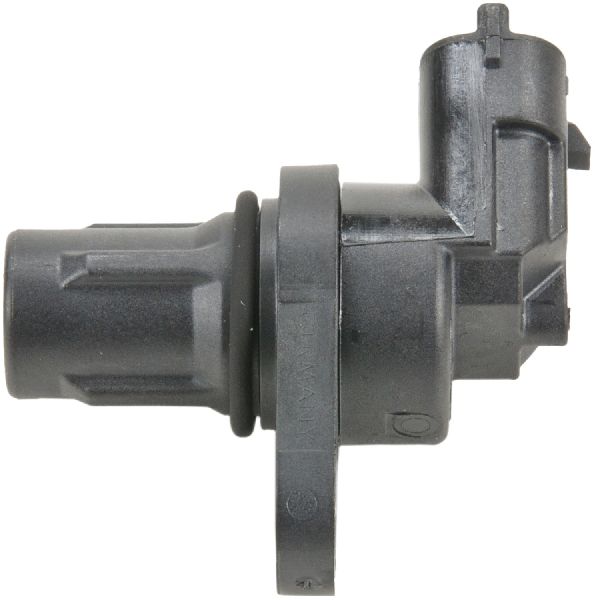
Est. part cost: $80-$150 - Faulty Camshaft Position Sensor ⚪ Low Probability While less common than a magnet failure, the sensor that reads the camshaft's position can fail and send incorrect data to the ECM. These sensors can also leak oil into the wiring harness, potentially damaging the ECU if not addressed.
How to confirm: After confirming the magnet is good (by swapping it), the sensor is the next likely electrical component. It can be tested with a multimeter or by swapping it with the sensor from another camshaft position to see if the fault code follows. Inspect the connector for oil.
Typical fix: Replace the Bank 2 intake camshaft position sensor. If oil is found in the connector, it's wise to also install a short pigtail harness 🎬 Watch: How to replace the camshaft position sensor. to prevent oil from wicking further.
Est. part cost: $50-$100
Rare But Worth Checking
- Stretched Timing Chain: While the balance shaft sprocket is the more common cause of mechanical timing deviation on the M272, a stretched timing chain can also occur, especially on higher mileage engines, causing similar codes. It is often replaced as part of the balance shaft job.
- Stuck Camshaft Phaser (Adjuster): The mechanical adjuster itself, located at the end of the camshaft, can seize in the advanced position due to sludge or internal failure. This is less common than a solenoid failure and much more expensive to fix.
Diagnosis Steps
- Check the engine oil level and condition. Ensure it is full and not sludgy. If in doubt, perform an oil change with the correct Mercedes-spec oil (e.g., MB 229.5) and a fleece filter.
- Scan for all stored fault codes. Note if P0016, P0017, P0018, or P0019 are present, as this points heavily toward a mechanical timing issue like the balance shaft.
- Locate the camshaft adjuster magnets on the front of the cylinder heads. Bank 2 is the driver's side. There are two magnets per bank (intake and exhaust). Inspect the electrical connectors for any signs of oil leakage.
- Swap the Bank 2 intake magnet with the Bank 2 exhaust magnet. Clear the codes and drive the vehicle. If the code changes to P0024 ('B' Camshaft Position - Bank 2), the magnet is bad.
- If the P0021 code returns, the magnet is likely not the issue. The next step is to test or swap the camshaft position sensor for Bank 2 intake. Again, check the connector for oil.
- If both the magnet and sensor are confirmed to be good, the problem is likely mechanical. Check the engine serial number. An engine number below 2729..30 468993 indicates high risk for balance shaft failure.
- At this stage, a professional diagnosis is needed to confirm a mechanical failure like a worn balance shaft or stretched timing chain, which requires specialized tools and significant labor.
Parts You'll Likely Need
- Camshaft Adjuster Magnet (Solenoid)
(OEM #A2720510177)— This is the most common cause of P0021 on the M272 engine. It's an electro-hydraulic valve that fails over time, causing incorrect camshaft timing.
Trusted brands: Bosch, Pierburg, Genuine Mercedes-Benz
OEM price range: $60-$90
Aftermarket price range: $30-$60 - Balance Shaft Repair Kit — For early M272 engines, this is the definitive fix for P0021 when it's caused by the worn sprocket. The kit includes the updated balance shaft and often the timing chain, guides, and tensioner.
Trusted brands: Febi Bilstein, IWIS, Genuine Mercedes-Benz
OEM price range: $800+
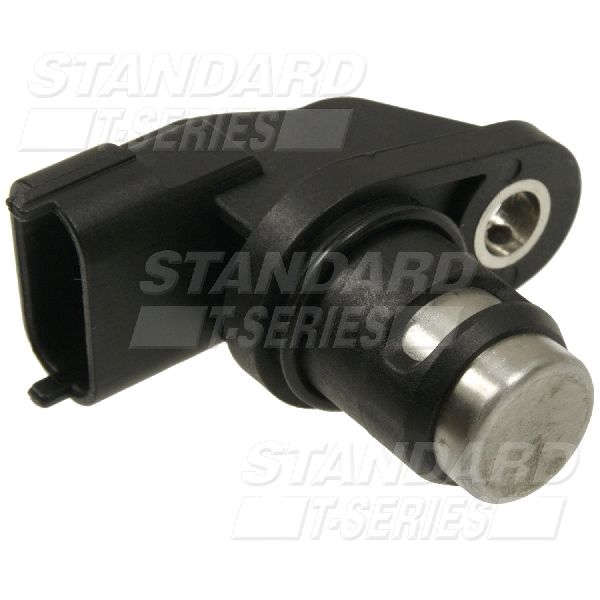
Aftermarket price range: $400-$600 - Camshaft Position Sensor
(OEM #A0041539628)— A less common but possible cause. Replaced after the magnet is ruled out. Can leak oil into the harness.
Trusted brands: Bosch, Continental/VDO, Genuine Mercedes-Benz
OEM price range: $50-$100
Aftermarket price range: $30-$70
Related Codes That Often Appear With This One
- P0016 — Crankshaft/Camshaft Position Correlation (Bank 1). Its presence strongly suggests a base timing issue, like a worn balance shaft sprocket or stretched timing chain, rather than an isolated magnet/sensor failure.
- P0017 — Crankshaft/Camshaft Position Correlation (Bank 1). Similar to P0016, this points towards a serious mechanical timing problem affecting the entire engine.
- P1200 / P1208 — These are Mercedes-specific codes that also point to camshaft position deviations and are often seen with balance shaft issues.
Technical Service Bulletins (TSBs) & Recalls
- While no specific TSB number is consistently cited, multiple sources refer to internal Mercedes-Benz technical bulletins that identify the affected engine number range for the balance shaft issue.
Platform-Specific Known Issues
- Premature Balance Shaft Sprocket Wear: M272 engines in 2006-2008 models (before engine # 2729..30 468993) are at high risk for this failure, which is an expensive, engine-out repair. This is the single most critical vehicle-specific issue related to this code.
Mechanic-Grade Diagnostic Values
- Camshaft Adjuster Magnet (Solenoid) Resistance — expected: 10-18 Ohms. Failure: A reading outside of this range, or an open circuit (infinite resistance), indicates a failed solenoid coil.
- Live Data Camshaft Angle Deviation — expected: Less than 2-3 degrees difference between commanded and actual position at idle and 2000 RPM.. Failure: A deviation greater than 2-3 degrees confirms the timing is over-advanced and the fault is active. A significant deviation that does not change when commanding the solenoid suggests a mechanical jam or oil pressure issue.
- Camshaft Position Sensor Power Supply — expected: Approximately 12V with key on, engine off.. Failure: Lack of voltage indicates a wiring or ECU power supply issue, not a faulty sensor.
Hidden / Shadow Codes Worth Checking
- 1200: Constant adjustment of intake camshaft of right cylinder bank in direction 'Advanced' (P0018) or 'Retarded' (P0019). While often associated with Bank 1, it's a general indicator of a significant, persistent timing deviation that the ECU is struggling to correct, frequently seen with balance shaft issues. (see via Mercedes-Benz specific scanners like XENTRY/DAS or high-end professional scan tools.)
- 1208: Constant adjustment of intake camshaft of left cylinder bank in direction 'Advanced' (P0021) or 'Retarded' (P0022). This is a Mercedes-specific event code that directly corresponds to the condition causing the generic P0021 code, indicating a persistent, non-intermittent fault. (see via Mercedes-Benz specific scanners like XENTRY/DAS or high-end professional scan tools.)
- 0276: Continuous camshaft adjustment (LEFT): Incorrect position of the intake camshaft (P0022). This is another variant of a manufacturer-specific code pointing to a timing issue on the left (Bank 2) cylinder bank. (see via Mercedes-Benz specific scanners like XENTRY/DAS.)
Scan Tool Commands That Help
- XENTRY / DAS: Camshaft Adjuster Actuation Test — This is a critical bidirectional test to confirm if the camshaft adjuster solenoid and the mechanical phaser are responding to commands from the ECU. The technician can command the solenoid to activate and should observe a corresponding change in the actual camshaft position on the live data screen. If the solenoid is commanded but the timing angle doesn't change, it points to a stuck phaser, oil pressure problem, or a failed solenoid.
- XENTRY / DAS: Adaptation of camshaft position — After replacing components like camshaft adjusters or sensors, this function can be used to check the adaptation values. If the adaptation 'times out' or shows a value for one camshaft that is significantly different from the others, it can indicate an underlying mechanical timing problem (like a worn sprocket) even if the new parts are functioning.
Wiring & Ground Locations
- W10 — Right front battery ground point, located in the engine bay near the battery or jump-start terminal.. This is a primary ground point for engine electronics. Corrosion or a loose connection here can cause erratic behavior and intermittent faults in various sensors and actuators, including the camshaft position sensors and adjuster magnets.
- Engine Block to Chassis Ground — Typically a braided cable running from the engine block or bell housing area to the vehicle's chassis/frame.. A poor engine ground can introduce electrical noise and voltage drops, potentially affecting the sensitive signals from the camshaft and crankshaft position sensors, leading to incorrect readings and timing-related fault codes.
- Camshaft Adjuster Magnet Connector — Front of the cylinder head, connecting to the round, silver-colored solenoid (Y49/5 for Bank 2 Intake).. This connector is the direct interface for testing the solenoid. Pin 1 is typically the control signal from the ECU (N3/10) and Pin 2 is power. It is also a common point for oil intrusion, which can travel down the harness and damage the ECU.
Real Owner Repair Stories
- MBWorld.org user 'go000ob' (2007 C230 Sport (M272)) — Check Engine Light with codes P0012 and P0015 initially. After two years, the light returned with P0012 and P0021.
❌ Tried (didn't work) The user had replaced all four camshaft magnets two years prior to fix the initial codes.
✅ What actually fixed it Replacing all four camshaft adjuster magnets again. The user concluded that the magnets are a wear item that may need to be replaced every few years, even if they are genuine Mercedes-Benz parts.
OEM Part Supersession History
A2720510077→A2720510177— The part was updated for improved reliability and to address failures. The new part is considered a more robust design.
Heads up: The new part number (A2720510177) is a direct replacement for the old one. It is recommended to use the latest revision.
Model Year Variations Within This Range
- 2006-2008 (approx.): Engines with serial numbers below 2729..30 468993 were fitted with a balance shaft sprocket made of a softer metal, making them highly susceptible to premature wear that causes P0021 and related timing codes. Later models used a hardened sprocket, largely eliminating this specific failure mode.
- 2012+: Starting in 2012 for the C-Class, the M272 engine was replaced by the M276 V6. While the M276 is a related design, it features direct injection and a different timing system architecture. Therefore, diagnostic procedures and common failures for a 2012+ C350 are different from the 2006-2011 models.
Diagnostic Flowchart
Other Known Issues on This Vehicle
Issues unrelated to this code that are worth knowing about as an owner of this generation:
- Intake Manifold Swirl Flap Lever Failure 🟠 Medium — Very common on M272/M273 engines, typically after 60,000-80,000 miles. The plastic lever breaks due to heat and carbon buildup.
- 722.9 Transmission Conductor Plate Failure 🔴 High — Common failure in vehicles equipped with the 7G-Tronic transmission, often occurring around 80,000-120,000 miles. Causes harsh shifting, limp mode, and speed sensor fault codes.
- Oil Cooler Gasket Leak 🟠 Medium — The gasket between the oil filter housing/cooler and the engine block becomes brittle and leaks oil, often mistaken for a valve cover or oil pan leak. Typically occurs after 60,000 miles.
- Electronic Steering Lock (ESL) Failure 🔴 High — A very common issue on W204 models. The ESL motor fails, preventing the key from being turned and leaving the vehicle stranded. Can happen at any mileage, but more common around 100k miles.
- Rear Subframe Rust/Failure 🔴 High — Significant rust can develop on the rear subframe, potentially leading to structural failure. Mercedes-Benz has extended the warranty on this part for 20 years due to the prevalence of the issue. (Ref: Yes, warranty extension (not a formal recall))
Used vs. New Parts: Buying Guide for This Vehicle
When a used part is the smart pick: For this specific fault, using used parts is generally not recommended. The primary failure items (magnets, sensors, timing components) are all wear-and-tear items. A used part may have limited remaining life or could be faulty from the start. The only exception might be for 'hard parts' like a mounting bracket or a connector pigtail if the original is physically damaged.
Donor-vehicle mileage cap: roughly under 80000 miles for the part to have meaningful remaining life.
What to inspect on the donor part:
- For a magnet or sensor, check the electrical connector pins for any signs of corrosion or oil contamination.
- Ask for the VIN of the donor car to verify it's from a model year outside the balance shaft failure range if possible.
- Physically inspect O-rings for cracking or flattening, though they should always be replaced anyway.
OEM-only on this vehicle (don't cheap out):
- Balance Shaft Repair Kit: This is a critical, high-labor repair. Using non-OEM parts risks premature failure and repeating a multi-thousand dollar job. Use Genuine Mercedes-Benz or a highly reputable OEM supplier like IWIS for the chain.
- Camshaft Position Sensor: Aftermarket sensors are notoriously hit-or-miss. Using a cheap sensor can lead to incorrect readings, causing you to continue chasing a problem that isn't there. Stick with Genuine Mercedes-Benz, Bosch, or Continental/VDO.
Aftermarket brands forum-validated for this vehicle:
- Pierburg: An OEM supplier to Mercedes-Benz for the camshaft adjuster magnets. Often the exact same part as Genuine but in a different box.
- Bosch: Also an OEM supplier for many electrical components, including magnets and sensors. A reliable alternative to Genuine parts.
Brands owners have reported issues with on this vehicle:
- Unbranded / 'White-box' eBay/Amazon parts: While tempting due to low cost, these parts have a very high failure rate. For camshaft magnets and sensors, forum users frequently report these parts being dead-on-arrival or failing within a few months, leading to wasted time and money.
Real Owner Stories
Aggregated from forums and TSBs cited above. Mileages and costs reflect what owners reported in those sources.
2006-2008 Mercedes-Benz M272 V6
Symptoms: The owner experienced a mechanical timing failure due to the balance shaft sprocket wearing down prematurely from the timing chain.
What fixed it: A major engine-out repair involving the replacement of the balance shaft with an updated part, along with the timing chain, tensioner, and guides.
Cost: $3,000-$7,500
Source hint: https://mbworld.org/forums/e-class-w211/457959-dreaded-m272-balance-shaft.html
Mercedes-Benz C-Class (W204) M272
Symptoms: Check engine light with VVT related codes; owner sought a simple way to address the common solenoid failure.
What fixed it: Replacement of the camshaft adjuster magnets (solenoids) using an E8 Torx socket.
Cost: $120-$240
Source hint: https://mbworld.org/forums/c-class-w204/732568-cam-magnets-replacement-made-easy.html
Mercedes-Benz M272 V6 — ~70000 miles
Symptoms: The plastic lever on the intake manifold broke due to heat and carbon buildup.
What fixed it: Repair or replacement of the intake manifold swirl flap lever.
Source hint: Known Issues: Intake Manifold Swirl Flap Lever Failure
Related OBD-II Codes
Frequently Asked Questions
How can I tell if my 2006-2011 C-Class is at risk for the expensive balance shaft failure?
Is there a simple way to test if the camshaft adjuster magnet is the cause of my P0021 code?
What specific oil should I be using in my M272 engine to prevent VVT issues?
I see oil in the electrical connector of my camshaft sensor; what should I do?
Can I replace the camshaft magnets myself on my C-Class?
Are there any technical bulletins regarding the balance shaft issue for the M272 engine?
Helpful Videos


We Have This Part in Stock


The information in this article is provided for general reference and educational purposes only. Vehicle specifications, procedures, and part compatibility can vary by production date, trim level, and region. Always consult your vehicle's factory service manual and verify part numbers before purchasing or performing repairs. Safety-critical components such as airbags, seat belts, and braking systems should be installed by a qualified professional.
- Mercedes-Benz C-Class:
- 🎬 Helpful Videos
- 🛍️ Shop This Part
- What's Unique About the 2006-2011 Mercedes-Benz C-Class
- Symptoms You May Notice
- Most Likely Causes
- Rare But Worth Checking
- Diagnosis Steps
- Parts You'll Likely Need
- Related Codes That Often Appear With This One
- Technical Service Bulletins (TSBs) & Recalls
- Platform-Specific Known Issues
- Mechanic-Grade Diagnostic Values
- Hidden / Shadow Codes Worth Checking
- Scan Tool Commands That Help
- Wiring & Ground Locations
- Real Owner Repair Stories
- OEM Part Supersession History
- Model Year Variations Within This Range
- Diagnostic Flowchart
- Other Known Issues on This Vehicle
- Used vs. New Parts: Buying Guide for This Vehicle
- Real Owner Stories
- 2006-2008 Mercedes-Benz M272 V6
- Mercedes-Benz C-Class (W204) M272
- Mercedes-Benz M272 V6 — ~70000 miles
- Related OBD-II Codes
- Frequently Asked Questions
- 🎟️ Get 5% Off