

OBD-II Code P0019: Crankshaft - Camshaft Timing Mismatch (Bank 2, Sensor B)
The Ultimate 2026 Guide to Diagnosing and Fixing P0019
- Code P0019 means the Bank 2 exhaust camshaft is out of sync with the crankshaft, a severe timing issue that risks catastrophic engine failure if ignored.
- Check your engine oil dipstick first, as low or sludgy oil causes over 50% of variable valve timing (VVT) correlation codes.
- On GM 3.6L V6 engines, P0019 almost guarantees a stretched timing chain, requiring a $2,000 to $4,000 professional replacement.
- For 2013 and newer Subarus, do not replace parts until a dealer checks for TSB #09-120-24R, as a $150 software update often fixes the code permanently.
What Does P0019 Mean?

Your car's Engine Control Module (ECM) detected that the exhaust camshaft on 'Bank 2' is not spinning in the correct position relative to the crankshaft. The crankshaft and camshafts must be perfectly in sync for the engine to run correctly. This code means the exhaust camshaft on one side of the engine is out of step, disrupting the precise opening and closing of exhaust valves.
Technical definition: The SAE/OBD-II definition is "Crankshaft Position - Camshaft Position Correlation (Bank 2 Sensor 'B')". The Powertrain Control Module (PCM) detected that signals from the crankshaft position sensor and the Bank 2 exhaust camshaft position sensor do not correlate within a specified number of degrees. For example, GM vehicles trigger this when the camshaft is >9° advanced or >13° retarded for more than 25 engine cycles. Audi vehicles trigger it at just a 5-degree deviation.
Can I Drive With P0019?

no_recommended. Driving is not recommended. Ignoring P0019 leads to stalling in traffic, poor performance, and reduced fuel economy. If the cause is a stretched timing chain, continued operation risks the chain breaking or jumping a tooth. In an interference engine, this causes pistons to collide with valves, resulting in catastrophic engine failure with repair costs exceeding $4,000. Driving with a misfire also damages the catalytic converter, adding an $800-$2,500 repair bill. Stop driving immediately if the check engine light flashes or you hear loud engine rattling.
Common Causes

- Low, Dirty, or Incorrect Viscosity Engine Oil (Very Common) — The variable valve timing (VVT) system uses oil pressure to change camshaft timing. Low, sludgy, or incorrect oil prevents VVT solenoids and cam phasers from operating, causing a timing correlation error. This is the #1 cause of VVT faults.
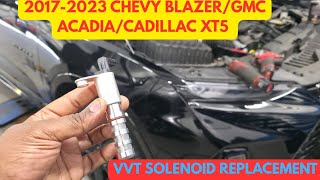
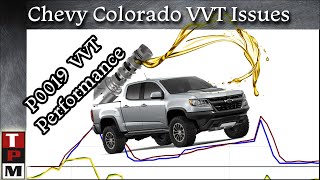
- Failed VVT Solenoid / Oil Control Valve (Very Common) — This electronic valve directs oil to the cam phaser. It clogs with sludge or fails electrically, getting stuck and preventing timing adjustments on the Bank 2 exhaust camshaft. 🎬 Watch: Diagnostic walkthrough for P0019 on a 3.6L engine.
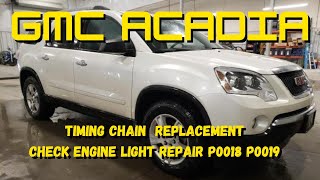
- Stretched Timing Chain or Worn Guides (Common) — Timing chains stretch and plastic guides wear out over time. This creates slack, directly causing the camshaft and crankshaft timing to fall out of sync. This is the primary cause in GM 3.6L V6 engines. 🎬 Watch: Step-by-step timing chain replacement for GM 3.6L V6.
- Outdated ECM Software (Less Common) — The ECM contains a software glitch, causing it to misinterpret sensor data and falsely trigger P0019. This is highly common on 2013+ Subarus and requires a dealer reflash.
- Faulty Camshaft Position Sensor (Less Common) — The sensor reading the camshaft's position fails, sending incorrect data to the ECM. Mechanics often misdiagnose this as the primary cause when the real issue is mechanical.
- Damaged Camshaft Phaser (Rare) — The cam phaser gear rotates to change timing. Internal components wear out or the locking pin fails, causing it to stick or rattle.
- Damaged Reluctor Ring (Rare) — The toothed wheel read by the sensors breaks or slips on the shaft, providing incorrect position data even if mechanical timing is perfect.
- Incorrect Timing Installation (Rare) — If recently replaced, the timing chain or belt was installed misaligned by one or more teeth.
Symptoms

- Check Engine Light is On — The ECM stores the P0019 code and illuminates the malfunction indicator lamp.
- Engine Rattling Noise — A rattling or ticking noise on cold starts or at idle (800-1200 RPM) indicates a loose timing chain or failing cam phasers.
- Rough Idle or Stalling — The engine shakes, runs unevenly, or stalls at stops because incorrect valve timing disrupts airflow. Idle fluctuates between 600-900 RPM.
- Poor Engine Performance — The car feels sluggish and lacks power during acceleration because valves open at the wrong time.
- Increased Fuel Consumption — Engine timing errors reduce combustion efficiency, dropping gas mileage by 10-25%.
- Hard Starting — If timing jumps significantly, the engine cranks for several seconds before starting, or fails to start entirely.
Diagnostic Flowchart
Tap your situation to follow the diagnostic path that matches what you're seeing on this code.
Common Fixes & Costs
- Engine Oil and Filter Change — Parts: $40-$100, Labor: $0-$50, ~0.5 hr book time (DIY)
- Replace VVT Solenoid (Oil Control Valve) — Parts: $50-$150, Labor: $100-$200, ~1 hr book time (Intermediate)
- Replace Timing Chain, Tensioners, and Guides — Parts: $400-$1000, Labor: $1500-$3500, ~15 hr book time (Professional)
- ECM Reprogramming (Subaru/GM) — Parts: $0, Labor: $150-$200, ~1 hr book time (Professional)
- Replace Camshaft Position Sensor — Parts: $50-$120, Labor: $80-$150, ~1 hr book time (DIY)
Used vs. New Parts: Buying Guide
When a used part is worth it: Never. VVT solenoids and timing components are wear items. A used part carries the exact same risk of failure as the part you are replacing.
Donor quality checklist:
- Never buy used timing chains, guides, or tensioners.
- Always match part numbers exactly; OEM or high-quality aftermarket is required.
Decision logic:
- If The faulty part is a VVT solenoid or camshaft sensor. → Buy a new OEM part. The cost savings of a used part are minimal compared to the risk of repeat labor.
- If The faulty part is the timing chain, tensioner, or guides. → Buy a new, complete timing kit. Installing used timing components leads to catastrophic engine failure.
Warranty tradeoff: Used parts have a 30-day warranty that does not cover labor. New OEM parts offer a 1-2 year warranty.
Worst-case if a used part fails: $4000+ if a used timing chain fails after installation.
What Happens If You Wait — Timeline
- 0-1 month: Check Engine Light illuminates with P0019. You notice a slightly rough idle or a minor hesitation on acceleration. (MPG impact: 0-5%% · Added cost: $0)
- 1-3 months: Engine performance decline becomes consistent. Noticeable power loss, rough idle, and stalling at stops. Fuel economy drops 10-25%. (MPG impact: 10-25%% · Added cost: $50-$150 in wasted fuel.)
- 3-6 months: Unburnt fuel overheats and damages the catalytic converter. A loose timing chain wears through plastic guides, sending debris into the oil pan. (MPG impact: 15-30%% · Added cost: $1,200-$2,800 for a new catalytic converter.)
- 6+ months: Catastrophic failure. The timing chain jumps teeth or breaks, causing pistons to collide with valves and destroying the engine. (MPG impact: 100% (vehicle is inoperable)% · Added cost: $4,000-$8,000+ for engine replacement.)
Cost of Not Fixing It
- 0-1 month: Noticeable drop in fuel economy (10-25%), rough idle, and engine hesitation. (Added cost: $50-$150 in wasted fuel.)
- 1-6 months: Unburnt fuel enters the exhaust, overheating and destroying the catalytic converter. (Added cost: $1200-$2800)
- 6+ months: The timing chain jumps a tooth or breaks, causing pistons to smash into valves and destroying the engine. (Added cost: $4000-$8000+)
Diagnosis Steps
- Check Engine Oil Level and Condition
Check the engine oil dipstick. Low, dirty, or incorrect viscosity oil is the #1 cause of VVT problems. If the oil is low, top it off. If it is dark or sludgy, perform an oil and filter change immediately.
Tools: Rag, new oil and filter, drain pan, wrench (Beginner) - Scan for Codes and Check TSBs
Use an OBD-II scanner to confirm P0019 and check for related codes (P0018, P0017). Search for Technical Service Bulletins (TSBs) for your specific VIN, as a manufacturer software update may exist.
Tools: OBD-II Scanner, internet access (Beginner) - Test the VVT Solenoid (Oil Control Valve)
Swap the Bank 2 exhaust solenoid with the Bank 2 intake solenoid. Clear the codes and run the engine. If the code changes to P0018, you have confirmed the solenoid is bad.
Tools: Socket set, torque wrench (Intermediate) - Analyze Live Data with a Scan Tool
Using a bi-directional scanner, monitor 'Bank 2 Exhaust Camshaft Position - Desired' vs. 'Actual' at warm idle. A persistent gap greater than 5 degrees points to a mechanical fault or oil flow issue, not a sensor.
Tools: Bi-directional OBD-II Scanner (Advanced) - Inspect Sensor Wiring and Electrical Values
Visually inspect the wiring harness for the camshaft position sensor. Use a multimeter to back-probe the connector with the key on. Ensure you have 5V reference, good ground (<5 ohms), and a fluctuating signal wire voltage during cranking.
Tools: Flashlight, multimeter, back-probe kit (Advanced) - Inspect Mechanical Timing
Remove the valve cover to visually inspect the timing chain, guides, and sprockets. Look for excessive slack or broken plastic guides. Stop DIY and tow to a shop if you lack engine timing experience.
Tools: Extensive socket set, repair manual (Professional)
When This Code Triggers (Freeze-Frame Conditions)
- Engine Coolant Temp: 180-210°F (The engine must be at full operating temperature for the VVT monitor to run.)
- RPM: 1500-3000 (The code sets during steady-state cruise or light acceleration, rarely at idle.)
- Engine Load: 20-60% (A stable, moderate engine load is required for the PCM to compare cam and crank signals.)
- Vehicle Speed: 30-60 mph (The test runs during city or highway driving where engine speed is relatively constant.)
Related Codes
- P0018 — Correlation error for the intake camshaft on Bank 2. Having P0018 and P0019 together suggests a problem affecting all of Bank 2, like a mis-timed secondary chain or localized oil starvation.
- P0017 — Correlation error for the exhaust camshaft on Bank 1. P0017 and P0019 together point to a shared component failure, like the primary timing chain or oil pump.
- P0016 — Correlation error for the intake camshaft on Bank 1. Seeing all four codes (P0016-P0019) indicates a severely stretched primary timing chain or a slipped crankshaft reluctor wheel.
- P0390-P0394 — Circuit malfunctions for the Bank 2 exhaust camshaft sensor. Getting these alongside P0019 proves the root cause is electrical (sensor or wiring), not mechanical.
Climate & Environmental Factors
- Cold Weather: Cold temperatures increase oil viscosity, making it harder for oil to flow to the VVT system on startup. This causes temporary timing errors and triggers P0019, especially if using the wrong 'W' (Winter) grade oil.
- High Humidity: High humidity accelerates corrosion on electrical connectors for the camshaft sensor and VVT solenoid. Corrosion increases resistance, distorting signals and triggering false codes.
How to Talk to a Mechanic About This Code
Say this: "I have a P0019 code. I've confirmed the oil level is good. Please check the live data for desired versus actual cam position on Bank 2 and test the VVT solenoid before quoting a timing chain."
This directs the technician to perform targeted diagnostics rather than immediately quoting the most expensive repair. It shows you want a proper diagnosis, not just parts replacement.
Avoid saying:
- 'Just fix whatever's wrong'
- 'My check engine light is on, can you look at it?'
- 'My car is making a funny noise.'
Questions to ask before authorizing the repair:
- What were the 'desired' vs 'actual' cam angle readings from the scan tool?
- Did you test the VVT solenoid, and if so, how?
- If you recommend a timing chain, can you show me the physical evidence of slack?
- Did you check for any Technical Service Bulletins (TSBs) or software updates?
Where to Take It: Dealer vs Independent vs Chain
- Dealer:
Best for: Vehicles under powertrain warranty, Known manufacturer-specific issues requiring software updates (Subaru), Complex, model-specific failures (Nissan oil gallery gaskets)
Downsides: Highest labor rates., Quick to recommend full assembly replacement over targeted repairs. (Typical cost: +50% vs. baseline) - Independent Shop:
Best overall fit. A reputable independent shop offers the best balance of expertise and cost for common P0019 repairs.
Best for: Out-of-warranty vehicles., Common P0019 causes like GM timing chains or Ford VVT solenoids.
Downsides: Quality varies widely; vetting through reviews is crucial., May lack access to dealer-only software updates. (Typical cost: +0% vs. baseline) - Chain Shop:
AVOID for diagnosis. P0019 requires nuanced diagnostics beyond the scope of a typical chain shop.
Best for: Simple maintenance like oil changes.
Downsides: Technician skill varies dramatically., Lack advanced diagnostic tools for complex timing issues., High pressure to sell unnecessary sensors. (Typical cost: -10% vs. baseline)
When to Walk Away From the Repair
If the estimated repair cost (e.g., timing chain replacement) exceeds 50% of your car's private-party value, do not fix it.
- Car worth $5000, fix is $2800: Walk away. The repair costs 56% of the car's value.
- Car worth $15000, fix is $3200: Fix it. The repair is 21% of the vehicle's value.
- Car worth $8000, fix is $500: Fix it immediately. A VVT solenoid is a cost-effective repair.
What Scan Tool You Need for This Code
Minimum: A scanner that graphs live data, specifically 'Camshaft Position - Desired' and 'Camshaft Position - Actual'.
A $20 code reader only tells you P0019 is present. It cannot show the live data proving *why* the code is setting, leading to wasted money on good sensors.
Budget: BlueDriver Pro (~$100) — Connects to your smartphone and graphs critical live data PIDs to identify mechanical problems.
Mid-range: Autel MaxiCOM MK808S (~$350) — A true bidirectional tool. It commands the VVT solenoid to activate on demand, confirming if the solenoid or wiring is faulty.
Professional: Launch X431 Series (~$800) — Offers full bidirectional control and ECU coding, providing OEM-level diagnostics essential for complex timing issues.
Rent vs buy: Buy. Free loaner tools from auto parts stores lack the live data and bidirectional functions required to diagnose P0019.
How to Clear the Code After You Fix It
- Use an OBD-II scan tool to erase the diagnostic trouble codes.
- Perform the specific vehicle drive cycle to allow readiness monitors to run.
- Verify the code does not return after the engine reaches operating temperature.
Drive cycle (~30 minutes): A general drive cycle includes: a cold start, 5 minutes of idling, 15 minutes of mixed city driving, 5-10 minutes of steady highway speed (55-60 mph), and a complete cool down.
Readiness monitors affected: Comprehensive Component Monitor, Catalyst Monitor, Oxygen (O2) Sensor Monitor
Before emissions retest: drive at least 100 miles to fully set monitors.
Watch out for:
- Clearing the code without fixing the mechanical issue guarantees it will return.
- Disconnecting the battery resets all readiness monitors to 'Not Ready', causing an automatic emissions test failure.
Will This Fail Emissions / State Inspection?
Yes — this code typically fails an OBD-II emissions inspection.
- California: An illuminated Check Engine Light from P0019 is an automatic failure for a Smog Check.
- New York: New York's annual safety inspection includes an OBD-II scan. P0019 causes an immediate failure.
- Texas: In the 17 Texas counties requiring emissions testing, an active P0019 code results in an automatic failure.
Most Commonly Affected Vehicles
- Chevrolet / GMC Traverse, Acadia, Enclave, Equinox, Camaro (2008-2019) — The 3.6L V6 (LLT, LFX) engine is highly prone to premature timing chain stretching. On these models, P0019 is almost a definitive diagnosis of a timing chain problem.
- Ford F-150, Mustang, Explorer (2011-2023) — On 3.5L EcoBoost and 5.0L V8 engines, P0019 is often caused by a faulty VVT solenoid due to oil debris. High-mileage vehicles also suffer from stretched chains and failing cam phasers.
- Subaru Legacy, Outback, Crosstrek, Forester (2013-2024) — P0019 is frequently caused by an overly sensitive ECM. Check for TSB #09-120-24R, as a software update often fixes the issue permanently.
- Nissan / Infiniti Titan, Armada, QX56 (2004-2015) — On the VK56DE V8, P0019 is triggered by failing internal oil gallery gaskets. This internal leak starves the VVT system of oil pressure.
- Toyota / Lexus Camry, Highlander, RX350 (V6 models) (2007-2022) — The 2GR-FE V6 is sensitive to oil quality. P0019 is frequently caused by a failing VVT solenoid or sludge buildup from neglected oil changes.
Manufacturer-Specific Notes
- General Motors (GM): On 3.6L V6 engines, P0019 is almost always a sign of stretched timing chains covered by TSB #12-06-01-009F. Do not waste money on sensors; the root cause is mechanical.
- Subaru: For 2013-2024 models, P0019 is triggered by overly sensitive software. Have a dealer check if TSB #09-120-24R applies before replacing any parts.
- Ford: On 3.5L EcoBoost and 5.0L V8 engines, VVT solenoids fail frequently. Swapping the Bank 2 exhaust solenoid with the intake solenoid is a standard diagnostic trick.
- Nissan / Infiniti: On the VK56DE 5.6L V8 engine, P0019 is a symptom of failed internal oil gallery gaskets causing a major internal oil leak.
Real Owner Stories
2012 Chevrolet Traverse 3.6L at 115,000 miles
Check engine light came on with P0019. The engine rattled on cold starts and idled roughly.
Outcome: A mechanic diagnosed a stretched timing chain. The owner paid $2,800 for a full timing chain, tensioner, and guide replacement. The code cleared permanently.
Lesson: On GM 3.6L V6 engines, P0019 almost guarantees a stretched timing chain. Do not waste money on sensors; get a professional mechanical diagnosis.
2018 Subaru Crosstrek at 75,000 miles
P0019 triggered with no noticeable driving symptoms.
Outcome: The owner found Subaru TSB #09-120-24R. A dealer confirmed outdated software and performed an ECM reprogram for $150. The code never returned.
Lesson: For modern Subarus, always check for software update TSBs before replacing hardware. It saves hundreds of dollars.
2014 Ford F-150 5.0L V8 at 95,000 miles
P0019 appeared with a rough idle and hesitation. Oil was full but dark.
Outcome: The code changed to P0018 (Intake Mismatch), confirming the solenoid was faulty. The owner installed a $75 OEM solenoid in 30 minutes, fixing the issue.
Lesson: Swapping suspect VVT solenoids between intake and exhaust is a free, definitive way to prove a part has failed.
How to Prevent This Code From Triggering
- Change engine oil using full synthetic. (Every 5,000 miles.) — Clean oil is critical for the hydraulic operation of VVT solenoids and timing chain tensioners. Sludge clogs passages and accelerates wear.
- Install premium oil filters. (With every oil change.) — Quality filters trap micro-particles, preventing them from clogging the tiny screens in the VVT system.
- Warm up the engine before aggressive driving. (Daily habit.) — Hard acceleration on cold oil stresses the timing chain, accelerating stretch. Warm oil lubricates timing components effectively.
Frequently Asked Questions
What is 'Bank 2' and 'Sensor B'?
Bank 2 is the side of a V-style engine without cylinder number one. On most US and German vehicles, this is the driver's side, while on Japanese vehicles it is the passenger's side. Sensor B universally refers to the exhaust camshaft position sensor.
Can I fix P0019 myself?
Simple fixes like an oil change or replacing an accessible VVT solenoid are DIY-friendly. However, if the cause is a stretched timing chain, the repair requires special engine timing tools and extensive disassembly. Stop DIY and consult a professional mechanic if the oil and solenoids check out fine.
Will an oil change fix a P0019 code?
An oil change resolves the issue if the problem stems from low or sludgy oil restricting the VVT system. However, if a component has already failed or a timing chain has permanently stretched, fresh oil will not fix the mechanical damage.
How serious is code P0019?
It is a highly severe code. Continued operation leads to engine stalling, catalytic converter damage, and potential catastrophic engine failure. If the timing chain breaks on an interference engine, the pistons will smash into the valves, destroying the engine.
Why did the code come back after I replaced the camshaft sensor?
The P0019 code indicates a correlation issue between two components, not necessarily a failed sensor. The ECM is reporting a physical timing discrepancy. The root cause is usually a mechanical timing fault, an oil flow problem, or a software glitch rather than the sensor itself.
What is the difference between P0019 and P0017?
Both codes indicate an exhaust camshaft to crankshaft correlation error. P0019 is for Bank 2, while P0017 is for Bank 1. Seeing both codes together points to a shared problem, like a primary timing chain issue or low global oil pressure.
Can a bad battery cause a P0019 code?
It is highly unlikely. While severe voltage fluctuations cause spurious codes, P0019 stems from mechanical or oil-pressure issues. Focus your diagnosis on the timing system and oil level, not the battery.
Key Takeaways
- Code P0019 means the Bank 2 exhaust camshaft is out of sync with the crankshaft, a severe timing issue that risks catastrophic engine failure if ignored.
- Check your engine oil dipstick first, as low or sludgy oil causes over 50% of variable valve timing (VVT) correlation codes.
- On GM 3.6L V6 engines, P0019 almost guarantees a stretched timing chain, requiring a $2,000 to $4,000 professional replacement.
- For 2013 and newer Subarus, do not replace parts until a dealer checks for TSB #09-120-24R, as a $150 software update often fixes the code permanently.
Helpful Videos

The information in this article is provided for general reference and educational purposes only. Vehicle specifications, procedures, and part compatibility can vary by production date, trim level, and region. Always consult your vehicle's factory service manual and verify part numbers before purchasing or performing repairs. Safety-critical components such as airbags, seat belts, and braking systems should be installed by a qualified professional.
- 🎬 Helpful Videos
- What Does P0019 Mean?
- Can I Drive With P0019?
- Common Causes
- Symptoms
- Diagnostic Flowchart
- Common Fixes & Costs
- Used vs. New Parts: Buying Guide
- What Happens If You Wait — Timeline
- Cost of Not Fixing It
- Diagnosis Steps
- When This Code Triggers (Freeze-Frame Conditions)
- Related Codes
- Climate & Environmental Factors
- How to Talk to a Mechanic About This Code
- Where to Take It: Dealer vs Independent vs Chain
- When to Walk Away From the Repair
- What Scan Tool You Need for This Code
- How to Clear the Code After You Fix It
- Will This Fail Emissions / State Inspection?
- Most Commonly Affected Vehicles
- Manufacturer-Specific Notes
- Real Owner Stories
- 2012 Chevrolet Traverse 3.6L at 115,000 miles
- 2018 Subaru Crosstrek at 75,000 miles
- 2014 Ford F-150 5.0L V8 at 95,000 miles
- How to Prevent This Code From Triggering
- Frequently Asked Questions
- What is 'Bank 2' and 'Sensor B'?
- Can I fix P0019 myself?
- Will an oil change fix a P0019 code?
- How serious is code P0019?
- Why did the code come back after I replaced the camshaft sensor?
- What is the difference between P0019 and P0017?
- Can a bad battery cause a P0019 code?
- Key Takeaways
- 🎟️ Get 5% Off