

P0021 on 2007-2009 Ford Edge 3.5L: Causes and Fixes for Over-Advanced Cam Timing
On a 2007-2009 Ford Edge, code P0021 is most often caused by low or dirty engine oil, or a failing Variable Camshaft Timing (VCT) solenoid on Bank 2. An oil change with 5W-20 oil is the first step. If that doesn't work, a new Motorcraft VCT solenoid (part #AT4Z-6M280-B) costs around $50-$90 and is the next most likely fix.
- First, check your engine oil. Low, old, or incorrect viscosity oil is the number one cause of P0021 on this engine.
- P0021 refers to Bank 2, which is the cylinder bank at the front of the engine bay (near the radiator), making the components easier to access than Bank 1.
- The most likely part to have failed is the Bank 2 intake VCT solenoid. It's a relatively inexpensive part and a common DIY repair.
- If an oil change and new solenoid do not fix the issue, the problem could be a more serious mechanical fault like a bad cam phaser or stretched timing chain, which requires professional diagnosis.
What's Unique About the 2007-2009 Ford Edge
The 3.5L Cyclone V6 is known for its Variable Camshaft Timing (VCT) system being highly sensitive to oil quality and level. Ford has issued multiple technical service bulletins (SSM 50067, etc.) for similar engines, noting that small debris in the oil can cause the VCT solenoids to stick, leading to timing codes. While the P0021 code points to the easily accessible Bank 2 (front) solenoid, it can sometimes be an early warning for two notorious issues on this engine: a failing internal water pump contaminating the oil or a stretched timing chain. A water pump failure has a dedicated weep hole that is designed to leak coolant externally down the side of the engine block, but if this warning is missed, a complete seal failure can contaminate the oil.
Symptoms You May Notice
- Check Engine Light is on
- Rough or unstable idle
- Engine hesitation or stalling, especially during acceleration or when coming to a stop
- Reduced fuel economy
- Rattling or knocking noise from the engine, especially on cold starts
- Hard starting condition
- Replacing the camshaft position sensor. The sensor is usually just reporting the timing problem accurately; it is rarely the cause of an over-advanced code.
Most Likely Causes
- Low or Dirty Engine Oil 🔴 High Probability The VCT system is hydraulic and uses oil pressure to adjust timing. The 3.5L V6 is particularly sensitive to oil viscosity and cleanliness, and multiple Ford TSBs cite oil debris as a primary cause for VCT codes.
How to confirm: Check the engine oil dipstick for level and inspect the oil's color and consistency. If it's low, dark, or sludgy, it needs to be changed. This is the first and most important diagnostic step.
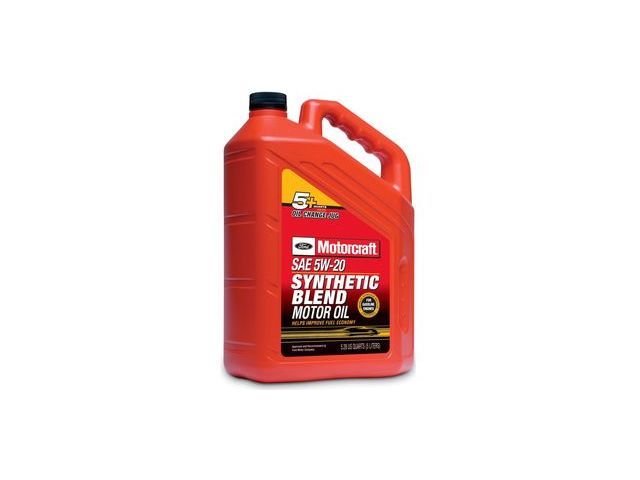
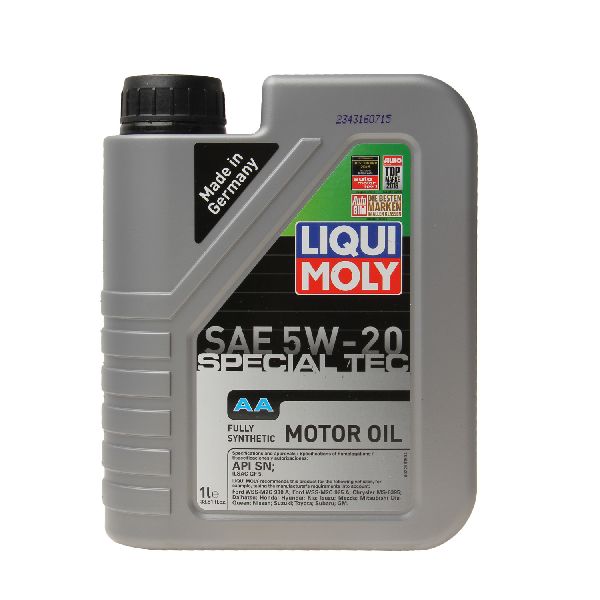
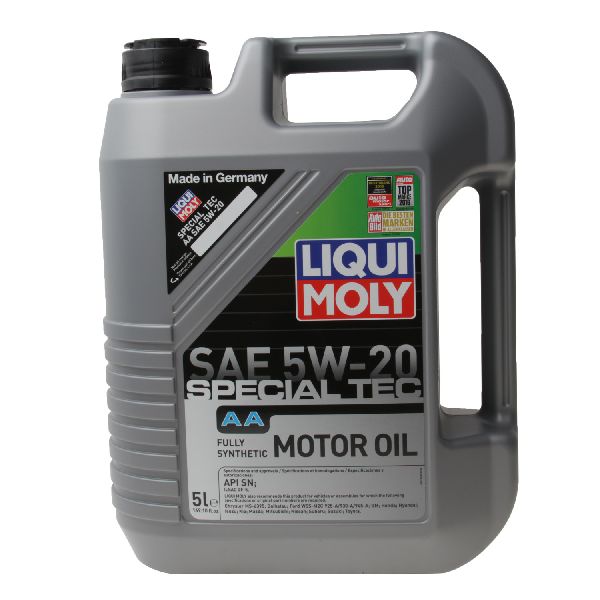
Typical fix: Perform an engine oil and filter change using the manufacturer-recommended 5W-20 synthetic blend or full synthetic oil and a quality filter like Motorcraft.
Est. part cost: $40-$80 - Failed VCT Solenoid (Bank 2 Intake) 🔴 High Probability These solenoids can become clogged with debris from the oil or fail electrically, causing them to stick in the advanced position. It's a very common failure point on this engine. Manufacturer service bulletins such as SSM 47170 and SSM 50067 specifically note that small debris can cause the VCT solenoid to stick, triggering P0021.
How to confirm: A common diagnostic step is to swap the Bank 2 (front) intake VCT solenoid with the Bank 1 (rear) intake solenoid. If the code changes to P0011 (the Bank 1 equivalent), the solenoid is confirmed to be faulty. Note that accessing the Bank 1 solenoid requires removing the upper intake manifold, adding significant labor.
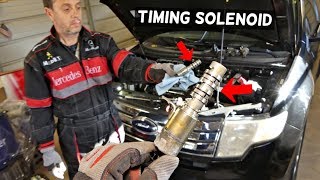
Typical fix: Replace the Bank 2 intake VCT solenoid. On this engine, the Bank 2 solenoids are on the front valve cover and are relatively easy to access. 🎬 Watch: How to locate and replace the Bank 2 solenoid.
Est. part cost: $30-$100 - Failed Camshaft Phaser (Bank 2 Intake) 🟡 Medium Probability The mechanical phaser gear can fail internally, get stuck due to oiling issues, or have its locking pin break. Ford issued a TSB (11-6-1) for 2007-2009 Edge models built on or before 12/15/2008, specifically identifying faulty camshaft phasers as a cause for P0021 and other VCT codes.
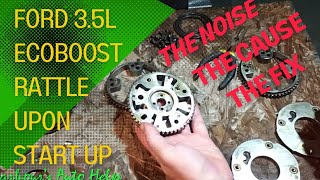
How to confirm: This is a more advanced diagnosis. If a new solenoid and oil change do not resolve the code, and especially if rattling noises are present on startup, 🎬 See what a failing cam phaser sounds like and why. a mechanic will need to inspect the timing components, which requires significant engine disassembly.
Typical fix: Replace the Bank 2 intake camshaft phaser. This is a labor-intensive job that also typically includes replacing the timing chain, guides, and tensioners.
Est. part cost: $150-$400
Rare But Worth Checking
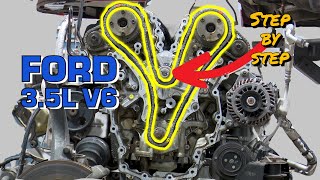
- Stretched Timing Chain: While less common than a solenoid failure, the timing chain can stretch over time, causing correlation issues between the camshafts and crankshaft. This is a major repair and is often accompanied by rattling noises on startup or multiple timing codes at once (e.g., P0011, P0016, P0018, P0021). Bulletin #TSB-16-0093 indicates that vehicles may exhibit an illuminated MIL with P0021 and other correlation codes stored in the PCM memory.
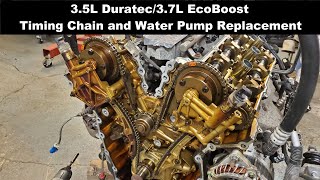
- Failing Internal Water Pump: A notorious issue on the 3.5L V6 is the internal, timing-chain-driven water pump. When its seal fails internally, it can leak coolant directly into the engine oil, compromising the oil's lubricating properties and causing VCT system failures and eventually catastrophic engine damage. 🎬 Watch: A complete walkthrough of the timing chain and water pump repair. Check for a milky, 'chocolate milk' consistency in the oil or on the oil cap.
Diagnosis Steps
- Check the engine oil level and condition. If low or dirty, perform an oil and filter change with 5W-20 oil and clear the code. Drive to see if the code returns.
- If the code returns, scan for any other pending or active trouble codes to identify patterns (e.g., codes on both banks).
- Listen for engine noises. A rattle on startup can indicate phaser issues, while a constant whine or ticking could point to chain/guide problems.
- Locate the Bank 2 (front, radiator side) intake and exhaust VCT solenoids on the valve cover.
- Swap the intake VCT solenoid from Bank 2 with the intake VCT solenoid from Bank 1 (rear, firewall side). This requires removing the upper intake manifold to access the Bank 1 solenoid.
- Clear the codes and drive the vehicle. If the code changes to P0011 (Bank 1 Over-Advanced), the solenoid you moved is faulty and must be replaced.
- If the P0021 code returns, the problem is not the solenoid. Inspect the wiring and connector for the Bank 2 intake VCT solenoid for damage, oil saturation, or corrosion. Bulletin #SSM 54366 suggests following Pinpoint test HK in the Powertrain Control and Emissions Diagnosis (PC/ED) manual for these DTCs.
- If wiring is intact, the issue is likely mechanical. At this point, professional diagnosis is recommended to inspect the camshaft phaser and timing chain components, which may be covered by TSB 11-6-1 if your vehicle was built before 12/15/2008.
Parts You'll Likely Need
- Engine Variable Valve Timing (VVT) Solenoid
(OEM #AT4Z-6M280-B (Supersedes AT4Z-6M280-A))— This solenoid is the most common part to fail, typically by getting stuck or clogged with oil debris, causing the timing to be over-advanced.
Trusted brands: Motorcraft, Dorman, Delphi
OEM price range: $50-$90
Aftermarket price range: $30-$60 - Engine Oil and Filter — Clean oil of the correct viscosity (5W-20) is critical for the VCT system to function. An oil change is the first and most important diagnostic step.
Trusted brands: Motorcraft, Mobil 1, Valvoline
OEM price range: $50-$90
Aftermarket price range: $40-$80
Related Codes That Often Appear With This One
- P0011 — This is the equivalent code for Bank 1. If both appear, it strongly suggests a systemic issue like incorrect oil viscosity, very low/dirty oil, or a problem affecting the entire timing system like a stretched timing chain.
- P0018 — This is a Crankshaft/Camshaft Correlation code for Bank 2. Its presence alongside P0021 points more strongly towards a mechanical timing issue like a stretched chain or failed phaser, rather than just a solenoid.
- P0022 — This is the 'over-retarded' code for Bank 2. Seeing both P0021 and P0022 can indicate an erratic VCT solenoid that is sticking intermittently, a wiring issue, or a severe mechanical problem in the VCT system for that bank.
Technical Service Bulletins (TSBs) & Recalls
- TSB 11-6-1: Addresses multiple VCT codes (P0011, P0012, P0016, P0018, P0021, P0022) on vehicles built on or before 12/15/2008. The procedure involves removing the cam covers to inspect the phaser part numbers and replacing them if they are the old style. This TSB applies to the 3.5L and 3.7L engines in the Edge, MKX, MKZ, Taurus, Flex, and MKS.
- SSM 50067: Notes that Ford and Lincoln vehicles may exhibit an illuminated MIL with DTC P0021 due to small debris causing the VCT solenoid to stick.
- SSM 47170: States that some vehicles may exhibit P0021 and other VCT codes due to small debris causing the solenoid to stick, and recommends cleaning or cycling before replacement.
- TSB-16-0093: Reports that engines may exhibit an illuminated MIL with diagnostic trouble codes including P0011, P0018, and P0021 stored in the PCM memory.
- SSM 54366: Directs technicians to use Pinpoint test HK in the PC/ED or Workshop Manual Section 303-14 when diagnosing P0021 and related timing codes.
Platform-Specific Known Issues
- TSB 11-6-1 was issued for 2007-2009 Edge models (among others) built on or before 12/15/2008 for various VCT codes including P0021. It directs technicians to inspect the camshaft phaser part numbers and replace them if they are the older, fault-prone design.
Mechanic-Grade Diagnostic Values
- VCT Solenoid Internal Resistance — expected: 6.9 to 7.9 Ohms at 68°F (20°C). A general acceptable range is 5-15 Ohms.. Failure: A reading of 0 Ohms (short circuit) or OL/infinity (open circuit) indicates a failed solenoid coil.
- VCT Solenoid Connector Voltage (Key On, Engine Off) — expected: Approximately 12V (Battery Voltage) on the power supply pin (typically Blue/Green wire).. Failure: No voltage or significantly low voltage points to a wiring issue, blown fuse (e.g., F16 in battery junction box), or PCM power supply problem.
- Engine Oil Pressure at Hot Idle — expected: Minimum 15 PSI, ideally 25 PSI or higher.. Failure: Pressure below 15 PSI at hot idle can cause erratic VCT operation and trigger timing codes, as the system needs sufficient pressure to function correctly.
- Scan Tool PID: VCT_INT_DIF2 (Bank 2 Intake Cam Angle Error) — expected: Should be near 0 degrees at a stable hot idle, with an allowable variance of +/- 5 degrees.. Failure: A consistent, large error value when the engine is at idle indicates the cam is not at its commanded (base) position, suggesting a stuck phaser or solenoid.
Scan Tool Commands That Help
- Ford IDS / FORScan: VCT Solenoid Actuator Test (Pinpoint Test HK) — Per Ford TSBs (like SSM 50067), this command cycles the suspect VCT solenoid up to 10 times. It is used to attempt to dislodge small debris that may be causing the solenoid to stick, which can sometimes fix the issue without part replacement.
- Ford IDS / FORScan: Monitor PIDs: VCT_INT_ACT2, VCT_INT_CMD2, VCT_INT_DIF2 — These Parameter IDs (PIDs) allow for live monitoring of the Bank 2 intake camshaft's actual angle, commanded angle, and the difference (error) between them. This is crucial for determining if the timing deviation is constant or intermittent and under what engine conditions it occurs.
Wiring & Ground Locations
- Bank 2 VCT Solenoid Connector — On the front (radiator side) valve cover, protruding from the top. It is a two-pin connector.. This is the primary electrical connection for the faulty component. The connector or its wiring can become brittle from heat, saturated with oil, or corroded, leading to an open or short circuit that mimics a failed solenoid. The power supply wire is typically Blue/Green.
- Engine Block Ground — A primary ground wire bolts from the battery negative terminal or chassis directly to the side of the engine block. On some models, this requires removing the battery to access.. A poor engine ground can cause a variety of electrical issues, including erratic sensor readings and improper solenoid function. While not a common cause for a single-bank VCT code, it's a foundational check for any electrical diagnosis.
Real Owner Repair Stories
- Ford F150 Forum user (2004 Ford F-150 (similar 3-valve engine VCT system)) — P0021, rough acceleration, loss of power, flashing CEL, noise from passenger side, significant oil leak.
❌ Tried (didn't work) Replaced VCT solenoids, Replaced all spark plugs, Replaced all ignition coils
✅ What actually fixed it The user was advised by other forum members that with the severe symptoms and oil consumption, the likely cause was a complete failure of timing components (phasers, guides, tensioners) due to oil pressure loss, and that a full timing job was required. The initial parts replacement did not address the root mechanical failure.
OEM Part Supersession History
AT4Z-6M280-A→AT4Z-6M280-B— Improved design to address reliability and debris tolerance issues.
Model Year Variations Within This Range
- 2007-2010 vs 2011+: The 2007-2010 Ford Edge with the 3.5L V6 produced 265 horsepower. For the 2011 model year refresh, this same engine was updated to produce 285 horsepower. While the fundamental VCT system is the same, software and potentially minor internal changes were made.
Diagnostic Flowchart
Other Known Issues on This Vehicle
Issues unrelated to this code that are worth knowing about as an owner of this generation:
- Internal Water Pump Failure 🔴 High — Common after 100,000 miles. Failure can be gradual (external leak from a weep hole) or catastrophic (internal leak contaminating engine oil).
- Power Transfer Unit (PTU) Failure (AWD Models) 🔴 High — Very common. The unit is located near the hot exhaust with no drain plug, causing the fluid to cook and break down, leading to failure often before 100,000 miles.
- Faulty Brake Booster 🟠 Medium — Widespread issue where the internal diaphragm tears, causing a hissing noise when the brake pedal is pressed and inconsistent or hard pedal feel. (Ref: Ford issued a warranty extension program (13N02) for this issue.)
- Transmission Failure / Harsh Shifting 🔴 High — Particularly prevalent on 2007-2008 models, with many owner complaints of sudden transmission failure, clunking, and unexpected shutdowns.
- Door Ajar Sensor Failure 🟡 Low — A common annoyance where the sensor within the door latch fails, causing the 'door ajar' light to stay on and the interior dome lights to remain illuminated, potentially draining the battery. (Ref: TSB 18-2013 addresses this for later models, but the issue is common on early ones too.)
Used vs. New Parts: Buying Guide for This Vehicle
When a used part is the smart pick: For this specific repair, using a used VCT solenoid is strongly discouraged. The part is electronic, sensitive to wear and oil contamination, and its remaining lifespan is unknown. Given the labor cost to replace it (especially for Bank 1), the risk of a premature failure of a used part outweighs the small cost savings.
Donor-vehicle mileage cap: roughly under 50000 miles for the part to have meaningful remaining life.
What to inspect on the donor part:
- Must be from a documented low-mileage vehicle.
- Inspect the mesh screens on the solenoid; they must be perfectly clean, intact, and free of any metallic debris or sludge.
- Test the resistance with a multimeter before purchase; it must be within the 6.9-7.9 Ohm range.
OEM-only on this vehicle (don't cheap out):
- VCT Solenoid
- Camshaft Phasers
Aftermarket brands forum-validated for this vehicle:
- Motorcraft (OEM)
Brands owners have reported issues with on this vehicle:
- Dorman (Some forum users report premature failure or out-of-spec performance with VCT components for this engine family, recommending sticking to OEM Motorcraft parts).
Real Owner Stories
Aggregated from forums and TSBs cited above. Mileages and costs reflect what owners reported in those sources.
2011 Ford Edge 3.5L V6
Symptoms: Rough idle and trouble codes P0018 and P0021.
What fixed it: The owner was advised to check oil levels and swap the cam solenoids from Bank 1 to Bank 2 to see if the code followed the solenoid.
Source hint: FordEdgeForum.com - Thread 'Rough Idle and trouble codes P0018 and P0021'
2010 Ford Edge 3.5L V6
Symptoms: Vehicle ran poor immediately after starting; Check Engine Light showed four codes: P0011, P0016, P0018, and P0021.
What fixed it: The presence of all four primary timing codes simultaneously after a timing job suggested a systemic failure, such as a jumped tooth or stretched chain.
Source hint: Reddit r/FordEdge - Thread '2010 Ford Edge Started Vehicle and it ran poor. CEL shows 4 codes P0011, P0016, P0018, P0021'
Related OBD-II Codes
Frequently Asked Questions
Does TSB 11-6-1 apply to my 2008 Ford Edge with the P0021 code?
I have a P0021 on my 2007 Edge; which side of the engine should I check?
Can I just swap the solenoids to see if the part is bad on my 3.5L V6?
What type of oil should I use to prevent VCT issues like P0021 in my Ford Edge?
Is the P0021 code related to the water pump issues common on the 2007-2009 Edge?
My Edge is rattling on cold starts and has a P0021 code. What does that mean?
Helpful Videos
We Have This Part in Stock



The information in this article is provided for general reference and educational purposes only. Vehicle specifications, procedures, and part compatibility can vary by production date, trim level, and region. Always consult your vehicle's factory service manual and verify part numbers before purchasing or performing repairs. Safety-critical components such as airbags, seat belts, and braking systems should be installed by a qualified professional.
- Ford Edge:
- 🎬 Helpful Videos
- 🛍️ Shop This Part
- What's Unique About the 2007-2009 Ford Edge
- Symptoms You May Notice
- Most Likely Causes
- Rare But Worth Checking
- Diagnosis Steps
- Parts You'll Likely Need
- Related Codes That Often Appear With This One
- Technical Service Bulletins (TSBs) & Recalls
- Platform-Specific Known Issues
- Mechanic-Grade Diagnostic Values
- Scan Tool Commands That Help
- Wiring & Ground Locations
- Real Owner Repair Stories
- OEM Part Supersession History
- Model Year Variations Within This Range
- Diagnostic Flowchart
- Other Known Issues on This Vehicle
- Used vs. New Parts: Buying Guide for This Vehicle
- Real Owner Stories
- 2011 Ford Edge 3.5L V6
- 2010 Ford Edge 3.5L V6
- Related OBD-II Codes
- Frequently Asked Questions
- 🎟️ Get 5% Off