

P0016 on 2013-2020 Ford Fusion 2.5L: Causes and Fixes for Cam/Crank Correlation
On the 2.5L Fusion, P0016 is most often caused by a sticking intake VCT solenoid due to dirty or low engine oil. This is a well-documented issue in Ford TSBs. Start by checking your oil level and condition. If that's fine, the VCT solenoid is the next likely part to replace, costing about $40-$80 for the part. A stretched timing chain is a less common but possible cause on higher mileage vehicles.
- P0016 on a 2.5L Fusion is most likely a VCT solenoid issue, not a catastrophic failure.
- Always check your engine oil level and condition first; a simple oil change can sometimes fix the problem.
- Do not replace the cam or crank sensors before thoroughly testing the VCT solenoid, as this is a common misdiagnosis.
- Replacing the VCT solenoid is a DIY-friendly job (difficulty 2/5) that requires removing the valve cover.
- If you hear a rattling noise from the engine, the possibility of a stretched timing chain increases, which is a more serious and expensive repair.
What's Unique About the 2013-2020 Ford Fusion
For this specific Fusion and 2.5L engine, the P0016 code is very frequently linked to the Variable Camshaft Timing (VCT) system's sensitivity to oil quality and debris. Ford has issued multiple Technical Service Bulletins (TSBs) acknowledging that small debris in the engine oil can cause the VCT solenoids to stick, leading to this exact code. The TSBs even recommend a diagnostic procedure (Pinpoint Test HK11) to cycle the solenoid with a scan tool to attempt to clear the debris before replacement. Unlike some other engines where this code immediately points to a stretched timing chain, on the 2.5L Duratec, the VCT solenoid is the primary suspect.
Symptoms You May Notice
- Check Engine Light is on
- Rough or erratic idle
- Reduced engine power and poor acceleration
- Engine is hard to start, or cranks but won't start
- Decreased fuel economy
- Rattling noise from the engine, especially on a cold start
- Engine stalling, especially at low speeds or when stopping
- Replacing the camshaft or crankshaft position sensors as the first step. These sensors are usually not the root cause but are simply reporting the timing misalignment. Always investigate the oil and VCT system first, as per Ford's own TSBs.
Most Likely Causes
- Sticking or Failed Intake VCT Solenoid 🔴 High Probability Ford TSBs #SSM 47170 and #SSM 48423 directly identify this as a common issue caused by small debris in the engine oil lodging in the solenoid's fine passages. This is the most widely reported fix in owner forums for this engine family.
How to confirm: Use a bidirectional scan tool to command the VCT solenoid on and off (Pinpoint Test HK); a lack of response or change in engine idle indicates a problem. You can also remove the solenoid and test it by applying 12V to see if the plunger actuates. Visually inspect the solenoid's screens for metallic debris or sludge.
Typical fix: Replace the intake VCT solenoid. Since the solenoids are under the valve cover, the valve cover gasket should be replaced at the same time. An oil and filter change using high-quality 5W-20 oil is critical to remove the debris that likely caused the failure.
Est. part cost: $40-$80 - Low or Dirty Engine Oil 🟡 Medium Probability The VCT system is entirely hydraulic and relies on clean oil at the correct pressure to function. Extended oil change intervals or using the wrong viscosity oil leads to sludge and debris that clog the VCT solenoid passages and phaser oil galleys, triggering this code.
How to confirm: Check the oil level on the dipstick and inspect the oil's condition. If it is low, excessively dark, or feels gritty, this is a likely contributor. This should be the first check performed.
Typical fix: Perform an engine oil and filter change using the manufacturer-specified oil (Motorcraft 5W-20 Synthetic Blend) and a quality filter (e.g., Motorcraft FL-910S). Clear codes and drive to see if the issue returns.
Est. part cost: $30-$80 - Stretched Timing Chain ⚪ Low Probability While the 2.5L Duratec is not as prone to chain stretch as some EcoBoost engines, it can occur over time, typically with mileage exceeding 100,000-120,000 miles. Lack of oil changes accelerates wear on the chain, guides, and tensioner, leading to slack that causes a correlation error.
How to confirm: This is an advanced diagnosis. A mechanic can remove the valve cover to physically inspect for chain slack at the top. A definitive check involves comparing cam and crank sensor waveforms on an oscilloscope against a known-good pattern to see the exact degree of timing deviation.
Typical fix: Replace the timing chain, tensioner, guides, and phasers. This is a labor-intensive job that requires specialized timing tools.
Est. part cost: $150-$400 for a kit
Rare But Worth Checking
- Failed Camshaft Phaser: The VCT phaser (the gear on the end of the camshaft) can fail mechanically. It might get stuck, or the internal locking pin can fail, causing it to not hold its base position on startup. This will often be accompanied by a rattling or knocking noise.
- Failed Camshaft or Crankshaft Position Sensor: It's rare for the sensor itself to fail in a way that causes this specific correlation code without setting a sensor-specific circuit code (e.g., P0340). They are usually just accurately reporting a mechanical problem. However, if all mechanical causes are ruled out, a faulty sensor with an intermittent internal failure is a possibility.
- Damaged Crankshaft Reluctor Ring: The toothed tone ring that the crankshaft position sensor reads can be damaged, or in rare cases on other engines, slip or rotate on the crankshaft. This causes the PCM to receive an incorrect signal for the crankshaft's position, leading to a correlation code even if the mechanical timing is perfect.
Diagnosis Steps
- Check Engine Oil: Verify the oil level is correct and the oil quality is good. If low or dirty, perform an oil and filter change with the correct 5W-20 viscosity oil, clear the code, and drive to see if it returns.
- Scan for Codes: Use an OBD-II scanner to confirm P0016 and look for any other related codes (like P0017, P0011, P0012, P0340) which can help narrow the diagnosis.
- Test the VCT Solenoid (Scan Tool): Using a bidirectional scan tool, perform the 'Pinpoint Test HK' as recommended by Ford TSBs #SSM 47170 and #SSM 48423. This involves commanding the intake VCT solenoid on and off 10 times. Listen for a click from the solenoid and watch for a change in engine idle. This may even temporarily clear the debris.
- Inspect and Test VCT Solenoid Manually: If the scan tool test is inconclusive, remove the VCT solenoid. It is located under the valve cover. Inspect its screen for debris or sludge. You can test its mechanical function by applying 12V power and ground to its terminals to see if the internal plunger moves.
- Inspect Wiring: Check the wiring and connector for the VCT solenoid and camshaft position sensor for any damage, corrosion, or oil contamination. Ensure the harness is secure.
- Mechanical Timing Check: If the VCT system appears to be functioning, a mechanical inspection is necessary. This involves removing the valve cover to check for timing chain slack. An advanced diagnosis involves using an oscilloscope to compare the crankshaft and camshaft sensor signals to verify the exact timing alignment against a known-good waveform.
Parts You'll Likely Need
- Engine Variable Valve Timing (VVT/VCT) Solenoid
(OEM #9L8Z-6M280-C)— This is the most common failure point for P0016 on this engine, as documented by Ford TSBs. It gets stuck due to oil debris. Part number 9L8Z-6M280-C is the latest revision, superseding 9L8Z-6M280-A and 9L8Z-6M280-B.
Trusted brands: Motorcraft, Dorman
OEM price range: $60-$95
Aftermarket price range: $30-$60 - Valve Cover Gasket Kit
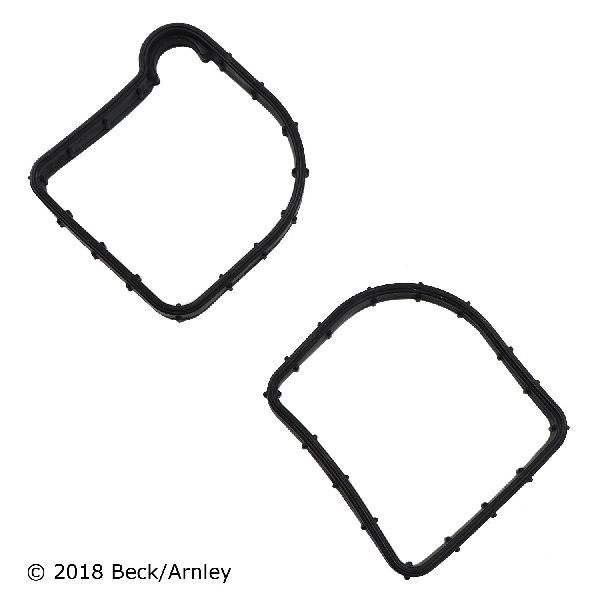
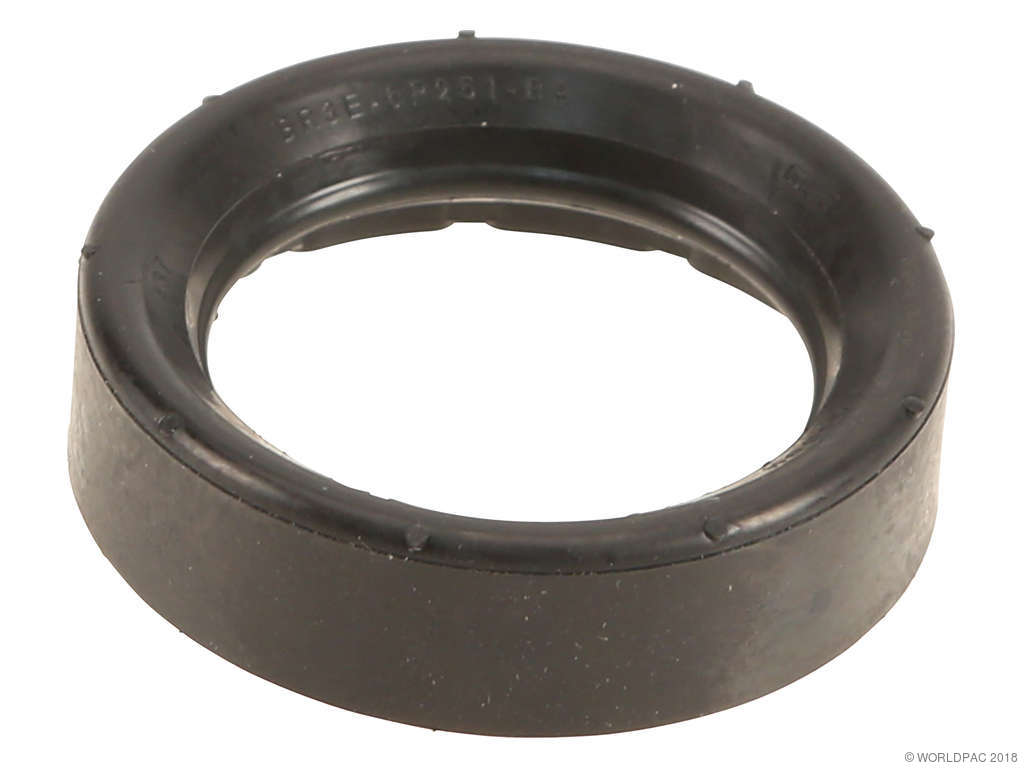
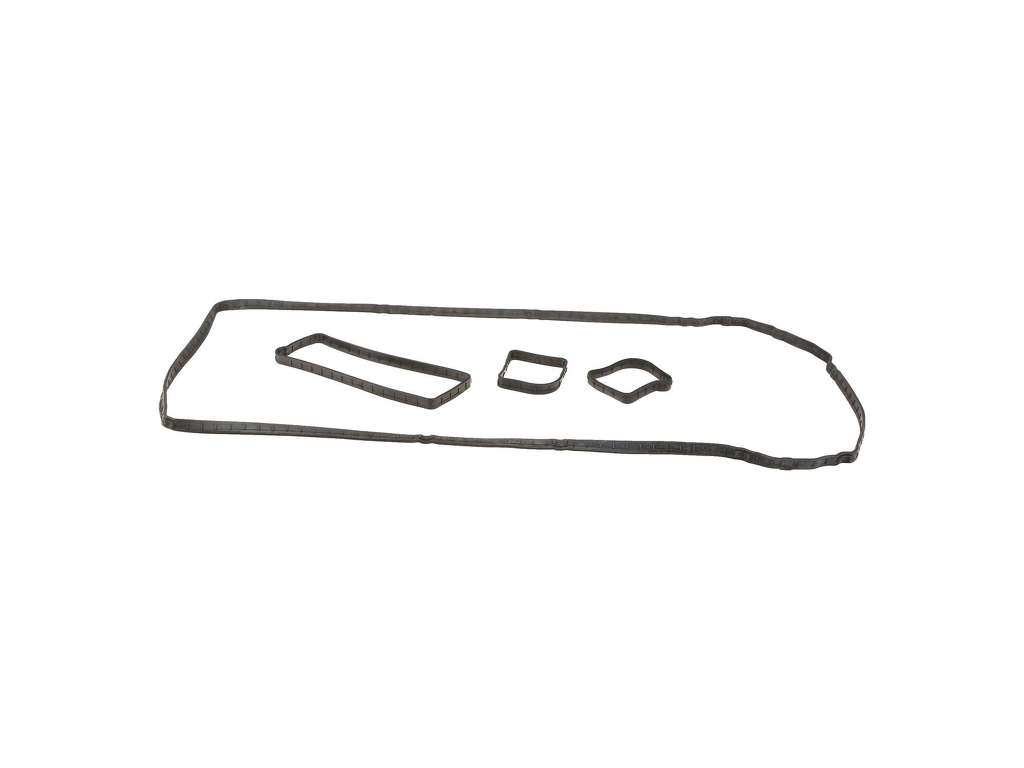
(OEM #9E5Z-6584-A (Gasket), 7L8Z-6C527-A (Solenoid Seals))— Required for replacing the VCT solenoids, which are located under the valve cover. The kit should include the main gasket and the spark plug tube seals. The VCT solenoid seals are often separate but should also be replaced.
Trusted brands: Fel-Pro, Mahle, Motorcraft
OEM price range: $40-$60
Aftermarket price range: $20-$40 - Timing Chain Kit — Needed only if diagnosis confirms the timing chain has stretched or a guide/tensioner has failed. A full kit is recommended.
Trusted brands: Motorcraft, Cloyes
OEM price range: $250-$400
Aftermarket price range: $150-$250
Related Codes That Often Appear With This One
- P0017 — This is the correlation code for the exhaust camshaft ('Sensor B'). If seen with P0016, it points more strongly toward a base timing issue like a stretched timing chain affecting both cams, or issues with both VCT solenoids.
- P0011 — This code for 'Camshaft Position Timing - Over-Advanced' can appear if the VCT solenoid is stuck in a position that causes the intake cam to be too far advanced.
- P0012 — This code for 'Camshaft Position Timing - Over-Retarded' can appear if the VCT solenoid is stuck in a retarded position or if oil flow is restricted.
Technical Service Bulletins (TSBs) & Recalls
- SSM 47170
- SSM 48423
Platform-Specific Known Issues
- Ford has issued Technical Service Bulletins (TSB #SSM 47170 and #SSM 48423) that specifically note P0016 can be caused by small debris making the VCT solenoid stick. The recommended diagnostic procedure includes using a scan tool to cycle the solenoid to try and clear it before replacement.
- Owner forums frequently cite an oil change followed by VCT solenoid replacement as the definitive fix. Many owners report the code appearing shortly after an oil change at a quick-lube shop, suggesting incorrect oil viscosity or a poor quality filter may contribute to the problem.
Mechanic-Grade Diagnostic Values
- VCT Solenoid Internal Resistance — expected: 8 to 12 ohms. Failure: A reading outside this range indicates a faulty solenoid coil. A forum user reported measuring 7.9-8.0 ohms on failed solenoids and 8.2-8.3 ohms on new ones.
- VCT Solenoid Connector Voltage (KOEO) — expected: ~12V (Battery Voltage) on the power supply pin.. Failure: No voltage or low voltage points to a wiring issue, a blown fuse (F16 in the battery junction box for some models), or a PCM power relay problem, not the solenoid itself.
- Camshaft Position (CMP) Sensor Signal Voltage — expected: A fluctuating square wave signal, typically between 0V and 5V, when viewed on an oscilloscope while the engine is running.. Failure: A flat line (0V or 5V) or no signal indicates a failed sensor or a wiring/power issue.
- Scan Tool PID: VCT_ADV_ERR (VCT Advance Error) — expected: Close to 0 degrees (+/- 5 degrees) at idle.. Failure: A large, consistent deviation from 0 degrees indicates the PCM cannot achieve the desired cam timing, pointing to a stuck solenoid, phaser, or mechanical timing issue.
- Engine Oil Pressure (at idle) — expected: At least 25 PSI on most engines.. Failure: Pressure below specification indicates oil starvation, which will prevent the hydraulic VCT system from functioning correctly and can cause this code. This points to a problem with the oil pump, pickup tube, or internal blockages rather than the VCT components themselves.
Hidden / Shadow Codes Worth Checking
- Mode 6, TID $83, CID $0B: This refers to the Cam/Crank Position Error monitor. It tracks the maximum deviation detected between the camshaft and crankshaft. A high value here, even before the CEL is triggered, can indicate an emerging timing problem. (see via A professional scan tool or an advanced OBD-II app (like FORScan) that can display Mode $06 data.)
Scan Tool Commands That Help
- Ford IDS / FORScan: Pinpoint Test HK: VCT Solenoid Test — This is a key diagnostic step recommended in Ford TSBs. The function commands the PCM to cycle the VCT solenoid on and off rapidly (typically 10 times) to check for response and potentially dislodge small debris causing it to stick.
- Ford IDS / FORScan: PCM Reset / Relearn Procedure — After replacing any timing components (solenoids, phasers, chain), this function should be used to clear all learned adaptive values. This forces the PCM to relearn the timing positions and solenoid response characteristics of the new parts.
Wiring & Ground Locations
- G100 / G101 / G102 — Located on the left front of the engine compartment.. These are primary engine bay grounds. A corroded or loose connection at these points can introduce electrical noise or cause voltage drops in sensor circuits, including the CMP and CKP sensors, potentially leading to false correlation codes.
- Engine-to-Chassis Ground Strap — Typically runs from the engine block or transmission bell housing to the vehicle's frame/chassis.. This is the main ground path for the engine's electrical system. If this strap is broken, loose, or heavily corroded, the PCM and its sensors may not have a stable ground reference, leading to a variety of erratic electrical issues, including sensor correlation faults.
- VCT Solenoid Connector Pins — At the VCT solenoid, under the valve cover.. Pin 1 is typically the 12V power supply from a fuse (e.g., F16), and Pin 2 is the control line (ground) from the PCM. Testing voltage at Pin 1 and continuity to ground on Pin 2 can quickly isolate a wiring problem from a failed solenoid.
Real Owner Repair Stories
- Ford Fusion Forum user report (Ford Fusion with 2.0L EcoBoost (similar VCT system)) — Persistent P0016 code that appeared immediately after an oil change.
❌ Tried (didn't work) Initial diagnosis pointed towards replacing VCT solenoids or timing components.
✅ What actually fixed it The root cause was a faulty aftermarket oil filter. Its internal bypass valve had failed, causing improper oil pressure and flow to the VCT system. Replacing the filter with a genuine Motorcraft part and performing another oil change resolved the code completely. - Reddit user in r/fordfusion (2013 Ford Fusion 2.5L with 62k miles) — Check engine light with P0016, slightly rough cold start.
❌ Tried (didn't work) Cleared the code, but it returned.
✅ What actually fixed it The user replaced the intake camshaft position sensor, which resolved the issue. While less common, it highlights that a sensor can occasionally be the direct cause.
OEM Part Supersession History
9L8Z-6M280-A, 9L8Z-6M280-B→9L8Z-6M280-C— Standard part revision. Later revisions often include improvements to materials, internal coil windings, or the filter screen design to improve durability and resistance to clogging from oil debris.
Diagnostic Flowchart
Real Owner Stories
Aggregated from forums and TSBs cited above. Mileages and costs reflect what owners reported in those sources.
2013 Ford Fusion 2.5L — 62000 miles
Symptoms: Check engine light came on indicating the camshaft was over-advanced. The car drove fine the day prior, but had a slightly rough cold start the next day, though not bad enough to suggest a jumped timing chain.
What fixed it: Owner initially cleared the code to see if it was persistent while diagnosing whether it was a sensor failure or a more significant timing issue.
Source hint: Reddit - r/fordfusion - P0016 Error - Any advice?
2013 Ford Fusion 1.6L
Symptoms: P0016 code triggered indicating a timing correlation error.
What fixed it: Corrected physical timing during a head gasket job, confirming the code was directly related to mechanical timing alignment.
Source hint: FordFusion.org - 2013 Ford Fusion 1.6 engine trouble
Ford Escape 2.5L
Symptoms: P0016 and P0011 codes appeared immediately after getting an oil change.
What fixed it: Issue was tied to the recent oil service, highlighting the 2.5L VCT system's extreme sensitivity to oil quality and viscosity.
Source hint: Reddit - r/MechanicAdvice - Ford Escape P0011 and P0016
Related OBD-II Codes
Frequently Asked Questions
Do Ford TSBs SSM 47170 or SSM 48423 apply to my 2013-2020 Fusion 2.5L for code P0016?
Why did P0016 trigger on my Fusion right after getting an oil change at a quick-lube shop?
Can I fix the P0016 code on my 2.5L Duratec without replacing parts?
What oil and filter does Ford recommend to prevent VCT solenoid issues on the 2.5L engine?
Is a stretched timing chain a common cause for P0016 on the 2.5L Fusion?
Where is the VCT solenoid located on the 2013-2020 Fusion 2.5L?
Used OEM Parts in Stock


New Aftermarket Parts Available


The information in this article is provided for general reference and educational purposes only. Vehicle specifications, procedures, and part compatibility can vary by production date, trim level, and region. Always consult your vehicle's factory service manual and verify part numbers before purchasing or performing repairs. Safety-critical components such as airbags, seat belts, and braking systems should be installed by a qualified professional.
- Ford Fusion:
- 🛍️ Shop This Part
- What's Unique About the 2013-2020 Ford Fusion
- Symptoms You May Notice
- Most Likely Causes
- Rare But Worth Checking
- Diagnosis Steps
- Parts You'll Likely Need
- Related Codes That Often Appear With This One
- Technical Service Bulletins (TSBs) & Recalls
- Platform-Specific Known Issues
- Mechanic-Grade Diagnostic Values
- Hidden / Shadow Codes Worth Checking
- Scan Tool Commands That Help
- Wiring & Ground Locations
- Real Owner Repair Stories
- OEM Part Supersession History
- Diagnostic Flowchart
- Real Owner Stories
- 2013 Ford Fusion 2.5L — 62000 miles
- 2013 Ford Fusion 1.6L
- Ford Escape 2.5L
- Related OBD-II Codes
- Frequently Asked Questions
- 🎟️ Get 5% Off