

P0011 on 2015-2019 Lincoln MKC: EcoBoost Over-Advanced Timing Causes and Fixes
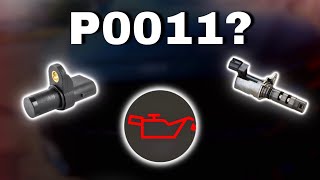
On a 2015-2019 Lincoln MKC, P0011 is almost always caused by low or dirty engine oil, or a failing intake Variable Camshaft Timing (VCT) solenoid for Bank 1. The most common fix is an oil change and/or replacing the VCT solenoid (Part #CJ5Z-6M280-A), which is a relatively inexpensive part.
- Always check your engine oil first. A simple oil change with the correct full-synthetic oil can often resolve this code.
- The most likely failed part is the Bank 1 intake VCT solenoid, which is relatively inexpensive and accessible for a DIY repair.
- Do not immediately assume a major timing chain issue. Address the high-probability causes (oil and VCT solenoid) first.
- Ignoring this code can lead to poor performance, bad fuel economy, and potential engine damage over time.
- Multiple Ford TSBs confirm that a sticking VCT solenoid is a known issue on this platform.
What's Unique About the 2015-2019 Lincoln MKC
The 2.0L and 2.3L EcoBoost engines in the Lincoln MKC use a Variable Camshaft Timing (VCT) system that is highly sensitive to oil pressure and cleanliness. The VCT solenoids have fine mesh screens that can become clogged by oil sludge or debris, causing them to stick. Ford has issued multiple Technical Service Bulletins (TSBs) for these engines, noting that this exact failure mode is the direct cause of code P0011. This makes oil-related issues and VCT solenoid failure the most prominent causes for this specific platform, often appearing before more severe mechanical timing problems.
Symptoms You May Notice
- Check Engine Light is on
- Rough or unstable idle
- Engine stalling, especially when coming to a stop
- Poor acceleration or sluggish performance
- Reduced fuel economy
- Engine hesitation
- Engine noise (rattling or ticking), particularly on cold starts, which may indicate a more serious timing chain issue.
- Replacing the camshaft position sensor when the actual problem is the VCT solenoid or an oil quality issue.
- Immediately assuming a stretched timing chain without first addressing the much more common VCT solenoid and oil-related causes.
- Replacing the camshaft phaser when only the much cheaper and more accessible VCT solenoid is faulty.
Most Likely Causes
- Low, Dirty, or Incorrect Viscosity Engine Oil 🔴 High Probability The EcoBoost VCT system uses oil pressure to adjust timing, making it extremely sensitive to oil level and quality. Sludge or the wrong oil can clog the fine mesh screens on the VCT solenoids and impede their function.
How to confirm: Check the engine oil level on the dipstick and inspect its condition. If it is low, dark, or sludgy, this is the likely starting point. This is always the first step in diagnosis.
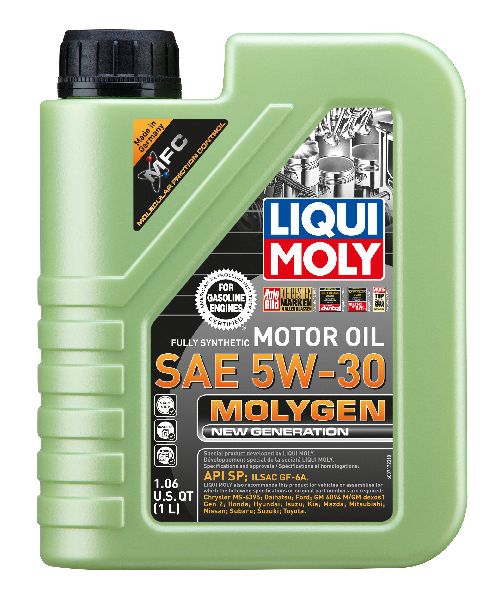
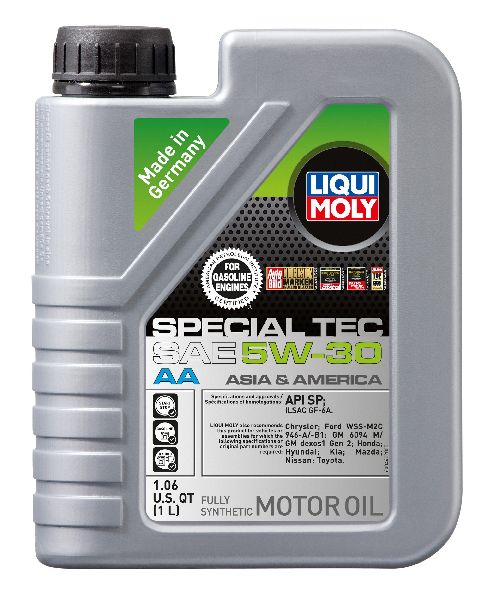
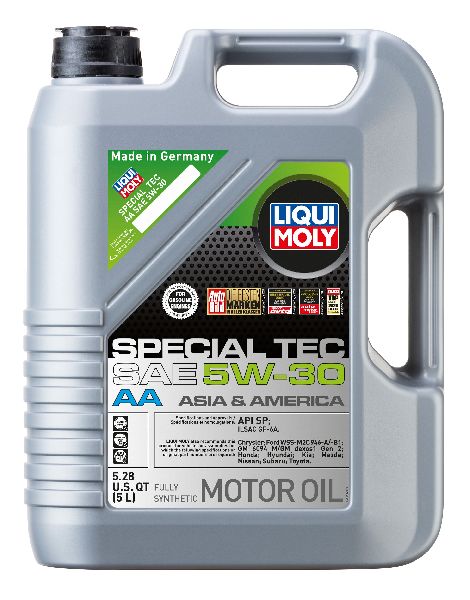
Typical fix: Perform an engine oil and filter change using the manufacturer-specified full synthetic oil (typically SAE 5W-30 for these engines). Some owners report success using an engine flush product before the oil change to help clear deposits.
Est. part cost: $50-$100 - Failing Variable Camshaft Timing (VCT) Solenoid 🔴 High Probability This is a well-documented failure point. Ford TSBs SSM 48423, SSM 47170, and SSM 49821 directly state that P0011 can be caused by debris making the VCT solenoid stick internally.
How to confirm: After confirming oil is correct, the next step is to test the solenoid. A scan tool can command the solenoid to cycle; if timing doesn't change, the solenoid is likely faulty. A definitive diagnostic is to swap the intake solenoid with the exhaust solenoid. If the code changes to P0014 (Exhaust Cam Over-Advanced), the original intake solenoid is confirmed to be bad.
Typical fix: Replace the Bank 1 intake VCT solenoid and its seal. It is often recommended to replace the valve cover gasket at the same time, as the cover must be removed for access.
Est. part cost: $40-$80 - Stretched Timing Chain or Worn Timing Components ⚪ Low Probability While less common than oil or solenoid issues for just a P0011 code, timing chains can stretch over time, especially with extended oil change intervals or high mileage, causing a persistent timing correlation issue.
How to confirm: This is typically diagnosed after ruling out oil and solenoid issues. A distinct rattling noise from the engine on cold starts that lasts for a few seconds is a strong indicator. Professional diagnosis is often required to physically inspect the timing components, as it is a labor-intensive job.
Typical fix: Replace the timing chain, tensioners, and guides. This is a labor-intensive job.
Est. part cost: $300-$600
Rare But Worth Checking
- Failed Camshaft Phaser: The phaser is the gear at the end of the camshaft that actually adjusts the timing. It can get stuck or fail internally, but this is less common than a solenoid failure and should be diagnosed after solenoids are ruled out.
- Faulty Camshaft Position Sensor: The sensor that reads the camshaft's position can fail, but it's more likely to throw a specific sensor circuit code (like P0340). It's an uncommon cause for P0011 alone.
- Clogged Oil Passages from External Debris: In rare cases of severe sludge or failure of other engine components, debris can travel through the oil system and clog the passages leading to the VCT solenoids and phasers. One documented case involved debris from a failed vacuum pump impeller.
Diagnosis Steps
- Check Engine Oil: Verify the oil level is full and the oil is clean. If low, dirty, or of the incorrect viscosity, perform an oil and filter change with the correct Ford-spec synthetic oil (5W-30). Clear the code and see if it returns. This is the most critical first step.
- Scan Tool Analysis: Use a scan tool to monitor the desired vs. actual camshaft position for Bank 1. This can confirm if the timing is actually off and by how much.
- Test the VCT Solenoid (TSB Method): Use a bidirectional scan tool to perform the diagnostic procedure outlined in TSB SSM 48423 (Pinpoint test HK11). This function commands the Bank 1 intake VCT solenoid to cycle 10 times, which can dislodge small debris and potentially resolve the issue without replacement.
- Swap Solenoids: A common and effective diagnostic trick is to swap the intake VCT solenoid with the exhaust VCT solenoid (they are identical). Clear codes and drive the vehicle. If the code changes to P0014 (Exhaust Cam Over-Advanced), the solenoid you moved is confirmed to be faulty.
- Check Solenoid Circuit: If the solenoid seems unresponsive, unplug it and check the wiring and connector for damage, corrosion, or oil contamination. Test for power and ground at the connector with a multimeter.
- Inspect Mechanical Timing: If all else fails, the issue is likely mechanical. This involves a more in-depth inspection of the timing chain, phasers, and tensioners for wear or damage. This step is labor-intensive and often best left to a professional.
Parts You'll Likely Need
- Intake Variable Camshaft Timing (VCT) Solenoid
(OEM #CJ5Z-6M280-A)— This is the most common component to fail, as it gets stuck from oil debris. It is directly implicated in multiple Ford TSBs as the primary cause of P0011. It is also referred to as a VVT Solenoid or Control Valve Solenoid.
Trusted brands: Motorcraft, Dorman, NGK
OEM price range: $50-$70
Aftermarket price range: $30-$60 - Engine Oil and Filter — Clean, correct-viscosity oil is critical for VCT system operation and is the first step in any diagnosis for this code.
Trusted brands: Motorcraft, Mobil 1, Castrol
OEM price range: $50-$80
Aftermarket price range: $40-$70 - Valve Cover Gasket
(OEM #CV6Z-6584-A)— Accessing the VCT solenoids on the 2.0L/2.3L EcoBoost requires removing the valve cover. It is standard practice to replace the gasket to prevent oil leaks upon reassembly.
Trusted brands: Motorcraft, Fel-Pro, Mahle
OEM price range: $30-$45
Aftermarket price range: $15-$30
Related Codes That Often Appear With This One
- P0012 — This code is for 'Timing Over-Retarded'. Seeing both can indicate a VCT solenoid that is sticking intermittently in both directions or a severe oiling problem.
- P0014 — This is the 'Over-Advanced' code for the exhaust ('B') camshaft. If you swap the intake and exhaust solenoids for diagnosis, P0011 will change to P0014 if the solenoid is bad. If they appear together, it can point to a systemic oil pressure issue.
- P0016 — This is a Crankshaft/Camshaft Correlation code. It can appear alongside P0011 if the timing deviation is significant, often pointing towards a mechanical timing issue like a stretched chain or failed phaser.
- P0300, P0301, P0302, P0303, P0304 — These are random or specific cylinder misfire codes. Incorrect camshaft timing disrupts the air/fuel mixture and combustion stability, which can lead to engine misfires.
Technical Service Bulletins (TSBs) & Recalls
- SSM 48423: Notes that P0011 and other VCT codes may be due to debris causing the VCT solenoid to stick. Recommends using a scan tool to perform pinpoint test HK11, which cycles the solenoid 10 times to attempt to clear the debris.
- SSM 47170: Similar to SSM 48423, addresses VCT codes caused by sticking solenoids due to debris and recommends the pinpoint test diagnostic procedure.
- SSM 49821: Another bulletin reiterating that VCT codes like P0011 can be set by debris causing the solenoid to stick internally.
- TSB 22-2133: While primarily addressing coolant intrusion issues on the 2.0L EcoBoost, this TSB lists P0011 as a potential related diagnostic trouble code that may be stored in the PCM.
Platform-Specific Known Issues
- The EcoBoost VCT system's sensitivity to oil quality is a well-documented platform issue. Extending oil change intervals significantly increases the risk of this code appearing.
- Multiple Ford Technical Service Bulletins (SSM 48423, SSM 47170, SSM 49821) have been issued that directly link P0011 to debris causing the VCT solenoid to stick, confirming this is a known pattern failure.
- The widespread use of this engine family across Ford and Lincoln models means that parts are readily available and the repair is well-understood by technicians.
Mechanic-Grade Diagnostic Values
- VCT Solenoid Internal Resistance — expected: 6.9 to 14.0 Ohms. Failure: A reading of 0 Ohms (short), OL/infinite (open), or outside the specified range indicates a faulty solenoid coil.
- VCT Solenoid Connector Voltage (Key On, Engine Off) — expected: Approximately 12V (Battery Voltage) at the power supply pin (Pin 1).. Failure: No voltage or significantly low voltage points to a wiring issue, a blown fuse (often F16 in the battery junction box), or a problem with the PCM power relay.
- Scan Tool PID: VCT_ADV_ERR (VCT Advance Error) — expected: Close to 0° at idle (+/- 5°).. Failure: A large, persistent positive or negative value indicates the camshaft is not at its commanded position, confirming a system performance issue.
Scan Tool Commands That Help
- Ford IDS (Integrated Diagnostic System) or equivalent professional scan tool: Pinpoint Test HK11 or HK12 — As recommended by Ford TSBs (SSM 48423, SSM 47170), this bidirectional command cycles the VCT solenoid 10 times. It should be used after confirming good oil quality but before replacing the solenoid, as the cycling action can dislodge small debris and potentially fix the sticking issue without part replacement.
Wiring & Ground Locations
- VCT Solenoid Connector — On top of the valve cover, connected to the VCT solenoid.. This is the connection point for testing. Pin 1 is the power supply (typically a Blue-Green wire) which should have battery voltage with the key on. Pin 2 is the control wire, which is ground-side switched by the PCM. Testing here confirms if the solenoid is receiving power and if the wiring is intact.
Real Owner Repair Stories
- Reddit user comment in r/Cartalk (2011 Chevy Malibu (similar VVT system design and failure mode)) — P0010/P0011 codes.
✅ What actually fixed it Replacing the Intake & Exhaust Camshaft Position Actuator VVT Solenoids resolved the codes. The user noted it was an easy self-repair. - YouTube comment (Not specified, but general P0011 issue) — P0011 error code.
✅ What actually fixed it The user removed and cleaned the VVT solenoids with carburetor cleaner, performed an engine flush, and then did an oil change with fresh oil. The code did not return after 1000 miles of driving.
OEM Part Supersession History
CJ5Z-6M280-A→No supersession found. This remains the current and widely used part number.— N/A
Heads up: While this specific part number has not been superseded for this application, it's important to note that on some other Ford engines (like the 5.0L Coyote), VCT solenoid designs were updated, requiring new wiring connectors (pigtails) to be spliced in. This is not a known issue for the 2.0L/2.3L EcoBoost in the MKC, but it highlights the importance of visually matching the new part to the old part before installation.
Model Year Variations Within This Range
- 2019: The 2019 model year received a facelift with a new corporate grille, replacing the previous split-wing design. The SYNC 3 infotainment system was enhanced with standard Apple CarPlay and Android Auto. However, there were no significant changes to the 2.0L or 2.3L EcoBoost powertrains or the VCT system itself that would alter the diagnosis or repair of a P0011 code.
Diagnostic Flowchart
Real Owner Stories
Aggregated from forums and TSBs cited above. Mileages and costs reflect what owners reported in those sources.
Unspecified Vehicle (YouTube Commenter)
Symptoms: Persistent P0011 code.
What fixed it: Removing and cleaning the VVT solenoids and performing an engine flush with fresh oil. The fix held for over 1,000 miles.
Source hint: "P0011 Code Causes: 'A' Camshaft Position Timing Over-Advanced Or System Performance (Bank 1) - YouTube"
Chevy Sonic
Symptoms: Persistent P0011 code that wouldn't go away, highlighting the potential difficulty of this code.
What fixed it: The owner replaced the timing kit, solenoids (multiple times), and performed flushes, yet the code kept returning.
Cost: Over $2,500
Source hint: "P0011 Won't Go Away | Sonic Owners Forum"
Ford 5.4L V8
Symptoms: Rough running condition.
What fixed it: Replaced the VCT solenoid and seal, demonstrating a successful DIY repair principle common across Ford engines.
Cost: Under $100
Source hint: "How To Fix Ford P0012 Code ( VCT Solenoid replace ) - YouTube"
Related OBD-II Codes
Frequently Asked Questions
Do Ford TSBs like SSM 48423 apply to my Lincoln MKC?
Can low or dirty oil really cause a P0011 code on my 2.0L EcoBoost?
I have a P0011 code and a rattling noise on cold starts. What does this mean?
How can I test if the VCT solenoid is the problem before buying parts?
Is P0011 related to the coolant intrusion issue on the 2.0L EcoBoost?
What oil should I use to prevent P0011 on my MKC?
Helpful Videos

Used OEM Parts in Stock
New Aftermarket Parts Available


The information in this article is provided for general reference and educational purposes only. Vehicle specifications, procedures, and part compatibility can vary by production date, trim level, and region. Always consult your vehicle's factory service manual and verify part numbers before purchasing or performing repairs. Safety-critical components such as airbags, seat belts, and braking systems should be installed by a qualified professional.
- Lincoln MKC:
- 🎬 Helpful Videos
- 🛍️ Shop This Part
- What's Unique About the 2015-2019 Lincoln MKC
- Symptoms You May Notice
- Most Likely Causes
- Rare But Worth Checking
- Diagnosis Steps
- Parts You'll Likely Need
- Related Codes That Often Appear With This One
- Technical Service Bulletins (TSBs) & Recalls
- Platform-Specific Known Issues
- Mechanic-Grade Diagnostic Values
- Scan Tool Commands That Help
- Wiring & Ground Locations
- Real Owner Repair Stories
- OEM Part Supersession History
- Model Year Variations Within This Range
- Diagnostic Flowchart
- Real Owner Stories
- Unspecified Vehicle (YouTube Commenter)
- Chevy Sonic
- Ford 5.4L V8
- Related OBD-II Codes
- Frequently Asked Questions
- 🎟️ Get 5% Off