

P0011 on 2011-2023 Chrysler 300 3.6L: Causes and Fixes for Over-Advanced Cam Timing
On the 3.6L Pentastar V6, code P0011 is most often caused by low, old, or incorrect viscosity engine oil. Before buying parts, check your oil level and change it if needed. If the code returns, the next most likely cause is a faulty Bank 1 (passenger side) VVT solenoid, which costs around $45-$150. On this engine, P0011 can also be an early warning for a cracked oil filter housing or internal engine wear like failing rocker arms.
- Always check your engine oil first. Low, dirty, or incorrect oil is the #1 cause of P0011 on the 3.6L Pentastar.
- Listen for a ticking noise. A tick combined with P0011 strongly suggests a more serious rocker arm/camshaft issue that must be addressed.
- Do not replace the camshaft position sensor first; it is rarely the cause.
- If an oil change doesn't fix the code, swapping the VVT solenoids between banks is a simple, no-cost diagnostic step to confirm a faulty solenoid.
- Be aware of the common oil filter housing leak; check the engine valley for pooled oil as a sign of this failure.
What's Unique About the 2011-2023 Chrysler 300
The 3.6L Pentastar V6 is equipped with a sophisticated VVT system that is highly sensitive to oil pressure and cleanliness. While oil issues are a common cause for this code on any vehicle, the Pentastar has two well-documented weaknesses that directly lead to P0011. A failing rocker arm (often causing a 'Pentastar tick') can shed needle bearing debris into the oil, clogging the fine mesh screens on the VVT solenoids. Additionally, the original plastic oil filter/cooler housing, located in the engine's valley, is notorious for cracking with heat cycles, causing oil pressure loss that starves the VVT system and triggers this code.
Generation note: The 2011-2023 model years cover the second generation (LD) of the Chrysler 300. The 3.6L Pentastar engine was used throughout this period, receiving an update around 2016. However, the common causes and fixes for code P0011, especially those related to oil quality, VVT solenoids, the oil filter housing, and rocker arms, remain consistent across this entire year range.
Symptoms You May Notice
- Check Engine Light is on
- Rough or poor idle
- Engine stalling
- Hard starting
- Reduced engine power or 'limp mode'
- Decreased fuel economy
- A ticking or rattling noise from the engine
- Replacing the camshaft position sensor. The sensor is almost always doing its job correctly by reporting the timing discrepancy. The fault lies in the hydraulic or mechanical components that control the timing (oil, solenoid, phaser), not the sensor itself.
Most Likely Causes
- Low, Dirty, or Incorrect Viscosity Engine Oil 🔴 High Probability The Pentastar's VVT system is hydraulic and extremely sensitive to oil pressure and cleanliness. Sludge from extended oil change intervals can easily clog the small passages in the VVT solenoids and cam phasers. Using the wrong viscosity (e.g., 10W-30 instead of the specified 5W-20 or 0W-20) can also impede proper oil flow.
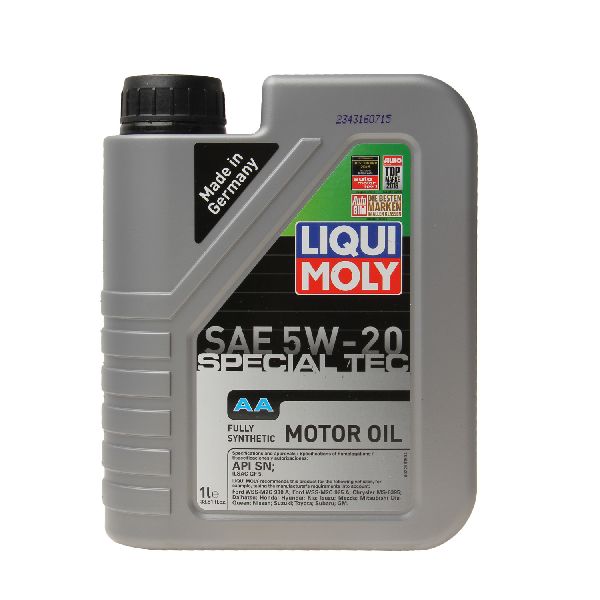
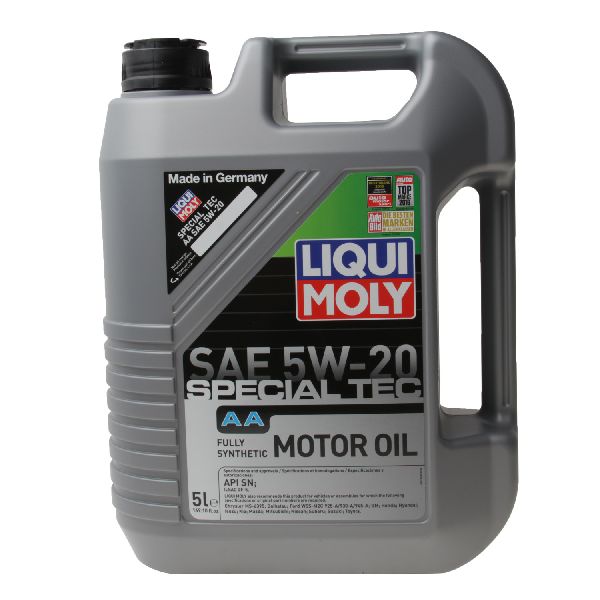
How to confirm: Check the oil level on the dipstick. Note the color and consistency of the oil. Check service records for the last oil change and the type of oil used. The manufacturer specifies full synthetic oil meeting the Mopar MS-6395 standard. Early models typically use 5W-30 or 5W-20, while later models often specify 0W-20.
Typical fix: Perform an engine oil and filter change using the correct specification and viscosity oil for your model year. Always use a quality filter, as some aftermarket filters have been reported to cause sealing issues.
Est. part cost: $50-$90 - Faulty Variable Valve Timing (VVT) Solenoid / Oil Control Valve (OCV) 🟡 Medium Probability The solenoid can become clogged with sludge or metal debris from a failing rocker arm, causing it to stick in the advanced position. It can also fail electrically, which would typically set a P0010 code as well.
How to confirm: Swap the Bank 1 (passenger side) intake VVT solenoid with the Bank 2 (driver side) intake VVT solenoid. They are identical and located on the front of each valve cover. Clear the codes and drive the vehicle. If the code returns as P0021 (the Bank 2 equivalent), the solenoid is faulty. Before installing, inspect the solenoid's screens for metallic debris, which indicates a more serious engine problem.
Typical fix: Replace the Bank 1 intake VVT solenoid. It is highly recommended to clean the solenoid port in the cylinder head before installing the new part, as sludge can accumulate there and block oil flow.
Est. part cost: $45-$150 - Cracked Oil Filter / Cooler Housing Assembly 🟡 Medium Probability The 3.6L Pentastar from 2014 onwards uses a plastic oil filter and cooler housing located in the valley of the engine. This part is notorious for developing cracks from heat cycles, leading to significant oil leaks and a loss of oil pressure that triggers VVT codes. The leak often mimics a rear main seal leak as oil drips down the back of the engine.
How to confirm: Using a flashlight, inspect the engine valley (the 'V' between the cylinder heads, under the intake manifold) for pooled oil. An oil leak in this specific area is a strong indicator of a failed housing. You may also have code P0520 (Engine Oil Pressure Sensor) set, as the sensor is part of this assembly.
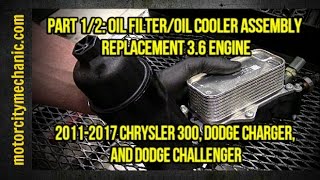
Typical fix: Replace the entire oil filter and cooler housing assembly. This is a moderately labor-intensive job that requires removing the upper and lower intake manifolds. 🎬 Watch: Step-by-step guide to replacing the oil cooler assembly. Many owners opt for an upgraded aluminum aftermarket version (e.g., Dorman 926-959) instead of the OEM plastic part to prevent future failures.
Est. part cost: $100-$250
Rare But Worth Checking
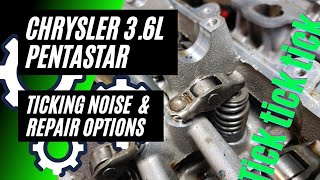
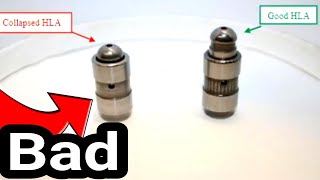
- Failing Rocker Arms and/or Camshaft Lobes: This is a known and serious issue with the 3.6L Pentastar, often called the 'Pentastar Tick'. A persistent ticking noise is the key symptom. The needle bearings in the rocker arms fail, sending metal debris through the oil system, which clogs VVT components and scores the camshaft lobes. If a tick is present, this must be investigated as the root cause before replacing other parts. Early models (2011-2013) had a related cylinder head issue covered by warranty extension X69 (TSB 09-002-14), primarily for misfires on the left bank.
- Failed Camshaft Phaser: The phaser itself, which is the gear on the end of the camshaft, can fail mechanically, get stuck, or become clogged with debris. This is a more complex and expensive repair that should be considered after solenoids and oil issues are ruled out.
- Stretched Timing Chain or Worn Guides: While not as common as other causes, a worn or stretched timing chain can cause the actual cam timing to deviate from the commanded position, triggering correlation codes like P0011. This is more likely on higher-mileage engines.
- Loose Oil Galley Plug: A less common but known issue is an oil galley plug located under the valve cover working itself loose. This causes a localized drop in oil pressure to the cam phasers on that cylinder head, which can trigger VVT codes.
Diagnosis Steps
- Check Engine Oil: Verify the oil level is full and the oil is clean and of the correct viscosity (check owner's manual for 0W-20, 5W-20, or 5W-30). If low, old, or incorrect, perform a complete oil and filter change with oil meeting Mopar MS-6395 specifications. Clear the code and test drive.
- Listen for Noise: With the engine running, listen for a distinct, persistent ticking noise from the top of the engine. If a 'Pentastar tick' is present, the root cause is likely a valvetrain issue (rocker arms/camshafts) that requires removing the valve cover for inspection.
- Swap VVT Solenoids: If the oil is good and there's no ticking, swap the intake VVT solenoids between Bank 1 (passenger) and Bank 2 (driver). Clear the codes. If the fault code changes to P0021, the solenoid you moved is bad and must be replaced. Inspect the solenoid screens for debris during this step.
- Inspect for Oil Leaks: Thoroughly inspect the engine valley under the intake manifold for pooled oil. This is the classic sign of a cracked oil filter housing, which causes a loss of oil pressure.
- Advanced Diagnostics: If the code persists after the above steps, the issue is likely a more serious mechanical problem like a failed cam phaser, stretched timing chain, or loose oil galley plug, which requires professional diagnosis and teardown.
Parts You'll Likely Need
- Engine Oil and Filter — This is the most common and simplest fix. The VVT system relies on clean oil at the correct pressure and viscosity.
Trusted brands: Pennzoil, Mobil 1, Mopar
OEM price range: $60-$90
Aftermarket price range: $50-$80 - Variable Valve Timing (VVT) Solenoid
(OEM #05184150AF (may be superseded))— This is the second most common failure. It gets clogged with debris or fails electrically.
Trusted brands: Mopar, Dorman, NTK
OEM price range: $90-$150
Aftermarket price range: $45-$100 - Oil Filter and Cooler Housing Assembly
(OEM #68105583AG (or superseded))— A very common failure on 2014+ models, causing oil pressure loss that triggers VVT codes. The original plastic design is prone to cracking.
Trusted brands: Mopar, Dorman (Aluminum OE-Fix)
OEM price range: $150-$250
Aftermarket price range: $100-$200
Related Codes That Often Appear With This One
- P0010 — This code indicates an electrical circuit malfunction for the Bank 1 intake VVT solenoid. Seeing it with P0011 strongly points to a faulty solenoid or a wiring/connector issue.
- P0520 — This code for the Engine Oil Pressure Sensor circuit is very common. Since the VVT system is entirely dependent on oil pressure, a fault in the pressure sensor or a genuine loss of pressure (like from a cracked oil filter housing) will often trigger VVT codes.
- P0300, P0301, P0303, P0305 — These are misfire codes for random cylinders (P0300) or the specific cylinders on Bank 1 (passenger side). Incorrect intake valve timing disrupts the air/fuel mixture and combustion stability, leading to misfires.
- P0021 — This is the equivalent P0011 code but for Bank 2 (driver's side). It's not usually seen at the same time, but it's what you look for after swapping VVT solenoids between banks to confirm a bad solenoid.
Technical Service Bulletins (TSBs) & Recalls
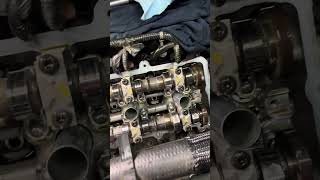
- TSB 09-002-14 Rev. B: Addresses MIL illumination for misfire codes (P0300, P0302, P0304, P0306) on 2011-2013 models due to a cylinder head issue on Bank 2. The fix involves a cylinder leakage test and potential replacement of the left cylinder head. 🎬 Watch: How to locate and replace your VVT solenoids. This was covered under warranty extension X56/X69.
- TSB 18-034-13: PCM flash update for 2014 Grand Cherokee models with 3.6L or 5.7L engines to address a P0456 (EVAP leak) code. Not directly related to P0011 performance.
- TSB 09-008-15: Acknowledges oil filter housing leakage on various 2014 Chrysler vehicles with the 3.6L engine.
- TSB Bulletin #18-044-26: This manufacturer bulletin notes that P0011-00 (Bank 1 Camshaft 1 Position Timing Over Advanced) may be found in active or stored status, often appearing alongside other sensor circuit codes.
Platform-Specific Known Issues
- Rocker Arm Bearing Failure: A well-documented issue where rocker arm needle bearings fail, causing a ticking noise ('Pentastar Tick') and sending metal debris through the oil system, which clogs VVT components.
- Cracked Oil Filter Housing: The original plastic oil filter/cooler housing (on 2014+ models) is prone to cracking with heat cycles, causing oil leaks and low oil pressure. The leak often pools in the engine valley.
- Cylinder Head Failure (Early Models): 2011-2013 models had a known issue with the left cylinder head (Bank 2) that caused misfires. While this primarily set P030x codes, it's part of the engine's early valvetrain issues. Chrysler issued warranty extension X69 (related to TSB 09-002-14) to address this.
Mechanic-Grade Diagnostic Values
- VVT Solenoid / Oil Control Valve Internal Resistance — expected: 8 to 12 Ohms. Failure: A reading of infinite resistance (open circuit) or very low/zero resistance (short circuit). Some sources note that a reading below 8 Ohms can also indicate a failure.
- VVT Solenoid Harness Voltage (Key On, Engine Off) — expected: ~12 Volts (Battery Voltage). Failure: A reading of 0V or significantly less than battery voltage points to a problem in the wiring harness or the PCM driver circuit.
- Scan Tool: Desired vs. Actual Cam Angle — expected: The 'Actual' value should closely track the 'Desired' value as commanded by the PCM.. Failure: With P0011, the 'Actual' angle will be significantly higher (more advanced) than the 'Desired' angle, and will not respond when the PCM commands it to retard.
Scan Tool Commands That Help
- wiTECH (Chrysler Dealer Tool) or equivalent professional scanner: VVT Solenoid Actuation / Control — This bidirectional command allows a technician to manually activate the VVT solenoid while the engine is running or off. It is used to verify if the solenoid clicks (audible confirmation of electrical function) and to observe its effect on cam timing angles and engine performance, helping to isolate a stuck or non-responsive solenoid.
Real Owner Repair Stories
- MotorCity Mechanic YouTube Channel (Chrysler/Dodge/Jeep/Ram with 3.6L Pentastar V6) — Various codes related to oil pressure and VVT system, including P0011.
❌ Tried (didn't work) Replacing VVT solenoids, Replacing cam phasers, Changing oil and filter
✅ What actually fixed it The oil galley plugs located under the valve covers at the front of the cylinder heads had backed out, causing a significant internal oil pressure leak to the VVT system. The fix was to tighten these 13mm bolts to their 13 ft-lbs torque spec, often with Loctite, while the valve covers were off for another service.
OEM Part Supersession History
Multiple, including 68105583AA, AB, AC, AD, AE, AF→68105583AG (for OEM plastic)— Revisions to address cracking and leaking issues in the original plastic design.
Heads up: The Dorman 926-959 aluminum housing is a popular, more durable alternative to the OEM plastic part and is designed to fit a wide range of 2011-2021+ vehicles.05184150AE and earlier→05184150AF— Likely improvements to internal components to prevent sticking and increase durability.
Heads up: 05184150AF is the standard service replacement for most 3.6L Pentastar applications.
Model Year Variations Within This Range
- 2011-2013: These early Pentastar engines were known for a left cylinder head issue that could cause misfires and were subject to a warranty extension (X69). While not directly causing P0011, the associated valvetrain problems could contribute. They used a different, less problematic oil filter housing design than later models.
- 2014+: Starting in the 2014 model year, Chrysler introduced a new plastic oil filter/cooler housing assembly located in the engine valley. This design is highly prone to cracking and leaking, causing a loss of oil pressure that is a primary cause of P0011 on these later models.
- 2016+: The 3.6L Pentastar received an update (PUG - Pentastar Upgrade) which included changes to the VVT system, a new two-stage variable valve lift (VVL) system, and redesigned components. While the fundamental causes of P0011 remain similar, some internal parts like rocker arms are different.
Diagnostic Flowchart
Other Known Issues on This Vehicle
Issues unrelated to this code that are worth knowing about as an owner of this generation:
- Cracked Oil Filter/Cooler Housing (2014+) 🔴 High — Very common after 60,000 miles. The plastic housing becomes brittle from heat cycles and cracks, causing major oil and/or coolant leaks. (Ref: TSB 09-008-15)
- Rocker Arm Bearing Failure ('Pentastar Tick') 🔴 High — Common across all years, can appear after 50,000 miles. Results in a distinct ticking noise and can lead to camshaft damage if ignored.
- Cylinder Head Failure (Bank 2) 🔴 High — Primarily affects 2011-2013 models, causing misfires on cylinders 2, 4, and 6. Less common on later models. (Ref: Warranty Extension X69 (TSB 09-002-14))
- Alternator Failure 🟠 Medium — A recall was issued for sudden alternator failure on 2011-2014 models, which could cause the vehicle to stall. (Ref: NHTSA Recall 14V-634)
- Cooling System Problems (Water Pump/Thermostat) 🟠 Medium — Water pumps and thermostats can fail prematurely, leading to overheating. Not as widespread as the oil filter housing but a notable point of failure.
- Uconnect Infotainment System Glitches 🟡 Low — Common across many model years. Issues include screen freezing, unresponsiveness, phantom touches, and Bluetooth connectivity problems. Often requires software updates or a hard reset.
Used vs. New Parts: Buying Guide for This Vehicle
When a used part is the smart pick: For this code, used parts are generally not recommended for the key components. The failure modes of the VVT solenoids, oil filter housing, and internal engine parts are all related to wear, heat cycles, and contamination. A used part is likely to have similar wear or be close to failure.
Donor-vehicle mileage cap: roughly under 40000 miles for the part to have meaningful remaining life.
What to inspect on the donor part:
- If considering a used VVT solenoid, inspect the mesh screens for any tears or metallic debris. Debris indicates the donor engine had internal wear, and the solenoid should be avoided.
- For any used part, try to get history on the donor vehicle, specifically its maintenance records and mileage.
- Avoid any parts from engines that show signs of heavy oil sludge or neglect.
OEM-only on this vehicle (don't cheap out):
- Camshaft Phasers
- Timing Chain and Guides
Aftermarket brands forum-validated for this vehicle:
- Dorman (specifically the 926-959 aluminum oil filter housing upgrade)
Brands owners have reported issues with on this vehicle:
- Cheap, unbranded VVT solenoids from online marketplaces have a high failure rate.
- Aftermarket plastic oil filter housings can be just as prone to failure as the OEM plastic design; the aluminum upgrade is the preferred aftermarket solution.
Real Owner Stories
Aggregated from forums and TSBs cited above. Mileages and costs reflect what owners reported in those sources.
2013 Jeep Grand Cherokee 3.6L Pentastar V6 — 187000 miles
Symptoms: The vehicle kept getting a P0011 code. Cleaning the solenoid did not resolve the issue.
What fixed it: Replacing the VVT solenoid with an aftermarket part fixed the issue for at least 28,000 miles.
Source hint: Real Owner Story on a Jeep (Same Engine) - forum_citations
2012 Ram 1500 3.6L Pentastar V6
Symptoms: P0011 code returned quickly even after the VVT solenoid was replaced.
What fixed it: Thoroughly cleaning a thick layer of sludge inside the mounting port in the cylinder head which was blocking oil flow to the new solenoid.
Source hint: DIY Tip: Clean the Solenoid Port - forum_citations
Related OBD-II Codes
Frequently Asked Questions
Does TSB 09-002-14 apply to my 2012 Chrysler 300 with the 3.6L Pentastar?
I have a 2015 Chrysler 300 and see oil pooling in the engine valley. Could this cause P0011?
What specific oil should I use in my Chrysler 300 to prevent VVT issues?
Can I just clean the VVT solenoid on my 3.6L Pentastar to fix P0011?
Is there an upgraded part for the oil filter housing that keeps cracking?
What is the 'Pentastar Tick' and is it related to my P0011 code?
Helpful Videos

Used OEM Parts in Stock


New Aftermarket Parts Available


The information in this article is provided for general reference and educational purposes only. Vehicle specifications, procedures, and part compatibility can vary by production date, trim level, and region. Always consult your vehicle's factory service manual and verify part numbers before purchasing or performing repairs. Safety-critical components such as airbags, seat belts, and braking systems should be installed by a qualified professional.
- Chrysler 300:
- 🎬 Helpful Videos
- 🛍️ Shop This Part
- What's Unique About the 2011-2023 Chrysler 300
- Symptoms You May Notice
- Most Likely Causes
- Rare But Worth Checking
- Diagnosis Steps
- Parts You'll Likely Need
- Related Codes That Often Appear With This One
- Technical Service Bulletins (TSBs) & Recalls
- Platform-Specific Known Issues
- Mechanic-Grade Diagnostic Values
- Scan Tool Commands That Help
- Real Owner Repair Stories
- OEM Part Supersession History
- Model Year Variations Within This Range
- Diagnostic Flowchart
- Other Known Issues on This Vehicle
- Used vs. New Parts: Buying Guide for This Vehicle
- Real Owner Stories
- 2013 Jeep Grand Cherokee 3.6L Pentastar V6 — 187000 miles
- 2012 Ram 1500 3.6L Pentastar V6
- Related OBD-II Codes
- Frequently Asked Questions
- 🎟️ Get 5% Off