

U1424 on 2017-2024 Chrysler Pacifica: Implausible Engine Torque Signal Fixes
Code U1424 on a Chrysler Pacifica most often indicates a software issue within the Powertrain Control Module (PCM). The primary fix is a software update performed by a Chrysler dealership, which should be the first step in diagnosis before replacing any parts. A weak battery is the second most common cause.
- U1424 is a communication error, not a mechanical failure. It means the engine's reported torque value is conflicting with other vehicle data.
- The most probable cause is a software glitch in the Powertrain Control Module (PCM). Always check with a dealer for available software updates before replacing parts.
- A weak or failing 12V battery is the second most likely cause and should be professionally load-tested early in the diagnostic process.
- Symptoms often manifest as transmission problems (erratic shifting, lack of power), but the transmission itself is rarely the faulty component.
- Do not replace expensive parts like the PCM or transmission until software, battery, and wiring have been thoroughly checked.
What's Unique About the 2017-2024 Chrysler Pacifica
On many modern Chrysler products, including the Pacifica, U1424 is frequently traced back to software logic rather than a hard part failure. Chrysler has released numerous Technical Service Bulletins (TSBs) for various models that address this code with a PCM software update. This suggests the original programming can be overly sensitive or has bugs that are corrected in later software versions. For the 2018 Pacifica specifically, TSB 18-001-19 REV. B was released to address rough idle and other issues via a PCM reflash. Therefore, checking for an available software update is a critical first step specific to this platform.
Symptoms You May Notice
- Check Engine Light is on
- Traction Control or Stability Control light may illuminate
- Poor or hesitant acceleration
- Erratic or harsh transmission shifting
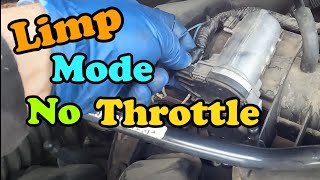
- Vehicle may feel like it's stuck in one gear or in 'limp mode'
- Reduced engine power
- Shudder upon startup
- Replacing the transmission or torque converter. Transmission shifting problems are often a symptom of this code, not the cause. The transmission is simply reacting to the bad data it's receiving from the engine controller.
Most Likely Causes
- Outdated Powertrain Control Module (PCM) Software 🔴 High Probability Chrysler has issued multiple TSBs across its lineup to fix this code with a software update, indicating it's a known issue with the factory programming logic. TSB 18-001-19 REV. B specifically applies to the 2018 Pacifica and involves a PCM reflash to fix various drivability symptoms.
How to confirm: A Chrysler dealership or a properly equipped independent shop can check for available PCM software updates using the vehicle's VIN and a wiTECH scan tool.
Typical fix: Reprogramming the PCM with the latest available software. The dealer must ensure the TCM is also updated to the latest software version after the PCM flash.
Est. part cost: $0 - Weak or Failing Battery 🟡 Medium Probability Modern vehicles are highly sensitive to voltage. A battery that provides low voltage, especially during startup, can cause communication glitches between modules, triggering network codes like U1424. The Pacifica, with its extensive electronics and sometimes a dual-battery system (for Engine Start-Stop), is particularly susceptible to voltage-related faults.
How to confirm: Perform a load test on the battery. A simple voltage check is not sufficient. Most auto parts stores can do this for free. Ensure both the main and auxiliary batteries (if equipped) are tested.
Typical fix: Replace the 12V battery (or batteries).
Est. part cost: $180-$350 - Faulty Crankshaft or Camshaft Position Sensor ⚪ Low Probability A sensor providing incorrect data can cause the PCM's torque calculation to be implausible. TSBs for other Chrysler models link U1424 with crankshaft sensor codes (P0335). A faulty camshaft sensor (P0340/P0344) can also be a root cause, as it directly impacts engine timing and performance calculations that feed into the torque signal.
How to confirm: Scan for other trouble codes. Codes for specific sensors like P0335 (crankshaft) or P0340/P0344 (camshaft) will point to the failing component. Diagnosing these codes first is crucial.
Typical fix: Replace the faulty sensor. The camshaft position sensor on the 3.6L Pentastar is relatively accessible.
Est. part cost: $40-$150 - Wiring Harness Issues or Dirty Throttle Body ⚪ Low Probability Corroded grounds or damaged wires in the CAN bus network can corrupt signals between modules. On Pacificas, poor ground connections have been noted to cause various electrical issues. Additionally, a dirty throttle body can cause a mismatch between expected and actual airflow, leading to implausible torque calculations and sometimes triggering limp mode.
How to confirm: Visually inspect wiring harnesses connected to the PCM, TCM, and ABS module for damage, corrosion, or looseness. Check main chassis and engine ground points for tightness and lack of corrosion. Inspect the throttle body for carbon buildup.
Typical fix: Repair the damaged wire or clean/tighten the ground connection. Clean the throttle body with a dedicated throttle body cleaner.
Est. part cost: $5-$50
Rare But Worth Checking
- Failing Powertrain Control Module (PCM): This is a last resort. All other possibilities, especially software and wiring, should be exhausted before condemning the PCM.
- Aftermarket Accessories: Improperly installed remote starters, alarms, or performance tuners can interfere with the CAN bus network and trigger communication codes.
Diagnosis Steps
- Scan for all codes in all modules. Pay close attention to any accompanying codes, as they can point to the root cause. Codes for engine sensors (crank, cam) should be addressed first.
- Check for Technical Service Bulletins (TSBs). Contact a dealer with your VIN to see if a PCM software update is available to address U1424. Specifically mention TSB 18-001-19 REV. B if you have a 2018 model.
- Test the battery. Perform a proper load test on the 12V battery to ensure it's healthy. Low voltage is a common cause of network communication faults.
- Inspect wiring and grounds. Check the main wiring harnesses to the PCM, TCM, and ABS module for any visible damage. Ensure engine and chassis ground straps are clean and tight.
- Diagnose other codes first. If codes for specific sensors like the crankshaft sensor (P0335) or camshaft sensor (P0340/P0344) are present, diagnose and fix those issues first, as they are likely the root cause.
- Inspect the Throttle Body. If no other cause is found, check for and clean any carbon buildup on the electronic throttle body.
- If all else fails, consider professional diagnosis of the PCM itself.
Parts You'll Likely Need
- Powertrain Control Module (PCM) Software Update — This is the most common fix documented by Chrysler in multiple TSBs to correct logic errors that cause the code.
Trusted brands: Mopar (Dealer Service)
OEM price range: $100-$250
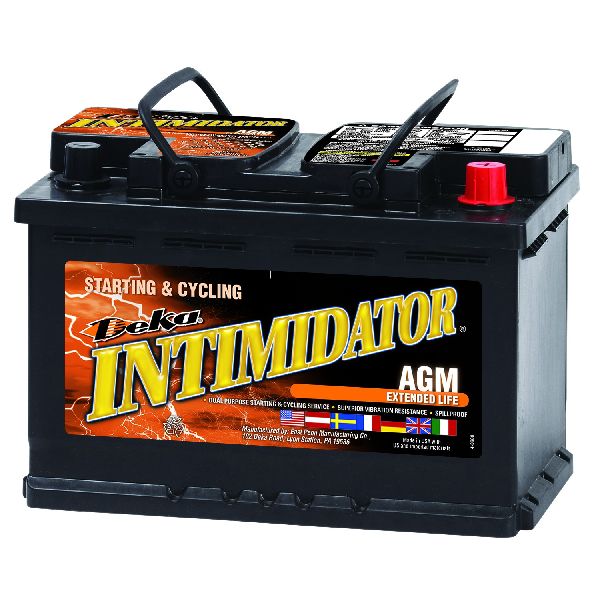
Aftermarket price range: N/A - 12V AGM Battery — A weak battery is a frequent cause of network communication faults on modern, computer-heavy vehicles.
Trusted brands: Mopar, Duralast, DieHard
OEM price range: $250-$400
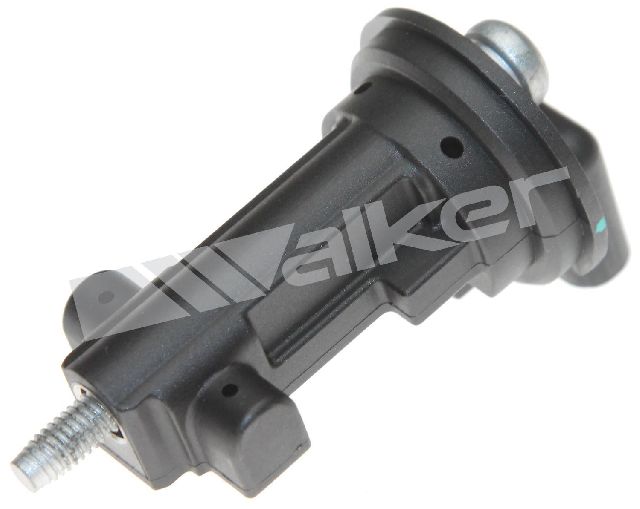
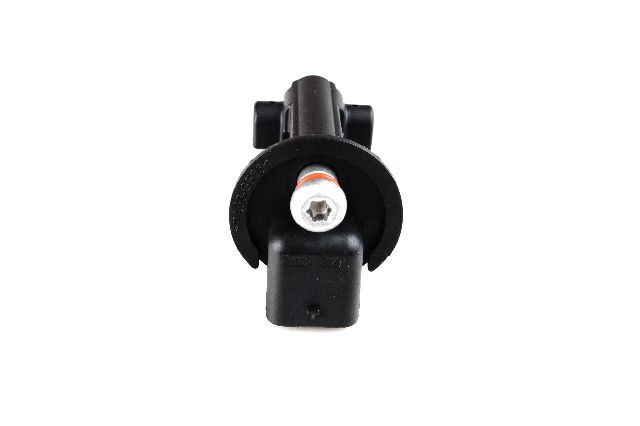
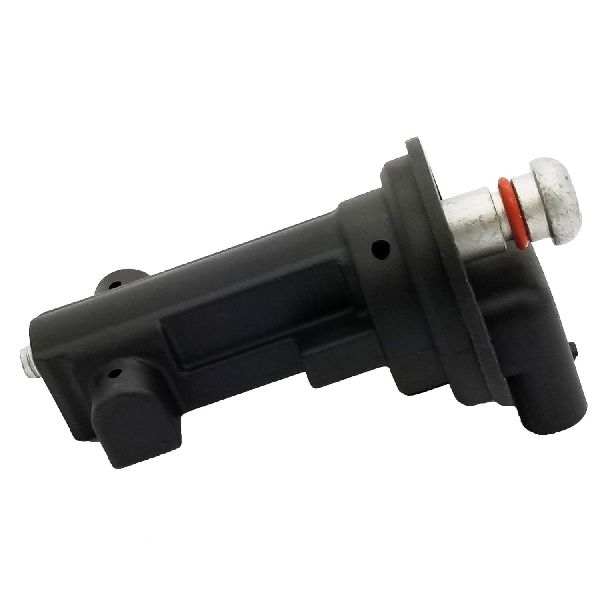
Aftermarket price range: $180-$350 - Camshaft Position Sensor
(OEM #68080819AD (example, verify with VIN))— Often seen with companion code P0340 or P0344, a faulty cam sensor can be the root cause of the implausible torque calculation.
Trusted brands: Mopar, NTK, Standard Motor Products
OEM price range: $50-$90
Aftermarket price range: $30-$60
Related Codes That Often Appear With This One
- P1DD2 — This code means 'Torque Request Signal From TCM Denied'. It often appears with U1424 and indicates the PCM has rejected a request from the Transmission Control Module (TCM) due to the implausible torque data. They are very frequently seen together.
- P0335 — This code for the 'Crankshaft Position Sensor Circuit' can be a root cause for U1424, as a bad crank signal leads to incorrect torque calculations. TSB 18-062-17 explicitly lists both codes together.
- U0402 — This code means 'Implausible Data Received From TCM'. It indicates a general data conflict with the transmission module, which is closely related to the torque signal issue.
- P0340 / P0344 — These codes relate to the Camshaft Position Sensor. A faulty cam sensor can lead to incorrect engine timing data, which in turn causes the PCM to calculate an implausible torque value, triggering U1424.
Technical Service Bulletins (TSBs) & Recalls
- 18-001-19 REV. B: Specifically for the 2018 Pacifica, this involves a PCM reflash to fix drivability issues.
- 18-071-20: Mentions U1424-00 - Implausible Engine Torque Signal Received on Chrysler 300, pointing to a software fix.
- 18-052-16 REV. A: Links U1424-00 with other codes like P0335 (Crankshaft Position Sensor Circuit) on a Chrysler 200, highlighting potential sensor-related causes.
- 21-008-21: A TCM flash for the 2017 Pacifica to address various shift quality issues and DTCs. While not directly for U1424, it shows the importance of keeping all modules updated.
- 18-062-17: Lists U1424 alongside P0335 (Crankshaft Position Sensor) for various FCA vehicles, confirming the link between a bad sensor and this network code.
Platform-Specific Known Issues
- TSB 18-001-19 REV. B: Specifically for the 2018 Pacifica, this bulletin involves a PCM software update to address rough idle, ESS (Engine Start-Stop) issues, and other drivability concerns that can accompany network codes.
Mechanic-Grade Diagnostic Values
- Camshaft Position Sensor Signal Voltage (3.6L Pentastar) — expected: Switches between ~5V and ~0V when a magnet is brought near the sensor tip.. Failure: Voltage does not switch, or is stuck at 0V or 5V.
- Camshaft Position Sensor Supply Voltage (3.6L Pentastar) — expected: Approximately 5V with the ignition on, engine off.. Failure: Voltage is significantly lower than 5V or absent.
- CAN Bus Resistance — expected: ~60 ohms between CAN High (Pin 6) and CAN Low (Pin 14) at the OBD-II port with the battery disconnected.. Failure: Resistance is ~120 ohms (indicating a missing terminating resistor or open circuit) or 0 ohms (indicating a short circuit).
Hidden / Shadow Codes Worth Checking
- U1424-00: The '-00' suffix is a Failure Type Code (FTC) used by Chrysler. While a generic definition is not publicly available, its consistent appearance in TSBs for 'Implausible Engine Torque Signal Received' indicates it's the primary variant addressed by software updates. (see via A professional scan tool like the dealer's wiTECH or a high-end Autel/Snap-on scanner that can read manufacturer-specific codes and FTCs.)
Scan Tool Commands That Help
- wiTECH or equivalent professional scanner: Clear all DTCs — This is required after a PCM reflash to ensure no old codes remain in any modules.
- wiTECH or equivalent professional scanner: Reset Adaptive Values / Quick Learn (in TCM) — After addressing the root cause of U1424 (like a software update or sensor replacement), resetting the transmission's learned shift behavior can resolve lingering harsh shifting symptoms.
- wiTECH or equivalent professional scanner: Throttle Body Relearn / Reset — If the throttle body was cleaned or replaced during diagnosis, this function resets the learned closed-throttle position, which is critical for accurate torque calculation. A manual relearn may also be possible.
Wiring & Ground Locations
- CAN Bus Star Connectors — The Pacifica has multiple CAN bus junction points, often called 'star connectors'. A scan tool's topology map can show which modules are connected to each. One is located up front, and another in the rear, connecting various modules to the Security Gateway Module (SGW).. A fault, corrosion, or loose connection at one of these central connectors can disrupt communication for multiple modules simultaneously, potentially causing network codes like U1424.
- PCM Connectors — On many Chrysler vehicles, the PCM is mounted on the firewall.. These connectors are a critical point for checking for corrosion or water intrusion, which can disrupt the engine torque signal and other sensor inputs.
- Engine/Transmission Ground Straps — Main ground points are typically from the battery negative terminal to the chassis, and from the engine block or transmission case to the chassis.. A poor ground can cause floating voltages and unpredictable behavior in electronic modules, leading to communication errors. Adding a supplementary ground wire is a known fix for electrical issues on some Chrysler platforms.
Real Owner Repair Stories
- YouTube channel 'Online Mechanic Tips' (2015 Chrysler 300 with 3.6L Pentastar V6 and 8-speed transmission (similar powertrain)) — Poor shifting, lack of power, vehicle not idling correctly.
❌ Tried (didn't work) The initial complaint suggested a transmission replacement.
✅ What actually fixed it Diagnosis revealed the U1424 and P1DD2 codes in the TCM were symptoms, not the cause. The root cause was found in the PCM: codes for camshaft position and engine oil pressure. The mechanic emphasized that fixing the underlying engine VVT system issues (related to oil pressure or cam sensors) would resolve the transmission-related codes, and replacing the transmission would have been a misdiagnosis. - Reddit user in r/MechanicAdvice (2015 Chrysler 200 with 3.6L V6) — Goes into limp mode, won't shift. Codes U1424, P0344, P0340, P0457 present.
❌ Tried (didn't work) Initial scan showed multiple codes.
✅ What actually fixed it The user reported that replacing the bank 1 exhaust camshaft position sensor resolved the issue. This confirms that a faulty cam sensor can be the direct cause of the U1424 code.
OEM Part Supersession History
5033308AB, 68080819AB, 68080819AC→68080819AD— Part has been revised multiple times by the manufacturer, likely for improved reliability or performance.
Heads up: The latest part number (68080819AD) is the recommended replacement for all previous versions.
Diagnostic Flowchart
Other Known Issues on This Vehicle
Issues unrelated to this code that are worth knowing about as an owner of this generation:
- Engine Stalling / Sudden Shutdown 🔴 High — Common enough to trigger a recall for 2017 models. Owners of other years also report stalling. (Ref: Recall U06 (NHTSA 17V-741) for 2017 models involved an engine control software update to fix stalling.)
- Harsh/Jerky Transmission Shifting 🟠 Medium — A widely reported issue, particularly in 2017-2018 models, involving rough shifts, lurching, and hesitation. (Ref: Multiple TCM software update TSBs exist, such as 21-008-21 for the 2017 model, to improve shift quality.)
- Uconnect Infotainment Screen Delamination 🟡 Low — Very common across all model years. Bubbles appear under the screen, leading to 'ghost touches' and eventual non-responsiveness. (Ref: No recall, but it is a well-documented physical failure of the screen's adhesive layers.)
- Pacifica Hybrid High-Voltage Battery Fire Risk 🔴 High — Affects specific 2017-2022 PHEV models, leading to multiple recalls. (Ref: Multiple recalls (e.g., NHTSA 22V-077, 20V-106) advise owners not to charge the vehicle and to park outside due to fire risk.)
- Pacifica Hybrid Stalling / 'Service Charging System' Message 🔴 High — Reported by numerous hybrid owners, where the vehicle stalls while driving and displays a charging system warning. (Ref: TSB 21-025-25 REV. A addresses related transmission internal wiring/bearing issues under an extended warranty (XE1).)
Used vs. New Parts: Buying Guide for This Vehicle
When a used part is the smart pick: For this specific code, used parts are generally not recommended for the primary fixes. A software update must be done at a dealer. A used battery is never a good idea. For related sensor faults (cam/crank), the labor involved often justifies using a new part with a warranty. A used throttle body could be a viable option if it's thoroughly cleaned before installation.
Donor-vehicle mileage cap: roughly under 60000 miles for the part to have meaningful remaining life.
What to inspect on the donor part:
- For a throttle body, check for a clean throttle plate and bore with minimal carbon buildup.
- Ensure all electrical connectors are free of corrosion or damage.
- Verify the part comes from a vehicle that was not in a front-end collision.
OEM-only on this vehicle (don't cheap out):
- Powertrain Control Module (PCM): A used PCM will have the VIN from the donor car and will not start the vehicle. It requires dealer programming.
- Camshaft/Crankshaft Position Sensors: While aftermarket sensors exist, OEM (Mopar) sensors are strongly recommended for Chrysler products to avoid compatibility and premature failure issues that are common with off-brand electronics.
Aftermarket brands forum-validated for this vehicle:
- NTK (for Cam/Crank sensors)
- Standard Motor Products (for sensors and solenoids)
Brands owners have reported issues with on this vehicle:
- Ultra-cheap, unbranded sensors from online marketplaces often fail quickly or are dead-on-arrival.
Real Owner Stories
Aggregated from forums and TSBs cited above. Mileages and costs reflect what owners reported in those sources.
2017 Chrysler Pacifica
Symptoms: Service Electronic Throttle Control light and P1DD2 code appeared after the vehicle sat in the cold.
What fixed it: The problem resolved itself after a thorough warm-up, suggesting the issue was related to battery voltage or temperature.
Source hint: pacificaforums.com - Thread 'P1DD2 Service Electronic Throttle Control'
2017 Chrysler Pacifica
Symptoms: Check engine light with codes P0303, P1DD2, and U1424, accompanied by a shudder upon startup.
What fixed it: Diagnosis revealed a base engine problem (Cylinder 3 misfire) was triggering the network and torque-related codes.
Source hint: reddit.com/r/MechanicAdvice - Thread 'Chrysler Pacifica 2017'
2017-2024 Dodge Durango 3.6L
Symptoms: Combination of CEL codes P0335, U1424, P1DD2, and U0140.
What fixed it: The issue was traced to either a failing Crankshaft Position Sensor or a weak battery, which are common failure points for this code grouping on the 3.6L platform.
Source hint: dodgeforum.com - Thread 'Trouble - CEL codes P0335,U1424, P1DD2, U0140'
Related OBD-II Codes
Frequently Asked Questions
I have a 2018 Chrysler Pacifica with a rough idle and U1424; is there a specific software fix?
My 2017 Pacifica stalled and now shows U1424; is this part of a recall?
Does the dealer need to update the transmission software if they flash the PCM for U1424?
Can a bad auxiliary battery on my Pacifica trigger the U1424 code?
Is there a TCM-specific update for the 2017 Pacifica to help with shift quality and codes?
Helpful Videos
Used OEM Parts in Stock

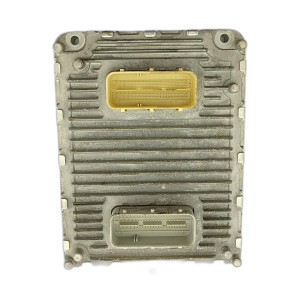


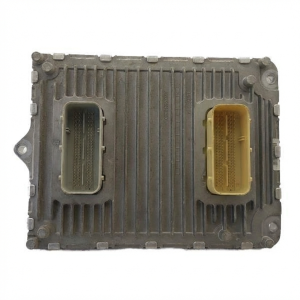
New Aftermarket Parts Available


The information in this article is provided for general reference and educational purposes only. Vehicle specifications, procedures, and part compatibility can vary by production date, trim level, and region. Always consult your vehicle's factory service manual and verify part numbers before purchasing or performing repairs. Safety-critical components such as airbags, seat belts, and braking systems should be installed by a qualified professional.
- Chrysler Pacifica:
- 🎬 Helpful Videos
- 🛍️ Shop This Part
- What's Unique About the 2017-2024 Chrysler Pacifica
- Symptoms You May Notice
- Most Likely Causes
- Rare But Worth Checking
- Diagnosis Steps
- Parts You'll Likely Need
- Related Codes That Often Appear With This One
- Technical Service Bulletins (TSBs) & Recalls
- Platform-Specific Known Issues
- Mechanic-Grade Diagnostic Values
- Hidden / Shadow Codes Worth Checking
- Scan Tool Commands That Help
- Wiring & Ground Locations
- Real Owner Repair Stories
- OEM Part Supersession History
- Diagnostic Flowchart
- Other Known Issues on This Vehicle
- Used vs. New Parts: Buying Guide for This Vehicle
- Real Owner Stories
- 2017 Chrysler Pacifica
- 2017 Chrysler Pacifica
- 2017-2024 Dodge Durango 3.6L
- Related OBD-II Codes
- Frequently Asked Questions
- 🎟️ Get 5% Off