

U0101 on 2007-2016 Audi A5: Lost Communication With TCM Causes and Fixes
On a 2007-2016 Audi A5, code U0101 almost always indicates a failure of the Transmission Control Module (TCM), which is integrated into the Mechatronic unit inside the transmission. This is a common and well-documented issue, especially on S-Tronic (DL501) models. The repair is complex, expensive, and requires professional service, often involving rebuilding or replacing the entire Mechatronic unit. Before condemning the Mechatronic, it is critical to rule out wiring issues, particularly corrosi
- U0101 on a 2007-2016 Audi A5 is a critical code that makes the vehicle unsafe to drive.
- The cause is almost certainly a failure of the Mechatronic unit (which contains the TCM) inside the transmission, a known weak point on these cars.
- While less common, always check fuses and wiring for corrosion or damage, especially in the engine bay plenum area, before condemning the expensive Mechatronic unit.
- This is not a DIY repair. It requires a professional with specialized tools for diagnosis, removal, and programming of the replacement part.
What's Unique About the 2007-2016 Audi A5
For this generation of Audi A5 (8T/8F), particularly those with the 7-speed S-Tronic (DL501/0B5) dual-clutch transmission, the U0101 code is notoriously linked to the failure of the Mechatronic unit. This single, complex component houses both the hydraulic valve body and the electronic Transmission Control Module (TCM). Internal circuit board failures are so common that many specialist shops offer repair or remanufacturing services specifically for this part. Unlike a simple external sensor or wire, this failure requires removing and disassembling a core part of the transmission. Early B8 models (approx. 2008-2013) are considered more prone to this failure than the facelifted B8.5 models (2013-2016), which received revised Mechatronic units.
Generation note: The 2007-2016 year range covers the first generation of the Audi A5, known as the Type 8T/8F. The issues and fixes are generally consistent across this entire generation, though early models (pre-2013) with the S-Tronic DL501 transmission are more susceptible to Mechatronic failure.
Symptoms You May Notice
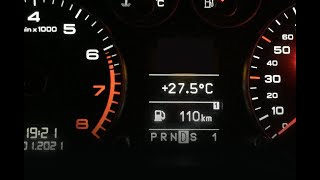
- Flashing 'PRNDS' indicator on the dashboard.
- Transmission enters 'limp mode', often stuck in a single gear.
- Harsh, jerky, erratic, or delayed shifting.
- Inability to select gears; may be stuck in Park or Neutral.
- Vehicle may not start, as the ECU needs to confirm the transmission is in Park or Neutral.
- Complete loss of forward or reverse gears.
- Illuminated Check Engine Light and/or Transmission Warning Light (EPC light).
- Message on dash: 'Transmission Malfunction: you can continue to drive' which may be followed by a loss of drive.
- Scan tool cannot communicate with the transmission module (Address 02).
- Replacing the entire transmission. While the faulty part is inside the transmission, the gearbox's mechanical components are often fine. A Mechatronic unit repair/replacement is usually sufficient and more cost-effective.
- Replacing the gear shifter assembly. The shifter lights may go out as a symptom of the U0101 code, not the cause. 🎬 Watch: Common causes and fixes for the U0101 code
- Unnecessarily replacing the Mechatronic unit when the actual fault is a simple corroded power wire or fuse in the plenum chamber.
Most Likely Causes
- Internal Mechatronic / TCM Failure 🔴 High Probability The S-Tronic (DL501) and some Multitronic (CVT) transmissions in this era have well-documented issues with the internal circuit board of the Mechatronic unit failing due to heat, vibration, and delamination over time. The circuit board and its integrated sensors are known weak points.
How to confirm: A professional scan tool (like VCDS) cannot establish communication with the transmission module (address 02). If power, ground, and CAN bus wiring to the module are confirmed good, the module itself has failed.
Typical fix: The Mechatronic unit must be removed from the transmission. It can either be replaced with a new, expensive OEM unit that requires programming, or sent to a specialist for a more cost-effective repair/rebuild of the circuit boards and solenoids.
Est. part cost: $650-$2500 - Corroded or Damaged Wiring/Connectors 🟡 Medium Probability Water ingress in the plenum chamber (under the windshield cowl) is a well-documented issue. Clogged drains cause water to overflow and drip onto the fuse box and wiring harnesses located there, causing corrosion on the power supply wire for the TCM.
How to confirm: Visually inspect the fuse carrier under the ECU in the plenum box for any signs of water damage, debris, or corrosion. Test for 12V power and good ground at the TCM connector pins. Test CAN bus resistance between CAN-High and CAN-Low (should be ~60 ohms with battery disconnected).
Typical fix: Clean corroded terminals, repair the damaged section of the wiring harness, or replace the affected fuse/relay. The source of the water leak (clogged plenum drains) must be cleared to prevent recurrence.
Est. part cost: $10-$200 - Low Battery Voltage or Failing Alternator ⚪ Low Probability Modern German vehicles are highly sensitive to voltage. A weak battery or failing alternator can cause sporadic communication errors across various modules before the car fails to start.
How to confirm: Test the battery voltage with the engine off (should be >12.4V). Test the alternator output with the engine running (should be 13.8V-14.5V). If the U0101 code appears alongside multiple other communication codes for different modules, low system voltage is a likely suspect.
Typical fix: Replace the battery and/or alternator. Ensure the new battery is properly coded to the vehicle's battery management system.
Est. part cost: $200-$700
Diagnosis Steps
- Scan all vehicle modules with an Audi-specific scan tool (like VCDS or OBD Eleven). Confirm that Address 02 (Auto Trans) is 'Cannot be reached' and note all other stored fault codes.
- Check and test the battery and charging system. Ensure voltage is stable and within spec (>12.4V off, 13.8-14.5V running) to rule out low voltage as the cause.
- CRITICAL: Inspect the plenum chamber. Remove the plastic cowl under the windshield and check the fuse/relay box for any signs of water intrusion, leaves, debris, or corrosion. A corroded power supply wire here is a very common cause.
- Check all fuses related to the Transmission Control Module. These can be in multiple locations: driver's side dash, passenger side dash, trunk, and the plenum chamber box.
- If fuses and plenum box wiring are good, access the main 16-pin transmission connector. Inspect for damage, corrosion, or pushed-out pins. Test for 12V power, proper ground, and CAN bus network integrity (~60 ohms resistance between CAN-High and CAN-Low with battery disconnected).
- If power, ground, and the CAN bus network are confirmed to be good all the way to the transmission connector, the fault is internal to the transmission. The Transmission Control Module (Mechatronic unit) is faulty and needs to be repaired or replaced.
Parts You'll Likely Need
- Mechatronic Unit / Transmission Control Module
(OEM #0B5325026AE028)— This is the component that most commonly fails internally, causing the U0101 code on this platform.
Trusted brands: Audi Genuine, BorgWarner (OEM for clutches), ACTRONICS (Remanufacturing service), ECU Testing (Remanufacturing service), XeMODeX (Remanufacturing service)
OEM price range: $1500-$2500
Aftermarket price range: $650-$1200 (for remanufacturing service) - Mechatronic Repair Kit (Circuit Boards)
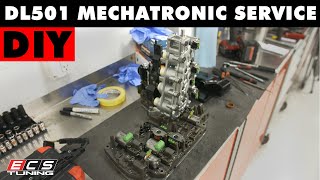
(OEM #0B5398048D)— For workshops that perform in-house repairs, this kit contains solenoids and a new circuit board to rebuild a faulty Mechatronic unit for the DL501 S-Tronic transmission. This is often related to Audi TSB 2025264/13. 🎬 Watch: How to rebuild a DL501 Mechatronic using the repair kit
Trusted brands: Audi Genuine
OEM price range: $400-$600
Related Codes That Often Appear With This One
- P0722 — Stands for 'Output Speed Sensor Circuit No Signal'. This sensor is physically located on the same Mechatronic circuit board that fails and causes U0101. A severe board failure can trigger both codes.
- Multiple U-codes (e.g., U0121, U0155) — If multiple 'Lost Communication' codes for different modules (like ABS or Instrument Cluster) appear at the same time, it points towards a general network problem, such as a CAN bus wiring short, a failing gateway module, or low system voltage, rather than just a faulty TCM.
- P179D — Stands for 'Coolant Oil Valve Electrical Fault'. This is frequently cited alongside U0101 in TSBs regarding Mechatronic failures, pointing directly to an internal electrical fault within the unit.
- P174B, P174F, P174C, P174A, P174E — These codes all relate to electrical faults in the valves within the Mechatronic's sub-gearboxes. Their presence strongly suggests an internal circuit board or solenoid failure.
Technical Service Bulletins (TSBs) & Recalls
- TSB 2025264/13: References a repair kit solution for the 7-speed S-Tronic (DL501) transmission for various gearbox malfunction codes, often involving the circuit board.
- TPI 2039534/12: Technical Product Information related to Mechatronic repair, often associated with repair kit 0B5398048C.
Platform-Specific Known Issues
- The DL501 S-Tronic transmission's Mechatronic unit is a known major failure point, with the internal TCM circuit board being the primary culprit, especially in pre-2013 models.
- Water ingress into the engine bay plenum is a critical check. Clogged drains cause water to corrode fuse blocks and wiring that supply power to the TCM, leading to communication loss that mimics a failed Mechatronic unit.
Mechanic-Grade Diagnostic Values
- CAN Bus Network Resistance — expected: Approximately 60 Ω. Failure: A reading of 120 Ω indicates one of the two terminating resistors is offline. A reading significantly less than 60 Ω suggests a short circuit in the wiring or a faulty module.
- TCM Power Supply Voltage — expected: 12.0 - 12.6V with ignition on, engine off.. Failure: Low or no voltage indicates a problem with the fuse, relay, or wiring from the power distribution block. Voltage that drops under load (when connected) points to a high-resistance fault, often due to corrosion.
- TCM Ground Resistance — expected: Less than 0.5 Ω. Failure: High resistance indicates a poor ground connection, which can cause communication errors.
Scan Tool Commands That Help
- ODIS (Audi Dealer Tool): Component Protection Removal — This is mandatory when installing a new or used Mechatronic/TCM unit. Without this online procedure, the module will not function in the vehicle, and the car will remain in a no-start or limp-mode state.
- VCDS (Ross-Tech): Basic Settings - Group 060 (or similar, varies by TCU) — After a Mechatronic repair or replacement, a basic settings procedure must be run to allow the TCM to relearn clutch engagement points and shift fork positions. This is often called 'Adaptation'.
- VCDS (Ross-Tech): Erase specific adaptation values — To resolve harsh shifting after a repair, individual adaptation counters for the clutches can be viewed in Advanced Measuring Values and reset. This forces the TCM to perform a new learning cycle.
Wiring & Ground Locations
- TCM Main Connector (T16r) — On the transmission housing, where the main vehicle harness connects to the Mechatronic unit. It is a large, round, twist-lock connector.. This is the single point of connection for all power, ground, and CAN bus signals to the TCM. All external diagnostic tests for the TCM's wiring are performed here.
- Plenum Chamber Fuse/Relay Panel — Under the plastic cowl at the base of the windshield, inside a black plastic box (E-box).. This area is prone to water ingress from clogged drains. It houses fuses and power supply wires for the TCM. Corrosion here is a common cause of power loss to the TCM, triggering U0101.
- Ground Point G100 (Example) — Locations vary, but common ground points for control modules are found on the chassis rails in the engine bay or on the firewall. A specific example for a similar platform showed a faulty ground splice connector near the passenger side ground point causing the issue.. A faulty ground is a common cause of communication codes. The TCM requires a solid ground connection to communicate reliably on the CAN bus.
Real Owner Repair Stories
- Ross-Tech Forums user (2013 Audi A4 B8.5 (similar platform and issue)) — Intermittent no-start, flashing PRNDS, inability to communicate with TCM (VAG01315, equivalent to U0101).
❌ Tried (didn't work) Replacing power relays ('645' relays)., Cleaning the main transmission connector (T16r)., Testing continuity of CAN wires from the connector to the ECM., Checking fuses SB1 and SB12.
✅ What actually fixed it The user discovered the fuse carrier for fuse SB1 in the plenum chamber box was not receiving battery voltage. Upon lifting the fuse carrier, severe water damage and corrosion were found underneath, causing an open circuit on the power feed wire to the fuse. Hot-wiring the fuse carrier to the battery temporarily restored communication, confirming the root cause was the corroded power supply wire in the plenum box, not a failed TCM. - NHTSA ODI #11450718 (Audi Q3 owner - cross-manufacturer reference) — An owner reported a no-start condition even after installing a new battery. A diagnostic scan revealed U0101 (Loss of communication to TCM), requiring the vehicle to be towed to the dealership for further investigation.
OEM Part Supersession History
0B5398009A/B/C→0B5398048D (or later revisions like 0B5398009F)— Revisions to the circuit boards and solenoids to improve reliability and address common failure modes like sensor and wiring harness degradation.
Heads up: While newer kits can often be used to repair older units, it's critical to use the correct repair procedure. There are different gear actuator adjustment settings depending on the build date of the Mechatronic unit, which must be followed to avoid damage.
Model Year Variations Within This Range
- Approx. 2008-2012 (B8): These models used earlier versions of the DL501 Mechatronic unit and are considered more susceptible to internal circuit board failure, leading to U0101.
- Approx. 2013-2016 (B8.5 Facelift): These models received updated Mechatronic units and repair kits (e.g., 0B5398048D) with improved circuit boards and wiring, making them generally more reliable, though failures can still occur.
Diagnostic Flowchart
Other Known Issues on This Vehicle
Issues unrelated to this code that are worth knowing about as an owner of this generation:
- Excessive Oil Consumption (2.0T Engine) 🔴 High — Very common on pre-2012 EA888 Gen 2 engines, typically starting around 40k-80k miles. Caused by faulty piston rings. Less common on 2013+ models. (Ref: Subject of multiple class-action lawsuits.)
- Carbon Buildup on Intake Valves (FSI/TFSI Engines) 🟠 Medium — Inevitable on all direct-injection engines (2.0T, 3.2 FSI). Causes misfires and rough idle. Typically requires cleaning every 40k-60k miles.
- Timing Chain Tensioner Failure (2.0T Engine) 🔴 High — Common on earlier EA888 engines. A failed tensioner can lead to the chain skipping teeth, causing catastrophic engine damage. Listen for a rattle on cold starts. (Ref: Updated parts were released to address this.)
- Water Pump & Thermostat Failure 🟠 Medium — A very common failure item across all engine types on this platform, often leaking coolant. Many owners replace it proactively every 60k-80k miles.
- Failing Front Control Arm Bushings 🟡 Low — The front upper and lower control arm bushings tend to wear out prematurely, causing clunking noises over bumps and imprecise steering feel.
Used vs. New Parts: Buying Guide for This Vehicle
When a used part is the smart pick: A used Mechatronic unit is almost never a smart choice for this vehicle. The part has a known high failure rate, and a used unit carries the same risk. Crucially, any used unit will have 'Component Protection' active, which requires dealer-level online programming (ODIS) to remove, adding significant cost and complexity. Cloning the original unit's data to the used one is possible but requires specialized tools and expertise.
Donor-vehicle mileage cap: roughly under 30000 miles for the part to have meaningful remaining life.
What to inspect on the donor part:
- Verification that the donor vehicle did not have any transmission-related fault codes.
- A clear return policy and warranty from the seller.
- Confirmation of the exact part number match.
OEM-only on this vehicle (don't cheap out):
- Mechatronic Unit / TCM
Aftermarket brands forum-validated for this vehicle:
- ACTRONICS (Remanufacturing Service)
- ECU Testing (Remanufacturing Service)
- BorgWarner (OEM supplier for some components)
- Sonnax (Provides improved replacement solenoids and repair components for rebuilders)
Brands owners have reported issues with on this vehicle:
- Unknown or unbranded complete Mechatronic units from online marketplaces. Many sellers offer cosmetically refurbished used units that have not been electronically tested or properly rebuilt, which are very likely to fail.
Real Owner Stories
Aggregated from forums and TSBs cited above. Mileages and costs reflect what owners reported in those sources.
2013 Audi A4 B8.5 (Platform Mate)
Symptoms: Intermittent failure to communicate with the TCM eventually became a permanent failure. The owner meticulously checked fuses and continuity.
What fixed it: Discovered water damage and corrosion under the fuse carrier in the plenum box which caused an open circuit on the TCM power supply. Hot-wiring the fuse carrier restored communication.
Source hint: Ross-Tech Forums: Resolved - U0101 / VAG01315 - Intermittent turned to "permanent" failure to communicate with TCM
Audi A4 B9 (Platform Mate)
Symptoms: Transmission issues persisted even after a major component replacement. The owner experienced similar symptoms just one week after a costly repair.
What fixed it: The dealer initially replaced the Mechatronic unit, but the recurrence of symptoms suggested a potential misdiagnosis or external factor like wiring/voltage.
Cost: $3000-$3500
Source hint: AudiWorld Forums: Transmission issues - mechatronic unit?
Related OBD-II Codes
Frequently Asked Questions
My Audi A5 dashboard is flashing 'PRNDS' and won't start. Is this related to code U0101?
Is there a specific repair kit for the DL501 S-Tronic transmission issues mentioned in Audi TSBs?
Could a simple water leak cause a U0101 transmission code on my A5?
How can I tell if my U0101 code is caused by the Mechatronic unit or just a bad battery?
Can I use VCDS to confirm if my Mechatronic unit has failed?
Helpful Videos
We Have This Part in Stock



The information in this article is provided for general reference and educational purposes only. Vehicle specifications, procedures, and part compatibility can vary by production date, trim level, and region. Always consult your vehicle's factory service manual and verify part numbers before purchasing or performing repairs. Safety-critical components such as airbags, seat belts, and braking systems should be installed by a qualified professional.
- Audi A5:
- 🎬 Helpful Videos
- 🛍️ Shop This Part
- What's Unique About the 2007-2016 Audi A5
- Symptoms You May Notice
- Most Likely Causes
- Diagnosis Steps
- Parts You'll Likely Need
- Related Codes That Often Appear With This One
- Technical Service Bulletins (TSBs) & Recalls
- Platform-Specific Known Issues
- Mechanic-Grade Diagnostic Values
- Scan Tool Commands That Help
- Wiring & Ground Locations
- Real Owner Repair Stories
- OEM Part Supersession History
- Model Year Variations Within This Range
- Diagnostic Flowchart
- Other Known Issues on This Vehicle
- Used vs. New Parts: Buying Guide for This Vehicle
- Real Owner Stories
- 2013 Audi A4 B8.5 (Platform Mate)
- Audi A4 B9 (Platform Mate)
- Related OBD-II Codes
- Frequently Asked Questions
- 🎟️ Get 5% Off