

U0100 on 2009-2014 Ford F-150: Lost Communication with PCM Causes and Fixes
On a 2009-2014 F-150, U0100 is most often caused by a melted Fuse 27 in the under-hood fuse box, which powers the fuel pump. The fuse terminals are undersized and overheat, causing a loss of power to the fuel pump and disrupting PCM communication. A simple and inexpensive fuse relocation kit (Ford Part No. EL3Z-14293-A) usually solves the problem. DIY difficulty is 2/5.
- Before any other diagnosis, immediately inspect Fuse 27 in the under-hood fuse box for signs of melting. This is the most probable cause of U0100 on a 2009-2014 F-150.
- The fix is typically inexpensive and DIY-friendly, involving a fuse relocation kit (Ford part EL3Z-14293-A).
- Do not assume the PCM has failed. A U0100 code is a network communication error, and on this truck, it's most often caused by a simple power supply issue at the fuse box.
- Symptoms are severe and include stalling or a no-start condition, making the vehicle unsafe to drive until repaired.
What's Unique About the 2009-2014 Ford F-150

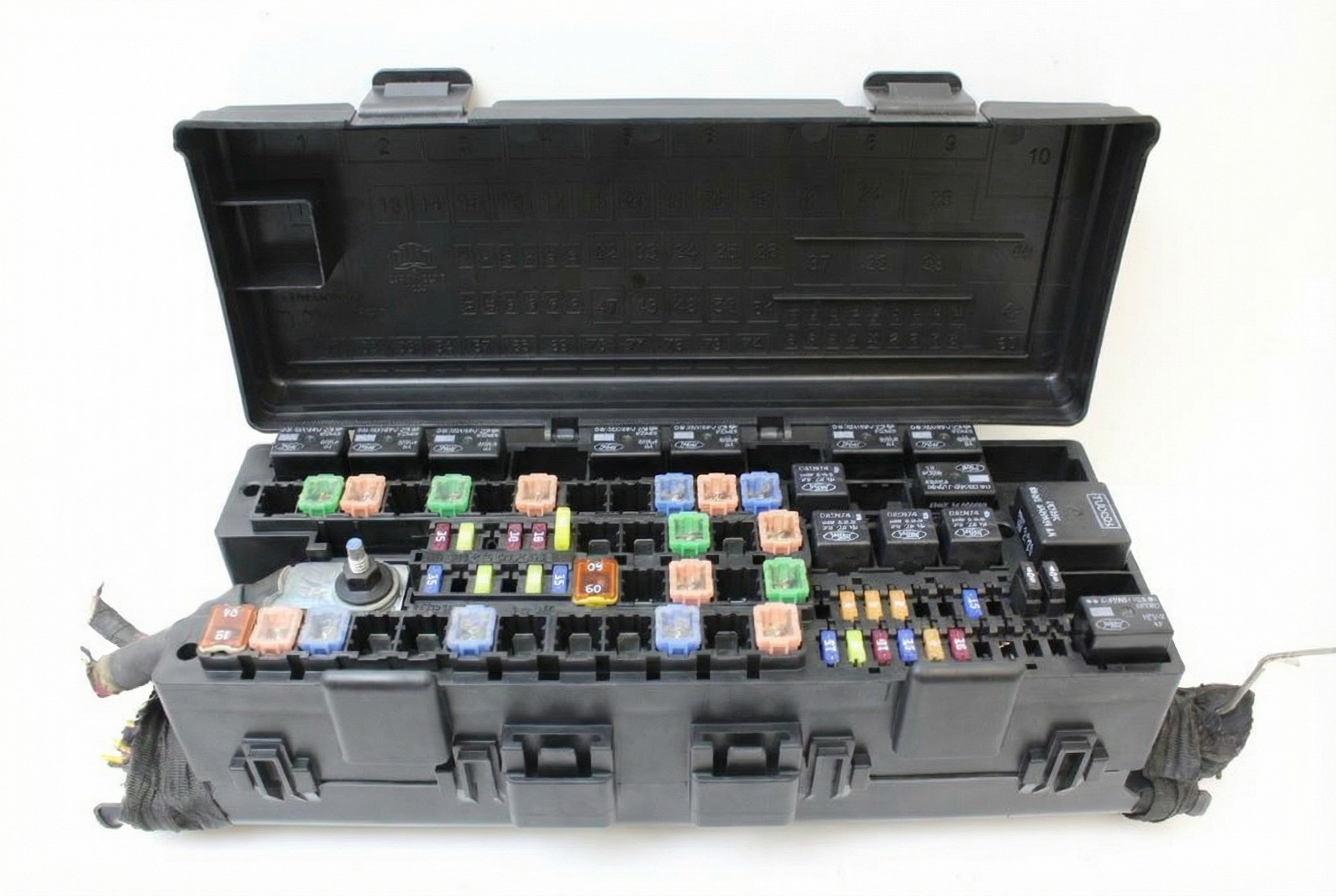
The 2009-2014 F-150 is uniquely prone to a specific failure that causes the U0100 code. The contacts for the fuel pump fuse (Fuse 27, a 20-amp mini-fuse in the under-hood fuse box) are undersized for the continuous electrical load of the fuel pump. This design flaw causes the fuse's plastic housing and the surrounding fuse box slot to overheat and melt, leading to a poor or lost connection. This intermittent loss of power to the fuel pump relay can disrupt the power supply or communication lines connected to the PCM, triggering a network code like U0100. Ford acknowledged this with Technical Service Bulletin (TSB) 15-0137, which recommends relocating the fuse.
Symptoms You May Notice

- Engine cranks but will not start.
- Intermittent stalling while driving, sometimes with complete loss of power.
- Multiple warning lights on the dashboard (Check Engine, wrench icon, battery light).
- Transmission may enter a 'limp mode' or shift erratically.
- Loss of gauges like the speedometer or tachometer.
- No sound of the fuel pump priming when the key is turned on.
- Engine may struggle to start, especially on cold starts, before failing completely.
- Replacing the PCM before checking Fuse 27. The symptoms of a melted Fuse 27 mimic a failed PCM, but the fuse is a much more common and cheaper fix.
- Replacing the in-tank fuel pump. A crank/no-start condition is often blamed on the pump 🎬 Watch: Why you should check Fuse 27 before replacing the pump., but the issue is usually the fuse that powers it.
- Replacing the alternator. One owner on f150forum.com reported a dealer incorrectly blamed a failing alternator for the melted fuse, which is not a plausible cause.
Most Likely Causes

- Melted Fuel Pump Fuse (Fuse 27) 🔴 High Probability The terminals for the original 20-amp mini-fuse in the battery junction box are too small for the electrical load of the fuel pump, causing high resistance and heat. The fuse itself doesn't blow; instead, the heat melts the fuse's plastic body and the socket, causing a loss of connection. This is a widely documented design flaw specific to this F-150 generation.
How to confirm: Visually inspect Fuse 27 in the under-hood fuse box. Look for a melted or distorted fuse, discolored/burnt plastic around the fuse slot, or a loose-fitting fuse. Even if the fuse looks intact, minor corrosion or a poor connection can be the start of the problem.
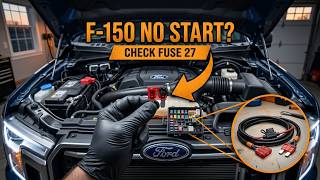
Typical fix: Install the Ford Fuse 27 Relocation Kit (Part No. EL3Z-14293-A). This kit moves the fuel pump circuit to an unused, more robust 'J-case' style fuse in slot 70 of the fuse box. The repair involves cutting one wire under the fuse box and splicing in the new harness.
Est. part cost: $20-$35 - Damaged Wiring Harness or Connectors 🟡 Medium Probability Wiring harnesses can chafe against the frame, engine block, or firewall over time, leading to shorts or open circuits in the CAN bus wiring. Rodent damage is also a possibility.
How to confirm: Visually inspect the main engine wiring harness for signs of rubbing, melting, or corrosion, paying close attention to where it passes through the firewall and runs near the engine and along the frame rails. Check the main PCM connectors for corrosion, moisture, or bent pins.
Typical fix: Repair the damaged section of wire and protect the harness from future damage using looms or tape. 🎬 Watch: How to identify and fix common wiring harness problems. Clean or replace corroded connectors.
Est. part cost: $10-$100 - Poor Battery Health or Bad Grounds ⚪ Low Probability
How to confirm: Test the battery voltage; it should be above 12.4 volts with the engine off. Clean the battery terminals. Inspect the main engine and chassis ground straps for tightness and corrosion. A common problem area for grounds is behind the passenger side kick panel.
Typical fix: Recharge or replace the battery. Clean or replace corroded terminals and ground straps.
Est. part cost: $5-$250 - Failed Powertrain Control Module (PCM) ⚪ Low Probability While true PCM failure is rare, it can happen. The 2009-2011 model years are noted as having more frequent PCM-related issues.
How to confirm: This is a diagnosis of exclusion. If all wiring, fuses, power, and ground connections are confirmed to be good, the PCM itself may be faulty. A user on f150forum.com confirmed a bad PCM after ruling out Fuse 27 and the FPDM; their symptom was the engine starting but dying after a second because the PCM would prime the fuel pump but not command it to continue running.
Typical fix: Replace the PCM. The new module must be programmed to the vehicle's VIN and a PATS (Passive Anti-Theft System) parameter reset must be performed.
Est. part cost: $500-$1200
Rare But Worth Checking
- Faulty Fuel Pump Driver Module (FPDM): While TSB 15-0137 lists U0109 (Lost Communication with FPDM) as a related code, a failing FPDM can sometimes disrupt the network and contribute to a U0100 code. It's located above the spare tire and is prone to corrosion. However, owners report that replacing the FPDM does not fix a no-start if the underlying cause is a melted Fuse 27.
Diagnosis Steps
- Scan for all diagnostic trouble codes. Note any other 'U' codes or fuel system codes (P0627, U0109, etc.).
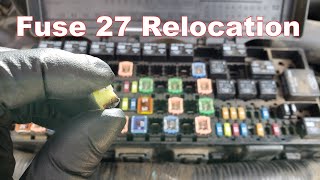
- CRITICALLY, inspect Fuse 27 in the under-hood fuse box. Remove the fuse and use a flashlight to look into the socket. Look for any signs of melting, scorching, discoloration, or a loose fit. This is the most likely cause.
- If Fuse 27 is intact, check the battery. Ensure it has a full charge (12.4V+ engine off) and that the terminals are clean and tight.
- Inspect major power and ground connections. Check the main battery-to-chassis ground and look for grounds near the passenger kick panel, which are known to have issues.
- Visually inspect the engine wiring harness for obvious signs of damage, such as chafing against the engine block, frame, or firewall.
- If the above steps do not reveal the issue, more advanced diagnostics are needed. Use a multimeter to check for 60 ohms of resistance across the CAN High and CAN Low pins (pins 6 and 14) at the OBD-II port with the battery disconnected. This verifies the integrity of the network's terminating resistors.
- If all wiring and network tests pass, the PCM is the likely culprit.
Parts You'll Likely Need

- Fuse 27 Relocation Kit
(OEM #EL3Z-14293-A)— This is the official Ford-prescribed fix for the most common cause of U0100 on this truck: the overheating fuel pump fuse.
Trusted brands: Motorcraft, Dorman (926-034)
OEM price range: $20-$35
Aftermarket price range: $15-$25 - Powertrain Control Module (PCM) — If all other causes are ruled out, the PCM itself may have failed. This is an infrequent but possible cause.
Trusted brands: Motorcraft, Cardone, Standard Motor Products
OEM price range: $800-$1200
Aftermarket price range: $400-$700
Related Codes That Often Appear With This One
- U0109 — Lost Communication With Fuel Pump Control Module. This code is often seen with U0100 because the melted Fuse 27 directly affects the power to the fuel pump system. It is explicitly listed in TSB 15-0137.
- P0627 — Fuel Pump 'A' Control Circuit/Open. This code also points directly to an electrical issue in the fuel pump circuit, reinforcing the likelihood of a Fuse 27 problem. It is also listed in TSB 15-0137.
- P0230, P025A — Fuel Pump Primary Circuit Malfunction / Fuel Pump Module Control Circuit Range/Performance. These are additional fuel-pump-related codes listed in TSB 15-0137 that point to the Fuse 27 issue.
- U0121 — Lost Communication With ABS Control Module. When the PCM goes offline, it can't talk to other major modules, causing them to log communication codes as well.
Technical Service Bulletins (TSBs) & Recalls
- TSB 15-0137: Addresses a crank/no-start or stalling condition caused by an overheating Fuse 27 in the battery junction box, and provides the procedure for relocating the fuse. It lists DTCs P0230, P025A, P0627, U0109, and P0201-P0208 as related codes.
- TSB 24-2117: Notes that installing certain trailer brake controller kits may store DTC U0100:87 in the trailer module (TRM).
- SSM 54216: Describes a crank/no start condition with multiple warning indicators and DTC U0100 stored in various modules including the audio front control module (ACM), gear shift module (GSM), and power steering control module (PSCM).
Platform-Specific Known Issues
- Ford Technical Service Bulletin TSB 15-0137 was issued specifically for 2009-2014 F-150s experiencing crank/no-start, stalling, or various trouble codes (including U0100, U0109, P0627, and others) due to the Fuse 27 circuit overheating. The bulletin instructs technicians to install a fuse relocation kit.
- DIY Walkthrough Video: Multiple YouTube videos provide a step-by-step guide for installing the Fuse 27 relocation kit, such as the one by 'Backyard Chevy', which shows the process of disassembling the fuse box, splicing the wire, and installing the new fuse holder.
Mechanic-Grade Diagnostic Values
- HS-CAN Bus Resistance — expected: Approximately 60 Ohms (± 5 Ohms).. Failure: A reading of ~120 Ohms indicates an open in the circuit or that one of the two terminating resistors (often in the PCM and Instrument Cluster) is not being seen. A reading significantly lower than 60 Ohms, such as 45 Ohms, could indicate a short or a third, unintended resistor on the network. A reading of 0 Ohms indicates a direct short between the CAN High and CAN Low wires.
- HS-CAN Bus Voltage (Key On, Engine Off) — expected: CAN High (Pin 6 at OBD-II port) should be ~2.7 Volts. CAN Low (Pin 14 at OBD-II port) should be ~2.3 Volts. The two voltages should add up to approximately 5 Volts.. Failure: If both lines read 2.5V, the network may be idle or the wires shorted together. If one line is at 0V and the other is normal, it indicates an open or short to ground on the 0V line. If a line is shorted to power, it will read battery voltage.
- Ground Circuit Resistance — expected: Less than 0.1 Ohms between the ground point and the negative battery terminal.. Failure: A reading higher than 0.1 Ohms indicates excessive resistance in the ground connection, which can cause intermittent module communication failures.
- Battery Voltage (Engine Off) — expected: 12.6 Volts or higher for a fully charged battery.. Failure: A reading below 12.4V indicates a partially discharged battery, and below 12.0V is considered discharged. Low voltage is a common cause of communication codes.
Scan Tool Commands That Help
- FORScan / Ford IDS: Network Test — This function pings all expected modules on the network and reports which ones are communicating and which are not. It's a critical first step after checking for codes to see the scope of the communication failure.
- FORScan / Ford IDS: PCM Self-Test (KOEO and KOER) — The Key-On-Engine-Off and Key-On-Engine-Running self-tests command the PCM to check its own internal circuits and its inputs/outputs. If the PCM is responsive enough to run a self-test, it can help rule out a completely dead module.
- Ford IDS / FDRS: Module Reprogramming / PCM Reflash — In some cases, corrupted firmware within the PCM can cause intermittent communication faults. If all wiring, power, and grounds test good, reflashing the PCM with the latest calibration can resolve the U0100 code.
- Ford IDS / FDRS: Programmable Module Installation (PMI) — This is required when a new or used PCM is installed. It transfers vehicle-specific data, including the VIN and security information (PATS), from the old module (if possible) or Ford's database to the replacement module.
Wiring & Ground Locations
- G100 / G104 — Located on the driver's side (LH) front of the engine compartment, on or near the upper radiator support and fender apron.. These are primary engine bay grounds. A poor connection here can affect the PCM and other critical engine electronics, leading to communication failures.
- G201 / G202 — G201 is behind the driver's side (LH) of the instrument panel, near the steering column. G202 is behind the passenger side (RH) cowl kick panel.. The ground behind the passenger kick panel (G202) is a known trouble spot for various electrical issues. It serves as a ground for multiple interior modules, and corrosion here can disrupt the CAN bus network.
- C175B — This is the main body/cowl harness connector for the PCM. It's one of the three large connectors that plug into the PCM, typically located on the firewall in the engine bay.. The HS-CAN bus wires pass through this connector. For 2009-2010 models, the HS1 CAN+ is pin 43 (Gray/Orange) and CAN- is pin 44 (Violet/Orange). For 2011-2014 models, HS1 CAN+ is Pin 59 (White/Blue) and CAN- is Pin 58 (White). Corrosion or a backed-out pin in this specific connector will sever communication with the PCM.
- C210 — An inline connector located under the driver's side of the instrument panel, near the e-brake assembly.. The CAN bus network wiring passes through this major inline connector. Damage or corrosion at C210 can interrupt communication between modules inside the cabin and the rest of the vehicle network, causing widespread U-codes.
- Splice S200 — Located in the main wiring harness, near the breakout (T/O) to connector C210.. This is a network splice where multiple CAN bus wires join together. Factory splices can sometimes fail due to corrosion or vibration, creating an open circuit that takes down a segment of the network. Diagnosing a failed splice often requires unwrapping the harness to find it.
Real Owner Repair Stories
- Reddit user in r/Justrolledintotheshop (Ford vehicle (model not specified, but behavior is relevant)) — U0100 and U0121 (Lost communication with ABS) codes, intermittent ABS light flicker, occasional loss of communication with PCM during scans.
❌ Tried (didn't work) Physical checks of power, ground, and CAN resistance all tested normal, suggesting no obvious wiring fault.
✅ What actually fixed it A PCM reflash using the Ford Diagnostic & Repair System (FDRS) resolved all communication faults. The root cause was determined to be outdated or corrupted PCM firmware, not a hardware or wiring issue. - CarKiller forum user (2010 F-150 Crew Cab 4x4 5.4L) — No crank, rapidly flashing anti-theft light, U0100 code. Scan tool could not communicate with the PCM.
❌ Tried (didn't work) Replacing the PCM and programming two new keys., Replacing the instrument cluster with a used unit.
✅ What actually fixed it The user diagnosed a CAN bus resistance of 120 ohms instead of the correct 60 ohms. Further testing revealed an open circuit on the CAN Low wire between the OBD-II port (pin 14) and the PCM connector (pin 43 on a 2010 model). The final fix was to find and repair the break in that specific wire within the harness.
Model Year Variations Within This Range
- 2009-2010 vs 2011-2014: The pinout for the High-Speed CAN bus at the main PCM connector (C175B) changed with the 2011 model year engine update. For 2009-2010 models, the HS-CAN lines are typically at pins 43 and 44. For 2011-2014 models, they are at pins 58 and 59. Using the wrong pin numbers for testing will lead to an incorrect diagnosis.
Diagnostic Flowchart
Used vs. New Parts: Buying Guide for This Vehicle
When a used part is the smart pick: A used Powertrain Control Module (PCM) from a junkyard or online seller can be a cost-effective alternative to a new or remanufactured unit, often saving hundreds of dollars. This is a viable option if you have access to advanced scan tools for reprogramming.
Donor-vehicle mileage cap: roughly under 150000 miles for the part to have meaningful remaining life.
What to inspect on the donor part:
- Match the OEM part number exactly. There are many variations based on engine, transmission, and emissions.
- Source the part from a vehicle of the same year, model, and engine.
- Inspect the connector pins on the used PCM for any signs of corrosion, moisture damage, or bent pins.
- Buy from a reputable seller that offers a warranty, even if it's only 30-90 days.
OEM-only on this vehicle (don't cheap out):
- Fuse 27 Relocation Kit: The cost is low and the part is specifically designed by the OEM to fix a known flaw. There is no benefit to sourcing this used.
Aftermarket brands forum-validated for this vehicle:
- For remanufactured PCMs, companies like Flagship One and Solo Auto Electronics specialize in providing pre-programmed modules for Ford vehicles, which can simplify installation.
- For the Fuse 27 relocation kit, Dorman (926-034) is a widely available and accepted aftermarket alternative to the Motorcraft part.
Brands owners have reported issues with on this vehicle:
- Be cautious of no-name, cheapest-available PCMs from online marketplaces without a clear warranty or programming service. A faulty or incorrectly programmed PCM can cause more problems than it solves.
Real Owner Stories
Aggregated from forums and TSBs cited above. Mileages and costs reflect what owners reported in those sources.
2014 Ford F-150 3.5L EcoBoost
Symptoms: While driving, all dashboard warnings came on and the gauges went dead. After pulling over, the truck would not crank or start. The issue was intermittent, resolving itself for weeks before returning. There was no communication with the PCM.
What fixed it: The resolution was not specified in the forum thread, but the owner was advised to check the battery, all connections, and the main PCM connection on the firewall after initial checks of fuses and battery were inconclusive.
Source hint: f150forum.com - 2014 no crank no start
2009 Ford F-150 SCrew 5.4L — 118000 miles
Symptoms: The truck went into Limp Home Mode with the wrench light illuminated while driving on the highway. The U0100 code would appear intermittently.
What fixed it: The resolution was not specified in the provided context.
Source hint: f150online.com
2009-2014 Ford F-150
Symptoms: The truck would crank but would not start.
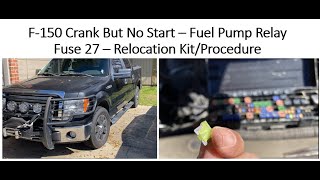
What fixed it: The owner discovered a 'toasted, distorted and burned' Fuse 27. The fix was to install the Fuse 27 relocation kit.
Source hint: f150forum.com: 'Crank - No Start - Fuse 27'
2009-2011 Ford F-150
Symptoms: The engine would start but then die after only a second. The fuel pump would prime on key-on but would not be commanded to continue running.
What fixed it: After ruling out the common Fuse 27 issue and the Fuel Pump Driver Module (FPDM), the Powertrain Control Module (PCM) was diagnosed as faulty and was replaced.
Source hint: f150forum.com user report cited in PCM diagnosis
NHTSA ODI #11523692
Symptoms: An owner reported being put in a dangerous circumstance while driving when the vehicle threw multiple codes including P2112, U3013-16, U0401-02, and U0100-00.
Source hint: NHTSA ODI #11523692
NHTSA ODI #11535218
Symptoms: A report describes a vehicle with codes for the anti-lock brake system and ECM/PCM (U0151-00 and U0100-00), despite the battery and starting system testing in good working order.
Source hint: NHTSA ODI #11535218
Related OBD-II Codes
Frequently Asked Questions
I have a U0100 code and my 2011 F-150 cranks but won't start. What's the very first thing I should check?
Is there an official Ford fix for the melting Fuse 27 problem on the 2009-2014 F-150?
My Fuse 27 looks fine, but my truck is still stalling intermittently. What else is a common cause for U0100?
Can a bad battery or ground connection cause a U0100 code on my F-150?
I've checked Fuse 27 and all the wiring seems okay. Could the PCM have failed?
Does the Ford Expedition from the same years have the same melting Fuse 27 problem?
Helpful Videos

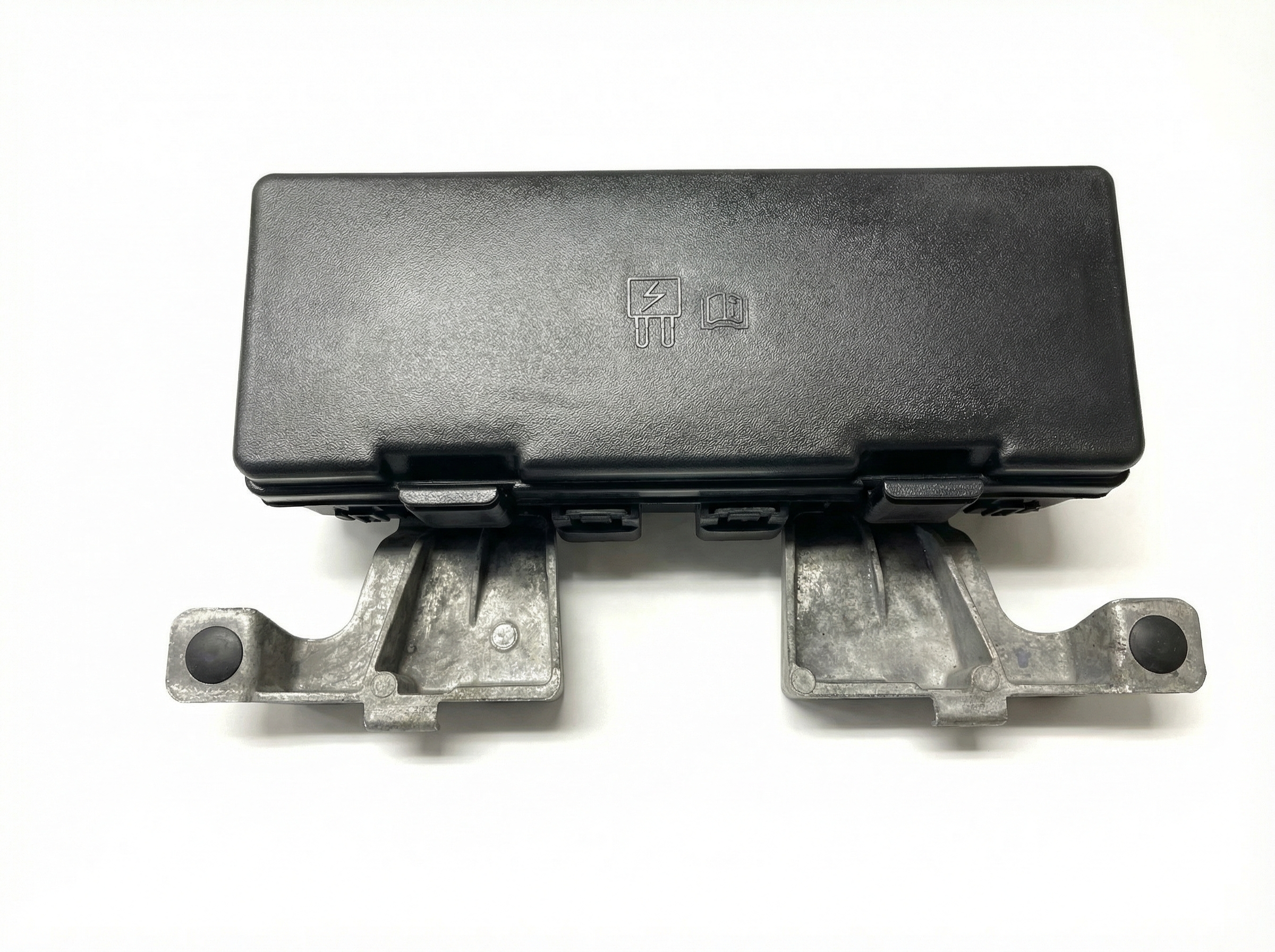
Used OEM Parts in Stock



New Aftermarket Parts Available

The information in this article is provided for general reference and educational purposes only. Vehicle specifications, procedures, and part compatibility can vary by production date, trim level, and region. Always consult your vehicle's factory service manual and verify part numbers before purchasing or performing repairs. Safety-critical components such as airbags, seat belts, and braking systems should be installed by a qualified professional.
- Ford F-150:
- 🎬 Helpful Videos
- 🛍️ Shop This Part
- What's Unique About the 2009-2014 Ford F-150
- Symptoms You May Notice
- Most Likely Causes
- Rare But Worth Checking
- Diagnosis Steps
- Parts You'll Likely Need
- Related Codes That Often Appear With This One
- Technical Service Bulletins (TSBs) & Recalls
- Platform-Specific Known Issues
- Mechanic-Grade Diagnostic Values
- Scan Tool Commands That Help
- Wiring & Ground Locations
- Real Owner Repair Stories
- Model Year Variations Within This Range
- Diagnostic Flowchart
- Used vs. New Parts: Buying Guide for This Vehicle
- Real Owner Stories
- 2014 Ford F-150 3.5L EcoBoost
- 2009 Ford F-150 SCrew 5.4L — 118000 miles
- 2009-2014 Ford F-150
- 2009-2011 Ford F-150
- NHTSA ODI #11523692
- NHTSA ODI #11535218
- Related OBD-II Codes
- Frequently Asked Questions
- 🎟️ Get 5% Off